
Supermarkets engineer every aisle, endcap, and price tag to extract the maximum amount of money from your wallet before you reach the checkout line. You can instantly reclaim hundreds of dollars a month just by learning which price tags are total illusions designed to exploit your convenience. Grocers rely on your rushed schedule to sell massively marked-up staples, knowing most people grab the first familiar item they see. When you uncover the actual pricing cycles behind everyday foods, you stop subsidizing their record profits. By strategically timing your purchases and refusing to pay the baseline premium, you force retailers to offer you the actual, rock-bottom value. Let us expose the ten worst grocery rip-offs that constantly trap unprepared buyers.

Shopping Trap #1: Pre-Cut Fruits and Vegetables
Supermarkets prey on your exhaustion by placing brightly colored, pre-chopped fruits and vegetables right at the entrance of the produce department. Retailers know that after a long day of work, you highly desire the promise of instant gratification and zero prep time. The financial reality of this convenience proves staggering. You regularly pay a markup of 200 to 300 percent for the exact same onion or melon simply because a store employee sliced it and encased it in plastic. That translates to paying roughly five dollars a pound for watermelon that costs less than one dollar a pound whole. Beyond the exorbitant price tag, pre-cut produce begins losing its nutritional value the second the knife pierces the skin. Exposure to oxygen accelerates vitamin degradation and dramatically shortens the shelf life, meaning your expensive convenience food often turns to mush before you eat it. The smart shopping move demands strictly buying whole, intact produce. Investing just ten minutes of your weekend into washing and chopping your own vegetables saves hundreds of dollars annually while drastically reducing unnecessary single-use plastic waste.
Shopping Trap #2: Name-Brand Spices and Seasonings
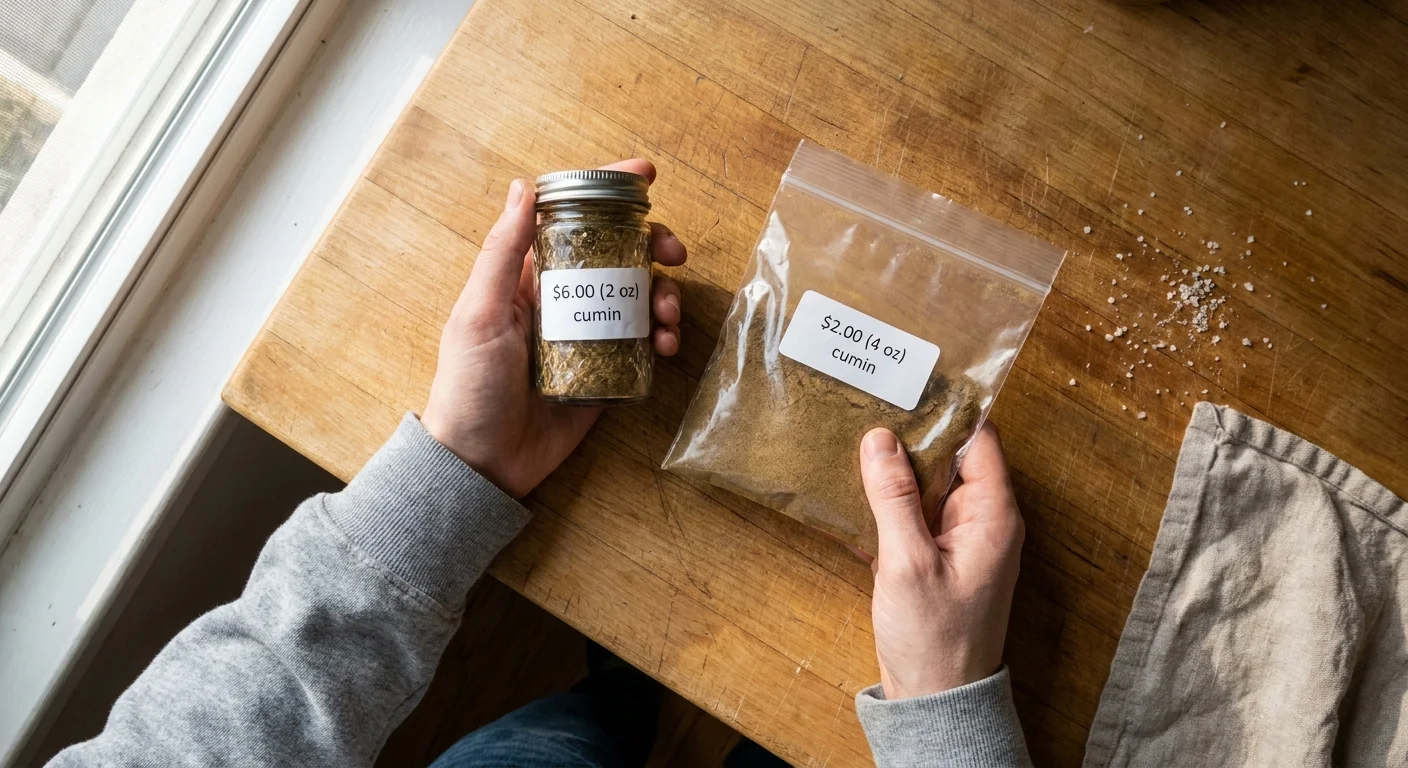
Walking down the baking aisle, you encounter rows of perfectly uniform, highly marketed glass jars containing standard spices like cinnamon, oregano, and basil. Retailers heavily rely on this specific aisle to boost their profit margins, often charging an astronomical premium for crushed leaves and bark. Stores quietly hide the exact same spices a few aisles over in the international or ethnic foods section, packaging them in simple plastic bags for a fraction of the cost. A tiny two-ounce jar of name-brand cumin sets you back six dollars, whereas a four-ounce bag of imported cumin costs roughly two dollars. Furthermore, you secure the best value at stores that offer bulk spice bins, allowing you to buy only the exact quantity you need. Bulk purchasing prevents the common trap of buying an expensive, obscure spice for a single recipe, only to let it grow stale in the back of your pantry for three years. Stop paying a massive premium for a branded glass jar that you simply throw away; prioritize the actual ingredient over the marketing facade.
Shopping Trap #3: Boxed Breakfast Cereal
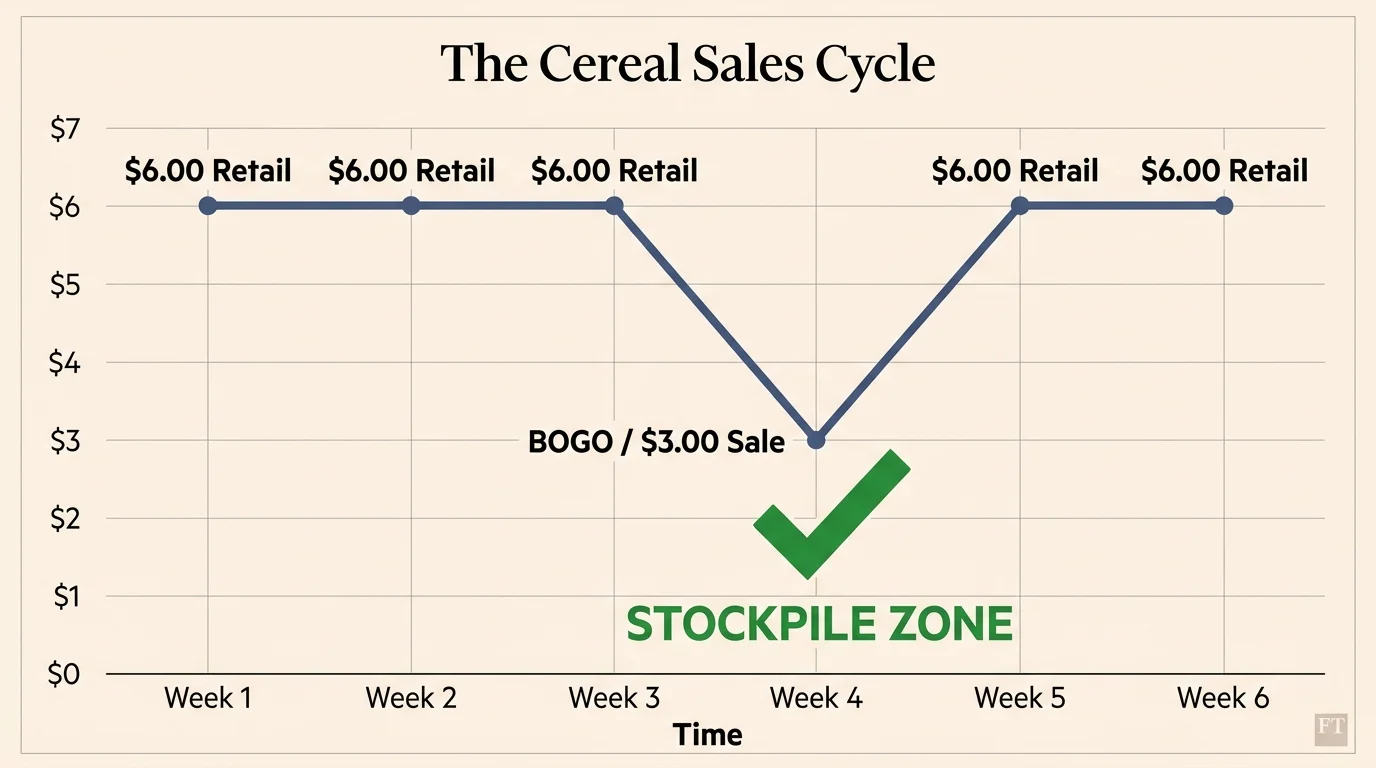
The cereal aisle provides a masterclass in consumer manipulation, featuring brightly colored characters positioned perfectly at the eye level of your children. Big food corporations spend billions of dollars researching exactly how to compel you to throw a six-dollar box of processed corn and sugar into your cart without a second thought. However, savvy consumers understand that breakfast cereal operates on a highly predictable, cyclical promotional schedule. Supermarkets use these popular items as loss leaders, rotating deep discounts and buy-one-get-one-free deals on major brands every four to six weeks. If you pay full retail price for cereal, you simply subsidize the massive discounts given to shoppers who wait for the sales cycle. To beat this system, you must learn the rhythm of your local store and stockpile your favorite brands only when they hit their lowest price point. Additionally, always compare the unit price per ounce rather than the overall box price, because manufacturers frequently shrink the package size while keeping the sticker price identical to trick unsuspecting buyers.

Shopping Trap #4: Pre-Marinated and Pre-Seasoned Meats
The meat counter often features an enticing array of pre-marinated chicken breasts, seasoned beef fajita strips, and skewered kebabs that look ready for the grill. These items act as the butcher’s greatest profit generator and a massive trap for unsuspecting shoppers seeking grocery savings. When you buy meat bathing in an opaque sauce, you pay top dollar for the added water and cheap marinade weight. A heavy teriyaki glaze easily accounts for twenty percent of the total package weight, meaning you pay premium meat prices for high-fructose corn syrup and sodium. Furthermore, butchers routinely use heavy marinades to disguise older cuts of meat that rapidly approach their expiration dates or to mask tough, undesirable trimmings. You guarantee higher quality and better budgeting by purchasing whole, unseasoned cuts and creating your own marinades at home using basic pantry staples like oil, vinegar, and spices. It takes less than two minutes to toss a few chicken thighs into a freezer bag with your favorite dressing, saving you up to three dollars per pound.
Shopping Trap #5: Single-Serving Snack Packs
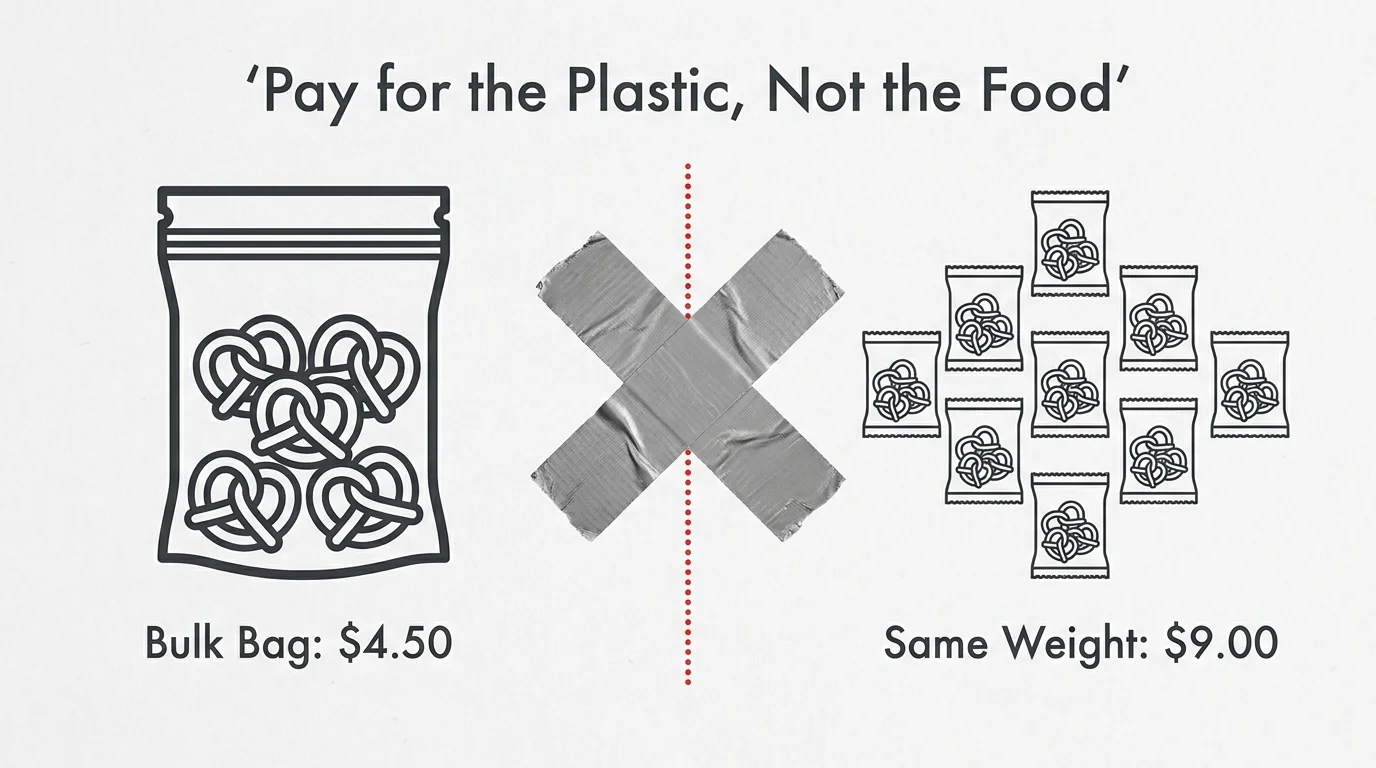
Packaging regular foods into miniature, lunchbox-ready portions offers companies a brilliant strategy to double their revenue without actually providing more food. Manufacturers routinely divide items like chips, crackers, and cookies into individual plastic pouches and market them to busy parents who desperately need quick solutions for school lunches. This packaging tax represents one of the biggest drains on a frugal shopping budget. When you break down the unit cost, a box containing twelve tiny bags of potato chips frequently costs double or triple the price of a standard family-sized bag containing the exact same volume of food. You essentially burn your hard-earned cash to buy excessive cardboard and plastic wrapping that instantly goes into a landfill. Reclaiming this money requires a straightforward habit shift; simply purchase the largest size available and spend a few minutes portioning the snacks into reusable silicone bags or small containers at home. This simple adjustment easily saves a family of four over fifty dollars a month while significantly reducing their environmental footprint.
Shopping Trap #6: Name-Brand Condiments and Sauces
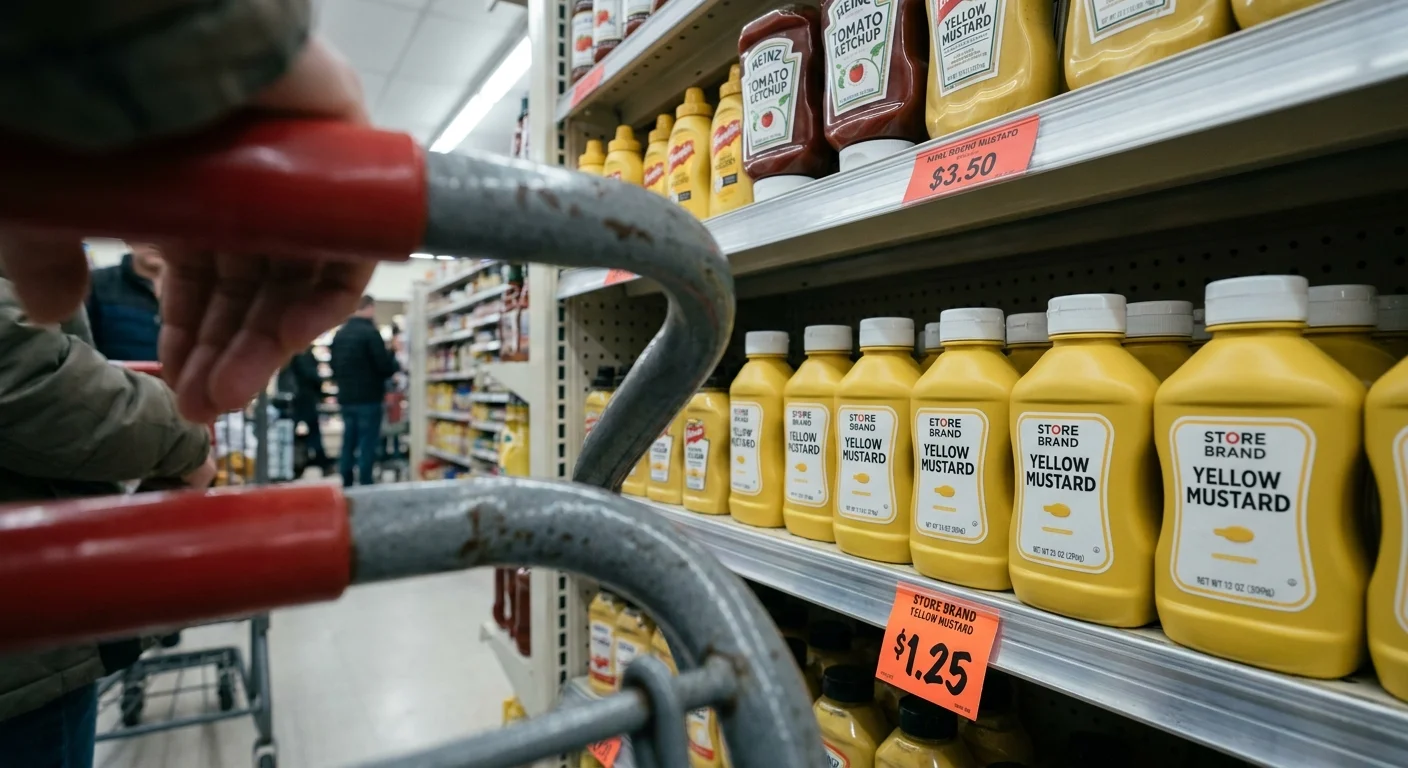
Ketchup, mustard, mayonnaise, and salad dressings offer retailers consistently high profit margins because consumers tend to develop blind brand loyalty. Shoppers mindlessly grab their favorite brand of barbecue sauce regardless of the sticker price, assuming the generic alternative tastes vastly inferior. In reality, the same processing facilities manufacture most store-brand condiments right alongside their premium counterparts, utilizing virtually identical ingredients and recipes. The colorful label and national advertising campaigns account for the entire price difference, passing those massive marketing costs directly to you. If you absolutely refuse to compromise on a specific brand name, you still must never pay full retail value. Condiments follow intense, seasonal promotional cycles. Prices hit absolute rock bottom just before major grilling holidays like Memorial Day, the Fourth of July, and Labor Day. Smart shoppers exploit these narrow promotional windows to stock their pantries for the entire year, combining aggressive store sales with manufacturer coupons to routinely score these items for pennies on the dollar.
Shopping Trap #7: Shredded and Sliced Cheeses
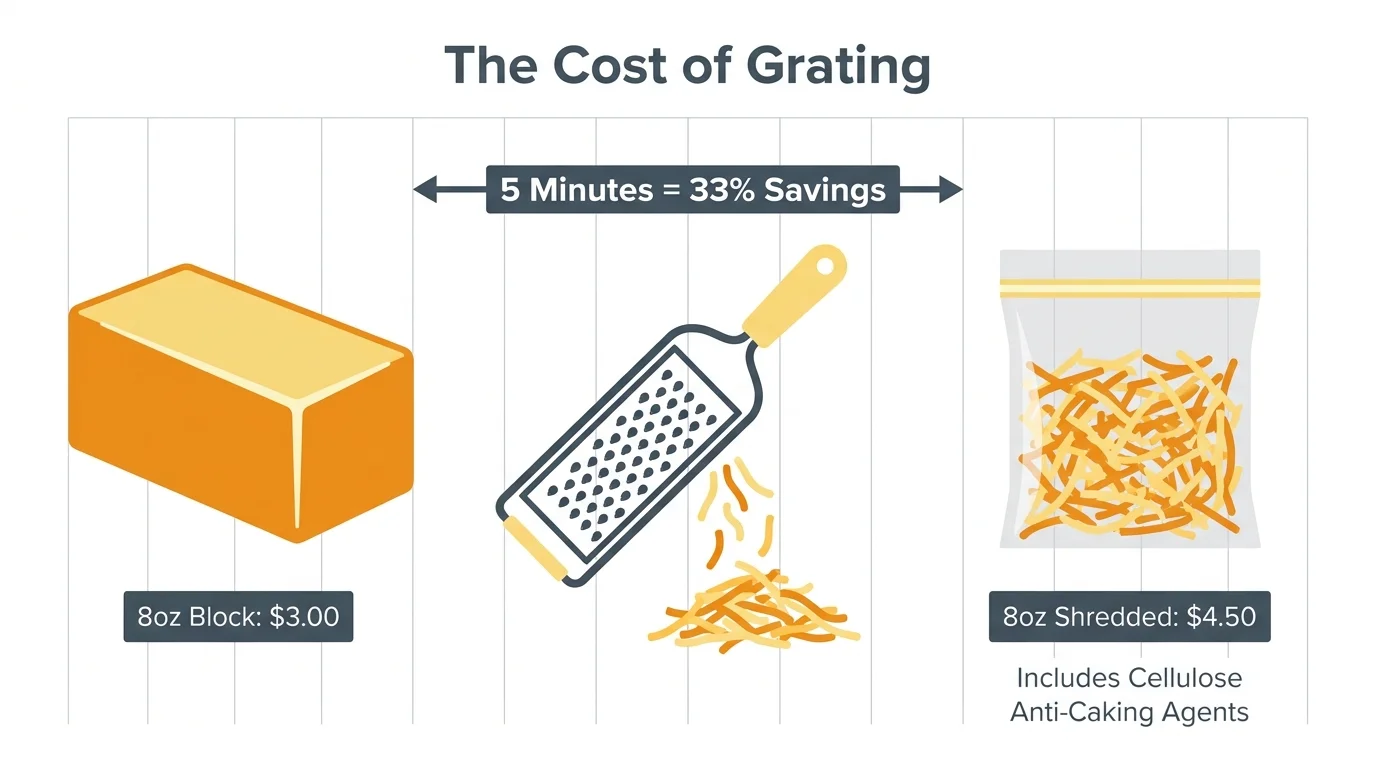
The dairy aisle perfectly illustrates the exorbitant cost of convenience, highlighted by the massive price discrepancy between a block of cheese and its shredded counterpart. When a manufacturer runs a standard block of cheddar through a commercial grater, they dramatically increase the retail price to capitalize on your desire to save five minutes of meal prep. To make matters worse, companies heavily coat pre-shredded cheese in anti-caking agents like cellulose—often derived from wood pulp—and potato starch to prevent the shreds from clumping together in the bag. These chemical additives completely alter the melting point and texture of the cheese, resulting in a gritty, oily mess when used in recipes like macaroni and cheese or homemade pizza. By spending a few dollars on a sturdy box grater and purchasing solid blocks of cheese, you instantly guarantee a superior culinary experience and slice your dairy budget in half. Freshly grated cheese melts beautifully, tastes significantly better, and gives you far more actual dairy per dollar spent.
Shopping Trap #8: Baking Supplies Outside of the Holidays
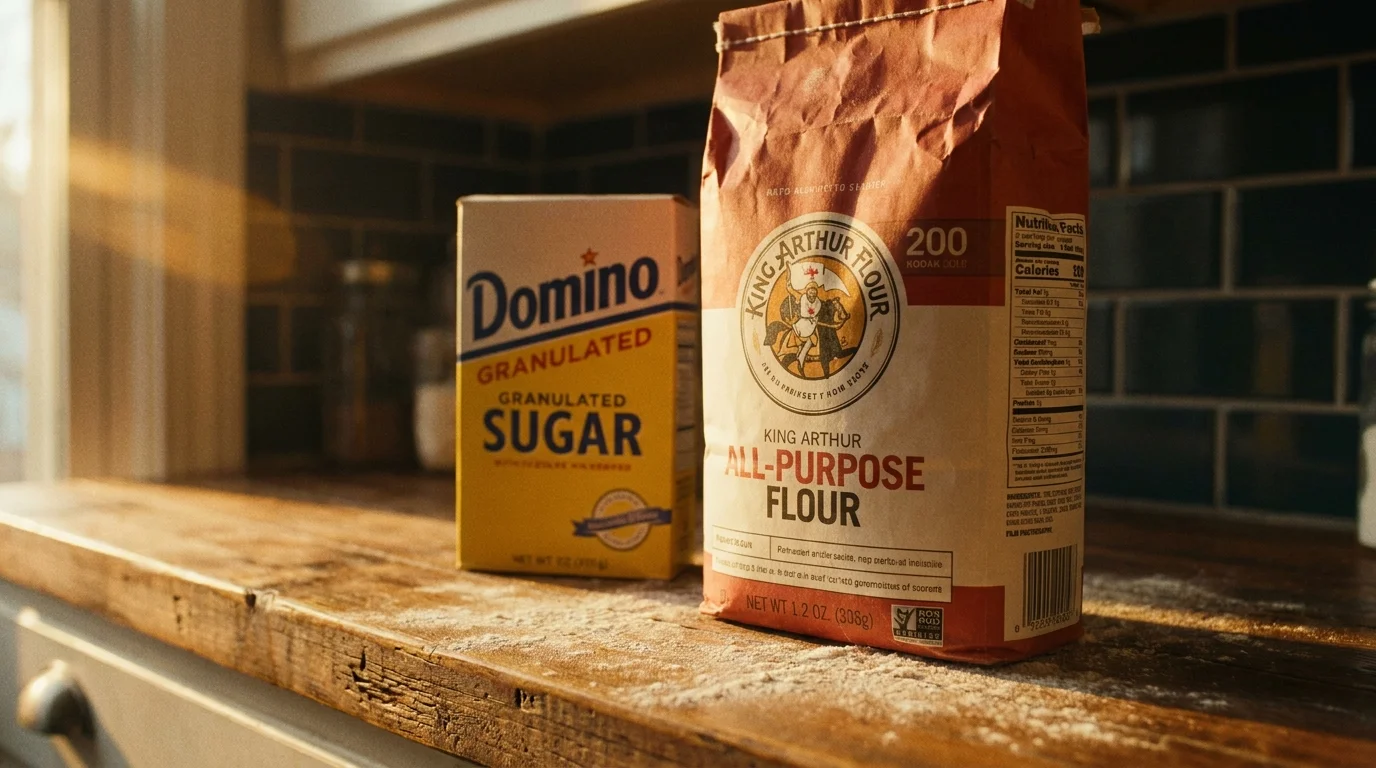
Pantry basics like flour, granulated sugar, baking chips, and vanilla extract destroy budgets because most consumers simply buy them whenever they run out. This reactive approach to grocery shopping guarantees that you pay the absolute maximum markup for standard commodities. Retailers treat baking supplies as high-margin items for ten months out of the year, knowing that impulse bakers willingly pay four dollars for a small bag of chocolate chips. However, the pricing dynamic completely flips during the peak holiday baking season in November and December. Supermarkets slash prices on baking staples to drive intense foot traffic into their stores, often selling flour and sugar at a massive loss. If you want to master the art of frugal shopping, you must evaluate your family’s annual consumption of these non-perishable goods and buy your entire yearly supply during this brief window of holiday promotions. Storing flour and sugar in airtight containers protects them from pests and ensures you never pay a premium price for a Tuesday night brownie craving in July.
Shopping Trap #9: Bottled Water and Sugary Beverages
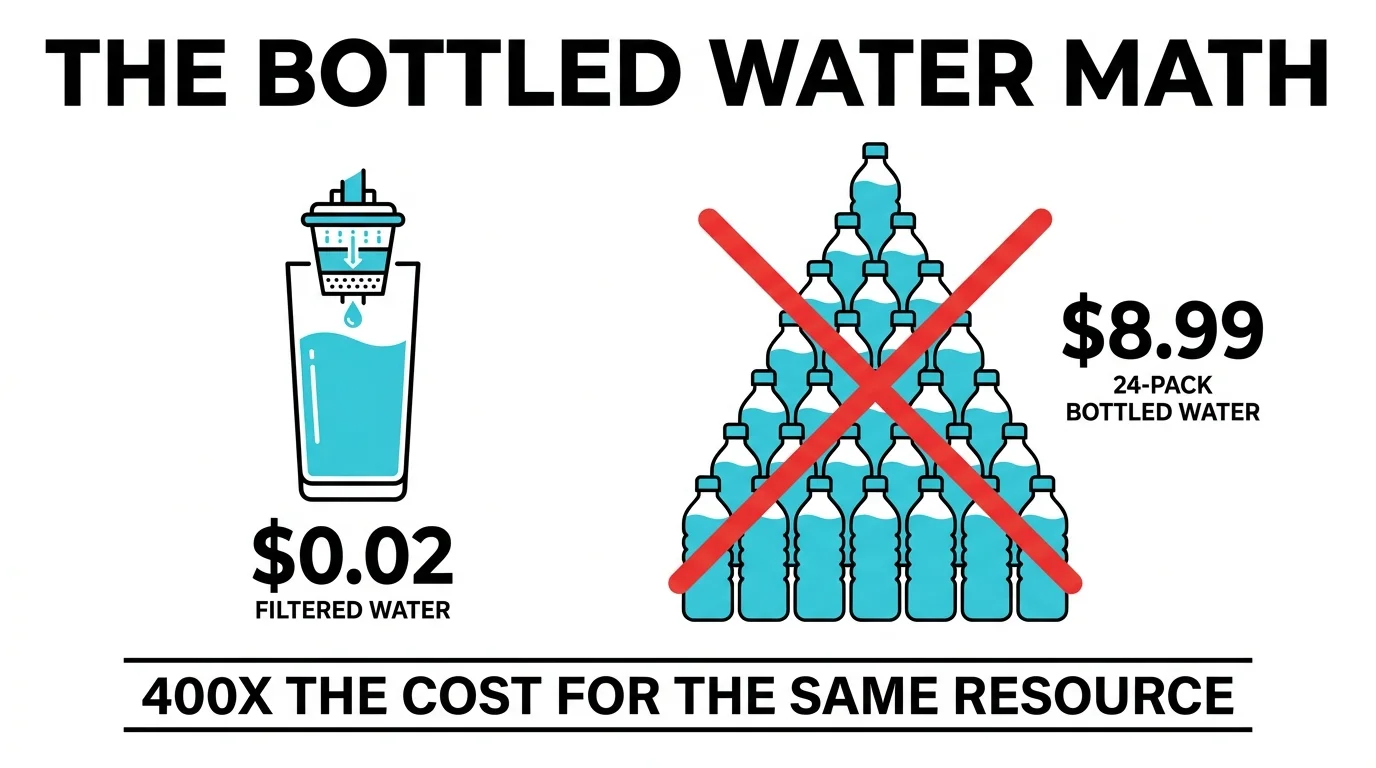
The bottled water industry represents the pinnacle of brilliant marketing overcoming common sense, convincing millions of Americans to buy a product that flows freely into their homes. Supermarkets dedicate entire aisles to towering pallets of single-use plastic bottles, leveraging aggressive endcap displays to trigger impulse purchases. When you buy bottled water at full price, you pay a markup that frequently exceeds two thousand percent compared to municipal tap water. You finance the plastic packaging, the diesel fuel required to truck heavy liquid across the country, and the lucrative celebrity endorsement deals. If your local tap water has an unpleasant taste or odor, investing once in a high-quality home filtration system pays for itself in less than a month. Similarly, sugary sodas and sports drinks offer zero nutritional value while rapidly draining your wallet. Beverage companies perpetually cycle sodas through buy-two-get-two-free promotions. Wait for the predictable sale, stock up minimally, and transition your daily habits toward clean, filtered tap water to protect your health and your budget.

Shopping Trap #10: Frozen Convenience Meals and Dinners
Vivid images of perfectly plated lasagna and exotic stir-fries bombard you as you wander through the freezer section. Food companies aggressively market these frozen convenience meals as the ultimate solution for a hectic lifestyle, promising a delicious dinner in just four minutes. Unfortunately, the cardboard box hides a tiny, heavily processed portion of food swimming in sodium and cheap preservatives. The unit economics of a standard frozen dinner fail every logic test; you often pay up to eight dollars for a meager serving of inexpensive pasta and a few ounces of low-grade meat. You can recreate nearly any frozen meal in your own kitchen for a fraction of the cost, using fresh ingredients that actually nourish your body. The most effective budgeting tip involves implementing basic meal prepping on your days off. By deliberately cooking large batches of chili, soup, or casseroles and freezing individual portions in glass containers, you build your own inventory of healthy convenience meals and bypass the grocery store’s massive markup entirely.
Your Action Plan: How to Be a Smarter Shopper
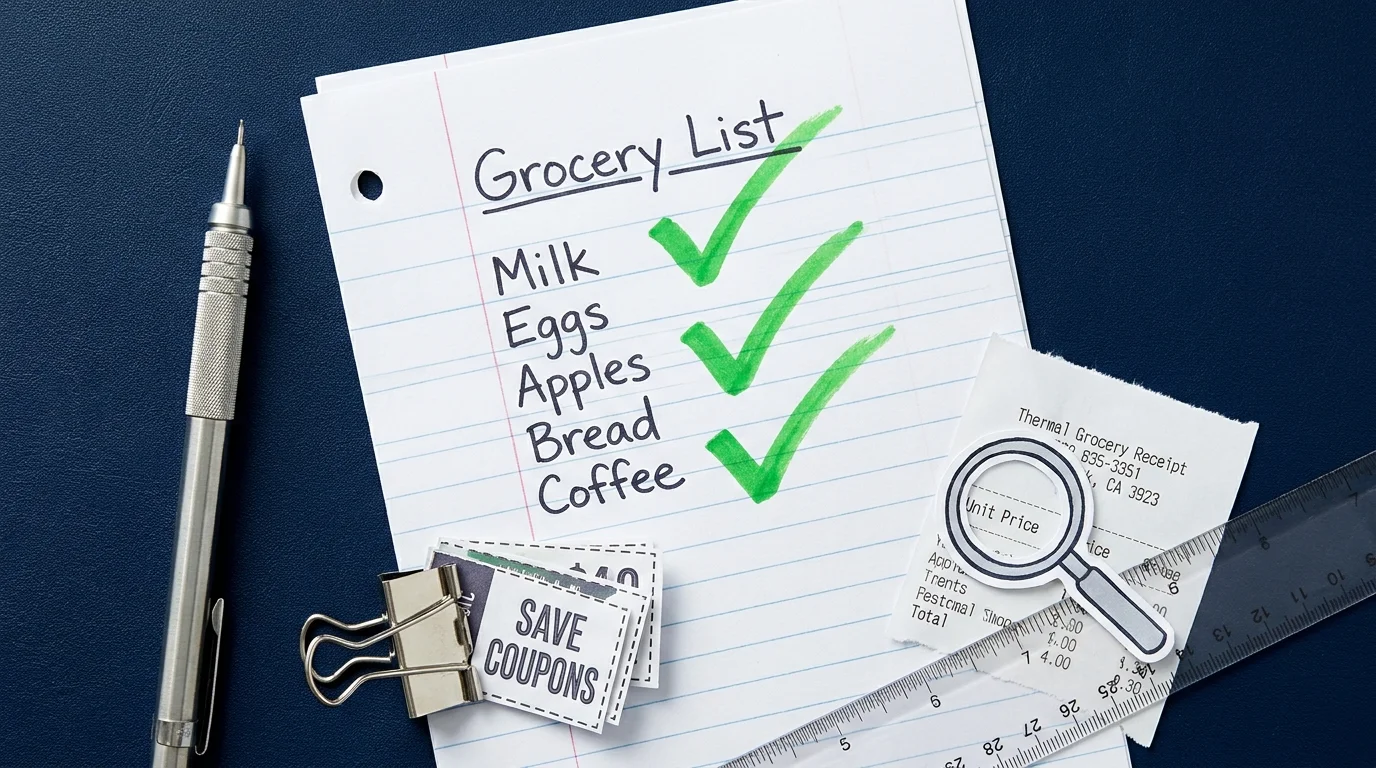
Reclaiming your hard-earned cash from predatory supermarket pricing strategies requires a fundamental shift in how you approach the grocery store. Start treating your weekly shopping trip as a tactical mission rather than a mindless chore. First, commit to tracking the sales cycles of the non-perishable items you consume most frequently. Maintain a simple price book on your phone to record the baseline cost and the rock-bottom promotional price of your favorite cereals, condiments, and household goods. When an item hits its lowest historical price, buy enough to last until the next cycle. Second, fiercely reject the convenience tax. Spend an extra thirty minutes a week chopping your own produce, grating your own cheese, and portioning out family-sized snacks into reusable containers. Finally, ignore the brightly colored marketing at eye level and always calculate the unit price per ounce before placing an item in your cart. By remaining disciplined and refusing to subsidize store markups on basic goods, you systematically slash your grocery bill and keep more money in your bank account.
Frequently Asked Questions
Is buying generic always the best way to save money on food?
While generic or store-brand products typically run twenty to forty percent cheaper than national brands, they do not always stand as the undisputed winners in frugal shopping. National brands frequently offer aggressive manufacturer coupons that, when strategically stacked with a weekly store promotion, easily make the premium product cheaper than the generic alternative. Always run the final numbers at the shelf before making your decision.
How can I identify a genuine grocery store sale versus a fake promotion?
Retailers notoriously inflate the baseline price of an item just days before slapping a bright yellow sale tag on the shelf to create the illusion of value. The only foolproof method to spot a fake promotion requires knowing the historical unit price of the item. If you consistently track the cost per ounce of your staple foods, you effortlessly bypass the deceptive signage and only open your wallet for legitimate discounts.
Does couponing still work for modern grocery savings?
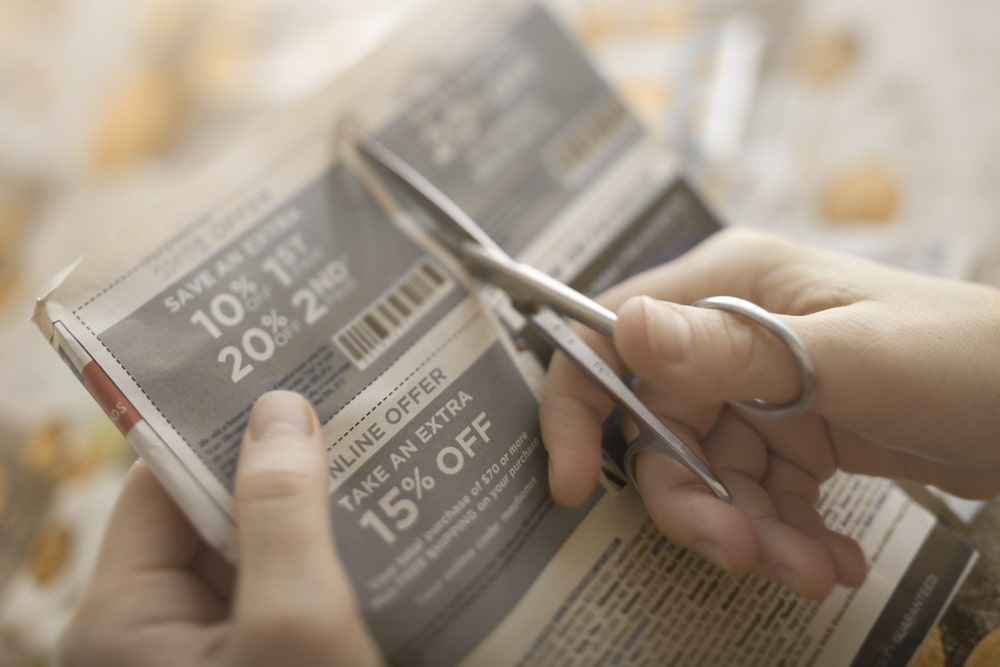
Yes, but the landscape completely shifted from clipping paper inserts to utilizing digital ecosystems. Nearly all major supermarket chains now require you to download their proprietary application to clip digital coupons and access the lowest tier of pricing. By spending five minutes matching your store’s digital coupons to the weekly circular before you leave the house, you unlock substantial savings without the hassle of organizing physical paper clippings.
To check for scams and false advertising, visit the FTC. For unbiased product reviews, consult Consumer Reports. Business ratings are available at the Better Business Bureau.
Disclaimer: The opinions in this article are for informational and entertainment purposes. Brands, products, and store policies can change. Always verify information and prices before making a purchase.





If I’m considering something cheaper, I’ll get one and see if I like it before buyng more.