

You worked for decades believing Medicare would cover your medical bills once you turned 65. That dangerous assumption blindsides millions of older Americans every single year.
In reality, a healthy 65-year-old couple needs roughly $350,000 just to fund basic healthcare throughout retirement. That massive sum does not include a single day of long-term nursing care.
If you want to protect your life savings, you must understand where the hidden leaks hide. Here are eight brutal realities retirees discovered the hard way—and how to sidestep them.
Tip #1: Medicare Is Far From Free
Most workers assume Medicare functions like an all-inclusive national health program. In truth, you trade private health insurance premiums for federal premiums, deductibles, and copayments.
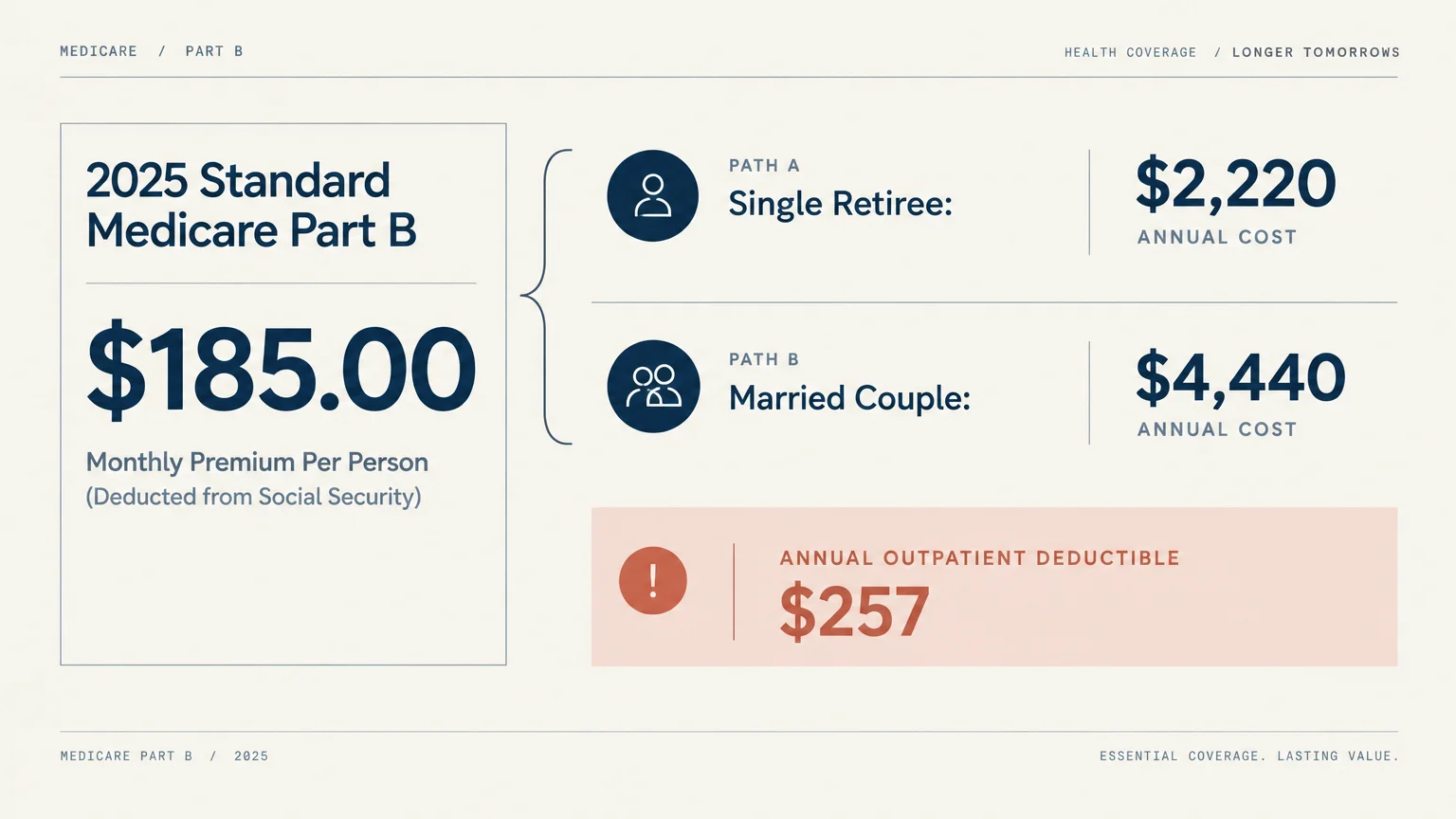
In 2025, the standard Medicare Part B monthly premium is $185.00 per person. That premium gets deducted straight from your monthly Social Security check before you ever see a dime.
For a married couple, Part B premiums alone siphon away $4,440 per year from your fixed budget. That cost recurs every single year, regardless of whether you visit a doctor or stay completely healthy.
Furthermore, you must satisfy an annual Part B deductible of $257 in 2025 before outpatient benefits kick in. When you factor in Medicare Part D prescription drug plans, monthly costs climb even higher.
Many retirees make major retirement healthcare budget mistakes by assuming their paychecks funded their future care. Payroll taxes only earned you entry into the system; they did not buy you a free pass.
Treating Medicare as a paid service rather than a gift is the first step toward building a realistic retirement plan. Budget for these recurring base premiums just like you budget for groceries or utilities.
Tip #2: The Terrifying Absence of an Out-of-Pocket Maximum
Employer health plans protect you with an annual out-of-pocket maximum that caps catastrophic losses. Traditional Medicare offers no such financial safety net.
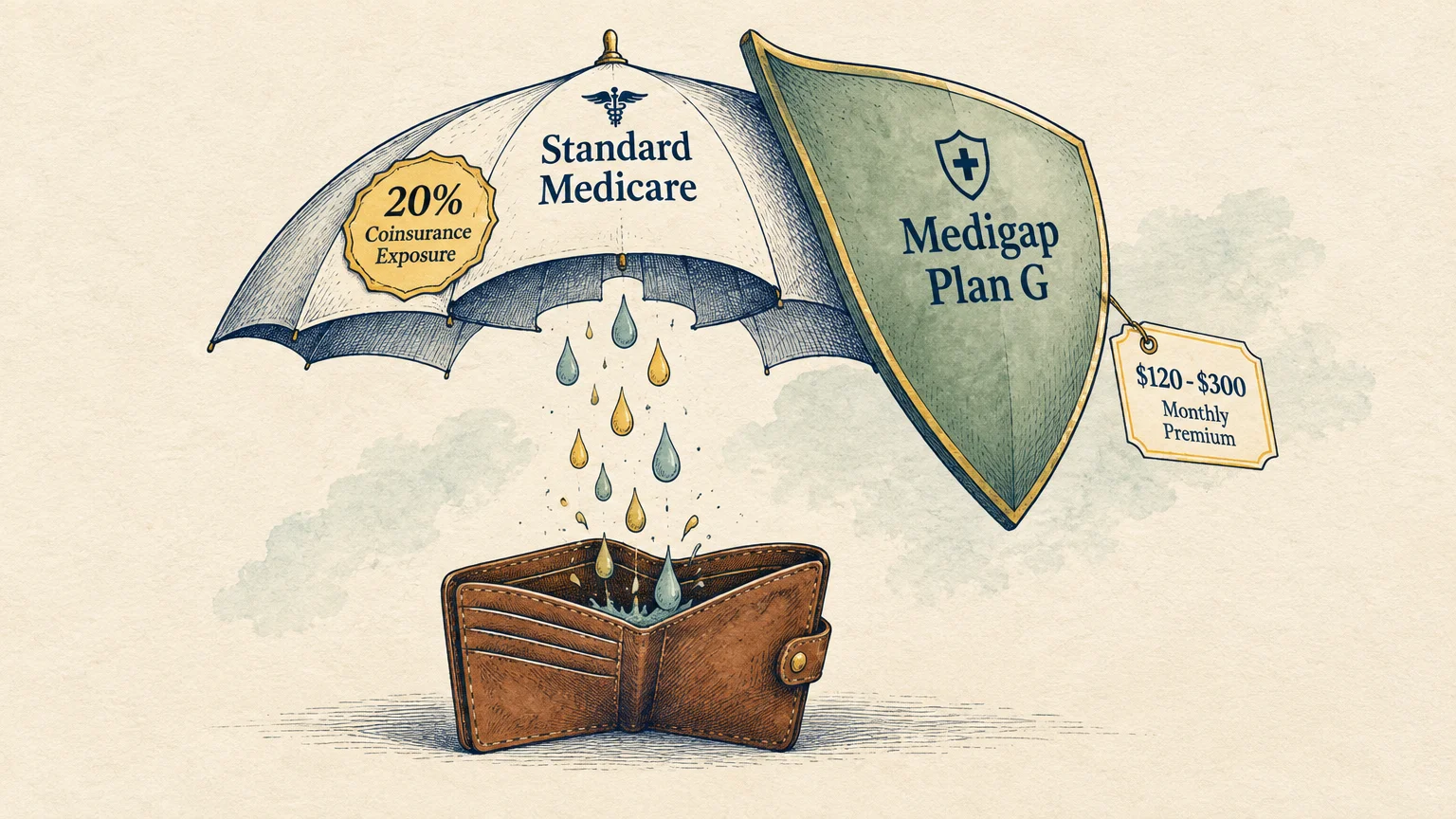
Under Original Medicare Parts A and B, there is literally no limit to what you might owe in a calendar year. You are permanently responsible for a 20% coinsurance on all outpatient medical services.
If you require complex cancer treatments, extensive surgeries, or frequent imaging scans, that 20% share can easily reach tens of thousands of dollars. An unexpected health crisis can deplete an entire nest egg.
This structural gap represents one of the biggest medical costs retirees didn’t expect when transitioning away from corporate benefits. The financial exposure is theoretically infinite without supplemental protection.
To eliminate this threat, smart savers purchase private Medicare Supplement insurance—commonly called Medigap—or enroll in Medicare Advantage plans. A comprehensive Medigap Plan G covers that 20% coinsurance completely.
However, Medigap requires an additional monthly premium ranging from $120 to $300 depending on your location and age. You must deliberately budget for this shield to prevent ruinous hospital bills.
Tip #3: The Crushing Reality of Custodial Long-Term Care
Perhaps the most catastrophic financial misconception among retirees involves assisted living and nursing home care. Millions mistakenly believe that Medicare will pay for their residential care when they grow frail.
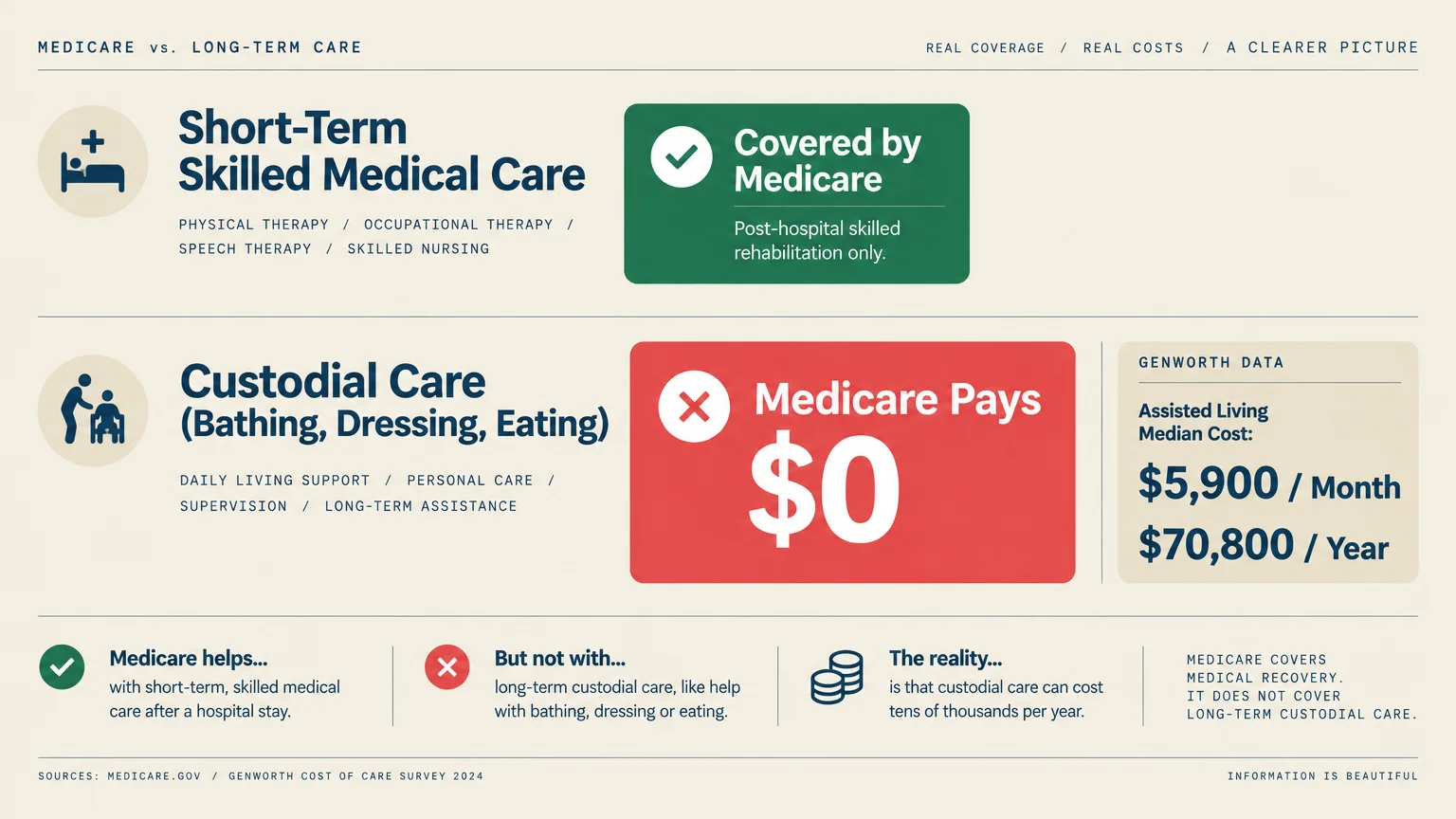
The law is blunt: Medicare covers only short-term, skilled medical rehabilitation following a qualifying hospital stay. It pays zero dollars for custodial care, which includes basic assistance with bathing, dressing, or eating.
Recent Genworth market data reveals that the national median cost for an assisted living facility is approximately $5,900 per month. That equals an astounding $70,800 annually for modest personal support.
If your condition requires skilled nursing facility care, the costs double. A private nursing home room now averages $127,750 per year, while a semi-private room demands roughly $111,325.
Even hiring a home health aide to assist you at home costs around $34 per hour. At 44 hours of weekly care, that totals nearly $78,000 every twelve months.
These massive bills rank among the most punishing underestimated retirement expenses seniors encounter. Medicaid only steps in after you spend down your liquid assets to near-poverty levels.
Proactive planners explore dedicated long-term care insurance, asset-based hybrid life policies, or specialized health savings reserves before their sixtieth birthdays. Once chronic conditions manifest, private coverage doors slam shut permanently.

Tip #4: The Routine Blindspot of Dental, Vision, and Hearing Care
Aging bodies inevitably require extensive maintenance on teeth, eyes, and ears. Unfortunately, the Medicare Act of 1965 statutorily excluded routine dental, vision, and hearing care from coverage.
Original Medicare will not contribute a single cent toward routine cleanings, tooth extractions, dentures, or dental implants. It will not pay for routine eye exams, prescription eyeglasses, or hearing aids either.
Routine dental procedures turn into significant cash drains very quickly. A single dental crown can easily cost $1,500; a complex dental implant frequently exceeds $4,000 per tooth.
High-quality hearing aids represent another major blindspot, commonly running between $3,000 and $6,000 per pair. Because hearing loss compounds cognitive decline, skipping this essential expense is dangerous.
While Medicare Advantage plans often advertise dental and vision benefits, their annual coverage caps are typically modest. Many plans cap dental benefits at just $1,000 or $1,500 per calendar year.
To preserve your oral and visual health, establish a dedicated self-insurance sinking fund. You can also explore standalone dental insurance, though reading the waiting periods and coverage limits is essential.
Tip #5: The IRMAA Surcharge Stealth Tax on Healthy Incomes
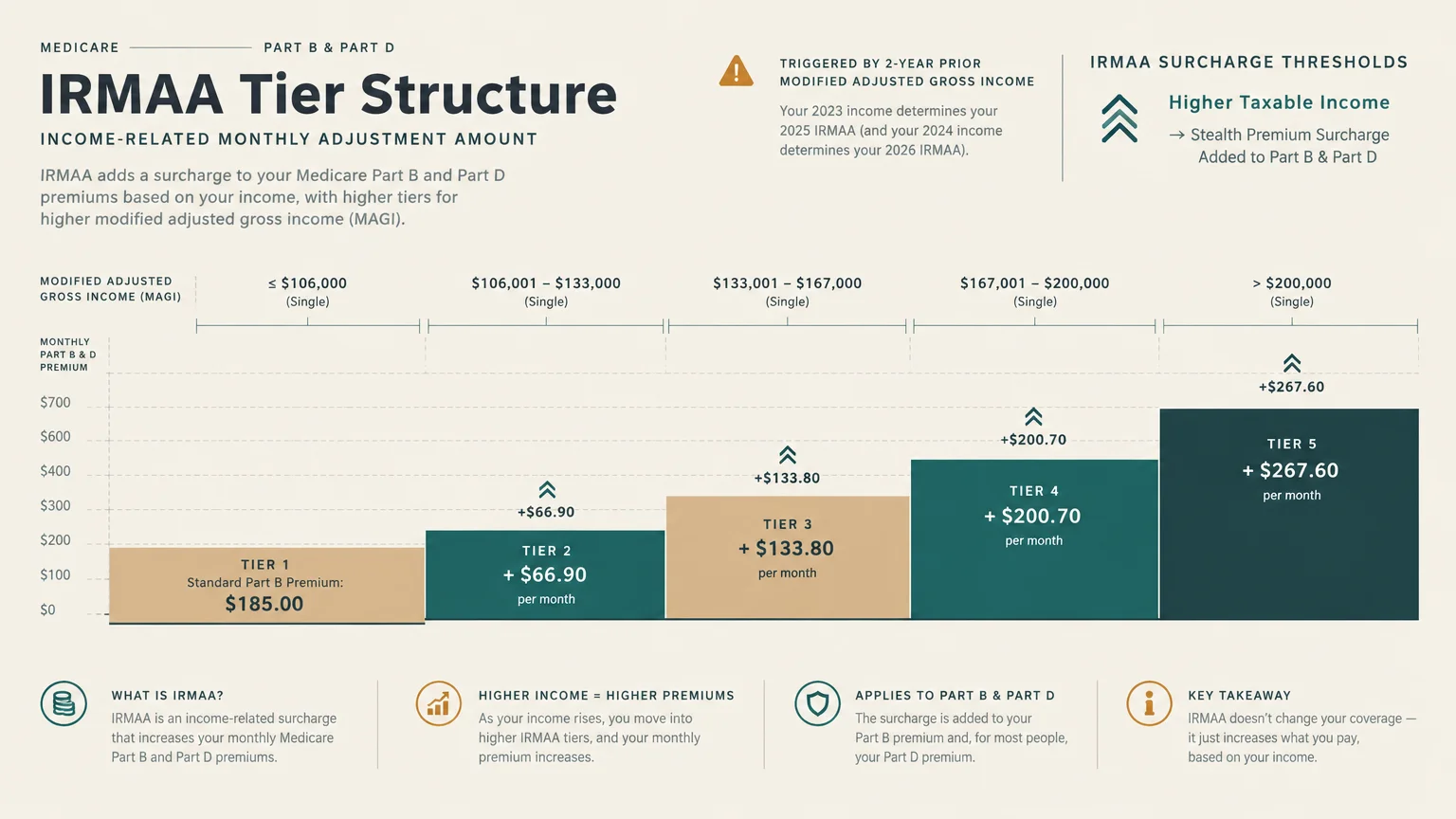
If you diligently saved into tax-deferred accounts, a nasty surprise known as IRMAA awaits you. The Income-Related Monthly Adjustment Amount is an aggressive federal surcharge on Medicare premiums.
The government calculates your IRMAA based on your modified adjusted gross income from two years prior. Your 2025 Medicare premiums depend entirely on the tax return you filed for 2023.
In 2025, surcharges trigger once your income exceeds $106,000 for single filers or $212,000 for married couples filing jointly. Crossing that threshold by a single dollar immediately increases both Part B and Part D premiums.
At higher income tiers, monthly Part B premiums can more than triple, reaching hundreds of dollars extra per person. Part D prescription drug surcharges add even more overhead to your monthly budget.
Routine retirement events—such as selling a home, taking large required minimum distributions, or executing Roth conversions—can accidentally trigger these penalties. Retirees often fail to anticipate how investment moves affect healthcare expenses.
Strategic planning for healthcare in retirement requires coordinating your tax withdrawals years before turning 65. Staggering capital gains and executing Roth conversions earlier can keep your taxable income safely below IRMAA thresholds.

Tip #6: The Financial Abyss of the Pre-65 Early Retirement Gap
Leaving the workforce before age 65 creates one of the most perilous financial chasms in modern retirement. Medicare eligibility begins strictly at 65, leaving early retirees to fend for themselves in the private market.
Relying on COBRA coverage after leaving an employer is notoriously expensive. COBRA typically lasts only 18 months, and you must pay 102% of the total monthly premium out of pocket.
When an employer is no longer subsidizing your health policy, family premiums can quickly exceed $1,800 to $2,500 every single month. That staggering expense can wipe out your early retirement cash cushions.
Your main alternative is purchasing an individual policy through the Affordable Care Act (ACA) marketplace. Navigating the ACA requires active income management to secure premium tax credits and avoid massive out-of-pocket deductibles.
Sourcing your living expenses from cash savings, Roth accounts, or taxable accounts helps keep your reported income low. This clever tactic maximizes your marketplace subsidies and slashes your monthly premium costs dramatically.
Failing to budget for the pre-65 window is among the most frequent retirement healthcare budget mistakes. Always quantify your interim health insurance costs before deciding to leave your corporate career early.
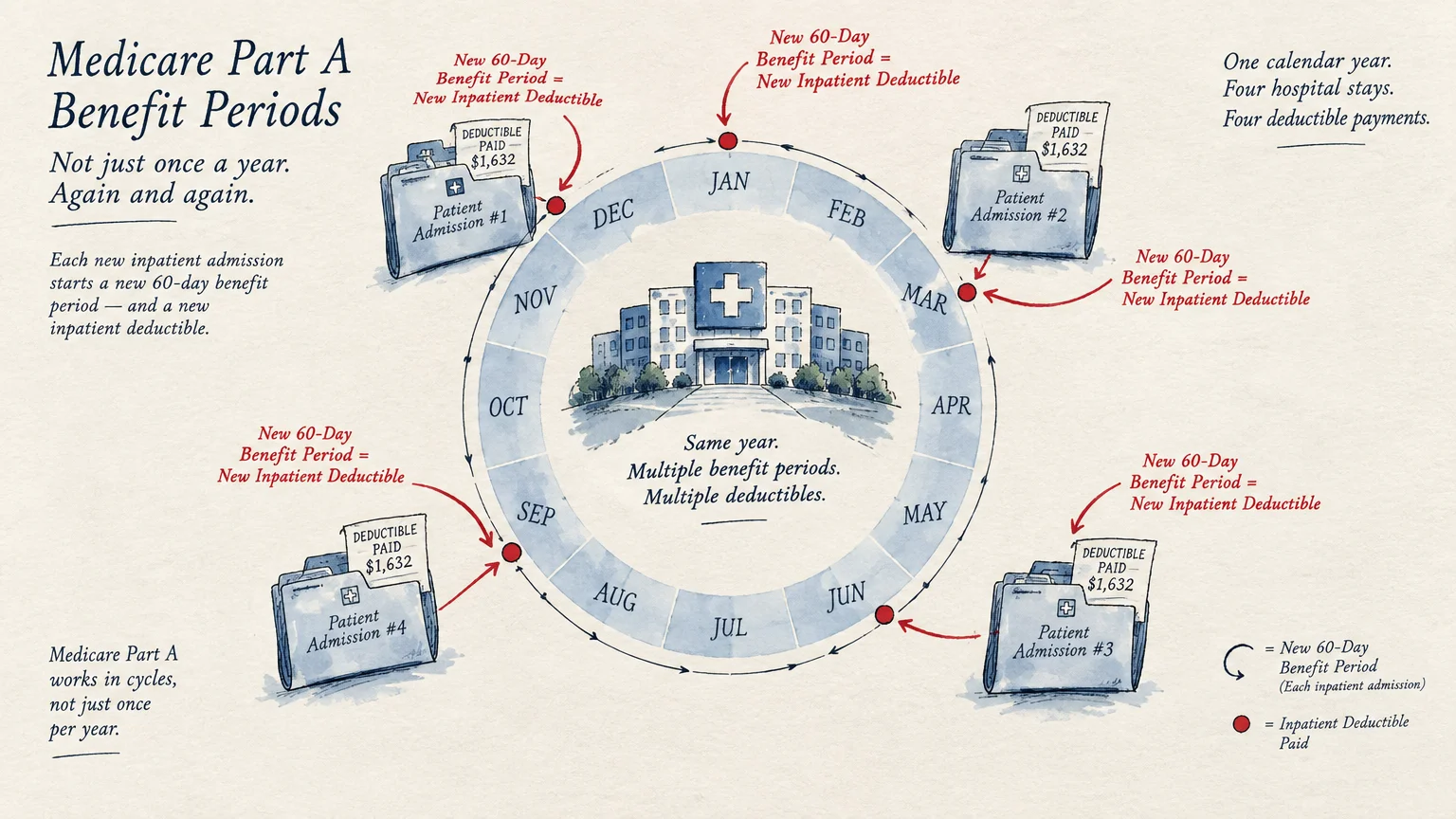
Tip #7: The Recurring Hospital Deductible Trap
Most people assume a health insurance deductible resets only once per calendar year. Medicare Part A operates on a completely different, far more punishing mechanism known as the benefit period.
A benefit period begins the day you enter a hospital and ends when you have been out for 60 consecutive days. In 2025, you must pay an inpatient hospital deductible of $1,676 for each separate benefit period.
If you are hospitalized in February and discharged, your benefit period eventually closes two months later. If you suffer another medical emergency in July, you must pay another $1,676 deductible.
An unfortunate senior dealing with chronic flare-ups could easily pay that deductible three or four times in a single year. That totals thousands of dollars in unexpected hospital deductibles within twelve months.
This quirky rule catches countless retirees off guard when multiple hospitalizations strike. Fortunately, a standard Medigap policy covers 100% of the Part A hospital deductible across all benefit periods.
Evaluating how your supplemental insurance handles Part A deductibles is critical to protecting your emergency reserves. Without that layer of protection, repeated inpatient admissions will drain your checking account fast.
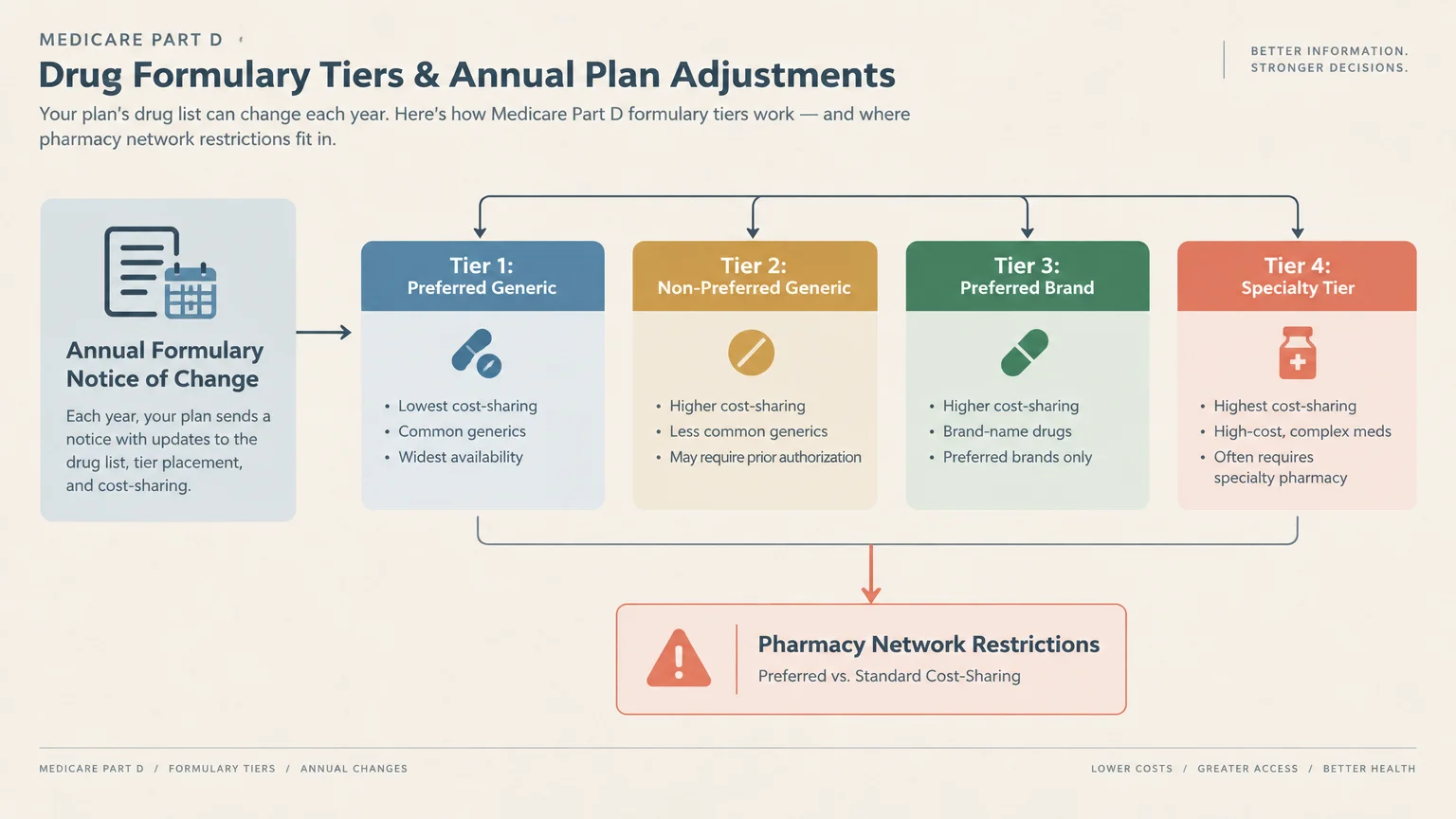
Tip #8: Prescription Drug Formulary Shuffles and Pharmacy Rules
Recent federal legislative updates have delivered welcome relief to retirees facing soaring drug prices. Starting in 2025, the Inflation Reduction Act permanently capped annual out-of-pocket costs for Part D prescription medications at $2,000.
This law also eliminated the dreaded coverage gap known as the donut hole. It capped covered insulin products at $35 monthly and made recommended adult vaccines completely free.
Despite these victories, retirees still underestimate their total pharmacy burdens. The $2,000 out-of-pocket limit applies only to covered medications that sit on your specific plan formulary.
Private insurance carriers shift their drug formularies, copayment tiers, and preferred pharmacy networks every single year. A lifesaving medication covered affordably on Tier 2 this year might get pushed to Tier 4 next year.
If your plan drops a medication altogether, you bear the full retail cost until you successfully appeal or switch plans. Those retail prices can easily run hundreds of dollars per refill.
Furthermore, you must proactively utilize the new Medicare Prescription Payment Plan if you want to spread drug expenses into monthly installments. Otherwise, high initial copays can hit your checking account all at once in January.
Shop your Part D coverage every autumn during the annual open enrollment period from October 15 to December 7. Comparing drug lists annually is the single easiest way to prevent runaway pharmaceutical expenses.

The Bottom Line: What This Means for Your Wallet
Healthcare costs in retirement are not a minor line item; they represent a major, dynamic wealth hazard. Failing to prepare for uncovered services, deductibles, and surcharges can disrupt an otherwise sound financial plan.
Fidelity estimates that an average 65-year-old retiree needs between $165,000 and $172,500 solely for healthcare expenses. For an average married couple, that expected burden exceeds $330,000 to $350,000 over their lifetimes.
You can easily protect your assets by taking aggressive, informed steps well before retirement begins. Maximize your Health Savings Account (HSA) while you still work to create a triple-tax-advantaged healthcare war chest.
Compare Medigap plans against Medicare Advantage thoroughly to determine whether broad provider access or lower initial monthly premiums best suits your budget. Never settle for default plan enrollments without checking network rules.
Manage your modified adjusted gross income carefully to avoid trigger thresholds for punitive IRMAA premium surcharges. A little strategic tax planning today preserves thousands of dollars in retirement cash flow tomorrow.
Consumer education and active vigilance remain your most powerful defenses against unexpected medical bills. Treat your healthcare coverage as an evolving financial asset that requires annual auditing and active management.
For consumer protection information, visit the Federal Trade Commission (FTC) and the Consumer Financial Protection Bureau (CFPB). For product safety and reviews, consult Consumer Reports.
Disclaimer: This article is for informational purposes only and does not constitute financial advice. The content reflects the author’s opinion and research at the time of writing. Always do your own research before making financial decisions.
Frequently Asked Questions
How much should I realistically budget for healthcare each month in retirement?
Most single retirees should budget between $400 and $800 per month for base premiums, supplemental coverage, and routine out-of-pocket costs. Couples should plan on allocating $800 to $1,600 monthly.
This baseline covers standard Part B premiums, a comprehensive Medigap policy, Part D prescription coverage, and routine out-of-pocket copays. It does not account for long-term custodial nursing care.
Can I use a Health Savings Account (HSA) to pay for Medicare premiums?
Yes, you can use accumulated HSA funds tax-free to pay premiums for Medicare Parts B, D, and Medicare Advantage plans. However, you cannot use HSA funds to pay private Medigap premiums.
Keep in mind that once you enroll in any part of Medicare, you can no longer contribute new funds to an HSA. You must stop contributions six months prior to applying for Social Security.
Is Medicare Advantage cheaper than Original Medicare with a Medigap plan?
Medicare Advantage plans often feature $0 monthly premiums and include dental, vision, and hearing benefits. However, they rely on restrictive provider networks and require prior authorizations for specialized care.
Original Medicare combined with Medigap Plan G requires a higher monthly premium but offers zero network restrictions and predictable out-of-pocket limits. Healthy retirees often prefer Advantage, while retirees needing extensive care favor Medigap.
What happens if I miss my initial Medicare enrollment window?
If you fail to enroll during your seven-month Initial Enrollment Period around your 65th birthday, you may face permanent late enrollment penalties. Your Part B premium increases by 10% for every 12-month period you delayed.
You can avoid these lifelong financial penalties only if you have qualifying creditable coverage through your or your spouse’s current, active employer. Retiree health coverage or COBRA does not count as creditable coverage for Part B.









Leave a Reply