


Introduction: Slashing Your Household Bills with These Tips
Living on a fixed income requires you to examine your financial habits with a critical eye, especially when it comes to the automated charges hitting your bank account. Over the years, countless companies have shifted their business models from selling simple products to pushing ongoing memberships. You likely pay for several automated services right now that provide very little actual value to your daily life. These stealthy charges slowly drain your retirement savings without you even noticing. If you want to take control of your finances, you must root out these unnecessary expenses and replace them with practical, hands-on solutions around your home.
The modern marketplace is designed to make you pay a premium for convenience. Companies bundle everything from television channels to basic household cleaning supplies into monthly contracts. While these services promise to make your life easier, they typically just make your wallet lighter. The good news is that you possess the skills and knowledge to manage your home without relying on expensive corporate middlemen. By rolling up your sleeves and adopting a few clever strategies, you can significantly reduce recurring costs while maintaining a comfortable, well-kept home.
This guide provides you with a clear roadmap to financial independence through self-reliance. We will walk you through exactly which services you need to drop and how to replicate their benefits using inexpensive, do-it-yourself methods. When you cancel subscriptions seniors frequently overpay for, you immediately free up cash for the things that truly matter. Let us explore these eight practical household hacks to help you streamline your budget and eliminate financial waste.
Household Hack #1: Cancel the Expensive Cable TV Package
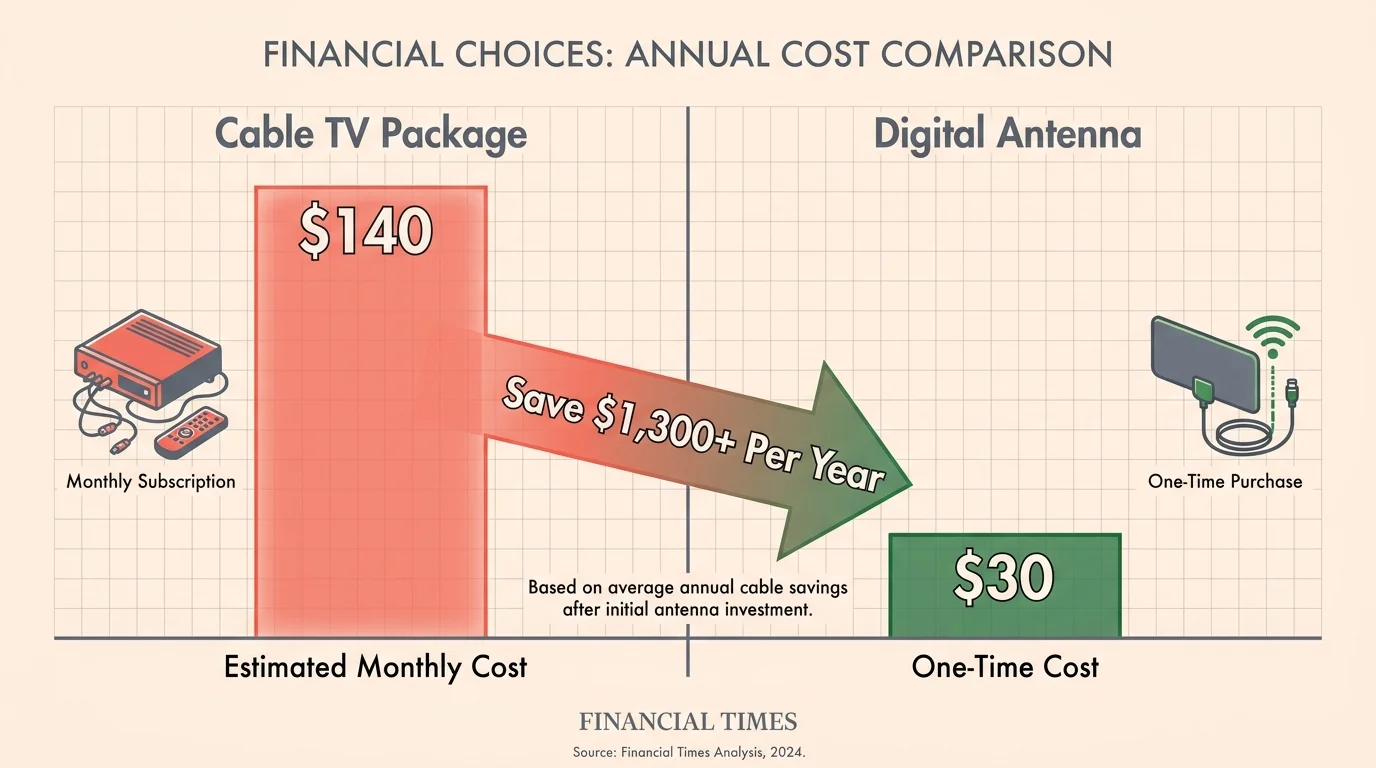
Many retirees consider cable television an essential utility, but the reality is quite different. The average American household spends over $140 a month on massive broadcast packages filled with hundreds of channels they never actually watch. You can easily replace this enormous financial drain with a simple, one-time purchase of a digital over-the-air antenna. Modern high-definition antennas cost around $30 at your local electronics store and provide crystal-clear access to major broadcast networks, local news, and public television. By making this straightforward swap, you instantly eliminate one of the largest unnecessary expenses lurking in your monthly budget.
Setting up a digital antenna requires no technical expertise and takes less than twenty minutes. You simply screw the coaxial cable into the back of your television, mount the flat antenna near a window, and use your remote control to scan for available channels. You will recover the upfront cost of the device within the first week of canceling your premium cable subscription. Furthermore, cutting the cord allows you to reduce electronic clutter; you can finally return those rented, bulky cable boxes that draw parasitic power even when turned off.
If you occasionally want to watch a specific movie or series, you can rely on the free streaming applications built into most modern smart televisions. Platforms like Pluto TV and Tubi offer thousands of ad-supported movies and classic television shows at absolutely no cost. You do not need to pay a wealthy telecommunications company for the privilege of watching the local evening news. Taking this step allows you to regain absolute control over your entertainment costs without sacrificing access to your favorite local programming.

Household Hack #2: Stop the Automated Furnace Filter Delivery Services
Home maintenance subscription boxes have surged in popularity, promising to remember your chores so you do not have to. Automated air filter delivery services are a prime example of this expensive trend. These companies charge a massive premium—often marking up the cost of a standard pleated filter by 300 percent—simply to mail a single unit to your doorstep every month or quarter. You pay heavily for the packaging, the shipping, and the illusion of convenience. You can achieve the exact same result for a fraction of the price by applying a little basic home economics.
Instead of paying a premium for a subscription box, visit your local big-box hardware store and purchase a multi-pack of high-quality furnace filters. Buying a six-pack of standard MERV 8 filters usually costs the same as just two filters from a specialized delivery service. Store the extra filters in a dry closet near your HVAC unit so they remain easily accessible. This simple bulk-purchasing strategy dramatically lowers your cost per unit and eliminates the environmental waste associated with single-item cardboard shipping boxes.
To replace the “automated reminder” aspect of the subscription, rely on a low-tech household hack. When you install a fresh filter, use a permanent marker to write the date directly on the cardboard frame. Next, grab a physical wall calendar and mark the replacement date three months ahead. If you use a smartphone, simply set a recurring digital reminder. This practical approach keeps your air conditioning system running efficiently, protects your blower motor from dust buildup, and keeps your hard-earned money in your own pocket.

Household Hack #3: Terminate Monthly Pest Control Contracts
Professional exterminators heavily market quarterly or monthly perimeter treatments as an absolute necessity for homeownership. These companies routinely charge between $100 and $150 per visit to walk around your house and spray a generic chemical barrier. Over the course of a single year, you might spend up to $600 just to keep common spiders and ants at bay. For a frugal homeowner willing to do a minor amount of physical work, this represents a completely avoidable expense.
You can purchase the exact same professional-grade barrier spray concentrates at agricultural supply stores or online for around $30. A single jug of concentrate, when properly mixed with water in a reusable one-gallon pump sprayer, can easily last a typical homeowner for three to five years. By mixing your own solution and walking the perimeter of your foundation every few months, you achieve the exact same pest-deterrent effect at a cost of literally pennies per application. You simply target the foundation line, entry doors, and ground-level window frames.
Beyond chemical sprays, the most effective pest control involves basic household maintenance that no subscription service provides. Spend a Saturday afternoon inspecting the exterior of your home for tiny gaps where insects enter. Buy a $5 tube of clear silicone caulk and seal the cracks around your plumbing penetrations, dryer vents, and baseboards. Inside the home, you can use natural, inexpensive deterrents; a light dusting of borax powder behind your kitchen appliances effectively eliminates roaches and ants. By handling this yourself, you secure your home against pests while saving a small fortune.
Household Hack #4: Drop the Gourmet Meal Kit Subscriptions
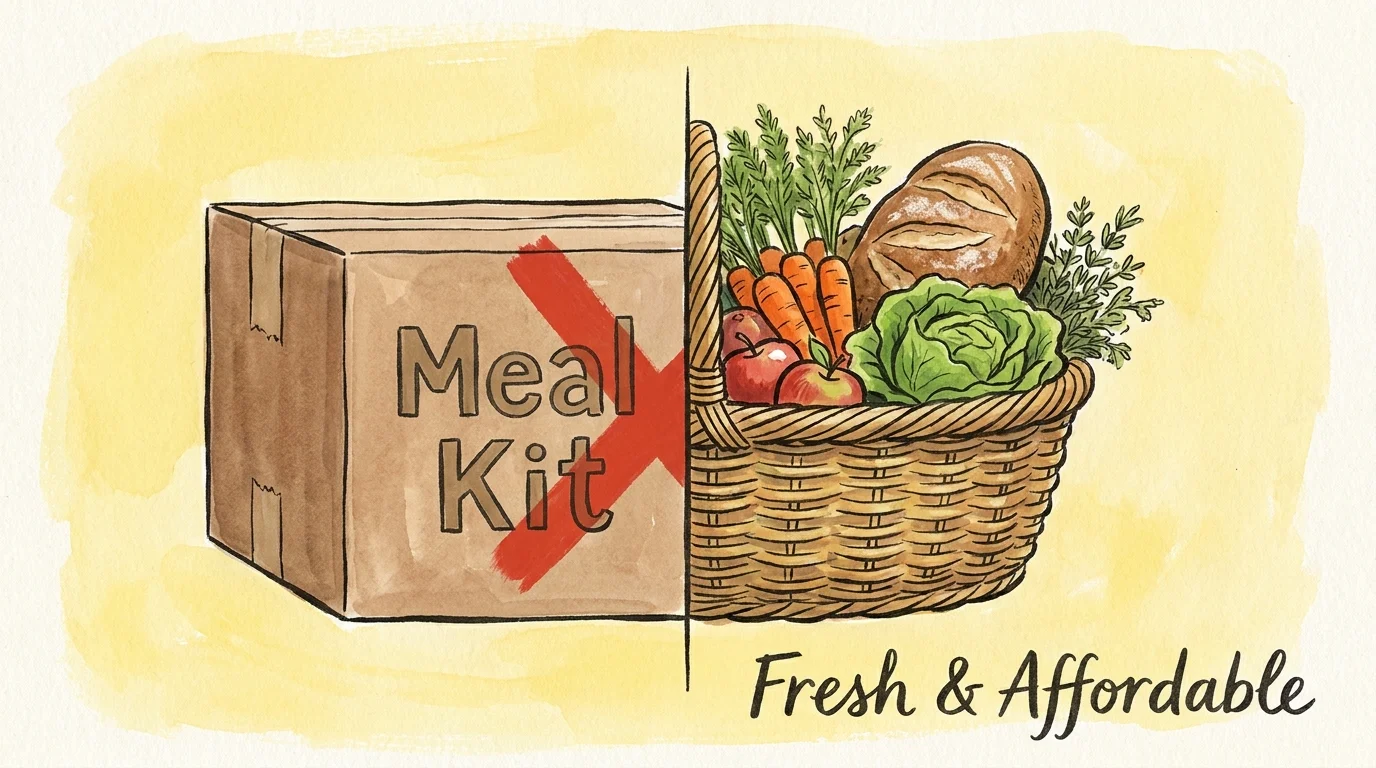
Meal kit delivery services aggressively target older Americans with the promise of perfectly portioned dinners and zero grocery shopping. While receiving pre-measured ingredients in an insulated box feels luxurious, the financial math is terrible. These kits frequently break down to $10 or $15 per serving for basic recipes involving inexpensive staples like pasta, chicken breasts, and root vegetables. You are essentially paying fine-dining restaurant prices to stand in your own kitchen and cook your own food.
You can save monthly bills almost instantly by returning to traditional meal planning and smart grocery shopping. If you struggle with the physical demands of navigating large supermarkets, take advantage of the curbside pickup services offered by almost every major grocery chain. You simply order your items through their website and an employee loads the groceries directly into your trunk. These services are often free or charge a very small nominal fee, completely eliminating the exorbitant markups built into national meal kit subscriptions.
To recreate the convenience of meal kits, practice the art of batch cooking and strategic freezing. Dedicate one afternoon a week to preparing a large, hearty meal—like a rich beef stew, a massive pan of lasagna, or a vegetable soup. Portion the leftovers into individual glass containers and freeze them. Within a few weeks, you will build a stockpile of customized, heat-and-eat meals in your own freezer. This method dramatically lowers your food costs, reduces the massive amount of plastic packaging waste generated by meal kits, and ensures you always have a quick dinner ready.
Household Hack #5: End Your Unnecessary Landline Telephone Contract
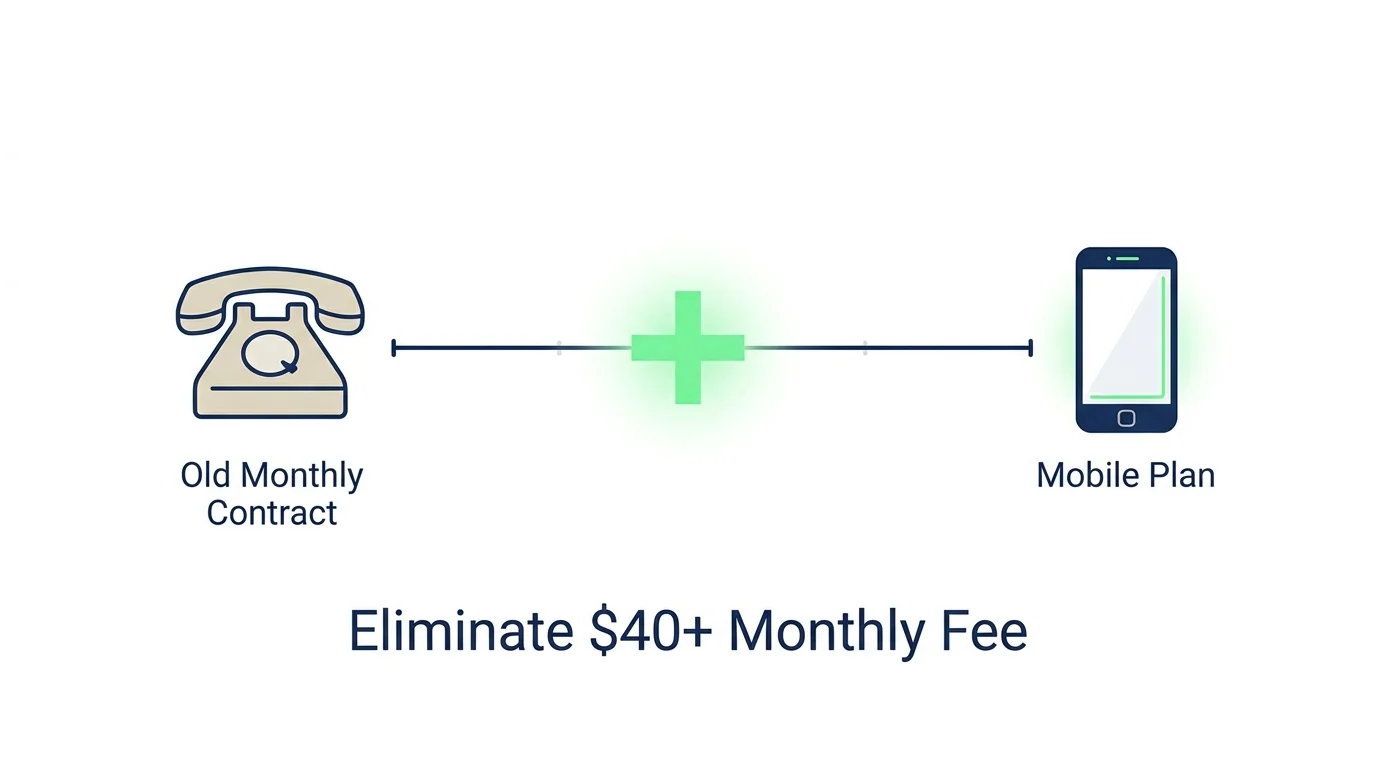
Many seniors maintain a traditional copper-wire landline out of pure habit or a lingering fear of cellular unreliability. Telecommunications companies know this and continue to quietly raise the rates for basic home phone service year after year. A standard landline contract can easily cost you $40 to $60 every single month. When you consider that you likely already pay for a mobile phone, this redundant service becomes one of the most glaring financial leaks in your household budget.
If you want to implement the best budget tips elderly consumers can use, cutting the cord on obsolete communication technology is a mandatory first step. Today’s cellular networks offer vast coverage areas, crystal-clear voice quality, and highly reliable connections. In fact, many major telecom providers are actively phasing out their copper wire networks entirely, meaning you are paying a premium for a dying infrastructure. You can easily port your long-held home phone number to a budget-friendly cellular device, ensuring your friends and doctors can still reach you.
If you rarely leave the house and just want a simple phone for emergencies, look into cellular plans specifically designed for seniors. Several reputable companies offer basic talk-and-text plans for as little as $15 a month. Alternatively, you can purchase a Voice over Internet Protocol device that plugs directly into your internet router. These small boxes allow you to use your existing traditional telephone handsets to make free domestic calls over your Wi-Fi network. Either route permanently eliminates that frustrating monthly landline bill.

Household Hack #6: Cancel Routine Lawn Maintenance Memberships
Paying a professional crew to maintain your landscaping is a major luxury that quickly depletes a fixed income. Weekly mow-and-blow services, combined with automated fertilizer treatments and weed control programs, can easily cost a homeowner hundreds of dollars a month during the growing season. While outsourcing yard work saves you time and physical exertion, there are much smarter, permanent ways to reduce your landscaping workload without paying a perpetual subscription fee.
The secret to eliminating lawn care costs is to fundamentally change the nature of your yard. You can drastically reduce the need for constant mowing and watering by implementing simple xeriscaping principles. Consider digging up struggling sections of turf and replacing them with attractive, low-maintenance materials like river rock, crushed gravel, or deep cedar mulch. These organic ground covers suppress weed growth naturally, retain soil moisture, and never require the blade of a lawnmower.
For the areas where you still want greenery, swap out thirsty turf grass for native perennial ground covers. Native plants evolved to thrive in your specific local climate; they survive on natural rainfall and rarely require chemical fertilizers. Once established, a bed of creeping thyme or local clover requires virtually zero maintenance while providing a beautiful, lush appearance. By transitioning your property away from high-maintenance grass, you eliminate the need for expensive landscaping crews and create a peaceful, sustainable outdoor environment.
Household Hack #7: Opt Out of Premium Home Security Monitoring
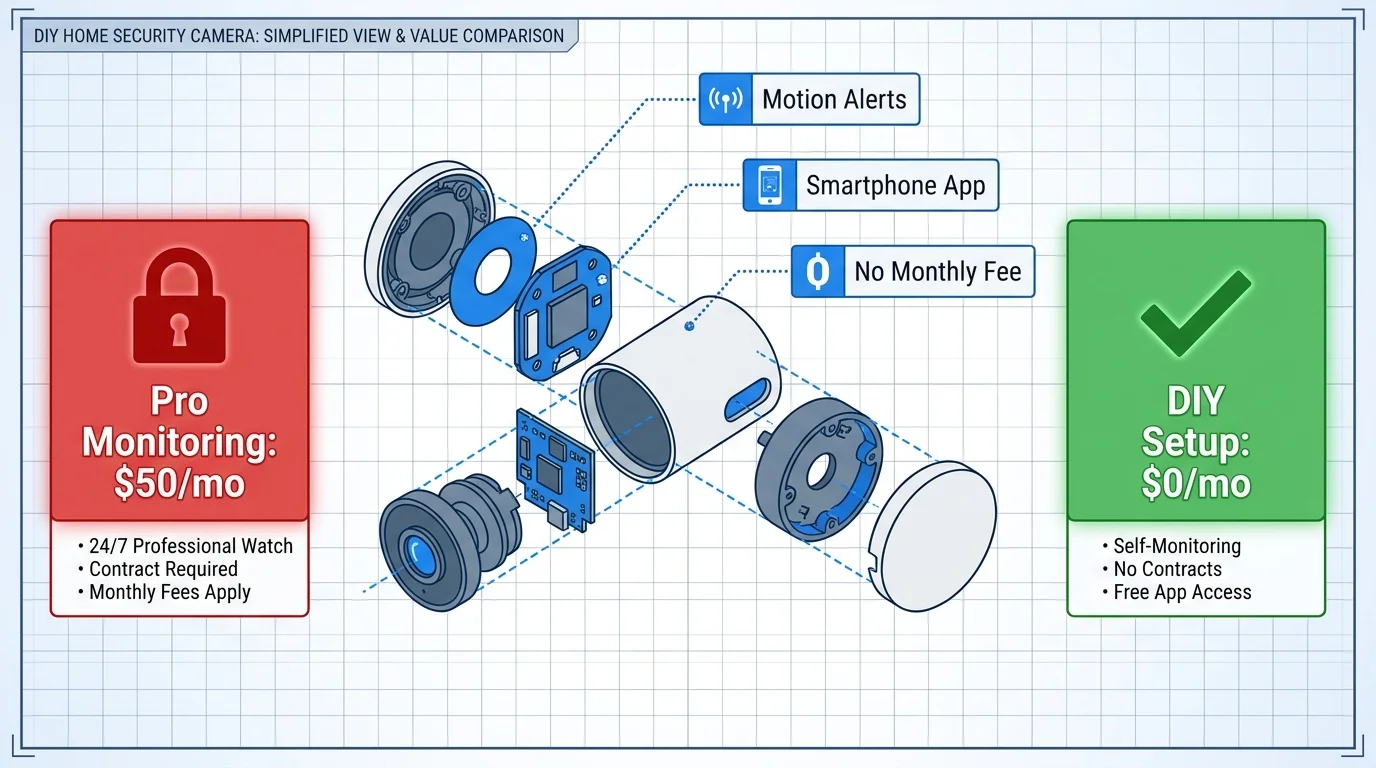
A professionally monitored home security system provides a powerful sense of safety, but it comes at a steep recurring cost. Legacy alarm companies routinely charge $40 to $70 a month to monitor your door sensors and motion detectors. Over a decade, that single subscription drains thousands of dollars from your savings. Modern technology has completely disrupted this industry, allowing you to secure your property effectively without paying a dime in monthly monitoring fees.
You can achieve excellent situational awareness by purchasing self-monitored, battery-powered Wi-Fi cameras. These small devices cost around $50 each, require zero wiring, and connect directly to your home internet router. If a camera detects motion on your porch or in your driveway, it immediately sends a high-definition video alert directly to your smartphone. You serve as your own monitoring center. If you see a legitimate threat on the video feed, you simply dial emergency services yourself, completely cutting out the expensive middleman.
True home security also relies heavily on physical deterrence rather than electronic sensors. You can vastly improve the safety of your home with a few inexpensive weekend projects. Replace the flimsy screws in your exterior door hinges and strike plates with heavy-duty, three-inch steel screws to prevent kick-ins. Cut wooden dowels to place in the tracks of your sliding glass doors and ground-level windows. These physical barriers offer robust, tangible protection that a monitoring center miles away simply cannot provide.
Household Hack #8: Cancel Specialized Cleaning Product Subscriptions
The internet is flooded with advertisements for trendy, eco-friendly cleaning subscription boxes. These companies convince you to sign up for monthly deliveries of concentrated all-purpose sprays, specialized bathroom scrubs, and proprietary floor cleaners. While the minimalist bottles look beautiful on your kitchen counter, you are ultimately paying exorbitant prices for fancy packaging, artificial fragrances, and marketing hype. To significantly reduce recurring costs, you must stop paying for boutique household chemistry.
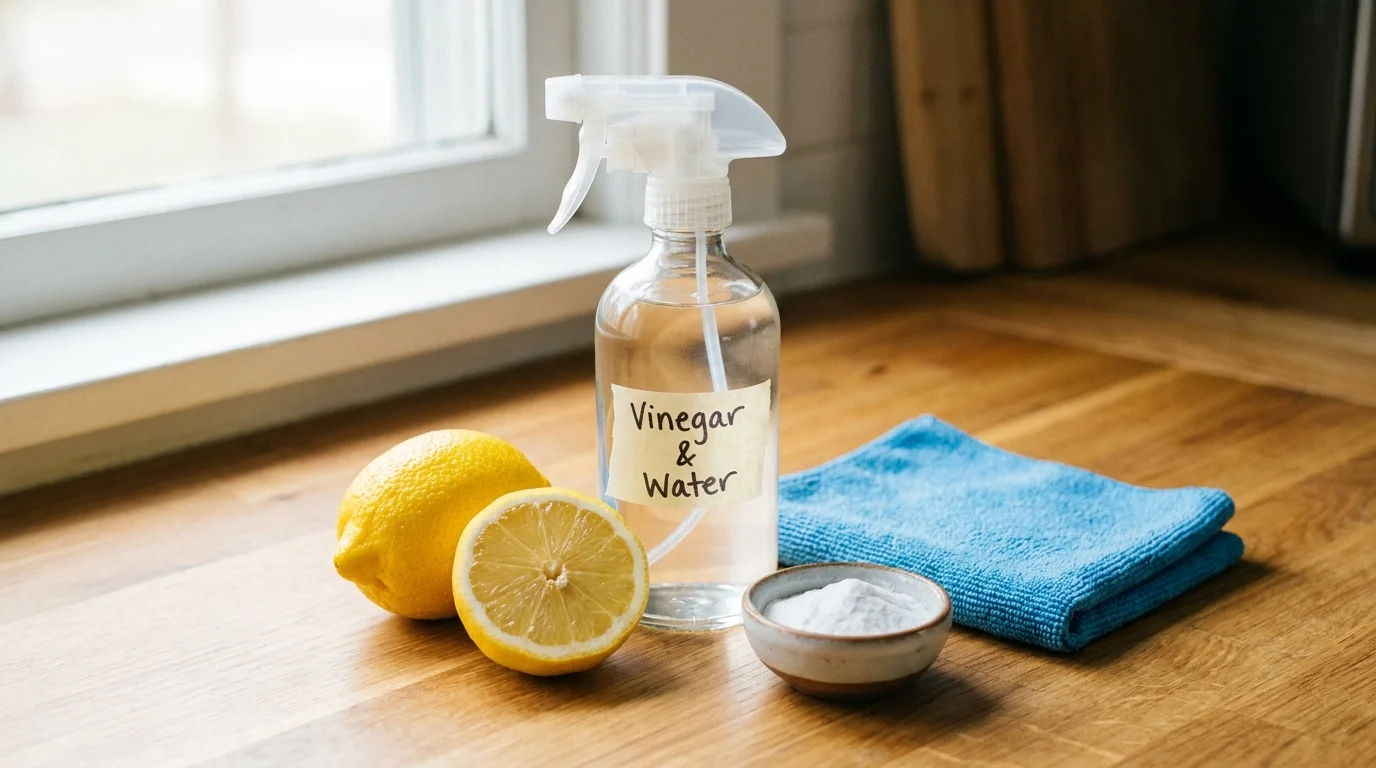
You can clean virtually every surface in your home using a few basic, incredibly cheap ingredients found in the baking aisle. A standard gallon of distilled white vinegar costs around $3 and serves as the ultimate antibacterial degreaser. To create a highly effective daily multi-surface cleaner, simply mix equal parts water and white vinegar in a reusable plastic spray bottle, adding a single drop of liquid dish soap to help cut through heavy grease. This DIY solution effortlessly cleans glass, sanitizes countertops, and removes hard water stains from your shower doors.
For tougher jobs requiring an abrasive touch, standard baking soda is your best friend. A thick paste of baking soda and water will scour baked-on grease from your oven walls and lift stubborn stains from your porcelain sink without scratching the finish. By utilizing these basic elements, you avoid exposing your lungs to harsh synthetic chemicals, eliminate the environmental cost of shipping heavy liquids across the country, and completely free yourself from overpriced cleaning subscriptions.

The Payoff: Real Savings for Your Home Budget
Transitioning away from the subscription lifestyle requires a slight shift in your daily mindset, but the financial rewards are undeniable. When you take the time to scrutinize your bank statements and ruthlessly eliminate automated charges, you immediately reclaim your purchasing power. Consider the basic math: saving $100 on cable, $50 on a landline, $40 on security monitoring, and $100 on lawn care puts nearly $300 back into your pocket every single month. Over the course of a year, that equates to a massive $3,600 raise.
More importantly, taking a hands-on approach to your home fosters a deep sense of independence and resourcefulness. Mixing your own effective cleaning supplies, maintaining your own HVAC system, and cultivating a low-maintenance landscape keeps you physically active and mentally engaged. You transform your living space from a financial burden into a sustainable, easily managed sanctuary. Embrace these practical household hacks, cancel those predatory automated contracts, and enjoy the profound peace of mind that comes with a perfectly balanced budget.
Frequently Asked Questions
Question: Are homemade DIY household cleaners actually effective against tough grime and bacteria?
Answer: Yes, fundamental chemical reactions handle most standard household dirt. White vinegar is a mild acetic acid that naturally dissolves mineral deposits, grease, and grime while creating an inhospitable environment for many types of bacteria. Baking soda acts as a gentle abrasive and a powerful deodorizer. While you should use specific commercial disinfectants for extreme biohazards, basic vinegar and soap solutions are more than sufficient for standard daily maintenance.
Question: Will I lose access to emergency services if I cancel my traditional copper landline?
Answer: No, modern cellular phones are fully equipped to connect you with emergency dispatchers. Furthermore, contemporary smartphones feature advanced GPS technology that actually helps emergency responders pinpoint your physical location much faster than older technology. As long as you keep your cellular device charged and accessible, it serves as a highly reliable lifeline in the event of an emergency.
Question: How long does a home-mixed pest control barrier last compared to professional exterminator services?
Answer: When you purchase professional-grade chemical concentrates, you are using the exact same active ingredients that the commercial exterminators use. A properly applied exterior barrier spray typically remains effective for up to three months, depending on the volume of rainfall in your specific geographic area. You follow the same quarterly application schedule as the professionals, you just avoid paying their massive labor and transportation markups.
Question: What is the best way to remember critical home maintenance tasks without relying on an automated delivery service?
Answer: The most reliable method is to anchor your maintenance tasks to existing habits. For instance, you can check your furnace filter on the same day you pay your electric bill each month. Alternatively, you can use a large wall calendar placed in a high-traffic area, like your kitchen or home office. Write down your filter changes, battery checks, and pest control sprays at the beginning of the year so you have a clear visual reminder.
For information on energy savings in your home, visit the U.S. Department of Energy at Energy.gov. For eco-friendly household tips, consult the Environmental Protection Agency (EPA).
Disclaimer: This article provides tips for informational purposes. Follow all safety precautions when attempting DIY projects or using household products. The author is not liable for any damages or injuries. Results may vary.








Leave a Reply