
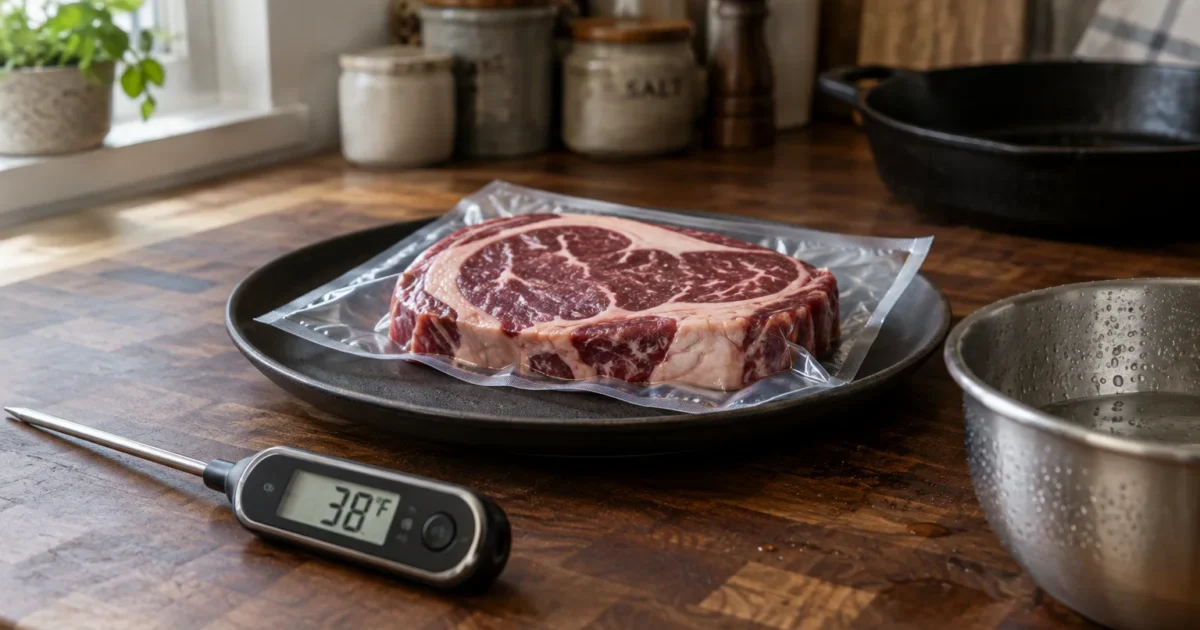
You can pull dinner together in under an hour without risking food poisoning or ordering overpriced takeout. When you need dinner fast, smart kitchen science beats dangerous shortcuts every single time.
Leaving raw steak or chicken on your kitchen counter invites rapid bacterial growth. Harmful pathogens multiply dangerously between 40°F and 140°F, turning an affordable dinner into a costly health disaster.
Master these safe meat defrosting methods to cut your prep time dramatically. You will protect your family, preserve your grocery budget, and get hot food on the table tonight.
Tip #1: The Submerged Cold-Water Bath
The submerged cold-water bath remains the undisputed champion of fast, chemical-free meat thawing. It is widely considered the fastest way to thaw meat without prematurely cooking delicate edges.
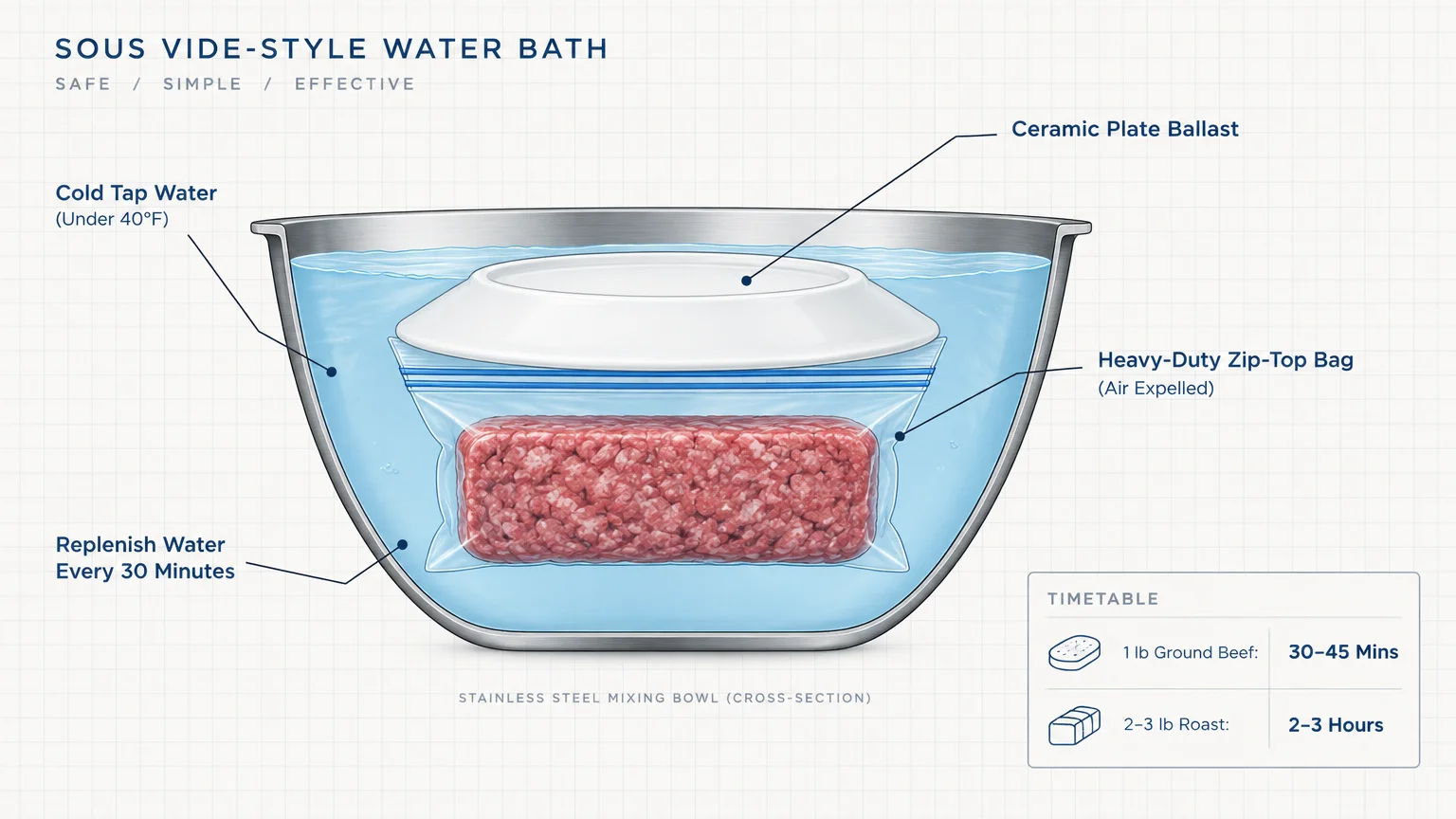
Start by placing your frozen meat inside a heavy-duty, leak-proof zip-top storage bag. Squeeze out as much excess air as possible before sealing it tightly.
A tight seal prevents external water from seeping inside and turning your cut waterlogged. It also stops meat juices from leaking into your clean preparation bowl.
Submerge the sealed package completely in a large bowl filled with cold tap water. If the package floats toward the surface, weigh it down using a heavy plate or ceramic mug.
You must empty and replenish the cold water every thirty minutes without fail. Fresh tap water transfers heat into the frozen meat much faster than stagnant, chilled water.
Regular water changes also keep the surface temperature safely below 40°F throughout the process. This prevents dangerous bacteria from colonizing the exterior while the interior thaws.
A one-pound package of ground beef thaws completely within thirty to forty-five minutes. Larger two-to-three-pound roasts will require roughly two to three hours of total soaking time.
Never use warm or hot water in an attempt to speed up this process. Warm water creates an immediate bacterial breeding ground on the outside while the center remains rock hard.
Once thawed, transfer the meat straight to your hot pan, grill, or preheated oven. Because the meat warmed slightly during thawing, you should cook it immediately.
Tip #2: The Running Cold-Water Trick for Continuous Convection
When thirty minutes is still too slow, you can speed up the process with active circulation. A gentle trickle of cold running water reduces standard thawing times by an extra twenty percent.
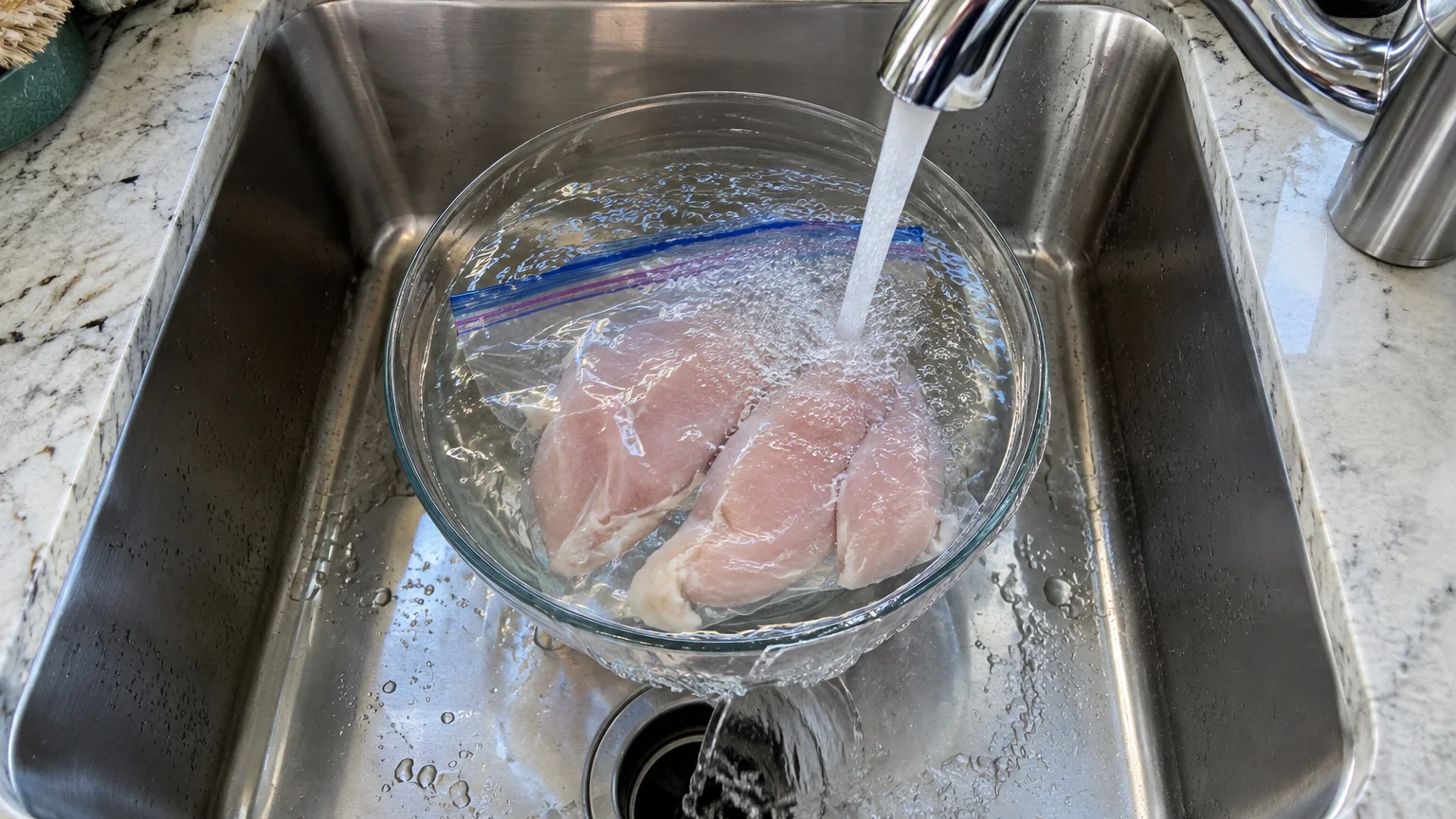
Keep your meat sealed inside a leak-proof bag and place it in a large clean bowl. Set the bowl directly inside your kitchen sink underneath the cold water faucet.
Turn on the tap so a thin, steady stream of cold water runs constantly into the bowl. Allow the excess water to spill gently over the rim and down the sink drain.
The moving water creates continuous thermal convection across the surface of the plastic bag. This constant movement strips away the chilled boundary layer of water that naturally insulates the meat.
Because fresh water continually enters the bowl, heat transfers into the frozen protein much more rapidly. You do not even have to remember to change the water manually every thirty minutes.
Make sure the faucet runs purely cold water rather than lukewarm or warm water. You want kinetic energy and rapid thermal conduction, not damaging heat, to accelerate the defrosting process.
This rapid method works best for thin proteins like chicken cutlets, pork chops, and shrimp. Most thin cuts soften into ready-to-cook shape in just fifteen to twenty minutes.
Turn off the tap the second the center of the cut yields to gentle thumb pressure. Pat the meat dry with clean paper towels and start cooking right away.
Tip #3: The Controlled Microwave Inversion Technique
When you have barely fifteen minutes before dinner, your microwave provides an indispensable emergency shortcut. However, you must apply precise technique to prevent the microwave from cooking the outer edges.
Remove all store packaging, plastic cling wraps, and absorbent styrofoam pads before defrosting. Place the frozen meat onto a clean, microwave-safe ceramic plate to capture draining juices.
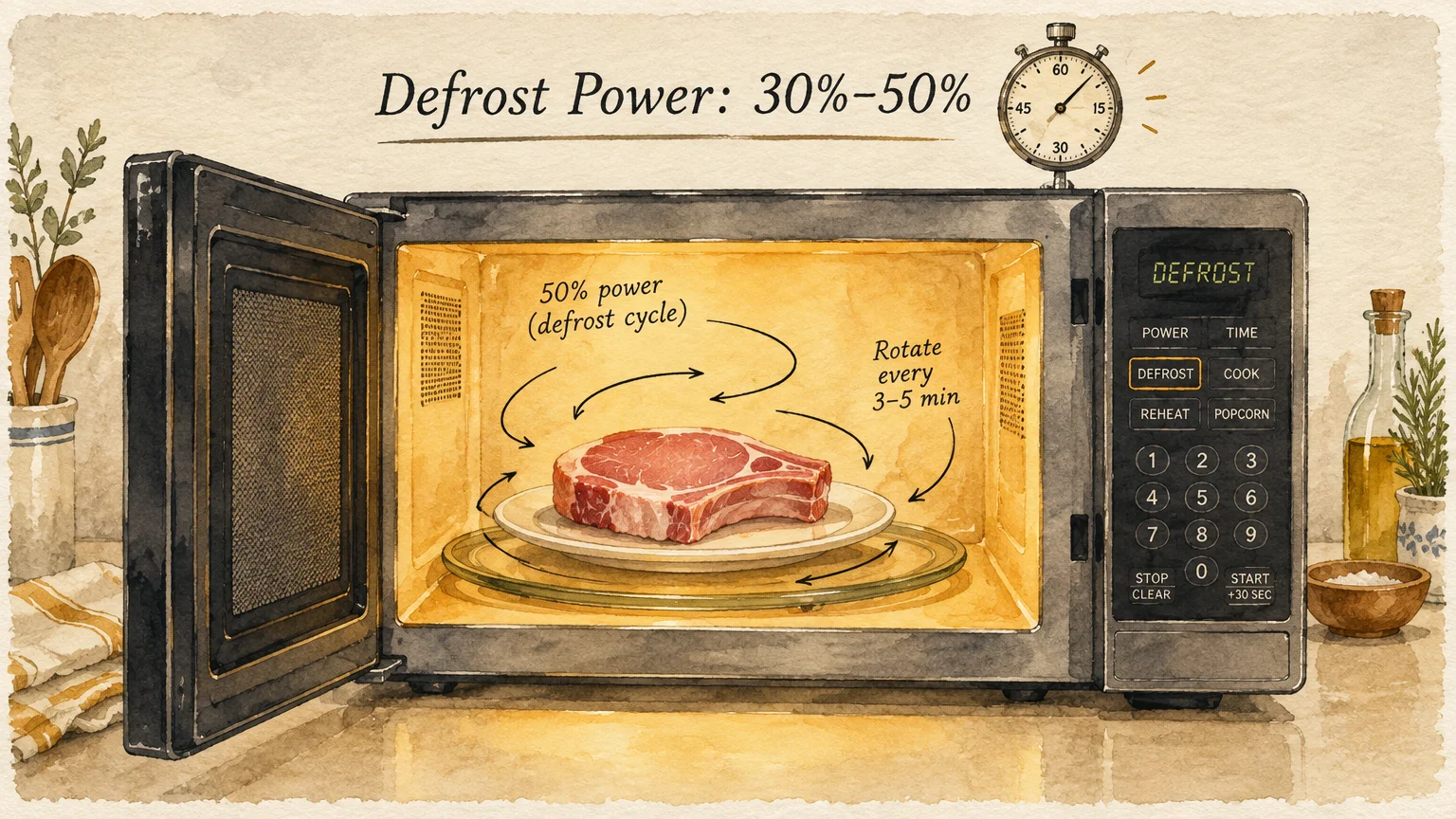
Always set your appliance to thirty percent power or engage its specific defrost preset. Defrosting at full power cooks the exterior into a tough, gray rim while the core stays frozen.
Microwave the meat in short bursts of two minutes, stopping to flip and rotate the cut each time. Regular turning distributes the low-wattage energy far more evenly across the irregular meat surface.
If you are thawing ground beef, scrape away the softened exterior meat after every two-minute interval. Set those thawed bits aside in a clean bowl so they do not overcook.
Adhering to food safety defrosting protocols means recognizing how microwave heat behaves. Uneven electromagnetic waves inevitably push small pockets of meat into the danger zone above 40°F.
Because those warm pockets encourage swift bacterial multiplication, you cannot store microwave-thawed meat for later. You must cook the meat immediately in a hot skillet, oven, or pot.
Never attempt to refreeze raw meat that has undergone microwave thawing. Cook the protein completely first; you can then freeze the finished meal safely.
Tip #4: The Direct-to-Heat Cooking Method
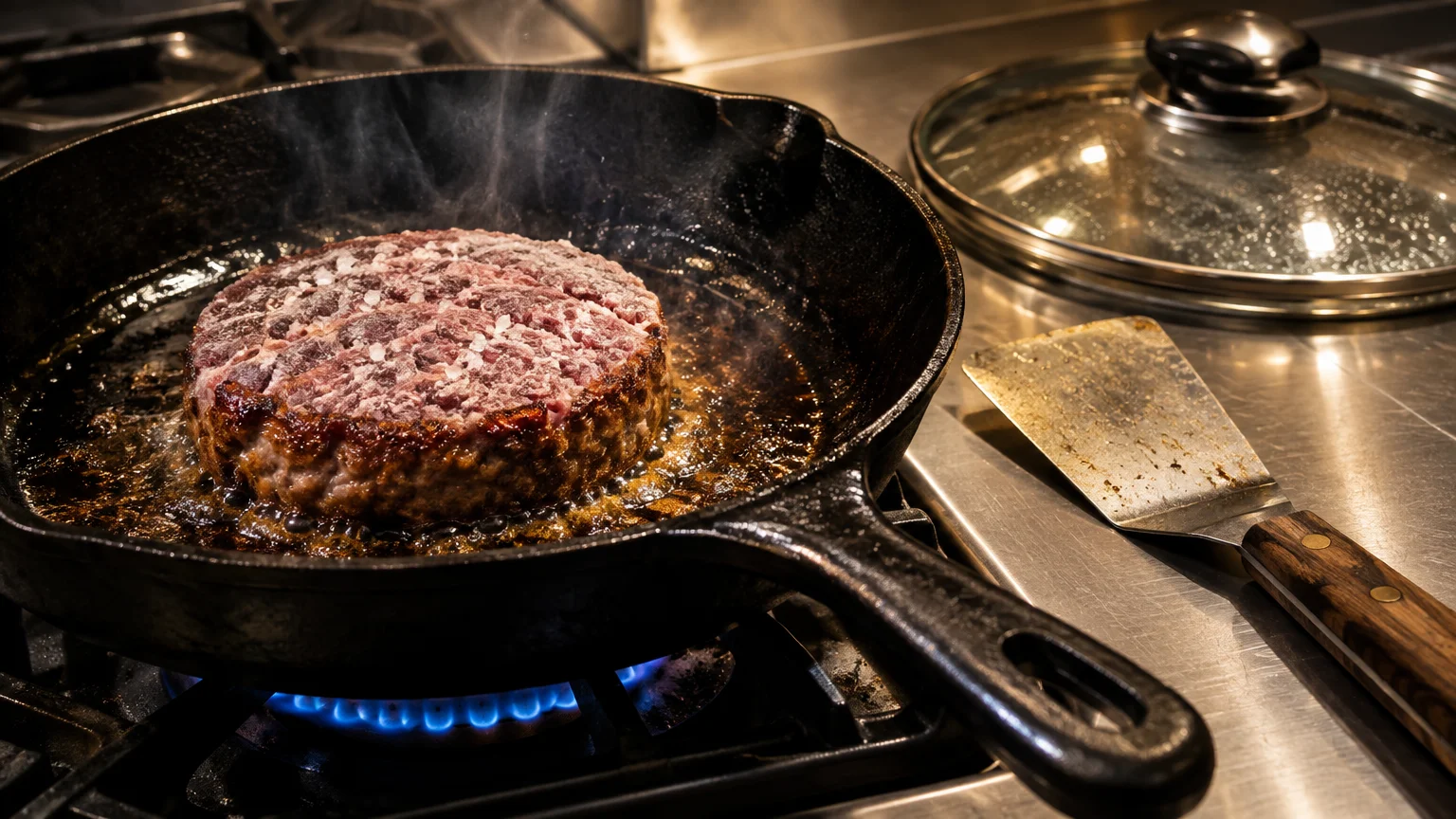
The ultimate weeknight time-saver is skipping the thawing phase completely. According to official USDA food safety guidelines, cooking solid frozen meat directly from the freezer is entirely safe.
You can safely roast, bake, braise, or air-fry solidly frozen steaks, pork loins, and chicken breasts. The intense heat of your oven or skillet quickly moves the surface through bacterial danger zones.
Be prepared for your total cooking duration to increase by approximately fifty percent over fresh cuts. For example, a chicken breast that normally bakes in twenty minutes will require thirty minutes.
Modern countertop air fryers and convection ovens excel at direct-from-frozen cooking. The circulating dry hot air rapidly browns the exterior while driving heat deep into the frozen core.
Avoid using a standard low-temperature slow cooker for large, solid frozen roasts. Slow cookers heat food far too gradually, letting frozen meat linger dangerously between 40°F and 140°F for hours.
Always verify doneness with a reliable instant-read digital meat thermometer before serving. Poultry must register an internal temperature of 165°F, while ground meats must reach at least 160°F.
Skipping the defrost step prevents mealtime panic and keeps you from buying expensive emergency takeout. You save money, cut dinner prep stress, and put hot meals on the table effortlessly.
Tip #5: The Double-Pan Aluminum Conduction Hack
You can accelerate thawing dramatically without using electricity, running water, or messy bowls. The double-pan aluminum trick uses basic thermodynamic principles to defrost thin cuts in record time.
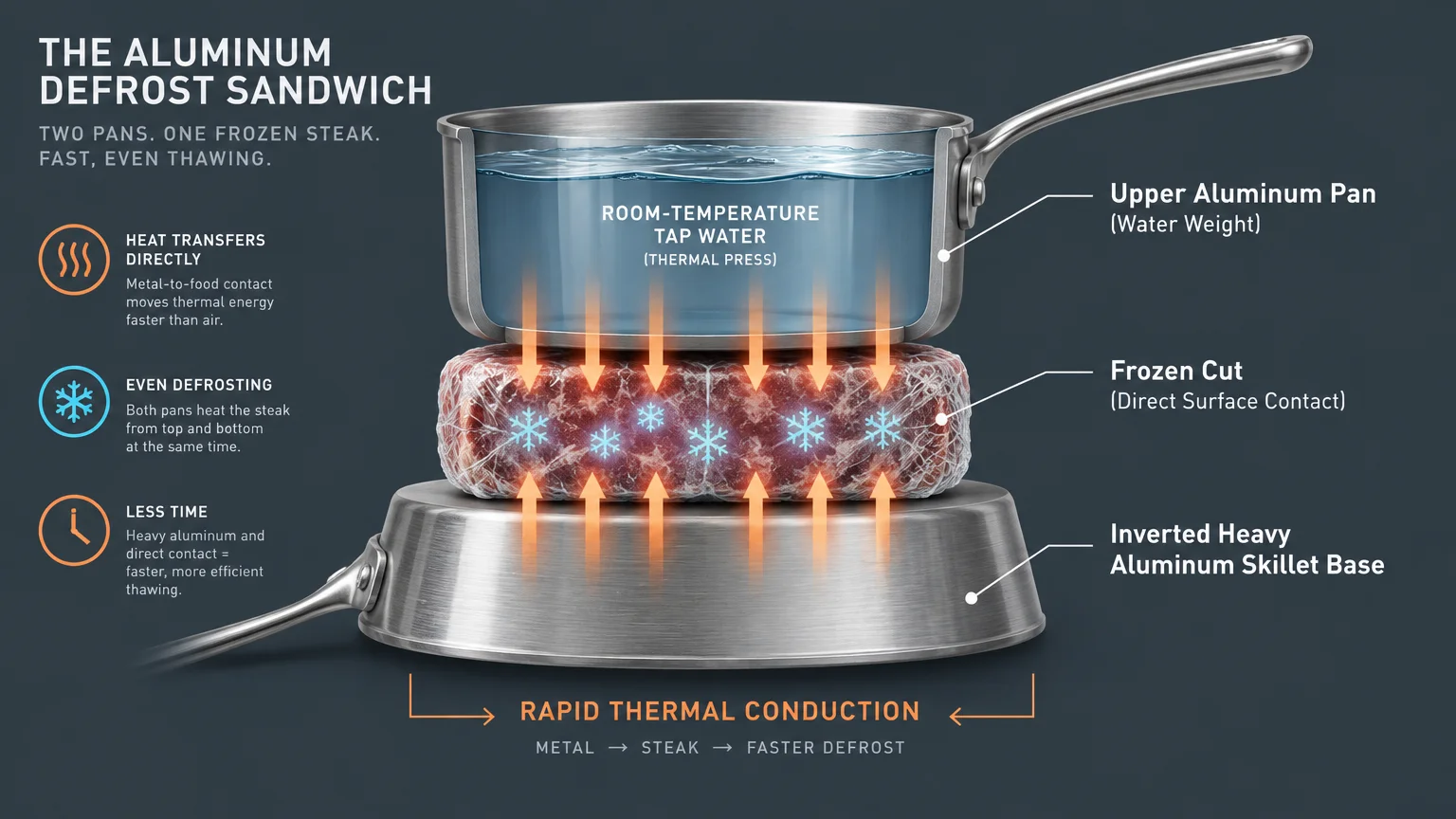
Take a heavy aluminum baking sheet or cast aluminum skillet and invert it flat on your counter. Place your flat, vacuum-sealed frozen meat directly on the cold metal surface.
Place a second heavy aluminum pan directly on top of the meat, creating a metal sandwich. For extra downward pressure and thermal contact, pour two cups of room-temperature water into the top pan.
Aluminum conducts thermal energy roughly forty times faster than standard ceramic plates or butcher-block countertops. The dense metal pulls ambient room temperature right into the meat from both sides simultaneously.
At the exact same time, the aluminum draws the intense chill out of the frozen protein. This rapid conductive transfer cuts traditional counter thaw times by nearly seventy-five percent.
A half-inch thick boneless pork chop or flank steak thaws completely in fifteen to twenty minutes. The meat stays cool to the touch throughout, preventing bacterial blooms on the surface.
This brilliant passive technique requires zero monitoring, uses zero water, and preserves delicate meat juices. Once the cut feels flexible, season it generously and cook it right away.
Tip #6: The Low-Temperature Sous-Vide Water Bath
Serious home cooks rely on an immersion circulator to thaw frozen meat with absolute precision. A sous-vide setup delivers unprecedented control over exact water temperature and liquid circulation.
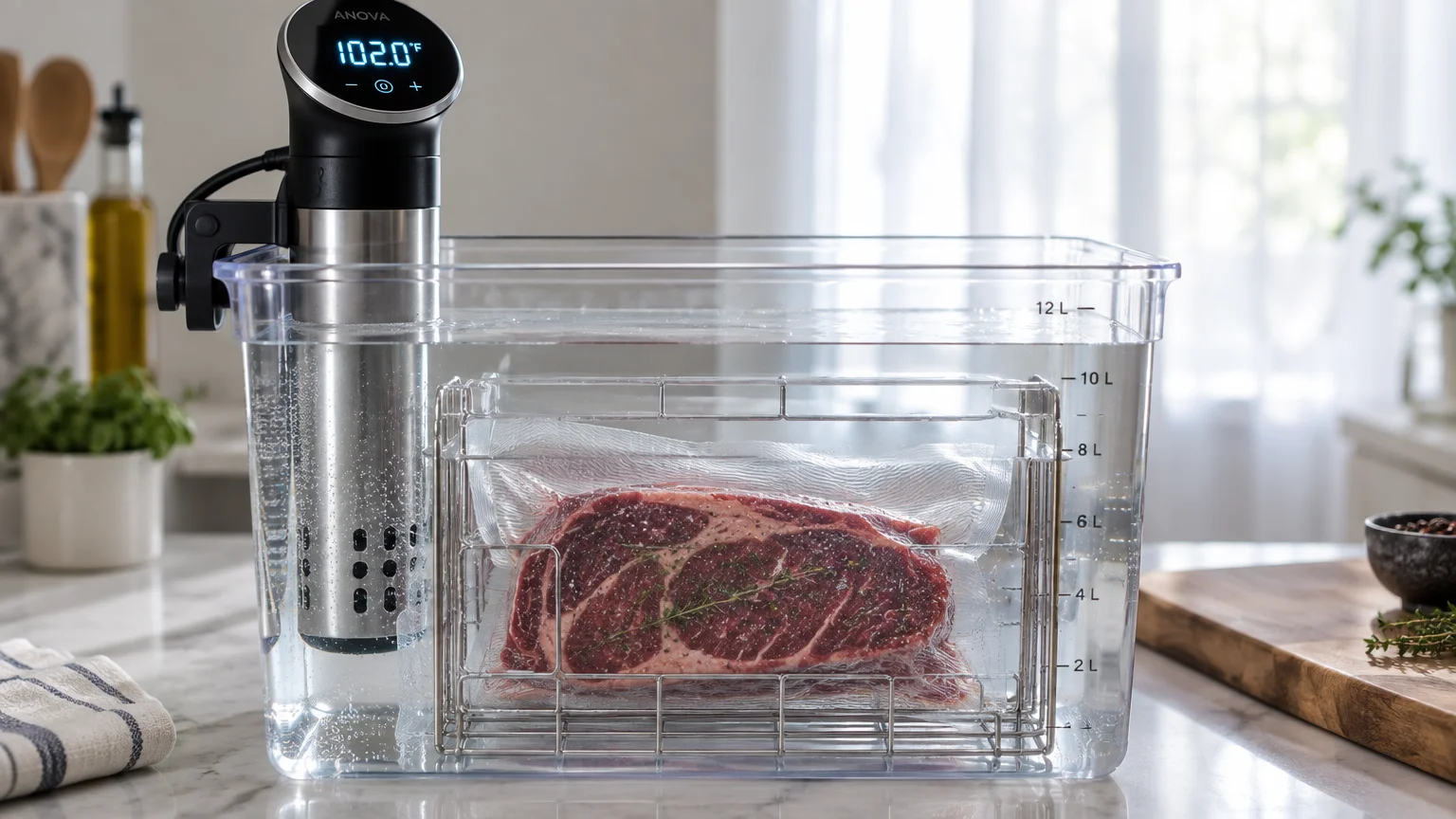
Fill a large cooking container with cool tap water and secure your immersion circulator inside. Set the circulator’s temperature display to 38°F or 39°F, using ice cubes if your tap runs warm.
The circulator’s high-speed motor forces water to flow over the sealed frozen package continuously. This vigorous agitation strips away the cold boundary layer faster than any still-water bath ever could.
Because the machine guarantees temperatures below 40°F, your meat never enters the bacterial danger zone. You achieve commercial-grade safe meat defrosting methods without babysitting the kitchen sink.
If you plan to cook the protein immediately, you can set the circulator straight to cooking temperature. Place your vacuum-sealed steak directly into 130°F water to thaw and cook in a single step.
When cooking directly from frozen via sous-vide, add forty-five minutes to your normal target cook time. This extra duration guarantees that the inner core achieves full pasteurization and flawless tenderness.
This automated method protects the tender texture and juicy flavor of expensive cuts of meat. You enjoy gourmet, restaurant-quality results from discounted freezer cuts while preserving your time.
Tip #7: The Refrigerator Cold-Spot Aluminum Plate Accelerant
Standard refrigerator defrosting is the safest method available, but it usually takes twenty-four hours or more. You can cut that waiting time in half while maintaining complete, pristine refrigeration safety.
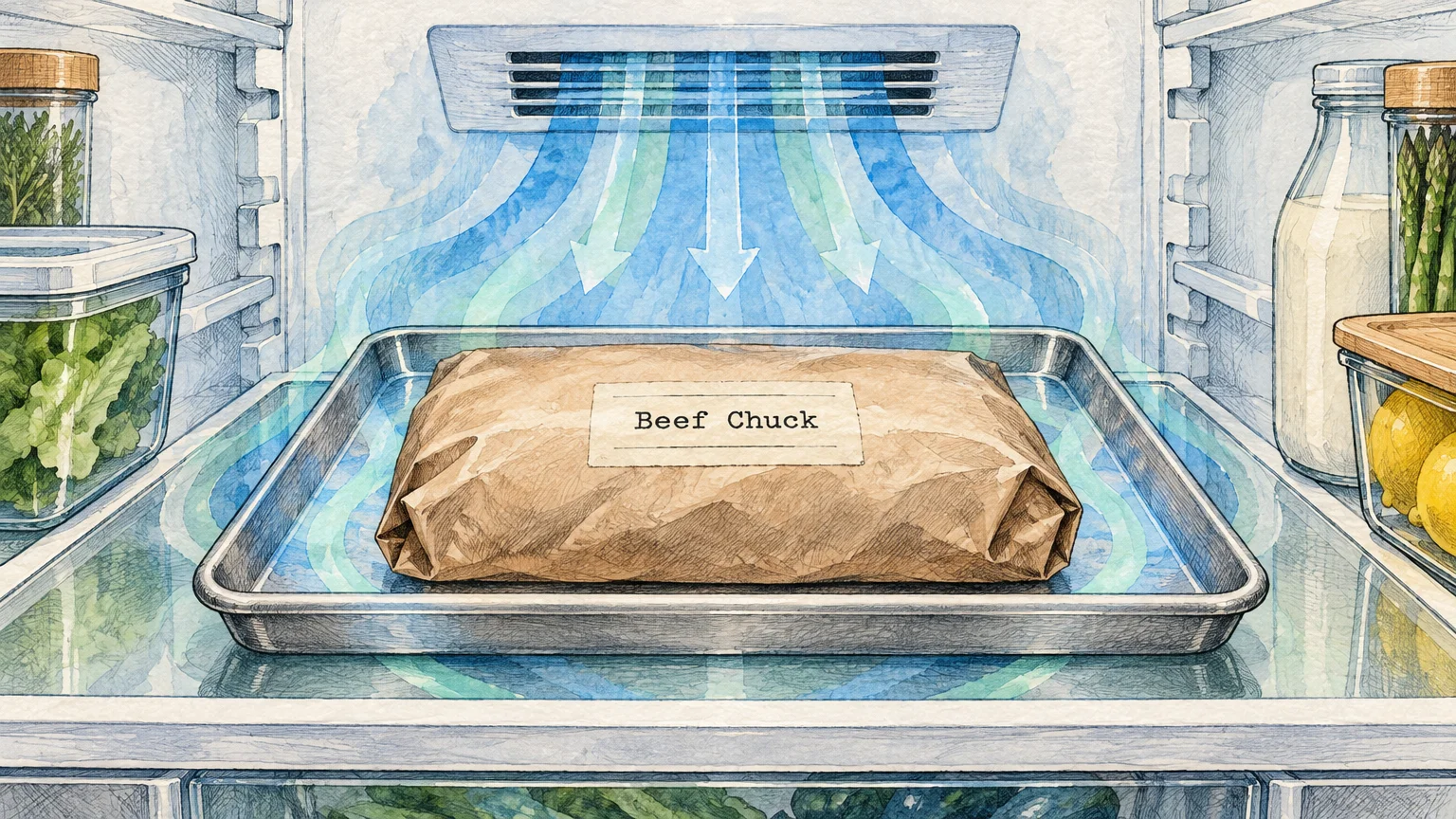
Position an aluminum baking sheet on the bottom shelf near the back of your refrigerator. This specific location is naturally the coldest and most temperature-stable zone in your entire appliance.
Place your packaged meat directly onto the aluminum sheet rather than sitting it on wire racks. The aluminum draws residual warmth from the circulating fridge air directly into the frozen cut.
Simultaneously, the metal plate acts as a sturdy rimmed tray that catches any accidental package leaks. This protects lower shelves and crisper drawers from dangerous cross-contamination.
Meat thawed using this accelerated refrigerator method keeps safely chilled below 40°F for its entire duration. As a result, you do not face immediate pressure to cook the cut the instant it thaws.
You can safely keep thawed poultry and ground beef in the refrigerator for two full days. Whole cuts of beef or pork will remain fresh and safe for three to five days.
If your weekend dinner plans change unexpectedly, you can even refreeze the meat without cooking it first. This flexibility prevents needless food waste and keeps your meal planning adaptable and stress-free.
Tip #8: The Thin-Freeze Vacuum Pre-Portioning Hack
The secret to unlocking the fastest way to thaw meat begins long before dinner time arrives. Smart grocery prep transforms bulky freezer items into quick-thawing weeknight assets.
When you buy bulk ground beef or family chicken packs, never toss them into the freezer whole. Thick, dense meat blocks take hours to defrost and invite dangerous thawing errors later.
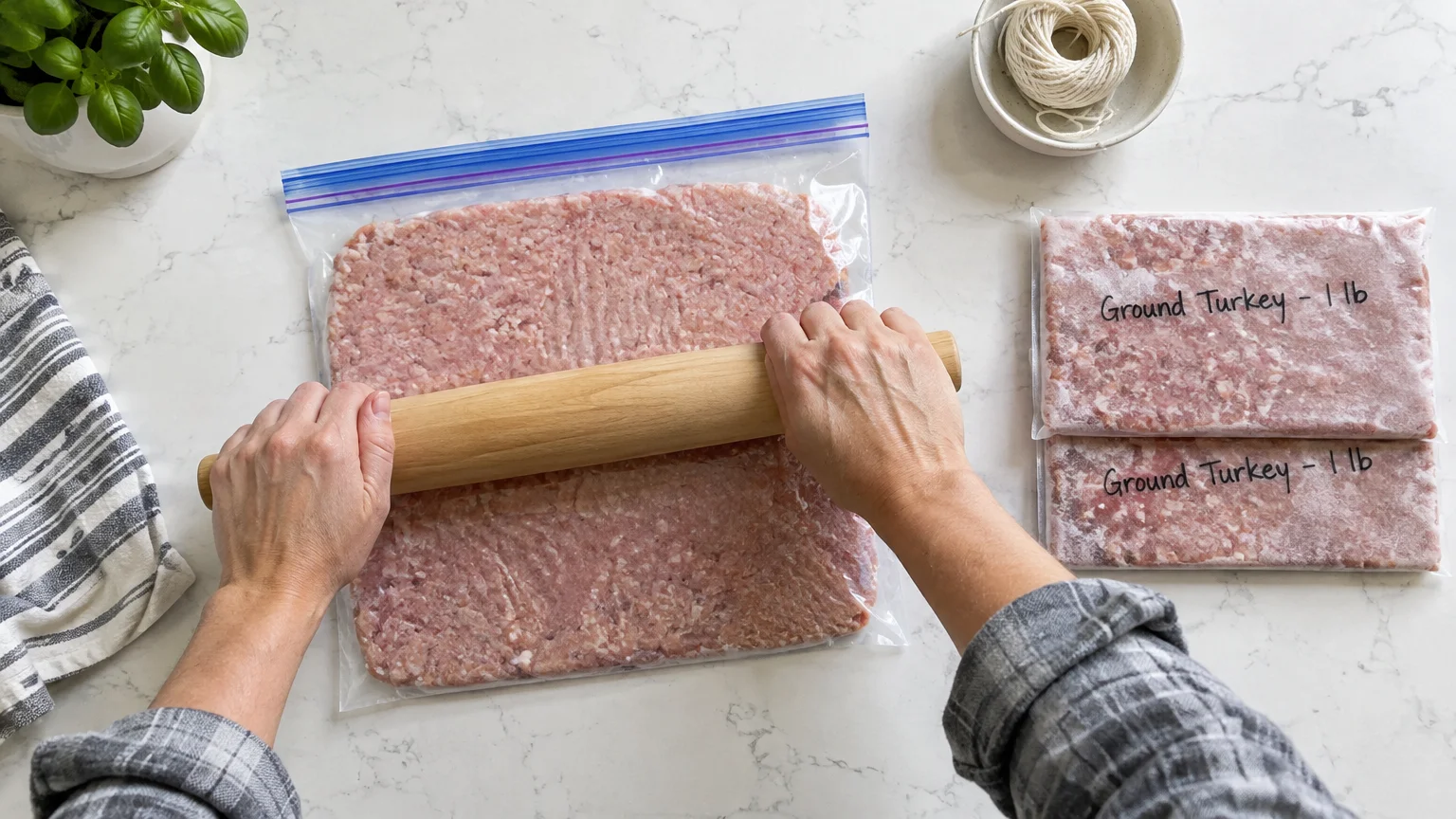
Divide your ground meat into one-pound portions and place each portion into a quart-sized freezer bag. Use a rolling pin to flatten the meat into a uniform, half-inch-thick pancake.
Flattening the meat drastically increases its surface area while minimizing its interior depth. This thin geometric shape allows ambient heat to penetrate straight through to the core almost instantly.
Stack these flat bags horizontally in your freezer until they freeze solid into neat, rigid tiles. Once frozen, file them vertically like thin record albums to organize your freezer space neatly.
When you need dinner in a hurry, that thin meat sheet thaws in cold water in under ten minutes. You bypass agonizing defrosting delays and get cooking almost immediately.
Applying quick meat thawing tips during your initial grocery unpack saves massive amounts of time and frustration. You will never abandon dinner prep for costly restaurant delivery again.
The Bottom Line: What This Means for Your Wallet
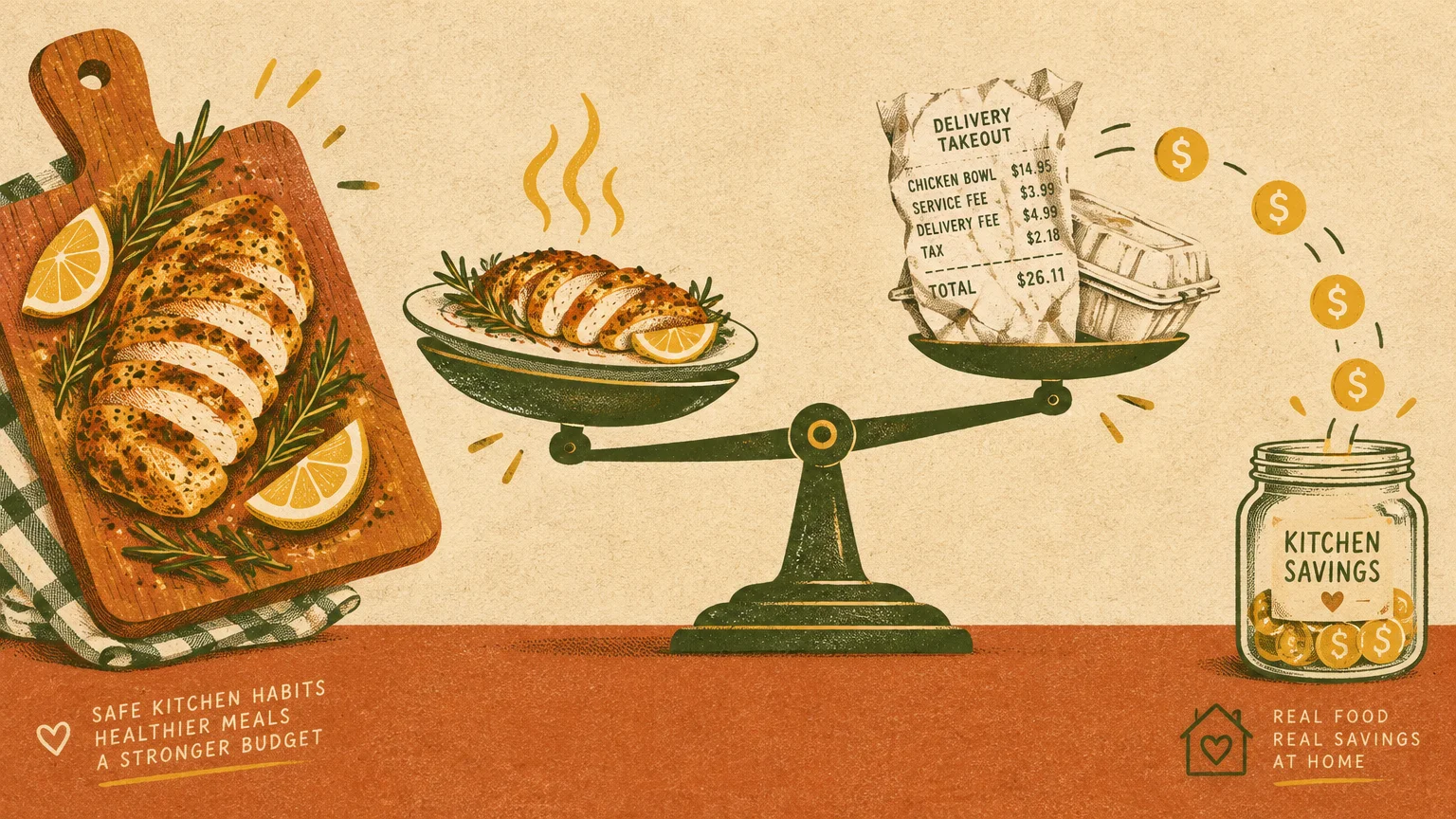
Smart kitchen habits directly influence the bottom line of your household finances. When you understand how to defrost meat safely, you eliminate costly food waste and protect your grocery investment.
Discarding spoiled meat because of careless room-temperature thawing wastes hard-earned dollars every single month. More critically, foodborne illness from salmonella or E. coli leads to crippling medical expenses and lost work wages.
Lingering dinner delays also tempt hungry families to abandon home cooking for expensive fast food or delivery. A single impromptu takeout dinner can easily wipe out an entire week of careful grocery savings.
Mastering the cold-water bath, aluminum heat sinks, and direct-to-heat cooking gives you an unbeatable advantage. You can buy discounted meats in bulk, freeze them safely, and prepare them on short notice.
True frugality is not about eating boring meals or sacrificing safety for convenience. It is about using practical food science to maximize convenience, safeguard your health, and stretch every single dollar.
Put these dependable, science-backed defrosting techniques into practice starting with your next weeknight meal. You will enjoy faster dinners, minimize grocery waste, and keep substantial cash in your wallet.
Frequently Asked Questions
Is it ever safe to defrost meat on the kitchen counter?
No, you should never defrost meat on your kitchen counter at room temperature. Bacteria multiply rapidly between 40°F and 140°F, reaching dangerous counts in less than two hours.
Even if the inner center remains frozen solid, the outer surface warms up rapidly. That warm exterior creates an ideal environment for dangerous pathogens like staphylococcus, salmonella, and E. coli.
Can you thaw meat quickly using hot tap water?
Thawing meat in hot water is exceptionally dangerous and severely damages meat quality. Hot water cooks the exterior edges of the protein while leaving the center frozen solid.
Furthermore, hot water elevates the meat surface directly into the bacterial danger zone almost immediately. Stick strictly to cold tap water baths and refresh the water every thirty minutes.
Can I refreeze meat after defrosting it in cold water?
You should not refreeze raw meat that has been defrosted using the cold-water method. Minor temperature fluctuations during water thawing mean the meat must be cooked promptly for safety.
Cook the protein thoroughly before deciding to freeze it again. Fully cooked dishes freeze exceptionally well and provide quick, effortless meals for future busy nights.
Does defrosting meat in the microwave destroy its texture?
Defrosting in the microwave ruins meat texture only if you use excessive power settings. High microwave power boils the exterior moisture away, turning delicate cuts tough, gray, and rubbery.
Use thirty percent power settings and pause every two minutes to flip the meat. This careful rotation protects protein integrity and delivers smooth, even defrosting throughout the entire cut.
For consumer protection information, visit the Federal Trade Commission (FTC) and the Consumer Financial Protection Bureau (CFPB). For product safety and reviews, consult Consumer Reports.
Disclaimer: This article is for informational purposes only and does not constitute financial advice. The content reflects the author’s opinion and research at the time of writing; always do your own research before making financial decisions.




Leave a Reply