
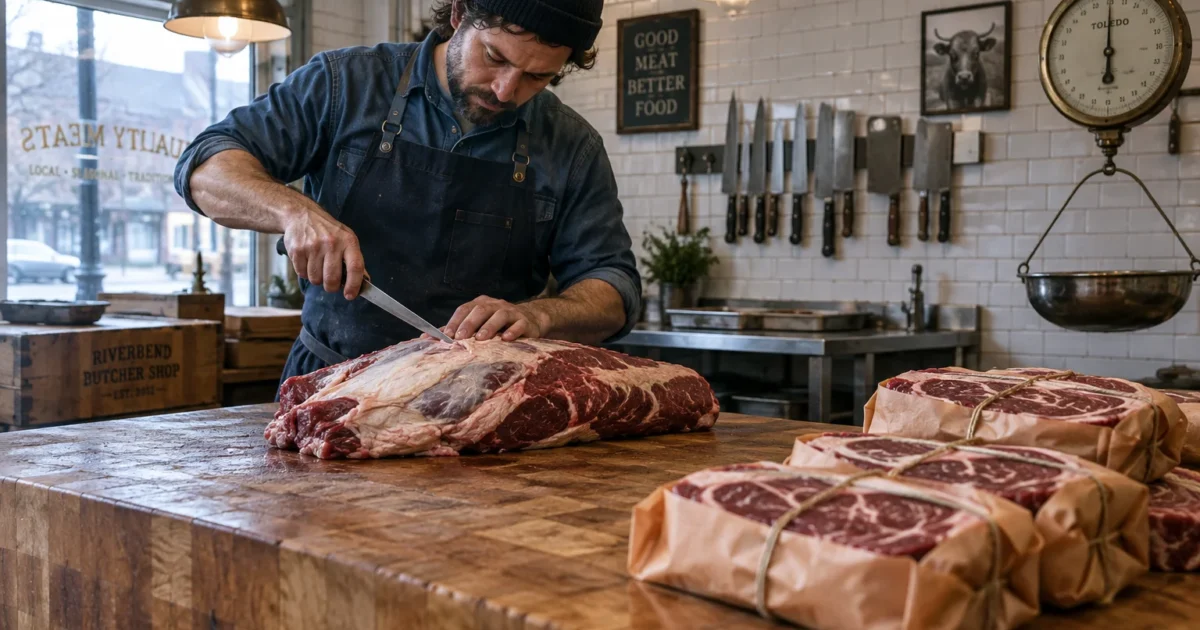
You lose hard-earned cash at the supermarket meat counter without realizing it. Big grocery chains quietly pump commercial cuts with saltwater and hide gristle beneath opaque foam packaging.
Switching to an independent shop is one of the smartest quality meat shopping tips available. You pay strictly for edible protein rather than inflated water weight, artificial preservatives, and industrial markup.
Understanding butcher vs grocery store meat transforms your weekly grocery budget. These twelve specific items provide superior cooking performance, richer nutritional value, and substantial long-term savings.
Tip #1: Custom Ground Beef Blends
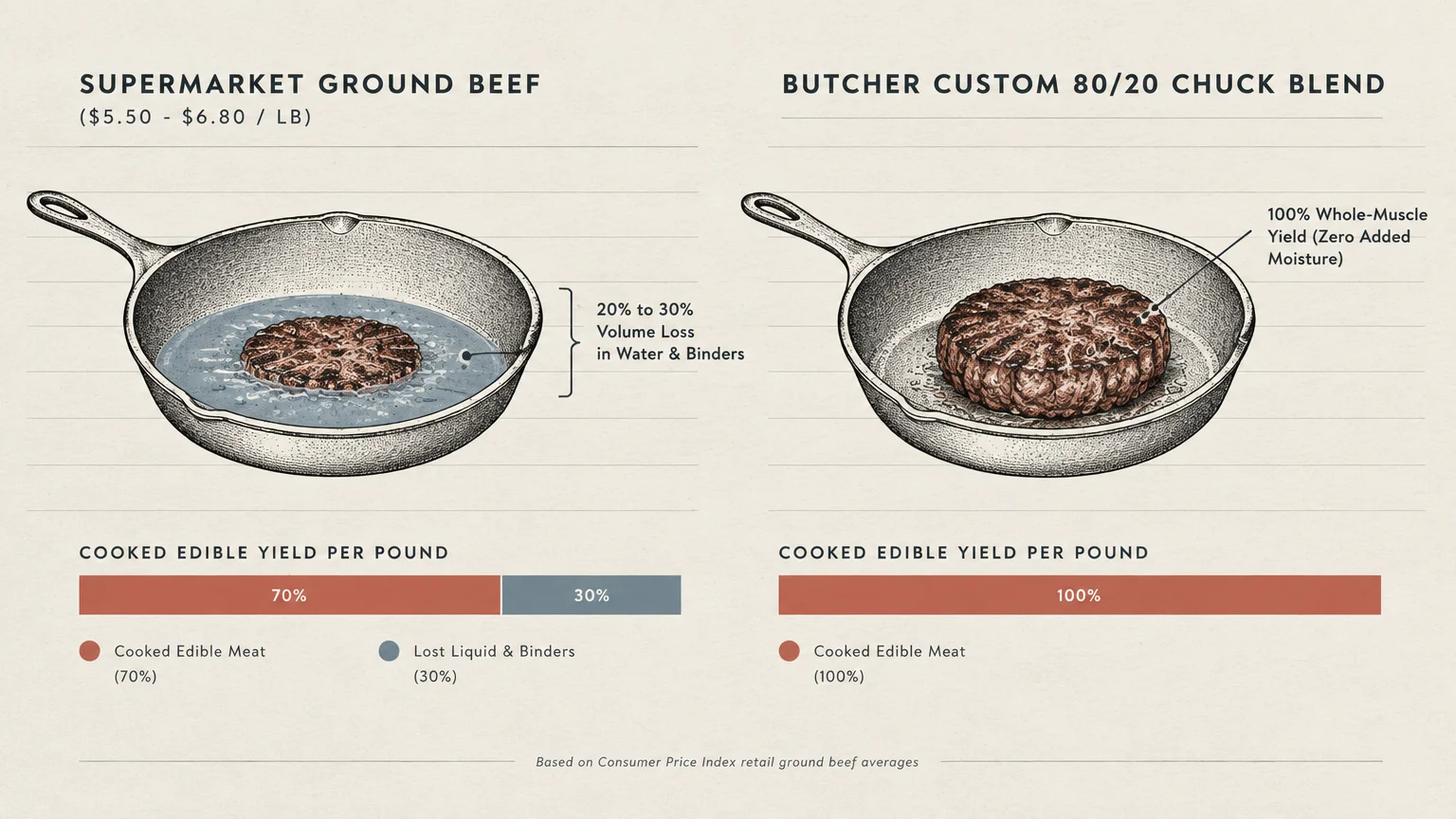
Supermarket ground beef looks cheap until you throw it into a hot skillet. You watch it pool with cloudy liquid and shrink away to nothing.
Consumer Price Index data puts retail ground beef between $5.50 and $6.80 per pound. Paying those rates for meat that loses 20% to 30% of its volume in water wastes money.
A local butcher grinds fresh whole-muscle trimmings right in front of you. You choose the exact balance of chuck, brisket, or short rib.
Because the meat contains zero added moisture or chemical binders, you get actual food yield. Your burgers stay plump, and your cost per cooked ounce plummets.
Ask for an 80/20 chuck blend ground fresh that morning. You will taste the difference instantly and keep more finished meat on your dinner plate.
Tip #2: Air-Chilled Whole Chickens
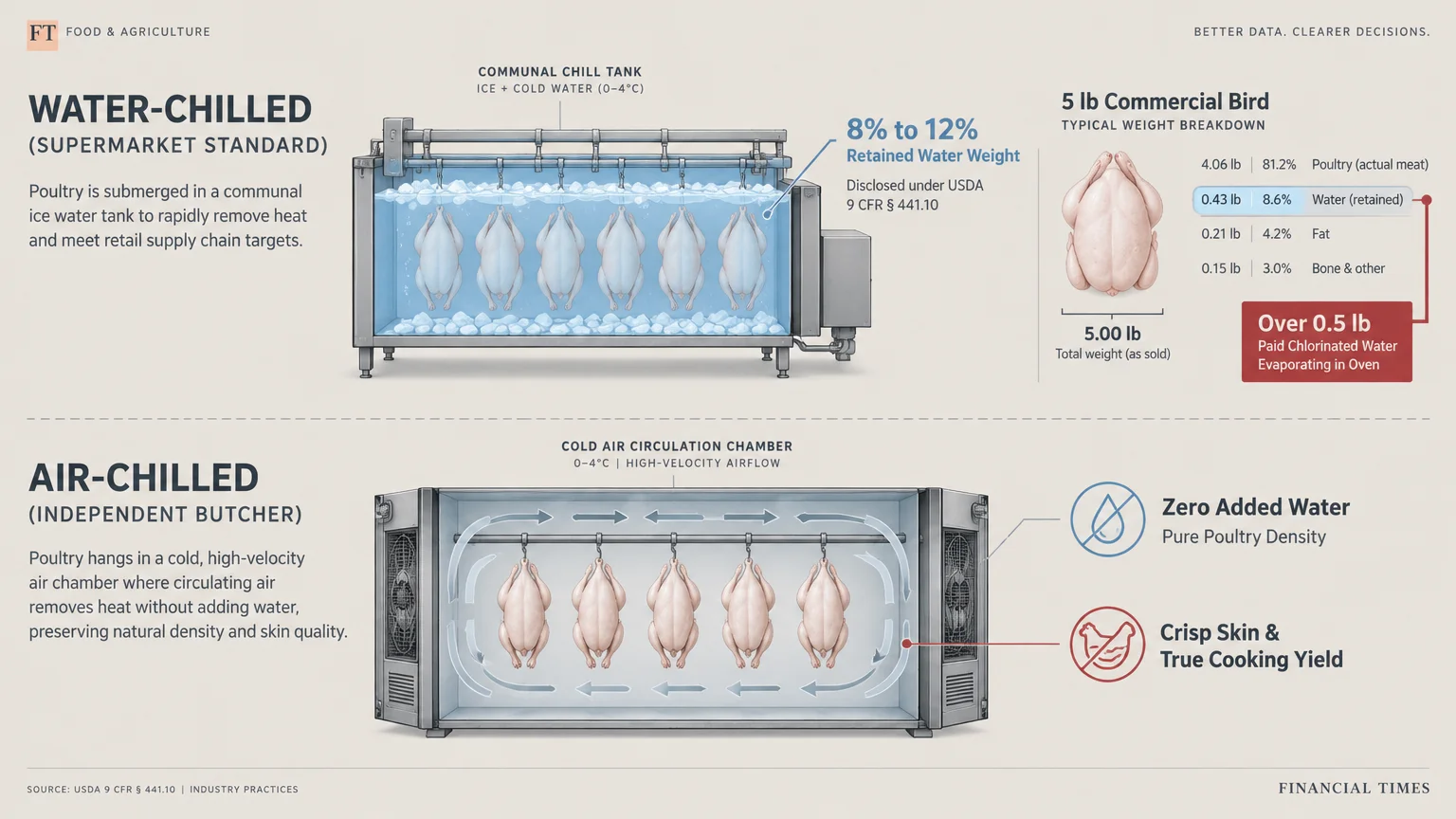
Supermarket chicken packages secretly charge you for chilled tap water. Industrial processing plants submerge warm bird carcasses in communal ice-water baths to cool them quickly.
Under USDA regulation 9 CFR § 441.10, commercial poultry must disclose this retained moisture. Those standard grocery store birds commonly carry 8% to 12% retained water weight.
That means on a five-pound bird, you pay meat prices for over half a pound of chlorinated liquid. That water inevitably evaporates into your roasting pan, producing soggy chicken skin.
Dedicated butchers carry air-chilled chickens cooled in specialized cold-air chambers. These birds contain zero added water, ensuring crisp skin and dense, juicy meat.
You get pure poultry weight for every dollar spent. Carving a whole bird yourself also yields carcasses for stock, stretching your investment even further.
Tip #3: Chuck Eye Steaks
Buying meat from a butcher unlocks incredible secret cuts that chain grocers rarely merchandise. Chuck eye steak stands as the reigning champion of bargain beef.
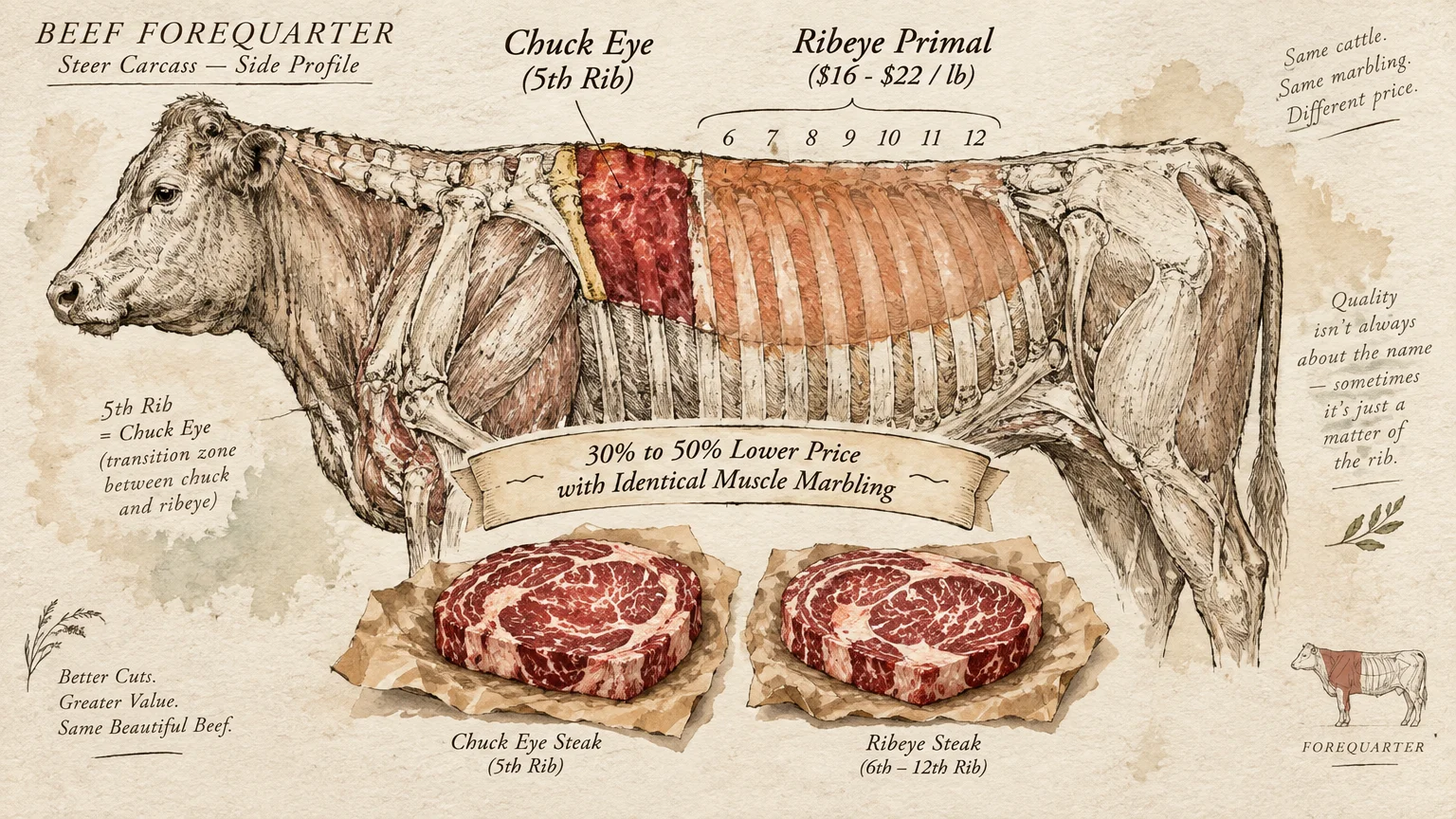
Cut from the fifth rib of the steer, chuck eye sits right next to the high-dollar ribeye primal. It shares the same deep beefy marbling and melt-in-your-mouth tenderness.
While commercial ribeye easily commands $16 to $22 per pound, chuck eye often sells for 30% to 50% less. You get almost identical luxury flavor on a Tuesday night budget.
Supermarkets usually toss these valuable portions into generic stew meat or bulk grind. A knowledgeable butcher recognizes their worth and cuts them into thick, beautiful steaks upon request.
Ask your butcher to hold two thick chuck eyes when they break down a forequarter. Sear them hard in cast iron for an effortless five-star dinner.
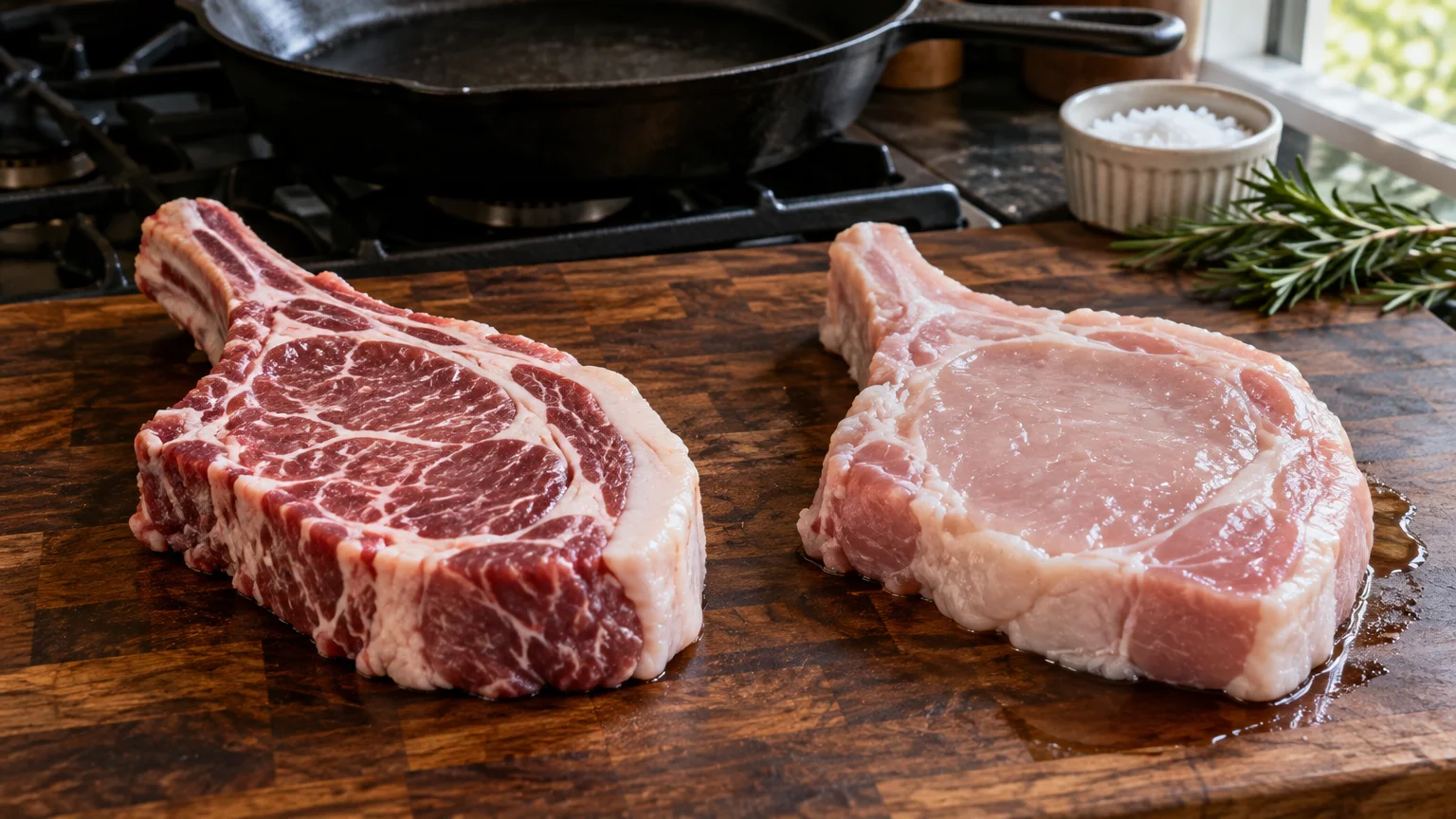
Tip #4: Heritage and Untreated Pork Chops
Supermarket pork chops look pale, watery, and bland because industrial meat packers pump them full of saline solution. This aggressive practice is known across the meat industry as plumping.
Commercial processors inject these cuts with an 8% to 15% sodium phosphate and broth solution. You end up paying pork prices for chemical brine that boils out during cooking.
Untreated pork chops from a local butcher feature rich marbling and deep reddish-pink muscle fibers. They come from pasture-raised or heritage breeds raised without industrial shortcuts.
When you drop an unadulterated chop onto a smoking skillet, it browns properly without steaming. The meat retains its natural juices instead of leaching salty water across the pan.
You receive honest weight, dense texture, and genuine pork flavor. One thick-cut butcher chop easily satisfies an appetite that would normally require two shrunken commercial chops.
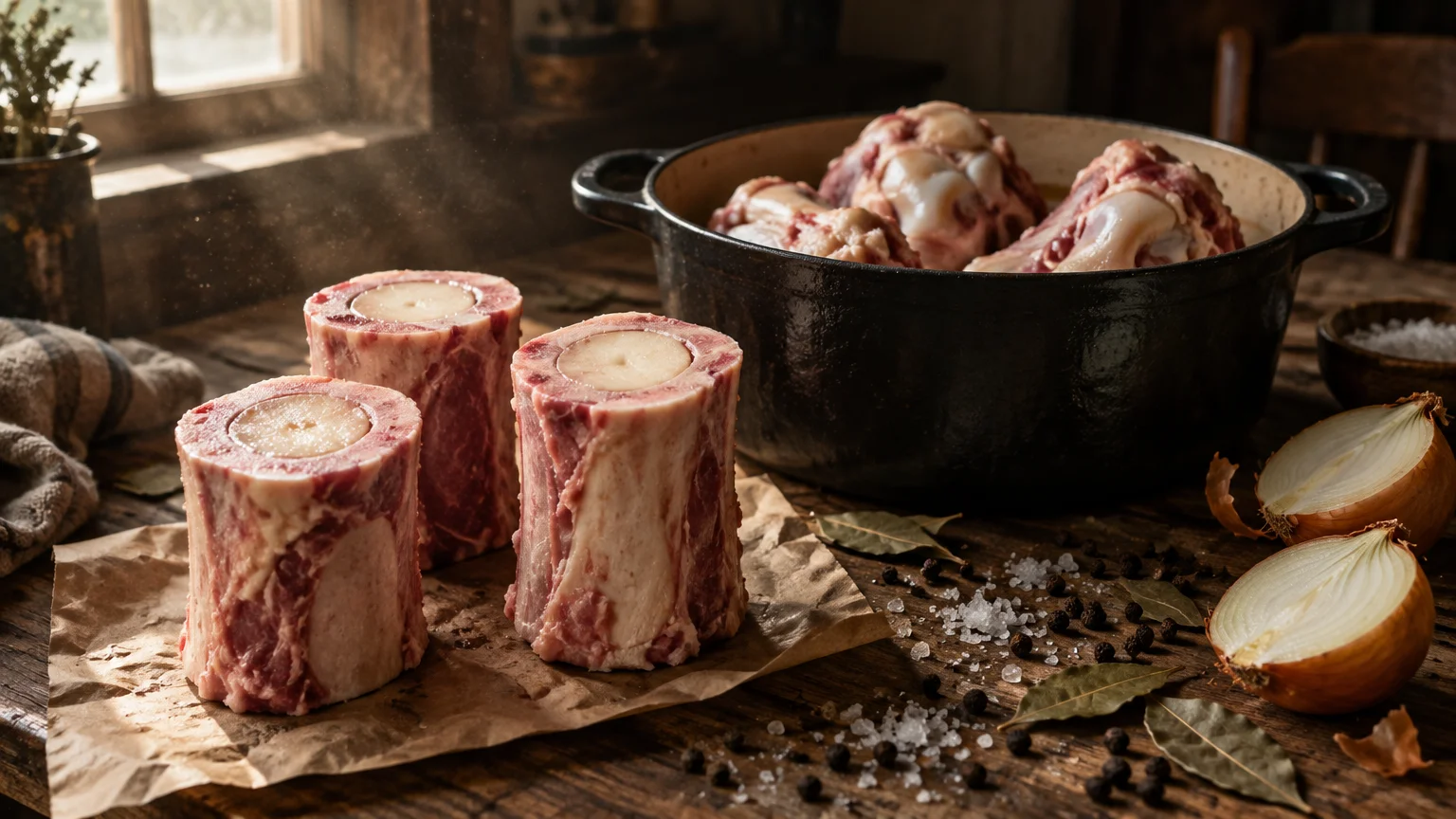
Tip #5: Beef Marrow and Knuckle Bones
Trendy store-bought bone broths cost between $4.00 and $7.00 for a single 32-ounce carton. Most of those commercial cartons contain watered-down concentrates loaded with yeast extracts and excessive sodium.
Your local butcher treats soup bones as an everyday byproduct rather than a luxury wellness item. They routinely sell marrow and collagen-dense knuckle bones for $1.00 to $3.00 per pound.
Simmering five pounds of butcher bones produces gallons of rich, gelatin-packed broth for a fraction of the supermarket price. It gels solid in the refrigerator, proving its immense protein and collagen density.
You can roast the center-cut marrow bones directly in the oven for a decadent weekend appetizer. Spread the unctuous marrow over crusty bread with coarse sea salt for pennies per serving.
Sourcing bones is one of the premier benefits of local butcher shops. They give you the raw fuel to build rich pantry staples without paying brand-name markups.
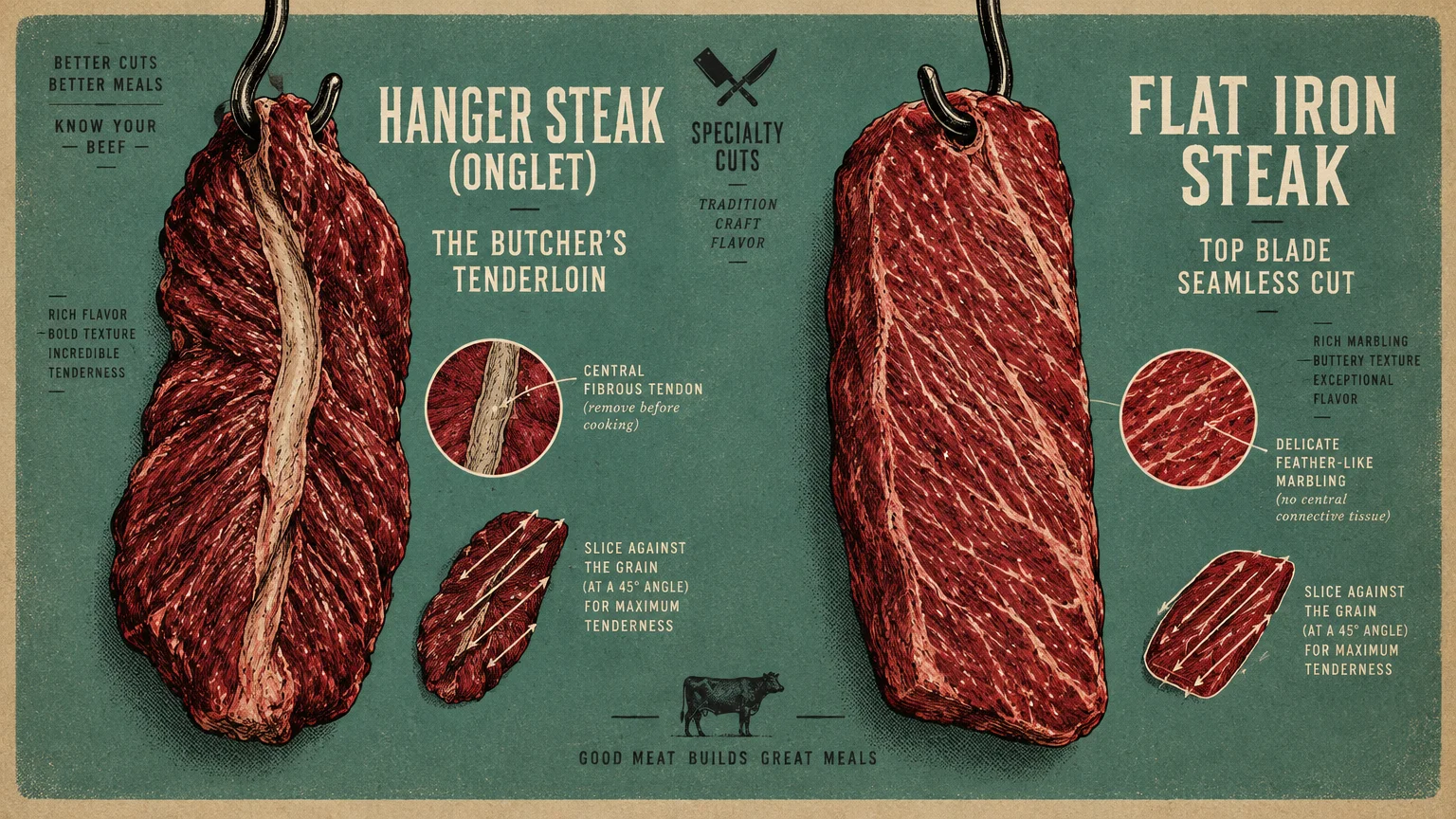
Tip #6: Hanger and Flat Iron Steaks
Chain supermarkets focus on high-margin, easy-to-sell cuts like strip loin and tenderloin. They largely ignore hanger steaks and flat iron cuts because each animal provides only a tiny amount.
The hanger steak hangs from the diaphragm near the kidney, boasting a robust iron-rich flavor that rivals aged ribeye. The flat iron comes from the shoulder and ranks as the second-most tender cut on the steer.
Whole-animal butchers carve out these flat irons and hangers with surgical precision. These value cuts cost 30% to 50% less per pound than strip steaks while delivering intense, beefy satisfaction.
You avoid the hefty tenderness tax associated with overpriced filet mignon. Marinate a hanger steak quickly or cook a flat iron hot and fast over lump charcoal for extraordinary results.
Building a relationship with your butcher guarantees you first dibs on these limited cuts. You dine like royalty without paying prime steakhouse prices.
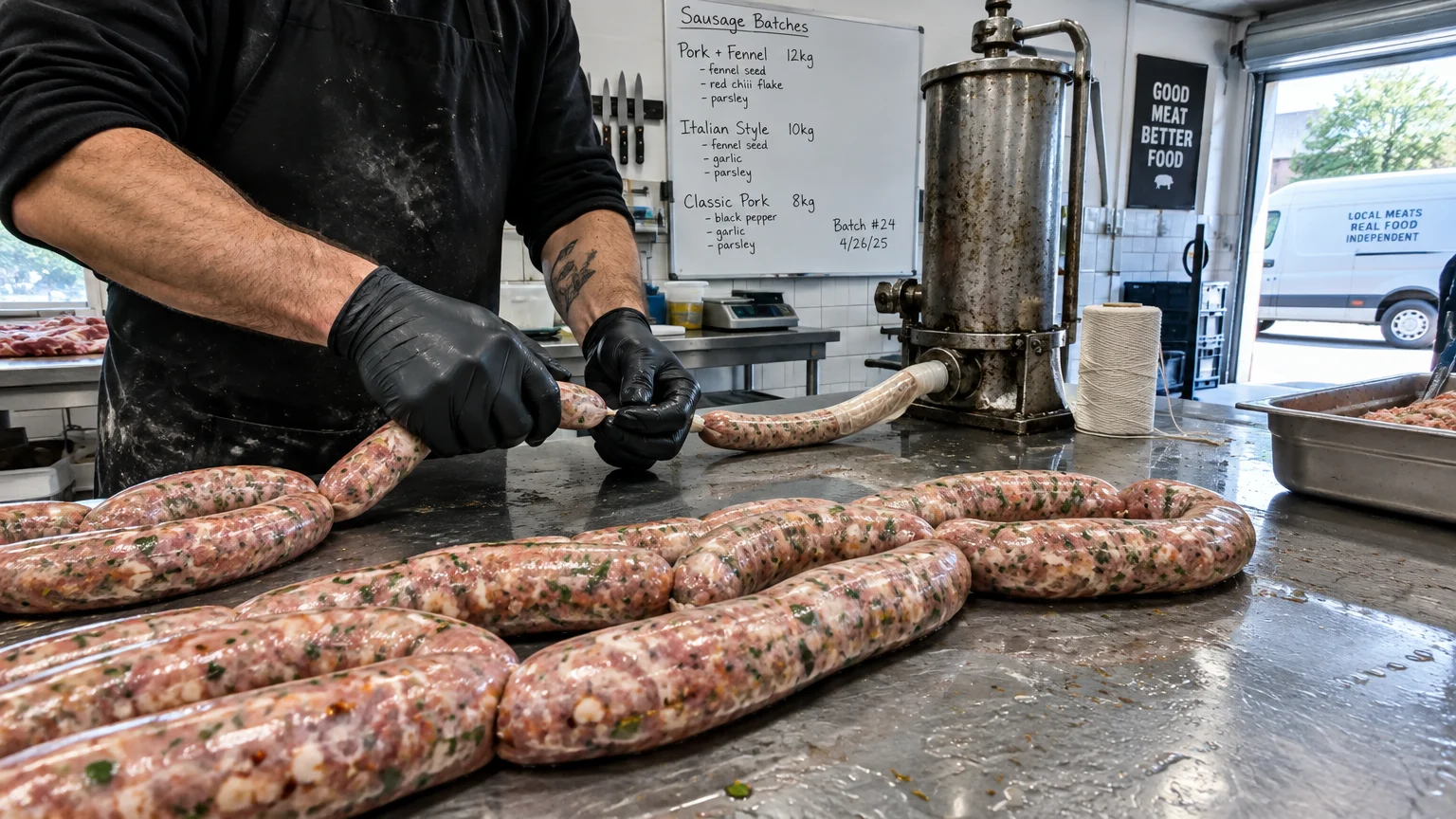
Tip #7: Fresh House-Made Sausages
Commercial boxed sausages look convenient until you read the ingredient panel. Factory brands stretch their profits by stuffing links with soy protein isolates, excessive water, corn syrup, and sodium nitrates.
Independent butchers make sausage the traditional way using fresh shoulder trimmings, natural hog casings, and whole spices. There are no synthetic binders or chemical preservatives diluting the meat.
Because artisanal butcher sausages contain pure pork and balanced fat, they do not rupture or shrivel in the pan. You get dense, satisfying links that hold their shape and yield incredible pan drippings.
Many shops also offer custom seasoning blends, from fiery Calabrian chili to garlic-heavy Polish kielbasa. You can even ask the butcher to grind custom batches with zero added sugar or salt.
The superior density means one butcher sausage fills you up faster than two commercial links. That efficiency directly lowers your per-meal grocery cost.
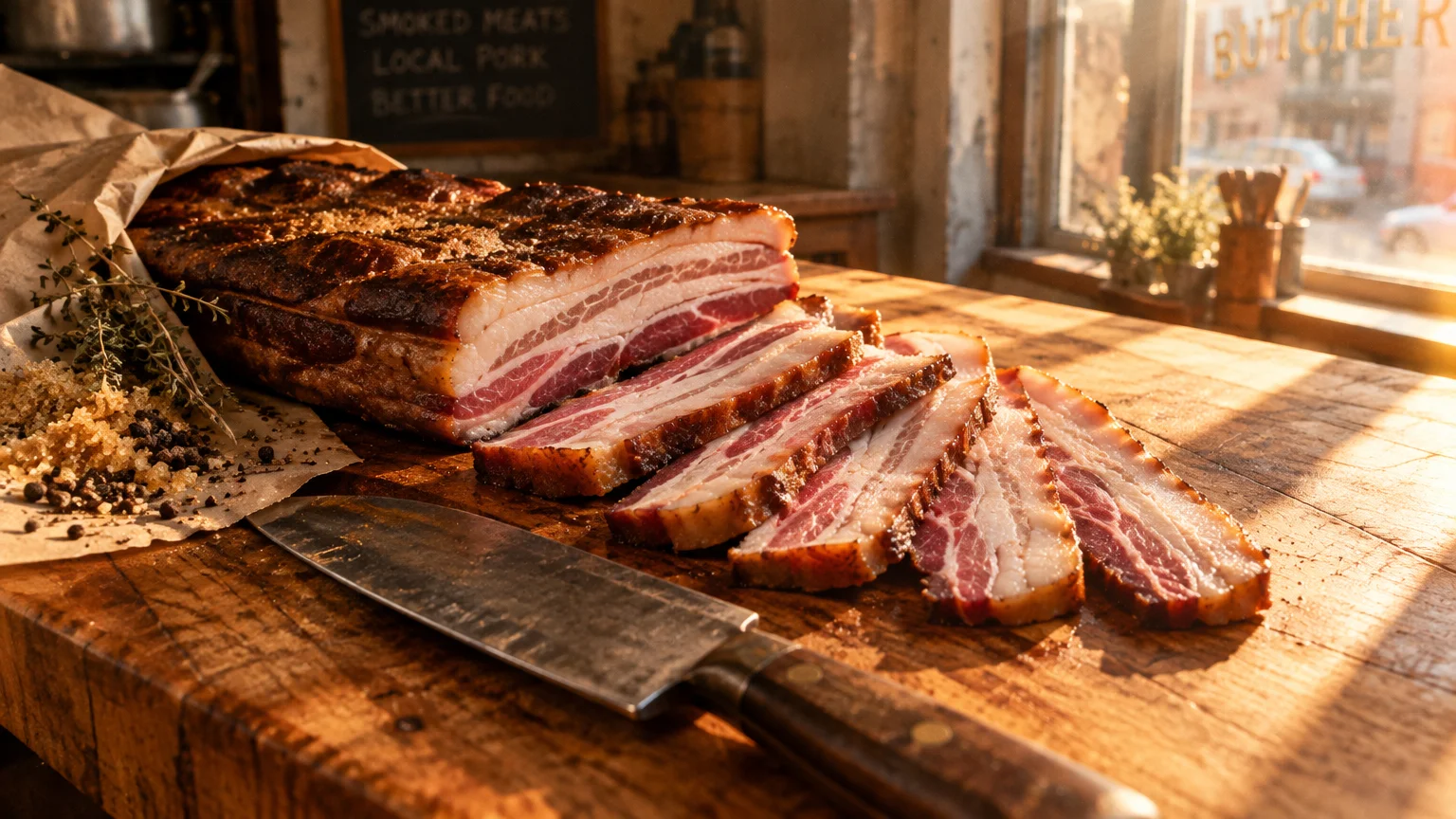
Tip #8: Whole Pork Belly and Thick Slab Bacon
Prepackaged grocery store bacon is an expensive illusion. Manufacturers wet-cure industrial pork bellies by injecting them with liquid smoke and water, which boils off the second it hits the pan.
You pay top dollar for strips that shrivel down to half their raw size while leaving behind a greasy, watery puddle. That is an enormous waste of your hard-earned grocery budget.
An authentic butcher sells slab bacon that has undergone true dry curing and wood smoking. Because it contains no injected water, the strips hold their exact thickness and crisp up evenly.
Buying whole pork belly from your butcher also allows you to cure your own bacon or braise decadent pork belly cubes at home. Uncut belly routinely costs half the per-pound price of sliced commercial bacon.
You control the thickness of every slice and save money on packaging overhead. The resulting fat renderings double as a premium cooking oil for roasting vegetables.
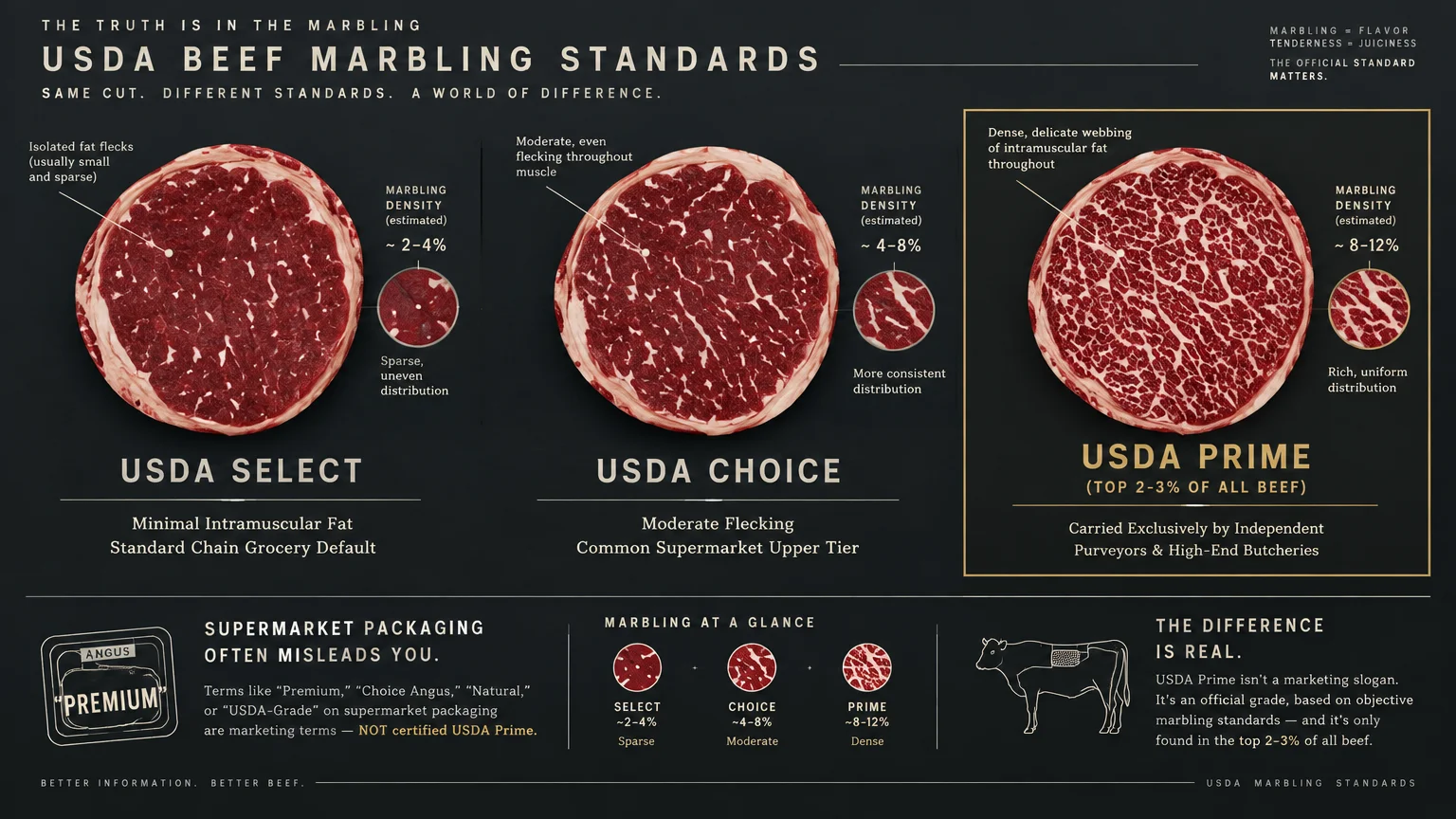
Tip #9: True USDA Prime Steaks
Most consumers do not realize that chain grocery stores rarely stock genuine USDA Prime beef. According to official USDA Agricultural Marketing Service reports, only 10% to 11% of all graded American beef earns that top rating.
Supermarkets fill their refrigerated display cases almost exclusively with Choice and Select cuts. When they do carry Prime, it often sits wrapped in plastic for days, oxidizing and losing flavor.
Dedicated butcher shops serve as the primary retail pipeline for top-tier Prime cuts. They hand-select loins with dense, spiderweb marbling that guarantees incredible tenderness.
Butchers also dry-age these steaks in controlled humidity lockers to concentrate natural flavors. A dry-aged Prime strip steak from your butcher outperforms any high-end restaurant steak at half the price.
When you want to splurge for a celebration, spend your money where the quality is guaranteed. Buying true Prime from an expert ensures you never pay top dollar for mediocre meat.
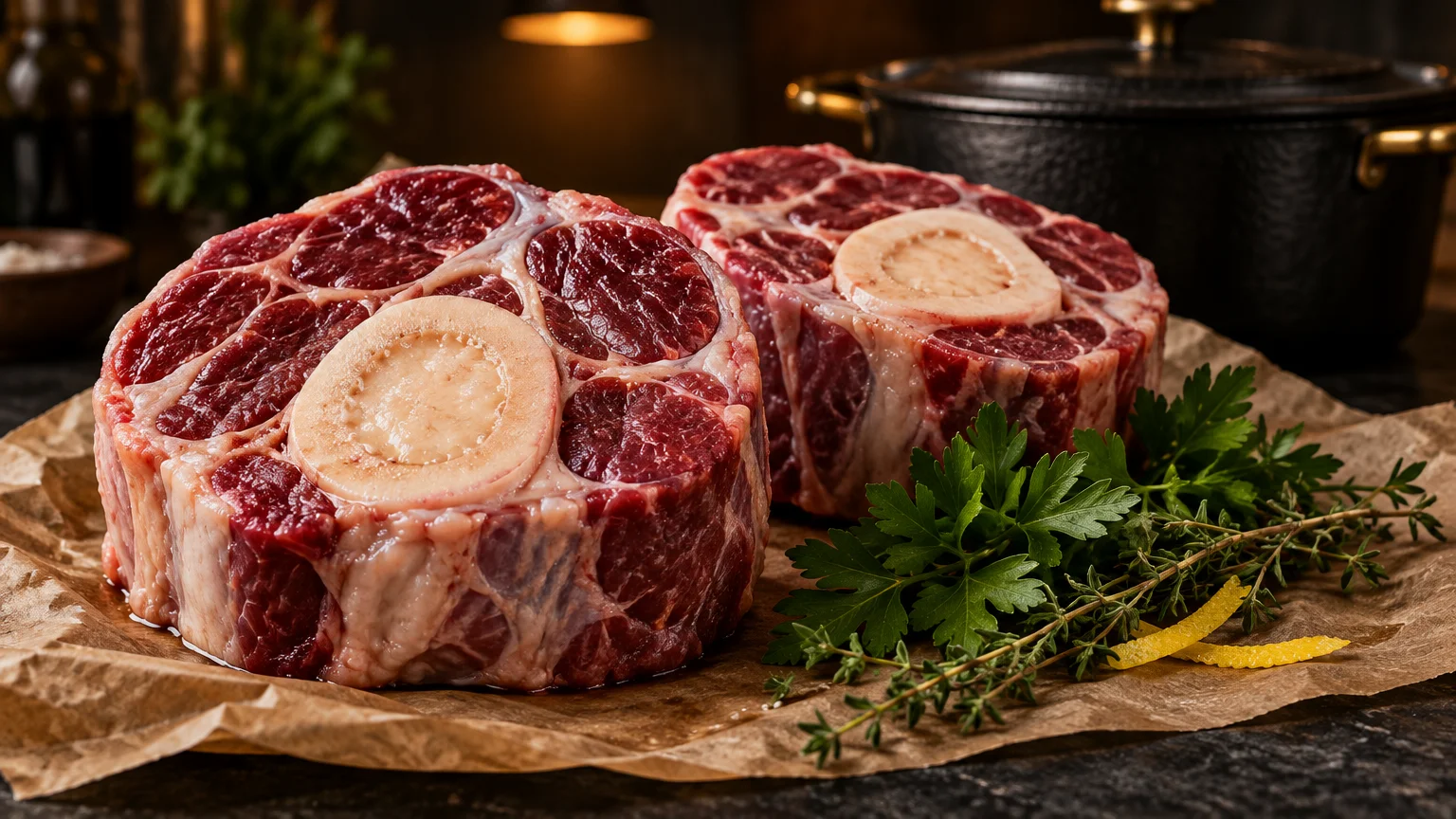
Tip #10: Beef Shank and Osso Buco
Beef short ribs have skyrocketed in price over recent years, transforming from a cheap peasant cut into an expensive luxury. Beef shank delivers that exact same melting richness for a fraction of the cost.
Cut across the leg, beef shank features a generous medallion of lean meat surrounding a marrow-packed center bone. It contains massive networks of collagen that break down into unctuous gelatin during slow braising.
Chain supermarkets rarely merchandise shanks properly, often grinding them into cheap ground beef. A whole-animal butcher cuts them into pristine, thick-cut cross sections perfect for classic osso buco.
Braised slowly with red wine, aromatics, and stock, shank meat turns butter-soft and releases its rich marrow directly into the sauce. It feeds a hungry crowd with magnificent visual appeal.
Choosing shank over short ribs cuts your meat bill by nearly half without sacrificing an ounce of culinary indulgence. It represents slow-cooking frugality at its finest.
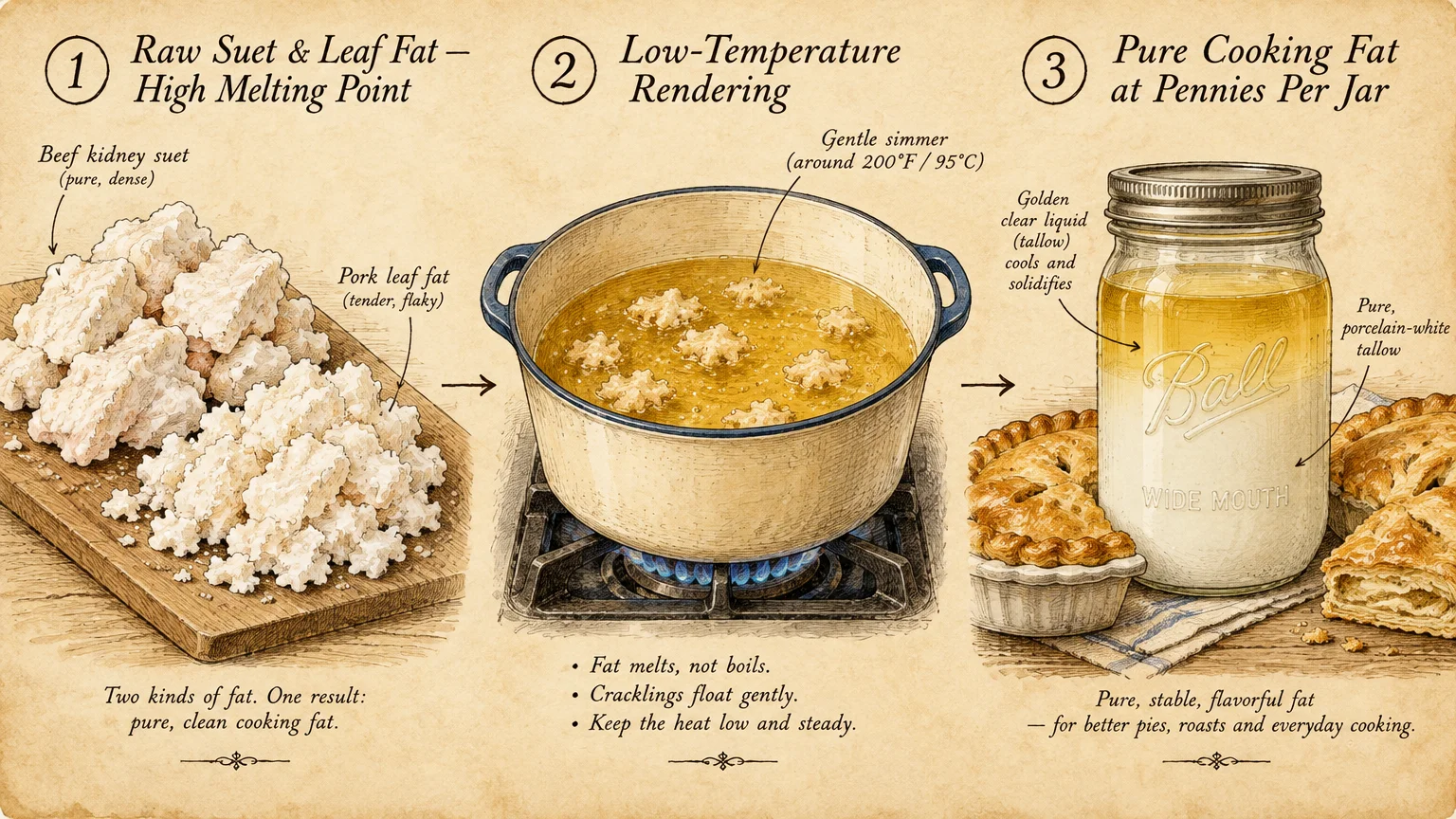
Tip #11: Raw Suet and Leaf Fat
Gourmet jars of rendered beef tallow and duck fat now sell for upwards of $15 per pint at specialty grocers. Many home cooks pay these absurd prices to avoid industrial seed oils.
Your local butcher frequently has buckets of raw beef suet and pork leaf fat sitting in the cooler. They sell this raw fat for $1.00 to $2.00 a pound, or sometimes give it away.
Rendering raw suet in a slow cooker takes minimal effort and yields quarts of shelf-stable, pristine tallow. It gives you the world’s best high-heat frying fat for a few pennies an ounce.
Pork leaf fat renders into pure white lard with a neutral profile and an exceptionally high smoke point. It creates the flakiest pie crusts and roasted potatoes you will ever taste.
By bypassing retail jars and rendering raw fat yourself, you slash your cooking oil expenses while gaining unmatched culinary performance. It is an essential hack for the frugal kitchen.
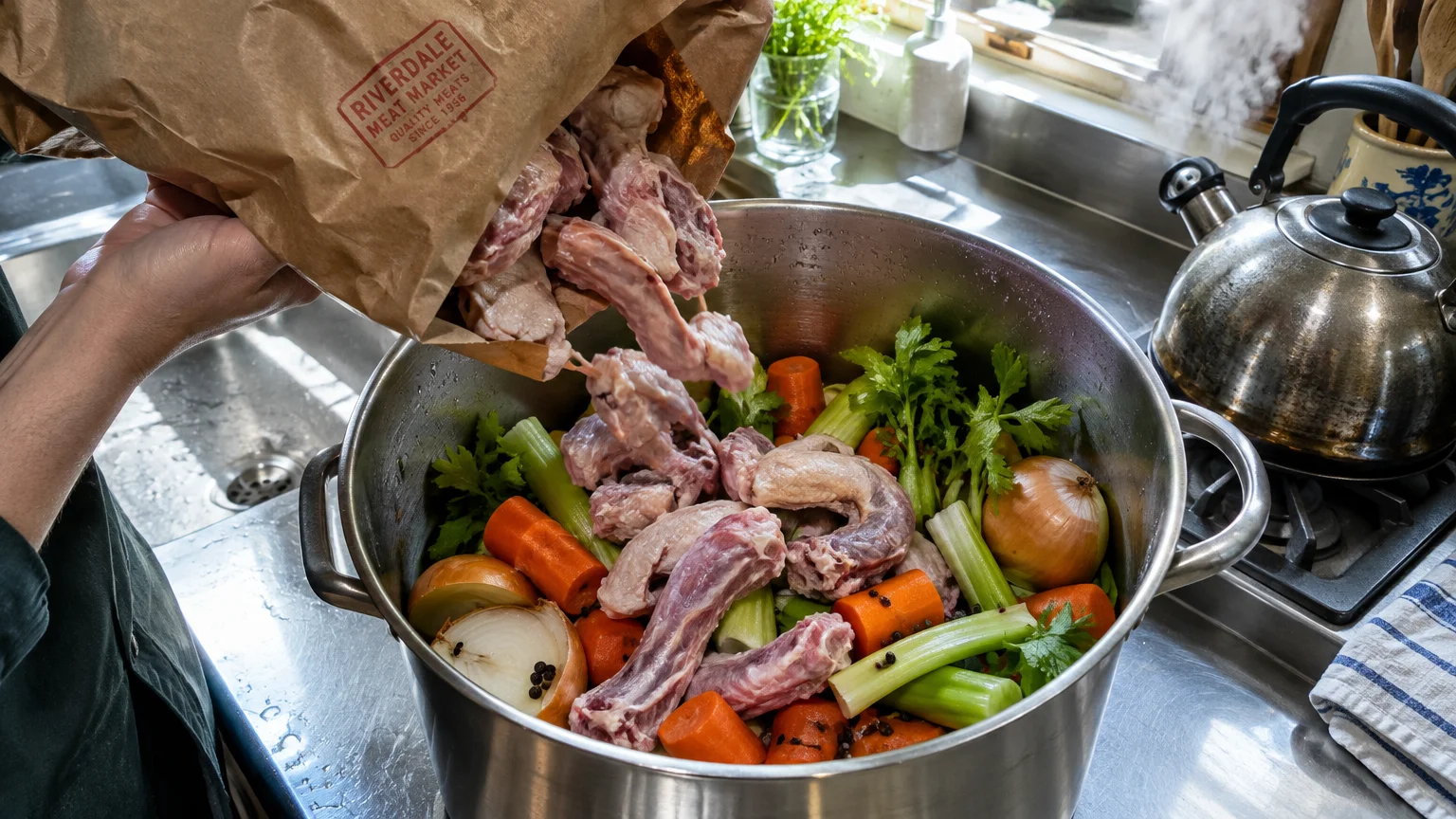
Tip #12: Chicken Backs, Necks, and Wing Tips
When supermarket meat departments cut whole birds into boneless breasts, they discard the nutrient-dense frames and neck bones. That is a massive loss for budget-conscious home cooks.
Independent butcher shops bag these chicken backs, necks, and wing tips to sell at rock-bottom prices. You can routinely buy bags of frames for $1.00 to $1.50 per pound.
These scrap cuts contain a heavy concentration of joint cartilage, skin, and residual meat. Simmering them creates a deeply golden, gelatinous chicken broth that easily rivals five-star restaurant bases.
You can pick the tender meat off the simmered bones to use in chicken salads, soups, and casseroles. Nothing goes to waste, maximizing every cent you invest into your grocery cart.
Stocking your freezer with inexpensive butcher backs ensures you never need to buy salty, cardboard-boxed chicken broth again. It is sustainable cooking that protects your pocketbook.
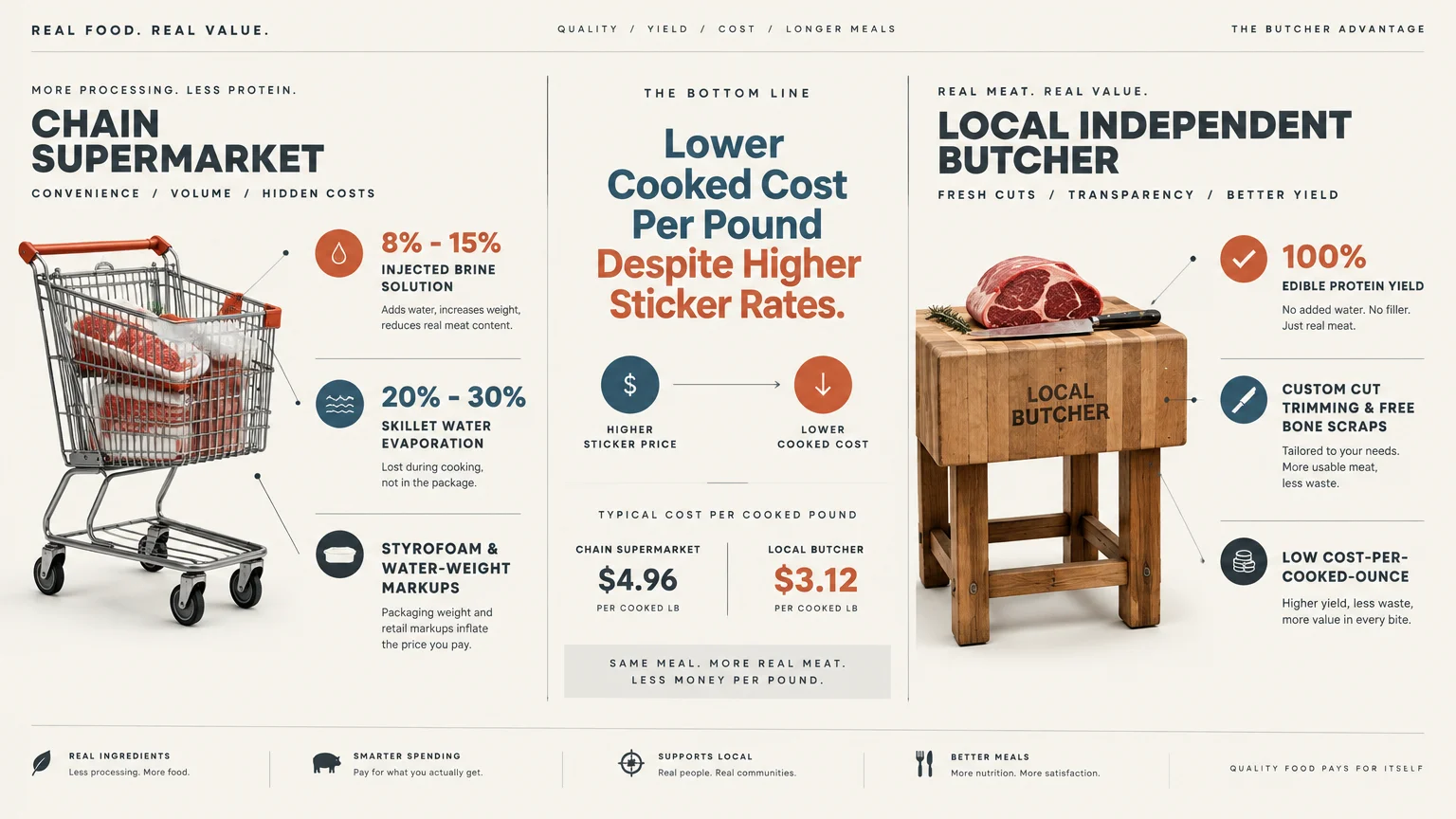
The Bottom Line: What This Means for Your Wallet
Supermarket meat counters rely on psychological pricing and packaging trickery to make inferior cuts look economical. When you account for cooking shrinkage, injected brine, and trim loss, grocery store savings vanish quickly.
Buying meat from a butcher flips the financial equation in your favor. You pay for high-density nutrition, clean ingredients, and skilled craftsmanship that chain stores simply cannot match.
Focus your spending on high-yield staples like air-chilled poultry, custom ground beef, and whole value cuts. Use inexpensive bones and scrap fat to build a self-sufficient, ultra-cheap pantry.
Talk to your butcher, ask what came in fresh, and request custom cuts suited to your budget. Embracing the benefits of local butcher shops will elevate your home cooking and protect your financial bottom line.
Frequently Asked Questions
Is buying meat from a butcher always more expensive than the grocery store?
No, the sticker price per pound can sometimes look higher, but your actual cost per cooked ounce is often lower. Supermarket meats contain up to 15% injected water and shrink drastically in the pan.
When you buy air-chilled poultry or custom grinds from a butcher, you retain almost the entire raw weight after cooking. You also gain access to value cuts that cost half as much as ribeye.
How do I talk to a butcher if I am a beginner?
Keep it simple and tell them your cooking method, your guest count, and your target budget. Ask them what cuts offer the best value that day or what they are taking home themselves.
Butchers love sharing their craft and will gladly trim, tie, or grind cuts to your exact specifications. You do not need professional culinary jargon to get exceptional service.
Can I freeze meat bought from a butcher for long periods?
Yes, butcher meat actually freezes better than grocery store meat because it contains far less surface moisture. Excess water inside commercial meat packaging promotes rapid freezer burn and degrades meat texture.
Ask your butcher to vacuum-seal or double-wrap your selections in heavy butcher paper for long-term storage. Properly wrapped cuts remain fresh and delicious in your freezer for up to twelve months.
What are the best cuts to buy at butcher shops for meal prepping?
Pork shoulder, beef shank, chuck roast, and chicken backs offer incredible yields for high-volume batch cooking. These cuts thrive during slow braising and yield pounds of tender shredded meat for weekly meals.
You can also ask your butcher to grind large custom batches of lean chuck or pork for homemade meatballs and casseroles. This guarantees top-notch protein quality throughout your entire busy workweek.
For consumer protection information, visit the Federal Trade Commission (FTC) and the Consumer Financial Protection Bureau (CFPB). For product safety and reviews, consult Consumer Reports.
Disclaimer: This article is for informational purposes only and does not constitute financial advice. The content reflects the author’s opinion and research at the time of writing. Always do your own research before making financial decisions.






Leave a Reply