Choosing the right warehouse club membership directly impacts your household budget, yet millions of shoppers default to the location closest to their home without calculating the true return on investment.
While Costco, Sam’s Club, and BJ’s Wholesale Club appear identical on the surface with their cavernous aisles and bulk packaging, their pricing structures, reward programs, and savings hacks differ significantly.
Paying $60 to $130 annually for a membership card makes sense only if the specific perks align with your shopping habits, family size, and driving routines.
This comprehensive warehouse club comparison exposes the hidden costs, policy loopholes, and operational differences among America’s top three retail titans so you can maximize every dollar you spend.
Tip #1: Analyze Membership Costs and Reward Caps
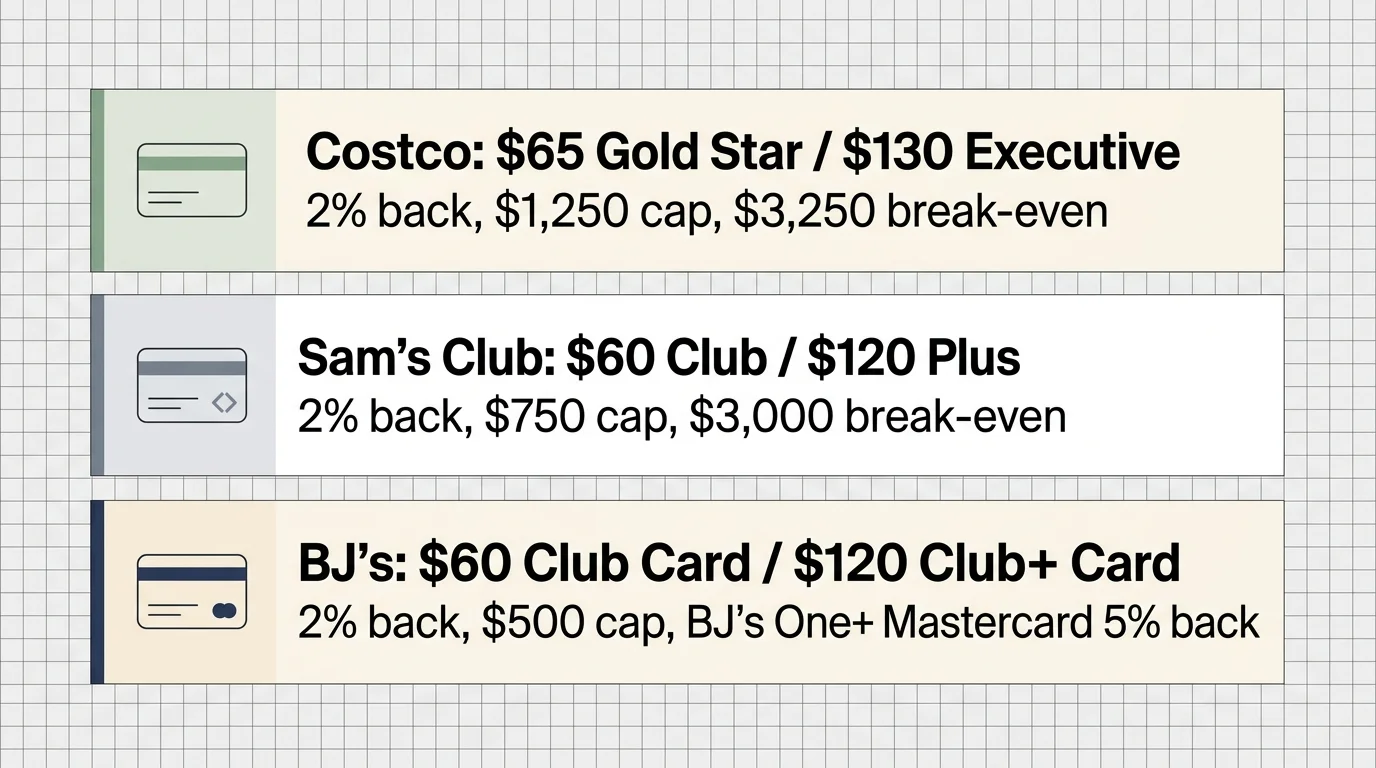
Evaluating basic and premium tier pricing across all three chains reveals distinct math equations for your wallet. Costco charges $65 per year for its basic Gold Star membership, while its Executive tier costs $130 annually.
Executive members earn 2% cash back on eligible purchases up to an annual reward cap of $1,250. To offset the additional $65 cost of an Executive upgrade, you must spend $3,250 per year at Costco, or roughly $271 per month.
Sam’s Club sets its entry-level Club membership fee at $60 annually and its premium Plus membership at $120 per year. Plus members earn 2% Sam’s Cash on eligible in-club purchases up to a cap of $750 per year.
Spending $3,000 annually at Sam’s Club generates $60 in rewards; that completely pays for the upgrade from basic to Plus. For high-volume households, Sam’s Club offers a slightly lower threshold to recoup your upgrade investment compared to Costco.
BJ’s Wholesale Club structures its fees similarly, pricing its basic enrollment, known as The Club Card, at $60 per year, while The Club+ Card costs $120 annually. Premium Club+ members receive 2% back in rewards on eligible purchases up to a $500 annual limit.
However, BJ’s offers a unique cardholder advantage through the BJ’s One+ Mastercard, which elevates your reward rate to 5% cash back with no annual earning cap. If you plan to carry store-branded plastic, BJ’s provides the highest potential ceiling for wholesale club savings.
Tip #2: Master the Art of Coupon Stacking
Understanding coupon policies exposes a major structural difference between these retail giants. If you love stacking discounts to slash grocery bills, a detailed BJ’s membership review reveals a massive advantage.
BJ’s stands out as the only wholesale club that accepts manufacturer coupons—both paper and digital—alongside its own store-issued promotional coupons. This policy opens up extraordinary savings opportunities for strategic shoppers.
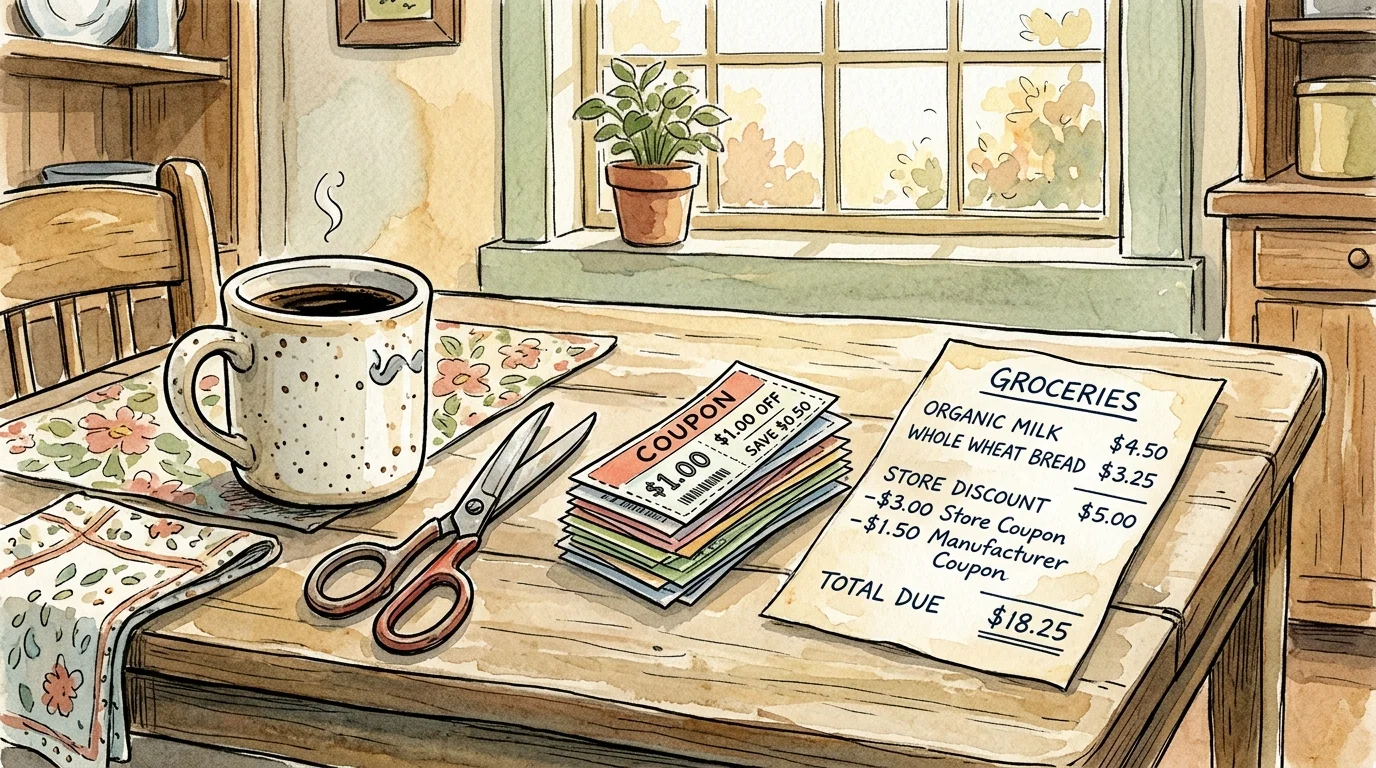
Consider a practical scenario: when BJ’s offers a store coupon for $3 off a major brand of paper towels, you can combine that promotion with a $1.50 manufacturer coupon from the Sunday paper or a coupon app.
This dual-discount technique cuts your register total far below wholesale base prices. You can double-dip on name-brand cleaning supplies, packaged foods, and personal care items every week.
Neither Costco nor Sam’s Club permits manufacturer coupons under any circumstances. Both retailers rely exclusively on internal instant savings and store promotions that automatically apply at checkout.
While instant savings simplify the shopping experience by eliminating paper trimming, they rob bargain hunters of the ability to stack discounts; that makes BJ’s the undisputed king of raw coupon power.
Tip #3: Evaluate Mobile Checkout Technology and Time-Saving Tech
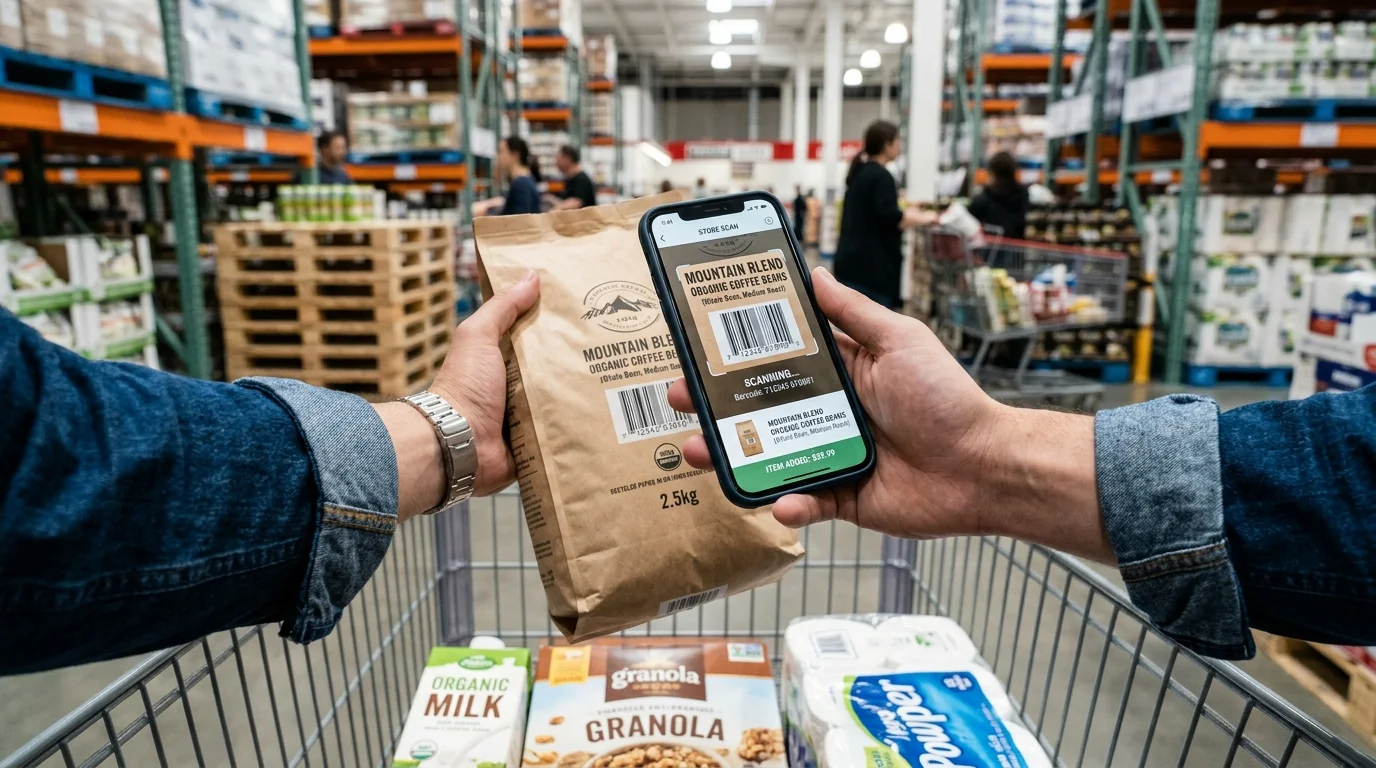
Time translates directly into money, and app functionality determines how quickly you escape store crowds. Sam’s Club dominates the technological landscape with its proprietary Scan & Go feature embedded within the mobile app.
You simply walk down the aisles, scan item barcodes with your smartphone camera, pay inside the app using your saved credit card, and show a QR code to the door attendant on your way out. You bypass long front-register checkout lines completely.
BJ’s offers a similar feature called ExpressPay through its mobile app. Shoppers scan items as they fill their carts, complete digital payment on their phones, and head straight for the exit doors.
This functionality reduces weekend shopping friction dramatically, transforming a potential hour-long headache into a swift twenty-minute errand.
Costco lags behind its competitors in mobile self-checkout technology. Costco does not offer a mobile scan-and-pay feature, forcing every shopper through traditional cashier lanes or standard self-checkout kiosks.
During peak weekend hours, waiting in line at Costco can add 15 to 30 minutes to your trip. If friction-free shopping ranks high on your priority list, Sam’s Club and BJ’s deliver a superior high-tech experience.
Tip #4: Compare Private Labels and Packaging Sizes
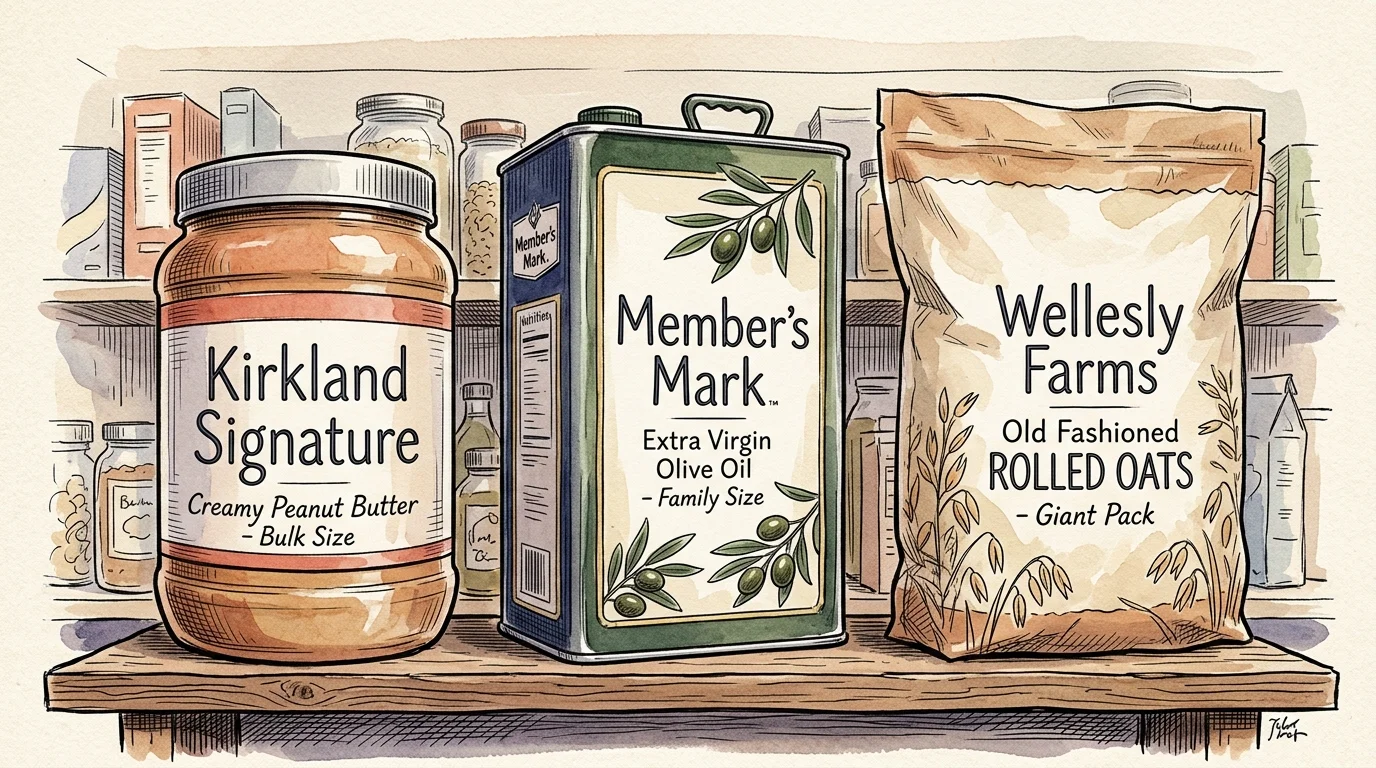
Private-label products frequently dictate long-term store loyalty because store brands yield the highest margins and savings. Costco built an elite consumer brand around Kirkland Signature, offering legendary quality that routinely matches or exceeds national brands.
From organic extra virgin olive oil and French vodka to paper towels and trash bags, Kirkland Signature delivers exceptional value; it drives millions of shoppers to renew their memberships annually.
Sam’s Club counters with its revamped Member’s Mark house brand. Over recent years, Sam’s Club overhauled Member’s Mark food items, household goods, and patio furniture to compete directly with Kirkland’s quality standards.
Member’s Mark products generally carry slightly lower price points than Kirkland Signature, giving budget-focused shoppers an extra edge at checkout.
BJ’s operates two distinct private labels: Wellsley Farms for food items and Berkley Jensen for non-food household goods. BJ’s real competitive edge, however, lies in packaging size.
While Costco and Sam’s Club force you to buy massive institutional quantities—such as multi-gallon condiment tubs or 36-count bakery packs—BJ’s stocks standard grocery store sizes alongside bulk offerings.
Smaller households avoid food waste because BJ’s sells manageable quantities that actually fit inside standard pantry shelves.
Tip #5: Leverage Gas Station Perks and Wholesale Fuel Savings
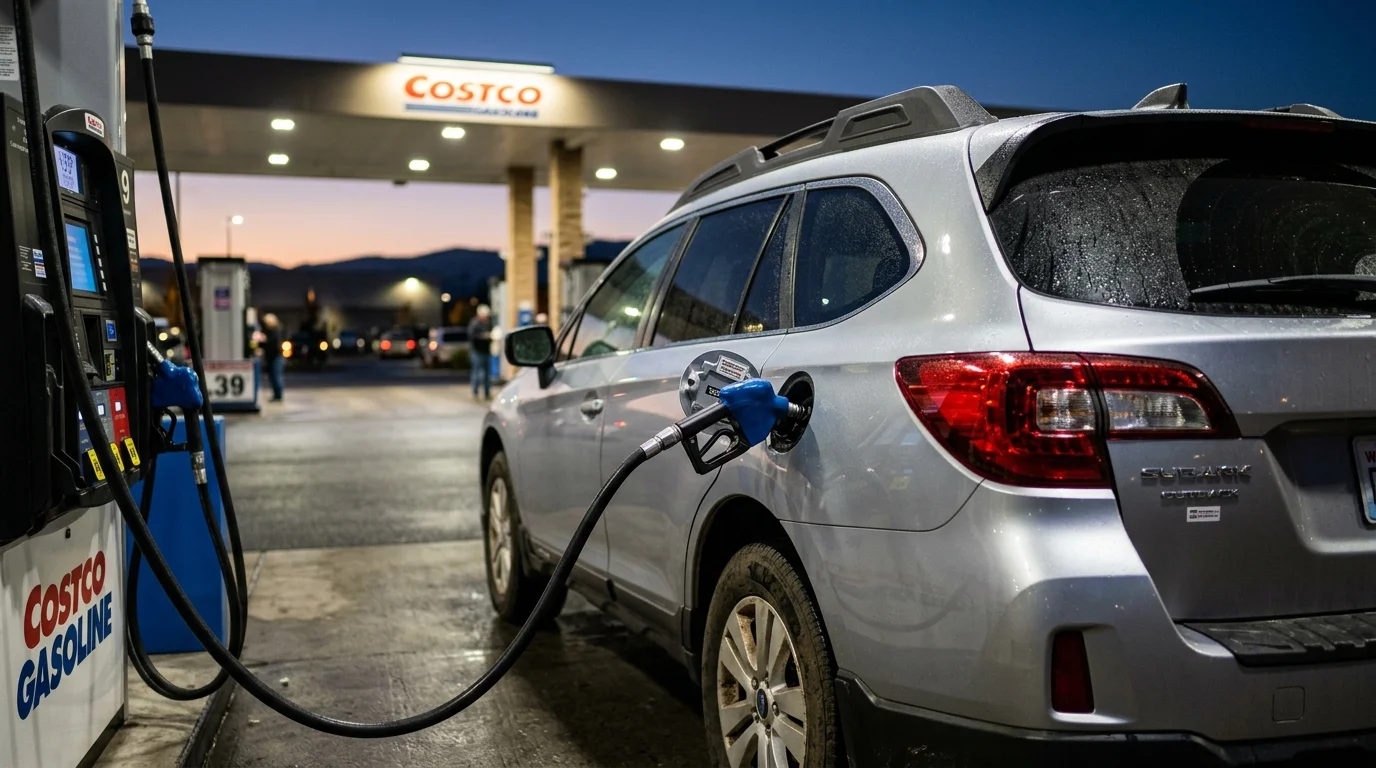
Fuel discounts represent one of the fastest ways to claw back your annual membership fee. Costco Fuel stations dispense Top Tier certified gasoline, which contains high levels of detergent additives designed to keep car engines clean and optimize performance.
Costco routinely prices its gas 10 to 30 cents per gallon below surrounding local stations, making weekly fill-ups a powerful financial incentive for commuter drivers.
Sam’s Club fuel stations offer competitive pricing that rivals Costco, and cash-back rewards ramp up significantly when paired with the store’s credit card.
The Sam’s Club Mastercard grants 5% cash back on gas purchases nationwide up to $6,000 annually, rather than limiting the bonus cash strictly to warehouse pumps. Commuters who log heavy mileage can earn hundreds of dollars in gas rewards each year.
BJ’s approaches fuel discounts through a targeted spending program called Fuel Your Savings. BJ’s highlights specific high-margin grocery products each month that unlock cumulative gas discounts—such as 10 cents off per gallon for every participating item purchased.
By strategically buying everyday household staples, you can lower your pump price by $1 or more per gallon during routine fill-ups.
Tip #6: Uncover the Senior Discount Myth and Sign-Up Hacks
A persistent belief circulates online regarding special rates for older shoppers, but looking for the best warehouse club for seniors requires dispelling common urban legends. None of the three major warehouse clubs offer a permanent, standing senior discount on their standard annual membership fees.
Older Americans pay the exact same base renewal rates as every other demographic.
However, savvy seniors can easily hack sign-up costs by targeting initial promotional deals. All three wholesale clubs routinely partner with deal platforms, military groups, teacher associations, and promotional sites to offer new member packages.
These sign-up promotions often award $20 to $45 in digital store gift cards, free rotisserie chickens, or instant account credits upon joining, effectively cutting the first-year fee in half.
Seniors looking to stretch a fixed income should also exploit household card rules. Each basic membership tier includes a free secondary card for a household member residing at the same address.
Sharing a single membership between spouses or resident family members cuts your effective annual fee in half, allowing you to maximize household savings without paying duplicate dues.
Tip #7: Assess Store Footprint and Regional Access
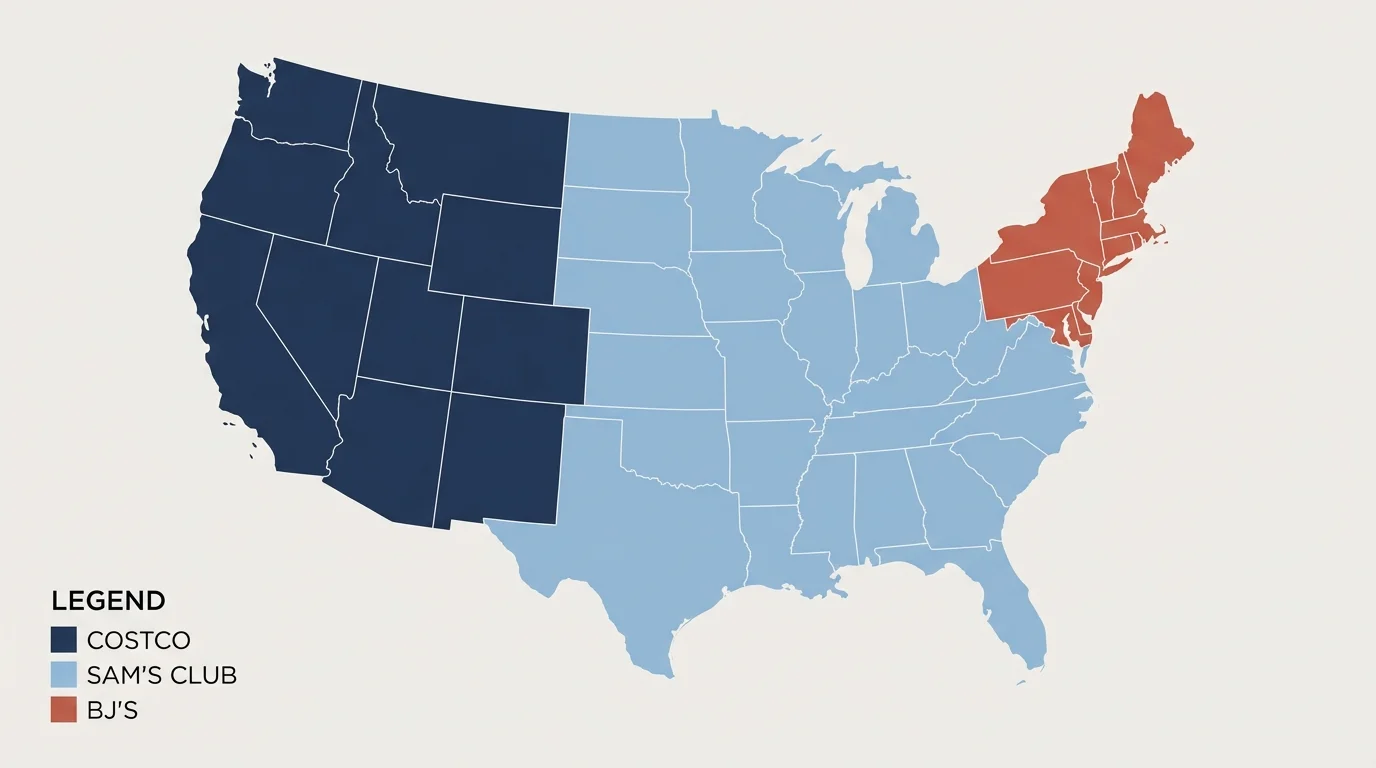
Geography often dictates practical choices regardless of individual store perks. Costco operates approximately 650 warehouse locations across the United States, maintaining a dense national footprint in suburban hubs and metropolitan areas.
Their extensive presence ensures easy access for millions of suburban families, though weekend parking lots remain notoriously crowded.
Sam’s Club maintains roughly 600 locations across 45 states, offering broad coverage throughout the Midwest, South, and rural suburban regions. Sam’s Club often places warehouses in mid-sized markets where Costco chooses not to operate.
For residents outside major metropolitan corridors, Sam’s Club frequently provides the most convenient physical location.
BJ’s Wholesale Club operates a more compact network of roughly 250 to 280 locations across 20-plus states. Concentrated heavily along the East Coast, BJ’s is expanding aggressively into new markets like Texas, Indiana, and Kentucky.
If you live outside the Eastern seaboard or new expansion zones, a BJ’s membership might prove impractical due to extended driving distances; long commutes quickly burn through any wholesale club savings you compute at the register.
Tip #8: Capitalize on Return Policies and Guarantee Fine Print
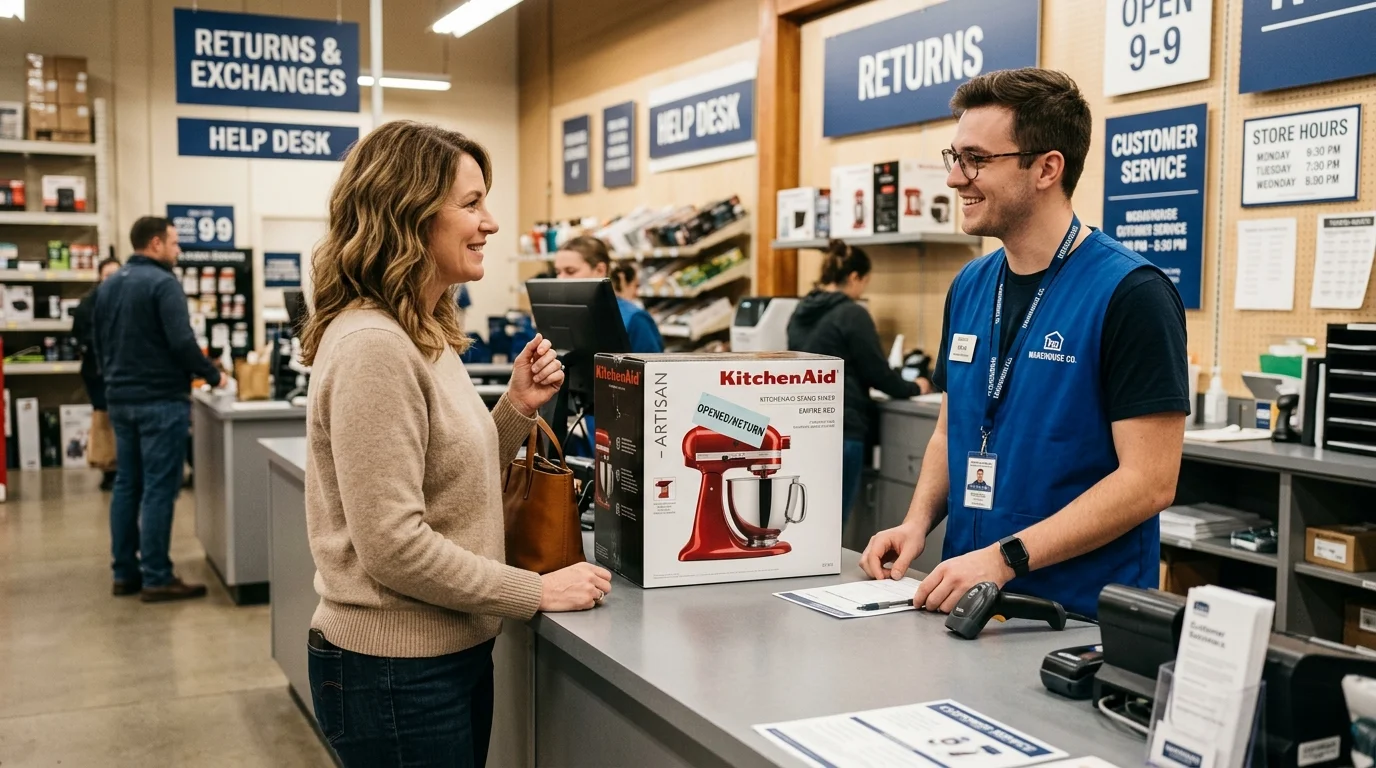
Risk mitigation forms an essential component of budget management, and return policies dictate how safely you can purchase high-ticket items. Costco sets the industry standard with its legendary 100% satisfaction guarantee.
If an item fails to meet your expectations, you can return it years later for a full cash refund, with major electronics capped at a generous 90-day return window.
Sam’s Club offers a matching risk-free guarantee on memberships and most general merchandise. Their return policy mirrors Costco by providing a 90-day return window for consumer electronics, laptops, and televisions.
Cashiers process returns efficiently through the digital app account history, eliminating the need to save stacks of paper receipts.
BJ’s maintains a solid return policy for general merchandise, allowing returns within one year of purchase for most items in original packaging. However, BJ’s enforces stricter timelines on electronics and technology goods, requiring returns within 14 to 30 days depending on the item category.
Always check the fine print when buying laptops, appliances, or televisions at BJ’s to avoid missing return windows.
The Bottom Line: What This Means for Your Wallet
Determining the clear winner in the costco vs sams club vs BJ’s showdown depends entirely on how you run your household.
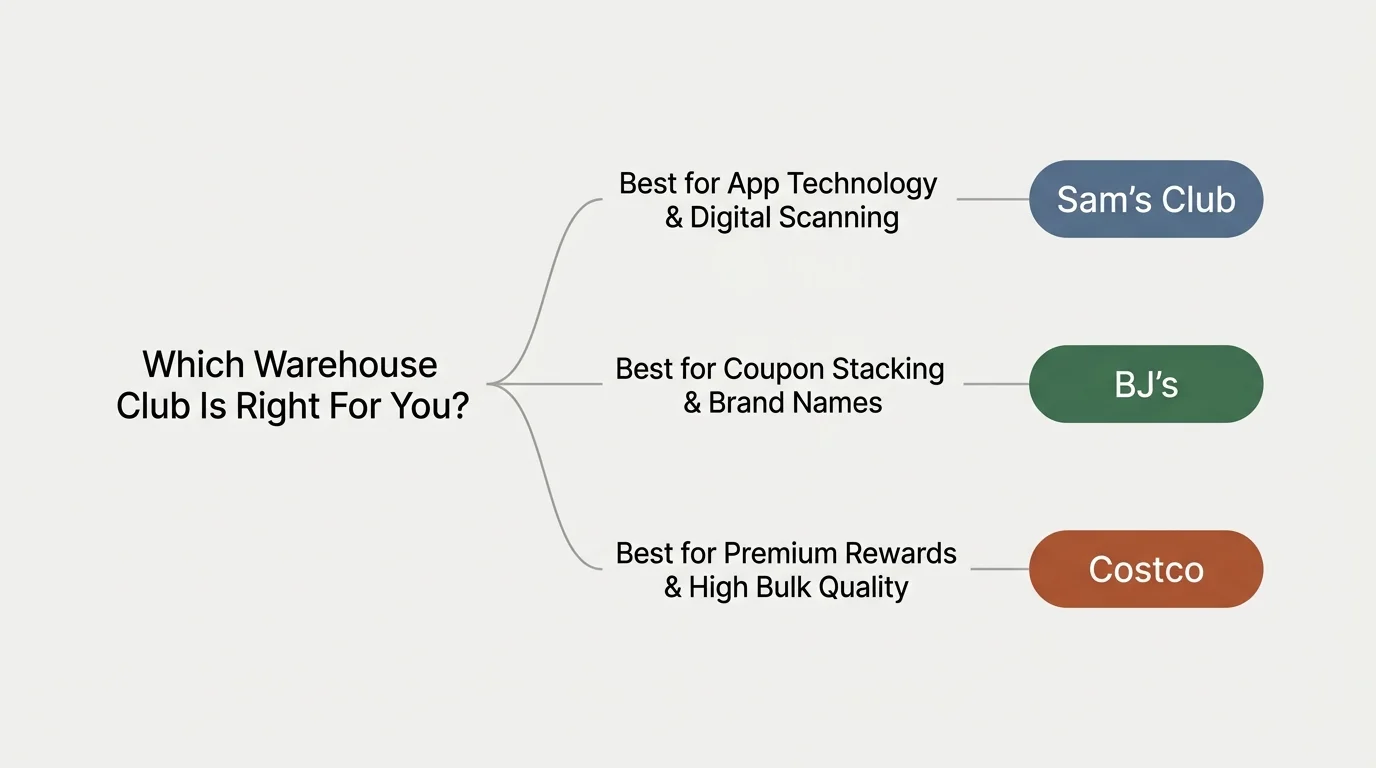
If high-end product quality, premium organic food selection, and unbeatable customer service guarantees rank first on your list, Costco easily justifies its $65 baseline fee. Executive members who spend heavily on home goods and gas will recoup their costs quickly while enjoying top-tier private label goods.
If you value digital convenience, speed, and aggressive credit card cash-back perks on gas, Sam’s Club takes the crown.
The Scan & Go app alone saves hours of standing in line every month, while the lower upgrade threshold makes premium rewards accessible for average household budgets. It delivers exceptional value for busy families who hate friction at checkout.
If you prefer standard packaging sizes, shop for a smaller household, or enjoy stacking coupons, BJ’s Wholesale Club offers the absolute best customized savings strategy. By pairing store promotions with paper manufacturer coupons, strategic shoppers can consistently beat bulk pricing models.
Evaluate your location, driving habits, and shopping style to select the card that returns maximum cash back into your bank account.
Frequently Asked Questions
Can you shop at wholesale clubs without buying a paid membership?
Yes, you can shop at wholesale clubs without a membership under specific regulatory exemptions. Federal law requires warehouse club pharmacies to sell prescription medications to non-members at standard retail pricing.
Additionally, non-members in many states can purchase alcohol at Costco and Sam’s Club without a card due to state liquor laws. You can also shop online at Costco.com or BJs.com as a non-member, though both sites add a 5% surcharge to non-member orders.
Which wholesale club offers the overall cheapest prices on basic groceries?
Price comparisons fluctuate based on regional sales, but Sam’s Club consistently edge out competitors on baseline per-unit prices for standard commodity groceries and pantry staples. However, BJ’s frequently wins on raw savings when shoppers actively stack manufacturer coupons on top of store discounts.
Costco maintains competitive per-unit prices while offering higher quality ingredients and larger organic selections.
How do the store-branded credit cards compare across the three chains?
The Sam’s Club Mastercard excels for drivers by providing 5% cash back on gas worldwide up to $6,000 annually. The BJ’s One+ Mastercard rewards heavy store spenders with 5% back on eligible BJ’s purchases with no annual earning cap.
The Costco Anywhere Visa by Citi offers 4% back on eligible gas (up to $7,000 per year), 3% back on restaurants and travel, and 2% back on Costco purchases, making it a versatile everyday card.
Is a warehouse club membership worth it for a single person living alone?
A warehouse membership can easily pay for itself for a single person if you strategically buy non-perishable goods, dry staples, fuel, and over-the-counter medications. Buying prescription drugs, paper goods, trash bags, coffee, and gasoline provides enough annual savings to cover a basic $60 or $65 fee.
BJ’s is particularly well-suited for single shoppers because it carries smaller, standard grocery package sizes.
For consumer protection information, visit the Federal Trade Commission (FTC) and the Consumer Financial Protection Bureau (CFPB). For product safety and reviews, consult Consumer Reports.
Disclaimer: This article is for informational purposes only and does not constitute financial advice. The content reflects the author’s opinion and research at the time of writing.
Always do your own research before making financial decisions.