
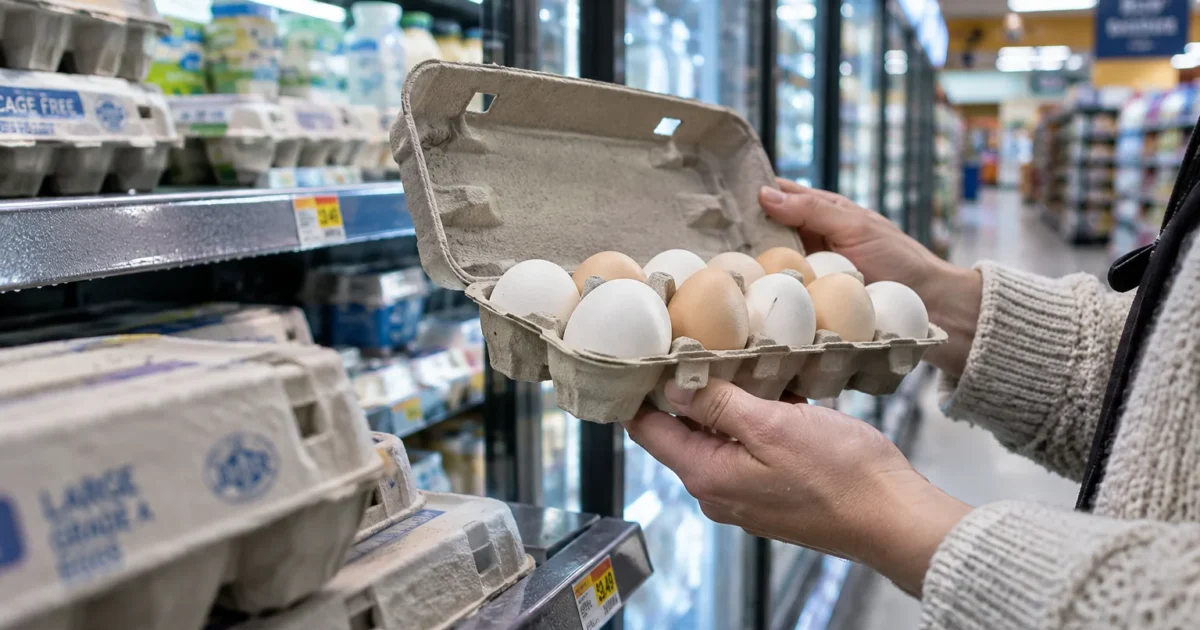
Stop overpaying for eggs based on misleading carton claims and flashy graphics. You can slash your grocery bill today by learning what retail carton labels actually mean.
Grocery stores routinely exploit consumer confusion, charging premiums of over 100 percent for buzzwords that offer zero nutritional benefit. Smart shoppers bypass these retail traps completely.
Learning what to look for when buying eggs puts hard-earned cash back into your pocket every single week. Here is your definitive egg quality guide to choosing the best eggs without wasting money.
Tip #1: The 3-Digit Julian Pack Date
Most grocery shoppers rely on the printed expiration date to judge freshness. That habit often leads to buying older inventory or tossing perfectly good food prematurely.
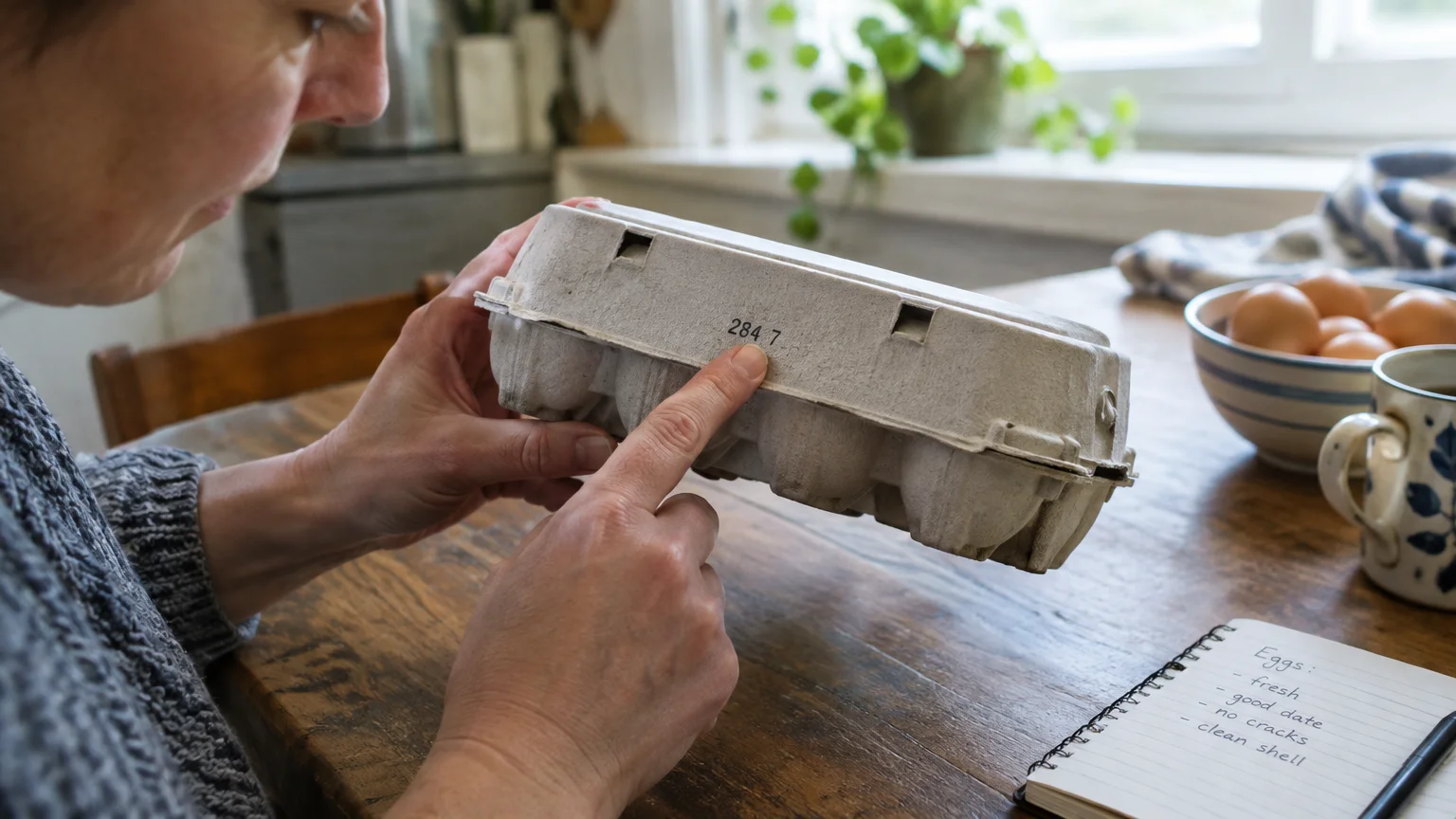
You need to ignore the marketing printed on top of the carton. Look instead for the three-digit Julian pack date stamped onto the short side.
Cracking the Julian Calendar Code
Cartons bearing the official USDA grade shield must display a three-digit Julian date. This number tells you the exact day of the year processors washed and packed those eggs.
The numbering system runs sequentially from 001 for January 1 through 365 for December 31. For example, a carton marked 045 means workers packed those eggs on February 14.
Finding a carton with a number closest to today’s date guarantees maximum freshness. Stale inventory sitting on display quickly loses moisture and culinary performance.
Understanding Sell-By Regulations
Federal rules prevent USDA-shielded cartons from showing a sell-by date greater than 30 days past the pack date. That 30-day window protects retailers, not your wallet.
Eggs remain fresh and safe to eat long after that printed sell-by date expires. Proper refrigeration at 40 degrees Fahrenheit preserves eggs for three to five weeks after purchase.
Throwing cartons away the moment they hit their stamped expiration date burns cash. Knowing how to pick fresh eggs based on the pack date eliminates unnecessary food waste.
Bypassing Supermarket Stocking Tricks
Grocery store employees follow strict stock rotation rules known as first-in, first-out. They deliberately push older cartons toward the front of the refrigerated dairy case.
Reach past the front row and inspect cartons situated at the very back. You will frequently find cartons packed one to two weeks later than the front units.
Grabbing that fresher carton buys you extra weeks of usable shelf life at home. That simple physical reach prevents spoilage before you finish the carton.
Tip #2: Net Weight and True Size Value
You might assume that egg sizes describe the physical dimensions of individual eggs. In reality, the United States Department of Agriculture regulates egg sizes strictly by total carton weight.
Farmers pack dozens based on minimum net ounces per carton rather than individual shell circumference. That distinction opens up significant budget opportunities when you shop.
The Official USDA Weight Standards
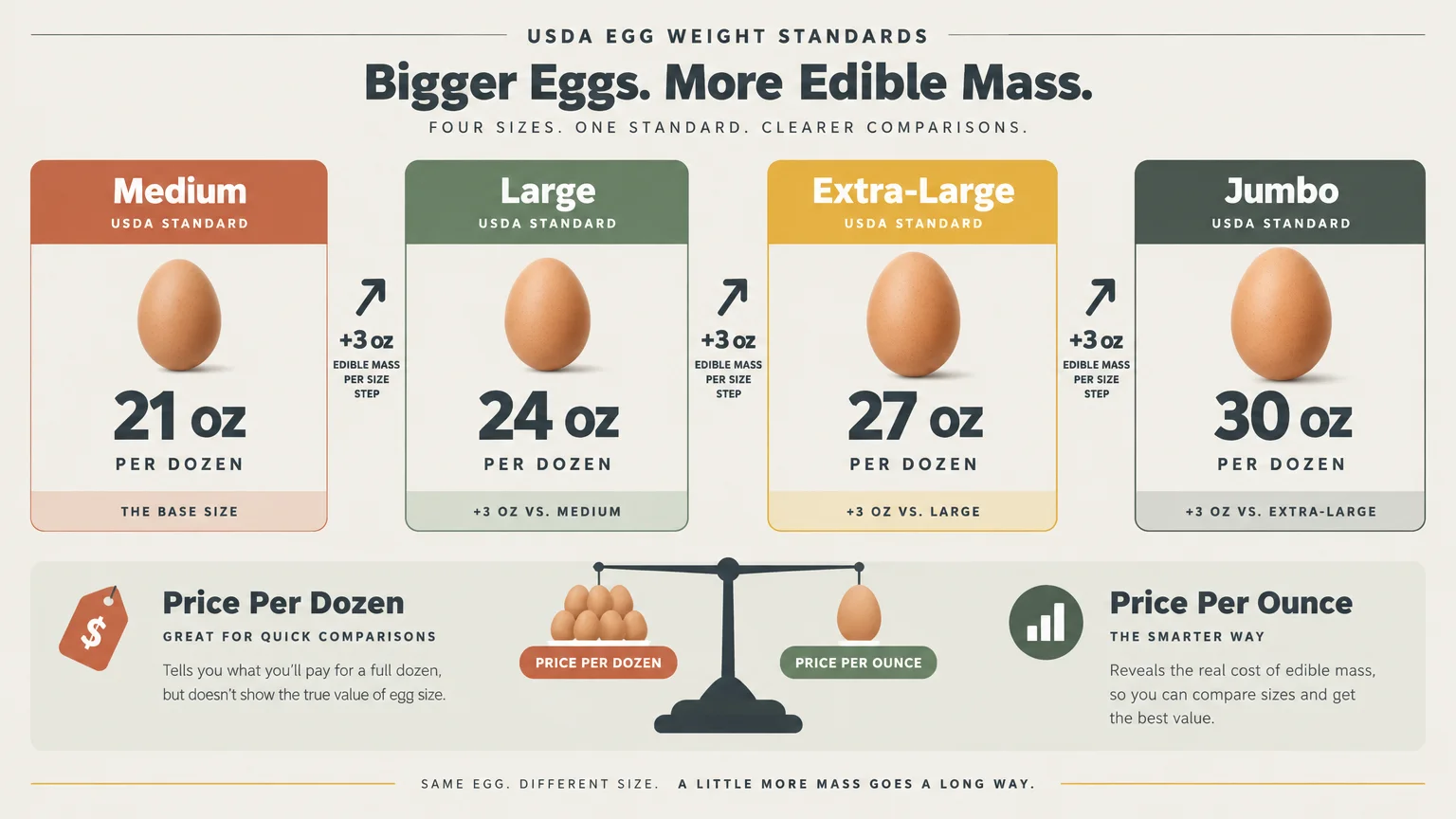
A carton of Medium eggs must weigh at least 21 ounces per dozen. Large eggs require a minimum weight of 24 ounces per dozen.
Extra-Large cartons must hit 27 ounces, while Jumbo dozens scale up to 30 ounces. Every step up in size provides three additional ounces of edible egg mass.
Almost every baking recipe standardizes measurements using Large eggs. However, cooking scrambles, omelets, and frittatas offers complete flexibility regarding shell size.
Calculating the Real Cost Per Ounce
Supermarket shelf tags show the price per dozen, which conceals the actual value. Calculating the price per ounce reveals which carton truly saves you money.
When retail egg markets fluctuate, supermarkets often discount Medium or Extra-Large sizes faster than standard Large dozens. Retailers do this to clear out unbalanced warehouse inventory.
Divide the carton price by the total ounces to identify the cheapest protein source. If Extra-Large eggs cost only ten cents more than Large, you gain three ounces of free food.
Capitalizing on Market Price Swings
Egg prices have experienced wild price swings across recent years due to supply shocks. Following record spikes, national average prices for Large eggs stabilized around $2.19 per dozen.
During inflationary periods, consumers aggressively buy Large eggs out of habit, driving up their relative price. You can exploit this behavioral blind spot by switching sizes.
Grabbing Medium eggs during price crunches often yields identical nutritional value at a steep discount. Never let habit dictate your carton selection at the checkout line.
Tip #3: The Shell Color Pricing Illusion
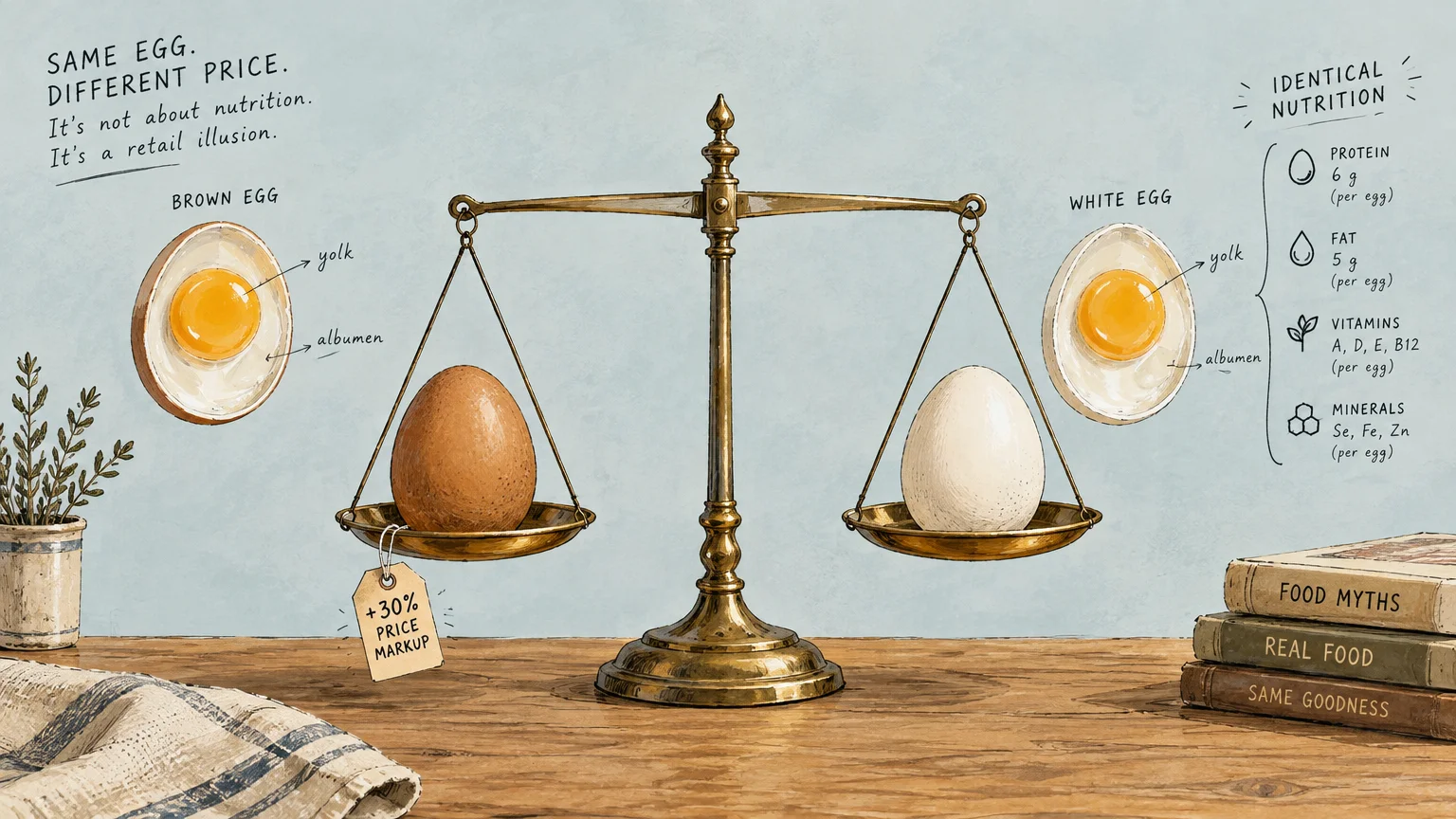
Walk down the dairy aisle and you will immediately notice a substantial price difference between white and brown shells. Brown eggs consistently command a price premium of 10 to 25 percent.
Marketers package brown eggs in earthy, rustic cartons to imply superior artisanal quality. That rustic appearance is an expensive optical illusion designed to capture your premium dollars.
The Biology Behind Eggshell Pigment
The color of an eggshell depends entirely on the breed and genetic lineage of the hen. Hens with white feathers and white earlobes lay white eggs.
Hens with red or dark feathers and red earlobes lay brown eggs. The pigment forms purely on the exterior shell surface during the final hours before laying.
Crack both shells open and you will find identical yolk structures and identical albumin whites. The internal egg remains functionally and aesthetically indistinguishable.
The True Reason Brown Eggs Cost More
Supermarkets charge more for brown eggs because brown-laying hen breeds are physically larger than white-laying Leghorns. Larger birds require significantly more feed each day to produce eggs.
Egg producers pass that elevated feed conversion cost directly onto supermarket shoppers. You pay extra money solely to cover the hen’s bigger grocery bill.
That production cost increase provides zero functional benefit to your family or recipes. Spending extra money on shell pigment simply burns your household grocery budget.
Nutritional Parity Across Shell Colors
Agricultural laboratories have analyzed thousands of eggs across multiple decades. Data proves that shell color shares zero correlation with protein, vitamins, minerals, or cholesterol levels.
Both colors deliver roughly six grams of high-quality protein per Large egg. Paying 50 cents more per dozen for brown shells delivers zero measurable health benefits.
Save your money by purchasing white eggs whenever brown eggs carry a price premium. Direct those grocery savings toward genuine nutritional upgrades elsewhere in your cart.
Tip #4: USDA Quality Grade Reality
Many shoppers believe that egg grades reflect nutritional density, purity, or food safety standards. That widespread belief is incorrect.
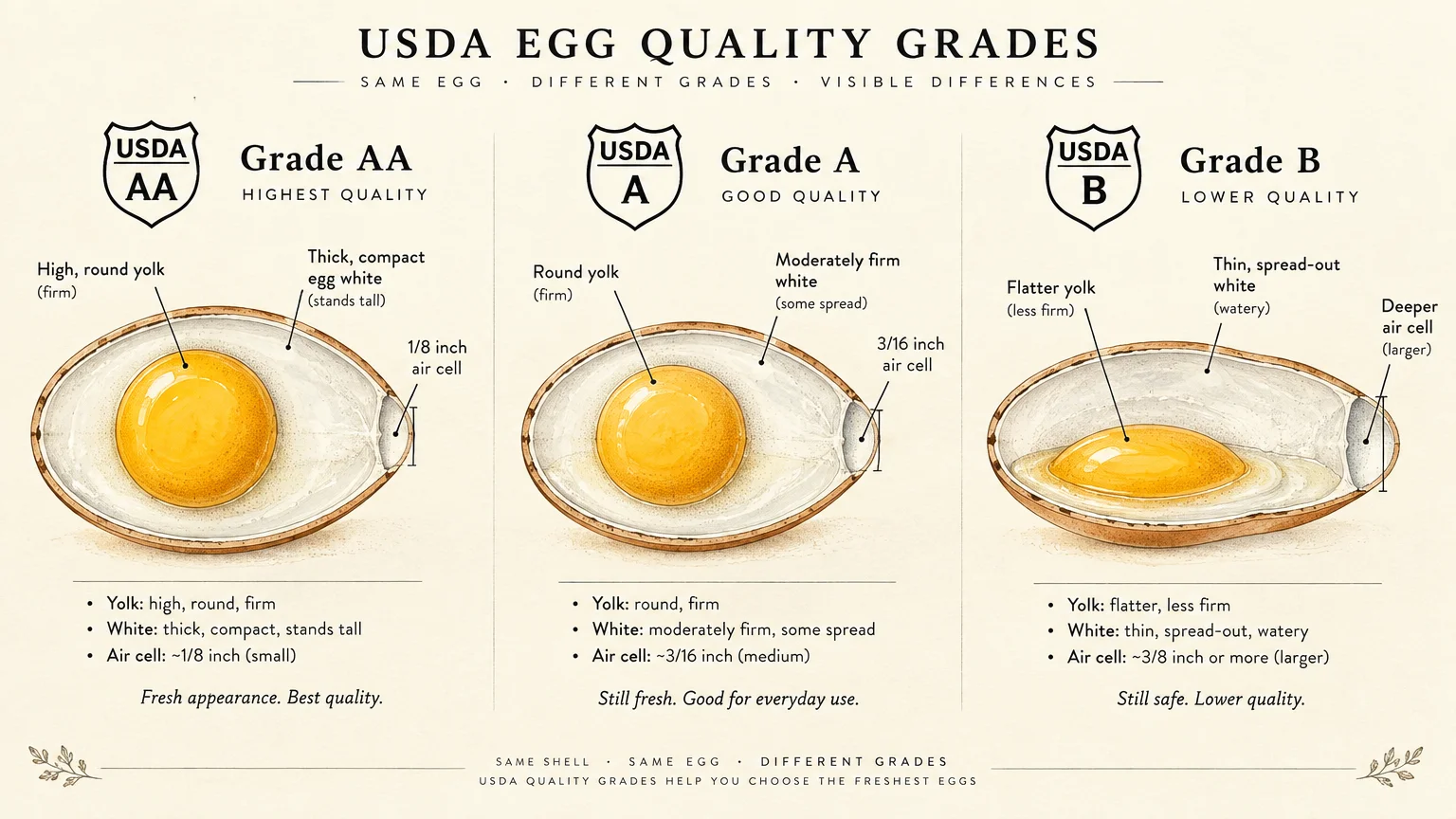
The USDA quality grade shield reflects cosmetic traits and structural firmness rather than nutritional superiority. Understanding this egg quality guide helps you avoid paying unnecessary brand premiums.
How Candling Determines Egg Grades
Egg inspectors grade cartons by passing eggs over high-intensity light beams in a process called candling. This illumination exposes internal characteristics without cracking the shell.
Inspectors measure the depth of the interior air cell at the blunt end of the shell. They also check yolk outline distinctness and the thickness of the surrounding egg white.
Grade AA eggs feature thick, firm whites, round yolks that stand high, and tiny air cells. Grade A eggs feature slightly less firm whites but remain exceptionally high quality.
The Grade AA Degradation Factor
Specialty grocery stores often charge a premium for cartons stamped with the Grade AA shield. That cosmetic rating begins degrading the moment cartons leave the processing facility.
Within a week of normal home refrigeration, moisture evaporates through the porous shell. That natural evaporation causes a Grade AA egg to settle into Grade A status naturally.
You are essentially paying extra for cosmetic traits that disappear before you crack the shell. Buying Grade A provides identical flavor and utility at a far more reasonable price point.
Nutritional and Culinary Equivalence
Both Grade AA and Grade A eggs provide identical quantities of protein, choline, and essential amino acids. The structural firmness differences matter only when you prepare delicate poached or fried eggs.
Scrambling, baking, and boiling eliminate any visual difference between egg grades entirely. In fact, slightly older Grade A eggs peel far more cleanly after hard-boiling than fresh Grade AA eggs.
Grade B eggs carry thinner whites and flatter yolks, making them ideal for commercial liquid egg products. Supermarkets rarely stock Grade B, leaving Grade A as your most cost-effective retail choice.
Tip #5: Regulated Labels Versus Marketing Buzzwords
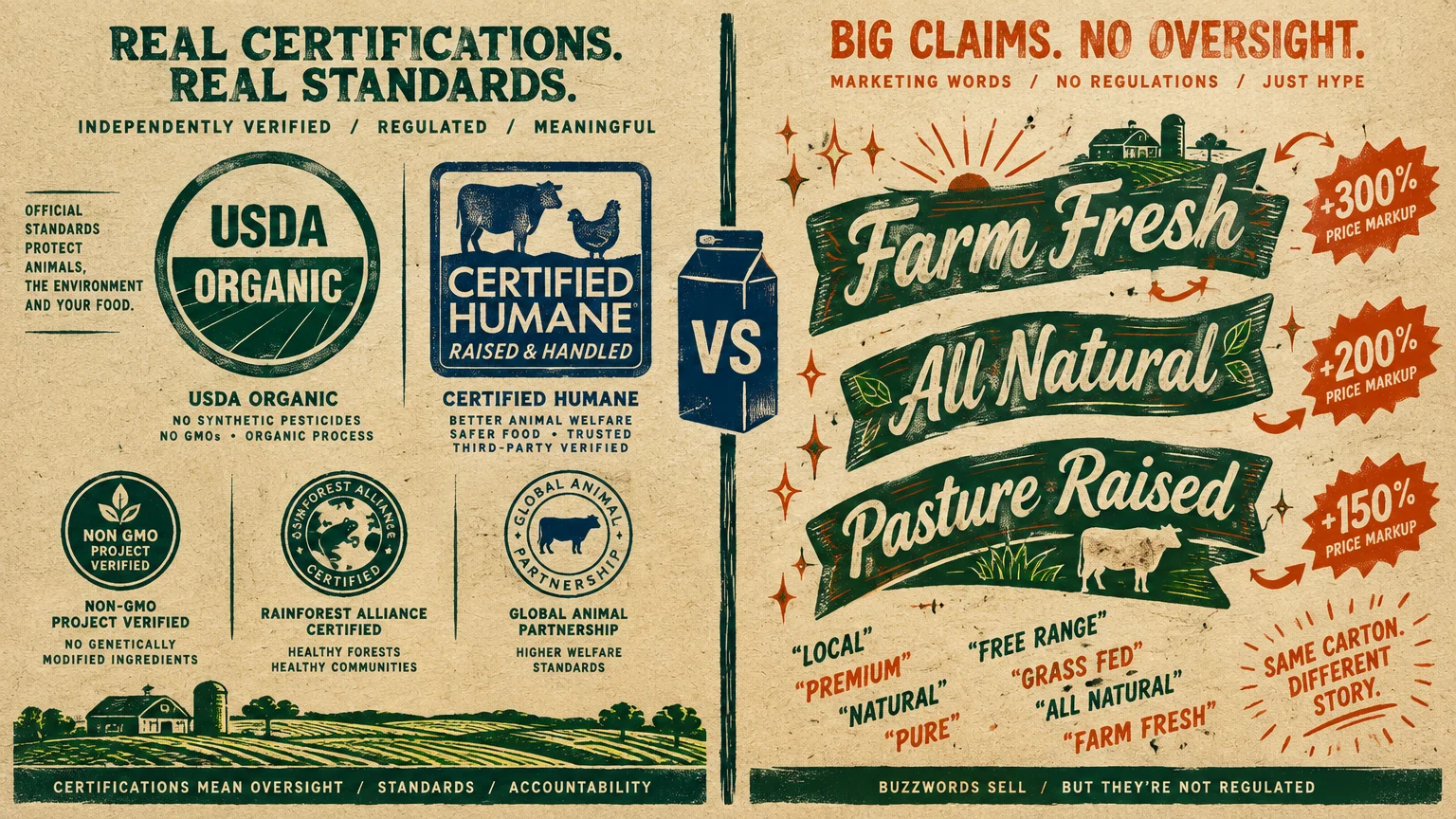
Egg carton marketing ranks among the most misleading categories in the entire grocery store. Brands plaster pastoral imagery, green fields, and feel-good terms across packaging to justify huge markups.
Standardizing your understanding of egg carton labels explained by federal law protects your family budget. You must separate legally enforced definitions from unregulated corporate marketing claims.
The Truth About Cage-Free Eggs
The USDA strictly regulates the term cage-free, but the legal reality surprises most shoppers. Cage-free hens do not live in tiny battery cages, but they rarely see sunlight.
These birds typically live inside massive enclosed barns with thousands of other hens. They can walk vertically and horizontally, but they generally have zero outdoor access.
Cage-free cartons regularly cost 30 to 50 percent more than conventional caged eggs. Knowing this reality helps you evaluate whether that price jump aligns with your financial priorities.
Deconstructing Free-Range Regulations
Free-range labels require producers to provide birds with continuous access to the outdoors during their laying cycle. However, federal regulations do not define the size or quality of that outdoor space.
A massive poultry warehouse with a single open door leading to a tiny gravel pen qualifies legally. Many hens inside large operations never actually venture through the small access doors.
Supermarkets charge substantial premiums for free-range cartons based on pastoral assumptions. Do not pay double unless you verify that the farm provides meaningful outdoor foraging space.
The Pasture-Raised Marketing Wild West
The term pasture-raised carries zero legal definition or enforcement from the USDA on retail packaging. Any producer can print pasture-raised on a carton without breaking federal labeling laws.
If you want authentic pasture-raised eggs, look for third-party certifications like Certified Humane or Animal Welfare Approved. Certified Humane requires at least 108 square feet of pasture per bird.
True pasture-raised eggs often command prices between $5.00 and $8.00 per dozen. That represents a 150 to 250 percent premium over standard eggs priced at $2.19.
Decoding USDA Organic Standards
USDA Certified Organic eggs must come from cage-free hens that have outdoor access and eat 100 percent organic feed. The feed cannot contain synthetic fertilizers, chemical pesticides, or animal byproducts.
The high price tag of organic eggs stems primarily from the expensive cost of certified organic grain. While organic feed eliminates pesticide residues, it produces eggs with identical basic macronutrient counts.
When household budgets tighten, buying standard conventional eggs frees up substantial weekly capital. Make your carton choices based on verifiable facts rather than picturesque farm illustrations.
The Bottom Line: What This Means for Your Wallet
Mastering the dairy aisle requires seeing past deceptive retail packaging and artificial price structures. Supermarkets count on hurried shoppers grabbing cartons without analyzing numbers or verifying claims.
Egg prices have recovered from historic bird flu highs that reached past $6.20 per dozen in early 2025. Today’s average price of $2.19 offers significant room for disciplined budget optimization.
Check the three-digit Julian date on the side of the carton to ensure peak freshness. Dig toward the back of the shelf to gain extra weeks of edible storage life at home.
Compare the price per ounce between Medium, Large, and Extra-Large sizes before placing a carton in your cart. That basic arithmetic exposes hidden bargains created by erratic wholesale inventories.
Ignore shell color and skip cosmetic Grade AA upgrades to protect your wallet from pointless marketing markups. Standard Grade A white eggs deliver identical kitchen performance and pure protein value.
Cutting your carton spending from $6.50 down to $2.19 saves over $220 annually for a typical household. Applying disciplined shopping rules keeps your hard-earned money right where it belongs.
Frequently Asked Questions
How do you test egg freshness at home without cracking the shell?
Place your egg gently into a deep bowl filled with cold tap water. Fresh eggs lie completely flat on the bottom because their internal air cells remain tiny.
Older eggs stand upright on point because moisture has evaporated, enlarging the buoyant air pocket. Eggs that float to the top have excessive gas buildup and belong in the trash.
Are cracked eggs safe to buy if the supermarket offers a discount?
Never purchase cracked eggs, regardless of how steep a discount the supermarket offers. Bacteria like Salmonella enter the egg instantly through microscopic hairline cracks in the shell membrane.
Open the carton in the store and gently touch each egg to verify that none stick to the bottom. A stuck egg indicates a leak that broke the protective microbial barrier.
Does deep yolk color mean an egg is more nutritious?
Yolk color reflects what the hen ate rather than overall nutritional quality or protein content. Hens fed yellow corn and alfalfa lay eggs with medium yellow yolks.
Producers frequently add marigold petals or paprika to hen feed to create rich, dark orange yolks. That vibrant color creates a visual impression of farm freshness without changing essential vitamins.
Can you freeze fresh eggs to stock up during major sales?
You can safely freeze eggs for up to one full year, but never freeze them inside their shells. Expanding liquids will crack the shells and ruin the texture.
Crack the eggs into a clean bowl, whisk whites and yolks together, and pour into ice cube trays. Transfer the frozen egg cubes into airtight freezer bags for future cooking.
For consumer protection information, visit the Federal Trade Commission (FTC) and the Consumer Financial Protection Bureau (CFPB). For product safety and reviews, consult Consumer Reports.
Disclaimer: This article is for informational purposes only and does not constitute financial advice. The content reflects the author’s opinion and research at the time of writing; always do your own research before making financial decisions.







Leave a Reply