Swapping national brand groceries for private label alternatives slashes your household food and supply bill by 20% to 30% without sacrificing quality. Consumer data shows American shoppers pay over $2 more per item simply for a corporate logo, adding thousands of dollars in unnecessary markup to annual expenditures.
Retail store brands reached a record $282.8 billion in sales in 2025 because smart shoppers recognize that the price markup on big-name brands pays for multimillion-dollar advertising campaigns rather than better ingredients.
You can immediately keep more money in your bank account by recognizing how private labels match or exceed national brand quality across every single aisle.

Tip #1: Crack the Price Gap Math to Save 20% to 30% Annually
Understanding the actual dollar difference between private label goods and national names is the first step toward reclaiming your household budget. A comprehensive report from Numerator revealed that the price gap between national brands and store brands grew by a staggering 38% between 2019 and 2024.
Today, you pay an average of over $2 more per individual item when you choose a national brand over a retailer’s private label equivalent.
While two dollars might sound like minor pocket change during a single grocery trip, that artificial markup compounds rapidly across a typical family basket of thirty or forty items.
Data released by Circana and the Private Label Manufacturers Association shows that U.S. store-brand sales hit an all-time record of $282.8 billion in 2025—a 3.3% increase over the previous year.
Store brands achieved historic market shares of 21.2% in total dollar sales and 23.2% in total unit volume across American stores. Consumer Reports consistently confirms that systematically choosing store brands saves households between 20% and 30% on their annual grocery and household supply bills.
When evaluating a head-to-head store brand vs name brand comparison, those percentages translate into thousands of retained dollars every single year that you can reallocate toward paying off debt, funding retirement, or investing.
The widening price disparity exists because national brands must continually raise prices to fund expensive corporate infrastructure, media ad buys, and shareholder dividends. Private labels bypass these bloated operational costs entirely; grocers partner directly with producers and ship directly to their own retail distribution centers.
As inflation squeezes family budgets, paying an arbitrary brand premium provides zero financial return for your hard-earned dollars.
Tip #2: Capitalize on Shared Factory Production Lines
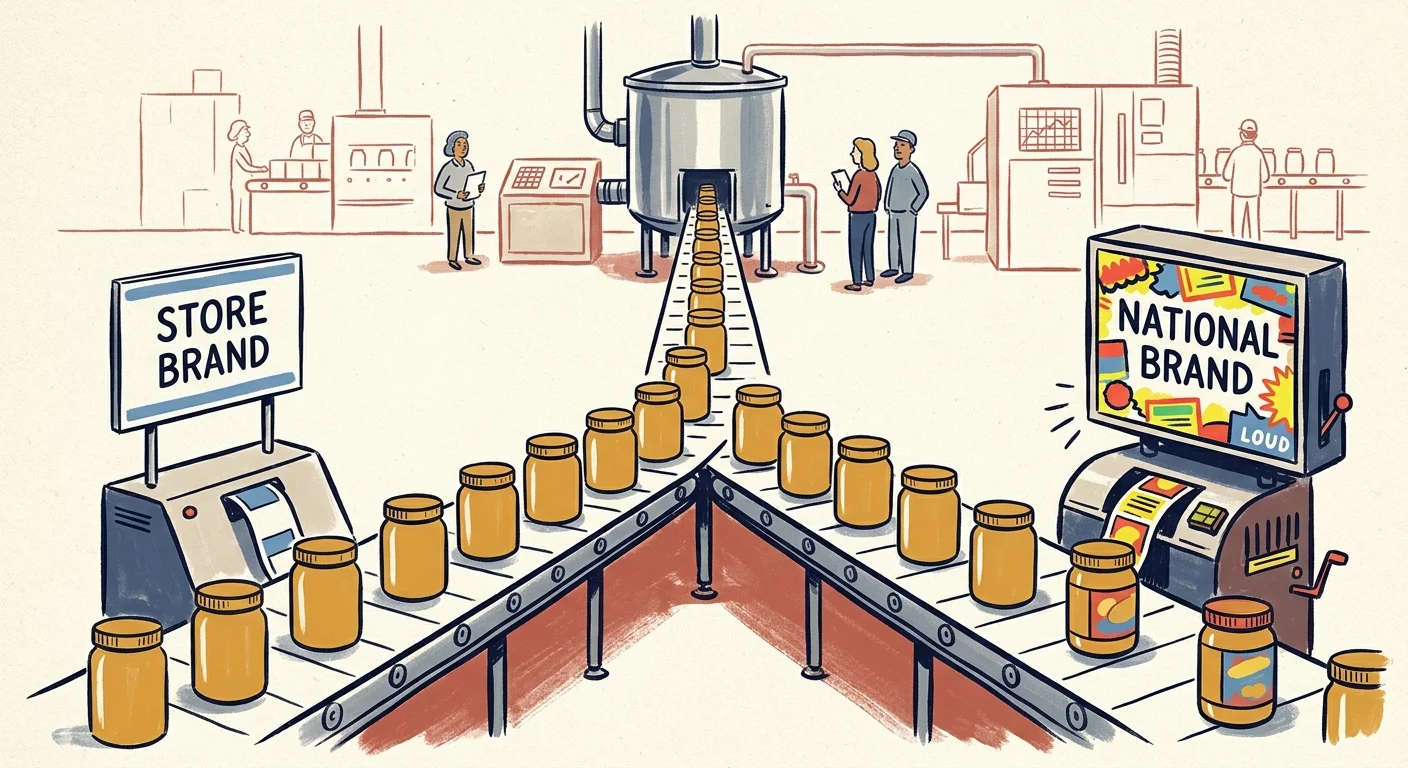
One of the best-kept secrets in the retail industry is that third-party food processors and major national brands frequently manufacture store-brand goods inside the exact same factory facilities.
Big-name food conglomerates regularly operate excess factory capacity; to maximize operational efficiency, they sign contract agreements to package their standard formulas under private store labels.
That means the store-brand canned tomatoes, pasta, frozen vegetables, or dairy products sitting next to the name-brand version on store shelves frequently come off identical assembly lines with identical raw ingredients.
Federal regulations enforce strict, uniform manufacturing standards across all food processing plants regardless of whose logo gets printed on the final cardboard box.
Both store-brand and national-brand food items must satisfy identical safety, sanitation, and labeling standards enforced by the Food and Drug Administration and the United States Department of Agriculture.
When assessing name brand vs generic food items, you are rarely paying for superior manufacturing techniques or elevated quality control; you are merely subsidizing the national brand’s marketing department, celebrity endorsers, and prime slotting fees paid to retail chains.
Recognizing this manufacturing reality eliminates the false narrative that lower price tag items are somehow inferior. When you buy a store-brand product, you are often consuming the exact product packaged by a household brand name, minus the expensive cardboard printing and multi-million-dollar marketing strategy.

Tip #3: Master Over-the-Counter Medications for 100% Active Ingredient Parity
If you want guaranteed financial savings without any compromise on biological performance, start your shopping changes in the pharmacy aisle.
Under strict federal regulations enforced by the Food and Drug Administration, generic and store-brand over-the-counter and prescription medications must contain the exact same active ingredients, strength, dosage form, and safety profile as their expensive name-brand counterparts.
Whether you buy brand-name pain relievers, allergy pills, nighttime cold remedies, or antacids, the active chemical compound delivering medical relief is legally mandated to be identical to the generic store-brand alternative.
Inactive ingredients—such as coloring agents, flavorings, or tablet binding compounds—can vary slightly between competing products, but these non-medicinal additives do not alter therapeutic performance or safety.
Market research indicates household penetration for store-brand health and beauty goods reached 99.2%, showing that millions of savvy consumers already trust store-brand medicine for their families.
Choosing private label health products over generic vs brand name products routinely yields price discounts of 40% to 70% per bottle, keeping significant cash in your pocket while delivering the exact same health outcomes.
Next time you search for headache or allergy relief, flip the box around and compare the active ingredient section on the back label.
When the active chemical formula matches down to the milligram, paying double or triple for a recognizable brand name is purely a tax on consumer habit.

Tip #4: Leverage Blind Taste Tests and Blind Product Performance
Marketing psychology exerts a powerful influence on human perception, tricking our brains into believing expensive items taste or perform better simply because they cost more. However, objective scientific testing strips away label bias and reveals the actual truth about product quality.
A study by First Insight revealed that 84% of American consumers believe store brands equal or surpass national brands in overall quality.
Even more telling, 72% of consumers in side-by-side blind comparison tests could not tell the difference between a private label product and its national brand rival.
Conducting your own home store brand quality comparison is an empowering and eye-opening exercise for your household budget. Pour store-brand cereal, potato chips, or orange juice into unlabeled bowls alongside name-brand versions and let your family judge purely on flavor, aroma, and texture.
In most household trials, family members fail to distinguish the expensive brand or actively prefer the store-brand formulation. Once you strip away flashy corporate packaging, you realize that brand loyalty is usually just an expensive mental habit engineered by advertising agencies.
By relying on your own palate rather than glossy advertising campaigns, you take back control of your food expenditures. Testing products blindly builds confidence in your spending decisions and proves that affordable private label foods deliver premium eating experiences.
Tip #5: Spot National Brand Retaliation and Marketing Tricks
National brand conglomerates realize they are losing massive market share to private store labels, so they rely heavily on subtle pricing tactics and retail psychology to protect their profits.
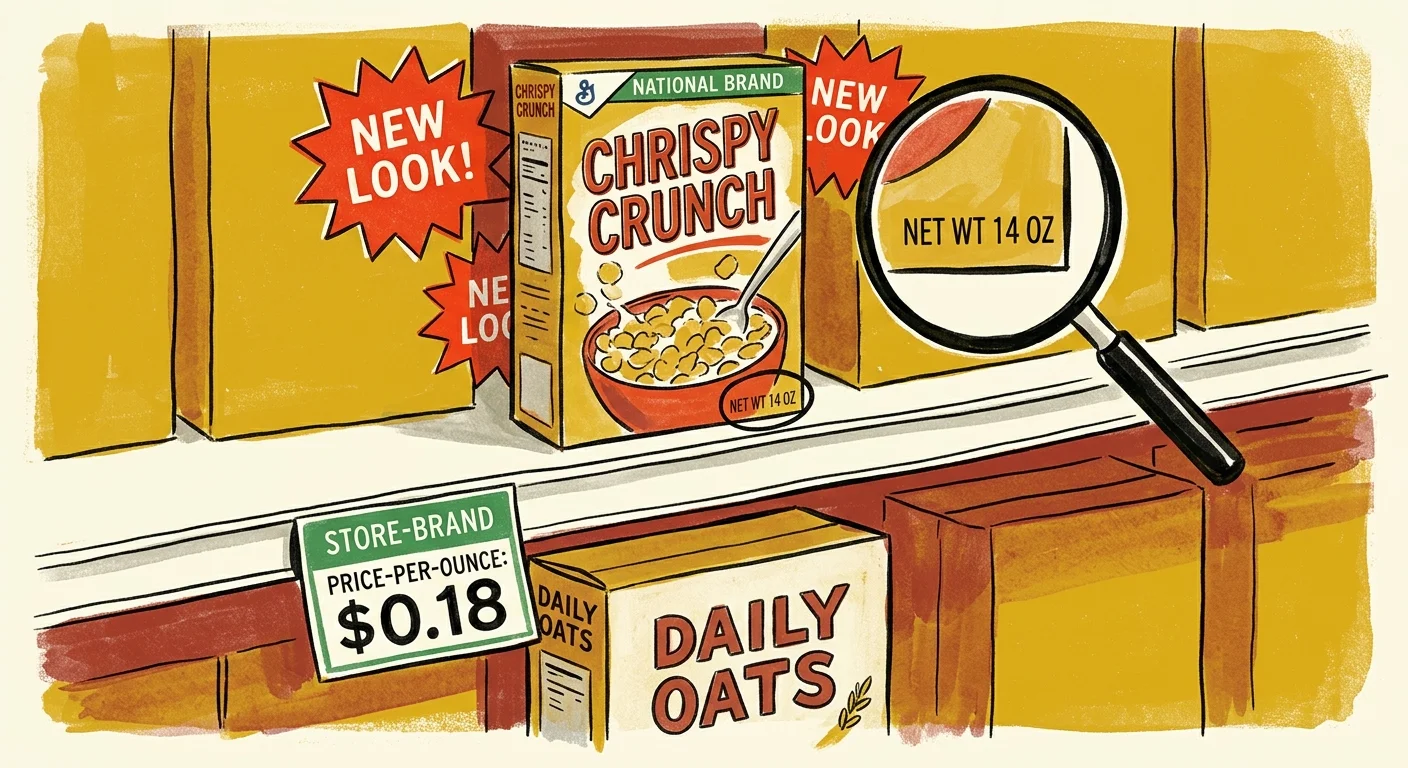
Store shelves are carefully calculated battlegrounds where name-brand manufacturers pay premium slotting fees for middle eye-level placement, leaving store brands tucked away on bottom or top shelves where shoppers look less frequently.
Furthermore, national brands routinely engage in subtle shrinkflation—reducing package volume while maintaining the same outer container size and price point—to hide price hikes from unsuspecting shoppers.
To guard your hard-earned money against these psychological traps, you must look beyond colorful box design and focus entirely on the unit price displayed on shelf tags. Compare products on a cost-per-ounce, cost-per-fluid-ounce, or cost-per-sheet basis rather than total box price.
You will quickly notice that name brands use oversized packaging and bold typography to justify exorbitant price markups.
By training yourself to scan the top and bottom shelves while calculating true unit costs, you bypass corporate retail traps and secure real value on every single shopping trip.
Never assume that a temporary sale or coupon on a national brand makes it cheaper than the private label baseline. Stores often discount brand-name items just enough to match store-brand regular prices, tricking you into returning to expensive brand habits once the promotional period ends.

Tip #6: Embrace Income-Agnostic Dupe Shopping Trends
Buying private label items was once unfairly stereotyped as a compromise for tight budgets, but cultural and economic attitudes have shifted dramatically across the country.
Market data reveals private label adoption across nearly 100% of U.S. households, with grocery penetration leading at 99.9% and household goods standing at 98.9%.
Modern shoppers view seeking out private label alternatives—frequently referred to as “dupes”—as a clear sign of financial intelligence rather than financial restriction.
A First Insight survey found that 47% of all shoppers actively seek store brands as direct dupes for premium national products. Interestingly, that number jumps to 70% among higher-income households earning six figures or more.
Wealthy consumers recognize that overpaying for basic household paper towels, cleaning sprays, trash bags, or pantry staples yields zero long-term financial return.
Embracing store-brand dupes frees up discretionary cash flow that you can redirect toward building wealth, proving that saving money on everyday goods is a universal strategy used by financially savvy families.
Social media trends and frugal online communities have made private label deal hunting popular across all demographic groups. When affluent households prioritize private labels, it confirms that private label quality matches top-tier market standards across every product line.

Tip #7: Target Staples vs. Unique Formulations Strategically
While private labels dominate most grocery categories, taking a targeted, strategic approach ensures you maximize both cash savings and personal satisfaction.
Basic commodity products—such as granulated sugar, flour, baking soda, salt, canned beans, frozen vegetables, shredded cheese, and milk—have zero meaningful quality variance between manufacturers.
Purchasing national brands in these basic categories is essentially burning money because raw commodity ingredients must adhere to strict standardized industry specifications across the entire food supply chain.
When asking is store brand worth it, evaluate products based on recipe complexity and personal preference.
Proprietary items with highly unique spice blends, specialized condiments, or specific snack textures might occasionally justify buying the national brand if a private label duplicate misses the mark for your taste buds.
However, applying a default store-brand rule to 90% of your shopping list allows you to enjoy massive baseline savings on standardized staples while reserving full flexibility for the handful of signature items where brand nuance truly matters to you.
Auditing your pantry using this staple-first framework immediately slashes your weekly checkout bill. By automating your purchases on basic ingredients, you eliminate decision fatigue while protecting your household budget from corporate inflation.
Tip #8: Exploit Grocery Store Return Guarantees and Satisfaction Policies
One major advantage of buying private label products is that major retailers back their store brands with exceptionally aggressive refund guarantees.
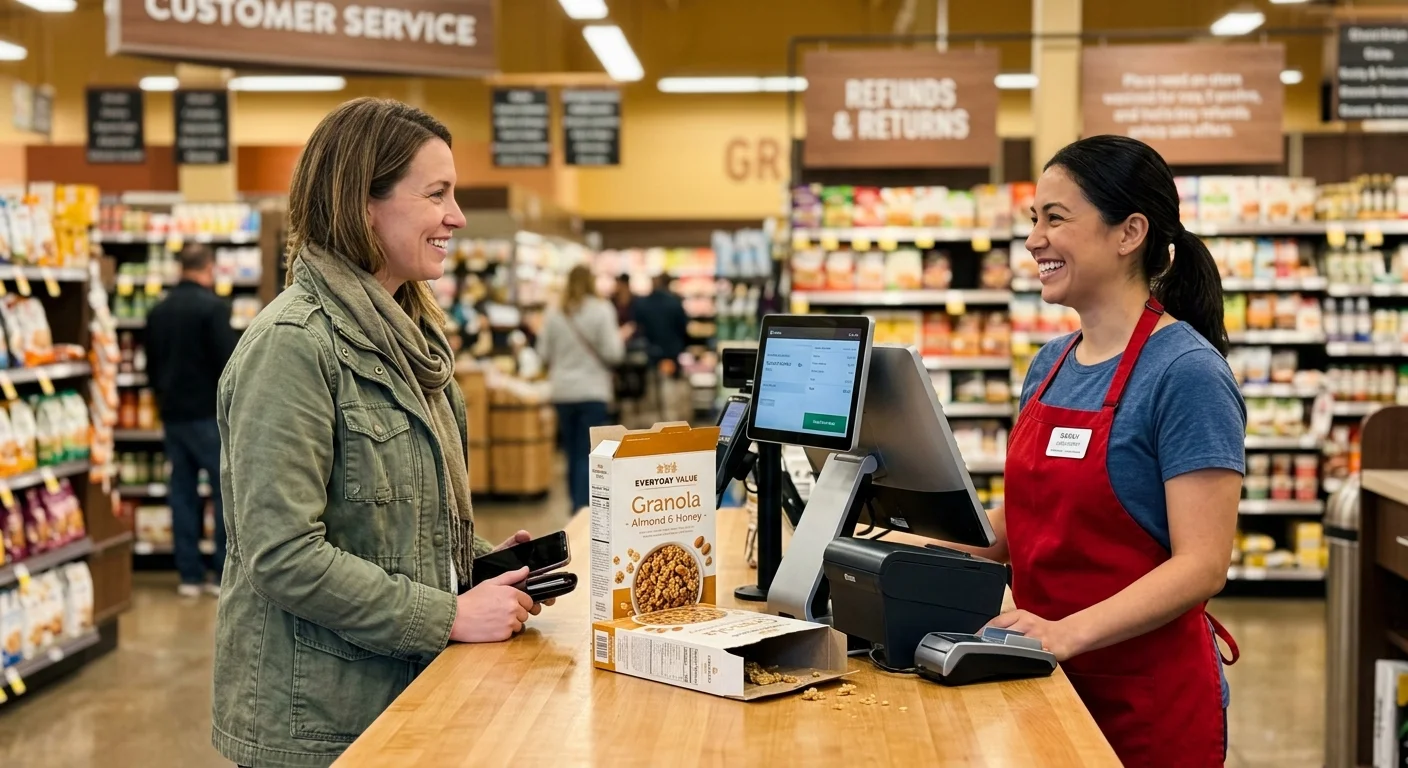
Supermarket chains, warehouse clubs, and discount grocers—including Aldi, Trader Joe’s, Kroger, HEB, and Costco—frequently offer 100% satisfaction guarantees or double-money-back promises on their store-brand items.
If you purchase a private label product and dislike the flavor, texture, or performance, you can return the open package for a full refund or a replacement plus your cash back.
These generous return policies eliminate financial risk when testing new store-brand items across your grocery list. Supermarkets aggressively defend private label quality because store brands offer higher profit margins for the retailer while building long-term customer loyalty.
Knowing you have zero financial exposure makes switching away from overpriced national brands completely frictionless. Take advantage of store refund policies to test private label alternatives across every department, keeping what you love and returning anything that falls short of your expectations.
Retailers create these risk-free trials specifically because their internal quality data proves most customers stick with store brands once they try them. Using these corporate guarantees gives you ultimate flexibility as you optimize your household budget.
The Bottom Line: What This Means for Your Wallet
The myth that higher price tags automatically signal superior product quality has been thoroughly debunked by market data, scientific testing, and federal regulation.
With private label market share topping $282.8 billion and price gaps widening significantly, sticking blindly to national brands costs the average household hundreds of dollars every month.
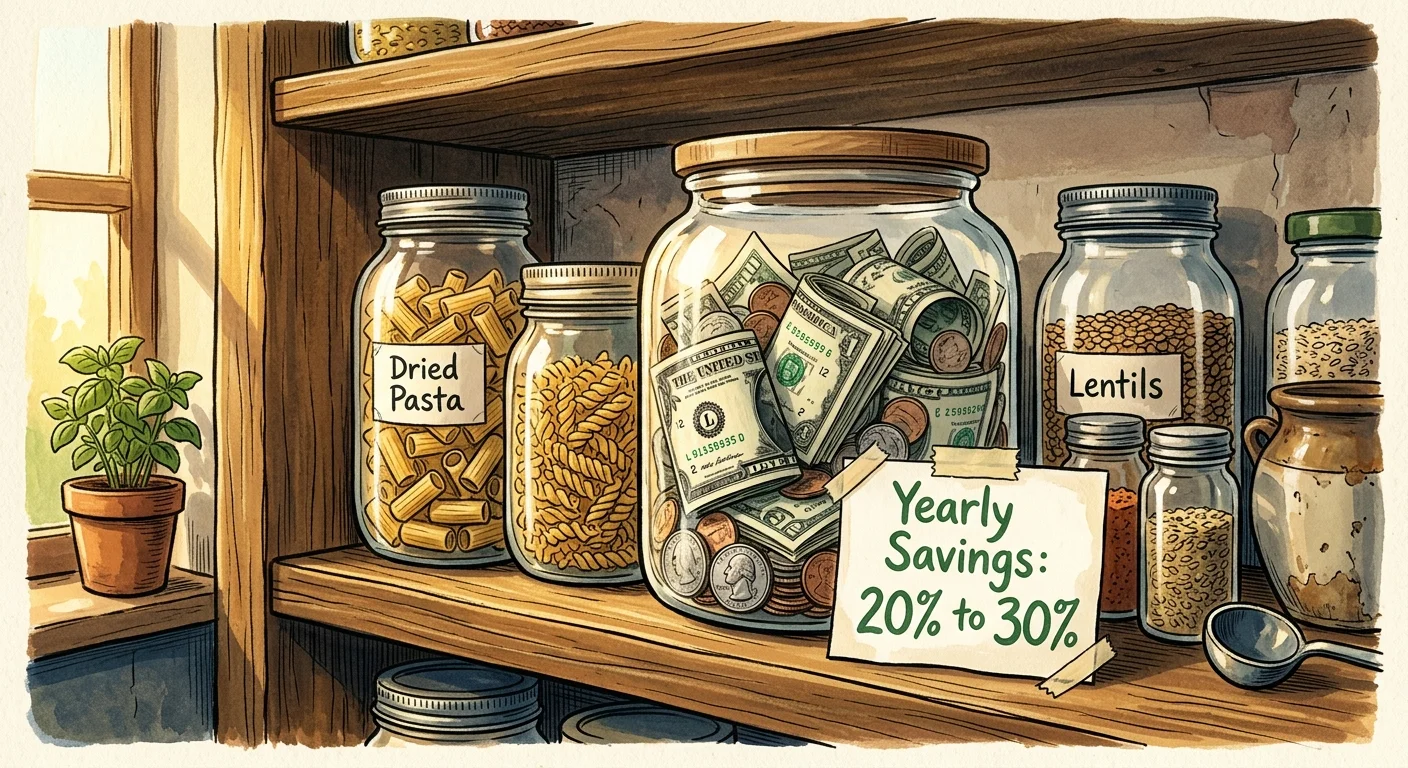
By switching your standard cart to private labels, you capture 20% to 30% instant savings without sacrificing safety, nutrition, or taste performance.
Smart shopping is not about personal sacrifice or lowering your living standards; it is about refusing to fund corporate marketing budgets and inflated distribution markups.
Take control of your grocery trips by checking unit prices, starting with pharmacy and commodity staples, and embracing the financial wisdom of private label dupes.
Reinvesting those monthly savings into high-yield accounts or debt reduction compounds over time, transforming simple supermarket choices into meaningful, long-term personal wealth.
Every time you choose a private label product, you keep more of your hard-earned money working for your personal financial goals rather than enriching corporate shareholders. Make private labels your default shopping setting today and watch your monthly cash flow increase immediately.
Frequently Asked Questions
Are store brand food items as safe as national brand products?
Yes. Both store-brand and national-brand food products are held to identical federal food safety, labeling, and inspection standards regulated by the FDA and USDA.
Private label items are frequently processed in the same certified production facilities as brand-name goods using identical safety protocols.
Why are national brands so much more expensive than store brands?
National brands carry heavy overhead costs, including massive marketing budgets, television and digital advertising campaigns, celebrity endorsements, and slotting fees paid to retailers for prime shelf placement. Store brands rely on existing store foot traffic, passing those massive overhead savings directly to consumers.
Do generic medications take longer to work than brand-name drugs?
No. Under FDA regulations, generic over-the-counter and prescription medications must deliver the exact same active ingredient, strength, dosage, safety, and absorption rate into the bloodstream as their name-brand counterparts. They work in the identical time frame and perform identically in clinical settings.
Which store brand categories offer the biggest financial savings?
Over-the-counter medications, pantry staples (such as flour, sugar, spices, and canned goods), paper products, and frozen fruits or vegetables typically offer the highest percentage savings—often ranging from 30% to over 60% compared to national brand pricing.
For consumer protection information, visit the Federal Trade Commission (FTC) and the Consumer Financial Protection Bureau (CFPB). For product safety and reviews, consult Consumer Reports.
Disclaimer: This article is for informational purposes only and does not constitute financial advice. The content reflects the author’s opinion and research at the time of writing.
Always do your own research before making financial decisions.