
Tip #5: Reconsider Trader Joe’s for Your Weekly Protein Needs
Trader Joe’s commands a massive, fiercely loyal cult following. Shoppers flock to the nautical-themed aisles for unique snacks, excellent frozen meals, and cheap wine. However, savvy shoppers know to completely avoid the fresh meat section. Trader Joe’s fails spectacularly when it comes to providing high-quality, affordable raw proteins.
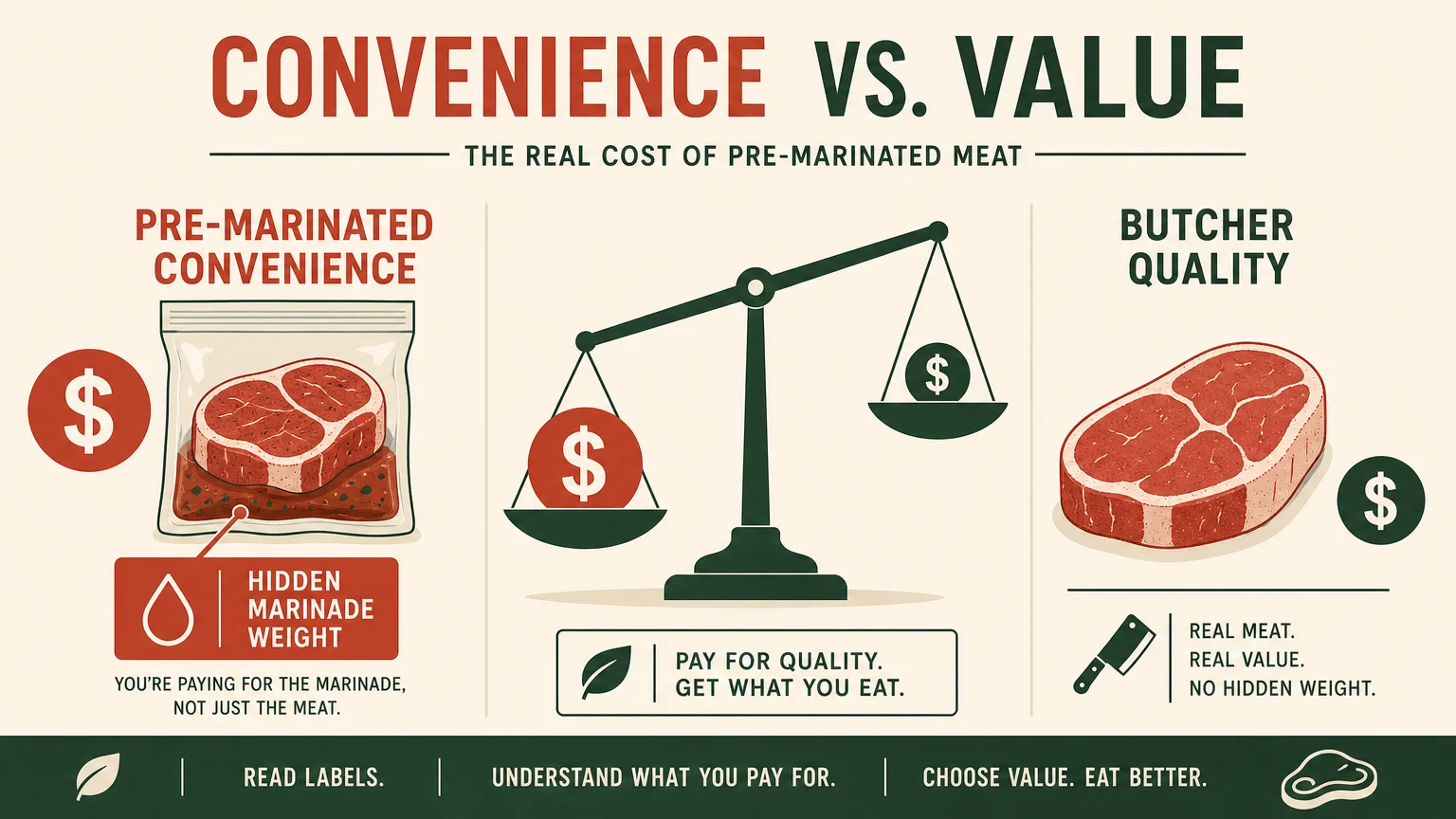
The most glaring issue involves their heavy reliance on pre-marinated meats. Trader Joe’s devotes a significant portion of its meat cooler to products like carne asada, pesto chicken breasts, and shawarma chicken thighs. You pay a massive premium for these ready-to-cook items. Worse, you are paying meat prices for cheap liquid marinades. A one-pound package of their famous marinated chicken might contain only eleven ounces of actual poultry. The rest of the weight comes from water, oil, and spices. You can recreate these marinades at home in three minutes for pennies on the dollar.
Packaging choices at Trader Joe’s also lead to widespread quality control issues. The store vacuum-seals almost all of its fresh beef and poultry to extend shelf life during transit. This tight plastic packaging frequently traps natural gases released by the meat. When you slice the plastic open in your kitchen, you are often hit with a distinct, sour odor. While this phenomenon—known as confinement odor—is sometimes harmless, it makes it incredibly difficult to tell if the meat has actually spoiled.
Trader Joe’s also struggles with fundamental pricing on basic cuts. Their plain ground beef and unseasoned chicken breasts routinely cost one to two dollars more per pound than the exact same products at regional grocery chains. The store does not employ butchers, meaning every cut is standardized and shipped from a central facility. Stick to Trader Joe’s for your pantry staples and frozen appetizers, but buy your fresh meat elsewhere.
Tip #6: Watch Out for Save-A-Lot Meat Additives
Save-A-Lot built a massive footprint by serving low-income neighborhoods and budget-conscious shoppers with heavily discounted groceries. They excel at providing cheap canned goods and dry staples, but their fresh meat department requires extreme caution. Discount grocers operate on razor-thin margins. To keep the sticker prices artificially low, they frequently source lower-tier meats that higher-end supermarkets reject.
This reality becomes glaringly obvious in their poultry selection. You will frequently encounter the woody breast phenomenon in cheap chicken. This occurs when chickens are bred to grow unnaturally fast, causing the muscle fibers to harden. The resulting chicken breast possesses a tough, crunchy texture that remains completely unpalatable no matter how you cook it. Deep discount stores are notorious dumping grounds for these heavily flawed cuts of meat.
Save-A-Lot also leans heavily on liquid injection. Many of their fresh pork and poultry products are enhanced with heavy sodium solutions. Always read the fine print on their meat labels. If you see a warning that the product contains up to fifteen percent retained water or broth, put the package down. You are throwing away your money on tap water. The heavy sodium content also ruins the nutritional profile of what should be a healthy, lean protein.
Visual inspection often reveals the poor handling and packaging practices at deep discount stores. If you look closely at the meat cases, you will frequently spot packages of ground beef or pork chops sitting in large pools of pink liquid. This liquid is called purge. Excessive purge indicates that the cell walls of the meat are breaking down, usually due to temperature fluctuations during shipping or prolonged storage. The meat is actively losing moisture and flavor right on the shelf. Save your money and shop at a store with stricter quality controls.






Leave a Reply