
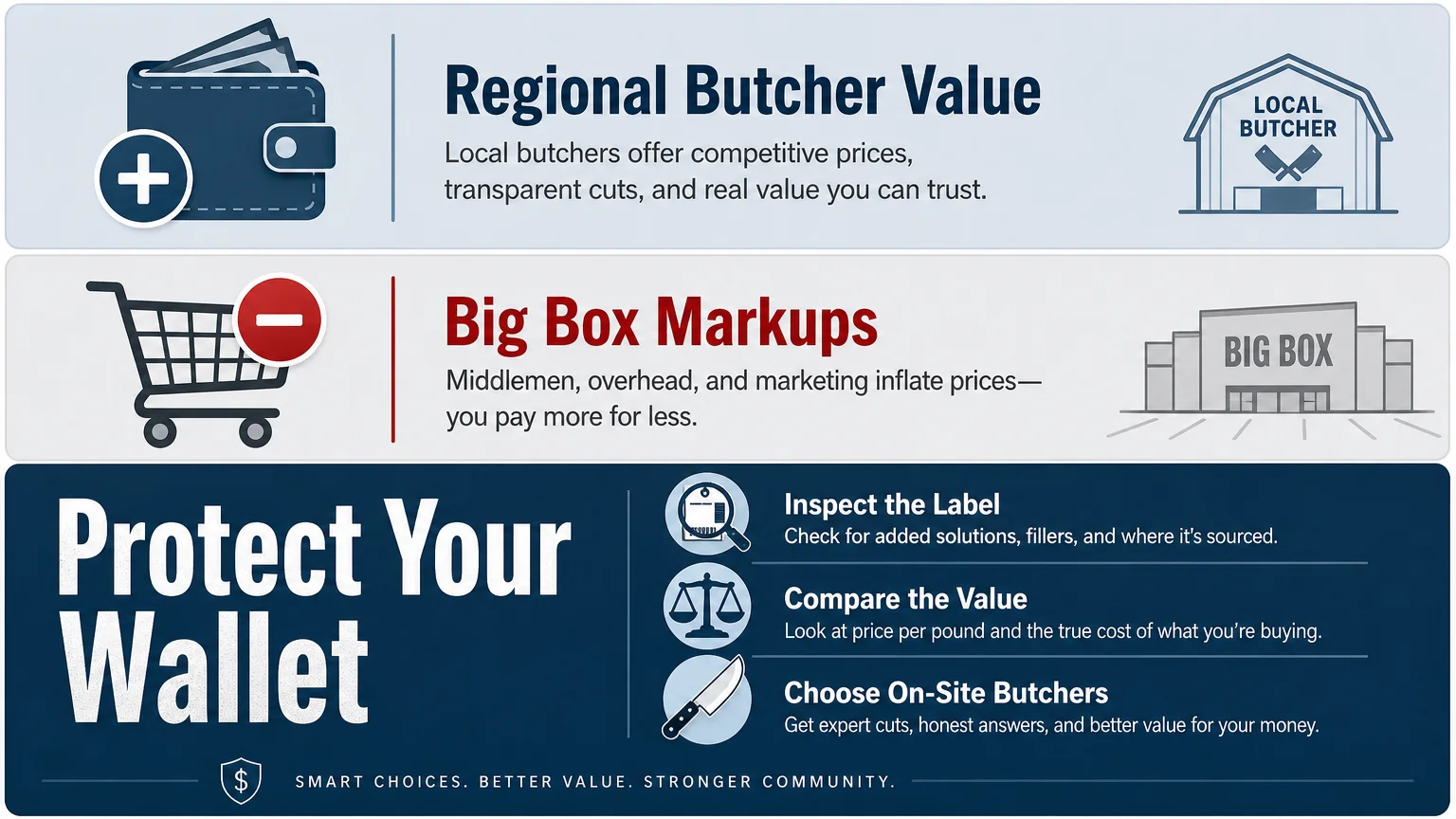
The Bottom Line: What This Means for Your Wallet
Shopping for meat requires extreme vigilance and a healthy dose of skepticism. The modern grocery industry utilizes a vast arsenal of psychological tricks, deceptive packaging, and chemical additives to separate you from your hard-earned money. You cannot simply walk into a supermarket, grab the first package of chicken you see, and assume you are getting a fair deal. These meat shopping tips will help you navigate the modern supermarket without falling for the standard retail traps.
To truly protect your grocery budget, you must change how you shop for protein. Stop looking exclusively at the large, bold sticker price on the package. You must calculate the exact price per ounce and check the ingredients list for added water or broth solutions. Never pay premium meat prices for cheap marinades, tap water, or heavy plastic packaging.
The most frugal Americans know that the best meat rarely comes from a massive corporate supermarket. Build a relationship with an independent local butcher. Invest in a vacuum sealer and a chest freezer so you can buy large primal cuts or wholesale meat from local farmers at a steep discount. Taking control of your meat purchasing habits will immediately improve the quality of your meals and leave hundreds of extra dollars in your bank account every single year.
Frequently Asked Questions
How can I quickly tell if my grocery store meat is pumped with water?
You must read the fine print on the actual pricing label or the brand packaging. The USDA requires manufacturers to disclose liquid enhancements. Look for phrases like “enhanced with up to 15% chicken broth,” “contains a solution of water and salt,” or “retained water.” Anything over two percent means the manufacturer is plumping the meat to rip you off.
Where is the absolute best place to buy meat on a tight budget?
Wholesale clubs like Costco and Sam’s Club offer the best balance of low pricing and high grocery store meat quality. Costco specifically employs real butchers in their warehouses and consistently stocks high-quality Choice and Prime beef. If you do not have a wholesale membership, look for regional supermarkets like H-E-B, Publix, or Wegmans. These chains use traditional butcher counters and frequently run aggressive loss-leader sales on chicken and pork to get you into the store.
Does buying meat in massive bulk quantities actually save money?
Yes, buying in bulk is the ultimate frugal meat hack, provided you store it correctly. You must invest in a high-quality vacuum sealer. If you simply throw store-bought styrofoam packages directly into your freezer, the meat will develop severe freezer burn within a month, wasting all your money. Vacuum-sealing whole cuts of meat protects them from oxygen and allows you to safely store bulk proteins for over a year without any loss in flavor or texture.
Is the meat counter always better than the pre-packaged meat aisle?
In most cases, the meat counter offers vastly superior quality and value. When you buy from a butcher counter, you can inspect the exact piece of meat you are buying from all angles. You can avoid the hidden fat and gristle that manufacturers frequently tuck underneath the cardboard trays in pre-packaged meat. Furthermore, you can request custom cuts, ask exactly when the meat was ground, and purchase the precise amount you need rather than settling for an overpriced family pack.
For consumer protection information, visit the Federal Trade Commission (FTC) and the Consumer Financial Protection Bureau (CFPB). For product safety and reviews, consult Consumer Reports.
Disclaimer: This article is for informational purposes only and does not constitute financial advice. The content reflects the author’s opinion and research at the time of writing. Always do your own research before making financial decisions.





Leave a Reply