Every recurring subscription quietly drains your bank account unless you actively audit its financial return each year. Retailers and subscription platforms design their memberships around friction and forgetfulness, banking on the fact that you will let annual fees slide on autopay.
If you are not extracting direct, measurable cash savings that surpass the cost of entry, you are subsidizing corporate profit margins rather than protecting your budget. Evaluating membership program value requires ruthless mathematical honesty and zero emotional attachment.
This guide breaks down the telltale signs a membership isn’t worth renewing so you can eliminate financial deadweight and keep more cash in your wallet.
Tip #1: Your Annual Savings Fall Below the Base Membership Fee
The primary justification for paying an upfront fee to access a store or service is immediate, tangible discount pricing. If your cumulative annual savings do not surpass the cost of the subscription itself, you are operating at an automatic financial deficit.
Many consumers assume that simply flashing a card at checkout guarantees net savings; in reality, low purchase volume turns a paid membership into an unrecouped overhead expense.
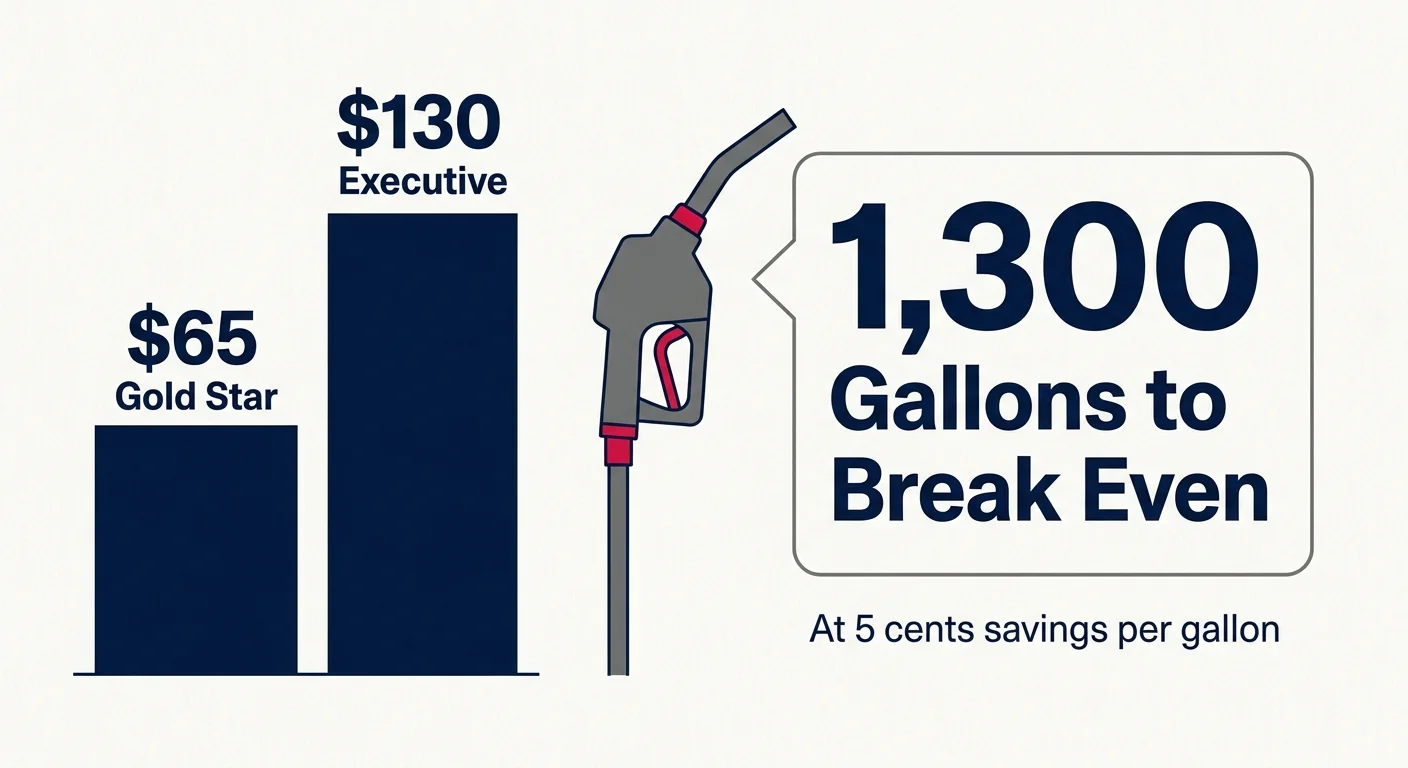
Consider the baseline numbers for major retail programs. Costco Wholesale increased its annual membership fees on September 1, 2024, setting the Gold Star standard tier at $65 per year and the Executive tier at $130 per year.
Meanwhile, Amazon Prime demands $139 per year or $14.99 per month, and Sam’s Club charges $50 per year for standard Club access and $110 per year for Sam’s Club Plus.
If you spend $65 on a wholesale club membership to save five cents per gallon on gasoline, you must purchase 1,300 gallons of fuel just to break even before earning a single penny of net savings.
Calculate your annual return by pulling your itemized receipts or digital purchase history over the previous twelve months. Subtract the retail shelf price of non-member alternatives from the price you paid as a member.
If that total net discount is less than the renewal fee, cancel immediately; you are paying for the psychological sensation of saving money rather than genuine financial progress.
Tip #2: You Fall Victim to Auto-Renew Phantom Spending
Subscription models thrive because recurring billing detaches spending from conscious decision-making. Once you set a credit card on autopay, the company no longer needs to earn your business every month—it simply relies on your inertia.
This dynamic produces massive leaks in household budgets across the country.
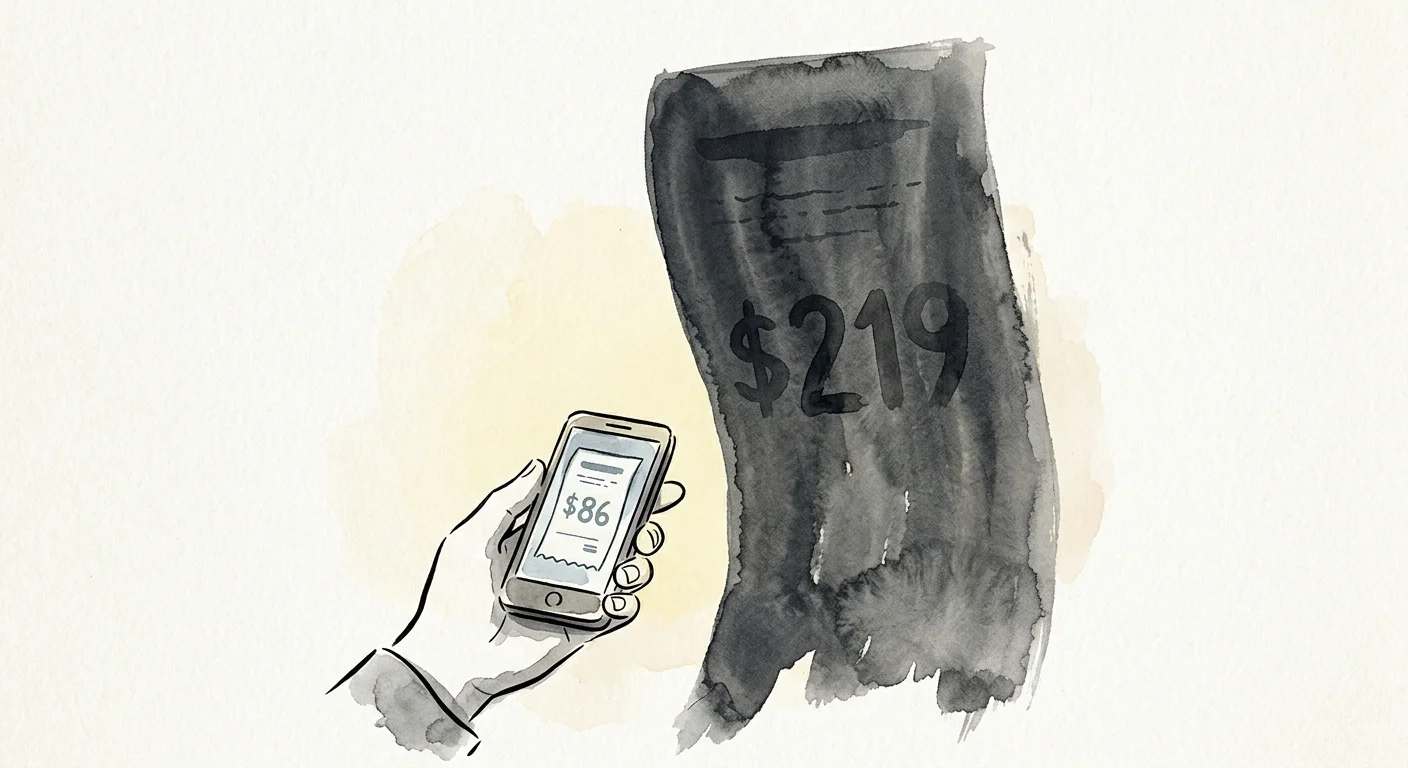
The data on this behavioral blind spot is staggering. According to comprehensive consumer research conducted by C+R Research, Americans spend an average of $219 per month on subscriptions and recurring memberships, but initially estimate their spending at just $86 per month.
This means consumers underestimate their recurring monthly obligations by $133—a miscalculation of over 2.5 times. Furthermore, the study revealed that 42% of consumers continue paying for auto-renewing subscriptions they no longer use, and 74% admit that recurring payments are easy to forget entirely.
Take an inventory of your bank statements and look for services you have not accessed in the last sixty days.
If you find charges for meal kits you constantly skip, software tools you never launch, or premium retail perks you never activate, you are paying a phantom tax.
Treat every auto-renewing service as an expired contract that must re-qualify for your business every single billing cycle.
Tip #3: Relentless Perk Skimpflation Erodes the Value Proposition
Companies routinely alter their terms of service, dilute rewards structures, and strip away key benefits while keeping the membership price identical or raising it.
This corporate phenomenon—often termed skimpflation—slowly degrades the value proposition of a program you joined years ago under far more generous conditions.
Look closely at how major membership programs have degraded their offerings over time. Streaming giants have inserted commercial interruptions into standard subscription tiers, demanding additional monthly surcharges to restore the ad-free experience you originally paid for.
Retail delivery programs have quietly raised order minimums for free shipping from $25 to $35 or higher, added mandatory processing fees, or extended delivery turnaround windows from one day to three days. Airline and hotel loyalty programs frequently devalue accumulated points, making reward redemptions significantly more expensive.
Compare the current perks sheet against the features that convinced you to sign up initially. When a company slashes warranty extensions, eliminates price-protection guarantees, or removes bundled features, the underlying value equation collapses.
Continuing to renew under diluted terms rewards the company for delivering an inferior product.

Tip #4: Free Alternatives Match or Surpass the Paid Benefits
The market constantly develops free, high-utility alternatives that render paid subscriptions obsolete. Sticking with a legacy paid program without examining the modern competitive landscape is an expensive habit.
In many retail and entertainment categories, paid walled gardens no longer provide exclusive value.
Consider media and reading subscriptions. Instead of paying recurring monthly fees for digital audiobooks, ebooks, and video streaming platforms, you can access tens of thousands of contemporary titles for free through your local public library using apps like Libby, Kanopy, and Hoopla.
For retail shopping, standard curbside pickup services at major national grocers—such as Target Drive Up or regional supermarket pickup lanes—offer trunk-loaded convenience without requiring an annual delivery subscription fee.
Furthermore, modern no-annual-fee credit cards often offer five percent cash-back categories on groceries, gas, and digital entertainment, eliminating the need to pay for retail reward tiers.
Audit your recurring digital expenses and test free alternatives for thirty days. If a no-cost platform meets ninety percent of your daily functional needs, paying an ongoing membership fee is an unnecessary drain on your financial reserves.

Tip #5: You Use the Service Strictly Out of Sunk Cost Guilt
A major psychological red flag occurs when you force yourself to use a service purely because you already paid the membership fee.
This cognitive trap, known as the sunk cost fallacy, leads consumers to make irrational purchasing and lifestyle choices in a desperate effort to justify an upfront expense.
This trap appears frequently in fitness and wellness memberships. Industry data from the Health & Fitness Association reveals that roughly 67% of gym memberships go completely unused or underutilized throughout the year.
Even worse, approximately 50% of new gym members stop attending facility locations within the first six months of enrollment. Despite this reality, millions of Americans leave their memberships active for years because canceling feels like admitting defeat or wasting the money already spent.
The money you paid for an annual membership is gone regardless of whether you step foot into the facility or order another bulk package of paper towels. Continuing an unwanted subscription does not recover your initial investment; it only guarantees future financial losses.
If your membership creates feelings of guilt, obligation, or forced consumption rather than genuine utility, canceling a membership program is the only rational path forward.
Tip #6: Consecutive Price Hikes Outstrip Your Actual Usage
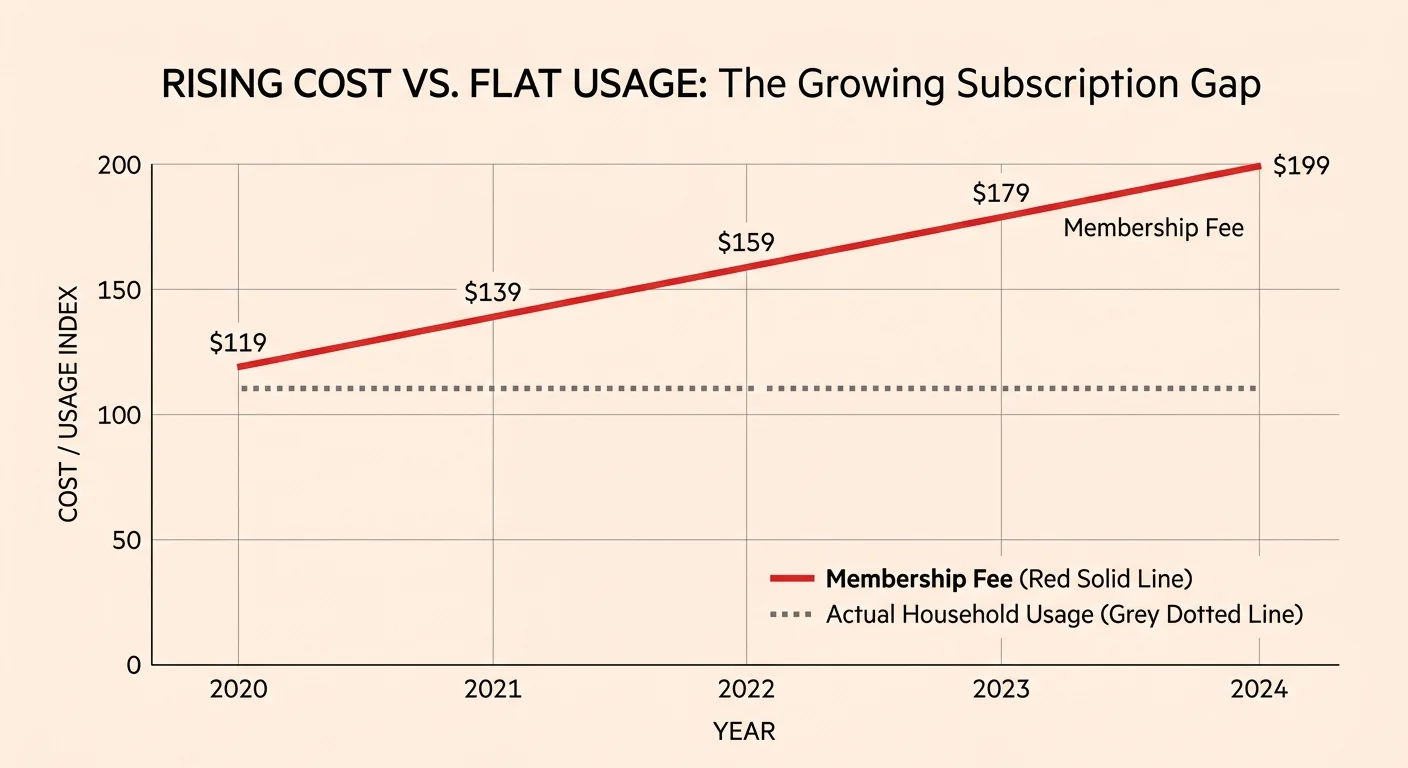
Membership programs rarely drop their prices; instead, they implement steady, compounding rate increases under the assumption that consumers will absorb the change without checking their actual frequency of use.
When price hikes outpace your personal usage rate, the mathematical equation supporting the membership breaks down rapidly.
Consider the compounding price landscape across prominent subscription categories. Amazon Prime now costs $139 annually or $14.99 per month, a stark increase from its original $79 pricing model.
Costco raised its standard Gold Star membership to $65 and Executive membership to $130 in September 2024. Sam’s Club charges $50 for basic Club access and $110 for Plus tier status.
When multiple platforms raise fees simultaneously, your annual subscription overhead can surge by hundreds of dollars within a single calendar year.
A price hike serves as an ideal trigger to conduct a strict usage audit. If a retail club increases its annual fee by ten percent, ask yourself if your household shopping volume increased by ten percent over the same period.
If your shopping frequency remained flat or declined, the higher fee directly diminishes your financial return. Do not let automatic renewals accept price hikes on your behalf.
Tip #7: The Provider Uses Dark Patterns to Prevent Cancellation
Ethical companies earn customer loyalty by delivering continuous value; predatory companies secure revenue by creating deliberate friction in the cancellation process.
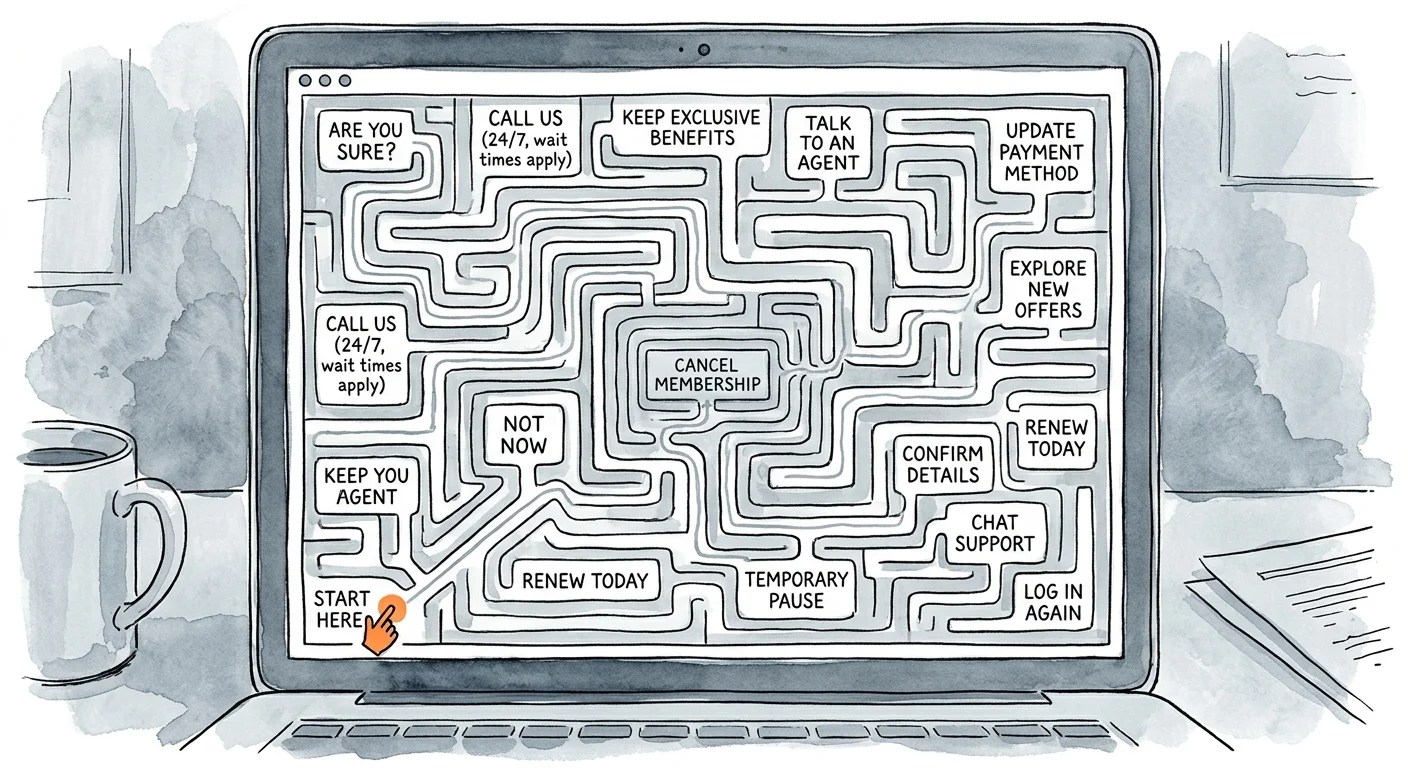
If a subscription service forces you to jump through digital hoops, endure deceptive retention surveys, or speak with phone representatives to close your account, they are employing dark patterns designed to trap your money.
Regulators have cracked down on these anti-consumer practices. In October 2024, the Federal Trade Commission finalized sweeping amendments to its Negative Option Rule, widely recognized as the Click-to-Cancel rule.
This federal mandate requires businesses to make canceling a recurring subscription as simple, immediate, and accessible as the initial enrollment mechanism.
If a business allowed you to enroll online with two clicks, federal law mandates that you must be able to cancel online with equal ease—without navigating through deceptive questionnaires or mandatory retention phone queues.
When you encounter a service that deliberately hides its account cancellation portal, forces in-person visits to cancel, or declines to process your digital cancellation request, take it as an unmistakable membership renewal decision sign.
Companies that rely on hostage-taking tactics rather than product excellence do not deserve your business. Cancel the service immediately and dispute any unauthorized subsequent billings directly through your card issuer.

Tip #8: Redundant Perks Overlap Across Your Cards and Accounts
Many consumers pay multiple recurring membership fees for overlapping benefits they already receive for free through other financial products. Premium credit cards, cellular phone plans, homeowner policies, and auto insurance policies frequently bundle high-value travel, shopping, and entertainment perks into their core terms.
For example, you might pay an independent $70 to $120 annual fee for a dedicated roadside assistance club while your primary auto insurance carrier or premium credit card already provides complimentary emergency towing, flat-tire changes, and jump-start coverage.
Similarly, major wireless carriers frequently bundle free access to major streaming services, cloud storage tiers, or gaming subscriptions directly into their unlimited monthly data plans.
Furthermore, several travel-focused credit cards provide complimentary access to airport lounge networks, global entry fee reimbursements, and purchase protection warranties that duplicate standalone travel memberships.
List every perk tied to your recurring memberships alongside the built-in benefits of your credit cards, insurance packages, and mobile plans. Highlight the redundancies and cancel standalone subscriptions that provide duplicate coverage.
Consolidating your perks eliminates wasted spend without costing you a single feature.

Tip #9: Your Household Routine and Purchasing Needs Have Shifted
Life circumstances evolve constantly, yet consumers often maintain subscription habits tailored to lifestyle phases they have long since outgrown. A membership that made perfect financial sense two years ago may serve zero practical purpose in your present daily routine.
Household dynamics dictate retail and service utility.
A wholesale club membership provides immense value for a bustling household with three teenage children eating meals at home every day; the same bulk shopping model yields excessive food waste and unnecessary storage clutter once those children move out.
Similarly, shifting from a remote work schedule back to a physical office space alters your commuting habits, lunch routines, and streaming consumption. Dietary changes, relocations to different shopping districts, or new fitness preferences all render previous subscriptions obsolete.
Review your memberships through the lens of your current lifestyle rather than your past habits or aspirational goals. If a service no longer fits how you live, cook, commute, and relax today, terminate the renewal.
You can always sign up again in the future if your lifestyle needs swing back.
The Bottom Line: What This Means for Your Wallet
Every recurring membership represents a silent contract against your future cash flow. Retailers, streaming platforms, and fitness conglomerates intentionally structure their business models around customer inertia, counting on the fact that you will overlook auto-renewal dates and ignore minor price hikes.
When you stop evaluating membership program value, you leave hundreds or even thousands of dollars on the table each year.
Take direct control of your recurring expenses by scheduling a biannual subscription audit. Open your credit card statements, isolate every recurring charge, and apply a strict return-on-investment test to each one.
If a membership fails to generate provable savings, provides degraded perks, or simply duplicates benefits you already hold elsewhere, cancel it without hesitation.
Remember that canceling is rarely permanent; if you discover you genuinely miss a service, providers will eagerly welcome you back—frequently with introductory discount promotions. Protecting your hard-earned money requires proactive curation of where your capital flows every single month.
For consumer protection information, visit the Federal Trade Commission (FTC) and the Consumer Financial Protection Bureau (CFPB). For product safety and reviews, consult Consumer Reports.
Disclaimer: This article is for informational purposes only and does not constitute financial advice. The content reflects the author’s opinion and research at the time of writing.
Always do your own research before making financial decisions.
Frequently Asked Questions
How do I calculate the exact breakeven point for a paid wholesale club membership?
To find your exact breakeven threshold, divide the annual membership fee by your average percentage savings per purchase compared to standard grocery stores.
For example, if a standard Costco membership costs $65 per year and you save an average of 10% on your regular household items compared to conventional supermarket pricing, you must spend at least $650 per year ($54.17 per month) at the wholesale club on eligible goods just to cover the cost of the fee.
If your actual annual spending falls below that figure, or if the costs of bulk food waste erode your margins, the membership loses money.
What rights do I have if a company makes canceling a membership difficult?
Under the Federal Trade Commission’s Click-to-Cancel rule finalized in October 2024, companies are legally prohibited from creating deceptive barriers or complex retention mazes to prevent cancellations.
If you enrolled in a subscription online, the business must provide a straightforward, easily accessible digital mechanism to cancel without requiring phone calls or in-person visits.
If a merchant refuses to honor your cancellation request or obscures the cancellation portal, document your attempt to cancel and file a complaint directly with the FTC or CFPB, then instruct your credit card company to block recurring charges from that merchant.
Does canceling a recurring membership program impact my credit score?
Canceling standard retail, streaming, gym, or software memberships has zero impact on your credit score because these are service subscriptions rather than credit or loan accounts. However, ensure your account balance is paid in full at the time of cancellation.
If you simply stop paying without formally canceling under the provider’s terms of service, the company may attempt to send delinquent unpaid subscription fees or contract termination fees to a third-party collections agency, which could negatively impact your credit report.
Is it better to pause a subscription program or cancel it completely?
Complete cancellation is almost always the superior financial move. Subscription pausing is a retention strategy designed to keep your payment details on file and automatically resume billing after thirty to ninety days, catching you off guard.
Canceling completely forces you to make an active, conscious decision to rejoin later. Furthermore, companies frequently offer lucrative win-back discounts and promotional credits to churned customers that are never offered to members who merely pause their accounts.