Retailers quietly slashed return windows and added hidden restocking fees while Americans processed $890 billion in returned merchandise in 2024. Standard return rules are shifting rapidly as 66% of major stores now charge for return shipping or impose strict deadlines, turning simple customer returns into expensive financial headaches.
You can protect your hard-earned dollars by mastering the specific return rules of major retail giants before you swipe your card. Knowing which stores offer 365 days of protection and which ones cut you off after 48 hours gives you a massive edge.
Here are seven game-changing store return policies every savvy shopper must understand today.

Tip #1: Costco — The Gold Standard with Hidden Timelines
Costco built its reputation on consumer-friendly practices, creating one of the best return policies stores offer today.
The wholesale giant operates on a core promise: a 100% risk-free satisfaction guarantee that allows you to return almost any physical product at any time for a full cash or card refund.
If you buy a patio furniture set, a kitchen blender, or a living room sofa, and it fails to meet your expectations three years down the road, Costco will process your return without hesitation.
They will even refund your annual membership fee in full if you decide the service fails to provide enough value for your household.
However, assuming every single item falls under this unlimited timeline can backfire on your budget. Major household electronics carry a strict 90-day return window.
This rule applies directly to televisions, desktop computers, touchscreen tablets, smartwatches, digital cameras, cellular phones, and major home appliances like refrigerators, microwave ovens, washers, and dryers.
Costco instituted this 90-day boundary to protect its business against rapid technology depreciation, yet many members remain unaware until it is too late.
If you purchase a high-end laptop or television, mark your calendar immediately; once day 91 arrives, Costco will refer you directly to the manufacturer warranty rather than issuing an in-store refund.
To maximize your financial protection at Costco, keep your receipts logged inside the official mobile app, although register clerks can easily look up purchase history through your membership account barcode.
If you buy large electronics, test them thoroughly during the first 60 days so you retain a solid buffer before the 90-day window closes. Mastering these boundaries ensures you enjoy Costco’s legendary flexibility without getting caught in an unexpected policy restriction.

Tip #2: Target — The One-Year Secret for Owned Brands
Target standard rules give shoppers a comfortable 90-day window for most off-the-shelf items, but the real financial advantage lies deep within their corporate private-label ecosystem.
Target offers an extraordinary 365-day return policy on all Target-Owned Brands when you retain your paper receipt or digital store app record.
This means popular internal store lines like Cat & Jack children clothing, Threshold home decor, Good & Gather groceries, and All in Motion activewear carry full protection for a complete calendar year.
This long-term guarantee provides a massive financial cushion for growing families.
For example, if you purchase Cat & Jack apparel for your children and the clothing develops holes, tears, or excessive wear within 12 months, Target will accept the item back for a full refund or exchange.
The same one-year rule applies to home furnishings from Threshold or unopened food products from Good & Gather that fail to satisfy your family’s taste buds. Combining this extended timeline with smart purchasing habits transforms everyday store receipts into powerful money-back guarantees.
You can stretch your timeline even further by utilizing Target’s built-in financial tools.
Paying for your purchases with a Target Circle Card (formerly known as the RedCard) automatically adds an extra 30 days to the standard 90-day policy, expanding your baseline return timeframe to 120 days for national brand items.
Always scan your free Target Circle barcode at checkout; doing so digitizes your receipts automatically, guaranteeing you never lose proof of purchase when requesting a 365-day private label return.
Tip #3: Home Depot — The Cardholder Upgrade and 48-Hour Trap
Home Depot serves millions of DIY renovators and contractors every week, offering a baseline 90-day return policy on standard unopened store merchandise.
If you purchase excess construction lumber, plumbing fixtures, or hand tools, returning them within three months yields a full refund to your original payment method.
However, major home improvement projects frequently stretch past ninety days, leaving homeowners with unused materials they can no longer return for cash. Learning how to bypass this window can save you thousands during major home remodels.
You can quadruple your protection window to 365 days simply by financing your purchases with a Home Depot Consumer Credit Card or registering transactions under a free Pro Xtra account.
Holding these store-backed payment credentials extends your return window to a full calendar year for standard merchandise. This structural upgrade allows you to purchase remodeling supplies in bulk during seasonal sales events without worrying about tight construction delays ruining your return eligibility.
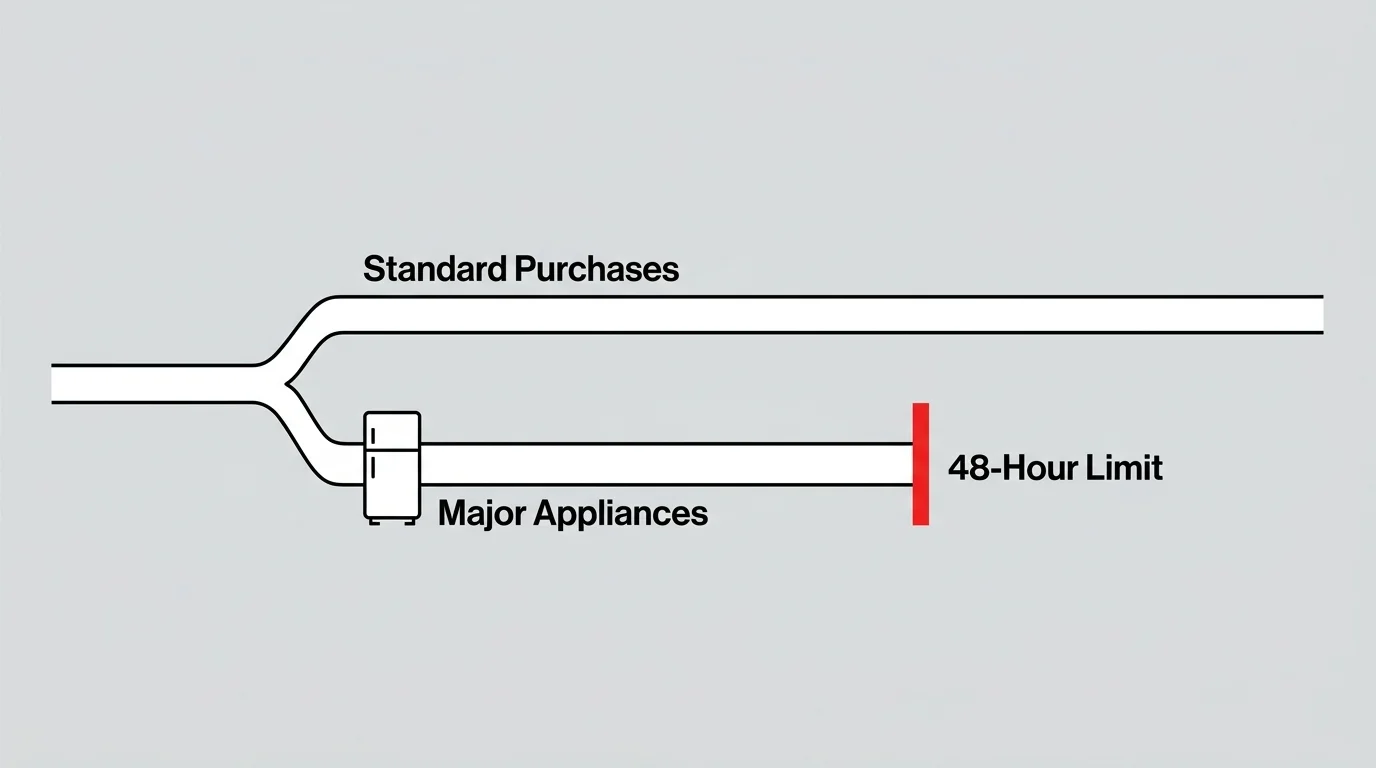
Beware of Home Depot’s most dangerous return trap: major appliances. Standard store return rules do not apply to refrigerators, washers, dryers, ranges, or built-in microwaves delivered to your home.
Home Depot enforces a brutal 48-hour inspection deadline from the moment of delivery.
You must inspect the appliance thoroughly for cosmetic damage, leaks, or mechanical failures within two days; once that 48-hour period lapses, Home Depot refuses all store returns, forcing you to navigate lengthy manufacturer warranty repairs instead.

Tip #4: REI Co-op — The Member Advantage vs. Non-Member Limits
REI built its retail empire on outdoor gear durability and customer trust, but the co-op updated its policies to prevent policy exploitation while maintaining high consumer value. Today, your overall protection depends heavily on whether you hold an official REI Co-op membership.
Non-members receive a standard 90-day return window for new and unused gear. However, paying a one-time $30 lifetime membership fee immediately unlocks a full 365-day return window, making it one of the most generous return policies for outdoor enthusiasts.
Co-op members can test tents, hiking boots, outerwear, and trail backpacks under real field conditions. If an item fails to perform or meet your expectations within 365 days, REI will exchange or refund the product with valid proof of purchase.
This long-term policy provides exceptional security when purchasing high-ticket items like winter jackets or technical camping setups that you might only use once or twice a season.
The financial savings generated from returning just one unsatisfactory piece of high-end equipment easily covers the lifetime membership fee.
Despite this overall flexibility, REI enforces strict exceptions on outdoor electronic technology across all customer tiers. Outdoor electronics—including GPS navigation units, action cameras, cycling computers, and smart bike trainers—carry a rigid 90-day return limit regardless of your membership status.
Inspect and field-test all electronic gear quickly upon purchase to ensure proper functionality before this 90-day window shuts down your options.

Tip #5: Kohl’s — The 180-Day Window and Hidden Brand Caveats
Kohl’s maintains one of the longest baseline returns schedules among general department stores, granting shoppers a massive 180-day window for most store items.
Whether you buy apparel, kitchen gadgets, bedding, or footwear, you have six full months to decide if the merchandise fits your lifestyle.
Furthermore, Kohl’s customer service desks can look up purchases electronically using your payment credit card or Kohl’s Rewards account, eliminating the stress of misplacing physical paper receipts.
While six months provides tremendous flexibility, Kohl’s enforces critical exceptions for specific product categories that short-circuit the 180-day rule. Premium electronics, high-end watches, and select tech accessories carry a tight 30-day return window and require official paper receipts or digital purchase records.
Additionally, items purchased from beauty shops operating inside Kohl’s locations face unique restrictions; Sephora at Kohl’s merchandise features a strict 60-day return window and requires the item to be in new or gently used condition.
Navigating Kohl’s rules requires tracking how you pay and what discounts you applied during checkout.
If you earned Kohl’s Cash on your initial transaction and later return part of that order, Kohl’s automatically deducts the dollar value of the redeemed reward cash from your final refund amount.
Keeping receipts synchronized inside the Kohl’s mobile app ensures you understand your exact net refund value before approaching the customer service counter.
Tip #6: IKEA — One Full Year for Unopened Flat Packs
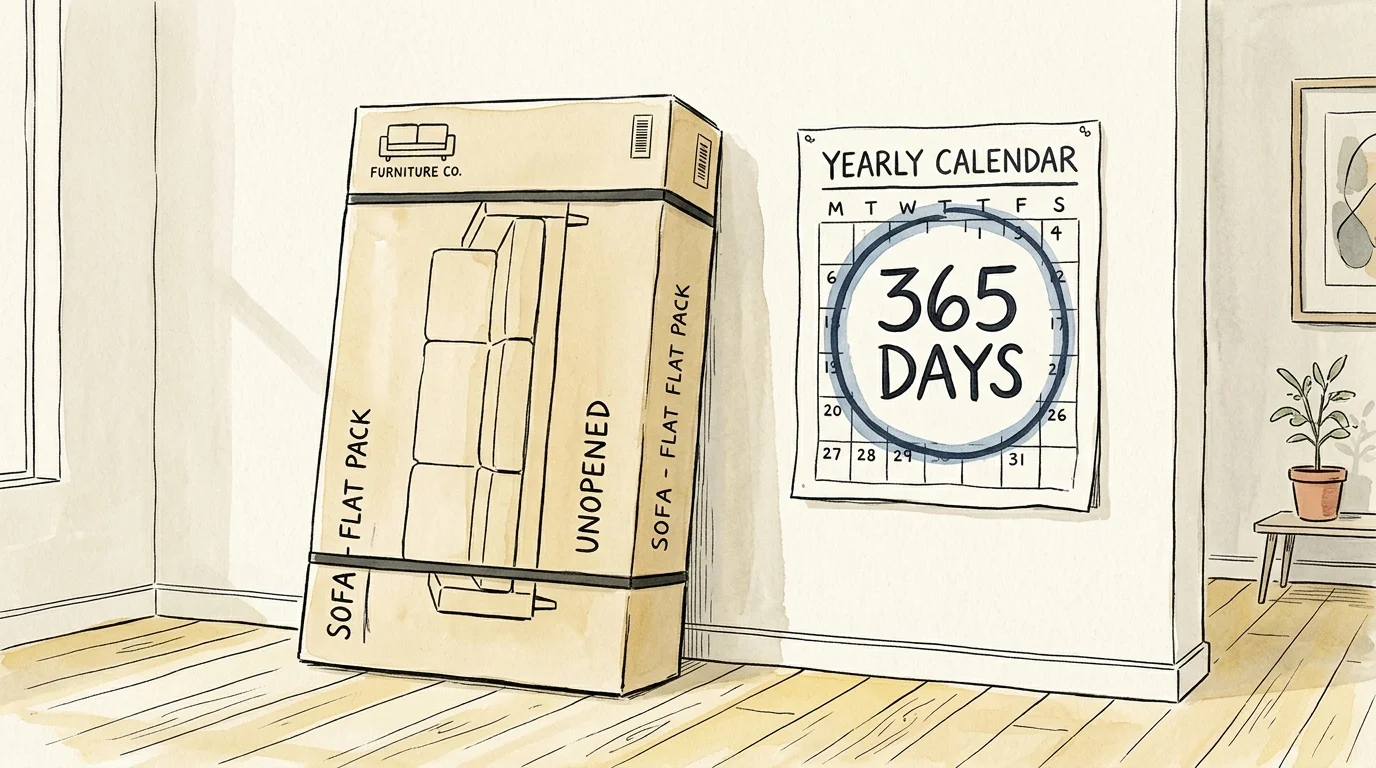
IKEA’s approach to returns caters directly to home decorators navigating long assembly schedules. The Swedish furniture titan offers a 365-day return policy on all new, unopened products accompanied by proof of purchase.
If you purchase flat-packed bookshelves, kitchen cabinets, or decorative items that sit untouched in your garage during a slow home renovation, IKEA will grant a 100% refund to your original payment method up to one full year after purchase.
The policy remains accommodation-focused even after you tear open the cardboard packaging. IKEA allows 180 days to return opened or tested products, provided the items remain clean, undamaged, and fully functional.
This 180-day grace period gives you half a year to evaluate whether an assembled desk, sofa, or floor lamp actually fits your home layout.
If you change your mind within six months, you can return the assembled item with proof of purchase for a store credit or card refund.
To streamline your IKEA shopping return rules, register every order under a free IKEA Family account at checkout. Store systems track your purchases automatically, preventing administrative hassle if paper receipts fade or disappear.
Keeping boxes sealed until you are ready to begin assembly preserves your 365-day protection window, keeping your hard-earned dollars safe throughout extended interior design projects.
Tip #7: Nordstrom — Main Store Flexibility vs. Nordstrom Rack Limits
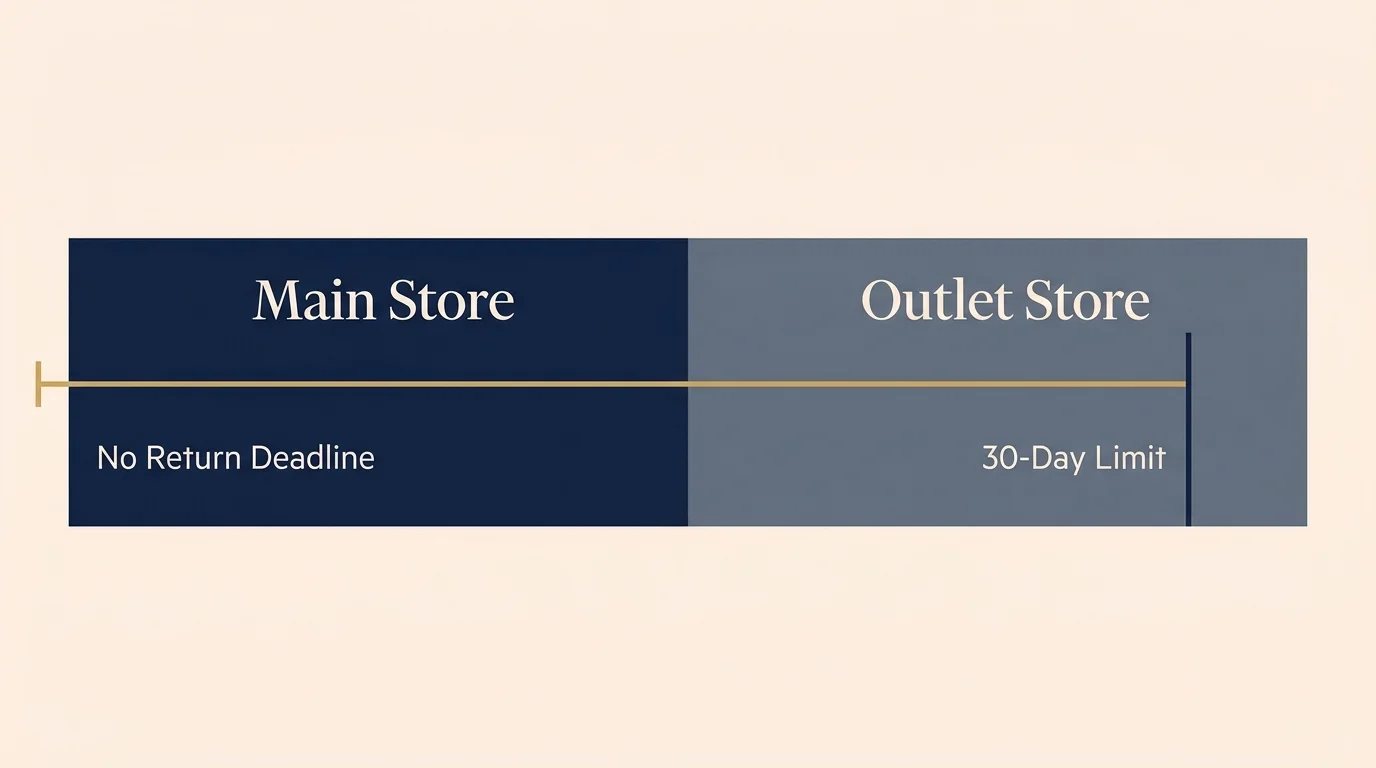
Nordstrom has long maintained a legendary reputation for customer service, operating without a formal written time limit on returns at its full-line luxury department stores. Instead of enforcing arbitrary deadlines, Nordstrom evaluates main-store returns on a case-by-case basis.
If an item fails to meet quality standards or sits unworn in your closet, store managers retain complete authorization to process full refunds, even without a paper receipt, as long as they can verify transaction records or confirm brand authenticity.
However, assuming this flexible policy extends across the company’s discount brand represents a costly financial mistake. Nordstrom Rack operates under completely different, highly restrictive rules designed for off-price liquidations.
Nordstrom Rack enforces a strict 30-day return window for in-store purchases and a 40-day return window for online orders.
Returned items at Nordstrom Rack must remain unworn, unwashed, and accompanied by original price tags and proof of purchase; failing to meet these deadlines leads to total rejection of your return.
Understanding this store return policy comparison prevents frustrating surprises at checkout counter registers. If you shop at Nordstrom Rack, mark your calendar immediately and treat the 30-day cutoff as non-negotiable.
Save main-store purchases for luxury investments where long-term flexible support matters, and execute fast decisions when hunting bargain attire at off-price Rack locations.
The Bottom Line: What This Means for Your Wallet
Retail returns reached an astonishing $890 billion in 2024, representing 16.9% of total annual U.S. retail sales. Online orders suffer even higher return rates, hovering between 17.6% and 20.4%, compared to roughly 10% for brick-and-mortar stores.
Because returns cost companies billions in logistics, 66% of major retailers now charge return shipping fees, enforce restocking penalties, or impose tighter return windows to protect their bottom lines. You can no longer assume that every retail store will take back merchandise on your terms.
Winning the retail game requires applying specific return policy tips to every transaction. Always digitize your store receipts inside retail apps right after checking out.
Take advantage of store loyalty perks—like using a Target Circle Card for an extra 30 days or upgrading to Home Depot Pro Xtra for a full 365-day window.
Finally, execute immediate inspections on high-risk items like home appliances and electronics before short 48-hour or 90-day windows expire.
Protecting your wallet isn’t just about finding sales; it is about preserving your right to get your money back when a product fails to deliver value.
For consumer protection information, visit the Federal Trade Commission (FTC) and the Consumer Financial Protection Bureau (CFPB). For product safety and reviews, consult Consumer Reports.
Frequently Asked Questions
What happens if I lose my paper receipt when trying to make a return?
Most major retailers can look up your transaction electronically using the payment card you used at checkout, your store loyalty account, or your mobile app profile. Stores like Kohl’s, Target, Costco, and Home Depot excel at electronic receipt tracking.
However, if a store cannot find electronic proof of purchase, they may refuse the return entirely or issue a store credit equal to the item’s lowest recent sale price.
Why are retailers cutting back on generous return policies?
Retailers are tightening rules to combat rising return fraud and offset escalating inventory transportation costs. With retail returns hitting $890 billion in 2024, corporate margins have taken a significant hit.
As a result, roughly 66% of retailers now charge return shipping fees or shorten return windows, particularly on high-depreciation electronics and seasonal merchandise.
Can store return policies change without warning?
Yes, retailers reserve the right to modify their return policies at any time. Famous historical examples include L.L.Bean ending its lifetime return guarantee in 2018 and REI shortening its lifetime policy to one year.
Always check a store’s posted return policy online or at the customer service desk before making major purchases, especially around holiday shopping seasons.
How can I avoid paying return fees on online purchases?
You can avoid online return shipping fees by returning items directly to a physical store location instead of mailing them back. Most major retailers—including Target, Kohl’s, Home Depot, and IKEA—allow free in-store returns for items ordered online.
Additionally, joining store loyalty programs or using store credit cards often unlocks free mail-in return privileges.
Disclaimer: This article is for informational purposes only and does not constitute financial advice. The content reflects the author’s opinion and research at the time of writing.
Always do your own research before making financial decisions.