

Retiring on a fixed income means maximizing every dollar without sacrificing your quality of life, making warehouse clubs an essential tool for your grocery budget. Choosing the right membership—Costco, Sam’s Club, or BJ’s Wholesale Club—depends heavily on how their specific perks align with your new daily routines. While you might assume these giant stores operate identically, their pricing models, healthcare services, and travel rewards vary wildly. We are analyzing the actual benefits each brand offers seniors, from prescription discounts to optimal package sizing. You will discover exactly which warehouse club delivers the most practical value for a retired household so you can stop overpaying for memberships you cannot fully utilize.
Factor #1: Baseline Membership Costs and the Senior Discount Myth
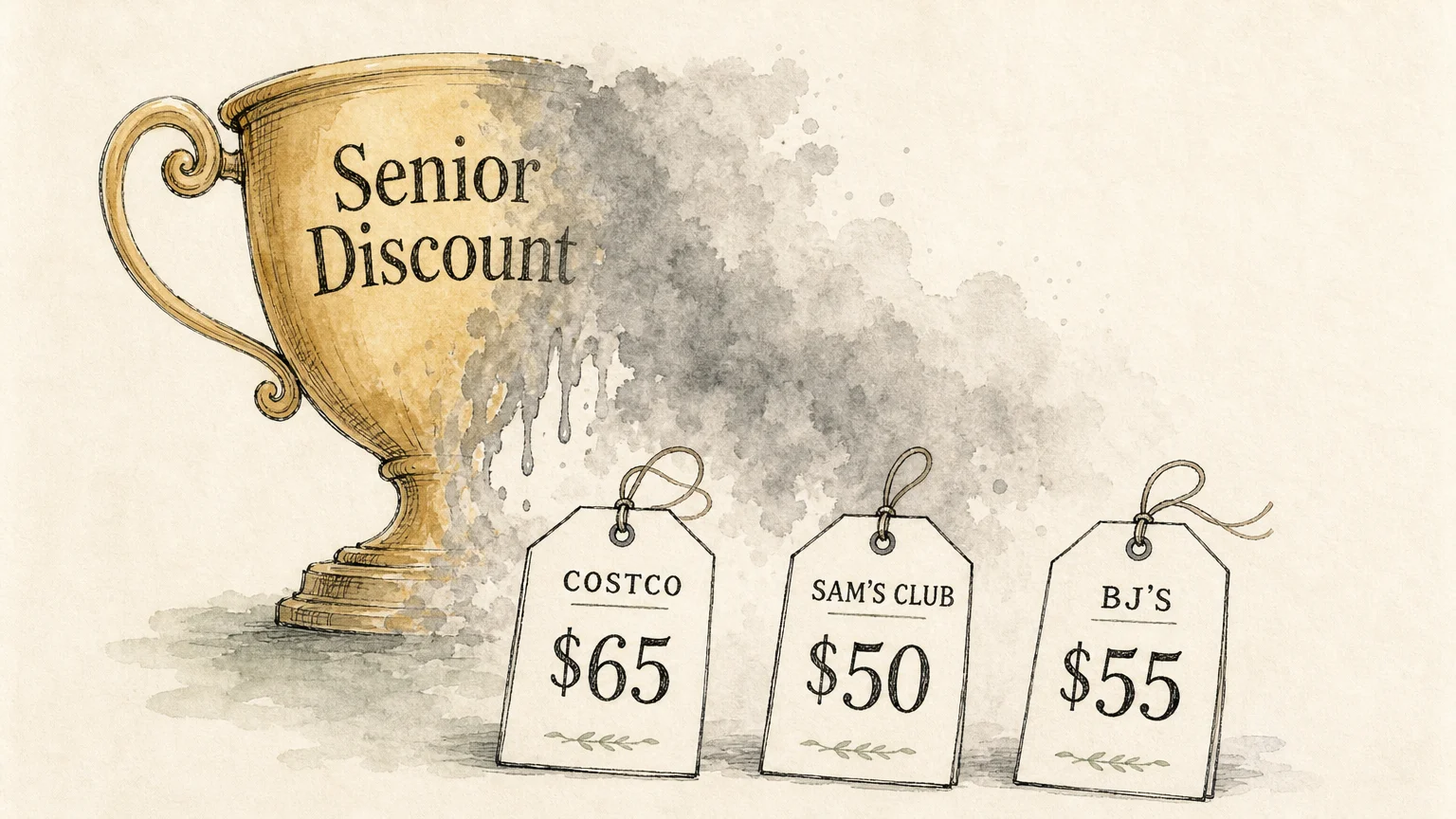
You need to look past the marketing materials to understand the true cost of entry. A pervasive myth in the personal finance world is that warehouse clubs offer secret senior discounts on their annual membership fees. They do not. You pay the exact same baseline rate as a twenty-something shopper. Costco currently charges $65 for its standard Gold Star membership and $130 for the Executive tier. Sam’s Club undercuts this significantly, charging $50 for standard Club access and $110 for its Plus membership. BJ’s Wholesale Club sits in the middle, pricing its standard Inner Circle membership at $55 and the premium Club Card tier at $110.
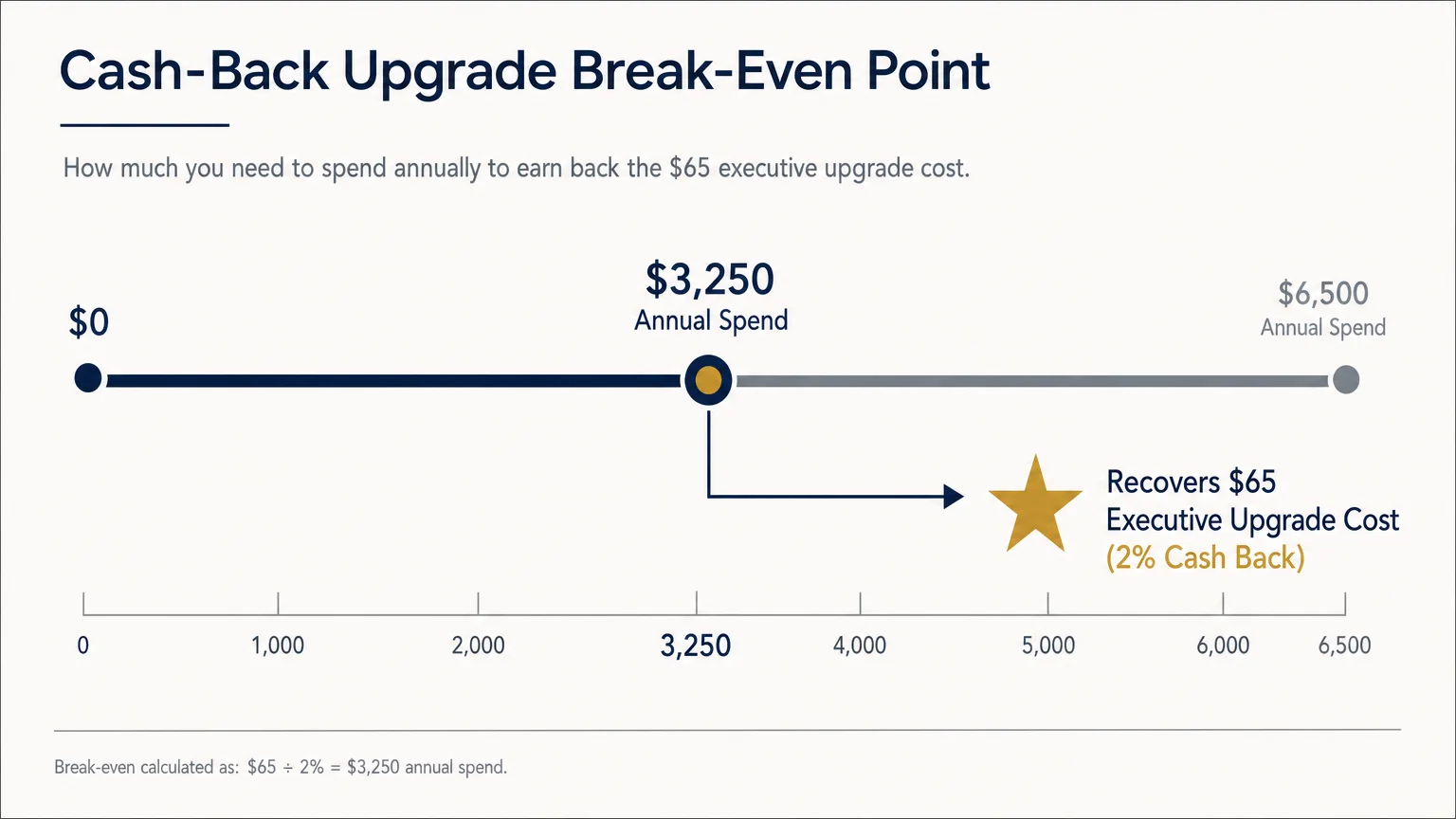
The real math for retirees involves calculating the break-even point on those premium, cash-back tiers. Upgrading to an Executive or Plus membership costs extra upfront but rewards you with 2 percent cash back on qualified purchases. At Costco, you must spend $3,250 annually at the warehouse to earn back the $65 upgrade cost. At Sam’s Club and BJ’s, the math is slightly more forgiving due to their lower baseline fees. If you manage a fixed income, review your last three months of bank statements to project your annual grocery shopping spend. If you rarely spend over $250 a month on bulk goods, the standard tier is your most frugal choice.

Factor #2: Pharmacy, Hearing Aid, and Optical Center Savings
Healthcare expenses dominate retirement budgets, and this category is where your warehouse club choice makes a massive financial impact. Costco dominates the hearing aid market. Premium hearing aids at a traditional private audiology clinic easily cost between $4,000 and $6,000 a pair. Costco sells highly rated, premium models for around $1,500 a pair, complete with free hearing tests, adjustments, and extended warranties. For many retirees, this single $3,000 savings justifies a lifetime of membership fees. You will not find a better deal on audiology services at Sam’s Club or BJ’s.
However, Sam’s Club aggressively targets prescription drug savings. Sam’s Club Plus members receive hundreds of generic prescriptions for $10 or less, with certain common medications offered entirely free. Costco also operates a robust Member Prescription Program that drastically reduces out-of-pocket costs for uninsured or underinsured medications, but the Sam’s Club Plus pharmacy perks provide incredible predictability for retirees managing chronic conditions. BJ’s offers decent optical and pharmacy discounts, but they lack the massive scale and aggressive loss-leader pricing that Costco and Sam’s Club utilize to draw in senior shoppers.

Factor #3: Package Sizes and Food Waste Realities
Buying in bulk only saves you money if you actually consume the product. Retirees frequently fall into the frugal trap of buying a massive container of perishable food, only to throw half of it away a week later. Costco is notorious for forcing consumers into massive package sizes. Buying three pounds of fresh spinach or massive trays of chicken breasts makes sense for a family of five, but it creates expensive food waste for a one- or two-person household.
BJ’s Wholesale Club emerges as the undisputed winner for empty nesters. Their package sizes bridge the gap between a traditional supermarket and a massive warehouse. More importantly, BJ’s is the only club out of the big three that accepts manufacturer coupons. You can stack a national manufacturer coupon with BJ’s internal store coupons, creating massive savings on name-brand staples. BJ’s also features a full-service deli counter where you can order a quarter-pound of sliced turkey, whereas Costco requires you to buy heavy, pre-packaged twin packs of deli meat. If your household struggles to consume large quantities of fresh food before it spoils, BJ’s provides the most sensible grocery shopping experience.
Factor #4: Technology, Accessibility, and Physical Strain
Navigating a sprawling, 150,000-square-foot concrete warehouse takes a physical toll. As mobility becomes a priority, the technological conveniences offered by these retailers heavily influence their value. Sam’s Club absolutely crushes the competition regarding accessibility and convenience. Their Scan & Go smartphone app allows you to scan items as you place them in your cart and pay directly on your phone. You bypass the checkout line entirely and walk straight to the exit. For retirees who want to avoid standing in long lines on a busy Saturday, this feature is invaluable.
Furthermore, Sam’s Club offers exceptional curbside pickup services. Plus members receive curbside pickup for free, allowing you to order heavy items like water softener salt, dog food, and laundry detergent from your couch and have an associate load them directly into your trunk. Costco is notoriously stubborn about adopting new technology. They rely heavily on Instacart for delivery, which adds high markups—often 15 to 20 percent higher than warehouse prices—on top of service fees and tips. Costco’s lack of a free, robust curbside pickup option forces you to either navigate the massive store yourself or pay a premium for delivery.

Factor #5: Gas Station Logistics and Fuel Perks
Retirees often trade daily work commutes for road trips, RV travel, and frequent visits to family. Fuel savings remain a high priority. All three warehouse clubs typically price their gasoline 10 to 20 cents lower per gallon than surrounding competitor stations. Costco holds a slight edge in fuel quality because their stations exclusively sell Top Tier certified gasoline, which contains advanced engine-cleaning detergent additives. Over the long term, Top Tier fuel prevents carbon buildup and saves you money on mechanic bills.
The drawback to Costco gas is the immense time investment. Long, sprawling lines at Costco fuel pumps are a daily reality. Waiting twenty minutes in a hot car to save three dollars on a tank of gas is a poor trade-off for your time. Sam’s Club and BJ’s gas stations typically feature much shorter lines and faster turnover. Additionally, you can use the Sam’s Club app to pay for gas directly at the pump at most locations, skipping the keypad entirely. When evaluating the fuel perks, you must weigh Costco’s superior fuel quality against the speed and convenience offered by Sam’s Club.
Factor #6: Store Credit Cards and Cash Back Rewards
Optimizing your wallet with the right store credit card amplifies your retiree savings. The Costco Anywhere Visa Card by Citi is a powerhouse for retirees who travel and dine out frequently. It offers 4 percent cash back on eligible gas and EV charging purchases worldwide on up to $7,000 per year. It also delivers 3 percent cash back on restaurants and eligible travel purchases, along with 2 percent back on all purchases from Costco. The major downside is that you receive your cash back only once a year in the form of a certificate.
The Sam’s Club Mastercard targets the daily driver. It provides an impressive 5 percent cash back on gas anywhere—not just at Sam’s Club stations—on up to $6,000 per year. It also offers 3 percent back on dining. Unlike Costco’s restrictive annual payout, Sam’s Club allows you to redeem your cash back digitally at any point during the year to pay for your groceries at the register. The BJ’s One Mastercard offers up to 5 percent back in rewards on most BJ’s purchases and 2 percent back everywhere else, with a solid 15-cent per gallon discount at BJ’s Gas. If immediate access to your rewards matters, Sam’s Club provides the most flexible credit card program.

Factor #7: Travel Packages and Leisure Discounts
Retirement gives you the freedom to travel outside of peak holiday seasons, and warehouse club travel portals are aggressively underutilized tools. Costco Travel is widely considered the gold standard in the industry. Booking a cruise, a Hawaiian resort package, or a guided European tour through Costco frequently yields incredible bonus perks. Retirees routinely receive hundreds of dollars in digital Costco Shop Cards, waived resort fees, complimentary breakfasts, and room upgrades simply by booking through the portal. Furthermore, Costco’s rental car portal allows you to add a second driver for free, a fantastic benefit for retired couples sharing the driving duties on long trips.
Sam’s Club Travel and Entertainment offers a solid portal for booking discounted hotels and theme park tickets, but it lacks the premium curation and massive kickbacks that Costco includes with its vacation packages. BJ’s also operates a travel portal with respectable discounts, but neither competitor matches the sheer volume of high-end, value-packed itineraries available through Costco. If you plan to take at least one major vacation or cruise per year, a Costco Executive membership pays for itself through the travel portal alone.
The Bottom Line: What This Means for Your Wallet
No single warehouse club is universally perfect for every retiree; your choice must align with your specific household habits. Costco is the ultimate winner if you require audiology services, plan to book significant travel, and prioritize Top Tier gasoline. The immense savings on hearing aids and vacations easily offset the lack of curbside pickup and the forced bulk-buying model. Sam’s Club takes the crown for convenience and budgeting. If you want to bypass checkout lines with Scan & Go, utilize free curbside pickup for heavy items, and maximize cash back on daily driving, Sam’s Club delivers a frictionless shopping experience. BJ’s Wholesale Club is the stealth champion for frugal, one- or two-person households. By offering smaller, manageable package sizes, a real deli counter, and the ability to stack manufacturer coupons, BJ’s allows you to enjoy warehouse pricing without throwing away spoiled food.
Frequently Asked Questions
Can I access the warehouse pharmacy without paying for a membership? Yes, you can. Federal and state laws largely prohibit retailers from restricting access to prescription medications. You can walk into Costco, Sam’s Club, or BJ’s and utilize their pharmacy services to purchase medications without a membership card. However, you will pay the standard retail price. The deep discounts, such as the Costco Member Prescription Program or the Sam’s Club Plus free generic drug list, are strictly reserved for paying members.
Is there a way to shop at these clubs occasionally without committing to a full year? You can leverage specific loopholes if you only want to buy bulk paper goods once or twice a year. If a current Costco member buys you a Costco Shop Card—their version of a gift card—you can enter the warehouse and purchase items up to the balance of the card without being a member yourself. Keep in mind that doing this frequently is cumbersome, and you lose out on the extended warranties and return policies tied to a member’s profile.
Do warehouse clubs still offer dedicated senior shopping hours? During the height of the recent pandemic, all three major warehouse clubs implemented strict early shopping hours exclusively for seniors and immunocompromised individuals. As of today, those dedicated hours have been almost entirely phased out. If you want to avoid massive crowds and navigate the aisles safely, the most strategic time to shop is Tuesday or Wednesday morning right when the doors open. Avoid the weekends entirely, as foot traffic and long lines create a stressful and exhausting environment.
For consumer protection information, visit the Federal Trade Commission (FTC) and the Consumer Financial Protection Bureau (CFPB). For product safety and reviews, consult Consumer Reports.
Disclaimer: This article is for informational purposes only and does not constitute financial advice. The content reflects the author’s opinion and research at the time of writing. Always do your own research before making financial decisions.








Leave a Reply