Scammers stole a record $12.5 billion from American consumers in 2024, with fake storefronts and non-delivery fraud standing as the second most reported crime nationwide. Spotting a scam online store before entering your credit card details saves you from financial loss, identity theft, and endless hassle.
Shady retailers use psychological tricks, stolen product images, and spoofed web addresses to trap bargain hunters who are eager to beat inflation. You can protect your hard-earned money by learning how to tell if a website is legitimate before you hit the checkout button.
Recognize these red flags of fake online shops so you never fall victim to fraudulent digital storefronts again.
Red Flag #1: Unbelievable Discounts and Phantom Inventory
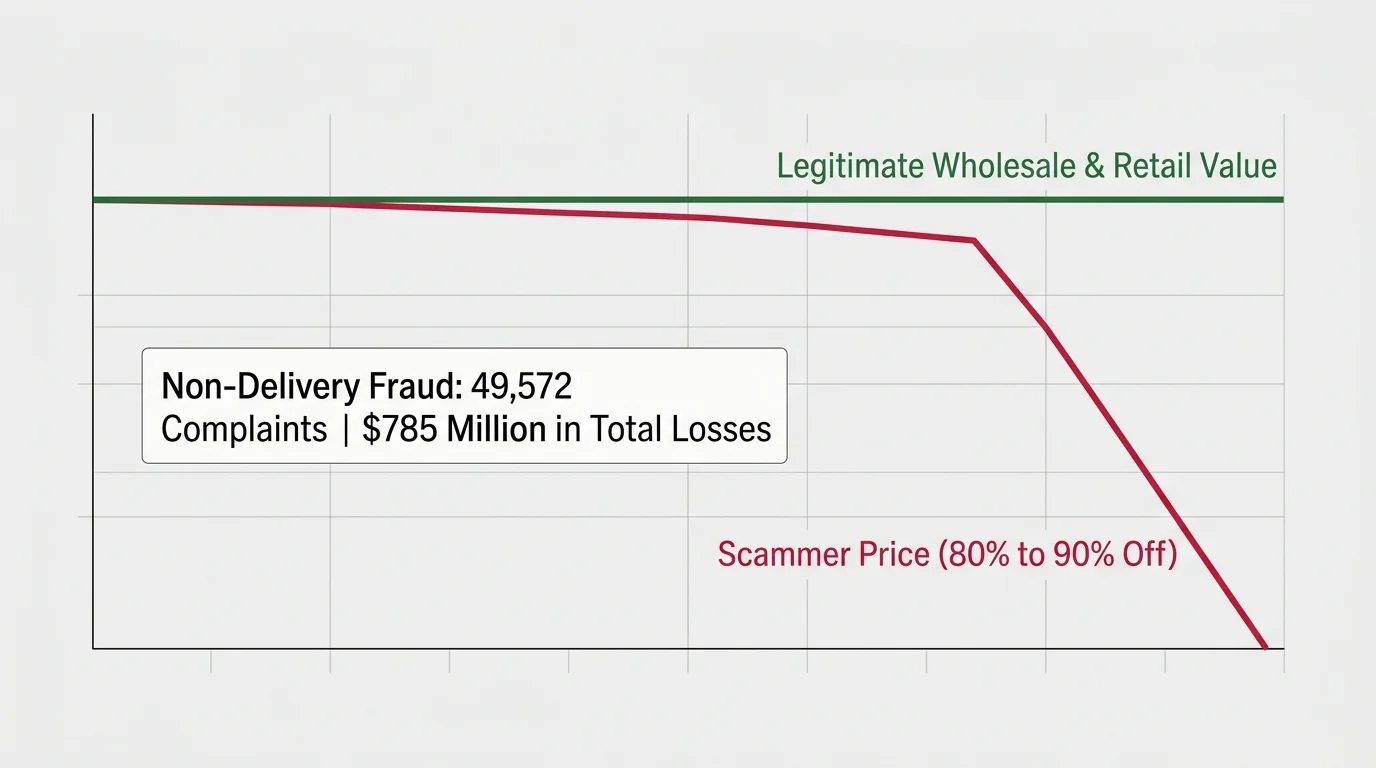
When you see a trending designer jacket, premium power tool, or top-tier espresso machine listed at 80% to 90% off retail price, your bargain-hunting radar should sound an immediate alarm. Fraudulent web operators rely on extreme loss-leader pricing to suppress critical thinking and trigger urgent impulse purchases.
According to the FBI Internet Crime Complaint Center (IC3) 2024 Internet Crime Report, non-payment and non-delivery scams generated 49,572 complaints and $785 million in total reported losses across the United States.
Phantom inventory is the primary driver behind these staggering figures; rogue storefronts advertise high-demand items that they do not own, have never produced, and have zero intention of shipping.
Legitimate retailers rarely discount active, high-demand merchandise below wholesale costs because their operational margins do not allow it.
If an unknown digital store offers brand-new consumer electronics or designer apparel for pennies on the dollar while major authorized distributors are completely sold out, you are looking at fake inventory.
You can expose these listings quickly by running a reverse image search on the product photos using Google Lens or Tineye. Scammers routinely lift high-resolution product photography directly from major brand catalogs.
If the exact same image appears across dozens of temporary storefronts with completely different pricing, you have caught the operators in a classic trap.

Red Flag #2: Missing or Suspicious Contact Information
Trustworthy merchants operate with transparency, displaying verifiable contact details on their storefronts, including a physical street address, a corporate email address tied to their domain, and a direct telephone number.
In contrast, scam websites hide behind anonymous web submission forms or list a free email address hosted on services like Gmail, Yahoo, or Outlook.
If an e-commerce site claims to represent an established brand but fails to disclose where its corporate offices or fulfillment centers reside, close your browser tab immediately.
Before placing an order, take thirty seconds to copy the listed street address and drop it into Google Maps or street view services.
Scammers frequently lift random addresses that resolve to single-family suburban houses, vacant retail lots, public park structures, or commercial mailbox rental centers with no physical link to the business. You should also attempt to call the listed customer service line prior to making a purchase.
If the phone call drops instantly, leads to a generic automated voice recording, or connects to an unrelated residential line, you have identified major signs an online retailer is untrustworthy. Legitimate enterprises maintain functioning, professional communication channels to serve their customer base.
Red Flag #3: Domain Name Anomalies and Brand-Spoofing URLs
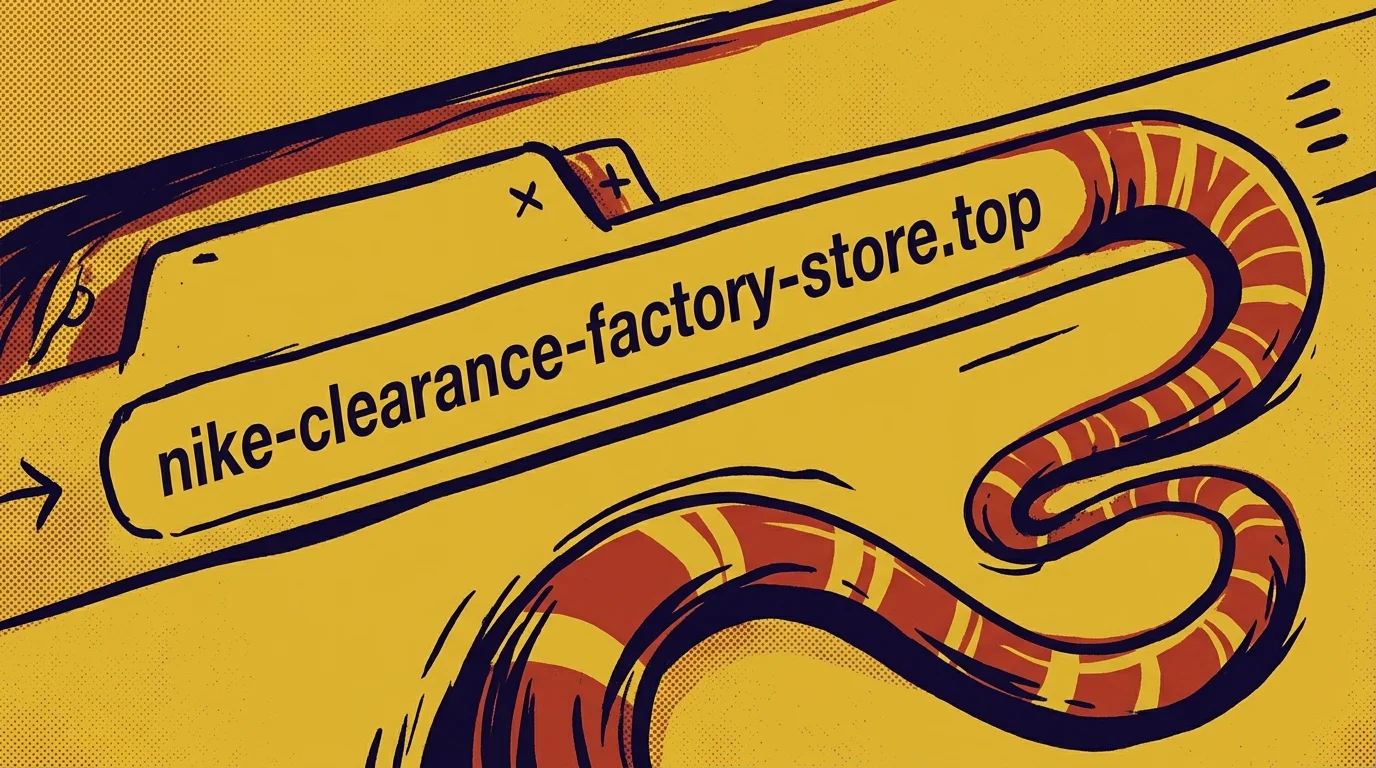
Cybercriminals routinely register domain names that mimic famous retail brands to trick mobile shoppers who skim web addresses. They register spoofed URLs containing supplementary words like “clearance,” “outlet,” “official-store,” or “sale”—such as nike-clearance-factory-store.top.
Scammers also prefer non-traditional top-level domain extensions such as .xyz, .vip, .club, or .shop because these domain extensions cost less than a dollar to register anonymously and involve virtually no identity verification.
Examine the URL in your browser address bar with painstaking attention. Look out for subtle misspellings, letter swaps, or odd hyphens designed to deceive your eye.
You can confirm a domain’s background by using the free ICANN Lookup tool to check when the web address was created. A merchant claiming to be a decade-old family business that registered its web address three weeks ago is an undeniable imposter.
Furthermore, newly minted web domains that hide behind offshore domain privacy proxies while running aggressive discount ads display undeniable red flags of fake online shops.
Red Flag #4: Unusual or Unprotected Payment Methods
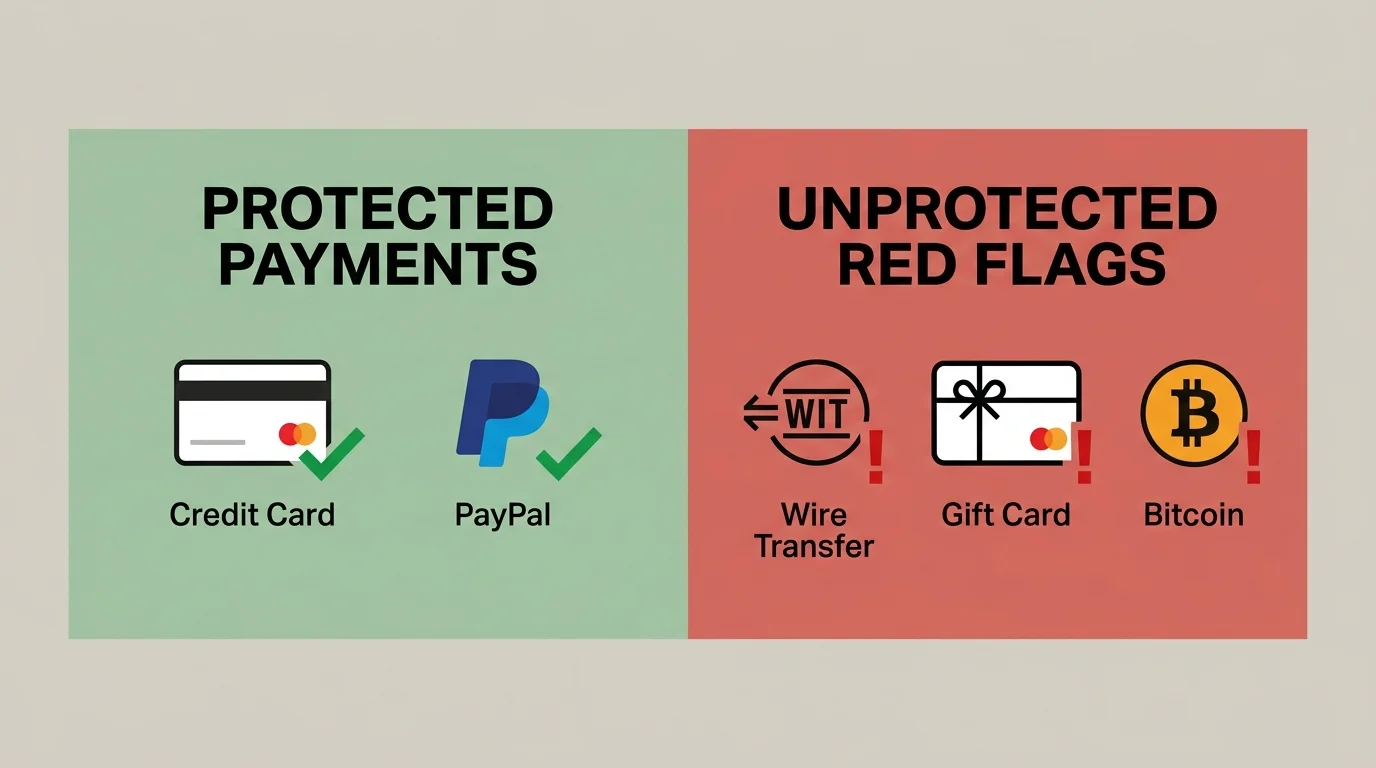
Examine the payment methods allowed at checkout before entering sensitive financial details. Legitimate e-commerce websites process payments through established merchant processors like credit cards, PayPal, Apple Pay, or Google Pay.
If a digital shop demands payment exclusively through peer-to-peer mobile apps like Zelle, Venmo, Cash App, wire transfers, or cryptocurrency, cancel the transaction right away.
Fraudulent sellers favor these non-reversible payment methods because they operate like digital cash; once the transfer completes, your money is gone with no administrative recourse.
Federal law provides substantial financial protections when you use a credit card for online transactions. Under the Fair Credit Billing Act (FCBA) codified in 15 U.S.C. § 1643, your maximum legal liability for unauthorized credit card charges is capped at $50.
Furthermore, federal law grants cardholders a 60-day window from the statement issue date to submit a written dispute for billing errors, non-delivery, or misstated items.
Deceptive websites deliberately avoid standard credit card processing facilities because high dispute ratios trigger financial penalties and permanent merchant account termination.
Red Flag #5: Vague, Copied, or Non-Existent Return Policies
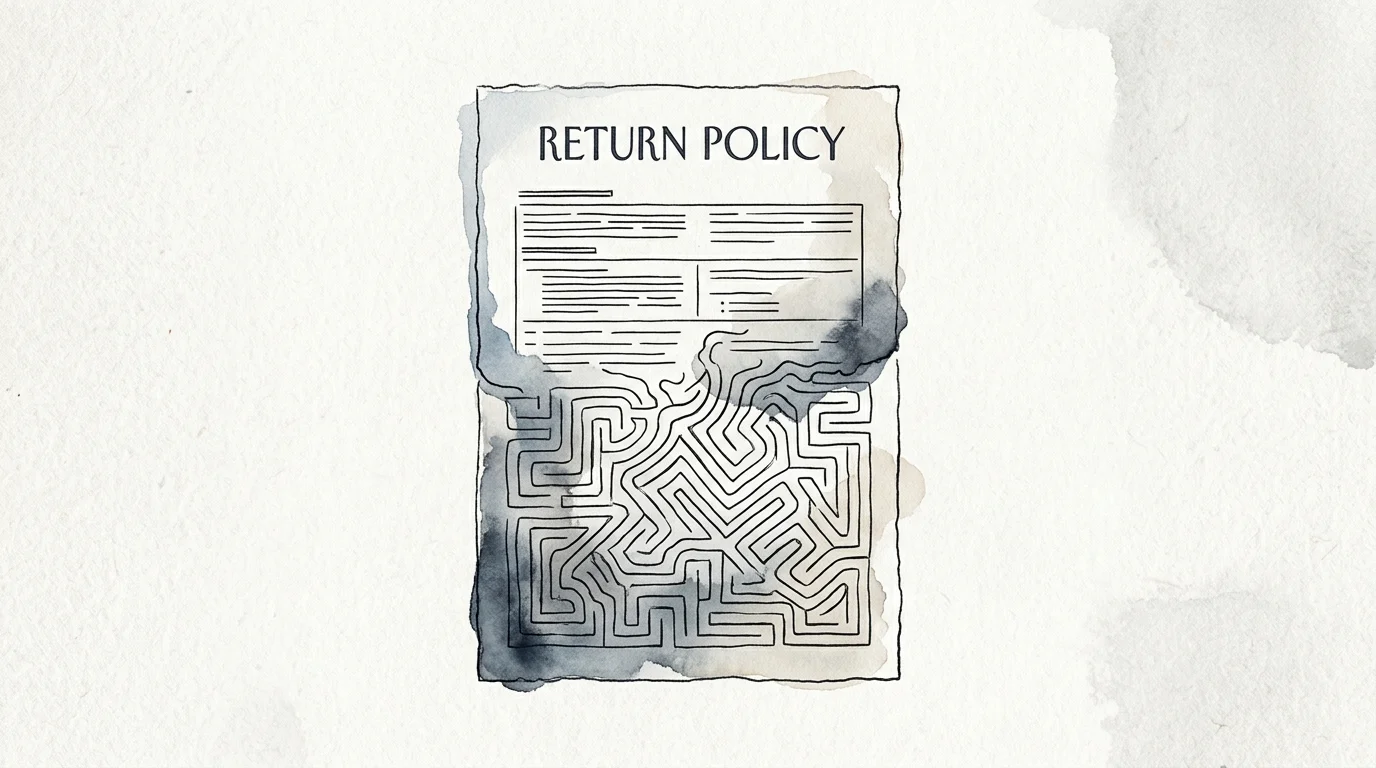
A company’s return and refund documentation provides a clear window into its operational legitimacy. Dishonest merchants frequently copy and paste generic legal text from open-source boilerplates without customizing the wording for their store.
You might notice an apparel shop referencing returns for heavy machinery or a home goods seller stating that damaged merchandise must be shipped back to an unlisted warehouse overseas at the consumer’s personal expense.
Federal regulations establish clear standards regarding merchant shipping and refund duties. The FTC Mail, Internet, or Telephone Order Merchandise Rule (16 CFR Part 435) requires merchants to ship orders within the advertised timeframe, or within 30 days if no delivery timeframe is specified.
If a merchant cannot fulfill the order on time, they must notify you and offer a full refund issued within 7 business days for credit card transactions.
Storefronts that claim “all sales are final,” require excessive restocking fees, or refuse to publish a transparent refund process violate federal rules and present obvious online shopping scam warning signs.
Red Flag #6: Synthetic or Uniformly Glowing Customer Reviews
Onsite customer reviews can be easily forged by site operators using automated scripts and artificial intelligence tools.
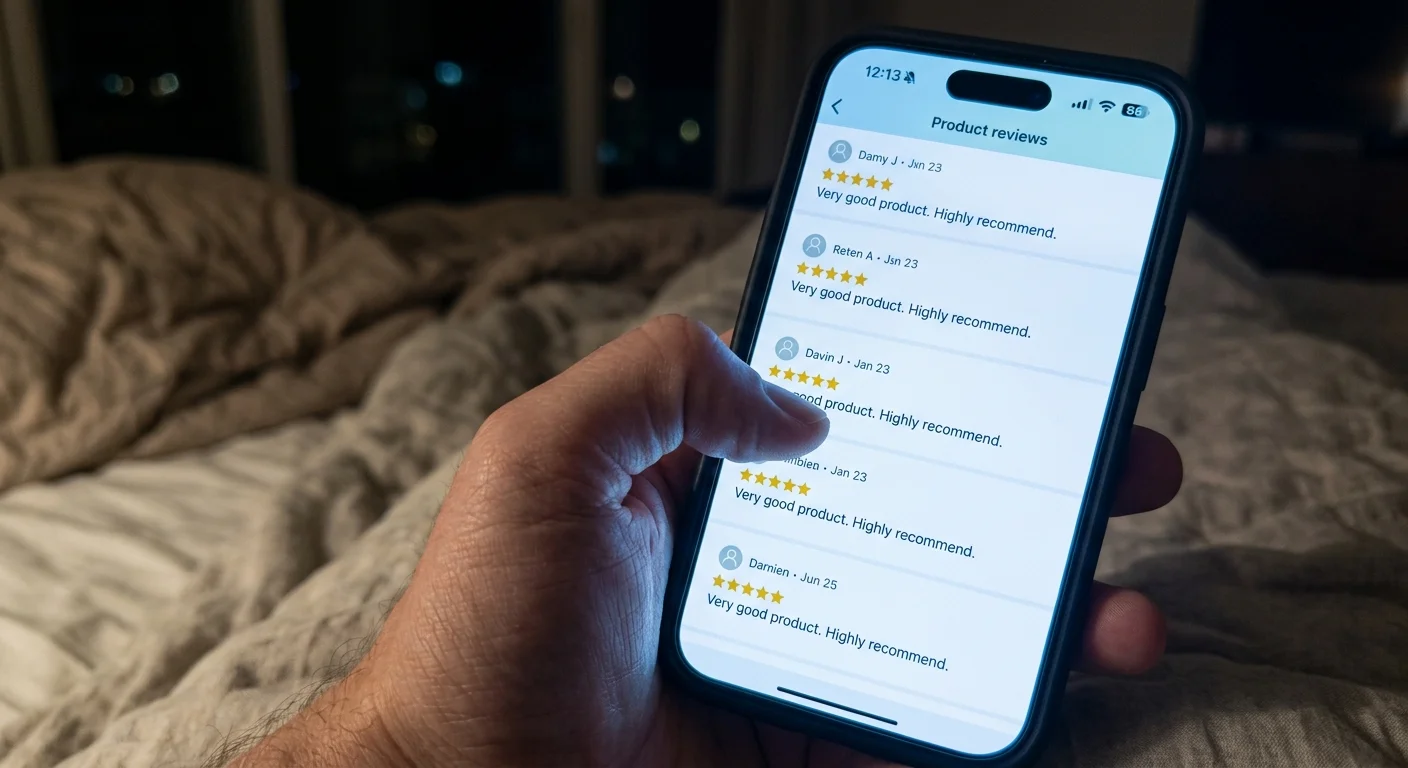
A distinct indicator of fake reviews is an overwhelming cluster of 5-star ratings published on identical dates, featuring short, vague phrasing such as “Super fast shipping!” or “Excellent quality!” Authentic consumer feedback exhibits natural variations in phrasing, details specific product features, and includes minor constructive criticisms.
Do not rely exclusively on testimonials published on the merchant’s own website. Third-party review portals offer an independent view of actual delivery performance, product build quality, and customer support responsiveness.
Search for the retailer on independent platforms like the Better Business Bureau or Trustpilot.
If a website displays hundreds of perfect ratings on its homepage while third-party complaint boards show severe warnings about missing tracking numbers and fraudulent charges, prioritize the third-party platforms every single time.
Red Flag #7: Missing SSL Certificates and Security Seal Gimmicks
Data security is mandatory when transmitting payment credentials, street addresses, and private contact information over the web. Check your browser’s address bar to ensure the web address begins with HTTPS rather than unencrypted HTTP.
While an SSL certificate alone does not prove that a merchant is trustworthy, the absence of an HTTPS connection guarantees that your private payment details travel in clear text, leaving you vulnerable to digital interception.
Watch out for static security trust badges displayed on checkout pages or site footers. Dishonest site builders routinely copy and paste image files of recognized security logos—such as McAfee Secure, Norton Secured, or BBB Accredited Business—without earning genuine trust verification.
Test these seals by clicking directly on them; legitimate security badges open an active, verifiable window hosted directly on the security provider’s domain.
If clicking the graphic does nothing or opens a static image file, the site uses deceitful tactics to create a false perception of safety.

Red Flag #8: Excessive Social Media Ad Reliance with Disabled Comments
Modern retail scams rely heavily on social networks like Instagram, Facebook, and TikTok. Scammers deploy glossy video ads built from stolen content to drive impulse traffic to disposable digital storefronts.
A dead giveaway of a fraudulent operation is a sponsored ad campaign or social profile that turns off user comments or scrubs critical posts submitted by previous buyers.
When victimized consumers realize they received cheap counterfeits or nothing at all, they leave public warnings on the merchant’s social ad campaigns. To prevent these warnings from killing conversion rates, rogue operators disable comments entirely or use comment filtering scripts.
Before making a purchase driven by a social media advertisement, inspect the comment section. If comments are disabled, restricted, or filled with repetitive spam accounts, do not trust the brand.

Red Flag #9: Unrealistic Shipping Timelines and Vague Logistics Tracking
Deceptive online outlets frequently mask their real shipping locations and logistics pipelines. They advertise rapid delivery windows, but once you complete payment, they issue tracking links connected to obscure third-party logistics portals that show stagnant updates like “Shipment Information Received” or “In Transit” for months.
This delay tactic is designed to push you past your credit card’s formal dispute timeframe.
If an online retailer refuses to state which standard shipping carrier delivers your package—such as USPS, UPS, FedEx, or DHL—or claims international tracking codes take weeks to update, you are likely dealing with a drop-shipping scam or a phantom merchant.
Always review the shipping location fine print before submitting payment. Reputable companies state where their distribution hubs are located and provide clear, trackable carrier numbers that update continuously from dispatch to doorstep.

The Bottom Line: What This Means for Your Wallet
Protecting your budget from online predators requires active caution and systematic checks before entering your credit card details.
The red flags of fake online shops are clear once you know where to look, ranging from brand-new domain registrations and missing business addresses to unbelievable discounts and disabled social media feedback.
Spending two minutes to verify domain age, check independent complaint databases, and test trust badges will safeguard your money from non-delivery schemes and identity theft.
Always prioritize secure, protected payment methods over unrecoverable options. Using a credit card gives you strong legal standing under federal protections to dispute fraudulent charges if a merchant fails to fulfill an order.
If you fall victim to a fraudulent web store, report the incident immediately to your bank, file a complaint with federal regulators, and alert consumer reporting agencies. Spotting warning signs early ensures you capture genuine savings online without falling prey to digital scams.
For consumer protection information, visit the Federal Trade Commission (FTC) and the Consumer Financial Protection Bureau (CFPB). For product safety and reviews, consult Consumer Reports.
Disclaimer: This article is for informational purposes only and does not constitute financial advice. The content reflects the author’s opinion and research at the time of writing.
Always do your own research before making financial decisions.
Frequently Asked Questions
What should I do if I already gave my credit card details to a scam website?
Contact your card issuer immediately to report unauthorized activity and cancel your card to prevent recurring charges. Request a replacement card with a new card number.
Document all communication, order confirmation emails, and receipts, then submit a formal written credit card dispute within 60 days of receiving your statement.
You should also monitor your credit reports for suspicious inquiries and consider placing a fraud alert on your credit file with the major credit bureaus.
Does an HTTPS padlock icon guarantee that an online retailer is safe?
No, an HTTPS padlock only proves that the connection between your web browser and the site server is encrypted. Today, scammers easily obtain free SSL certificates to display the HTTPS protocol and padlock icon.
While an unencrypted HTTP site is an immediate red flag, an encrypted HTTPS site can still be an outright fraud. You must evaluate contact details, domain age, payment options, and pricing alongside connection security.
How can I check if a brand-new online store is legitimate before buying?
Start by searching for the exact website domain name combined with terms like “reviews,” “scam,” or “complaints” on independent search engines. Run the website URL through the ICANN Lookup tool to inspect the registration date and country of origin.
Next, check for a physical address on Google Maps and test their customer service phone number. Finally, verify that the website supports standard credit card payments rather than peer-to-peer transfer apps.
What federal rights do I have if an online merchant takes my money and fails to ship my order?
Under the FTC Mail, Internet, or Telephone Order Merchandise Rule, merchants must ship your purchase within the advertised timeline or within 30 days if no delivery date was given.
If the merchant misses this window, they must offer you the option to cancel for a full refund within 7 business days for credit card transactions.
If the vendor refuses or ignores your inquiries, you can exercise your dispute rights under the Fair Credit Billing Act to reverse the charge through your credit card issuer.