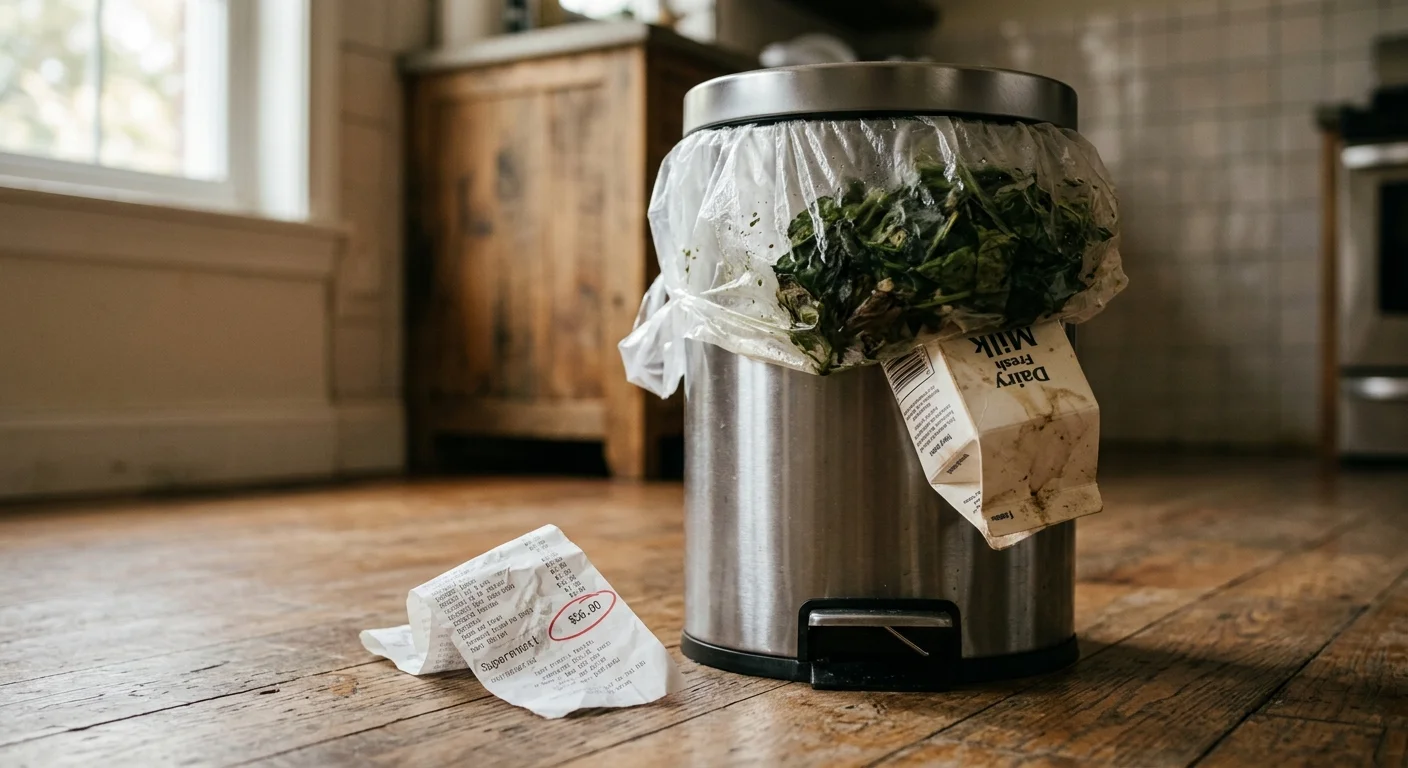
Every time you throw out a slimy bag of spinach or a carton of sour milk, you burn hard-earned cash.
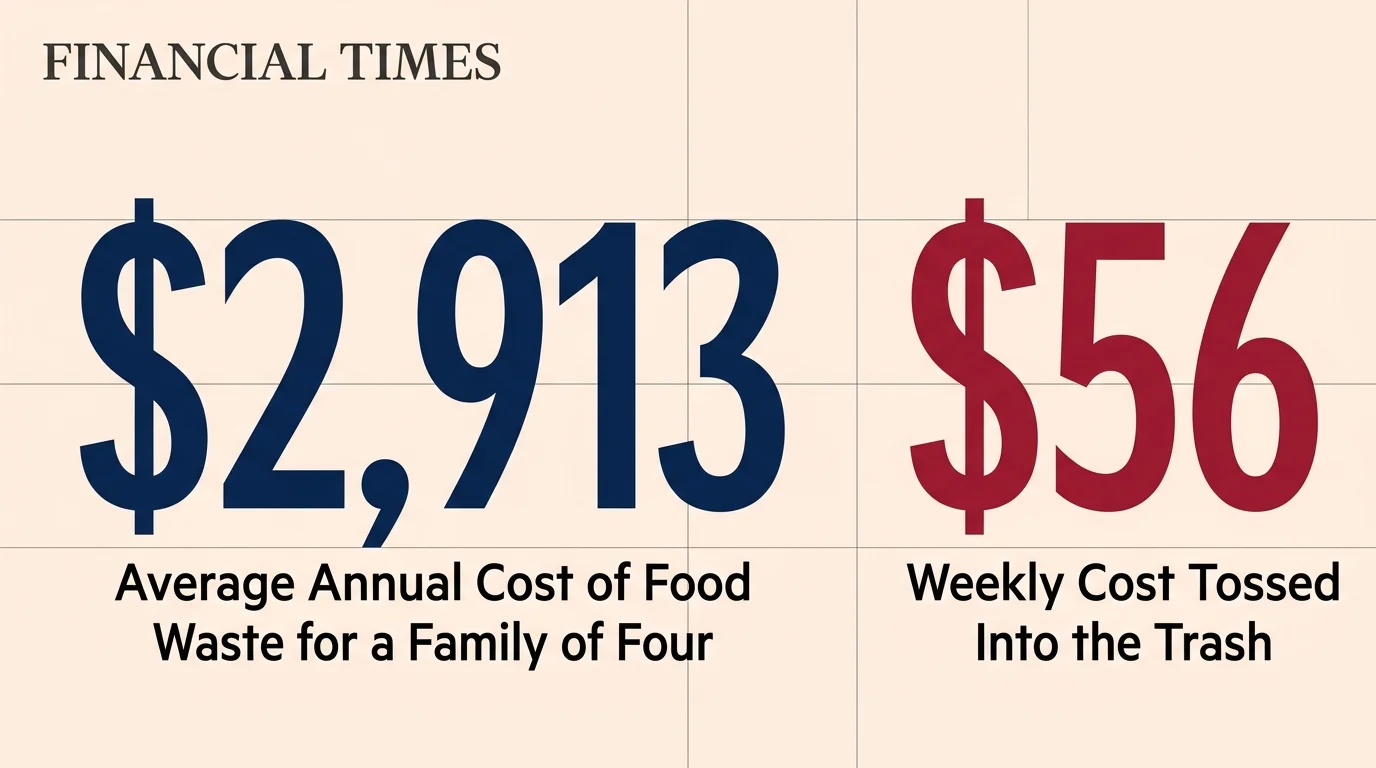
The Environmental Protection Agency estimates that food waste costs the average family of four $2,913 every year—that equals $56 every single week tossed directly into the trash. Residential households drive over 40% of all food waste in the United States, outpacing restaurants and supermarkets combined.
By identifying common grocery shopping mistakes, you can plug this financial drain immediately. Stopping these bad store habits will help you avoid wasting groceries, lower your weekly register receipt, and stretch your food budget significantly further month after month.
Tip #1: Shopping Without an Inventory-Based Meal Plan
Wandering down grocery store aisles without a firm plan is the fastest way to blow your budget. When you shop based on vague cravings or random recipe ideas you saw on social media, you inevitably buy ingredients that clash with what you already own.
Supermarkets strategically design their store layouts to trigger impulse purchases, placing eye-catching displays right where off-the-cuff shoppers look first.
Without a concrete list built on actual household needs, you will fill your cart with items that look great in the cart but rot in your refrigerator.
To fix this problem, you must abandon traditional recipe-first planning and adopt an inventory-based system instead. Studies published in the journal Resources, Conservation and Recycling reveal that adopting flexible meal planning and shopping lists reduces household food waste by 27% to 33%.
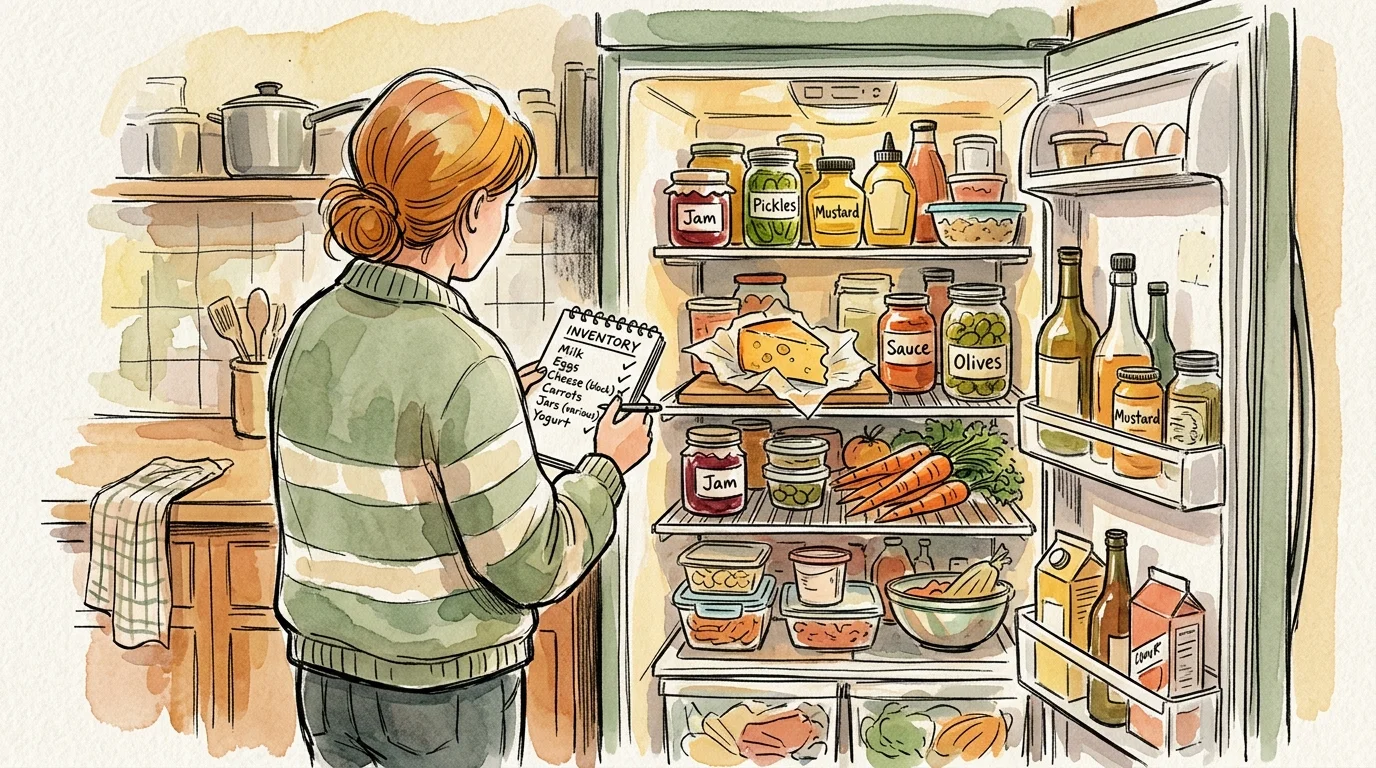
Before you draft a grocery list, audit your pantry, freezer, and crisper drawers. Identify items that require immediate consumption—like that half-used block of cheese or half-bag of carrots—and build your weekly meals around those core ingredients first.
Once you complete your inventory check, write down a precise shopping list organized by store aisle. Categorizing your list by produce, dairy, dry goods, and proteins keeps you moving efficiently through the store and minimizes temptation.
When an item isn’t on your list, skip it. By sticking to smart grocery shopping tips like inventory-first planning, you eliminate duplicate purchases and ensure that every dollar you spend at the register matches a specific meal on your calendar.
Tip #2: Misinterpreting Package Expiration Dates
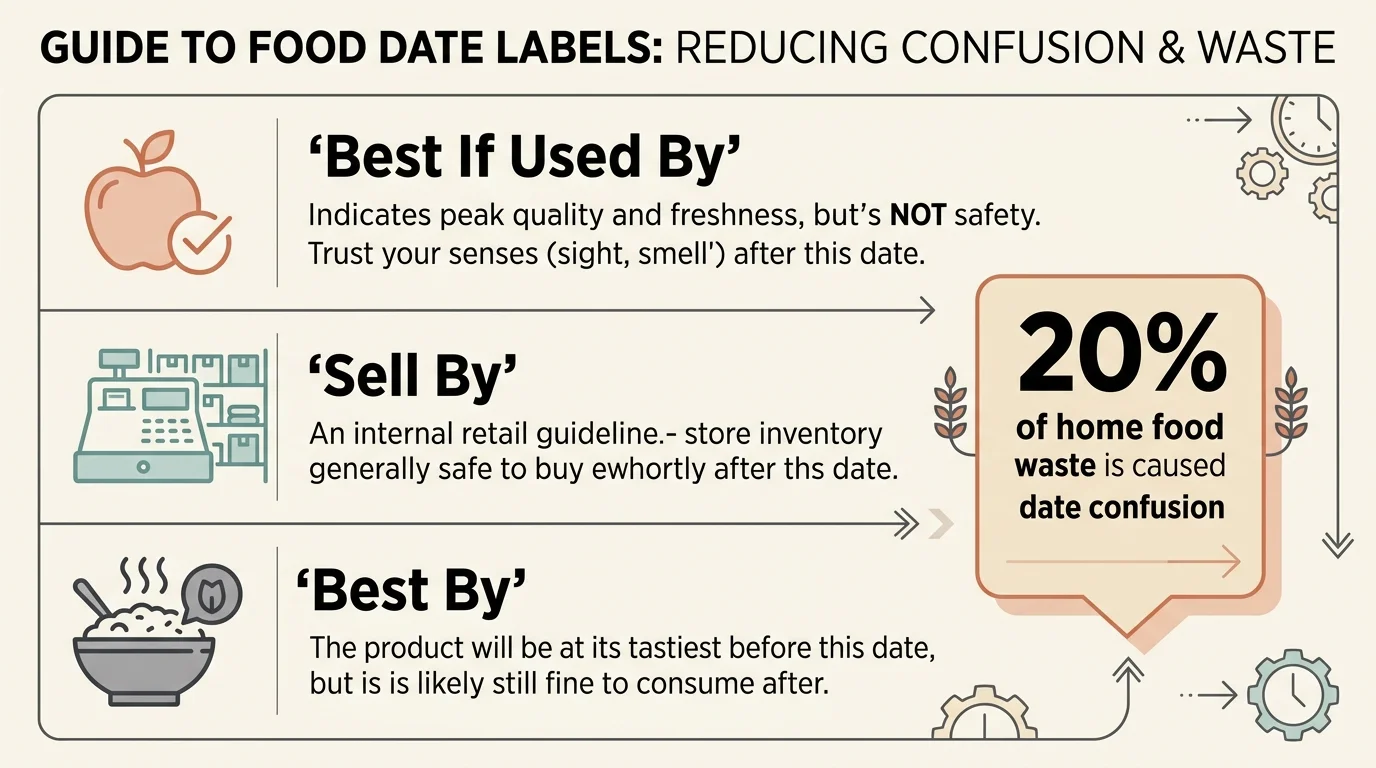
Throwing away food the exact moment it hits the date printed on the package is a massive financial blunder. Millions of consumers treat manufacturer dates as safety warnings, discarding perfectly wholesome food simply because the calendar moved forward.
The truth is that federal law does not require date codes on most foods, and manufacturers use these numbers to signal optimal flavor freshness rather than food safety. Misunderstanding these labels is one of the most common food waste causes in American homes.
Data from the USDA and FDA reveals that confusion over non-standardized package dates causes roughly 20% of consumer food waste at home. Regulatory agencies explicitly recommend “Best If Used By” as the standard phrase for peak quality rather than safety.
Phrase variations like “Sell By” merely tell retail staff when to rotate store shelves, while “Best By” simply indicates when a product delivers its absolute highest quality. Except for infant formula, printed package dates rarely indicate that food has suddenly become hazardous to eat.
Instead of relying blindly on printed numbers, use your natural senses to evaluate freshness. Inspect items visually for mold or discoloration, smell dairy and meat for sour aromas, and evaluate texture before tossing food into the trash.
Eggs, for example, often remain perfectly safe weeks past their printed date; you can easily test them by placing them in a bowl of water to see if they sink.
Learning how to judge real freshness helps you avoid wasting groceries that are completely safe and delicious to eat.
Tip #3: Falling for Bulk Deals on Perishable Goods
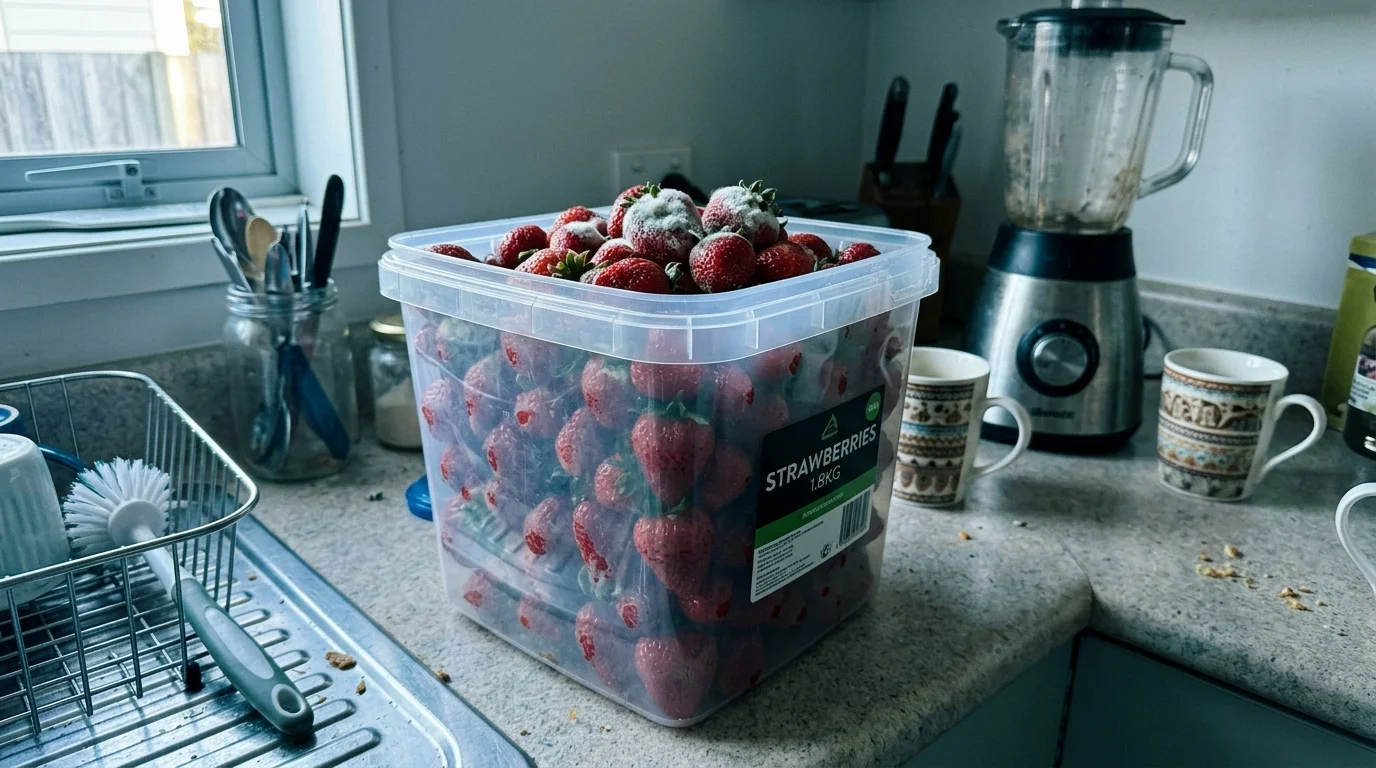
Supermarket multi-buys and warehouse club packages create an irresistible illusion of savings. Seeing a five-pound container of strawberries or an oversized bag of salad greens priced just a dollar higher than the smaller version feels like an obvious bargain.
However, buying massive quantities of short-shelf-life items is a classic retail trap. If your household cannot consume the entire volume before spoilage sets in, that advertised unit discount vanishes into thin air.
Fresh produce is the most frequently wasted grocery category in American homes, followed closely by dairy products and uneaten meal leftovers. Nationwide data from ReFED indicates that total U.S. surplus food reaches 70 million tons every year, creating over $380 billion in national economic loss.
Buying bulk perishables directly feeds this national statistic because delicate fruits and vegetables degrade rapidly under standard home storage conditions.
You can beat this store strategy by calculating the true cost of bulk purchases before putting them in your cart. If you pay $6 for a bulk tub of spinach but discard half because it turns slimy, your real cost jumps to $12 per usable container.
Restrict warehouse club bulk purchases exclusively to shelf-stable goods like canned tomatoes, dry pasta, paper products, and frozen items. When buying fresh perishables, purchase only what your household can realistically eat within five days, regardless of how attractive the bulk discount appears.
Tip #4: Shopping Under the Influence of Hunger and Store Marketing
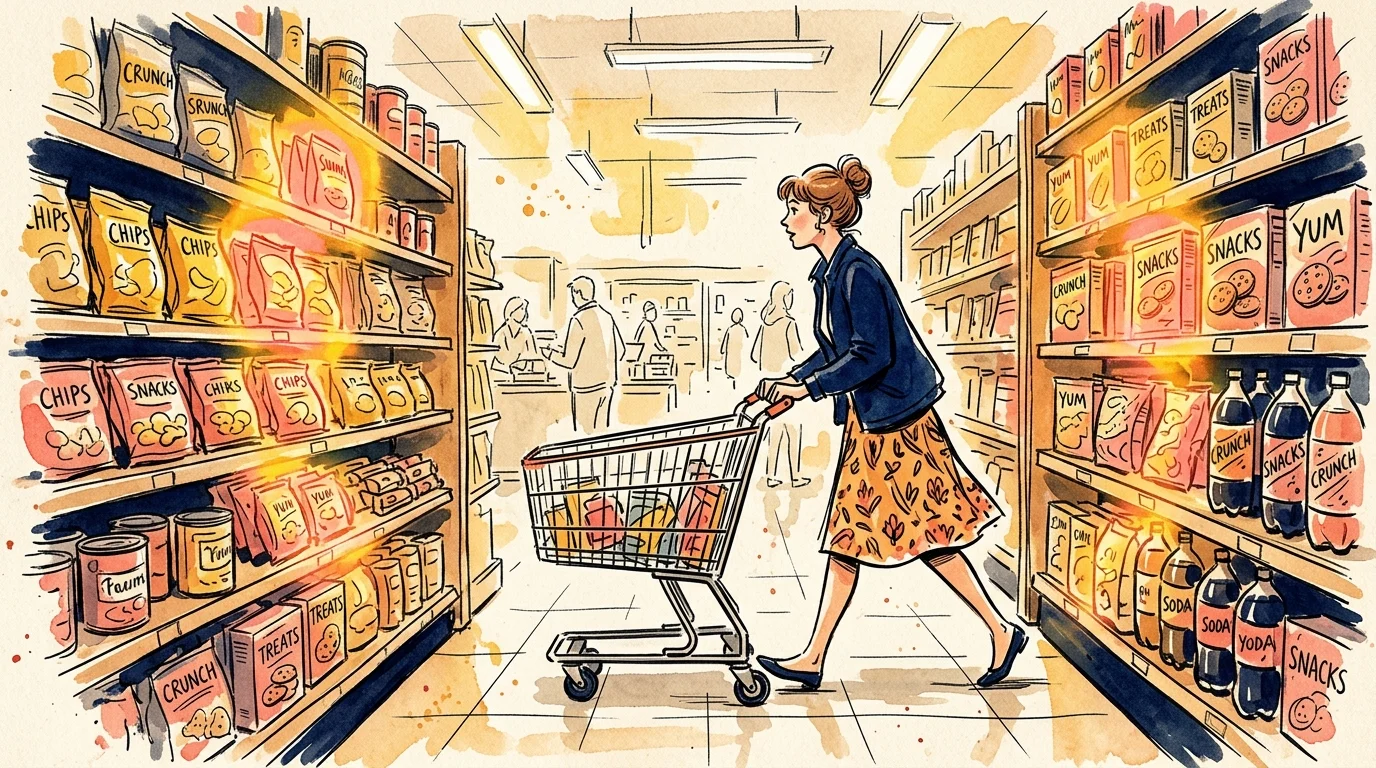
Entering a grocery store on an empty stomach leaves your wallet completely vulnerable. When your blood sugar dips, your brain craves instant gratification, driving you to purchase expensive pre-packaged snacks, bakery goods, and deli items that you never intended to buy.
Retailers rely heavily on sensory marketing—such as pumping the smell of baked bread near the entrance—to exploit hungry shoppers and push high-margin, highly perishable products directly into carts.
Impulse buys triggered by store marketing significantly increase your register total while escalating your risk of household waste. Unplanned purchases rarely fit into your weekly meal structure, meaning these random items often sit forgotten in your pantry or fridge until they spoil.
Exposing these marketing tricks helps you recognize that endcap displays, eye-level product placements, and temporary sales tags exist primarily to move inventory off retailer shelves, not to save you cash.
To protect your wallet, eat a satisfying protein-heavy snack before you head to the store. If physical store temptations still throw your budget off track, switch to online grocery pickup or delivery services.
Ordering online forces you to search for specific items, eliminates sensory manipulation, and lets you view your running total before checking out.
Adopting this digital buffer helps you correct common grocery shopping mistakes, maintain total control over your list, and stick strictly to your household spending targets.
Tip #5: Over-Buying Produce Without Proper Storage Management
Loading your refrigerator with fresh fruits and vegetables without a clear storage strategy guarantees accelerated decay. Many shoppers assume that tossing fresh produce straight into the crisper drawer keeps it fresh indefinitely.
In reality, different types of produce require distinct environmental conditions, and storing incompatible items side-by-side causes rapid premature spoilage across your entire crisping compartment.
The biological culprit behind fast produce decay is ethylene gas—a natural plant hormone released by certain ripening fruits. High-ethylene producers like apples, bananas, avocados, and tomatoes cause ethylene-sensitive items like leafy greens, broccoli, carrots, and cucumbers to rot rapidly when stored together.
Keeping these items in close proximity converts fresh, crisp vegetables into unusable sludge within a matter of days.
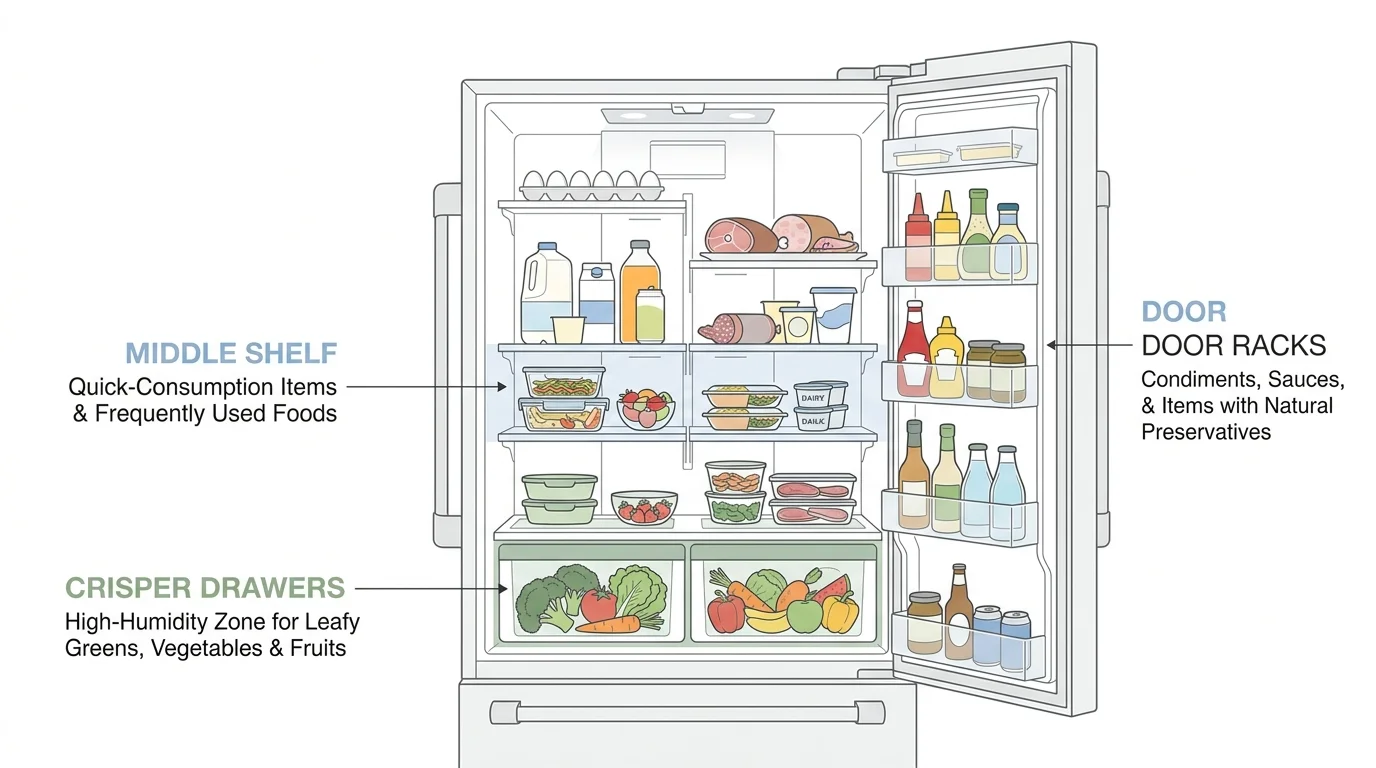
You can dramatically extend the life of your produce by mastering proper storage techniques. Adjust your refrigerator crisper drawers: set one drawer to high humidity for leafy greens and thin-skinned vegetables, and set the second drawer to low humidity for ethylene-emitting fruits.
Store fresh herbs upright in a glass of water like flowers, wrap delicate greens in dry paper towels to absorb excess moisture, and keep potatoes separated from onions in a dark, cool cabinet.
Proper storage protects your produce investment and ensures you consume every bite you buy.
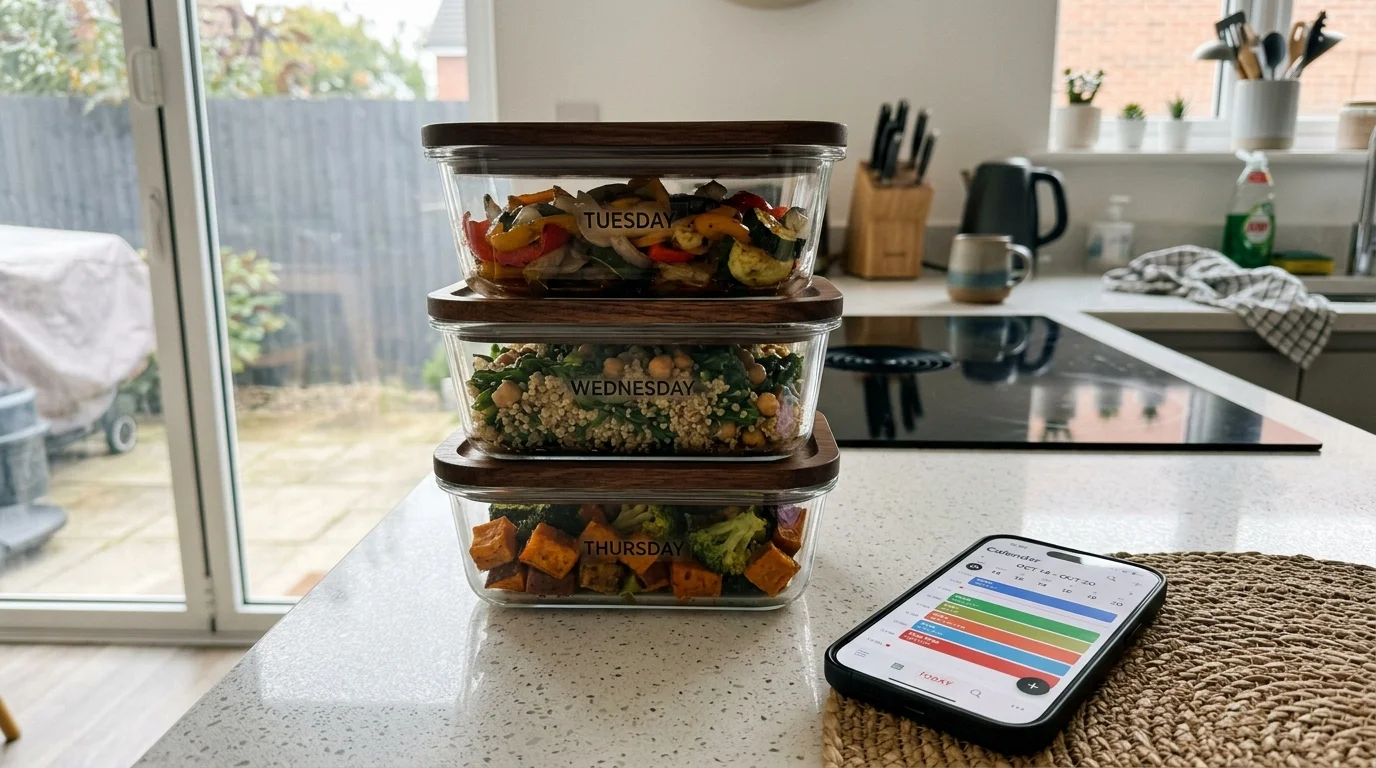
Tip #6: Treating Leftovers as an Afterthought Instead of Strategic Pre-Cooked Meals
Shoving dinner leftovers into opaque containers and pushing them into the dark corners of your refrigerator is a costly habit. When extra portions lack a clear purpose, they quickly turn into forgotten science experiments that end up in the trash bin during weekend cleanouts.
Treating leftovers as unwanted remnants rather than valuable pre-cooked ingredients wastes both your money and the time you spent cooking.
Uneaten meal leftovers represent one of the primary drivers of residential food waste across the nation. When you factor in the EPA finding that household waste costs a four-person family $2,913 annually—or roughly $56 each week—discarded dinners represent a major portion of that lost income.
Overcoming this habit requires shifting your mindset from viewing cooked food as static leftovers to treating it as versatile meal components.
Adopt professional kitchen systems like the “First In, First Out” (FIFO) method to manage your refrigerator contents effectively. Create a clear, labeled “Eat Me First” bin on your middle refrigerator shelf so high-priority meals remain visible.
When cooking large batches, plan specific transformational meals; for instance, turn Sunday’s roast chicken into Tuesday’s chicken tacos and Wednesday’s soup base.
If you know your family will not eat extra portions within two days, package and freeze them immediately to preserve their quality for future busy weeknights.
The Bottom Line: What This Means for Your Wallet
Food waste is not an inevitable tax on modern living; it is a direct result of fixable shopping habits and poor inventory controls.
When the average single consumer loses $728 every year and a family of four throws away $2,913 in edible food, taking control of your grocery habits yields an immediate financial return.
Recovering that $56 weekly loss is equivalent to giving your household a direct annual raise without taking on extra working hours.
By eliminating these six common grocery shopping mistakes, you transform your kitchen from a financial leak into an efficient, money-saving operation. You do not need to adopt extreme couponing or drastically reduce your living standards to see real results.
Simply auditing your inventory, understanding package dates, avoiding bulk perishable traps, ignoring impulse tricks, managing produce storage, and repurposing extra meals will yield massive long-term savings.
Start small by picking two specific adjustments to implement during your next store run this week. Audit your crisper drawer before writing your list, or establish an “Eat Me First” shelf in your refrigerator today.
As these smart practices turn into automated habits, you will watch your food waste drop to zero while keeping thousands of extra dollars right where they belong—in your family bank account.
Frequently Asked Questions
How can I tell if food is safe to eat past the printed date label?
Focus on sensory cues rather than printed label dates, as most dates signal peak quality rather than food safety. Inspect the food for visible signs of spoilage such as mold, severe discoloration, or strange textures.
Smell the product for off-putting, sour, or rancid odors, which strongly indicate bacterial growth. For eggs, submerge them in a bowl of cold water: fresh eggs lie flat on the bottom, while spoiled eggs float to the surface due to gas buildup.
Does using store pickup or delivery services really reduce food waste?
Yes, online grocery shopping significantly reduces food waste by eliminating sensory marketing temptations inside physical stores. Ordering digitally prevents impulse buys, allows you to cross-reference your online cart against your actual pantry inventory in real time, and keeps your purchase total visible before you pay.
This digital buffer ensures you purchase only items required for your planned weekly meals.
What is the most effective way to store fresh produce so it lasts longer?
The most effective strategy is separating high-ethylene producing fruits from ethylene-sensitive vegetables and managing moisture levels. Keep apples, bananas, avocados, and tomatoes away from leafy greens, cucumbers, and carrots.
Use your refrigerator crisper settings correctly by keeping greens in a high-humidity drawer with paper towels to absorb excess condensation, and store dry fruits in a low-humidity drawer.
How can I avoid overbuying when taking advantage of grocery store sales?
Always evaluate sale prices against your household’s actual consumption rate rather than the advertised percentage discount. Only buy promotional items in bulk if they are shelf-stable, such as canned goods or dry beans, or if you can freeze them immediately.
For fresh perishables offered on multi-buy sales, buy only what your family will consume within five days to prevent paying for items that end up in the trash.
For consumer protection information, visit the Federal Trade Commission (FTC) and the Consumer Financial Protection Bureau (CFPB). For product safety and reviews, consult Consumer Reports.
Disclaimer: This article is for informational purposes only and does not constitute financial advice. The content reflects the author’s opinion and research at the time of writing.
Always do your own research before making financial decisions.