
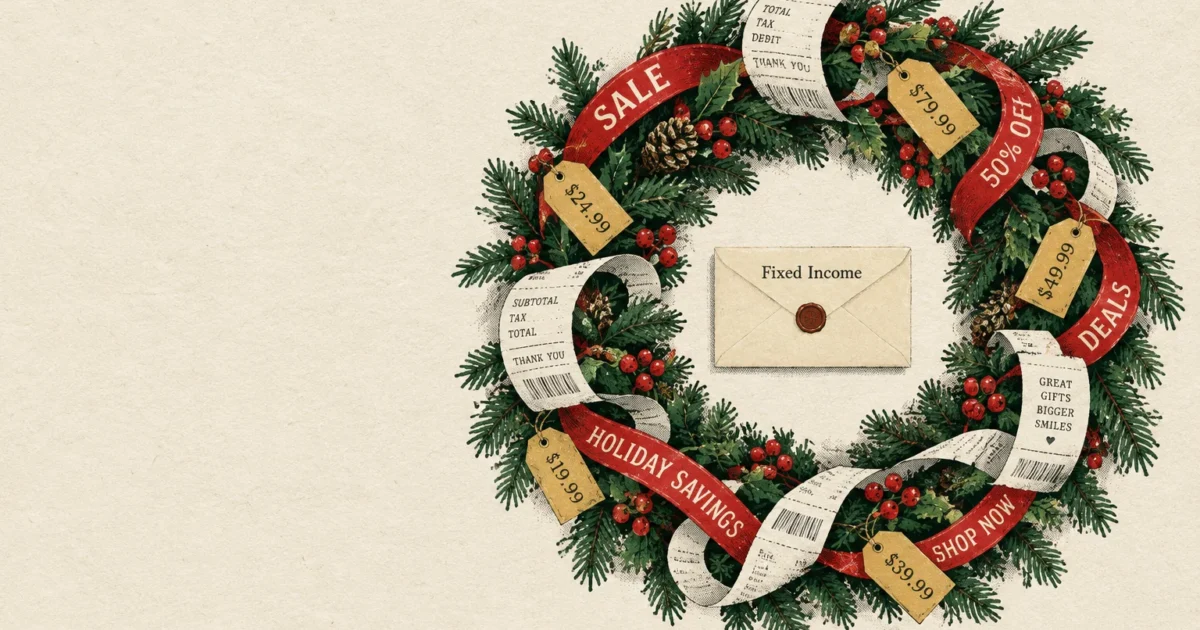
You can protect your hard-earned retirement nest egg this holiday season without sacrificing family joy. Retailers design holiday marketing campaigns specifically to separate older Americans from their fixed-income dollars.
A few seasonal missteps can wipe out months of disciplined budgeting. They can even trigger surprise tax penalties and lingering debts that jeopardize your financial security.
Mastering a retiree holiday budget requires spotting marketing traps before they drain your bank account. Here are the eight biggest traps you must avoid to keep your finances intact.

Tip #1: Subsidizing National Spending Benchmarks on a Single Check
Retail trade groups love to publish soaring national spending averages every November. The National Retail Federation reports that consumers budget between $890 and $902 each year for seasonal gifts, food, and festive decor.
Comparing your personal spending to that broad national benchmark invites financial trouble. Those retail surveys average high earners together with everyday workers.
Consider the math behind a typical retirement budget. The average monthly Social Security benefit sits between $1,976 and $2,084.
Spending $900 on holiday cheer devours roughly 43% to 45% of your total monthly income. No working household would surrender nearly half their paycheck to buy gifts.
Surrendering that much cash instantly destabilizes your day-to-day living expenses. You cannot afford to match the habits of corporate executives or dual-income households.
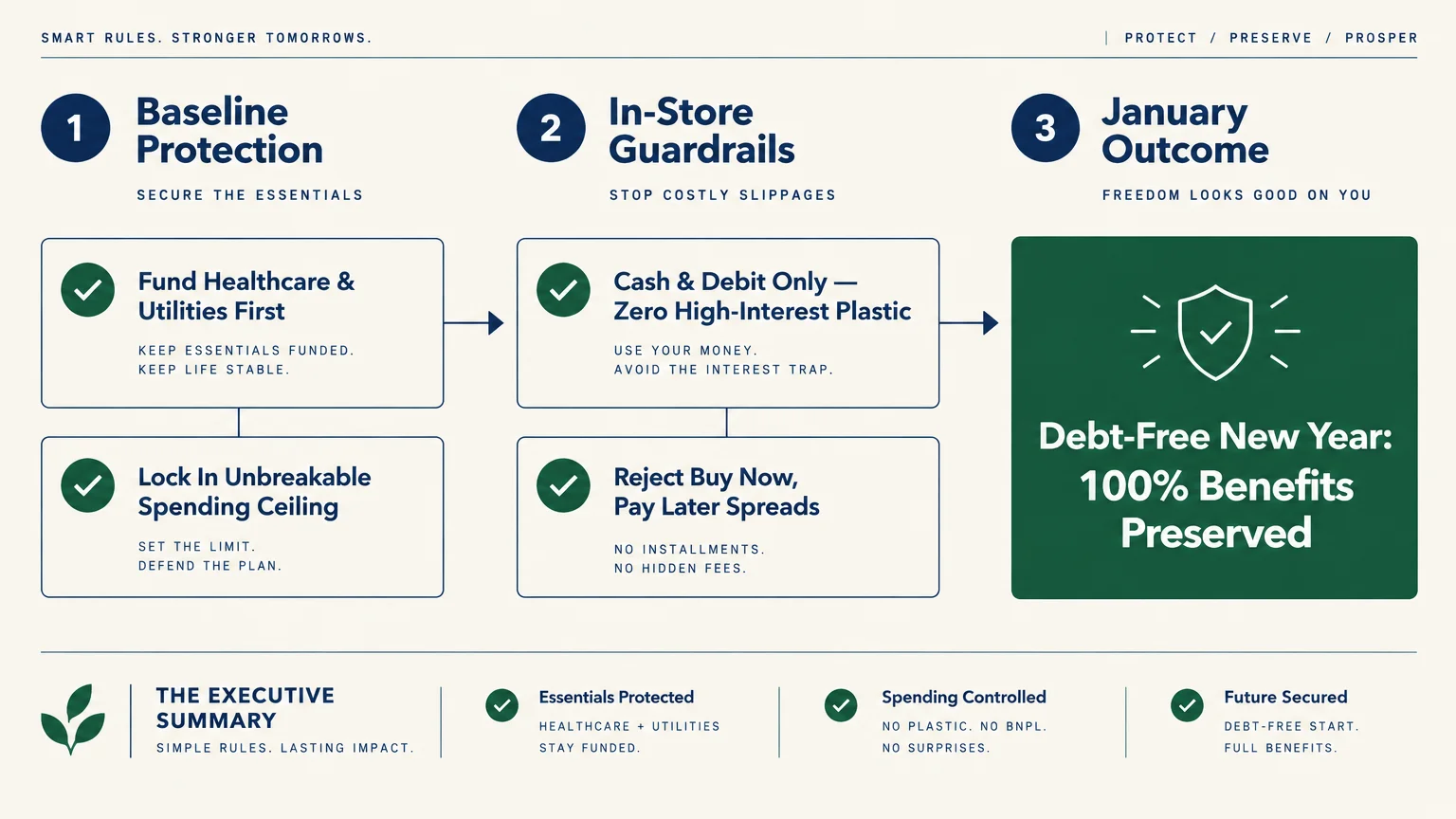
You must establish a realistic retiree holiday budget anchored strictly in your own disposable cash flow. Base your holiday spending on what remains after funding your healthcare and utilities.
Ignore marketing campaigns that tell you what the typical American spends. Your financial independence matters far more than an arbitrary retail index.
Set a firm seasonal spending ceiling before you browse store aisles or online catalogs. Write that dollar figure down and treat it as an unbreakable spending limit.
When your shopping funds run out, stop buying immediately. Your family loves you for your presence, not your ability to match corporate retail surveys.
Tip #2: Banking on the Annual COLA to Erase January Balances
Many retirees view the annual Social Security Cost-of-Living Adjustment as a holiday windfall. They charge seasonal expenses in December and promise to repay the balance with next year’s raise.
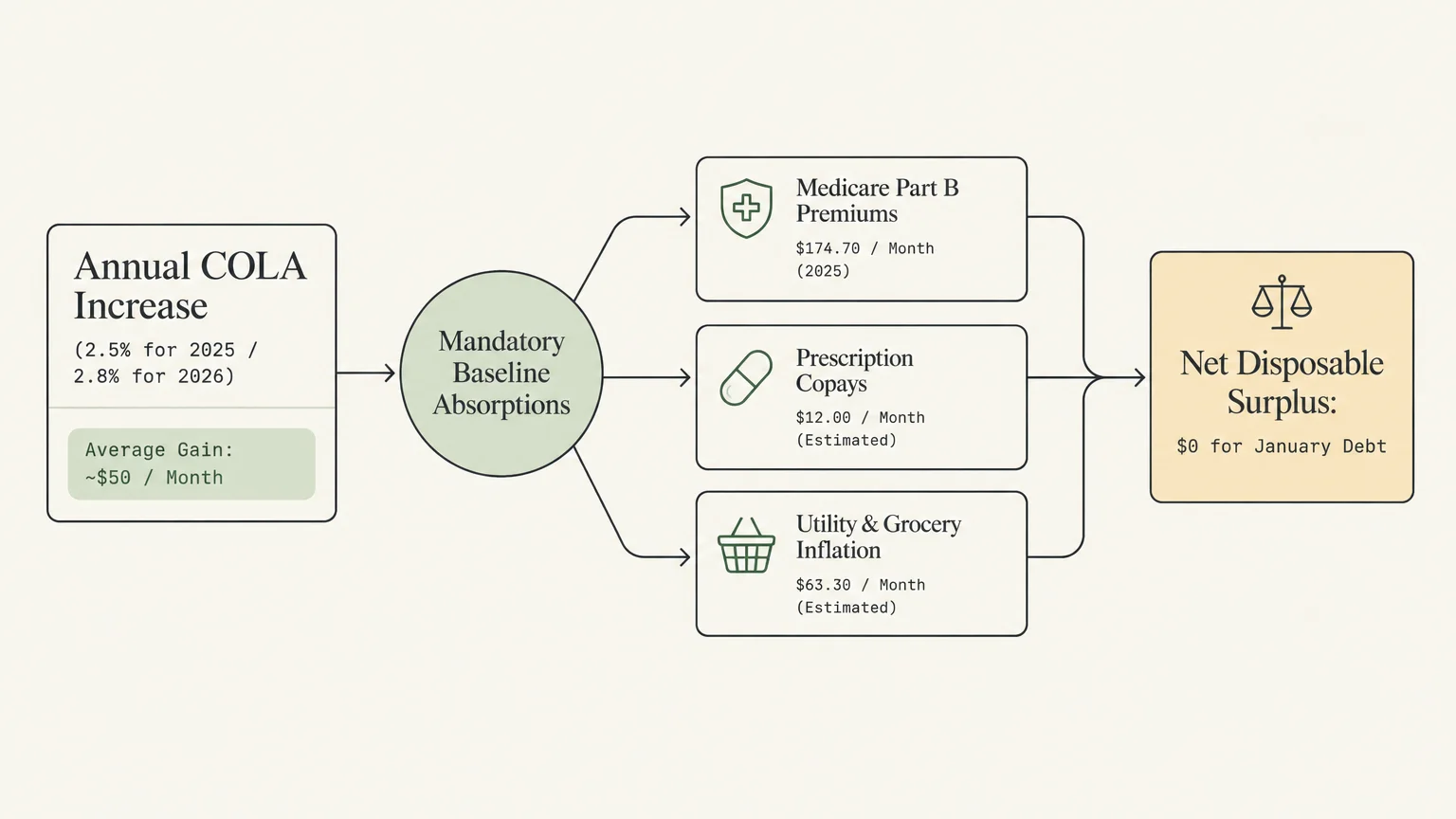
This assumption creates a dangerous financial trap. The Social Security Administration set the COLA increase at 2.5% for 2025 and 2.8% for 2026.
A 2.5% boost delivers an average increase of roughly $50 per month. That modest bump cannot wipe out a heavy stack of January credit card statements.
Rising healthcare costs routinely consume most of that statutory increase before you ever see it. Escalating Medicare Part B premiums and prescription copays quickly absorb those extra dollars.
General inflation on groceries, homeowner insurance, and utilities will claim whatever pocket change remains. You will not have surplus cash to pay down lingering debt.
Relying on future adjustments turns holiday spending on a fixed income into long-term financial distress. You essentially gamble your future baseline income on temporary seasonal purchases.
Treat every upcoming COLA as a vital defense against inflation, not as discretionary holiday money. Protect that monthly increase so it can cover your real living expenses.
If your current December cash flow cannot cover a purchase, leave the item on the store shelf. Never borrow against next year’s government benefits to fund today’s festivities.
Tip #3: Financing Gifts with High-Interest Plastic
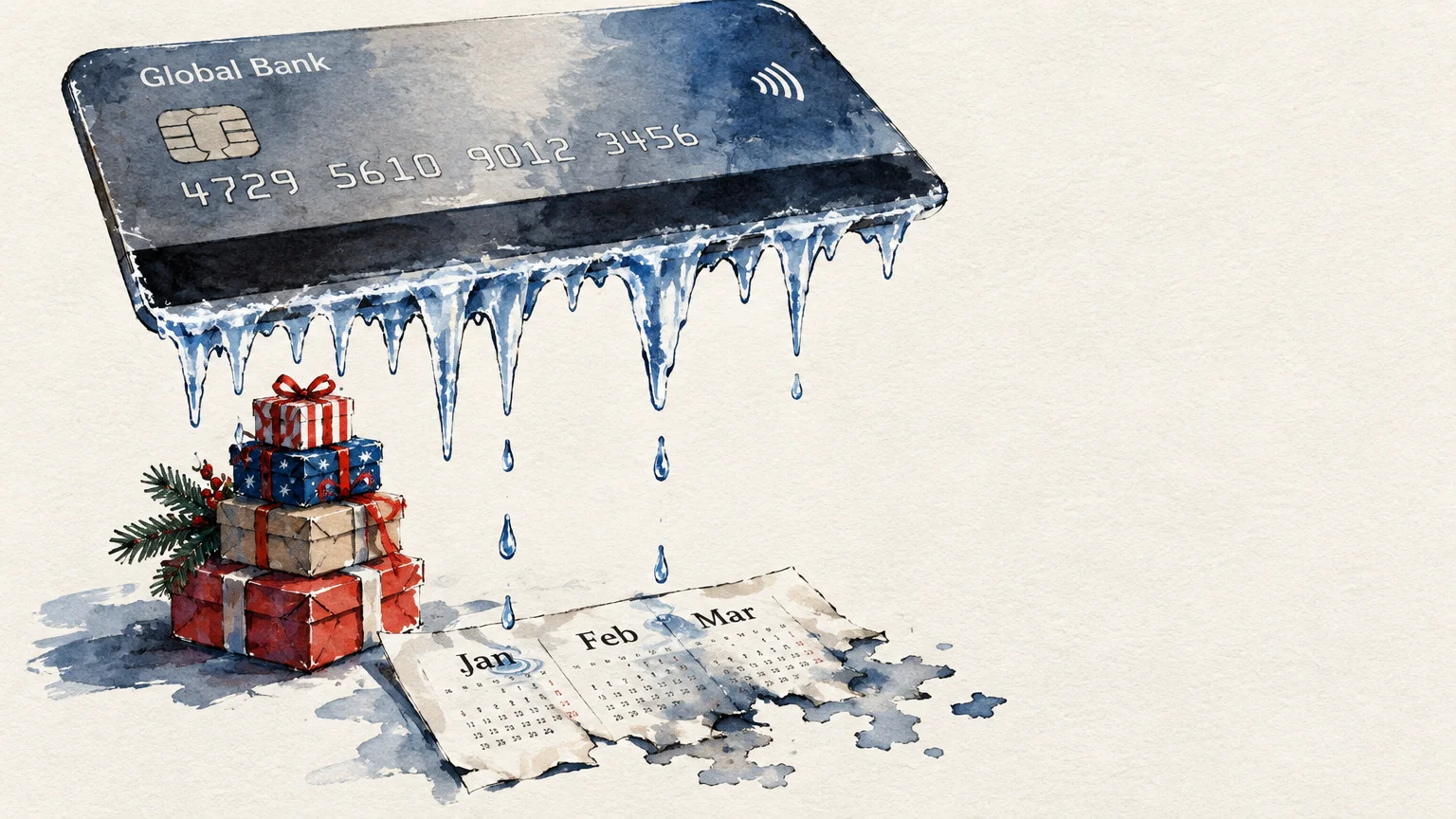
Swiping a credit card offers a quick escape when seasonal cash runs low. Unfortunately, credit card borrowing has become historically expensive across the United States.
Federal Reserve data reveals that average credit card interest rates hover between 21.4% and 22.2%. New card offers frequently exceed 23% APR.
Carrying holiday balances at those brutal rates erodes your purchasing power month after month. The interest charges accumulate far faster than fixed income streams can keep up.
Suppose you charge a modest $1,000 holiday haul at a 22% interest rate. Making only the minimum payments will keep you chained to that debt for years.
You will end up paying hundreds of dollars in pure interest charges on top of your original purchases. Those gifts will cost you double their initial retail price.
High interest balances actively devour the small discretionary cushions seniors rely on for emergencies. A blown car radiator or furnace breakdown then becomes an absolute crisis.
Adopt a strict cash envelope system or pay strictly with your debit card this winter. Locking your credit cards in a drawer prevents toxic debt from following you into the new year.
Smart shoppers avoid holiday overspending by spending only the liquid cash they currently hold. When you refuse to borrow, you guarantee complete control over your financial future.

Tip #4: Falling for Buy Now, Pay Later Phantom Debt
Retail websites aggressively pitch Buy Now, Pay Later plans at every checkout screen. These installment arrangements split your purchase into four deceptively small payments spread across several weeks.
Splitting payments distorts your perception of cost and encourages you to buy far more merchandise. You see a tiny $25 installment instead of an expensive $100 price tag.
These deferred obligations create what financial analysts call phantom debt. When you sign up for multiple plans across different stores, the future payments rapidly stack up.
Those scheduled installments will automatically draft from your checking account throughout January and February. That timing coincides with cold weather heating bills and semi-annual insurance premiums.
Fixed direct-deposit schedules leave little room for error. A flurry of surprise automated withdrawals can easily trigger expensive bank overdraft fees and penalty charges.
Consumer protections around these payment platforms also remain volatile. The Consumer Financial Protection Bureau withdrew its 2024 interpretive rule in 2025, weakening dispute standards.
Resolving billing errors or securing refunds on returned gifts through third-party lenders can prove exhausting. You may wait months to recover funds wrongfully drained from your checking account.
Protect your peace of mind by paying for holiday purchases in full at checkout. If you cannot afford the entire price today, decline the transaction entirely.
Tip #5: Tapping Traditional IRAs and Triggering the IRMAA Tax Trap
Some retirees solve seasonal cash crunches by pulling a few extra thousand dollars from traditional retirement accounts. They view their nest egg as an easy source of holiday cheer.
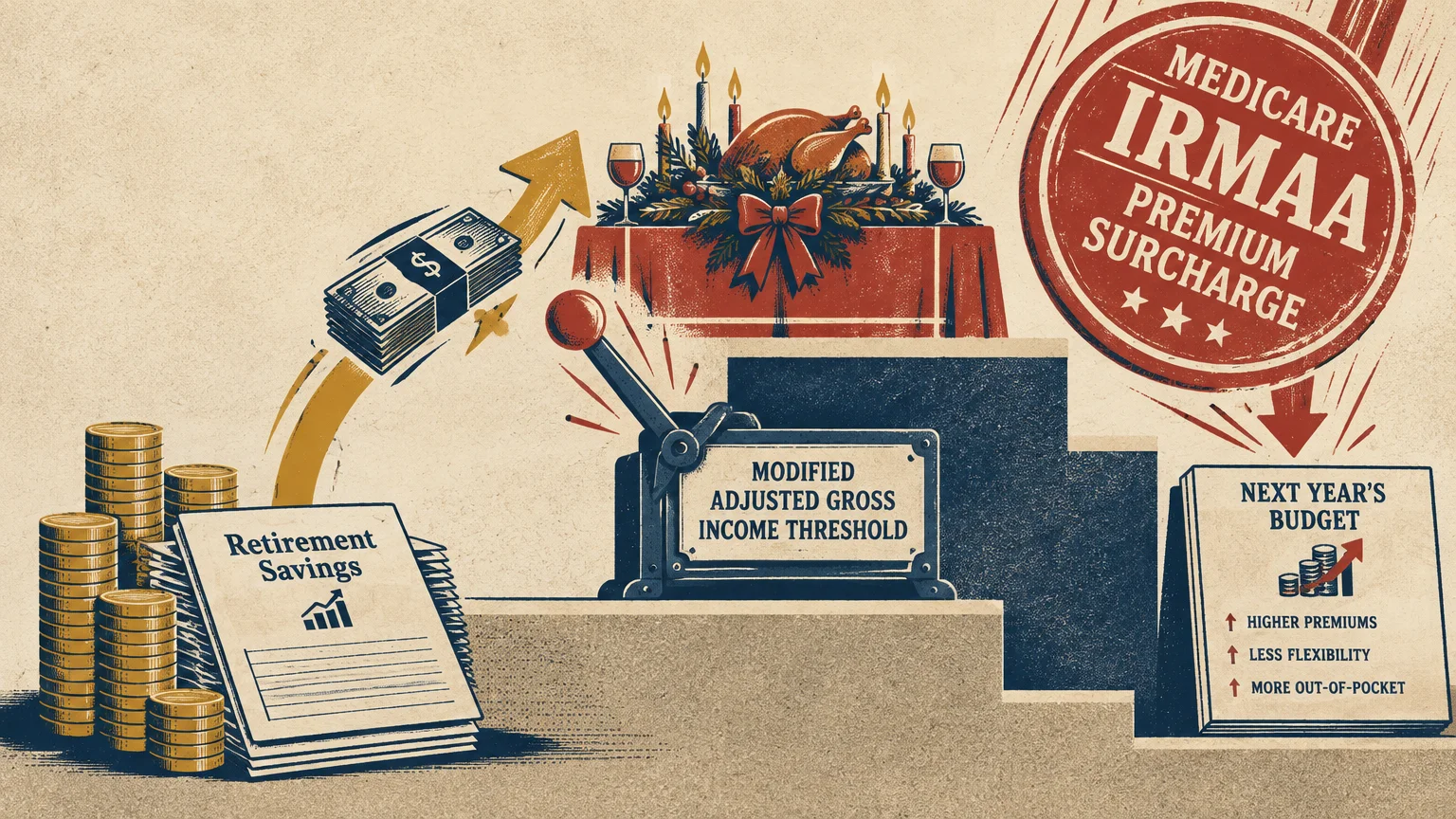
Unplanned withdrawals from tax-deferred accounts can trigger severe tax consequences. Under the SECURE 2.0 Act, the statutory Required Minimum Distribution age sits at 73.
Pulling extra distributions above your mandatory schedule inflates your adjusted gross income for the calendar year. That sudden spike can push you into a higher federal income tax bracket.
The financial damage does not stop with your basic income tax bill. Higher reported income can trigger expensive Medicare Income-Related Monthly Adjustment Amount surcharges.
The federal government calculates your Medicare Part B and Part D premiums using tax returns from two years prior. A holiday withdrawal today inflates your healthcare costs down the road.
Paying elevated Medicare premiums for an entire year can easily wipe out hundreds of dollars. That generous gift for your family could trigger an expensive long-term financial penalty.
Always coordinate your retirement distributions with a clear tax strategy before December 31. Never raid your investment portfolio to finance discretionary holiday shopping.
Keep your traditional retirement funds shielded from emotional spending. True wealth preservation requires protecting your accounts from avoidable tax traps and healthcare surcharges.

Tip #6: Absorbing Peak Travel and Full-Spread Hosting Costs Alone
Retirees often feel deep social pressure to host the traditional family holiday gathering. They want to provide festive feasts and create lasting memories for children and grandchildren.
Hosting a Thanksgiving or winter holiday dinner is remarkably expensive. Preparing a full meal with drinks and festive decorations averages between $430 and $487.
Travel costs can inflict even deeper damage on a modest budget. The average holiday traveler spends over $2,000 on peak airfare, lodging, and road transportation.
Paying peak holiday rates drains the emergency reserves that seniors rely on for routine living expenses. You should never bankrupt your winter budget to entertain working family members.
You can easily restructure family traditions without sacrificing quality time together. Transform your holiday dinner into a collaborative potluck where every household supplies a signature dish.
Your family members will gladly contribute side dishes, desserts, and beverages when you ask. Sharing the hosting burden slashes your grocery spending while reducing your physical fatigue.
If you plan to visit distant relatives, avoid traveling during peak holiday weeks. Book your flights in January or early November when airlines charge a fraction of holiday fares.
Flexible schedules are a major perk of your retirement years. Use that calendar flexibility to preserve your savings while avoiding crowded airports and inflated seasonal prices.

Tip #7: Succumbing to Seasonal Scams and Bogus Solicitations
The holiday season brings an aggressive surge in predatory scams targeting older Americans. Criminals exploit your natural generosity, holiday distractions, and goodwill to steal your savings.
FBI Internet Crime Complaint Center data shows elder fraud losses reached $4.88 billion in 2024. That figure jumped to an alarming $7.7 billion in 2025.
The average scam victim over age 60 loses more than $38,000 to these sophisticated schemes. That scale of loss completely shatters a retiree holiday budget.
Holiday fraudsters deploy fake package delivery text messages that demand immediate fee payments. Clicking those malicious links exposes your personal credentials and banking details to identity thieves.
Scammers also invent bogus charities that mimic legitimate non-profit organizations. They pressure you into making immediate debit card donations or wiring money to urgent relief funds.
Other criminals stage frantic grandparent emergency calls claiming a family member needs bail money. They rely on high emotional stress to manipulate seniors into sending cash immediately.
Never donate money over the telephone or click links inside unexpected text notifications. Research non-profit groups through official watchdog databases before donating a single dollar.
If an unfamiliar caller claims your grandchild needs urgent financial help, hang up instantly. Call the child or their parents directly to verify the situation independently.

Tip #8: Overcompensating with Equalizer Gifting for Expanding Families
Many retirees struggle with the changing arithmetic of an expanding family tree. As children marry and have babies, the list of gift recipients multiplies rapidly.
Grandparents often fall into the trap of equalizer gifting. They try to spend the exact same dollar amount on every grandchild that they spent decades ago.
Buying equal piles of merchandise for eight or ten relatives quickly becomes impossible on a fixed income. You cannot expand your monthly check to match a growing family tree.
This pressure drives many seniors to compromise their financial safety out of sheer guilt. Overspending out of habit or perceived obligation puts your personal independence at severe risk.
Break the spending cycle by having an honest conversation with your adult children. Explain that you are prioritizing simple, frugal holidays retirees can sustain without stress.
Suggest establishing a festive Secret Santa gift exchange among the adults in the family. Drawing names lets everyone focus their budget on one meaningful present instead of a dozen.
For young grandchildren, replace mountains of expensive plastic toys with shared experiences. Bake cookies together, read holiday books, or take them on a stroll through neighborhood light displays.
Children cherish quality time and undivided attention far longer than store-bought gadgets. Your presence and personal stories are the most valuable gifts you can offer.
The Bottom Line: What This Means for Your Wallet
Navigating the winter season on a fixed income requires firm financial boundaries and complete intentionality. Retailers design aggressive marketing promotions specifically to make you spend beyond your means.
Giving gifts should never force you to absorb high-interest debt or face surprise tax penalties. Your financial solvency and independence are essential to your long-term health and dignity.
You worked hard for decades to build your retirement stability. Jeopardizing that foundation for a single afternoon of gift unwrapping serves no one in the long run.
Communicate clearly with your family members about your holiday plans and spending limits. True loved ones respect your budget and prefer your peace of mind over expensive presents.
Focus your energy on creating meaningful memories, sharing comforting meals, and enjoying seasonal traditions. When you avoid these holiday traps, you secure a joyful season and a prosperous new year.
Frequently Asked Questions
How much should a retiree on a fixed income spend on holiday gifts?
Financial advisors recommend capping total holiday gift spending at no more than 1% to 1.5% of your annual net income. For someone receiving the average monthly Social Security benefit of roughly $2,000, that equals $240 to $360 total.
Never pull cash from emergency savings or take on consumer debt to expand that seasonal number.
How do I tell my family I am cutting back on holiday spending?
Address the topic directly and early in the season before anyone starts buying gifts. Frame your decision around your personal retirement goals rather than a personal financial crisis.
You can say you are focusing on shared experiences and simpler celebrations this year. Your family will respect your boundaries and appreciate the reduced pressure on their own budgets.
Is it safe to buy retail gift cards for family members?
Store gift cards make convenient presents, but you must inspect them carefully on retail display racks. Criminals frequently scan gift card barcodes and drain their balances before recipients can redeem them.
Always purchase gift cards kept securely behind customer service counters, or buy digital cards directly from official merchant websites. Keep your purchase receipts in case you need to dispute stolen balances.
What should I do if I already accumulated holiday credit card debt?
Stop using the card immediately and create an aggressive repayment plan for January. Pay as much above the minimum payment as your fixed monthly budget allows to reduce interest.
Apply holiday budget tips seniors use to cut discretionary expenses and redirect those funds toward your balance. Never pull extra taxable money from retirement accounts to clear consumer debt without speaking to a tax professional.
For consumer protection information, visit the Federal Trade Commission (FTC) and the Consumer Financial Protection Bureau (CFPB). For product safety and reviews, consult Consumer Reports.
Disclaimer: This article is for informational purposes only and does not constitute financial advice. The content reflects the author’s opinion and research at the time of writing. Always do your own research before making financial decisions.








Leave a Reply