The Bottom Line: What This Means for Your Wallet
Where you choose to buy your groceries is the single most controllable factor in your monthly budget.
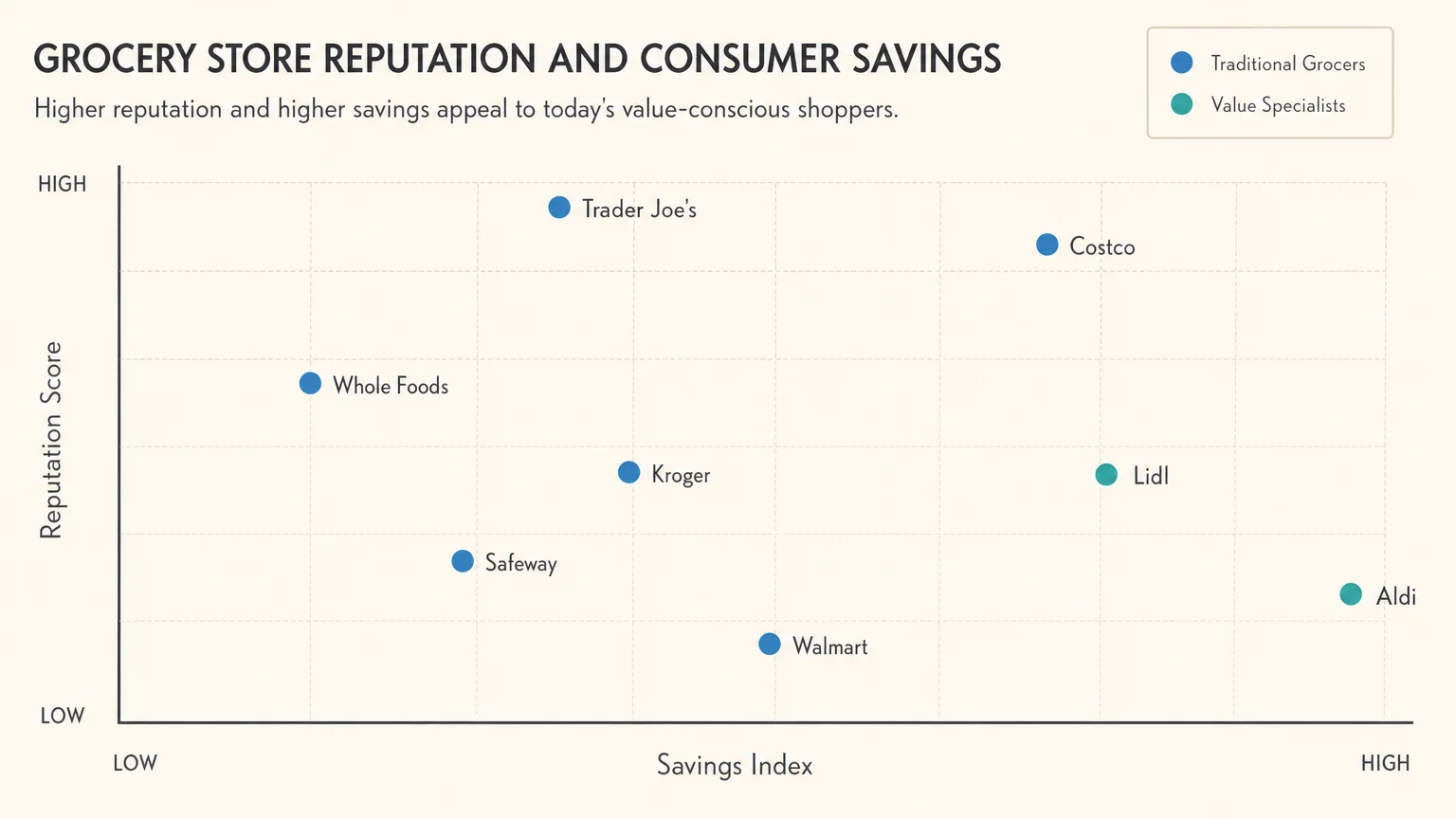
The supermarket chains dominating national reputation polls do not earn those spots by accident; they build trust by delivering consistent quality, treating their employees with respect, and aggressively cutting overhead to lower prices.
When a grocer values its workforce, you experience less shrinkflation, better customer service, and cleaner stores.
You must stop rewarding mediocre supermarkets that overcharge for basic goods just because they happen to be located closer to your house.
Driving an extra ten minutes to reach an Aldi, Trader Joe’s, or Costco can easily save you thousands of dollars over the course of a year. Master the specific frugal strategies unique to each of these highly respected chains.
Buy the Kirkland products, rent the Aldi cart, leverage the Publix BOGO sales, and scan your own items at Sam’s Club. By aligning your grocery budget with the most reputable retailers in the country, you take total control of your financial future.
Frequently Asked Questions
Why do private-label products cost so much less than name brands?
Private-label products, also known as store brands, eliminate the massive overhead costs associated with national advertising, fancy packaging, and middleman distribution.
When you buy a store brand at Trader Joe’s or Aldi, you are strictly paying for the food itself, not for a multimillion-dollar television commercial.
In many cases, these products are manufactured in the exact same facilities as the expensive name brands, meaning you get identical quality for a fraction of the price.
Is paying for a warehouse club membership actually worth the upfront cost?
Yes, absolutely. A warehouse club membership typically pays for itself within the first three months if you strategically purchase items with the highest markups at traditional stores.
Things like paper towels, trash bags, olive oil, and prescription medications are drastically cheaper at Costco or Sam’s Club.
If you utilize their wildly discounted gas stations and take advantage of loss leaders like the five-dollar rotisserie chickens, your savings will far exceed the annual membership fee.
How do employee-owned supermarkets benefit the consumer?
When employees hold an ownership stake in the grocery chain, their personal financial success is directly tied to the store’s profitability and customer retention. This creates a deeply invested workforce.
You directly benefit from this model through significantly better customer service, properly rotated fresh produce, and fully stocked shelves. Chains like Publix and WinCo Foods prove that well-compensated, loyal employees create a highly efficient shopping environment that ultimately keeps prices remarkably stable.
For consumer protection information, visit the Federal Trade Commission (FTC) and the Consumer Financial Protection Bureau (CFPB). For product safety and reviews, consult Consumer Reports.
Disclaimer: This article is for informational purposes only and does not constitute financial advice. The content reflects the author’s opinion and research at the time of writing.
Always do your own research before making financial decisions.