
Retirement changes how you spend money, turning mindless consumption into a strategic game of capital preservation. Buying the right items upfront shields your nest egg from inflated medical bills, surprise home repairs, and rampant consumer fraud.
Most financial advice urges retirees to cut spending across the board. That reflexive frugality often backfires by costing you more in future emergency expenses.
Smart retirement buys protect your health, slash recurring overhead, and unlock massive structural discounts. Investing deliberately in these essential retirement products pays lifelong dividends for your wallet.

Tip #1: America the Beautiful Senior Pass
Federal recreation lands offer unmatched scenery, but standard vehicle entrance fees drain vacation budgets quickly. A single week in Yellowstone or Yosemite costs dozens of dollars in gate fees alone.
You can secure an America the Beautiful Senior Pass for a one-time fee of $80. U.S. citizens and permanent residents aged 62 or older qualify for this lifetime benefit.
If you prefer testing the waters, buy an annual senior pass for $20. You can later credit that $20 toward your permanent lifetime credential.
This single purchase covers day-use amenity fees at more than 2,000 federal recreation sites across the nation. It admits you and all passengers in a single private vehicle.
Beyond free entry, the pass often cuts campsite and facility fees by up to 50%. You easily recoup the entire investment after just two weekend excursions.
This pass represents one of the best purchases for retirees seeking affordable, healthy outdoor recreation. Keep it in your glove compartment for spontaneous road trips.

Tip #2: Warehouse Club Memberships for Low-Cost Care
Big-box wholesale clubs provide substantial value beyond bulk paper towels and frozen groceries. Savvy retirees exploit these clubs for deeply discounted clinical and personal care services.
A standard Costco Gold Star membership costs $65 per year following the 2024 price revision. An Executive membership costs $130 annually and delivers a 2% reward on eligible purchases.
Warehouse optical departments sell high-index prescription lenses and frames at fractions of traditional retail markups. You save hundreds of dollars on everyday vision hardware alone.
Hearing health represents an even larger pocketbook victory for retirees. Warehouse hearing centers supply premium digital hearing aids with custom fittings for thousands below independent clinic prices.
Their pharmacies deliver cut-rate prices on generic maintenance medications. In fact, federal rules allow you to use warehouse pharmacies even without an active membership.
Buying a membership remains one of the smartest money saving purchases retirement has to offer. The healthcare savings alone justify the yearly membership fee tenfold.

Tip #3: Comprehensive Cybersecurity and Identity Protection
Criminal syndicates aggressively target seniors through phone scams, phishing schemes, and sophisticated credential harvesting. A single data breach can jeopardize decades of accumulated retirement savings.
According to the FBI Internet Crime Complaint Center, fraud losses among Americans aged 60 and older climbed to $4.885 billion in 2024. That staggering figure marks a 43% jump from 2023.
Purchasing dedicated identity theft protection and credit monitoring builds an active digital moat around your wealth. These services alert you immediately to unauthorized credit inquiries or compromised accounts.
Complement this protection with an encrypted password manager. Reusing predictable passwords across banking and retail accounts invites catastrophic account takeovers.
Modern password vaults generate unbreakable 20-character strings and fill them automatically. You never need to write sensitive login credentials on sticky notes again.
Treat digital security software as essential retirement products rather than optional tech gadgets. The modest subscription cost pales against the devastation of a drained investment portfolio.

Tip #4: Home Safety and Aging-in-Place Modifications
Most retirees want to remain in their familiar neighborhoods as they age. However, standard home architecture creates serious fall hazards and mobility barriers.
Install heavy-duty grab bars in bathrooms, replace slick steps with gentle ramps, and widen crucial doorways. Upgrading shower lighting and stair handrails also dramatically lowers physical injury risks.
These physical upgrades also deliver direct financial benefits at tax time. The IRS allows you to deduct qualified home safety improvements as itemized medical expenses.
You can write off unreimbursed medical modifications that exceed 7.5% of your Adjusted Gross Income. Keep meticulous contractor invoices and physician recommendation letters to substantiate every deduction.
Professional modifications prevent devastating hospital stays and delay expensive transitions into assisted living facilities. A single slip on slick tile costs far more than premium non-slip remodeling.
Prioritize structural safety early while you possess the energy to oversee construction projects. Proactive home retrofitting stands among the most vital smart retirement buys.

Tip #5: Comprehensive Legal and Estate Planning Documents
Procrastinating on estate planning leaves your finances vulnerable to court-appointed conservatorships and state probate battles. You must establish legal control over your assets long before medical crises strike.
The Department of Health and Human Services reports that roughly 70% of adults turning 65 will require long-term care services. Failing to prepare for this inevitability risks financial catastrophe.
Hire an experienced elder law attorney to draft a revocable living trust, healthcare directive, and durable financial power of attorney. These documents ensure trusted individuals execute your wishes seamlessly.
Explore hybrid life and long-term care insurance policies during early retirement. These hybrid contracts provide dedicated care benefits if you fall ill, or refund death benefits to heirs if you do not.
Avoid one-size-fits-all online legal forms that fail to comply with strict state probate statutes. Generic boilerplate templates routinely fall apart under judicial scrutiny.
Spending money on custom legal architecture preserves family harmony and protects generational wealth. It remains the ultimate financial defense for every retired household.
Tip #6: Targeted Supplemental Health Coverage
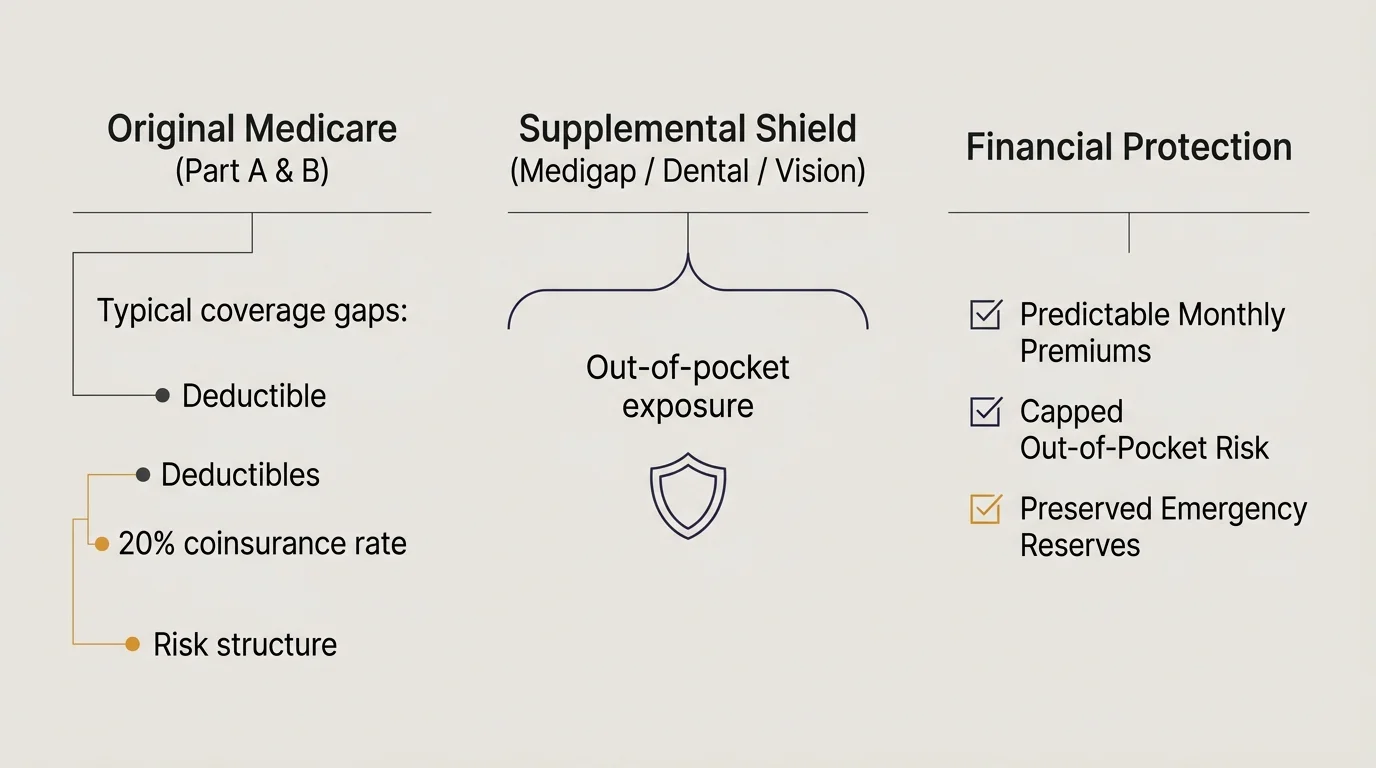
Original Medicare does not cover all medical expenses, leaving retirees vulnerable to 20% coinsurance obligations. Uncapped out-of-pocket medical liabilities can rapidly erode fixed income streams.
In 2025, the standard Medicare Part B monthly premium sits at $185.00, accompanied by a $257.00 annual deductible. You must plan for these baseline expenses in your monthly cash flow.
Invest in a comprehensive Medigap supplemental policy or evaluate a zero-dollar Medicare Advantage plan with tight network controls. A quality Medigap plan eliminates unpredictable outpatient hospital bills.
Prescription coverage underwent an historic overhaul under the Inflation Reduction Act. Part D out-of-pocket prescription drug costs are capped at $2,000 annually in 2025 and $2,100 in 2026.
This law completely eliminated the dreaded donut hole coverage gap. However, you must still purchase a standalone Part D plan to access this statutory cap.
Securing optimal supplemental coverage turns unpredictable medical crises into predictable monthly insurance premiums. That peace of mind is priceless for your mental and financial well-being.

Tip #7: Dedicated Travel and Transit Discount Passes
Retirement frees your calendar, granting you total flexibility to travel during off-peak seasons. Buying dedicated transit credentials allows you to roam comfortably while spending pennies on the dollar.
An annual AARP membership costs $20 per year, or $15 for your first year with automatic renewal. That single membership automatically includes a secondary household spouse or partner for free.
This low-cost card unlocks instant car rental markups, reduced hotel rack rates, and discounted dining checks across thousands of chains. The membership fee recoups itself on your first weekend getaway.
Do not overlook rail transit discounts when planning regional getaways. Amtrak provides a 10% discount on the lowest available rail fares for travelers aged 65 and older.
This discount applies to standard routes nationwide, and cross-border trains into Canada start savings at age 60. Rail travel lets you skip highway traffic and parking charges entirely.
Coupling organizational memberships with transit discounts stretches your recreational budget dramatically. You experience world-class leisure while spending far less than working travelers.

Tip #8: Energy-Efficient Induction and Safety Appliances
Kitchen safety issues represent a major risk for older adults living independently. Traditional gas burners emit indoor pollutants and create open flame hazards if burners remain unattended.
Investing in an induction cooktop eliminates open flames and hot radiant elements. Induction technology transfers electromagnetic energy directly to cookware, keeping cooking surfaces cool to the touch.
Modern induction units feature automatic shut-off timers that deactivate heating elements when you remove a pan. This feature prevents accidental kitchen fires caused by forgotten pans.
You should also upgrade your laundry room with smart, automated shut-off water valves. These sensors detect minuscule plumbing leaks and kill main water supplies instantly.
Water damage insurance claims cost thousands in deductibles and increase subsequent premium rates. Automated shut-off valves eliminate catastrophic pipe burst disasters entirely.
Efficient safety appliances reduce utility bills while providing foolproof physical protection for your primary residence. These prudent upgrades protect your home equity around the clock.

Tip #9: Fee-Only Fiduciary Financial Audits
Managing an investment portfolio during decumulation requires entirely different tactics than accumulating wealth. You must balance required minimum distributions, capital gains realization, and tax-efficient withdrawal sequences.
Commission-based brokers frequently pitch high-fee annuities that lock up your liquid capital. They earn hefty upfront commissions while leaving you trapped in restrictive surrender periods.
Instead, hire an independent, fee-only fiduciary financial advisor for a targeted financial checkup. Fee-only professionals charge flat hourly rates and accept zero product commissions.
A fiduciary review stress-tests your withdrawal rate against historical bear markets and prolonged inflation. The advisor optimizes your asset location to minimize lifetime income taxes.
Paying an upfront fee of $1,500 for an objective audit can prevent tens of thousands in tax blunders. You gain a conflict-free roadmap tailored strictly to your personal goals.
Implementing expert retirement shopping tips means paying for honest expertise rather than sales hype. An objective fiduciary audit delivers exceptional returns on your advisory dollars.

Tip #10: Preventive Wellness and Mobility Gear
Physical independence remains the single greatest determinant of your quality of life in retirement. Skimping on supportive gear leads to joint degradation, chronic back pain, and reduced mobility.
Replace worn-out mattresses with high-density ergonomic mattresses engineered for proper spinal alignment. Restorative sleep accelerates cellular repair and bolsters your daily immune response.
Invest in podiatrist-approved walking shoes featuring custom orthotic arch supports and non-slip rubber outsoles. Quality footwear maintains joint alignment and lowers dangerous slip-and-fall hazards on daily walks.
Purchase ergonomic gardening benches, walking poles, and low-impact fitness equipment for your home. These low-cost tools encourage consistent physical activity without damaging fragile knees or hips.
Out-of-pocket physical therapy co-pays cost far more than buying supportive wellness gear today. Spending money on preventive equipment keeps you active and pain-free for decades.
Consider mobility equipment an investment in longevity rather than a luxury purchase. Protecting your joints preserves your capacity to travel, garden, and enjoy daily life.
The Bottom Line: What This Means for Your Wallet
Frugality in retirement does not mean denying yourself necessary goods or living in artificial scarcity. Mindless penny-pinching often invites catastrophic financial liabilities down the road.
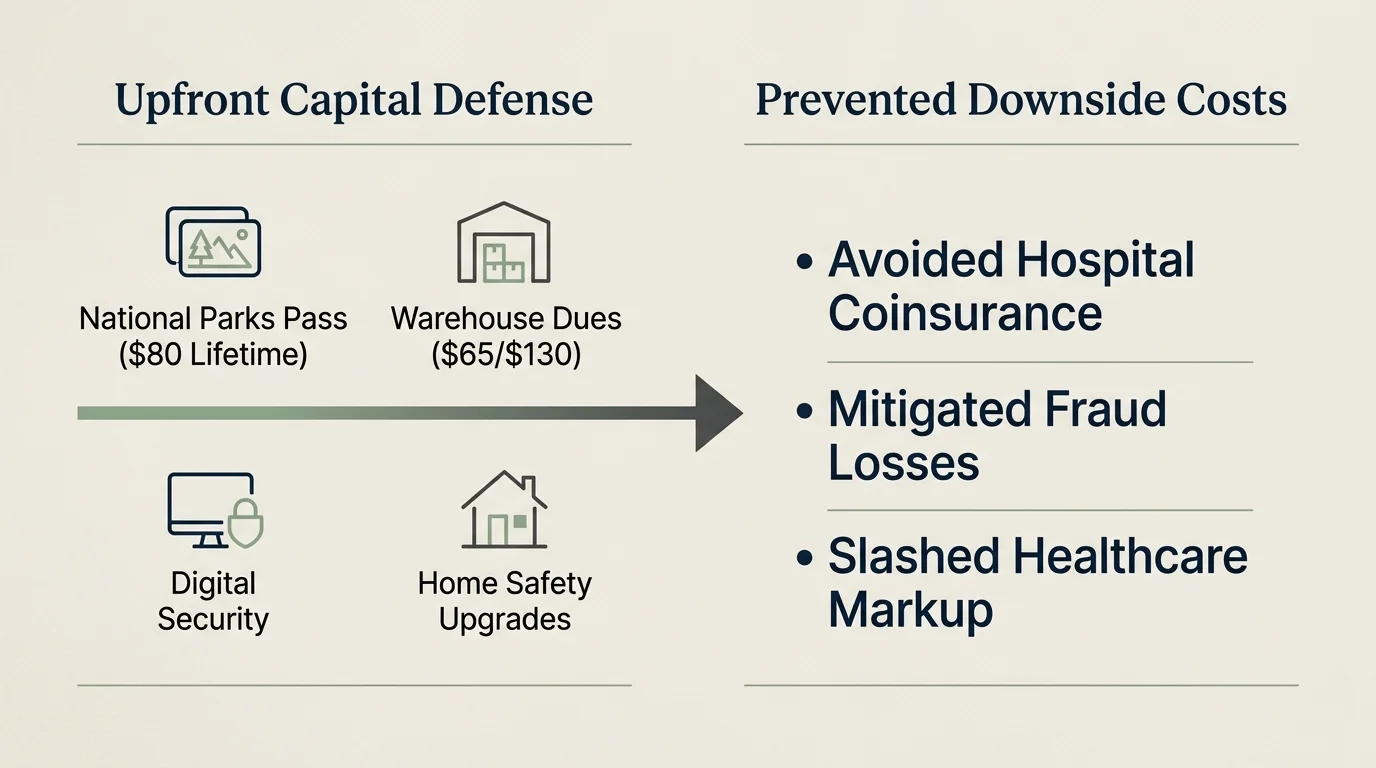
True financial wisdom involves making deliberate, defensive investments that shield your nest egg. Every dollar allocated toward safety, preventative health, and systemic discounts compounds your independence.
By capitalizing on federal passes, wholesale club services, and Medicare Part D caps, you slash overhead permanently. Simultaneously, strong cybersecurity and estate planning defend your assets against opportunistic predators.
Review your annual spending plan and allocate funds toward these high-impact items immediately. Strategic purchasing habits will keep your retirement both comfortable and solvent.
Frequently Asked Questions
Are wholesale club memberships truly worth it if I live alone?
Yes, because the primary financial return does not come from bulk pantry items. The massive discounts on prescription eyewear, hearing aids, and generic prescriptions easily offset the annual membership cost.
Furthermore, buying discounted gasoline and basic household paper goods provides consistent annual savings. Single retirees routinely recover the fee within two or three months.
Can I claim home safety improvements on my federal taxes without a doctor?
The IRS requires that home modifications directly accommodate a diagnosed medical condition or physical disability to qualify for medical expense deductions.
You should always secure a formal letter of medical necessity from your physician before beginning home renovations. Retain every contractor invoice to substantiate your claim if audited.
Why should I pay a fiduciary advisor when brokerage firms offer free retirement plans?
Free retirement consultations from brokerage houses usually function as sales pitches for proprietary financial products. Those advisors often earn hefty commissions by selling expensive annuities or actively managed funds.
Fee-only fiduciaries do not sell commissioned investments and owe you a strict legal duty of loyalty. Paying a transparent hourly rate ensures you receive unbiased, conflict-free advice.
How does the 2025 Medicare Part D cap affect my current supplemental insurance?
The $2,000 Part D out-of-pocket cap applies exclusively to covered prescription medications under your standalone drug plan or Medicare Advantage plan. It does not replace your need for Medigap coverage.
Medigap plans cover hospital deductibles and Part B outpatient coinsurance, which remain separate from prescription costs. You must maintain both policies to achieve comprehensive medical liability protection.
For consumer protection information, visit the Federal Trade Commission (FTC) and the Consumer Financial Protection Bureau (CFPB). For product safety and reviews, consult Consumer Reports.
Disclaimer: This article is for informational purposes only and does not constitute financial advice; the content reflects the author’s opinion and research at the time of writing. Always do your own research before making financial decisions.