

You can put at least $2,220 back into your bank account this year by securing state help paying Medicare costs. Many seniors forfeit this cash because they mistakenly assume their income or savings disqualify them.
State-administered Medicare financial assistance programs bridge this budget gap directly. In fact, qualifying eliminates monthly premium deductions from your Social Security check and wipes away costly medical bills.
Understanding current Medicare Savings Program eligibility rules is the fastest way to slash your healthcare expenses. The following proven strategies reveal how you can qualify and claim your rightful benefits.
Tip #1: Target the Right Tier Among the Four Core Programs
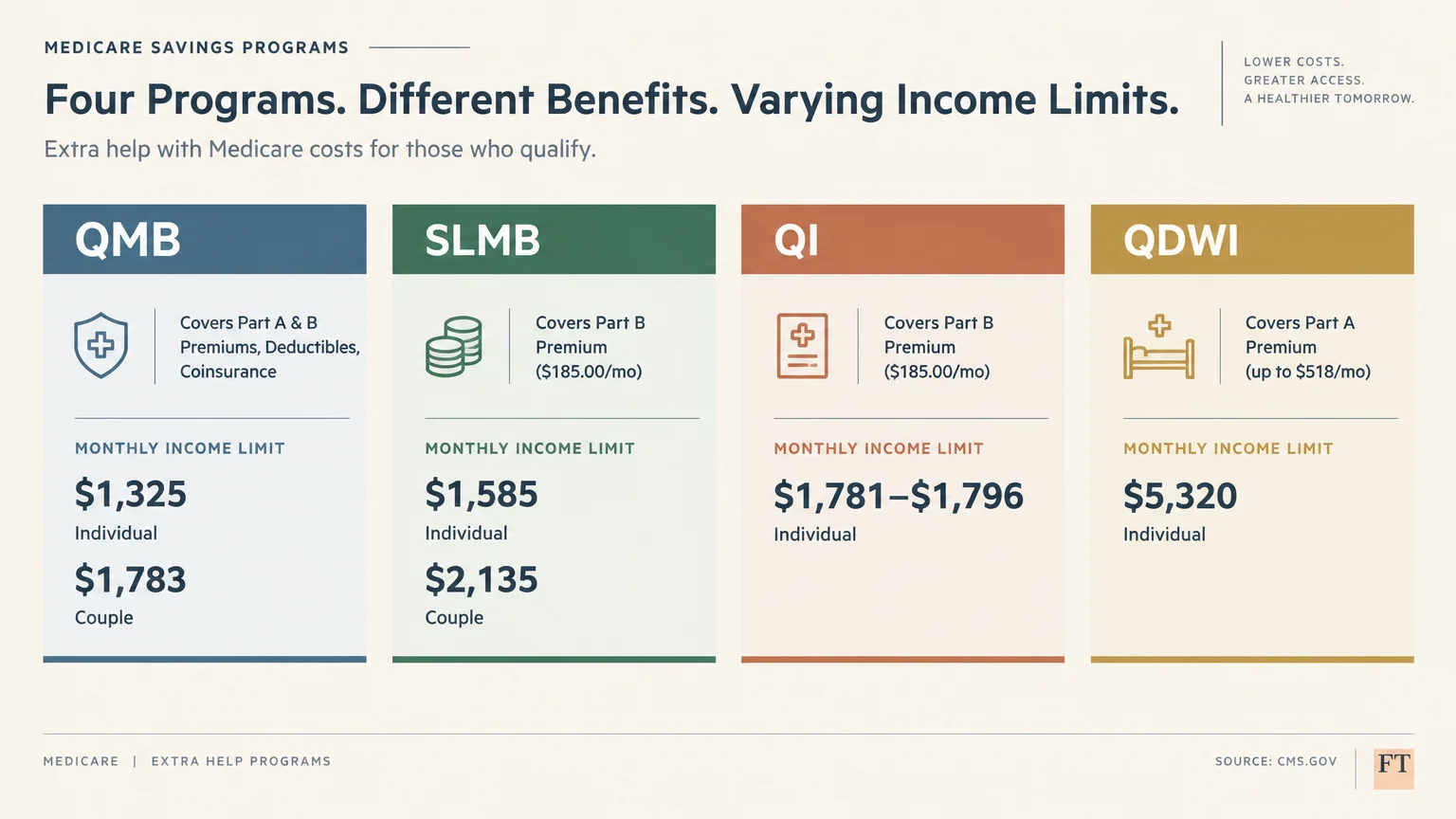
The federal government divides state Medicare assistance into four distinct programs. Each tier features specific income thresholds and covers different out-of-pocket medical expenses.
The first tier is the Qualified Medicare Beneficiary program, widely known as QMB. It acts as the gold standard of financial relief for low-income seniors.
QMB covers your Medicare Part A and Part B premiums, annual deductibles, coinsurance, and copayments. For 2025, individual monthly income cannot exceed roughly $1,325, while married couples cap out near $1,783.
The second tier is the Specified Low-Income Medicare Beneficiary program, or SLMB. This program focuses entirely on paying your monthly Part B premium.
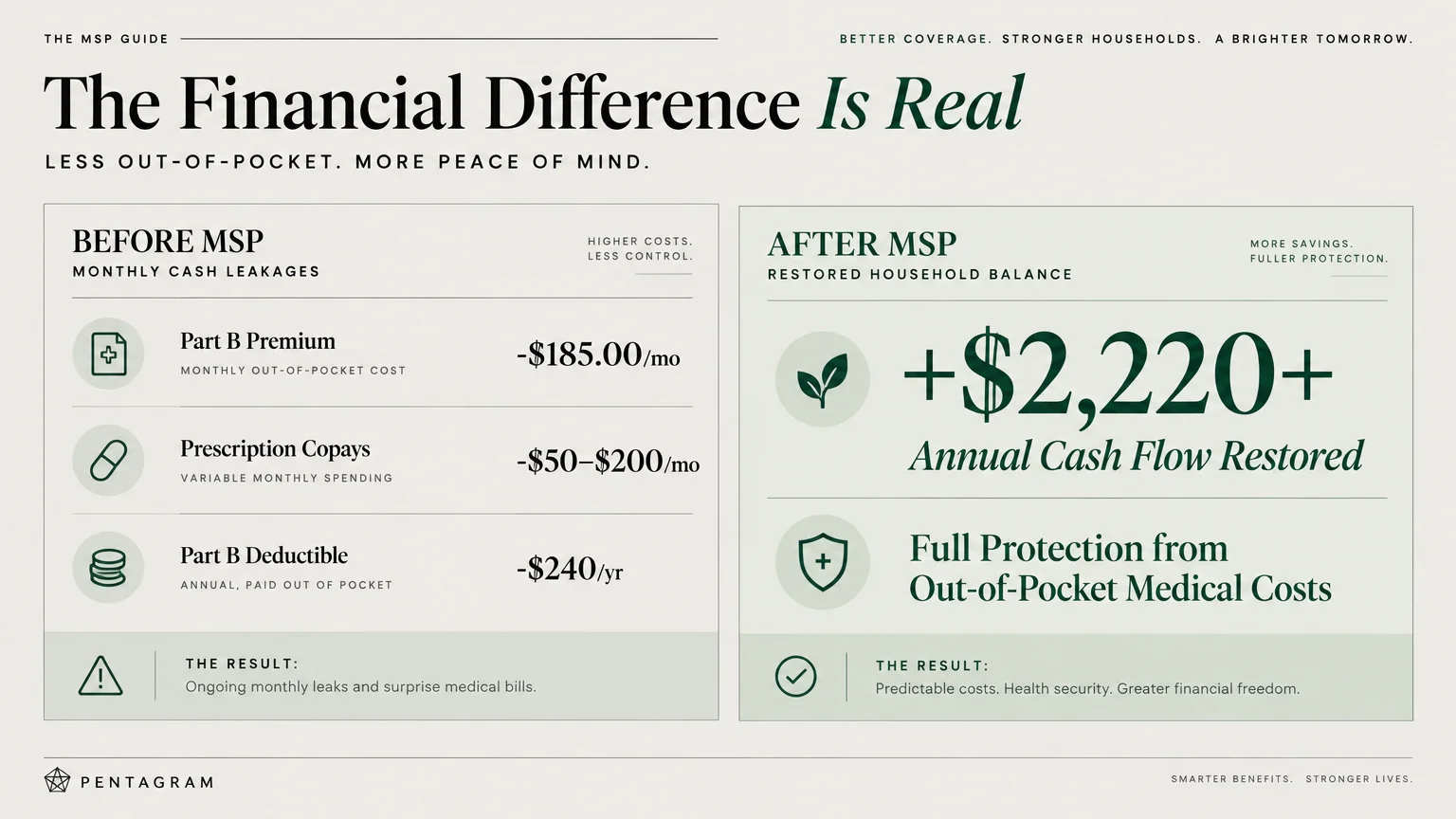
The standard Part B premium costs $185.00 each month in 2025. SLMB allows individuals earning up to roughly $1,585 monthly, or couples earning $2,135, to save that premium.
The third tier is the Qualifying Individual program, known as QI. It covers the same monthly Part B premium as SLMB but offers slightly higher income allowances.
Individuals earning between $1,781 and $1,796 monthly can qualify for QI assistance. Married couples can make between $2,410 and $2,434 per month in 2025.
States award QI funding on a first-come, first-served basis using federal grants. You must apply early each year to guarantee your spot before state funds run out.
The fourth tier is the Qualified Disabled and Working Individuals program, or QDWI. It specifically helps disabled people under age 65 who returned to work.
QDWI pays the expensive Part A premium, which reaches up to $518 per month in 2025. Individual monthly income can reach approximately $5,320, while couples can earn up to $7,216.
Tip #2: Calculate Your Income Using Hidden Federal Disregards
Most applicants look at their gross monthly income and immediately walk away. Doing that is a costly mistake that leaves thousands of dollars behind.
State agencies do not evaluate your raw, unadjusted gross earnings. Instead, they calculate your countable income using specific federal income disregards.
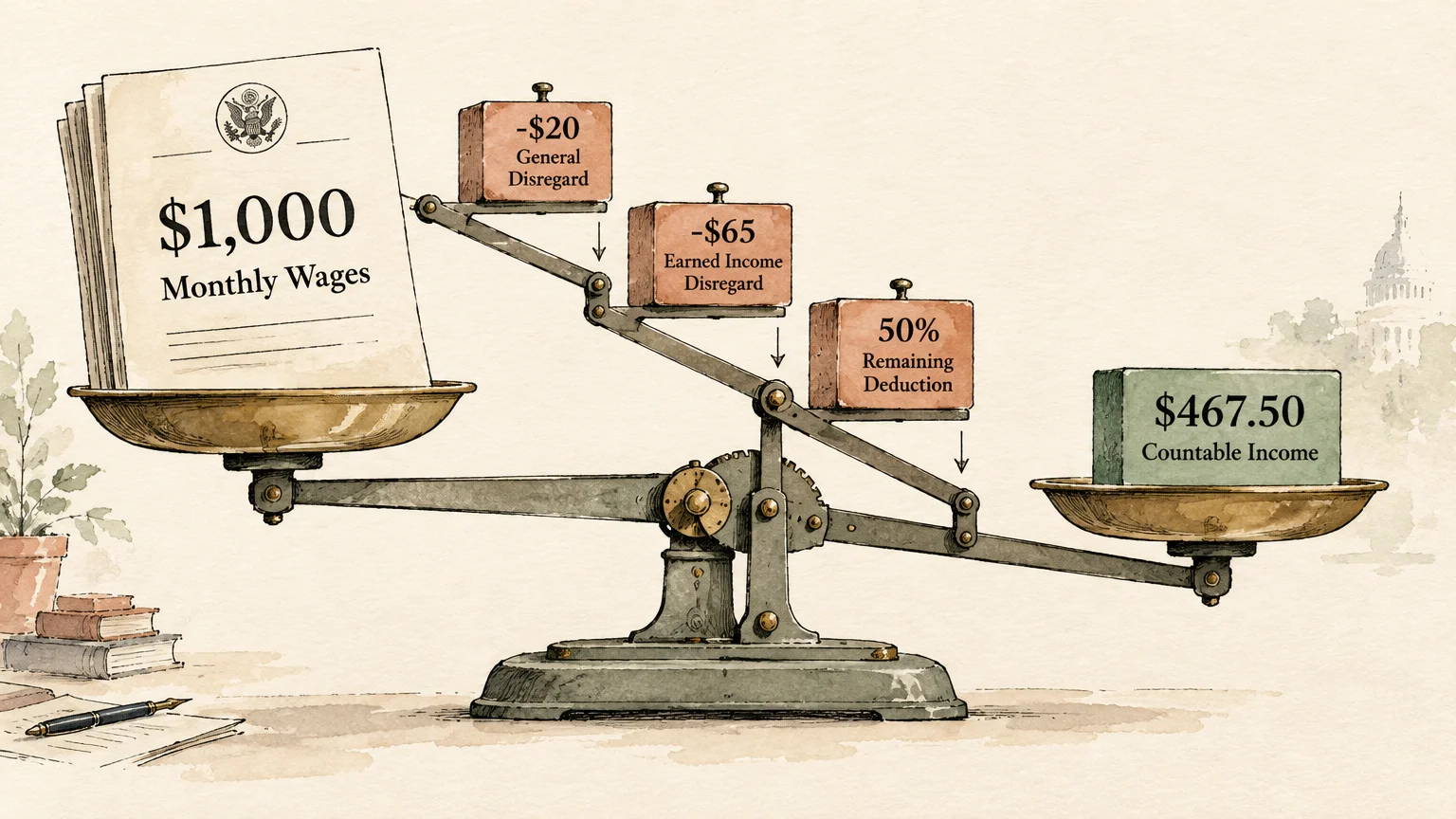
Federal rules apply a mandatory $20 general income disregard every month. You subtract this initial $20 from your unearned income, such as Social Security benefits or private pensions.
If you work part-time, the government provides an even larger earned income disregard. The state automatically excludes the first $65 of your monthly wages from the calculation.
Furthermore, caseworkers subtract half of your remaining monthly earned wages after that initial exclusion. This rule allows working beneficiaries to earn substantial income while maintaining their eligibility.
For example, an applicant earning $1,000 in monthly wages only has $467.50 counted toward the program limits. That mathematical buffer helps thousands of part-time workers qualify.
Certain federal benefits are completely immune from income calculations as well. Supplemental Nutrition Assistance Program payments and home energy subsidies never count against your eligibility.
Applicants who pay health insurance premiums can often deduct those payments from their countable income. Check your state guidelines to see which medical expenses lower your official earnings figure.
Understanding these arithmetic shields allows you to fit cleanly under Medicare Savings Program income limits. Always run the actual math before assuming you make too much money.

Tip #3: Audit Your Assets and Strip Away Non-Countable Resources
The asset test scares more seniors away from assistance than any other rule. Many people falsely believe they must liquidate their possessions before receiving state help.
For 2025, standard federal resource limits sit at $9,660 for individuals and $14,470 for married couples. The QDWI program limits assets to $4,000 for individuals and $6,000 for couples.
Those ceilings seem restrictive until you discover what the government actually counts. The federal government excludes your most valuable physical assets entirely.
Your primary home is completely exempt from the resource limit, regardless of its market value. You can own a home worth $500,000 and still qualify without penalty.
The state also excludes one personal vehicle used for transportation. The make, model, year, and market value of that vehicle do not matter during your review.
Household goods, personal effects, furniture, and family heirlooms are entirely exempt from the asset test. Caseworkers will never inspect your living room or appraise your personal jewelry.
Whole life insurance policies with a total face value of $1,500 or less do not count. Term life insurance policies have zero cash surrender value and are ignored completely.
You can also set aside up to $1,500 in designated burial funds per person. Irrevocable prepaid funeral arrangements enjoy complete protection without any dollar cap.
Only liquid resources like checking accounts, savings accounts, certificates of deposit, stocks, and bonds count. Strip away the exempt items first to uncover your true countable asset total.
Tip #4: Leverage State-Level Expansions That Eliminate the Asset Test
Federal resource rules are simply a baseline floor, not an unbreakable national ceiling. States possess legal authority to expand income and asset guidelines under federal Medicaid regulations.
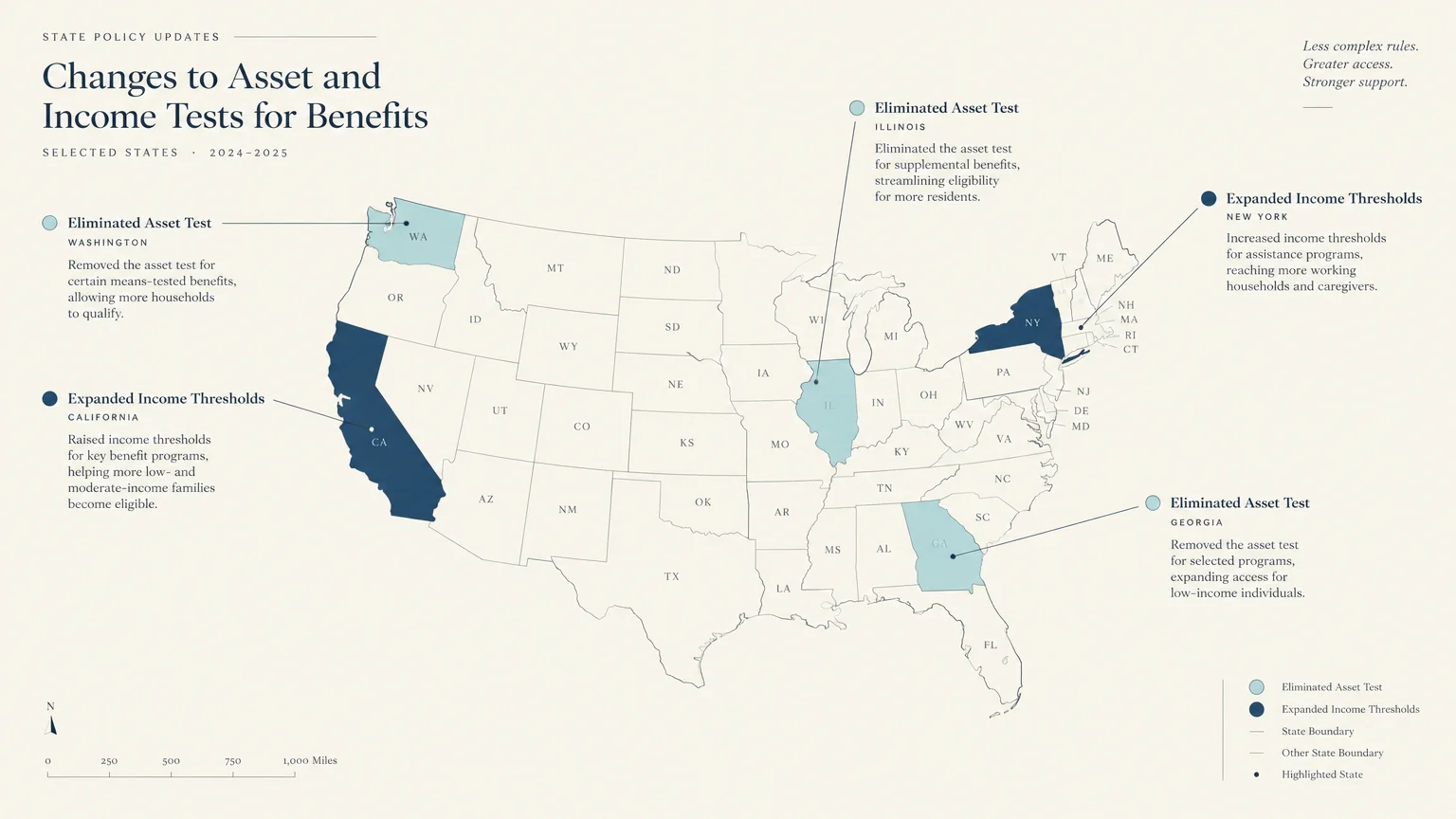
Several forward-thinking states have eliminated the asset test entirely for Medicare Savings Programs. In these jurisdictions, your bank balance does not impact your application at all.
California removed the asset test completely for all state-administered Medicare financial assistance programs. California residents can hold significant personal savings while receiving 100 percent premium coverage.
New York eliminated its asset test for both QMB and SLMB programs while raising income thresholds. A New Yorker can earn well above federal baselines and still receive comprehensive state assistance.
Connecticut, Maine, Oregon, and Washington, D.C. have also instituted generous state-specific reforms. These regions have either scrapped resource verification entirely or raised income caps significantly.
Living on the right side of a state border can save you thousands annually. If you reside in an expansion state, federal asset guidelines simply do not apply to you.
Do not let outdated federal manuals convince you that you own too much money. Always verify your specific state guidelines through your local Medicaid agency before making assumptions.
You can also contact a State Health Insurance Assistance Program counselor for regional guidance. These trained advocates provide confidential, free counseling on state-specific qualification rules.
Tip #5: Unlock Automatic Extra Help for Prescription Drug Coverage
Enrolling in a Medicare Savings Program unlocks a massive secondary financial windfall. The moment you qualify for QMB, SLMB, or QI, you automatically receive federal Extra Help.
Extra Help is the federal Part D Low-Income Subsidy that slashes prescription medication expenses. Under current law, you do not need to fill out a separate application to claim it.
The Centers for Medicare and Medicaid Services enrolls you automatically once your state approves your MSP. This data exchange eliminates bureaucratic delays and protects your wallet immediately.
Recent reforms under the Inflation Reduction Act expanded full Extra Help benefits to all qualifying participants. Partial subsidies no longer exist, granting maximum financial protection to every enrolled senior.
This federal subsidy eliminates your annual Medicare Part D prescription deductible completely. It also covers your entire monthly prescription drug plan premium under benchmark policies.
Your retail pharmacy copayments drop to minimal fixed rates under the program. In 2025, you pay no more than $4.50 for generic drugs and $11.20 for brand-name prescriptions.
These brand-name drug copay caps adjust modestly to $12.65 in 2026. If you take multiple maintenance medications, this single benefit saves you thousands of dollars at the pharmacy counter.
Extra Help also wipes away any late-enrollment penalties you may have accumulated in past years. That single administrative fix permanently reduces your lifetime prescription insurance costs.

Tip #6: Enforce the Federal Balance Billing Shield Against Illegal Charges
Qualifying for the QMB tier provides an extraordinary legal shield against medical debt. Federal law makes it illegal for healthcare providers to bill QMB enrollees for Medicare cost-sharing.
This protection is codified under Section 1902(n)(3)(B) of the Social Security Act. It applies to all Medicare-participating physicians, hospitals, medical suppliers, and Medicare Advantage networks.
Under this federal statute, doctors cannot bill you for Medicare deductibles, coinsurance, or copayments. The provider must accept the Medicare and Medicaid payment amounts as payment in full.
This legal shield eliminates the standard $257 Medicare Part B deductible in 2025. It also protects you from the massive $1,676 Part A inpatient hospital deductible per benefit period.
Despite this clear federal mandate, improper balance billing remains widespread across the healthcare industry. Inexperienced medical billing staff and automated accounting software frequently generate unlawful invoices to patients.
If you receive a medical bill for covered services as a QMB enrollee, never pay it. Paying an illegal invoice encourages billing offices to repeat their administrative errors.
Instead, contact the provider immediately and notify them of your protected QMB status. Show them your QMB card and instruct them to zero out your balance.
Healthcare providers who continue billing QMB patients face swift disciplinary action. The federal government can impose substantial financial sanctions and revoke Medicare billing privileges for persistent violations.

Tip #7: Apply Through State Medicaid Agencies to Claim Retroactive Relief
Many seniors mistakenly attempt to apply for Medicare Savings Programs through the federal Medicare portal. In reality, state Medicaid agencies administer these assistance programs independently.
You must submit your completed paperwork directly to your state social services department or local county office. Many states allow you to complete the entire application process online.
Unlike standard Medicare enrollment, MSP programs do not restrict you to specific calendar windows. You can apply at any time during the year without facing waiting periods or deadlines.
Applying promptly can trigger significant retroactive reimbursement for previous expenses. Programs like SLMB and QI offer up to three months of retroactive Part B premium refunds.
If you met eligibility standards during those prior three months, the state refunds your deducted premiums. Social Security will credit that money directly back into your checking account.
To speed up approval, gather your documentation before submitting your state application. You will need recent bank statements, Social Security award letters, proof of residency, and identification.
If your application faces unexpected delays, enlist a free advocate through your local SHIP program. These certified counselors know how to resolve administrative bottlenecks inside county welfare offices.
Once approved, verify your Social Security statement to confirm that premium deductions have stopped. Taking this proactive step secures hundreds of extra dollars in your budget every single month.

Tip #8: Recertify Annually to Prevent Unwanted Benefit Lapses
Securing your approval is a major victory, but maintaining your coverage requires annual vigilance. States require Medicare Savings Program beneficiaries to complete a formal recertification process every twelve months.
Your state Medicaid office will mail a renewal packet to your home before your anniversary date. You must complete, sign, and return this paperwork promptly with current financial documentation.
Failing to return your renewal packet triggers automatic termination from the program. If that happens, the Social Security Administration will immediately resume deducting $185 each month from your check.
You will also lose your automatic Extra Help subsidy at the pharmacy counter. That administrative lapse can cause your monthly prescription medication costs to skyrocket overnight.
To protect your coverage, mark your recertification date on your personal calendar well in advance. Always keep complete photocopies of your submitted documents and mail them using certified postal tracking.
Many states now offer convenient online renewal portals through their official health department websites. Utilizing digital submissions creates an immediate electronic record and prevents postal delays from jeopardizing your benefits.
If your household income or assets change during the year, notify your caseworker promptly. Proactive communication prevents costly overpayment notices and keeps your financial assistance in good standing.
The Bottom Line: What This Means for Your Wallet
Medicare financial assistance programs represent one of the most underutilized safety nets in the United States. Millions of eligible Americans sacrifice their retirement savings simply because they never applied.
Qualifying for even the baseline SLMB or QI tier returns $2,220 directly to your annual budget. Reclaiming that deducted premium provides immediate financial relief in an era of persistent inflation.
Securing QMB status provides even greater economic impact by wiping out deductibles and coinsurance charges entirely. That protection saves you from catastrophic medical debts if you face an unexpected hospital stay.
Adding full Extra Help coverage slashes your prescription drug expenses down to minor pocket change. Those compounding savings can easily total $5,000 to $8,000 in annual healthcare relief.
Never assume your savings or home value disqualify you from these life-changing federal programs. Take charge of your healthcare budget today by calculating your countable income and submitting an application.
Frequently Asked Questions
Can I qualify for a Medicare Savings Program if I own my home?
Yes, you can qualify even if you own a home. Federal regulations completely exclude your primary residence from the asset test, regardless of the property’s market value.
How long does it take for Social Security to stop deducting the Part B premium?
Processing typically takes between 30 and 90 days after your state approves your application. Once updated, Social Security stops the deduction and reimburses any premiums owed retroactively.
Does enrolling in an MSP require me to change my doctors?
No, enrolling does not force you to switch healthcare providers. You keep your current doctors as long as they accept standard Medicare assignment or participate in your network.
What should I do if my monthly income slightly exceeds the limit?
Apply anyway, because mandatory federal income disregards and medical deductions will reduce your countable income figure. Additionally, your state may enforce higher income limits than federal baseline guidelines.
For consumer protection information, visit the Federal Trade Commission (FTC) and the Consumer Financial Protection Bureau (CFPB). For product safety and reviews, consult Consumer Reports.
Disclaimer: This article is for informational purposes only and does not constitute financial advice. The content reflects the author’s opinion and research at the time of writing.
Always do your own research before making financial decisions.









Leave a Reply