
You can slash hundreds of dollars from your recurring expenses without sacrificing your quality of life. Massive service providers quietly raise rates every single billing cycle, banking on your financial inertia.
Most corporate pricing models assume you will never inspect your statements or challenge hidden charges. You can flip that script today by using federal regulations, statutory consumer programs, and aggressive market alternatives.
Use these proven bill negotiation tips and strategic pivots to cut expenses across your household. You can legally lower monthly bills starting with your very next statement cycle.
Tip #1: Auto Insurance Premiums
The national average cost of car insurance now sits between $2,140 and $2,680 per year for full coverage. That equals a staggering monthly payment of roughly $180 to $225 hitting your checking account.
Even minimum liability coverage costs drivers roughly $1,000 to $1,180 annually. Sharp double-digit rate hikes have hammered drivers since 2022 due to rising vehicle replacement costs and severe accident claims.
You do not have to accept these automated price increases passively. Insurance carriers calculate your premium based on risk models that you can actively alter.
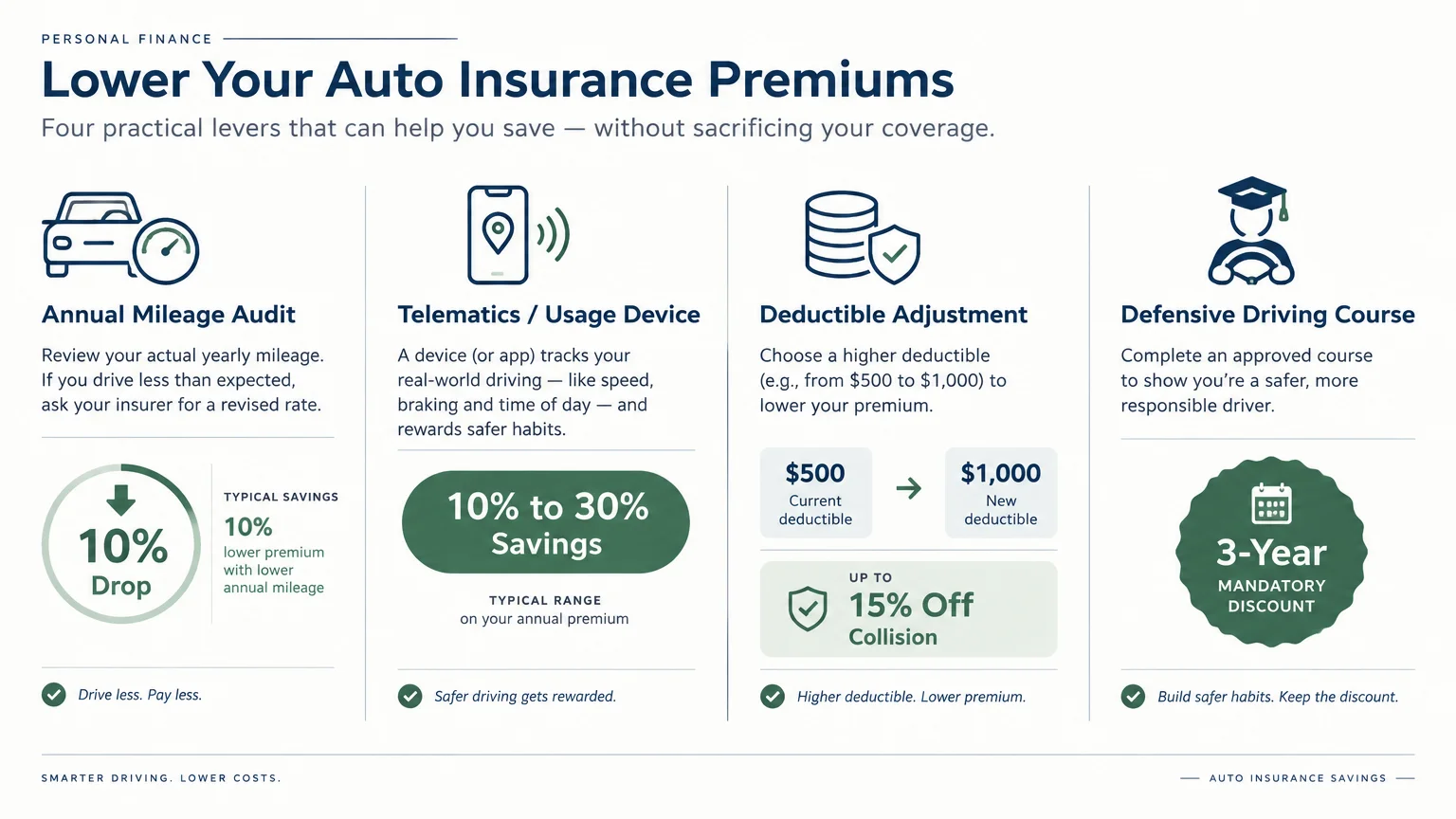
Call your carrier today and demand an audit of your policy annual mileage rating. If you transitioned to hybrid or remote work, dropping your estimated mileage can lower premiums by 10% immediately.
Ask your insurer about telematics and usage-based driving programs. Installing a mobile tracking app or vehicle plug-in device can instantly trim 10% to 30% off your bill.
Complete a state-approved defensive driving course online for twenty dollars. Most insurance companies legally must apply a mandatory three-year discount once you submit your completion certificate.
Raise your comprehensive and collision deductibles from $500 to $1,000 if you have a healthy emergency fund. This simple adjustment can slash your collision premium by up to 15%.
Drop comprehensive and collision coverage entirely if your vehicle is worth less than ten times your annual premium. Maintaining full coverage on an older vehicle rarely makes economic sense.
Shop your coverage across three competing underwriters every twelve months. Independent brokers can run your profile across regional carriers that bypass expensive television advertising budgets.
Loyalty penalties are rampant across the insurance industry. Forcing carriers to compete for your business remains the most reliable strategy to reduce household bills.
Tip #2: Credit Card Interest Rates
The average credit card interest rate in the United States currently hovers near historic highs between 21% and 22% APR. Carrying an unpaid revolving balance under these terms burns substantial cash each month.
Federal Reserve data confirms that card issuers are collecting record financing charges from households. Fortunately, your stated interest rate is not set in stone.
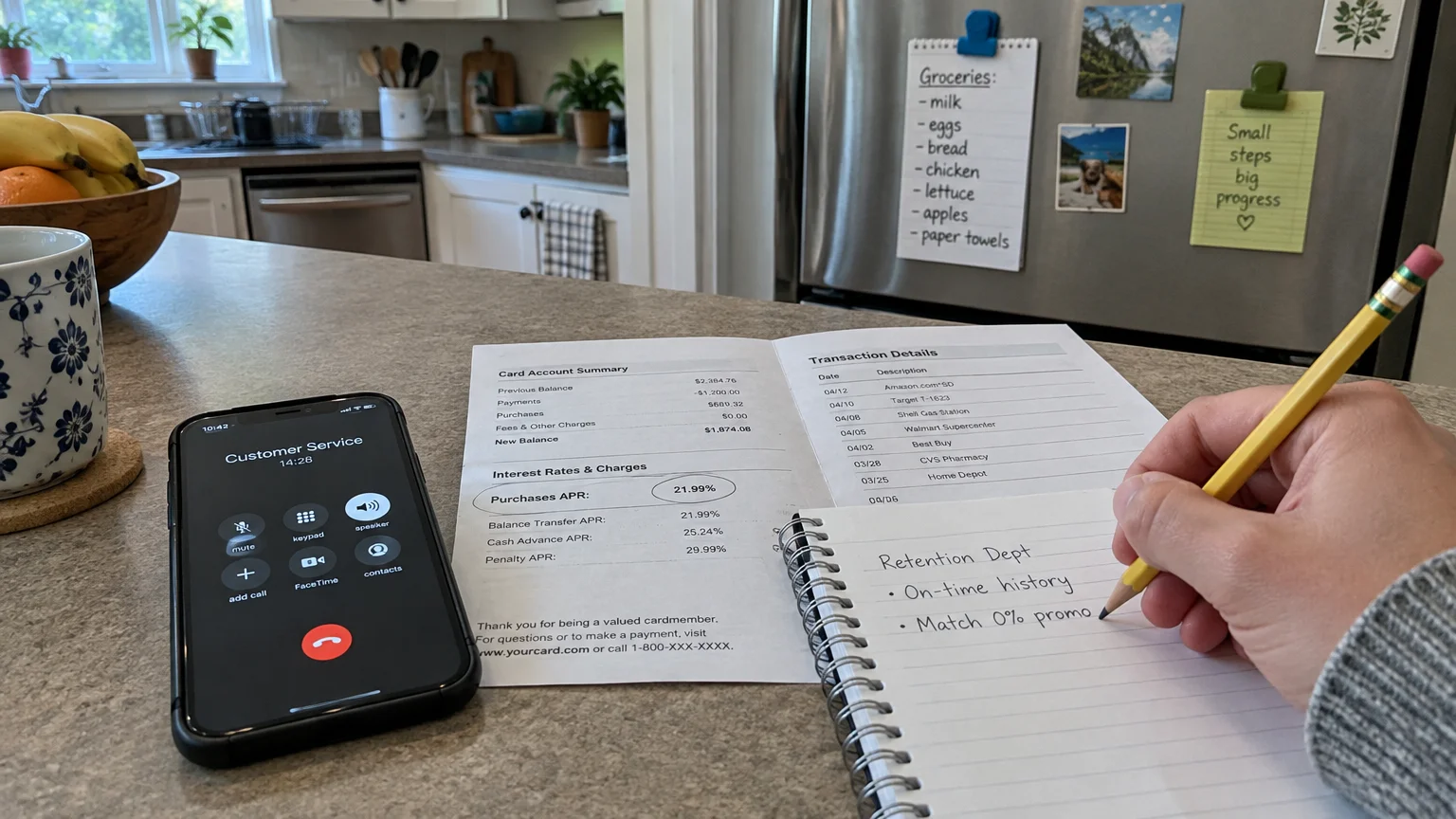
You have the legal right to request a rate reduction at any time. Card issuers maintain dedicated retention departments authorized to adjust terms to prevent customer churn.
Call the customer service number on the back of your card and cite your on-time payment history. Emphasize that competing banks are offering you zero-percent introductory balance transfer cards.
Ask the representative to match those promotional terms or permanently reduce your standard variable purchase APR. A direct five-point reduction can save you hundreds of dollars in interest this year.
Request a formal hardship repayment plan if you are struggling with a sudden income disruption. Federal banking guidelines encourage lenders to offer these structured relief options to proactive borrowers.
A hardship program can drop your interest rate down to single digits for twelve to sixty months. In exchange, the issuer may temporarily restrict your credit line while you pay off the balance.
You can also transfer existing high-rate debt to a dedicated zero-percent balance transfer card. This maneuver legally pauses interest charges for up to twenty-one months while you eliminate the principal.
Never let high interest eat away your hard-earned income in silence. A brief ten-minute phone conversation can permanently restructure your revolving debt costs.

Tip #3: Broadband and Home Internet Plans
Internet service providers count on confusing promotional expiration dates to extract extra revenue. Once promotional periods end, standard retail rates routinely surge by $20 to $40 per month.
New federal transparency regulations have fundamentally changed how broadband providers must disclose their pricing. As of 2024, the Federal Communications Commission requires all internet service providers to display standardized Broadband Consumer Labels.
These nutrition-style labels clearly disclose modem rental fees, introductory pricing lengths, and exact post-promotional rates at the point of sale. You can use these official disclosures to identify overcharges on your existing bill.
Check your bill for an equipment rental charge, which typically ranges from $10 to $15 every month. Purchasing your own compatible modem and router pays for itself within six months.
Call your provider cancellation department and reference promotional deals from local fiber or 5G home internet rivals. Inform the agent that you intend to switch unless they match the introductory competitor rate.
Be aware that the federal Affordable Connectivity Program officially expired in June 2024 after funding ran out. Do not let outdated guides deceive you into seeking that discontinued subsidy.
Qualifying low-income households should explore the ongoing federal Lifeline program instead. Lifeline provides an ongoing monthly subsidy on phone or broadband service for eligible consumers.
Ask your current provider about their proprietary low-cost community internet tiers. Major telecom companies offer low-cost plans starting at $15 to $25 per month for income-eligible families.
Auditing your required bandwidth can also uncover immediate savings. Most households pay for gigabit speeds they never fully utilize; dropping to a 300 Mbps tier cuts your bill without buffering.
Tip #4: Hospital and Medical Bills
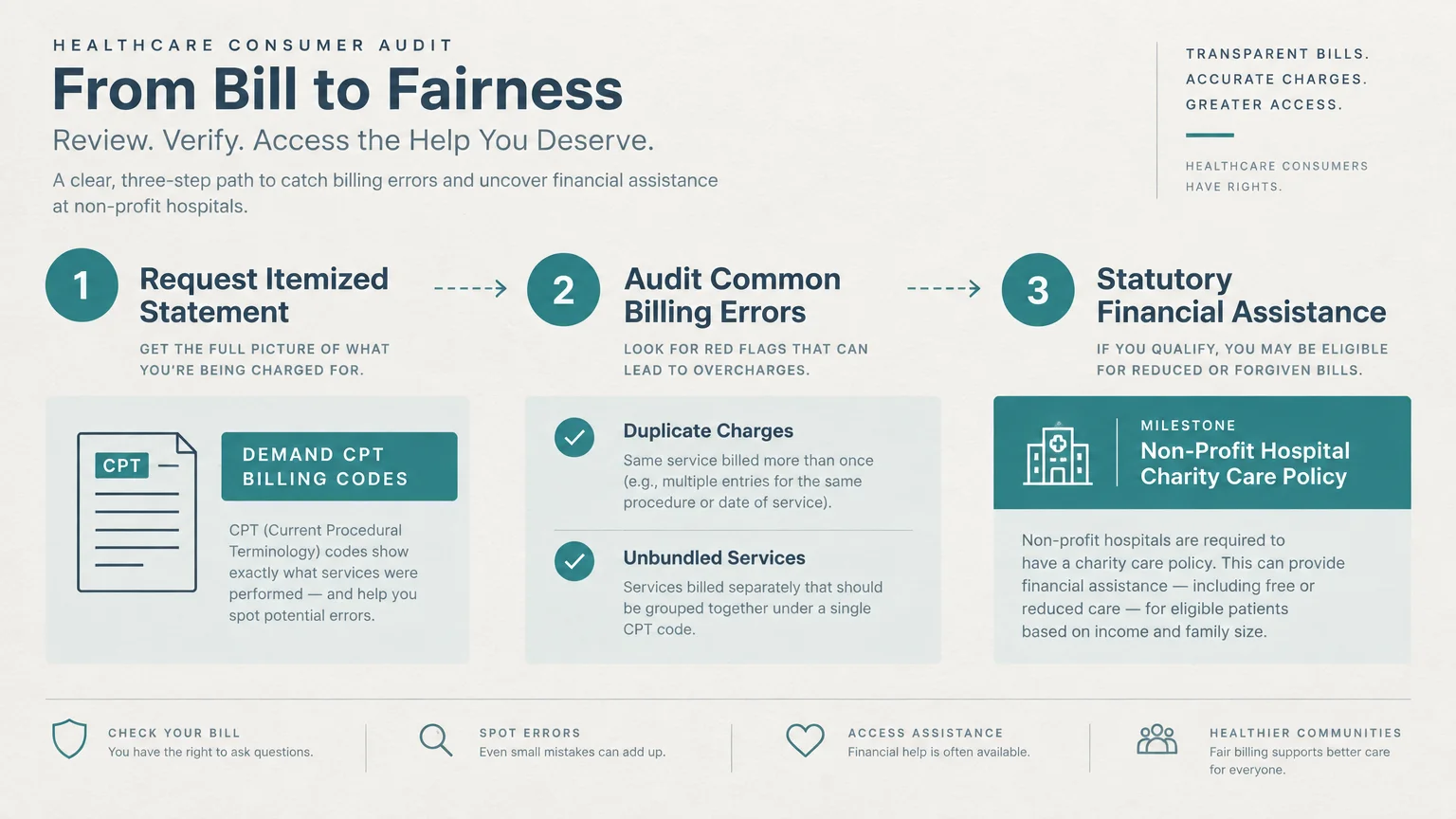
Medical billing errors affect a staggering number of patient invoices across the healthcare system. Outdated codes, duplicate room charges, and unbundled services routinely inflate out-of-pocket patient balances.
Never pay a balance-due statement without demanding an itemized bill containing standard procedure and billing codes. Requesting itemized statements frequently causes inflated administrative charges to disappear from your account.
Federal law provides potent statutory protections against predatory healthcare fees. Under the No Surprises Act, healthcare providers cannot legally hit you with out-of-network surprise bills for emergency services.
This legislation also protects you from balance billing during non-emergency care delivered at in-network facilities. If an out-of-network doctor treats you at an in-network hospital, dispute the bill immediately under this federal statute.
Check whether your treatment occurred at a non-profit medical facility. Non-profit healthcare systems account for roughly half of all hospitals operating in the United States.
Under IRS Section 501(r), non-profit hospitals must maintain a written Financial Assistance Policy. These charity care guidelines allow patients earning up to 400% of the Federal Poverty Level to receive massive discounts.
You can legally erase up to 100% of your medical balance simply by submitting your tax returns. Ask the hospital billing department directly for an application for their charity care program.
Consumer credit reporting rules also protect your personal balance sheet. The three major nationwide credit bureaus no longer report paid medical debt or any unpaid medical collections under $500.
Unpaid medical debts cannot appear on your credit report until one full year after nonpayment. This grace period gives you significant time to negotiate settlements without damaging your credit score.
Offer a prompt-pay cash settlement if you do not qualify for financial assistance. Hospitals regularly accept 30% to 50% less if you pay the negotiated balance in a single lump sum.

Tip #5: Mobile Phone Plans
Major wireless carriers charge premium prices for single-line postpaid service, often reaching $70 to $90 per month. These plans bundle expensive retail overhead, sports sponsorships, and superfluous streaming perks into your bill.
You do not need to pay top-tier rates to receive nationwide high-speed wireless connectivity. Switching to a Mobile Virtual Network Operator lets you save money on bills without sacrificing call quality.
These discount carriers lease excess network capacity from the exact same nationwide wireless towers. Companies like Mint Mobile, Visible, Cricket, and US Mobile offer premium access at wholesale prices.
MVNO plans typically cost between $15 and $35 per month for reliable high-speed data. Making the switch can instantly reduce your recurring mobile expenses by 50% or more.
Modern unlocked smartphones allow seamless transitions between wireless providers in minutes. You can easily transfer your existing telephone number without purchasing new hardware or signing long-term service contracts.
Major carriers often trap consumers with thirty-six-month device installment agreements masked as free phone upgrades. Bypassing these retail financing contracts gives you total freedom to shop the open market.
Buy certified refurbished phones outright and pair them with low-cost MVNO plans. This practical strategy stops wireless providers from locking you into inflated monthly line fees.
Review your actual monthly data consumption inside your phone settings. Most Americans stay connected to home or office Wi-Fi networks and consume far less cellular data than they assume.
Selecting a capped data tier that matches your real-world usage slashes your costs even further. You can always increase your data bucket later if your travel habits change.

Tip #6: Home Energy and Utility Charges
Seasonal heating and cooling spikes create frustrating unpredictability in your household budget. Electric and natural gas utilities often charge variable market rates that fluctuate dramatically with extreme weather.
You can eliminate these wild swings by enrolling in your utility company budget billing program. This free service averages your annual consumption to establish a fixed, predictable payment each month.
Balanced billing prevents crippling winter heating bills and summer air conditioning shocks. Level payments allow you to stabilize your monthly cash flow and eliminate unexpected financial strain.
Contact your energy provider to request a subsidized or free professional home energy audit. Utility auditors can inspect your insulation and identify costly air leaks around doors and windows.
Many municipal utilities distribute free smart thermostats, high-efficiency showerheads, and weatherstripping kits during these audits. Installing these conservation tools produces immediate, permanent reductions in monthly energy consumption.
Ask your provider if they offer time-of-use rate structures. Shifting laundry, dishwashing, and electric vehicle charging to off-peak overnight hours can significantly reduce your per-kilowatt cost.
Look into the federally funded Low Income Home Energy Assistance Program if your household faces financial distress. LIHEAP delivers direct energy grants to qualifying households through state-administered programs.
These federal grants apply directly to your utility balance to prevent service shutoffs. LIHEAP can also fund free home weatherization services to permanently reduce household bills.
Check whether your state allows customer choice for retail energy suppliers. Shopping alternative electricity generation suppliers can lock in lower kilowatt-hour rates than your default utility supply tariff.

The Bottom Line: What This Means for Your Wallet
High monthly overhead is rarely fixed or non-negotiable. Recurring bills represent contractual agreements between businesses and consumers that you can actively reshape or terminate.
Implementing two or three of these strategic adjustments can easily yield several hundred dollars in monthly savings. That recovered cash can build your emergency fund, pay down debt, or fund personal investments.
Service providers rely on your complacency to collect unjustified fees year after year. Armed with consumer protection laws and low-cost market alternatives, you hold the real negotiating leverage.
Schedule one hour this week to audit your statements and execute these practical bill negotiation tips. Taking proactive control of your recurring expenses delivers guaranteed financial returns immediately.
For consumer protection information, visit the Federal Trade Commission (FTC) and the Consumer Financial Protection Bureau (CFPB). For product safety and reviews, consult Consumer Reports.
Disclaimer: This article is for informational purposes only and does not constitute financial advice. The content reflects the author’s opinion and research at the time of writing.
Always do your own research before making financial decisions.
Frequently Asked Questions
Can negotiating my bills negatively impact my credit score?
Negotiating lower rates on utilities, cell phone plans, or insurance policies will never affect your credit score. These providers do not report routine rate adjustments to consumer credit bureaus.
Enrolling in a formal credit card hardship program may place a notation on that specific account. However, avoiding missed payments protects your overall credit rating far more than paying high interest.
What should I say when calling a provider to lower my bill?
Start by stating that you are reviewing your monthly household budget and considering switching to a lower-cost competitor. Politeness paired with firm market research gives you tremendous leverage with retention agents.
Specifically ask to speak with the customer retention or cancellation department. Retention agents possess special discretionary authority to offer promotional discounts that front-line representatives cannot provide.
How often should I review and renegotiate my recurring bills?
You should audit your recurring household expenses at least once every twelve months. Insurance carriers and broadband companies regularly change pricing algorithms and promotional tiers over that timeframe.
An annual review ensures you never languish on expired introductory contracts or outdated pricing structures. Consistent auditing keeps your monthly expenses aligned with the best market rates.
Are third-party bill negotiation services worth the fee?
Third-party bill negotiation apps often demand 30% to 50% of your first-year savings as compensation. While they offer convenience, they achieve results you can easily replicate yourself for free.
Spending fifteen minutes on a direct phone call preserves 100% of your hard-earned savings. Handling these simple negotiations yourself keeps your financial data secure and your returns maximized.