

You do not need to wait for chaotic late-November crowds to lock in the season’s lowest prices. Smart shoppers capture major holiday shopping savings weeks ahead by exploiting inventory clear-outs and pricing algorithms.
Retailers quietly roll out early Black Friday sales starting in mid-October to ease warehouse congestion. Waiting until the official shopping weekend often means facing depleted stock, inflated original prices, and slower shipping speeds.
Taking proactive control of your purchases now protects your cash reserves and secures genuine discounts. Use these battle-tested strategies to outsmart retail marketing tactics and maximize your holiday budget tips today.
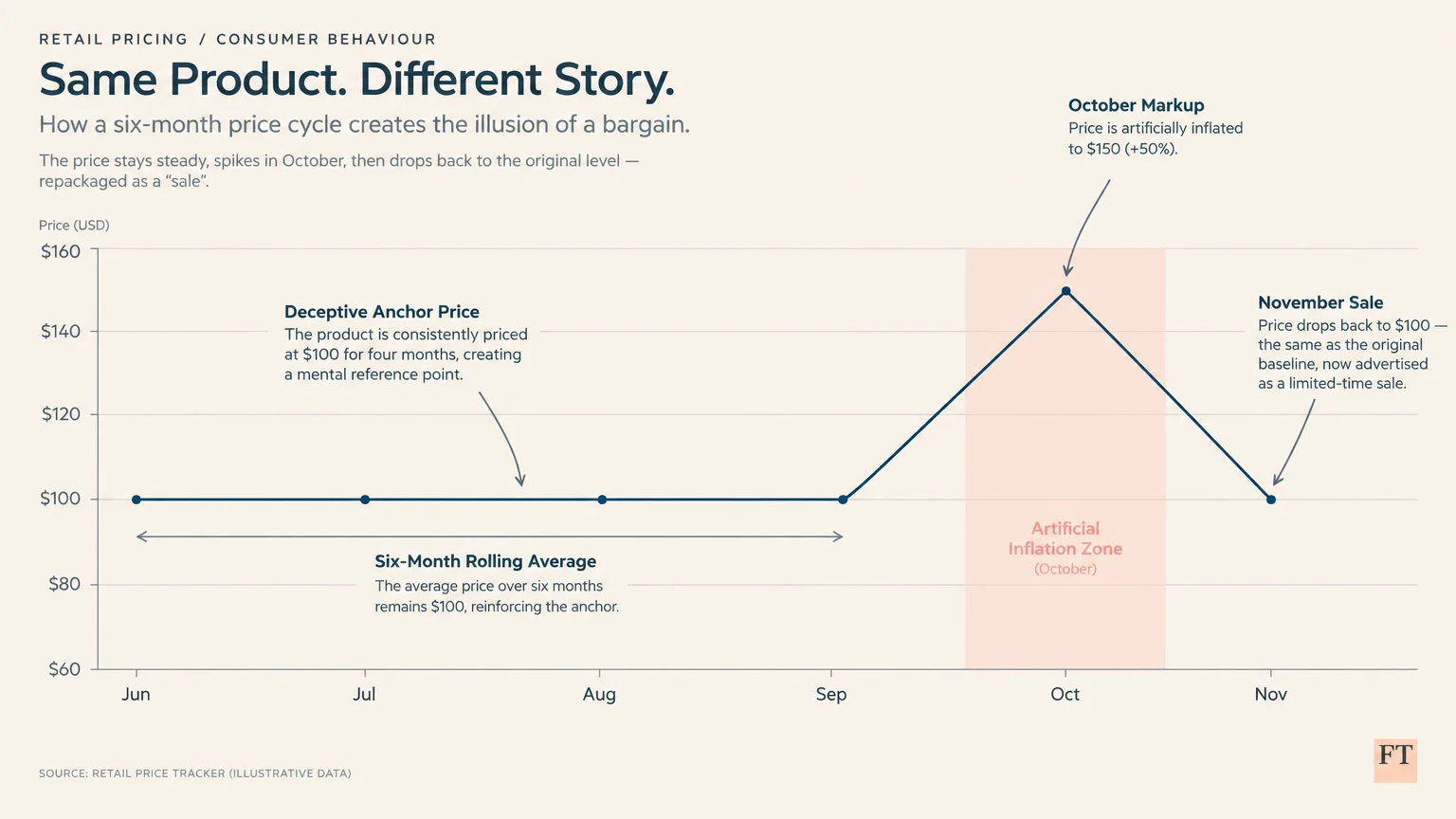
Tip #1: Track Price Histories to Unmask Fake Markups
Retailers frequently raise prices in October so their subsequent November promotions appear steeper than they actually are. Tracking software pulls back the curtain on these deceptive retail pricing tricks.
Free browser extensions like Keepa and Camelcamelcamel display complete historical pricing charts for millions of Amazon items. You can instantly see whether a markdown represents genuine savings or a routine seasonal price bounce.
Set automated email alerts on platforms like Honey or Earny for your high-priority items. When an item dips below its realistic six-month rolling average, execute the purchase immediately.
Independent studies reveal that nearly a quarter of advertised holiday discounts merely return products to their regular summer rates. Price history tracking prevents you from falling for deceptive anchor pricing.
Checking pricing trends before pulling your wallet out transforms you into an informed buyer. You eliminate the emotional urgency that marketers intentionally engineer during sales events.

Tip #2: Buy Certified Refurbished Tech Directly from Manufacturers
Electronics consistently dominate gift wish lists, but you do not need to pay brand-new retail prices. Major tech brands offer massive early holiday deals on factory-refurbished stock long before November arrives.
Programs like Apple Certified Refurbished, Dell Outlet, and eBay Refurbished offer discounts ranging from 15% to 40% below retail. These units undergo rigorous bench testing and include complete original manufacturer warranties.
You receive hardware that functions like new, often accompanied by fresh outer shells and brand-new batteries. Reputable manufacturers stand behind these devices with identical customer support channels.
Major brands often clear prior-generation certified stock during October to make room for upcoming Q4 inventory. Grabbing an iPad, laptop, or gaming console during these clearance windows avoids the Black Friday scramble.
Always verify that your purchase includes at least a one-year warranty backed directly by the manufacturer. Avoid unvetted third-party sellers who only provide thirty-day return windows.
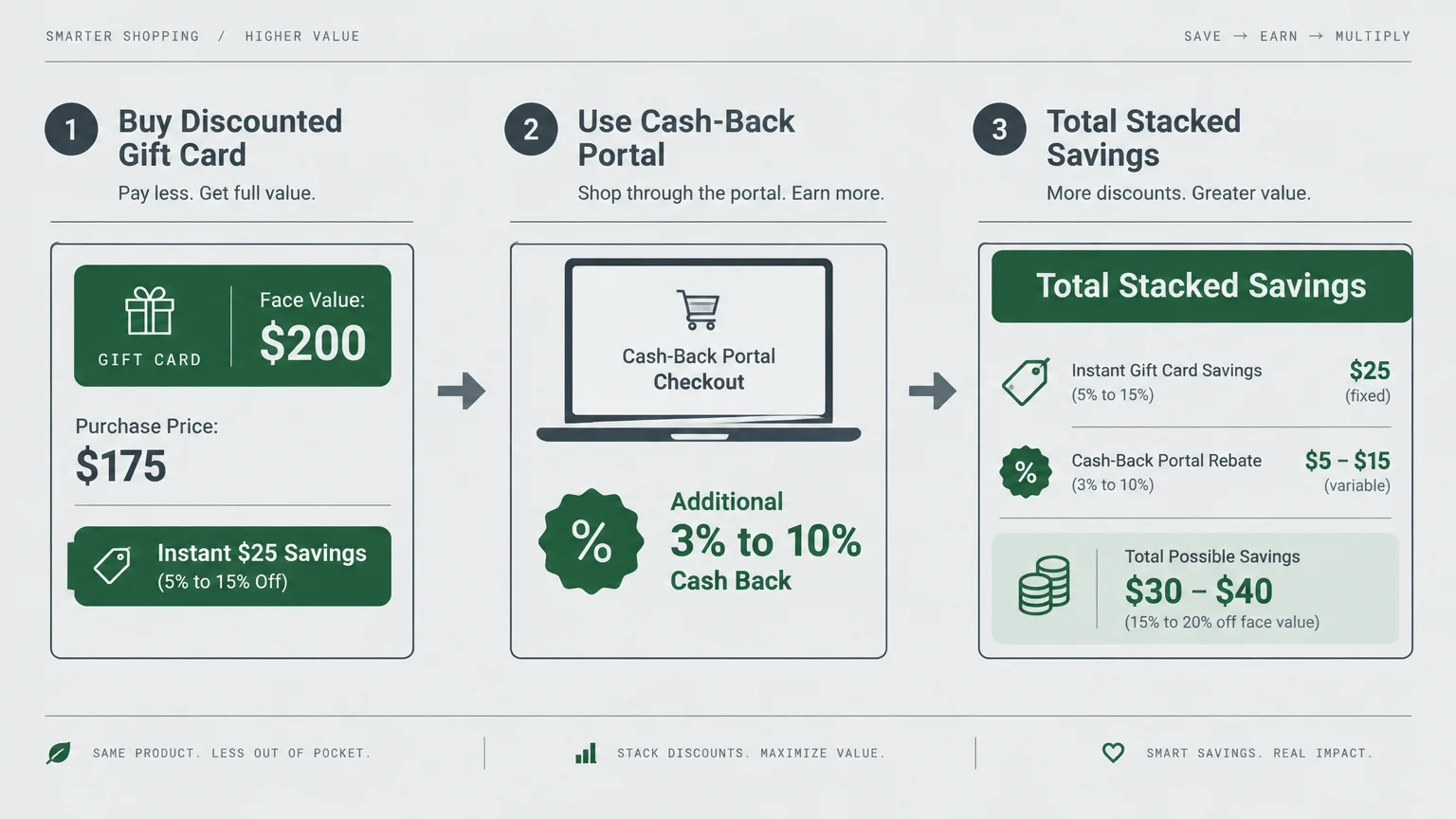
Tip #3: Stack Discounted Gift Cards with Cash-Back Portals
You can slash your total costs before browsing a single sale by acquiring discounted merchant gift cards. Secondary marketplaces allow consumers to buy verified gift cards well below face value.
Verified exchanges like CardCookie and Raise frequently sell store gift cards for popular merchants at 5% to 15% off. Buying a $200 gift card for $175 instantly saves you $25 on your intended purchases.
Layer these savings by clicking through a cash-back aggregator such as Rakuten or TopCashback before checkout. You earn another 3% to 10% in rebates while paying with your discounted gift card balance.
This double-stacking strategy creates guaranteed baseline savings regardless of whether an item carries an advertised promotional tag. It turns any routine shopping trip into an automatic bargain.
Ensure you verify the gift card balance immediately upon digital delivery to catch any rare discrepancies. Most major card reseller platforms offer comprehensive buyer protection guarantees for forty-five days.
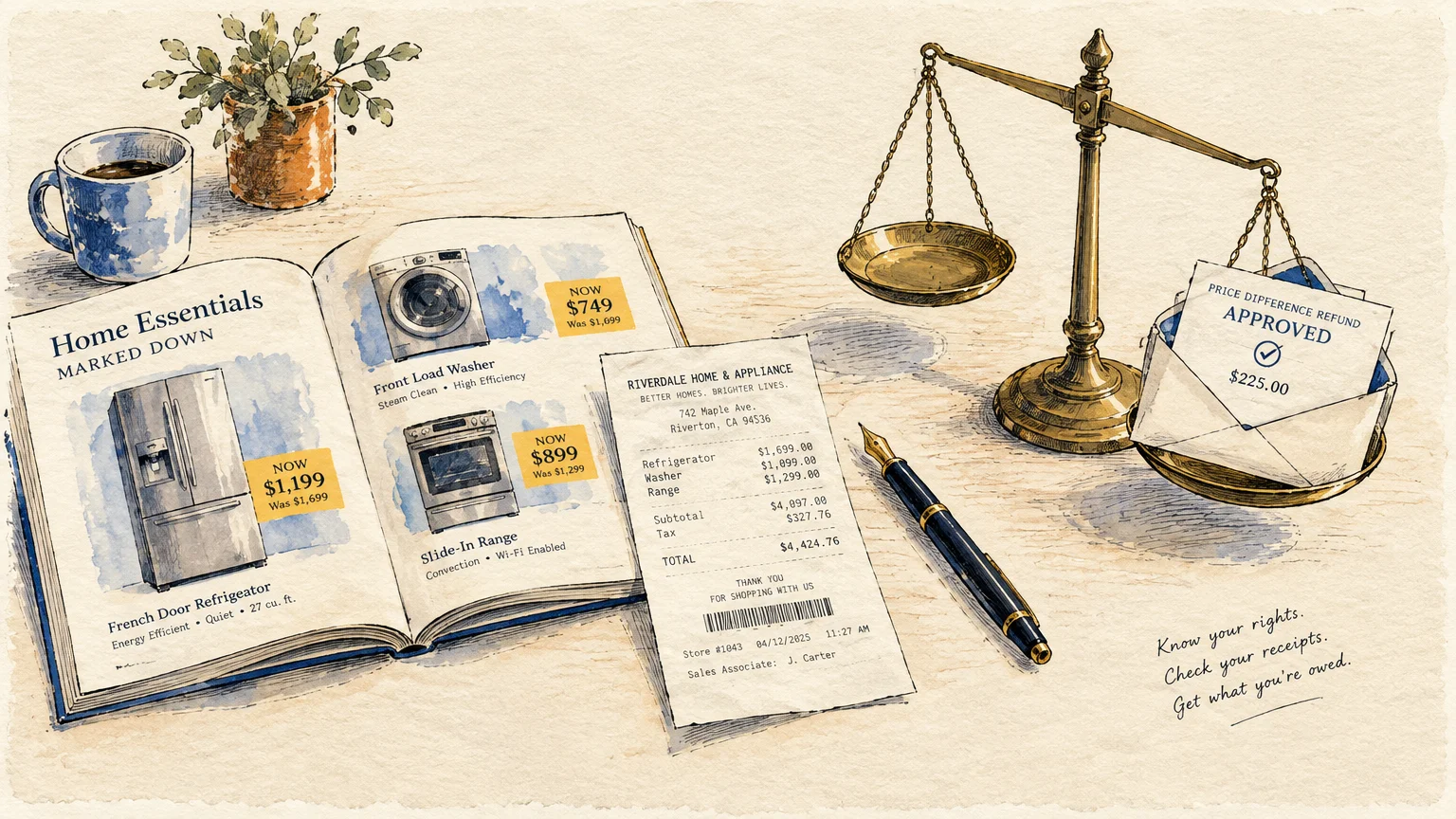
Tip #4: Leverage Early Holiday Price Match Guarantees
Big-box retailers have significantly lengthened their holiday price-matching windows to capture early foot traffic and online orders. Target, Best Buy, and Walmart routinely begin honoring holiday price matches in early October.
If you buy a qualifying item and the merchant drops the price before Christmas, customer service refunds the difference. This policy allows you to secure inventory early without the risk of post-purchase price drops.
Store your physical and digital receipts in a dedicated folder or app for quick retrieval. Automated tools like Capital One Shopping can also scan your purchase history and flag refundable price drops automatically.
Keep in mind that most retailers exclude limited-quantity doorbusters from standard price matching. However, standard everyday stock items remain fully eligible across major national chains.
Review each retailer’s specific policy terms online before checking out to confirm eligible competitor stores. A quick chat with customer service online can put cash back in your account in minutes.

Tip #5: Raid Retail Clearance Cycles in October and Early November
Retailers follow rigid seasonal clearance calendars to cycle out autumn and back-to-school products. October represents the prime window when department stores aggressively slash prices on apparel, camping equipment, and home goods.
These products make phenomenal holiday gifts at a fraction of their standard sticker prices. High-end jackets, bedding sets, and kitchenware often reach markdowns of 60% to 75% on back-wall clearance racks.
Check the clearance aisles of regional stores like Kohl’s, Macy’s, and Target mid-week. Merchandisers typically mark down seasonal inventory on Tuesday and Wednesday mornings before the weekend crowds arrive.
By timing your visits around these markdown schedules, you capture deep discounts on high-ticket goods; you avoid paying the inflated holiday prices that return in late November.
Look closely at store price tags for clearance codes that indicate final markdowns. For example, Target price tags ending in eight or four often signify the lowest possible liquidation price.
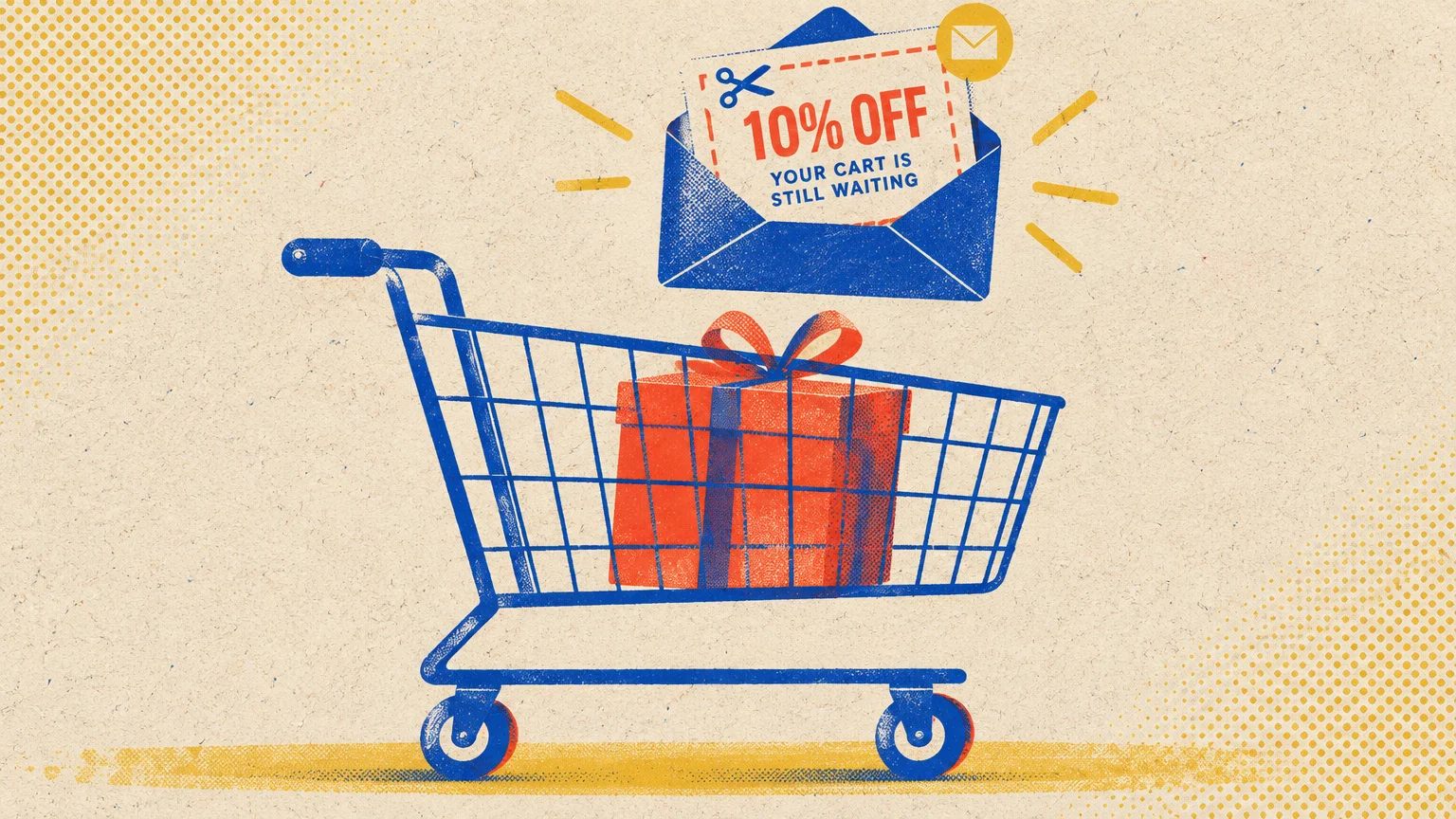
Tip #6: Trigger Abandoned Cart Discounts Using Guest Accounts
E-commerce algorithms track user drop-offs closely and will often deploy automated discounts to rescue stalled conversions. You can use this behavior to generate exclusive promotional codes that aren’t advertised publicly.
Log into your retailer account, place your desired items into the shopping cart, and proceed directly to the payment page. Stop before submitting payment and close the browser window entirely.
Within 24 to 48 hours, retailers often deliver automated emails containing direct discount codes worth 10% to 20% off. Fashion, specialty kitchenware, and boutique sites use this conversion tactic with high frequency.
Ensure your account settings allow marketing emails so these promotional recovery triggers land in your primary inbox. This simple pause can shave substantial dollars off your order total.
You can also try browsing in an incognito window using a secondary email address to trigger first-time customer popups. Many retailers offer instant 15% codes just for joining their email newsletters.
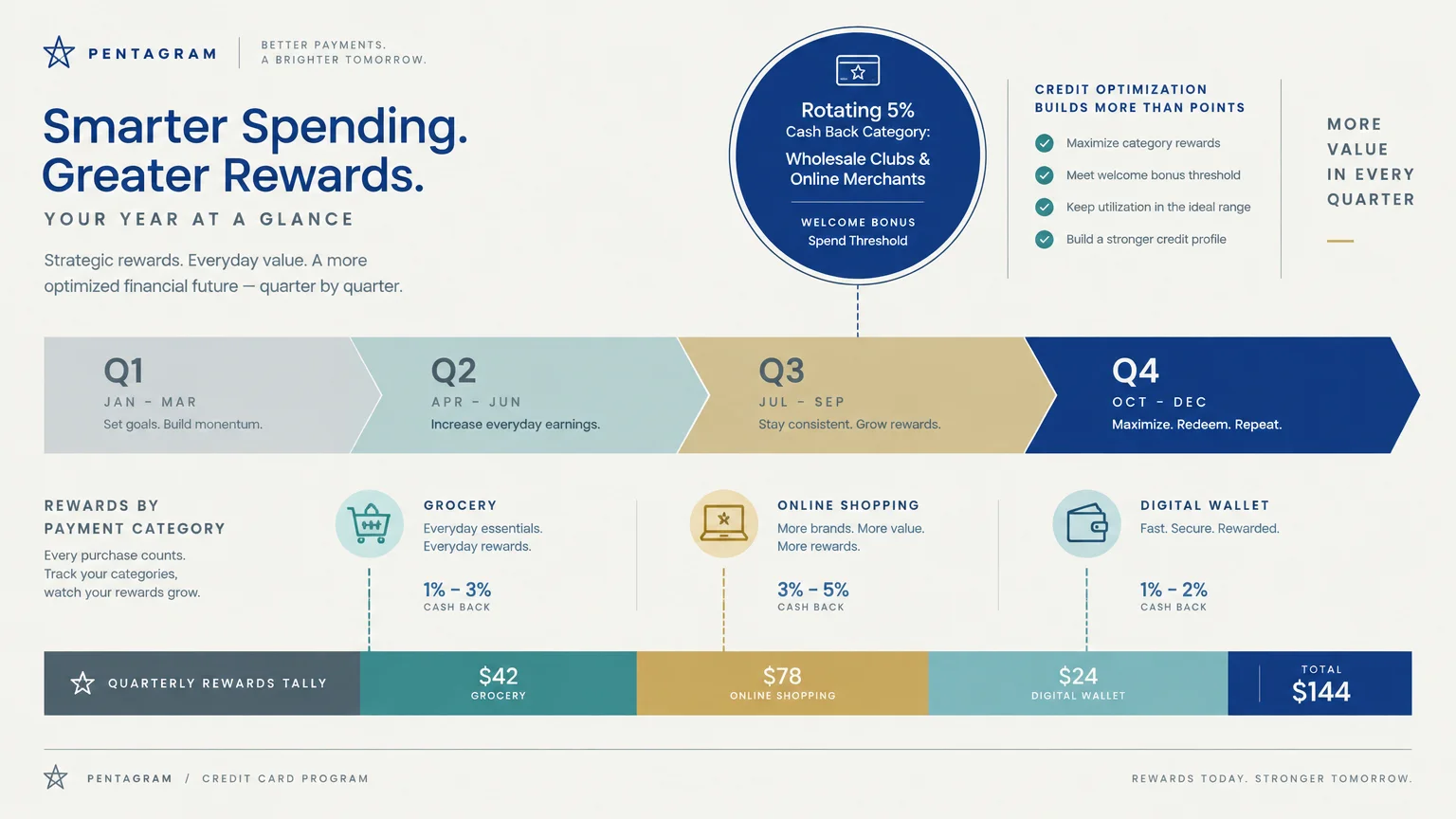
Tip #7: Maximize Rotating Credit Card Categories and Welcome Bonuses
Fourth-quarter credit card bonus categories are designed specifically around retail and online spending. Cards like the Chase Freedom Flex and Discover it consistently offer 5% cash back on quarterly spending categories up to $1,500.
Activating these merchant categories before beginning your early holiday shopping guarantees an immediate 5% return. Pairing these card rewards with existing store markdowns accelerates your total savings quickly.
If you plan to make large family purchases, consider opening a new card offering a lucrative introductory sign-up bonus. Meeting a standard spending threshold on planned holiday purchases can trigger $200 or more in statement credits.
Always pay your monthly balance in full to avoid interest charges that quickly erase your earned rewards. Savvy consumers treat credit cards strictly as payment pipelines rather than borrowed funds.
Check your existing card portals for targeted card-linked merchant offers from American Express or Chase. Adding these digital coupons to your card provides statement credits on top of standard reward earnings.
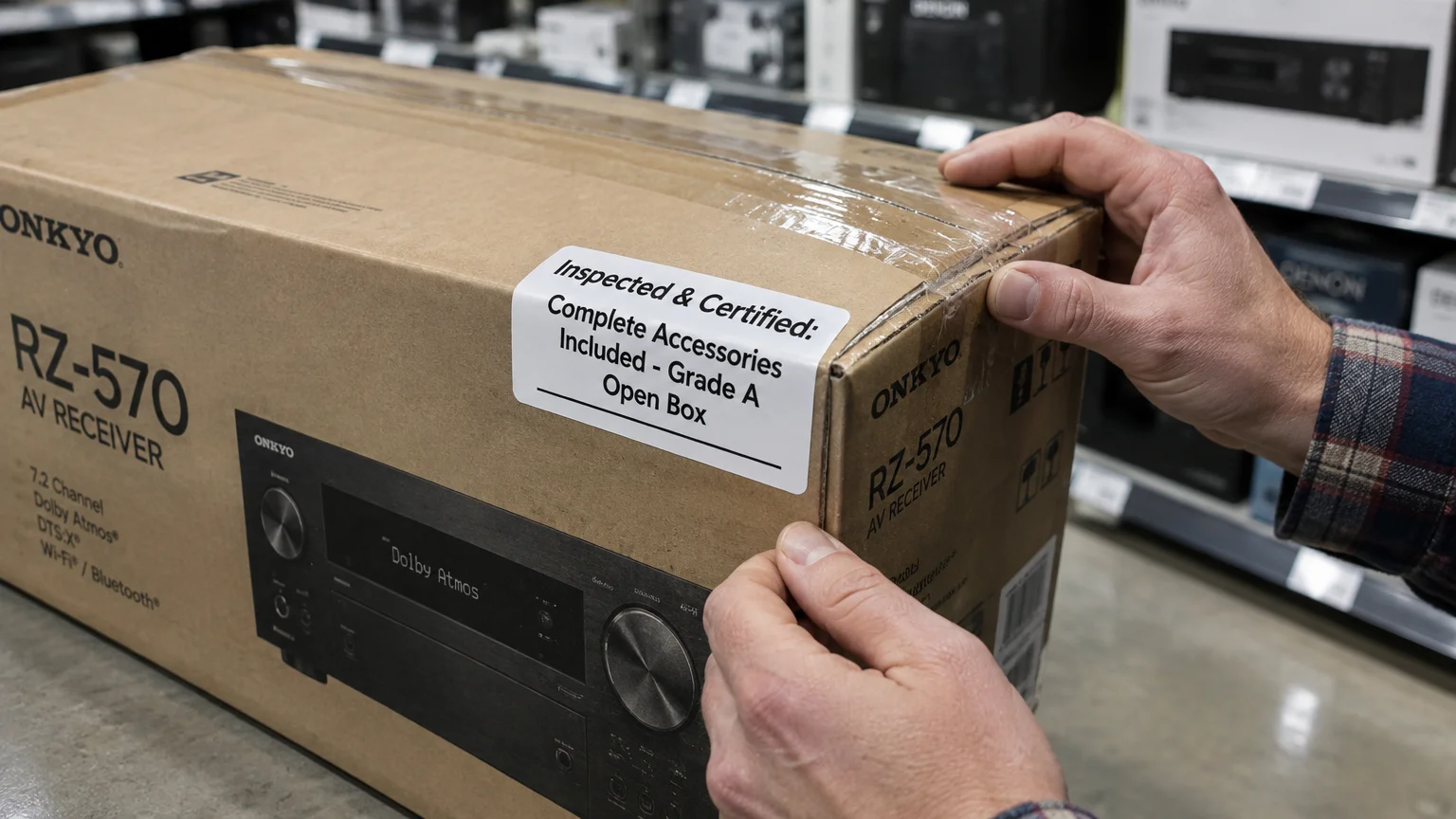
Tip #8: Target Open-Box and Returned Inventory Before the Rush
Many shoppers return unopened or barely used items following late-summer sales events like Amazon Prime Big Deal Days. Retailers test and repackage these items for resale at steep discounts through open-box portals.
Best Buy Open-Box and Amazon Resale offer massive savings on premium televisions, soundbars, kitchen appliances, and laptops. Products classified under “Like New” condition often arrive in factory packaging with unpeeled protective plastic.
Inquire directly with store managers at local electronics retailers about floor models scheduled for rotation. Display items frequently qualify for extra on-the-spot markdowns if you ask politely before holiday inventory floods the showroom.
Open-box items carry standard store return privileges, giving you an easy safety net if a gift falls short. You capture premium electronics while bypassing standard holiday retail markups.
Inspect the cosmetic grading details provided on the listing before finalizing an open-box transaction. Sticking to items marked “Certified” or “Excellent” guarantees an experience practically indistinguishable from buying new.

Tip #9: Secure Fall Toy Drop Promotions Before Inventories Dry Up
Waiting until late November to buy the year’s hottest toys is a recipe for inflated reseller markups and empty shelves. Toy manufacturers and big-box retailers launch their heaviest toy promotions during late October.
Retailers like Target regularly release high-value coupons, such as 25% off one toy, via their loyalty programs in mid-autumn. Amazon simultaneously matches these prices across bestselling building sets, dolls, and family board games.
Purchasing early ensures you pay retail list price or lower instead of facing secondary scalpers on auction platforms. The popular holiday toys of the year routinely sell out by mid-November.
Lock in these items during October promotion weeks to save before Black Friday; you can then hide them safely away until December.
Join retailer loyalty clubs early to gain access to exclusive pre-sale windows on limited-edition toy releases. Doing so protects your family budget from predatory third-party marketplace pricing later in the season.

Tip #10: Choose Frustration-Free Packaging and Bundled Multi-Packs
Elaborate retail clamshell packaging adds unnecessary freight weight and overhead expense to consumer products. Opting for frustration-free packaging on major online stores frequently shaves 10% to 20% off identical items.
These products contain identical goods inside recyclable cardboard boxes without excessive plastic blister wrapping or wire ties. You receive genuine merchandise while avoiding frustrating plastic packaging on Christmas morning.
Look for multi-pack bundles at warehouse clubs like Costco or Sam’s Club for stockings and secondary gifts. Buying personal care, food gifts, and utility gadgets in bulk allows you to divide items among multiple recipients.
This bulk-splitting tactic dramatically drives down your average cost per recipient across your entire gift list. It delivers exceptional value while trimming your holiday budget tips into realistic spending targets.
Warehouse clubs also price holiday gift basket sets and gourmet food collections lower in October than in December. Snagging shelf-stable goods early prevents frantic last-minute grocery runs at premium prices.
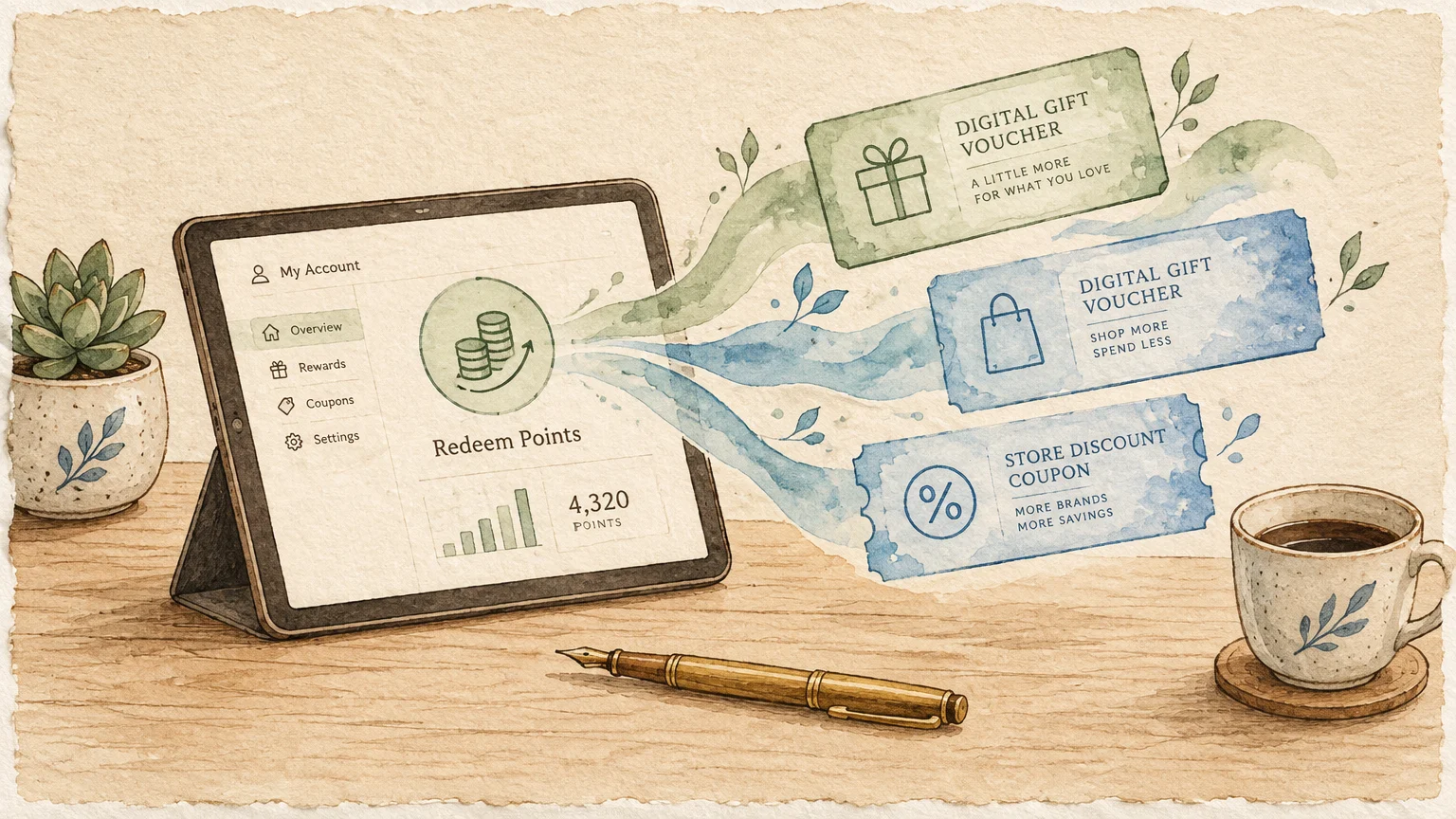
Tip #11: Audit and Redeem Accumulated Loyalty Points
Billions of dollars in credit card points, airline miles, and store loyalty rewards sit abandoned in forgotten accounts. Before spending your take-home pay on gifts, conduct a comprehensive audit of your digital balances.
Many card issuers allow you to redeem cash-back rewards directly for gift cards at a 10% to 20% point discount. Turning 10,000 points into a $120 retail gift card produces superior value compared to standard statement credits.
Check regional grocery chains and pharmacy loyalty apps for accrued digital cash rewards that expire at year-end. These points can easily cover holiday wrap, greeting cards, baking supplies, and stocking stuffers.
Funding early holiday deals with previously banked loyalty points keeps cash in your checking account. It neutralizes December financial stress before it ever starts.
Log into airline and hotel loyalty accounts to see if your points can be redeemed for consumer retail products. Many travel programs run promotional redemption rates on electronics and merchandise during the fall months.

Tip #12: Buy Pre-Owned Media and Luxury Goods from Resellers
High-ticket luxury items, video games, and hardcover book collections rarely need to be purchased brand new from retail shelves. Verified resale platforms offer mint-condition alternatives at a fraction of their original cost.
Platforms like Decluttr, ThriftBooks, and Swappa test and rate products before listing them for sale. You can pick up bestselling book collections, vintage vinyl, and pristine smartphones for 50% below retail prices.
For designer apparel and leather accessories, platforms like Poshmark and The RealReal verify item authenticity through professional appraisal teams. This authentication provides peace of mind while securing deep discounts on luxury designer labels.
Gifting pre-owned or vintage items is both environmentally sustainable and economically brilliant. Your gift recipient gets a thoughtful, high-end item, while your bank balance stays completely intact.
Order from independent resale platforms early in November to accommodate slower standard shipping times. Early ordering guarantees your curated vintage and pre-owned finds arrive well before holiday gatherings begin.
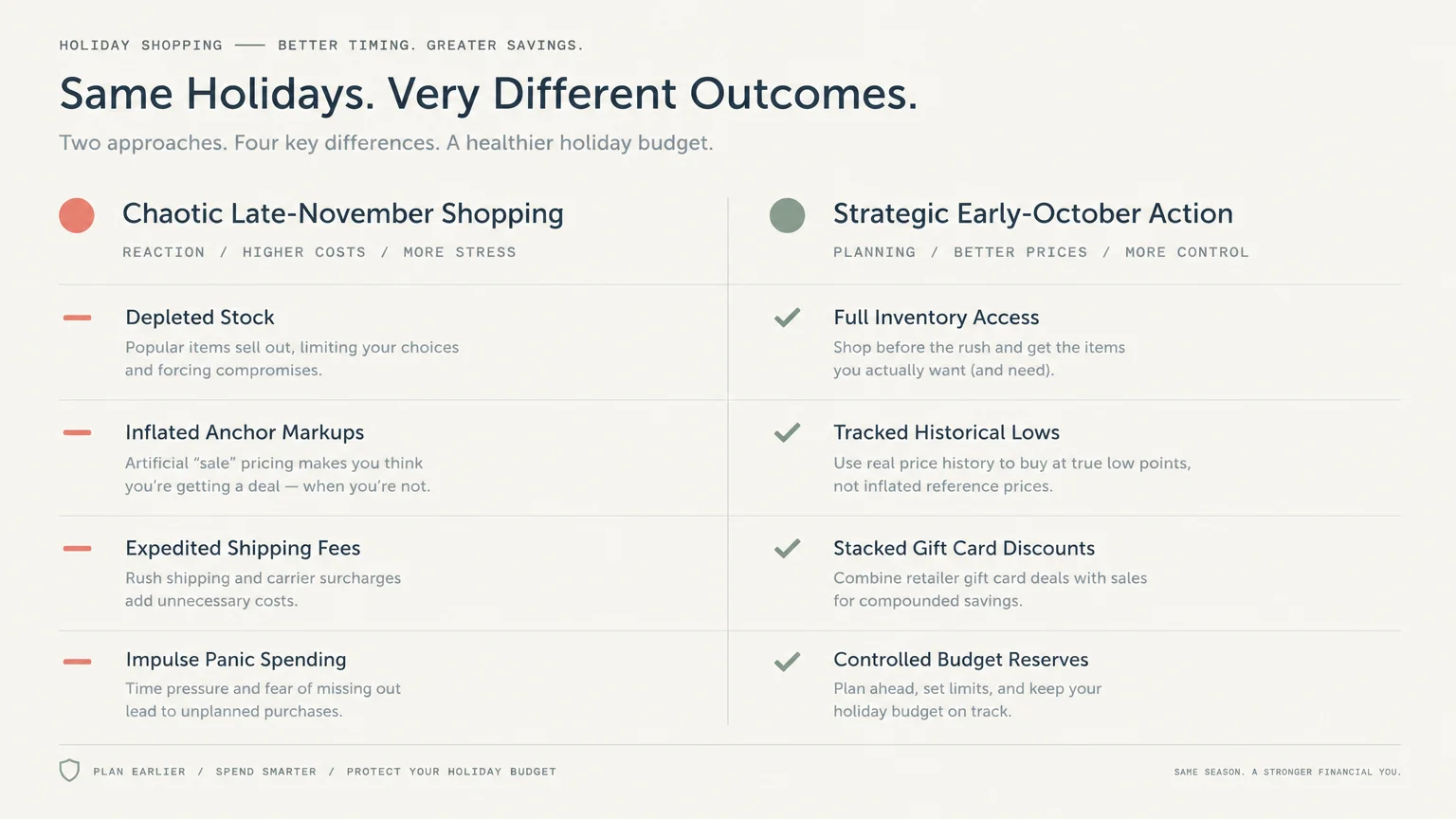
The Bottom Line: What This Means for Your Wallet
Waiting for late-November sales events is a gamble that rarely pays off for savvy consumers. Retail marketing machines promote artificial scarcity and exaggerated markdowns to push impulse spending during Thanksgiving weekend.
By adopting a disciplined approach in October and early November, you take control of your holiday spending. You systematically capture authentic discounts on your terms rather than reacting to manufactured commercial pressure.
Stacking discounted gift cards, tracking price histories, and utilizing early price-match guarantees keeps significant money in your pocket. These intentional moves protect your long-term financial health while allowing you to give generous gifts.
Start by auditing your gift list today and establishing clear price targets for your top five items. Securing those purchases through early promotions frees up your mental energy to actually enjoy the upcoming holidays.
True frugality is not about depriving yourself or your loved ones during the holiday season. It is about using insider knowledge to secure premium goods without paying standard retail markups.
Frequently Asked Questions
Are early Black Friday sales really as cheap as the actual day?
Yes, historical pricing data reveals that many early holiday deals match or beat promotional prices offered on Thanksgiving weekend. Retailers spread discounts across October and November to prevent logistics bottlenecks and warehouse crunches.
The only exceptions are extremely limited doorbusters designed to lure crowds into stores. For standard consumer goods and electronics, buying early with a price match guarantee is safer and equally affordable.
What items should you never buy before Black Friday?
Budget-tier off-brand televisions and deeply discounted promotional small kitchen appliances generally reach their absolute price bottoms during Black Friday weekend. Retailers manufacture specific holiday promotional models exclusively for doorbuster promotions.
If you are hunting for high-end name-brand televisions or professional cookware, however, buying early yields comparable pricing without inventory shortages.
How can I protect myself from fake online discounts?
Never trust an advertised percentage-off banner on a retailer’s homepage without verification. Use price-history browser extensions to inspect what the product sold for over the previous three to six months.
If the current sale price matches the item’s standard summer rate, the retailer simply inflated the anchor price to fake a discount.
Will retailers honor price adjustments if prices drop further on Black Friday?
Major chains like Target and Best Buy maintain holiday price-match guarantees that cover purchases made starting in early October. However, you must actively monitor prices and request the adjustment before the policy window closes.
Keep in mind that retailers routinely exclude limited-quantity doorbuster items and Thanksgiving Day flash deals from price-match coverage.
For consumer protection information, visit the Federal Trade Commission (FTC) and the Consumer Financial Protection Bureau (CFPB). For product safety and reviews, consult Consumer Reports.
Disclaimer: This article is for informational purposes only and does not constitute financial advice.
The content reflects the author’s opinion and research at the time of writing; always do your own research before making financial decisions.







Leave a Reply