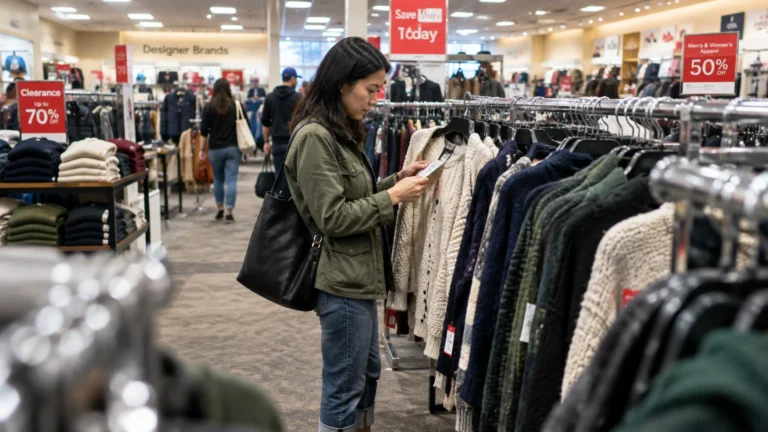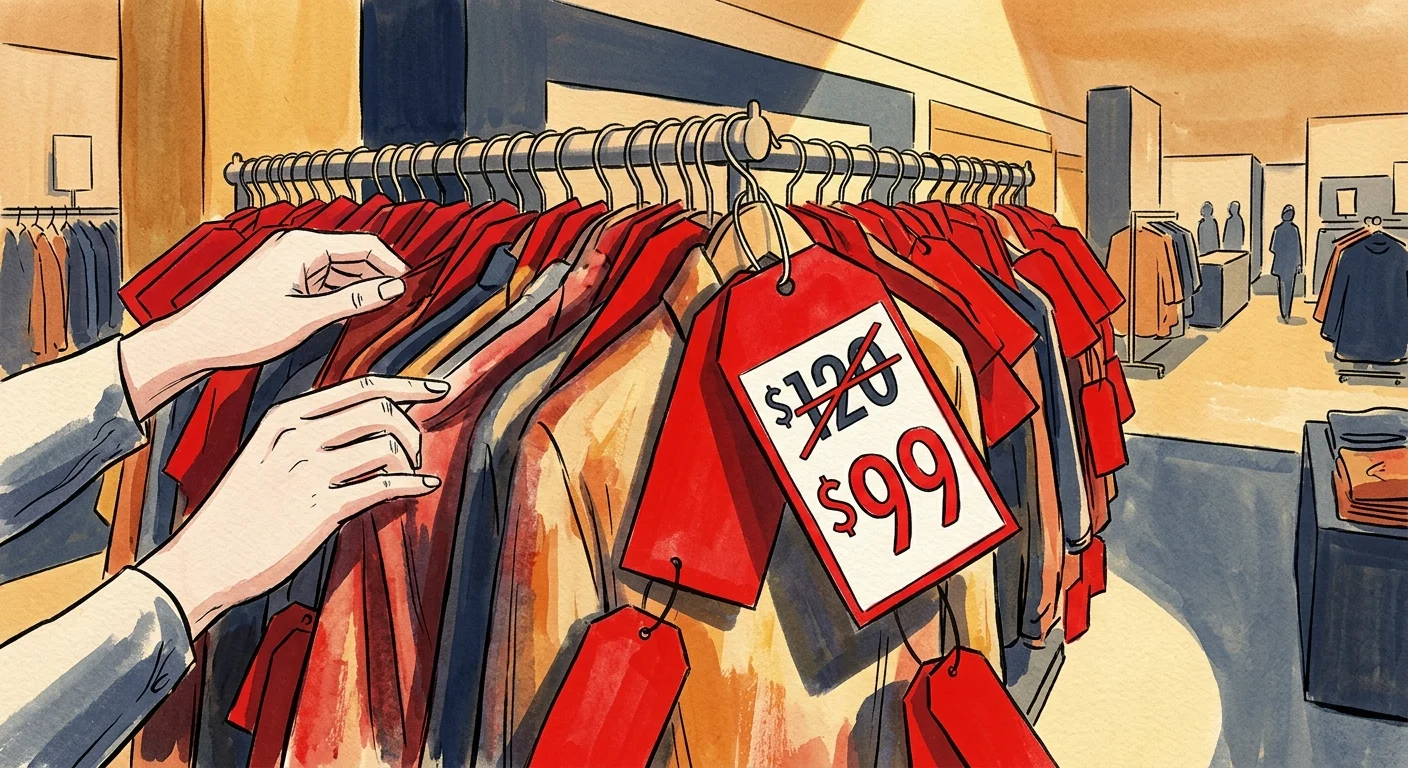
Retail clearance racks promise deep savings, but stores frequently deploy calculated clearance rack pricing tricks to make mediocre markdowns look like massive bargains.
You can safeguard your hard-earned cash by learning how major retail chains manipulate red stickers, artificial reference prices, and inventory codes to dump inferior merchandise. Retailers regularly inflate baseline prices or stock sales racks with lower-quality diffusion garments manufactured exclusively for bargain bins.
Understanding these deceptive clearance rack shopping tips puts purchasing power back into your hands. Spotting fake clearance deals before you reach the register ensures that your dollars secure true value rather than corporate profit margins.
Tip #1: The Original Price Was Never Actually Charged
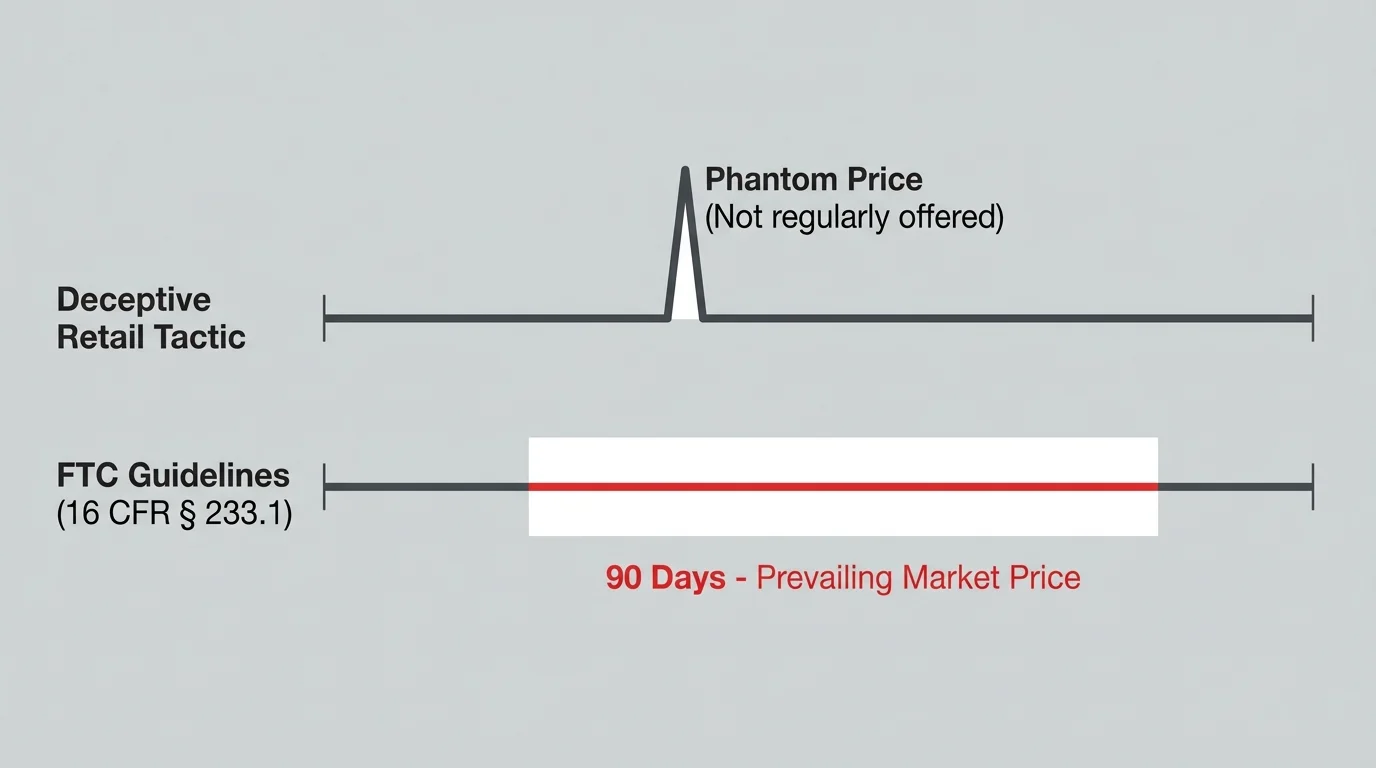
Retailers know that shoppers evaluate bargains based on the spread between the original price and the markdown price. To make a discount look irresistible, stores frequently create an artificially inflated baseline price that nobody ever paid.
This deceptive practice anchors your perception of value to a phantom figure, making an ordinary retail price seem like a steep discount. You might assume you are saving 60 percent, but the store simply fabricated the baseline to trigger your impulse to buy.
Federal regulations specifically prohibit this deceptive tactic.
Under the FTC Deceptive Pricing Guidelines outlined in 16 CFR § 233.1, a retailer advertising a markdown from an original or regular price must base the discount on an actual, bona fide price at which the company openly and actively offered the article to the public on a regular basis for a reasonably substantial period of time.
When a retailer sets an inflated reference price solely to advertise an exaggerated markdown, it violates federal standards.
State laws enforce even stricter boundaries on former price claims.
Under California Business and Professions Code § 17501, as well as prevailing market price statutes in states like New York and Massachusetts, a retailer cannot advertise a former price comparison unless that price was the prevailing market price within the preceding 90 days, or unless the tag clearly states the specific date when the former price applied.
Despite these statutes, an extensive pricing investigation by Consumers’ Checkbook tracked thousands of items across 25 major U.S. retailers and discovered that discount claims at most stores are deeply misleading.
The investigation revealed that for nearly half the retailers tracked, items were marked on sale or discounted more than 50 percent of the time, meaning the listed regular price was rarely or never charged.

Tip #2: Secret Factory and Diffusion Codes Appear on the Label
Many shoppers assume that clearance racks contain leftover, unsold inventory from the main store floor. In reality, major apparel brands routinely manufacture lower-quality merchandise specifically for discount sections and outlet distribution.
These items never spent a single day on a regular retail shelf; manufacturers cut corners on fabric weight, stitching density, and hardware to produce cheap inventory designed specifically for bargain bins.
You can identify these made-for-outlet garments by inspecting the internal clothing tags for specific brand identifiers. Banana Republic Factory and Gap Factory mark their diffusion lines with three small consecutive dots or diamonds printed directly on the fabric label beneath the brand name.
J.Crew Factory uses a similar system, placing two small dots beneath the J.Crew name on the neck label to designate garments made with cheaper synthetic blends and lower-grade cotton.
When you find these diffusion garments mixed into flagship clearance racks, you are not buying premium overstock at a steep discount. You are purchasing an item made from thinner yarn, single-needle stitching, and synthetic fiber blends that retail chains price according to lower manufacturing costs.
Check the tags carefully before assuming a designer clearance rack holds genuine flagship quality.
Tip #3: The Price Ending Number Signals Standard Inventory
Store management teams rely on automated pricing algorithms and standardized decimal codes to communicate inventory status to employees.
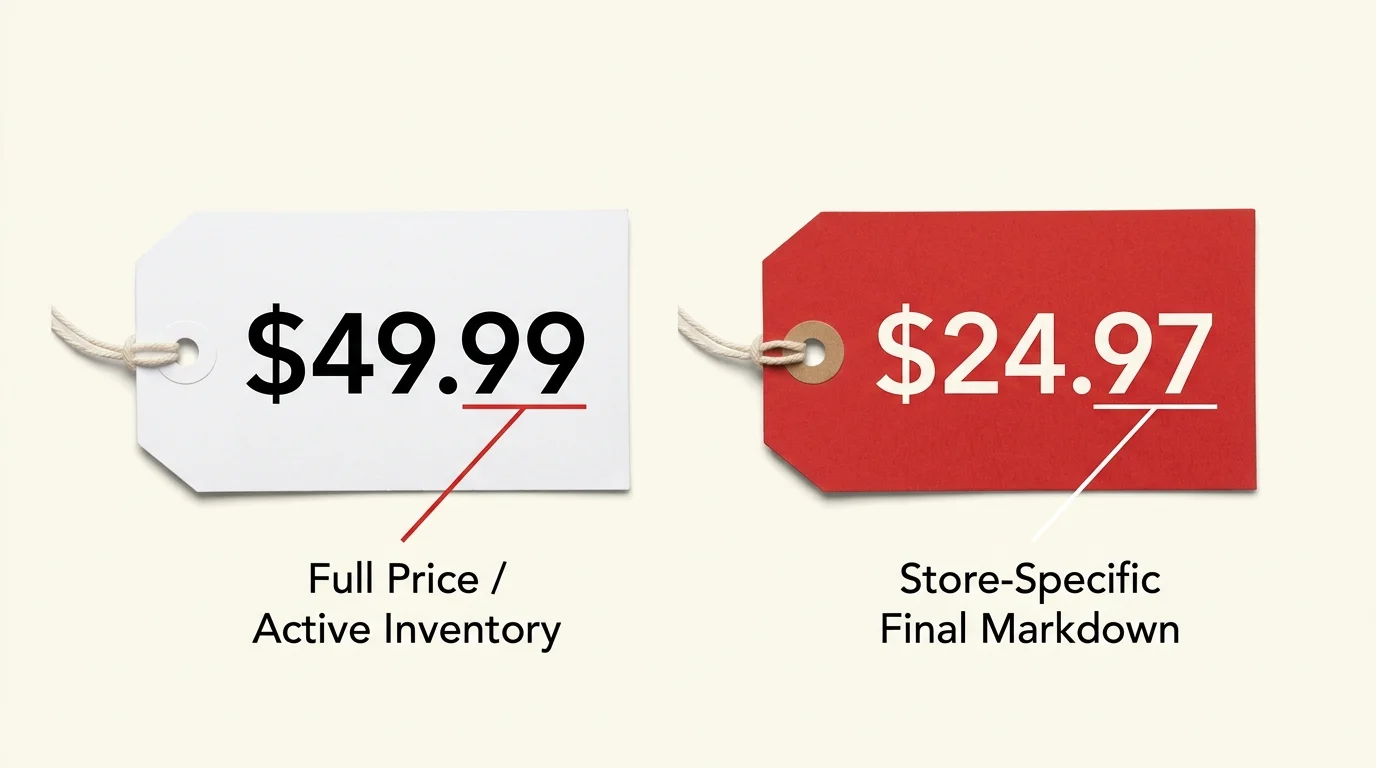
Learning how to read the last two digits on a clearance sticker reveals whether an item has undergone genuine liquidation markdowns or if an associate simply tucked full-priced inventory into the clearance aisle to free up shelf space.
Big-box retailers maintain clear internal decimal systems. At Costco, standard retail prices end in .99, whereas genuine clearance markdowns end in .97.
If you spot a price ending in .00 or .88, a local store manager manually marked down the item to liquidate floor models or returned stock.
Additionally, an asterisk in the upper right-hand corner of a Costco shelf tag signals that the item is discontinued and will not be restocked once inventory runs out.
Target follows a structured percentage-based markdown cycle. Target clearance tags display the markdown percentage—typically progressing from 30 percent to 50 percent, 70 percent, and occasionally 90 percent off—in the tiny upper right-hand corner of the red sticker.
Target items marked with prices ending in .04 or .08 represent final clearance stages, whereas numbers ending in standard nine-cent increments often represent initial, minor price drops.
The Home Depot utilizes yellow clearance tags with distinct endings: prices ending in .06 mark a six-week markdown cycle, .03 signals a three-week final clearance window, and .02 indicates the final bottom-dollar price before the store salvages or destroys the inventory.
If an item on a clearance shelf ends in standard retail decimals without these markdown codes, the store has not applied a true liquidation discount.
Tip #4: Re-Ticketing Conceals the True Base Price
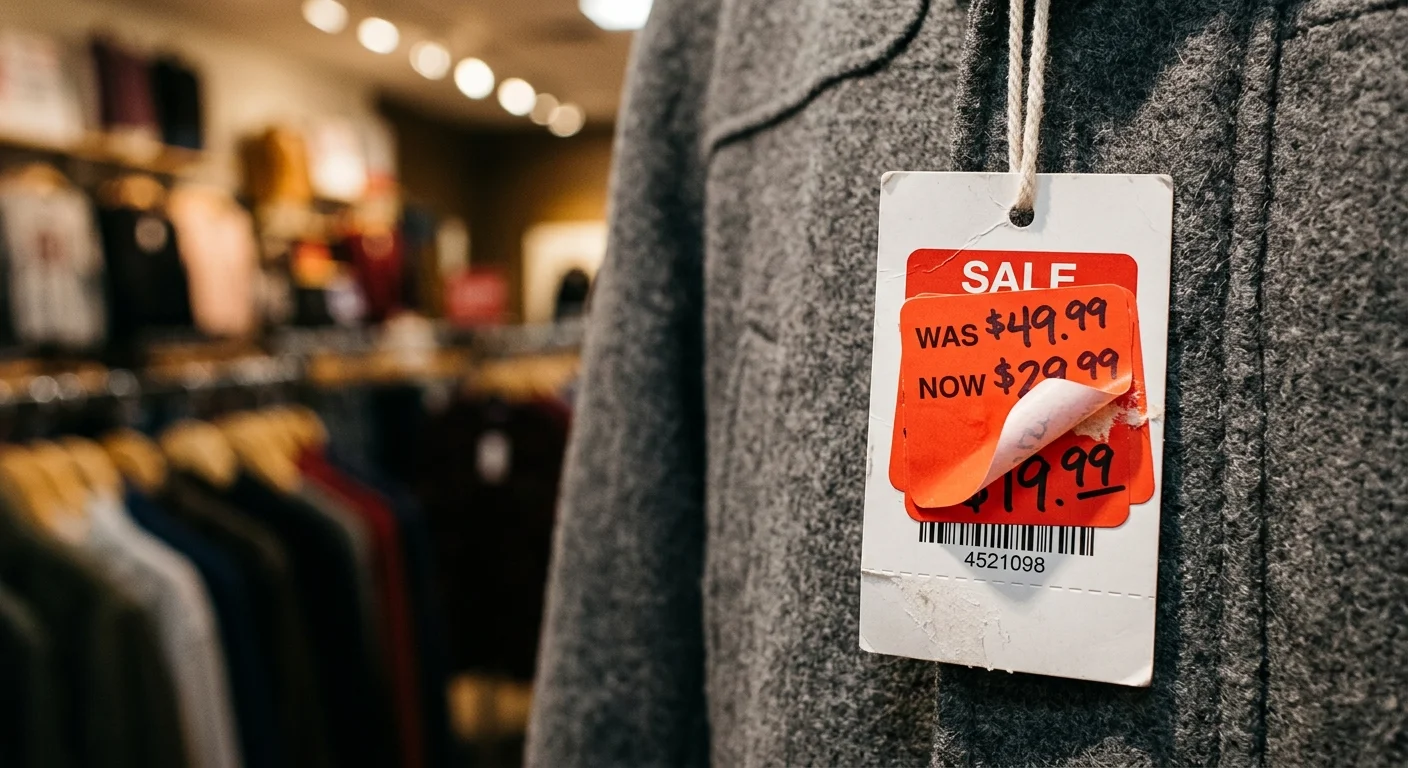
One of the clearest retailer clearance pricing red flags occurs when stores place new price stickers directly over original tags without providing real savings.
Retail associates frequently apply markdown labels across hundreds of items during busy shift rotations, leading to pricing errors that reveal artificial markdowns.
If you peel back a red clearance sticker and discover the exact same price printed on the original manufacturer tag, the store has fabricated the clearance status.
In worse scenarios, retailers increase base prices immediately before promotional sales events, only to apply a clearance sticker that brings the item right back to its original retail cost.
An item originally priced at $24.99 might receive a newly printed baseline tag of $34.99, covered by a bright red clearance sticker advertising a sale price of $24.99. This maneuver exploits your visual assumption that clearance tags automatically represent cost savings.
Always inspect layered stickers on clearance merchandise. Hold the tag up to the light or gently lift the edge of the markdown sticker to verify the manufacturer’s printed suggested retail price.
If the new clearance price matches or exceeds the underlying tag, walk away from the transaction.
Tip #5: Core Inventory Sits on Clearance Permanently
Legitimate clearance sections function as transitional zones for seasonal goods, discontinued lines, or surplus stock that a retailer must clear out to make room for incoming inventory.
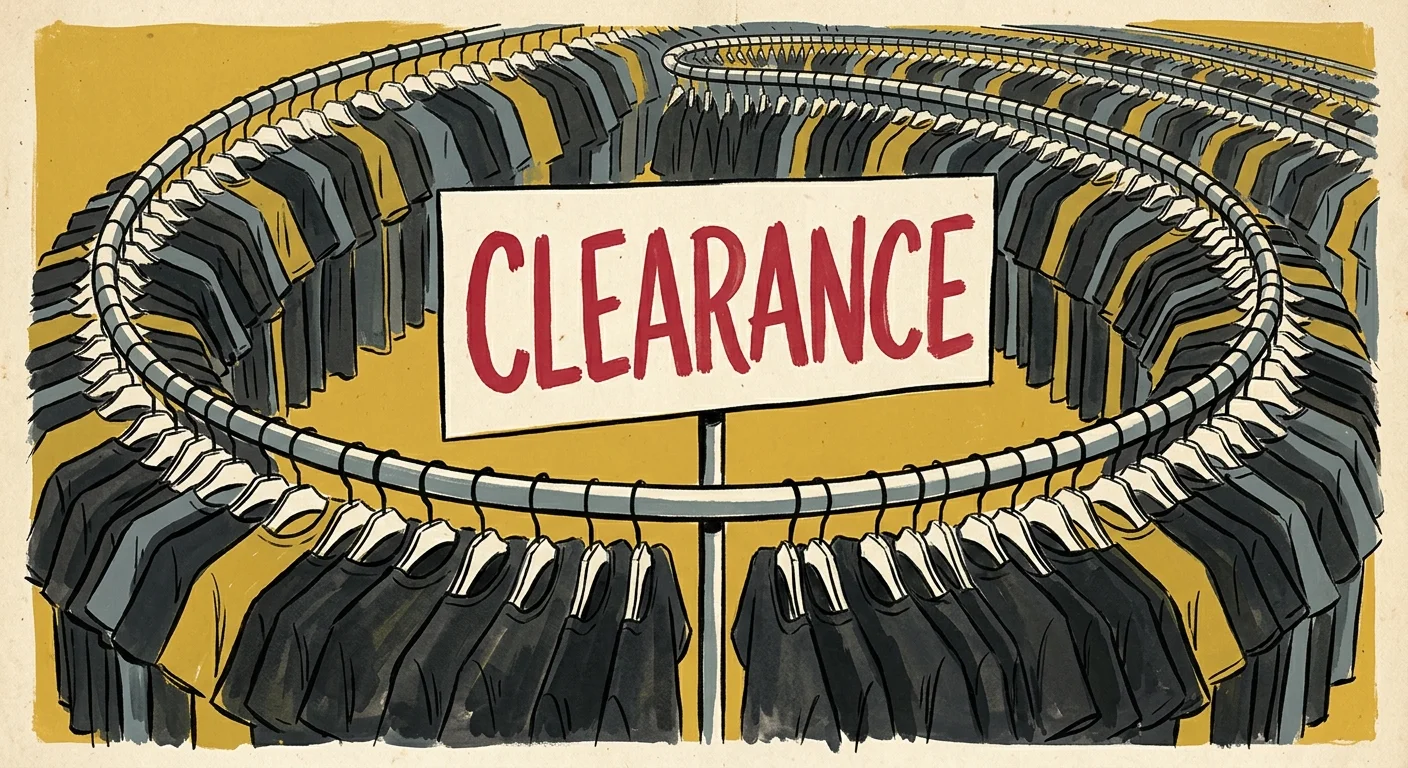
When a clearance section contains evergreen items that remain on the racks month after month, the retailer is running an artificial clearance display designed to attract bargain hunters.
Stores frequently stock clearance aisles with basic staple goods—such as generic charging cables, plain undershirts, or basic housewares—that never appear on regular shelves.
Because these items carry inflated suggested list prices, the retailer displays them exclusively on red-tagged racks to create an ongoing sense of urgency.
The clearance price represents the true intended retail price, offering standard profit margins to the store without delivering real savings to the consumer.
When are clearance items really discounted? Genuine discounts occur when seasonal merchandise transitions out of cycle—such as winter coats in March or patio furniture in September.
If you see core essentials occupying permanent clearance real estate regardless of the season, treat those prices as standard retail pricing.

Tip #6: Aggressive Final Sale Policies Shift Defect Risk to You
Deep clearance discounts often come with a strict catch: retailers stamp receipts and tags with “Final Sale” designations. While stores market these deep cuts as customer-friendly liquidation events, aggressive final sale policies often serve as a shield against returning damaged, defective, or unsellable stock.
Retailers use deep clearance racks to dump customer returns, floor displays with missing components, and garments with broken zippers directly onto consumers.
Under standard retail policies across the United States, items marked at 70 percent off or designated as Final Sale are completely exempt from standard 30-day to 90-day return windows, manufacturer warranty registrations, and post-purchase price matching adjustments.
If you purchase an electronic device or appliance on final clearance and discover a broken internal component at home, the retailer bears zero legal obligation to accept a return or issue a refund.
Before purchasing any non-refundable clearance item, complete a meticulous inspection. Test all zippers, examine seams for loose stitching, check electronics for complete power cords and accessories, and verify that household appliances include all mounting hardware.
A 75 percent discount quickly turns into a total financial loss if the product proves unusable after you leave the store.
Tip #7: Phantom Compare At Numbers Mislead on House Brands
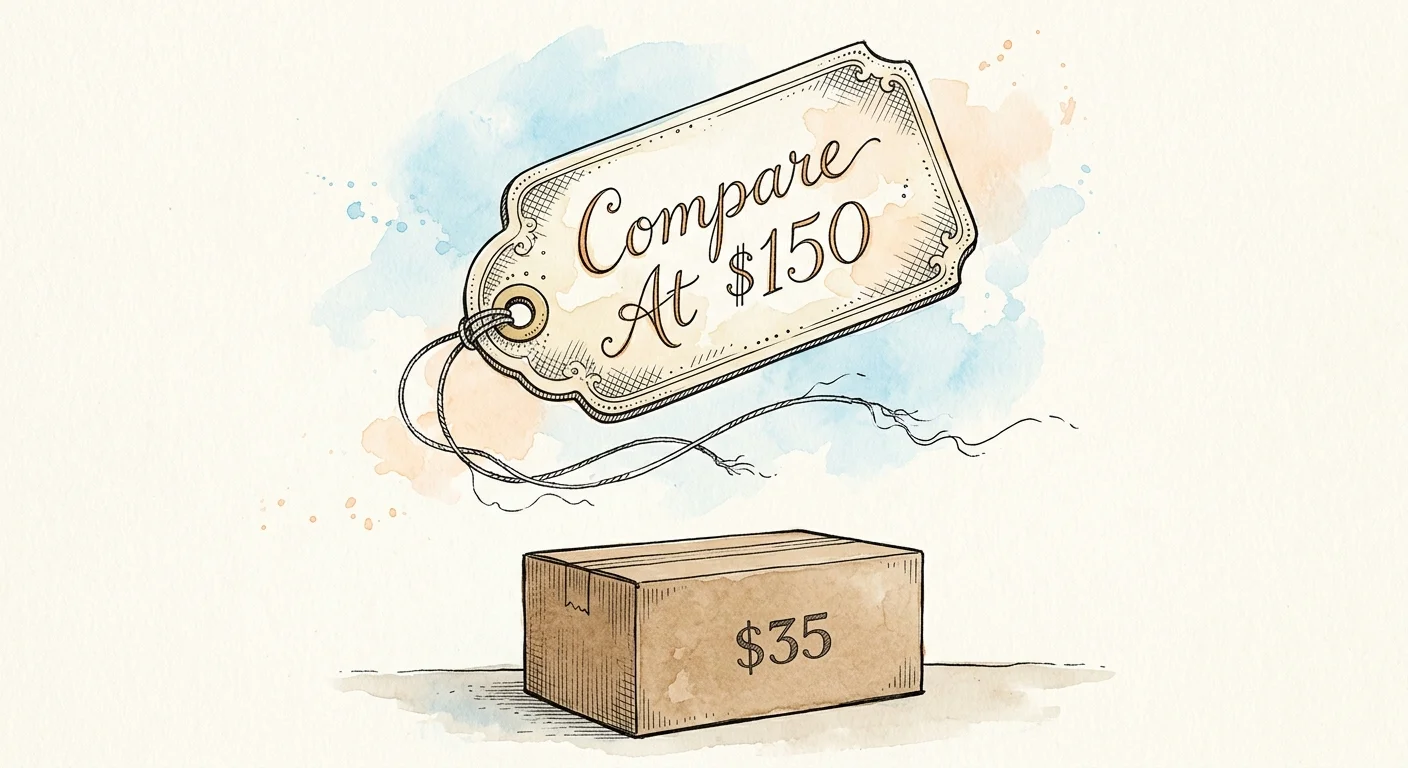
Off-price department stores and discount retailers frequently display clearance tags featuring a prominent “Compare At” price positioned right above the sale price. These reference numbers are often entirely fictional, particularly when applied to proprietary private-label brands that the retailer owns and manufactures internally.
When a retailer invents a house brand, no independent open-market competition exists to establish a fair market baseline price.
The store’s marketing team arbitrarily assigns an inflated “Compare At” price to the tag, creating the illusion that you are purchasing a luxury item at a fraction of its normal cost.
In reality, the item was never offered for sale at the comparison price anywhere in the country.
Do not rely on the retailer’s comparison claims when evaluating private-label clearance stock. Use your smartphone to scan the barcode or run an image search across competing online retailers.
Comparing the item to verified market alternatives allows you to judge whether the clearance price delivers genuine value based on materials and performance rather than arbitrary numbers printed on a corporate tag.
Tip #8: High-Pressure Visual Cues Mask Negligible Micro-Discounts
Retail store layouts use sophisticated behavioral psychology to direct foot traffic toward clearance zones. Bright red signage, neon hanging banners, and chaotic bargain bins create an environment of competitive hunting, which impairs rational financial assessment.
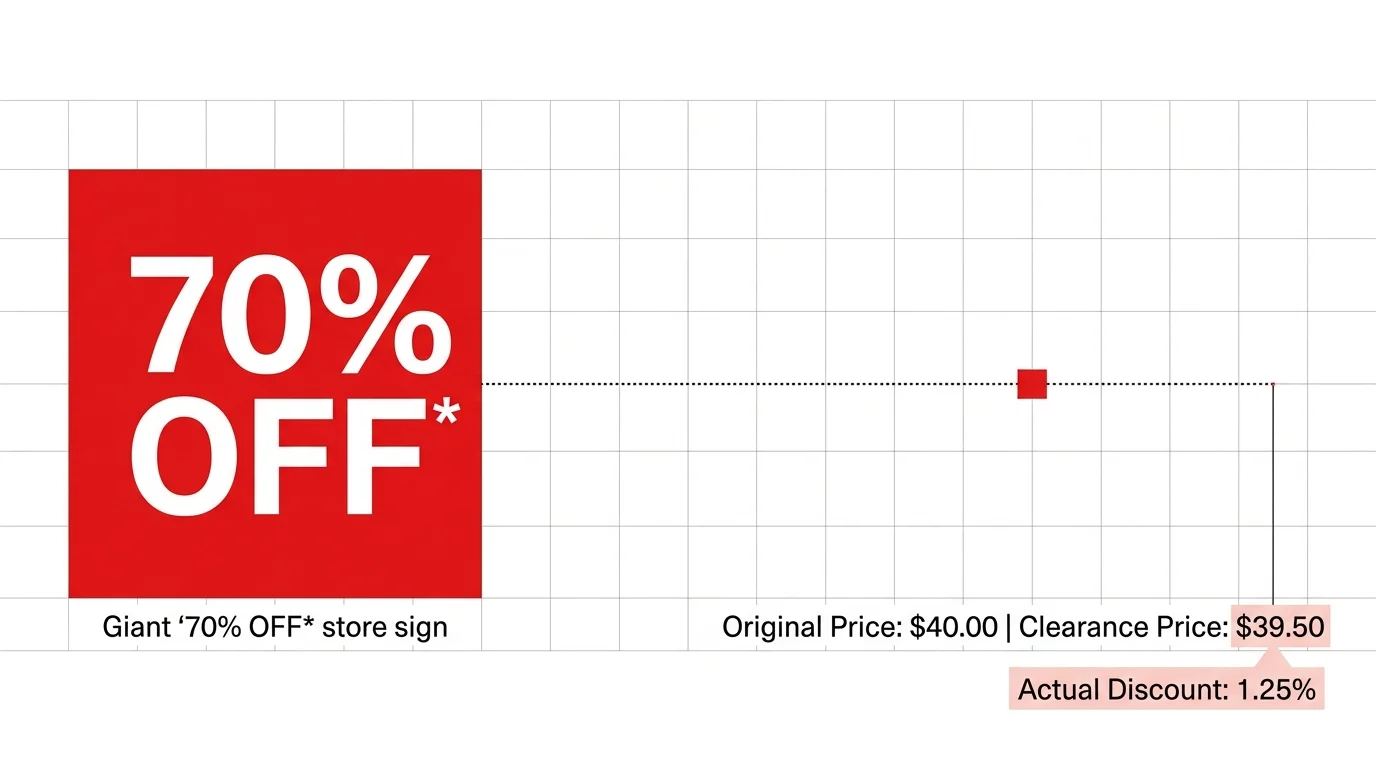
Retailers capitalize on this heightened emotional state by placing negligible micro-discounts inside high-visibility clearance displays.
When shoppers see bold red markdown tags, their brains automatically register substantial savings, often bypassing a detailed review of the actual math.
A retail associate might take a $50 blouse, apply a neon red sticker marking the price down to $48.99, and place it directly beneath a banner proclaiming dramatic clearance savings.
The $1.01 difference represents an insignificant 2 percent price reduction, yet the framing tricks shoppers into treating the garment as a major find.
Always calculate the exact percentage discount before placing a clearance item into your shopping cart. If a markdown offers less than 20 to 30 percent off the verifiable regular price, the store is simply clearing shelf space without providing true clearance savings.
Ignore the bright yellow and red visual framing and focus strictly on the mathematical reality of the transaction.

The Bottom Line: What This Means for Your Wallet
Clearance racks can offer substantial savings when you know how to separate genuine inventory liquidations from calculated marketing traps. Retailers rely on artificial price anchoring, made-for-outlet diffusion labels, and aggressive final sale policies to maximize profit margins on slow-moving or lower-grade inventory.
By learning to decode price tag endings, verifying historical baseline prices, and inspecting physical construction quality, you can easily bypass fake markdowns.
Approach every clearance purchase with a critical, analytical mindset. Check internal clothing labels for diffusion markings, peel back overlapping price stickers to confirm the true starting price, and calculate the actual percentage discount rather than relying on promotional signs.
When you shop with strategic discipline, you ensure that every dollar you spend delivers authentic quality and tangible savings to your household budget.
Frequently Asked Questions
How do I know if an item on clearance is truly at its lowest possible price?
You can determine if an item has reached its lowest clearance tier by decoding the decimal endings on the price tag and checking for specific retailer liquidation markers.
For example, Target clearance items ending in .04 or .08 and Home Depot yellow tags ending in .02 represent final liquidation stages before the store salvages the merchandise.
Additionally, look for percentage indicators in the corners of clearance stickers, where discounts of 70 percent or higher generally signal final floor markdowns.
Is it legal for retailers to raise prices right before putting items on clearance?
Raising prices immediately before advertising a sale or clearance discount violates federal and state consumer protection standards.
The FTC Deceptive Pricing Guidelines (16 CFR § 233.1) and state statutes such as California Business and Professions Code § 17501 mandate that advertised former prices must reflect genuine, prevailing market prices offered over a substantial period.
However, enforcement varies, making it essential for shoppers to inspect layered tags and verify historical pricing independently.
How can I verify if a clearance garment is an outlet-exclusive diffusion piece?
Examine the fabric labels located inside the collar, waistband, or side seams for brand-specific diffusion markings. Banana Republic Factory and Gap Factory place three small consecutive dots or diamonds on their tags, while J.Crew Factory places two small dots directly beneath the brand logo.
If you see these symbols on a flagship clearance rack, the garment was produced specifically for lower-cost outlet distribution using cheaper materials and construction methods.
What should I do if a clearance item is labeled Final Sale but turns out to be defective?
While final sale policies generally eliminate standard returns, federal and state implied warranty laws protect consumers against purchasing inherently defective or non-functional products.
If a product fails to perform its basic intended function straight out of the box, return to the store and speak with a manager to request a refund or store credit based on product defect rather than buyer remorse.
If the store refuses, you can dispute the charge with your credit card issuer under billing error and defective merchandise protection rules.
For consumer protection information, visit the Federal Trade Commission (FTC) and the Consumer Financial Protection Bureau (CFPB). For product safety and reviews, consult Consumer Reports.
Disclaimer: This article is for informational purposes only and does not constitute financial advice. The content reflects the author’s opinion and research at the time of writing.
Always do your own research before making financial decisions.