Slashing your household food budget requires knowing which grocery chains actually deliver genuine bottom-line savings rather than clever marketing illusions. With grocery store inflation rising 2.7% year-over-year and full-year food costs projected to climb 3.1%, choosing the right supermarket directly impacts your monthly spending.
According to recent McKinsey data, 71% of American shoppers now prefer low everyday base prices over deceptive promotional sales. We analyzed nationwide price comparisons, unit costs, and major industry benchmarks to rank the top grocers by raw financial value.
Discover which major chains yield the biggest savings on every receipt and which ones quietly drain your wallet.
Tip #1: Aldi — The Everyday Low-Price Champion
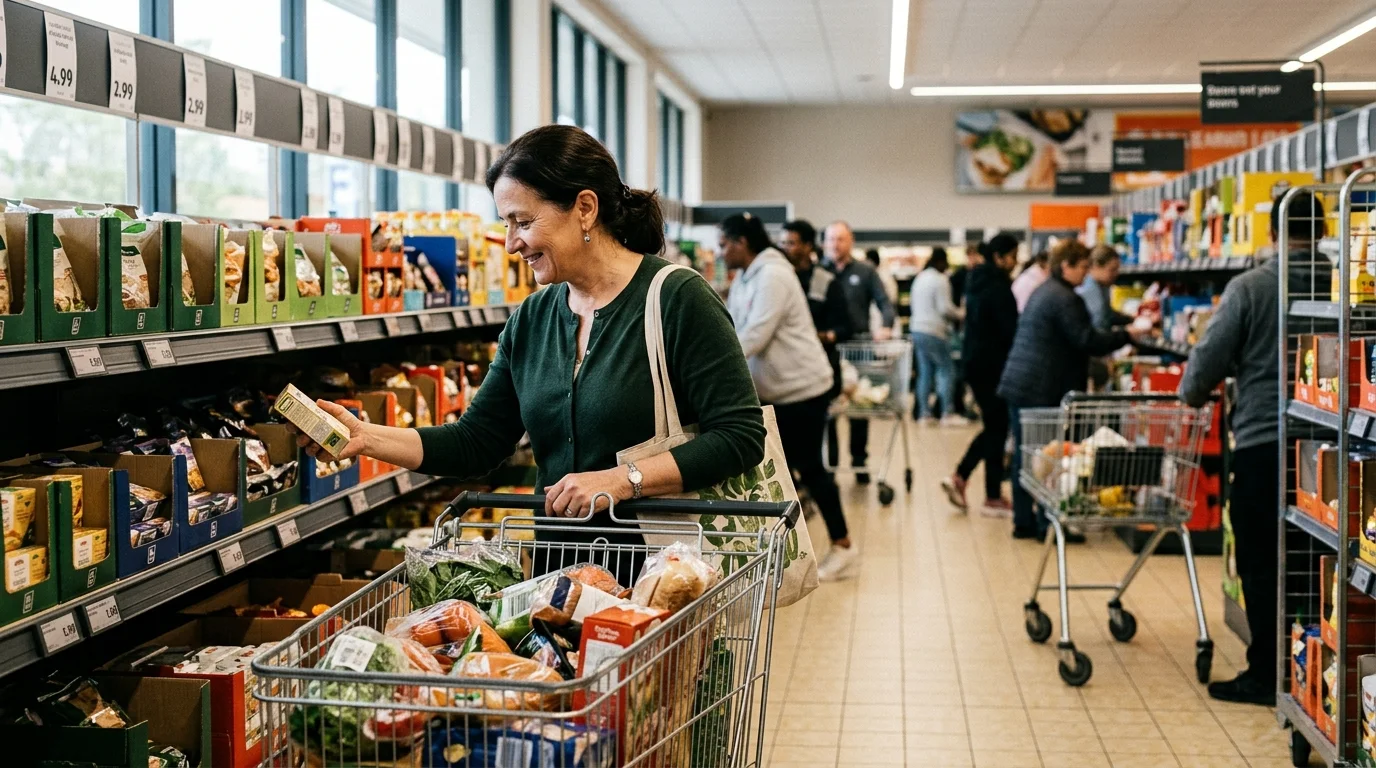
Aldi continues to dominate the affordable supermarkets 2026 landscape through relentless operational efficiency and a massive commitment to high-quality private-label merchandise. Over 90% of the products lining Aldi shelves feature exclusive house brands; this strategy completely bypasses the massive marketing markups that national food conglomerates charge.
By requiring shoppers to insert a quarter to unlock shopping carts, bring their own reusable bags, and select items directly from shipping boxes, Aldi drastically slashes store labor costs and passes those savings straight to your register total.
The financial payoff for your family budget remains undeniable. Independent grocery store price comparison studies consistently place Aldi among the absolute cheapest grocery chains in the nation, routinely beating traditional supermarkets by 20% to 30% on pantry staples, produce, and dairy items.
In dunnhumby’s Retailer Preference Index, Aldi earned top honors in the “Save Me Money” category alongside regional heavyweights; this proves that its streamlined inventory model delivers uncompromised value.
If you want to cut your weekly grocery bill without wasting hours clipping digital coupons, stocking up at Aldi remains one of the fastest financial wins available.
Tip #2: Market Basket — The Regional Value Powerhouse
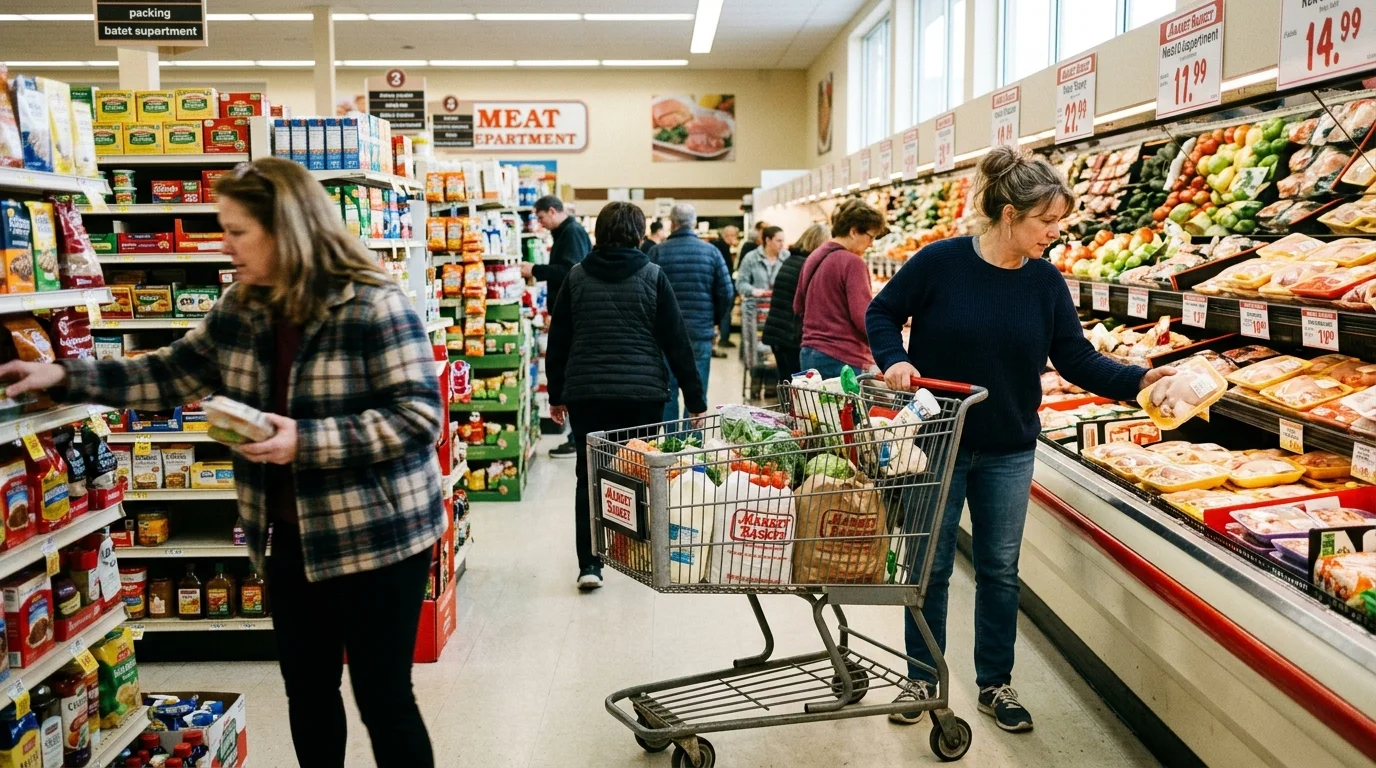
While national mega-chains hog headline media coverage, New England’s regional powerhouse Market Basket quietly sets the golden standard for raw pricing nationwide. In dunnhumby’s comprehensive evaluation, Market Basket captured the number one spot in the entire United States for customer price perception.
Even more impressive, it stood out as the single grocer nationwide to rank in the top five for both low base pricing and aggressive promotional sales discounts—a rare combination in modern retail economics.
Market Basket avoids flashy gimmicks, paid loyalty memberships, or invasive digital tracking apps. Instead, the company focuses on sheer inventory turnover, direct supplier negotiation, and slim profit margins across its store footprint in Massachusetts, New Hampshire, Maine, and Rhode Island.
When evaluating grocery chains ranked for total cost savings, Market Basket proves that focused regional management often beats out bloated corporate operations; you simply walk in, capture straightforward low shelf prices, and keep significantly more money in your checking account.
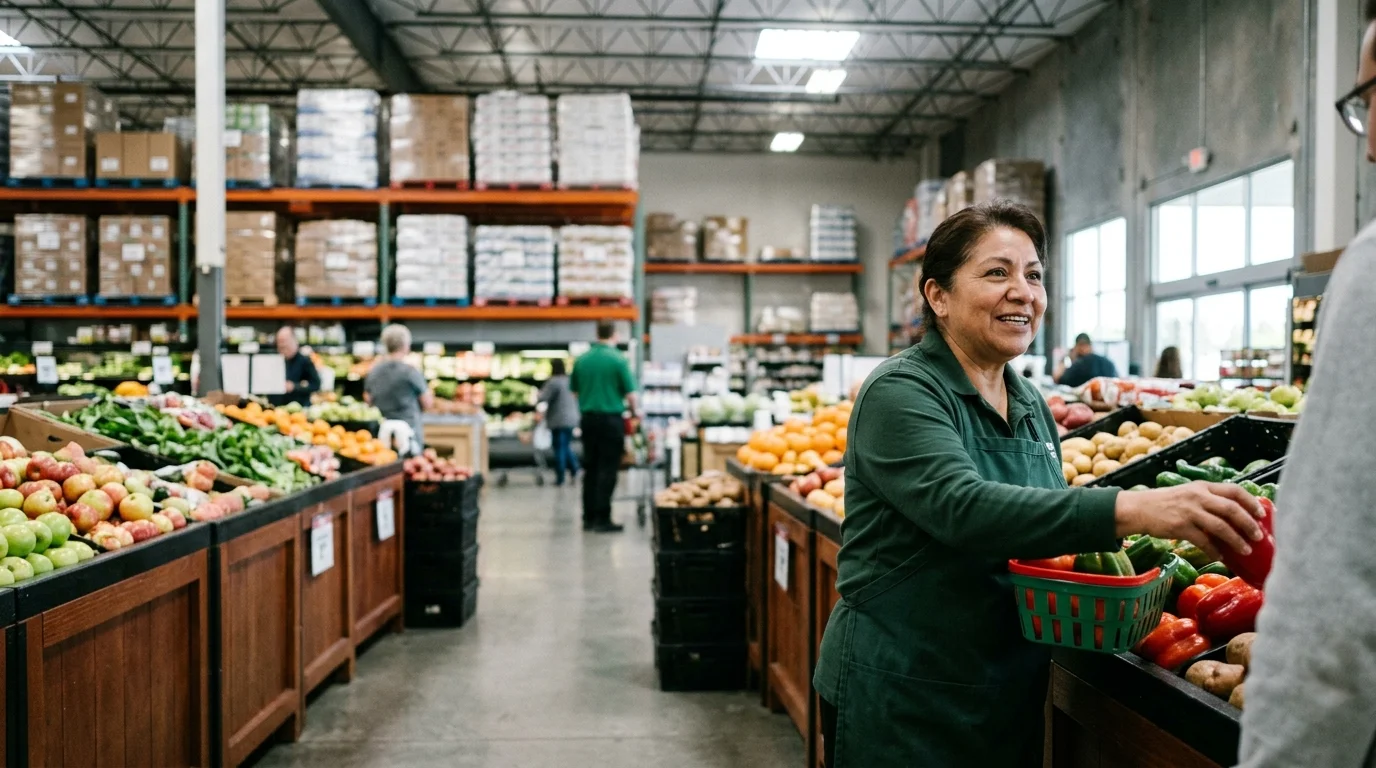
Tip #3: WinCo Foods — The Employee-Owned Wholesale Hybrid
Operating across the Western United States, WinCo Foods functions as an employee-owned hypermarket built specifically for hyper-frugal shoppers. Because store employees own the business through an Employee Stock Ownership Plan (ESOP), store management maintains an intense operational focus on cutting unnecessary overhead costs.
WinCo bans credit cards completely—accepting only debit cards, cash, and EBT—which instantly eliminates the 2% to 3% interchange fees that major grocers typically bake directly into food prices.
WinCo’s store model features massive warehouse layouts, extensive wall-to-wall bulk food bins, and mandatory self-bagging lanes. In national pricing benchmarks, WinCo beat Walmart on average basket cost, securing a top-five position in overall retailer preference rankings.
By purchasing grains, spices, baking supplies, and snacks from bulk bins by weight, you eliminate expensive branded packaging costs entirely. If you live near a WinCo location, adopting their cash-or-debit bulk strategy represents one of the smartest grocery hacks available in 2026.
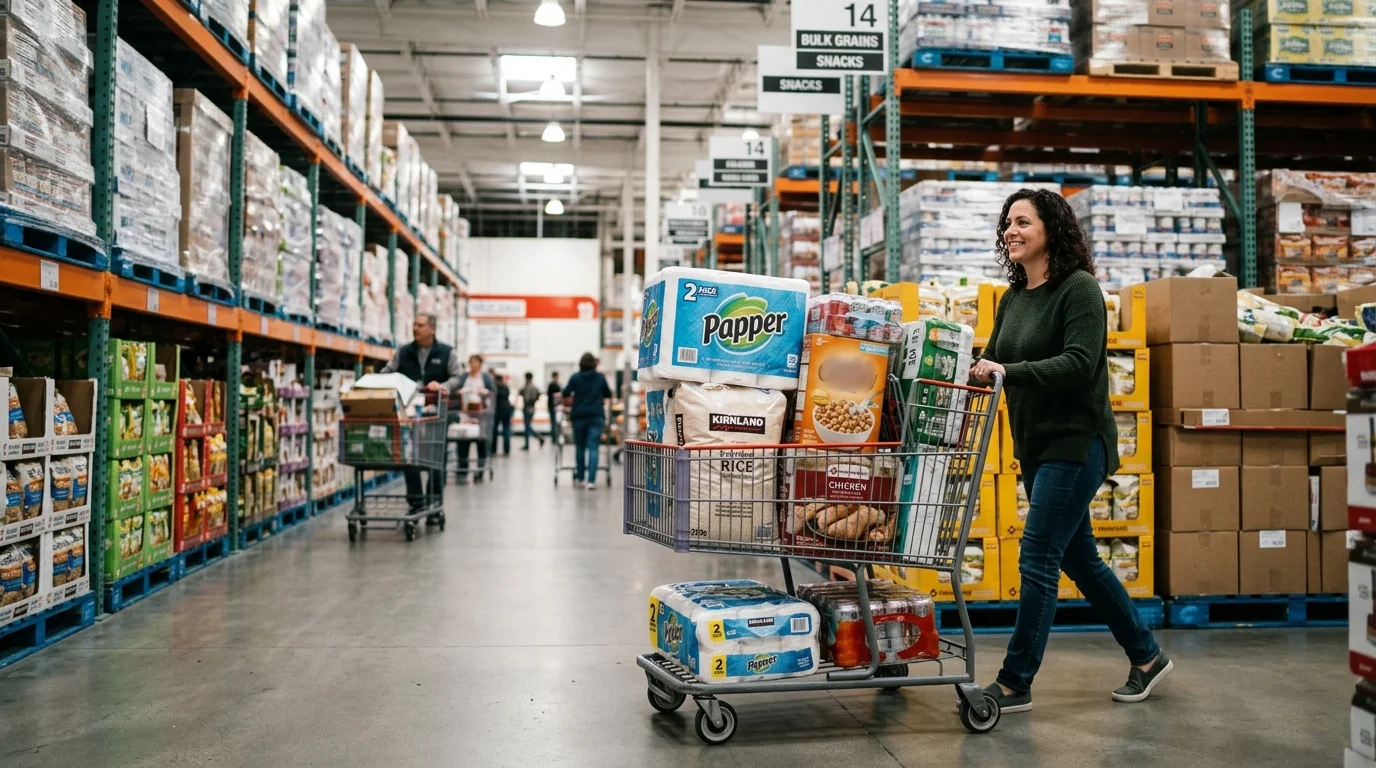
Tip #4: Costco Wholesale — The High-Volume Savings Leader
If you manage a large family household or maintain ample freezer storage space, Costco Wholesale offers unparalleled per-unit cost reduction. A landmark Consumer Reports study revealed that Costco’s average shelf prices sit an astonishing 21.4% lower than Walmart across overlapping grocery product lines.
While you must pay an upfront annual membership fee—currently set at $65 for standard Gold Star and $130 for Executive tiers—the steep volume discounts on meat, organic produce, paper goods, and pantry staples quickly offset that initial entry cost.
YouGov demographic tracking highlights that 11% of high-income households earning over $150,000 annually rely on Costco as their primary food retailer, precisely because wealthier shoppers understand unit-price optimization.
Furthermore, upgrading to the Executive membership returns 2% cash back on eligible purchases; if your household spends at least $271 per month on groceries, the annual cash-back rewards completely erase your yearly membership fee.
For families capable of buying in bulk without generating household food waste, Costco remains an unbeatable force for financial leverage.
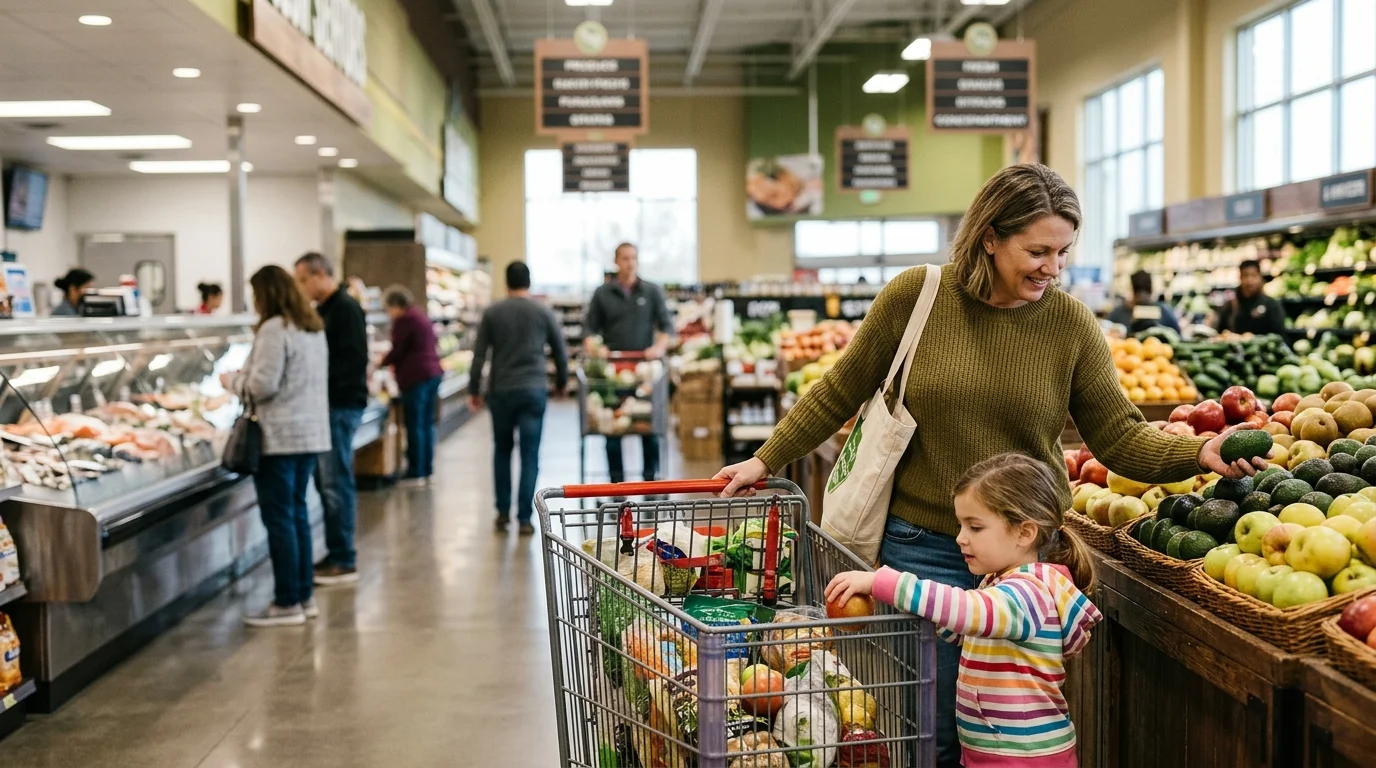
Tip #5: H-E-B — The Top-Ranked All-Around Grocer
Texas retail legend H-E-B earned the coveted rank of #1 overall grocer in America in dunnhumby’s nationwide Retailer Preference Index, outperforming every major national competitor.
H-E-B achieves this rare feat by balancing rock-bottom prices with exceptional fresh produce quality, clean store environments, and unmatched regional customer loyalty.
Instead of forcing consumers to choose between bargain-basement quality and exorbitant supermarket pricing, H-E-B proves you can enjoy a premium store experience while maintaining deep wallet discipline.
The store’s proprietary brand portfolio—including Hill Country Fare and H-E-B Select—offers top-tier quality control while undercutting national brand names by 20% to 40%. Extensive price testing demonstrates that H-E-B consistently beats Walmart Supercenters on routine grocery baskets across Texas metro markets.
Between their famous storewide digital yellow coupons and hyper-localized product sourcing, H-E-B sets the national standard for what the best value grocery stores 2026 should deliver to everyday consumers.

Tip #6: BJ’s Wholesale Club — The Flexible Bulk Alternative
While Costco grabs headlines, BJ’s Wholesale Club offers a far more flexible bulk shopping experience that caters specifically to suburban family households.
Consumer Reports pricing data confirmed that BJ’s averages 21.0% cheaper than Walmart on equivalent grocery items, coming within a fraction of a percentage point of Costco’s raw price dominance.
BJ’s operates predominantly along the East Coast, giving millions of shoppers access to deep warehouse savings without forcing them to buy extreme industrial-sized package volumes.
The real secret weapon at BJ’s lies in its unique coupon policy: unlike Costco or Sam’s Club, BJ’s accepts national manufacturer coupons alongside its own store-issued digital coupons.
You can stack a brand manufacturer coupon on top of an existing BJ’s store discount while purchasing a multi-pack; this compounds your total dollar savings at the register.
Additionally, BJ’s stocks smaller package sizes than traditional warehouse clubs, protecting smaller families from food spoilage while still capturing substantial bulk discount margins.

Tip #7: Lidl — The Private-Label Innovator
Expanding steadily along the East Coast, German discount innovator Lidl provides direct competition to Aldi by blending hyper-efficient private-label sales with an elevated fresh bakery and European market feel.
Like its hard-discount rivals, Lidl fills roughly 80% of its shelves with high-quality house brands; this strips out middleman broker fees and expensive celebrity advertising endorsements. Extensive industry pricing studies verify that a full supermarket basket at Lidl routinely beats Walmart Supercenter baseline pricing.
Lidl sets itself apart through its rotating general merchandise aisles and robust organic produce offerings priced at deep discounts compared to conventional grocers. Their mobile rewards app delivers personalized store discounts, digital loyalty punch cards, and targeted cash-off rewards when you hit monthly spending thresholds.
If you want high-end European imports, fresh daily artisanal bakery goods, and organic produce without paying luxury supermarket markups, Lidl delivers phenomenal practical value.
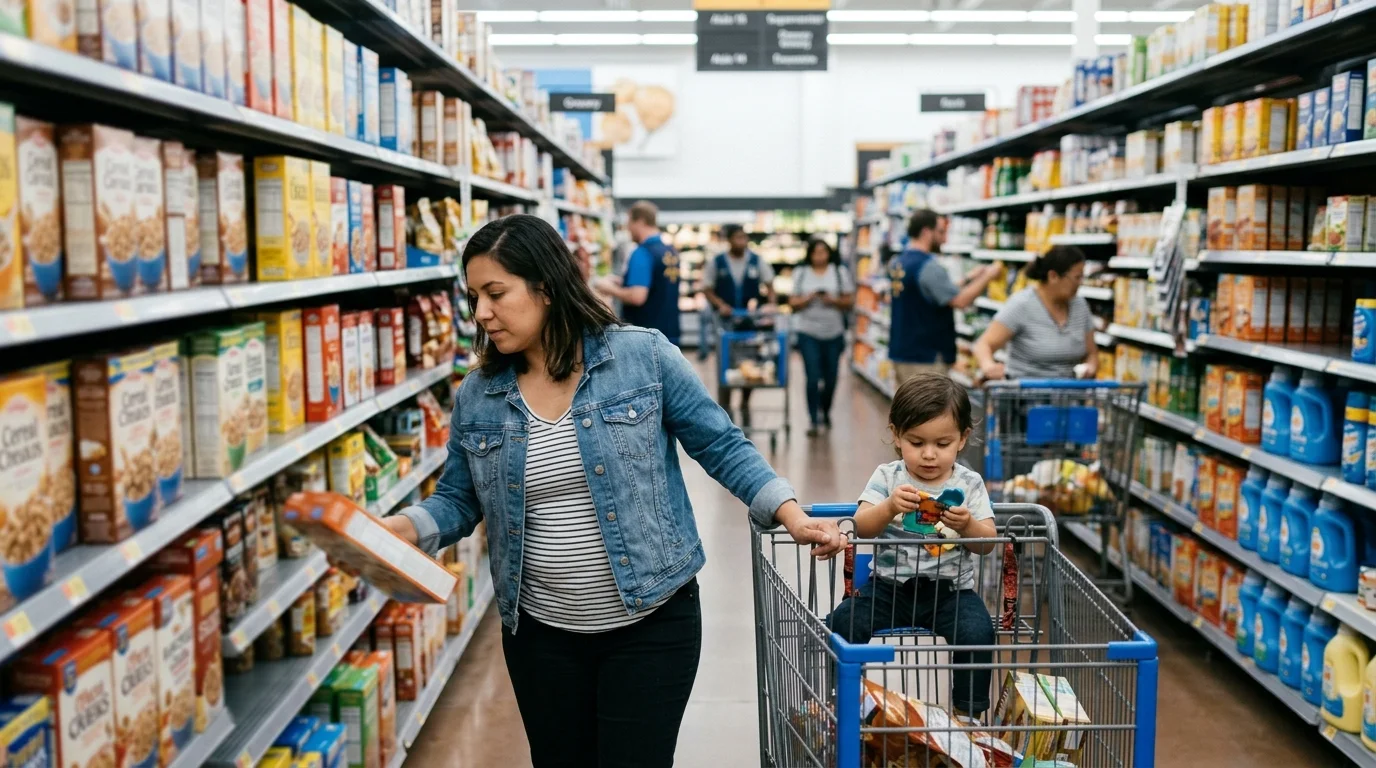
Tip #8: Walmart Supercenter — The Ubiquitous Baseline Benchmark
Walmart Supercenter serves as the ultimate national benchmark for grocery store price comparison, controlling the largest retail food market share in North America. According to YouGov consumer research, 20% of lower- and middle-income American households identify Walmart Supercenter as their primary grocery hub.
Walmart utilizes immense corporate purchasing power to pressure suppliers into low wholesale contract rates, guaranteeing consistently affordable baseline shelf tags across all 50 states.
While specialized hard discounters like Aldi and wholesale clubs like Costco frequently beat Walmart on raw unit pricing, Walmart holds distinct strategic advantages.
You never pay a membership fee, you enjoy massive store layout variety, and you can buy household essentials, electronics, and food in a single trip.
Combining Walmart’s Great Value private label with free store pickup lets you stick strictly to your digital shopping list; this eliminates impulse buying and keeps your overall monthly grocery expenditure under tight control.
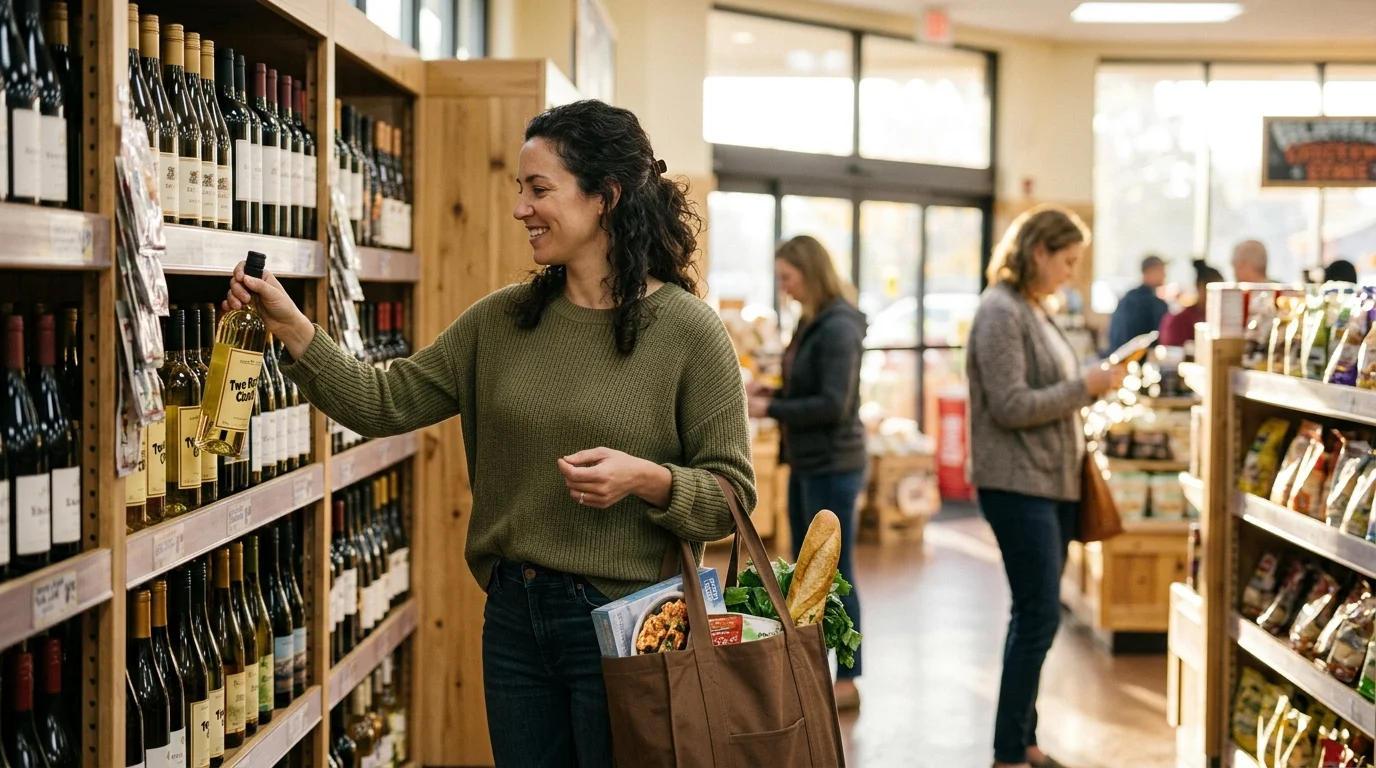
Tip #9: Trader Joe’s — The Specialty High-Value Favorite
Trader Joe’s operates under a unique, boutique grocery business model that proves high-end culinary appeal does not require high-end prices. By stocking roughly 80% exclusive private-label items and sourcing directly from international manufacturers, Trader Joe’s eliminates slotting fees, distributor markups, and middleman brokerage costs.
This lean supply chain allows them to sell gourmet cheeses, unique frozen entrees, and artisan snacks at prices competitive with conventional supermarkets.
Unlike traditional supermarkets that artificially inflate base prices to support complicated weekly sale flyers, Trader Joe’s maintains uniform nationwide everyday pricing.
While high-volume shoppers will still find better raw per-pound deals on bulk staples at warehouse clubs, Trader Joe’s provides incredible targeted value for singles, couples, and specialty diet shoppers.
If your grocery list includes organic, gluten-free, or specialty products, Trader Joe’s offers far superior value compared to high-cost grocers like Whole Foods Market, which averages nearly 40% higher prices nationwide.

The Bottom Line: What This Means for Your Wallet
Navigating food costs in 2026 requires moving past blind brand loyalty and adopting an aggressive, value-driven shopping strategy. With 60% of American consumers reporting that securing true value for money is more critical now than a year prior, relying on a single grocer is financial self-sabotage.
Traditional supermarkets rely on flashy weekly circulars to mask high everyday base prices, but smart shoppers stack their strategy by combining hard discounters with targeted warehouse bulk buying.
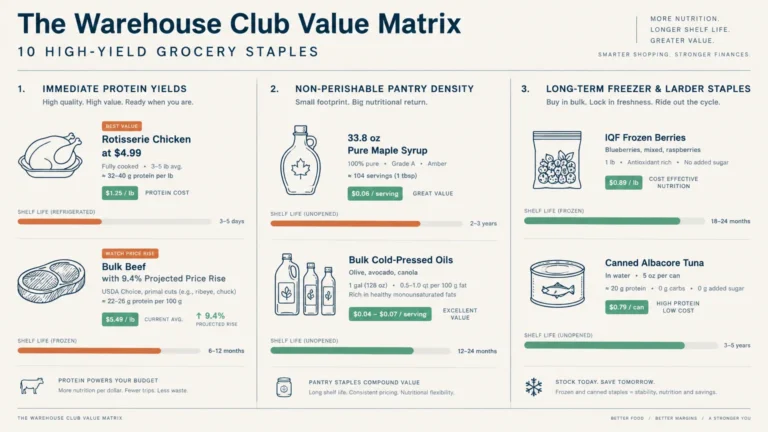
To maximize your monthly food budget, split your shopping trips intentionally: buy shelf-stable bulk staples and proteins at warehouse clubs like Costco or BJ’s, handle routine weekly produce and dairy runs at hard discounters like Aldi or WinCo, and utilize regional leaders like Market Basket or H-E-B when available.
By leveraging true unit-price math and choosing private-label store brands over national name-brand markups, you can easily keep hundreds of dollars in your bank account every single month regardless of broader economic trends.
Frequently Asked Questions
Is a warehouse club membership like Costco or BJ’s really worth the annual fee?
Yes, provided your household spending covers the upfront cost through volume unit savings.
With Consumer Reports showing Costco and BJ’s averaging over 21% cheaper than Walmart on equivalent goods, a family spending $300 a month on grocery staples saves over $700 annually—easily exceeding the $65 standard membership fee.
However, single shoppers who lack storage space or risk food spoilage should stick to hard discounters like Aldi or WinCo.
Why are employee-owned grocers like WinCo Foods consistently cheaper than traditional supermarkets?
WinCo slashes structural overhead costs through operational efficiency. By refusing high-fee credit card payments, eliminating dedicated stocking labor, requiring customer self-bagging, and utilizing worker-owner incentives through their ESOP structure, WinCo redirects direct operational savings straight into lower consumer shelf tags.
Are private-label store brands really equal in quality to major national name brands?
In the vast majority of cases, yes. National brand manufacturers often produce private-label store brands in identical manufacturing facilities using the exact same raw ingredients.
Store brands cost 20% to 40% less simply because house brands do not incur massive national advertising, shelf placement, or celebrity endorsement expenses.
How can I protect my grocery budget against projected food inflation in 2026?
Audit your shopping receipts by focusing strictly on unit pricing (cost per ounce or pound) rather than package price tag totals.
Transition at least 80% of your basket to private-label store brands, buy seasonal produce, and shop at low everyday base price retailers rather than waiting for unpredictable promotional sales.
For consumer protection information, visit the Federal Trade Commission (FTC) and the Consumer Financial Protection Bureau (CFPB). For product safety and reviews, consult Consumer Reports.
Disclaimer: This article is for informational purposes only and does not constitute financial advice. The content reflects the author’s opinion and research at the time of writing.
Always do your own research before making financial decisions.