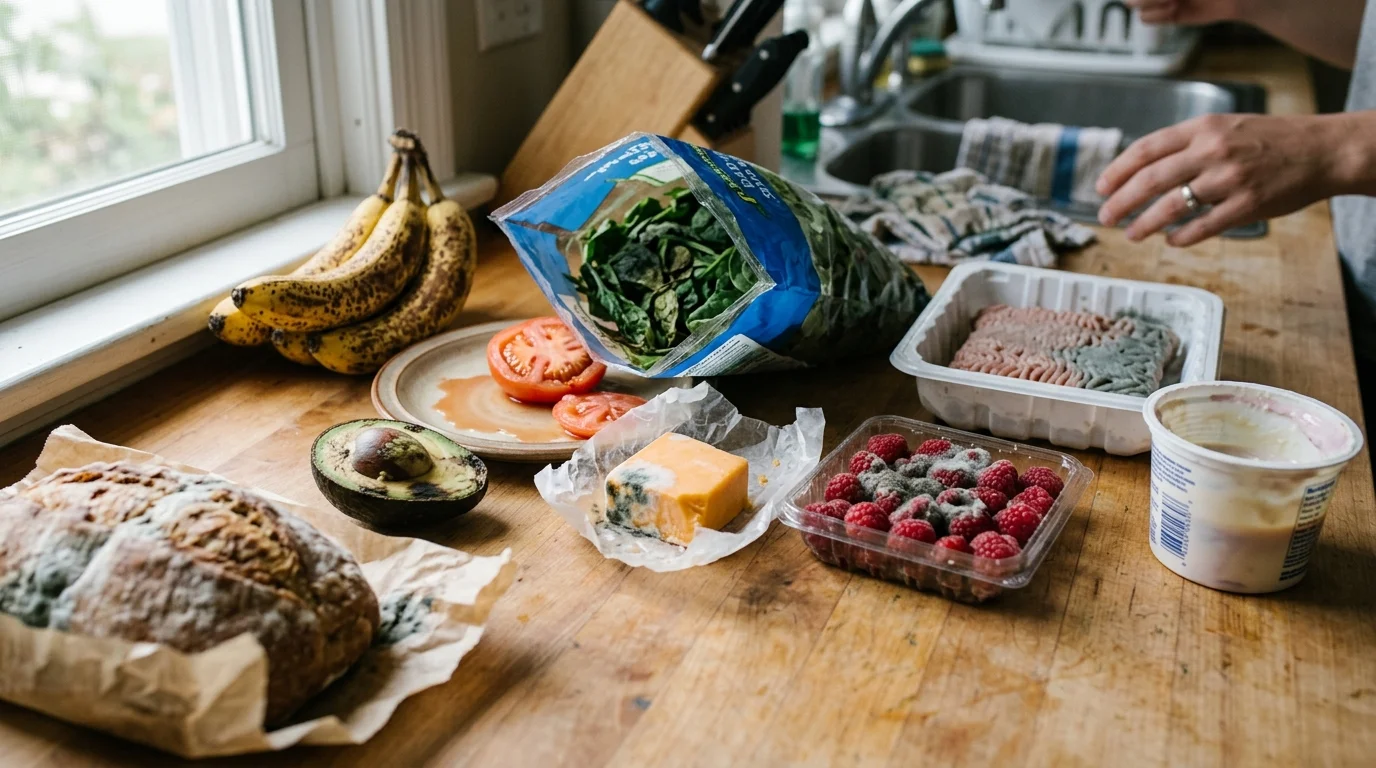
Misinterpreting printed dates on packaged food drains hundreds of dollars from your wallet every single year through avoidable waste. Printed grocery dates rarely measure true safety; instead, manufacturers print peak-quality estimates that mislead shoppers into throwing away perfectly edible meals.
According to the U.S. Environmental Protection Agency, food waste costs a family of four an estimated $2,913 annually—roughly $56 every week. Furthermore, the USDA reports that up to 40% of the domestic food supply gets wasted, largely because of widespread food expiration misconceptions.
Recognizing which staple foods go bad quickly—and knowing actual food spoilage signs—lets you stop throwing money in the trash and master smart kitchen budgeting.
Tip #1: Pre-Grated Bagged Cheese
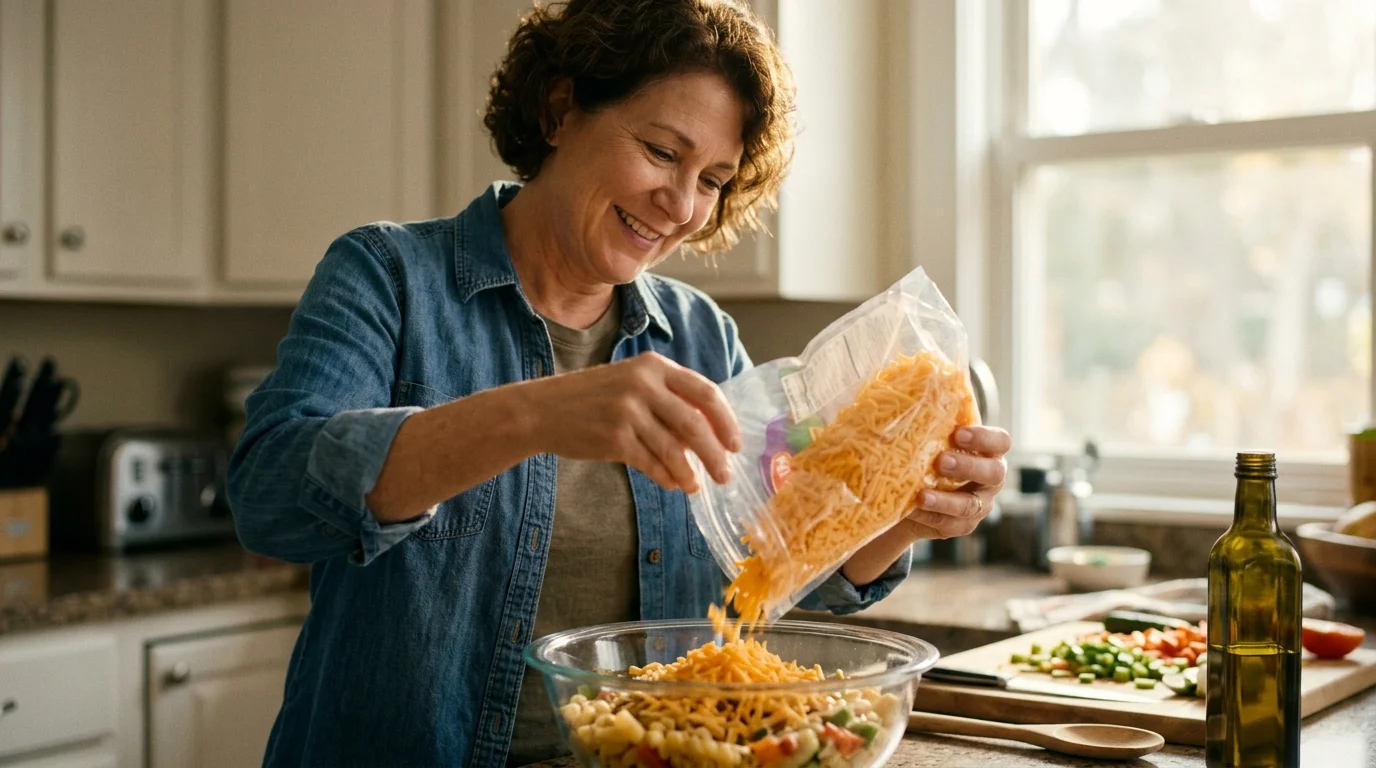
Food manufacturers coat pre-shredded cheese with potato starch or powdered cellulose to prevent individual shreds from clumping inside plastic packaging. While this additive keeps shredded cheddar and mozzarella looking loose on store shelves, it creates microscopic moisture traps once you open the seal.
Manufacturers flush unopened bags with inert nitrogen gas to block oxidation and mold growth. Consequently, the printed date on the bag assumes an airtight, unopened environment; it tells you nothing about the true shelf life after opening.
Understanding food expiration dates requires recognizing that open bags of shredded cheese spoil far faster than solid blocks. Within three to five days of breaking the seal, ambient air introduces mold spores that thrive on the surface moisture trapped by cellulose.
Common food spoilage signs include a sour or yeast-like smell, a slick coating on the cheese shreds, and faint green or white mold patches hiding in the bag corners. Scraping mold off shredded cheese is impossible because fungal threads spread rapidly throughout the loose bag.
Save cash by purchasing whole cheese blocks, which cost significantly less per ounce; grate them as needed, or freeze extra shredded cheese in airtight freezer bags.

Tip #2: Ground Beef and Poultry
Ground meat tops the list of foods that spoil faster than expected because of misleading retail labeling practices. Supermarket meat departments stamp packages with “Sell By” dates that indicate when display shelves must be cleared, not when the meat becomes unsafe.
The industrial grinding process mixes surface bacteria like Salmonella and E. coli throughout the entire batch of meat. This massive surface exposure gives microscopic pathogens a head start compared to solid cuts like steaks or whole chicken breasts.
While intact beef steaks comfortably last up to five days in your refrigerator, raw ground beef or ground turkey begins deteriorating within 24 to 48 hours of purchase. Recognizing early food spoilage signs prevents costly foodborne illness and wasted grocery money.
Watch for a dull gray or brownish color throughout the interior, a sticky or tacky film on the surface, and a sharp, sour ammonia odor.
If you do not plan to cook ground meat within 24 hours of buying it, divide the batch into one-pound portions immediately. Flatten the meat inside zip-top freezer bags and freeze it flat.
Flat bags freeze rapidly, thaw in minutes under cold tap water, and preserve peak quality for up to four months.

Tip #3: Fresh Berries
Fresh strawberries, raspberries, and blackberries are notorious for being foods that go bad quickly without warning. Produce packaging rarely features printed expiration dates, leaving consumers to guess freshness based on appearance in the store.
Farm-harvested berries naturally carry microscopic fungal spores, primarily Botrytis cinerea, or gray mold. Grocery distributors keep berries near freezing temperatures during transport, which pauses mold growth during transit.
When you bring berry clamshells into your warmer home environment, condensation forms rapidly inside the clear plastic packaging. Excess moisture combined with warmer ambient temperatures causes mold spores to explode into visible fuzz within 24 to 48 hours.
Clear food spoilage signs include soft water-soaked patches, bruised skin, pooling dark juice, and fine white threads creeping between fruit layers. Never wash berries before refrigerating them, as added moisture speeds up fungal decay.
Instead, give fresh berries a quick submersed wash in a solution of three parts water to one part white vinegar upon arriving home. Dry the fruit thoroughly on clean paper towels, then store them in a glass jar lined with a dry paper towel.
This simple step neutralizes fungal spores and doubles berry shelf life.

Tip #4: Bagged Salad Greens
Pre-washed bagged salad mixes and baby spinach offer ultimate convenience, yet they rank among the most frustrating grocery purchases. Processing plants flood salad bags with a modified nitrogen atmosphere that prevents leaves from wilting or browning during transit.
The printed “Best If Used By” date on the bag relies entirely on that sealed, nitrogen-rich environment remaining intact. The moment you slice open the plastic bag, atmospheric oxygen rushes in, and the protective barrier vanishes.
Cutting lettuce leaves ruptures fragile cell walls, releasing moisture and plant fluids that pool in the bag corners. Exposed to oxygen and trapped moisture, broken leaves decay exponentially fast.
Within 48 hours of opening, crisp salad greens collapse into unappetizing brown slime, regardless of a printed date claiming freshness for another week. Watch for visible food spoilage signs such as wet, translucent leaf edges, dark liquid pooling, and a sour, sulfurous odor.
To protect your grocery investment, open bagged greens immediately after purchasing and transfer them into a rigid glass or plastic container lined with clean paper towels. The paper towel absorbs excess moisture while the rigid walls prevent physical bruising, extending salad life by several days.

Tip #5: Cold-Pressed Cooking Oils
Extra virgin olive oil, avocado oil, and specialty nut oils carry printed expiration dates spanning 18 to 24 months into the future. Consumers frequently assume these shelf-stable cooking oils remain fresh indefinitely in the pantry.
However, unrefined oils contain high concentrations of delicate fatty acids that oxidize rapidly when exposed to heat, light, and ambient air. Once you unscrew the cap, oxygen enters the bottle, initiating chemical reactions that spoil the oil long before the printed date arrives.
Storing olive oil next to your hot stove burner or on a bright kitchen counter dramatically accelerates oxidation. An opened bottle of extra virgin olive oil begins degrading within 30 to 60 days, losing its heart-healthy antioxidants and distinct peppery kick.
Major food spoilage signs in cooking oil include a chemical scent resembling crayons, wet cardboard, or old paint, accompanied by a greasy, waxy mouthfeel that leaves a stale residue on your tongue.
Rancid oil produces harmful free radicals and ruins the taste of your home-cooked meals. Purchase cooking oils sold in dark glass or metal containers; store them inside a dark, cool pantry cabinet; and buy bottle sizes you can finish within two months.

Tip #6: Whole Wheat Flour
Standard white flour lasts for years because industrial processing removes the wheat kernel’s nutrient-dense germ and bran, leaving behind pure starch. Whole wheat flour retains the whole grain kernel, which contains healthy natural oils and polyunsaturated fatty acids.
Commercial paper flour bags display printed dates extending up to a year into the future. Unfortunately, those manufacturer estimates rely on ideal, temperature-controlled storage that rarely reflects warm home kitchens.
Exposed to room temperature air and oxygen passing through porous paper packaging, the natural oils in whole wheat flour turn rancid quickly. Whole grain flour often spoils within one to three months after opening, long before the package date indicates expiration.
Primary food spoilage signs include a musty, sour aroma resembling playdough or damp cardboard, alongside a sharp, bitter taste in cooked baked goods. Using oxidized flour ruins your baked items and wastes expensive secondary ingredients like eggs, butter, and vanilla extract.
Extend the usability of whole wheat flour by transferring it out of paper sacks into airtight glass or plastic containers. Store the sealed container in your refrigerator or freezer, where cold temperatures prevent oil breakdown and keep flour fresh for up to a year.

Tip #7: Raw Nuts and Seeds
Raw walnuts, pecans, almonds, and flaxseeds offer tremendous health benefits thanks to high concentrations of omega-3 and omega-6 fatty acids. However, those delicate polyunsaturated fats make raw nuts exceptionally sensitive to heat, light, and humidity.
Printed expiration dates on plastic nut packaging routinely suggest a shelf life of up to twelve months in your pantry. That timeline represents an impossible ideal once you open the bag in a standard room-temperature kitchen.
Warm pantry storage breaks down delicate fats inside raw nuts, causing rapid lipid oxidation. While eating stale nuts rarely causes emergency medical issues, rancid fats taste terrible and generate unwanted oxidative stress in your body.
Noticeable food spoilage signs include a pungent, chemical odor resembling varnish or oil paint, a dark or greasy surface coating, and a bitter, unpleasant taste instead of a clean, nutty crunch.
If a raw walnut or pecan feels rubbery rather than snappy when bitten, oxidation has ruined the batch. Stop losing money on bulk pantry nuts by storing them inside glass mason jars in your freezer.
Because nuts contain minimal water content, they do not freeze solid, allowing you to grab handfuls straight from the freezer for up to 18 months.

Tip #8: Ground Spices and Dried Herbs
Spice manufacturers print expiration dates three to four years past the bottling date on jars of ground cinnamon, paprika, and cumin. While ancient dried spices seldom harbor dangerous microbial growth or make you ill, they suffer from rapid volatile oil evaporation.
The essential oils that give spices their potent flavor, vibrant aroma, and medicinal benefits evaporate continuously upon exposure to light, heat, and air.
Addressing food expiration misconceptions requires distinguishing between food safety and flavor utility. Within six months of opening a spice jar, volatile essential oil levels drop by up to 70%.
Shaking open spice jars directly over steaming hot cooking pots introduces moisture, causing internal clumping and rapid flavor decay. Physical food spoilage signs include dull, faded coloring, a dusty or woodsy aroma lacking aromatic punch, and a bland, cardboard-like taste.
To maximize meal flavor and save money, purchase whole spices such as peppercorns, whole cumin seeds, and nutmeg. Whole spices preserve their essential oils inside protective outer shells for years.
Grind them fresh with an inexpensive spice grinder, or revive dull ground spices by dry-toasting them in a warm skillet for thirty seconds before cooking.

Tip #9: Canned Acidic Foods
Unopened canned goods enjoy an indestructible reputation among budget-conscious shoppers. Low-acid canned foods like black beans, sweet corn, and vegetable broths indeed stay safe for several years in cool pantries.
However, high-acid canned items—including canned tomatoes, tomato paste, pineapple, and citrus fruits—behave very differently. The natural citric and ascorbic acids in these foods slowly react with the internal tin or resin linings of metal cans over time.
Even in unopened cans, acidic contents degrade in quality and texture within 12 to 18 months, far faster than non-acidic canned goods.
Once you open a can of tomato sauce and store the leftover portion inside your refrigerator in the original metal container, airborne oxygen accelerates severe chemical reactions.
Acidic foods left in open metal tins leach metallic iron and zinc directly into your food within 24 to 48 hours. Spoiled canned items exhibit food spoilage signs like a sharp metallic odor, dark surface discoloration, and a harsh, tinny taste.
Protect your family and your food budget by transferring leftover canned tomatoes or fruit into food-safe glass or plastic containers immediately after opening. Never store open metal cans in your refrigerator.

The Bottom Line: What This Means for Your Wallet
Navigating date labels requires a sharp focus on kitchen reality rather than marketing claims.
Research demonstrates that over 50 different date-labeling terms—such as “Sell By,” “Enjoy By,” and “Best Before”—have historically confused shoppers, leading more than 80% of Americans to discard perfectly safe, edible food prematurely.
This confusion contributes directly to the staggering 30% to 40% of the U.S. food supply lost or wasted every year across retail stores and households.
According to data from the U.S. Environmental Protection Agency, food waste costs a single American $728 annually, while an average family of four loses an astonishing $2,913 per year—amounting to roughly $56 pulled straight out of your weekly budget.
Progress is on the horizon. California enacted Assembly Bill 660, effective July 1, 2026, making it the first state to ban confusing “Sell By” dates and mandate clear, standardized labels: “Best if Used By” for peak quality and “Use By” for true safety.
Until nationwide regulations take effect, Federal law mandates expiration dates strictly on infant formula; almost every other printed grocery date remains a manufacturer quality guess.
You can reclaim control over your food spending by relying on sensory evaluation—smell, visual texture, and taste—rather than arbitrary printed dates.
Proper storage techniques, such as freezing ground meats immediately, decanting opened canned items into glass jars, and washing fresh berries in diluted vinegar, keep your grocery dollars firmly in your bank account where they belong.
For consumer protection information, visit the Federal Trade Commission (FTC) and the Consumer Financial Protection Bureau (CFPB). For product safety and reviews, consult Consumer Reports.
Frequently Asked Questions
How can I tell if food is unsafe to eat versus just past its peak quality?
Distinguishing between safety and quality comes down to evaluating growth of harmful pathogens versus sensory degradation.
Peak quality loss involves changes in texture, flavor, or color—such as stale crackers, faded ground spices, or slightly wilted celery—which remain safe to consume even if less appetizing. Food safety hazards arise when harmful bacteria, molds, or yeast multiply to unsafe levels.
Sharp food spoilage signs include rancid or sour chemical odors, slimy or sticky surface textures on meats and cheeses, liquid pooling, and visible fuzzy mold growth. When in doubt, perform a visual and smell check rather than blindly trusting printed package dates.
Are date labels on food legally required by the federal government?
With the single exception of infant formula, federal law does not require date labeling on food products sold in the United States.
Manufacturers voluntarily print dates like “Best Before,” “Sell By,” or “Enjoy By” to indicate peak flavor and cosmetic quality as estimated by their internal product testing.
Because these printed dates do not measure food safety, relying solely on package stamps causes households to throw away hundreds of dollars in good food.
Understanding food expiration dates empowers you to ignore arbitrary quality stamps and judge product safety based on proper storage and visual inspection.
What is the best way to prevent food from spoiling faster than expected in my home?
Controlling exposure to oxygen, excess moisture, heat, and ambient light is the ultimate secret to extending food shelf life. Store delicate items like whole wheat flours, raw nuts, and cooking oils in dark, airtight glass containers rather than original open paper or plastic packaging.
Freeze ground meats, excess pre-grated cheese, and whole grains if you do not plan to consume them within 48 hours of opening.
Additionally, wash fresh berries in a diluted vinegar bath before drying and storing them with paper towels, and always transfer leftover canned acidic foods into glass or plastic containers immediately after opening.
How will new state regulations like California’s AB 660 help consumers save money?
California’s landmark law, Assembly Bill 660, takes effect on July 1, 2026, eliminating consumer-facing “Sell By” dates that confuse shoppers into believing food has expired when it is simply time for store restocking.
The legislation mandates two standardized phrases across packaged foods: “Best if Used By” or “Best if Used or Frozen By” to indicate peak quality, and “Use By” or “Use or Freeze By” to indicate safety limits.
By replacing over 50 confusing terms with clear, standardized language, these regulations help consumers stop discarding safe food prematurely, saving families money on weekly grocery bills.
Disclaimer: This article is for informational purposes only and does not constitute financial advice. The content reflects the author’s opinion and research at the time of writing.
Always do your own research before making financial decisions.