
Poorly structured grocery lists silently drain hundreds of dollars from your bank account every month before you even step inside a supermarket. Shifting to smarter grocery shopping habits eliminates unnecessary impulse purchases, slashes food waste, and keeps your household budget firmly under control.
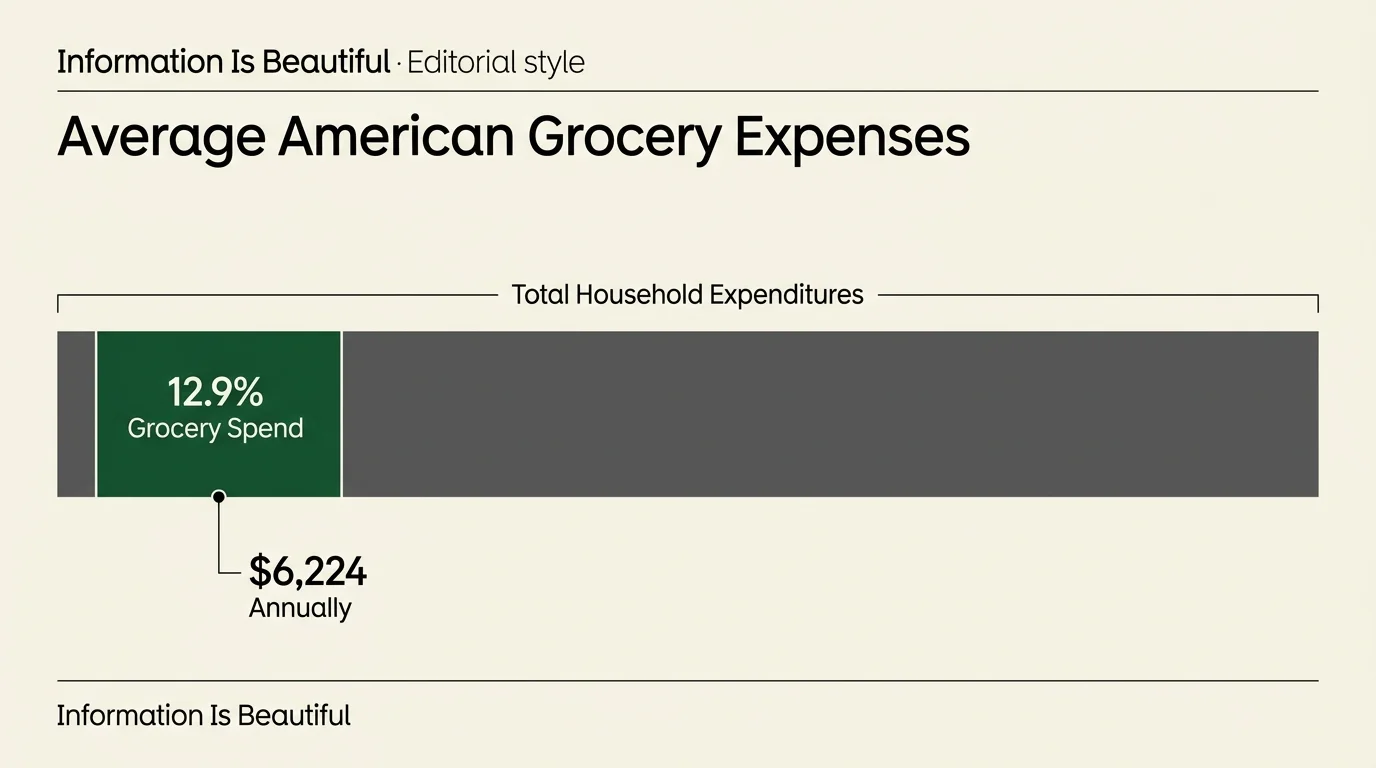
According to the Bureau of Labor Statistics, the average American household spends $6,224 annually on groceries—accounting for roughly 12.9% of total household expenditures. Even small planning errors compound rapidly, costing you thousands of dollars each year.
Here are seven costly grocery list mistakes that drain your wallet and the exact strategic adjustments to reverse them immediately.
Tip #1: You Write Vague Ingredients Instead of Exact Meal-Mapped Quantities
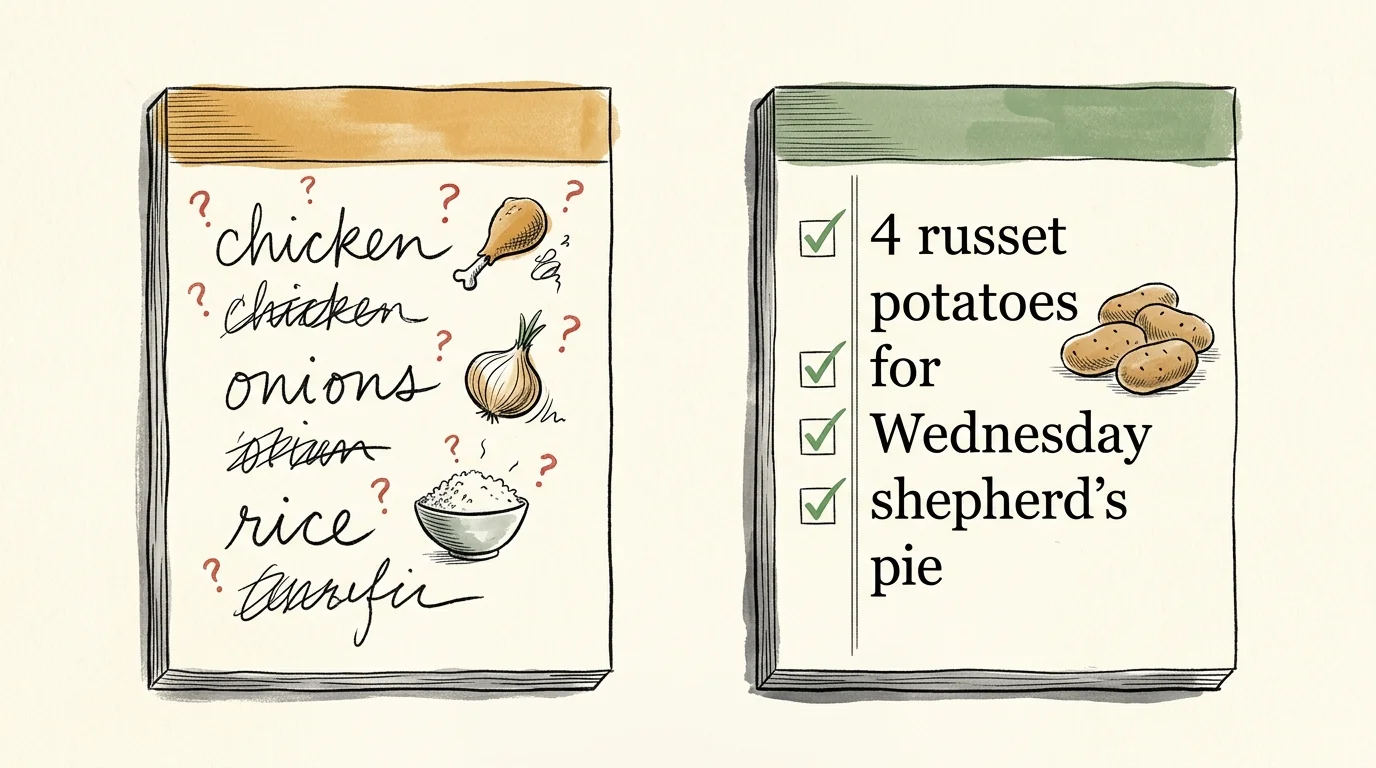
Writing generic entries like “chicken,” “onions,” or “rice” on your shopping pad is one of the most common grocery list planning mistakes. When you enter a store without exact quantities tied to specific recipes, you surrender purchasing decisions to retail marketing displays.
You spot a five-pound package of poultry on promotion, assume you will use it, and toss it into the cart. Days later, half of that meat spoils in the bottom of your refrigerator because your weekly meal schedule only required two cutlets.
The financial consequences of overbuying perishable goods are severe. The U.S. Environmental Protection Agency calculates that individual food waste costs $728 per person annually; for a typical family of four, that equals $2,913 every year, or roughly $56 per week thrown directly into the trash.
Furthermore, the USDA estimates that between 30% and 40% of the entire national food supply goes completely uneaten. Vague list items directly fuel these losses by decoupling purchasing from actual consumption.
Fix this costly habit by establishing a strict item-to-recipe formula. Instead of writing “potatoes,” write “4 russet potatoes for Wednesday shepherd’s pie.” If an item does not have a designated meal, lunch box, or snack schedule, it does not belong on the paper.
This tactical discipline prevents excess perishables from entering your home and preserves your hard-earned cash.
Tip #2: You Default to Brand Names Rather Than Listing Generic Products
Jotting down brand names such as “Heinz ketchup,” “Tide detergent,” or “Barilla pasta” establishes rigid psychological anchoring before you ever see shelf prices. Brand-name loyalty is one of the subtle grocery shopping habits that waste money week after week.
Major food conglomerates spend billions engineering packaging to make consumers believe brand names deliver superior quality, yet private-label alternatives often come from identical production facilities.
Extensive pricing benchmarks from Consumer Reports and the Private Label Manufacturers Association demonstrate that switching from national brands to store brands saves shoppers an average of 20% to 25% across every grocery run. On an annual grocery budget of $6,224, that simple swap preserves between $1,244 and $1,556 each year.
Applying those savings across pantry staples—such as canned tomatoes, dried beans, oats, flour, and spices—yields immediate budget relief without compromising meal flavor.
Write generic ingredient descriptions rather than corporate trademarks on your notepad. When you reach the aisle, deliberately compare the unit price (the cost per ounce or per pound) between the store brand and the national brand.
In the vast majority of cases, the private-label option provides identical nutritional value and culinary performance at a fraction of the cost.

Tip #3: You Put Pre-Cut Convenience Produce on Your Shopping Pad
Adding pre-sliced mushrooms, cubed butternut squash, shredded cabbage, or pre-cut melon spears directly to your list seems like a harmless time-saver. In reality, convenience packaging represents one of the steepest markups across the entire supermarket footprint.
Retailers charge exorbitant labor premiums for tasks that require less than two minutes of basic knife work in your own kitchen.
Industry pricing analyses and data from Consumer Reports reveal that pre-cut, pre-washed, and pre-packaged produce carries an average price markup between 40% and over 100% per pound compared to whole produce.
A whole cantaloupe might cost $2.50, while a plastic container holding half that fruit chopped into chunks sells for $5.99. Buying pre-diced onions at $3.99 for eight ounces translates to roughly $8.00 per pound—an absurd markup over a three-pound mesh bag of whole yellow onions selling for $2.49.
Beyond excessive unit costs, pre-cut produce deteriorates rapidly. Exposing cut fruit and vegetable surfaces to oxygen accelerates nutrient degradation and cellular breakdown, cutting shelf life in half.
Banish prepped produce from your list entirely. Commit to buying whole produce, and designate twenty minutes on grocery delivery day to wash, chop, and store your vegetables in airtight containers for the week ahead.

Tip #4: You Draft Lists in a Vacuum Without Doing a Reverse Pantry Audit
Sitting on your living room sofa drafting a shopping list based purely on what sounds appetizing is a critical grocery list planning mistake. This disconnected approach ignores the assets already sitting in your kitchen cabinets, pantry bins, and deep freezer.
Shoppers routinely purchase duplicate jars of cumin, extra bags of jasmine rice, or fresh containers of mayonnaise simply because they failed to inspect their inventory before writing their list.
Building lists without auditing existing ingredients inflates your register total and allows older pantry items to expire quietly in the back of your cupboards.
When you bring home fresh groceries to pile on top of older inventory, you create a perpetual cycle of buried, wasted food. This habit directly contributes to the $56 per week the average family loses to preventable kitchen spoilage.
Adopt the “Reverse List” strategy. Before adding a single new item to your notepad, inspect your crisper drawers, freezer shelves, and pantry racks.
Identify three to four ingredients that require immediate use—such as half a bag of frozen peas, opened broth, or softening bell peppers. Build your first few weekly meals around these foundational items, adding only the minimal complementary ingredients needed to complete the dishes.
This practice drains down your existing stock and immediately suppresses your grocery bill.
Tip #5: You Organize Your Items Chronologically Rather Than Mapping Store Layouts
Writing items down in the random order they pop into your head creates a disorganized, chronological checklist.
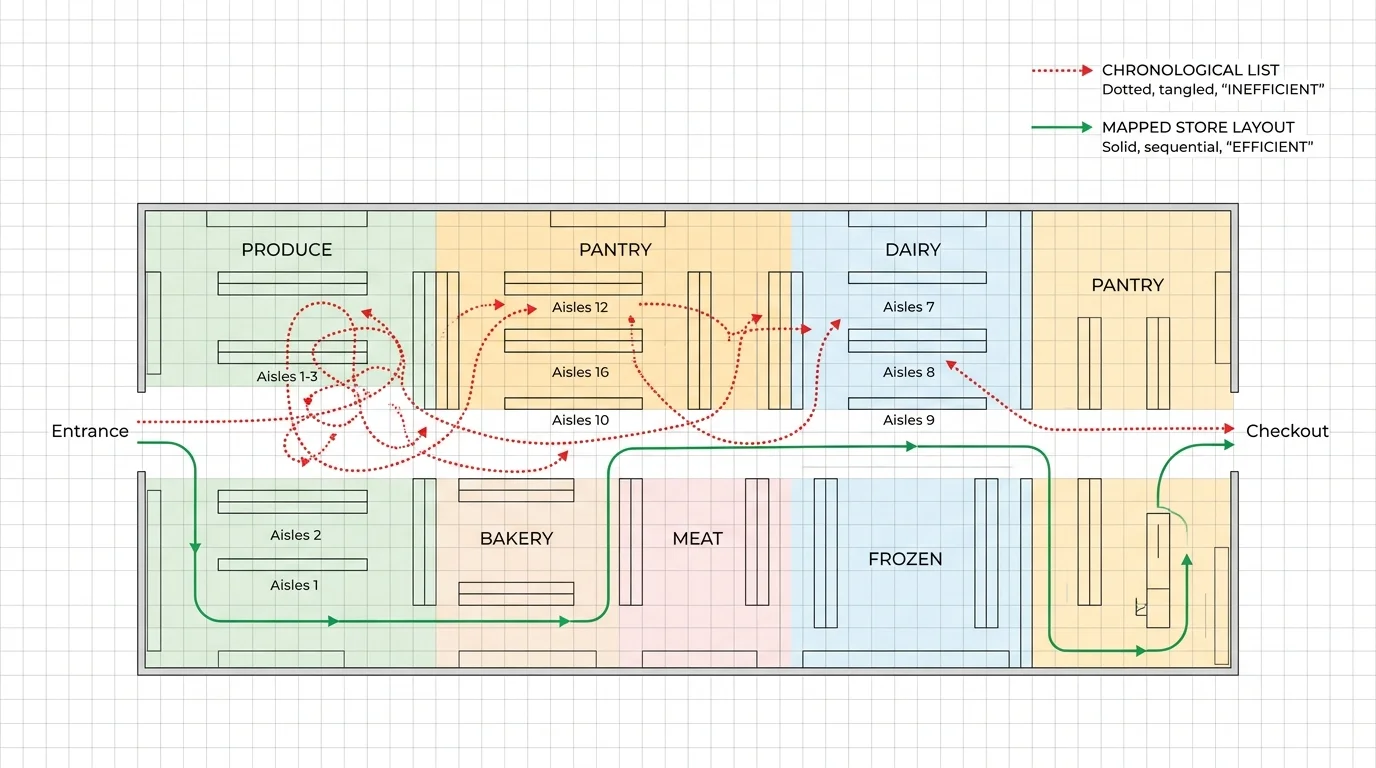
When you arrive at the grocery store with an unorganized list, you inevitably wander through the floor plan haphazardly—darting from the dairy case back to the produce section, then over to the frozen aisles, and back toward the deli.
This aimless movement directly plays into supermarket sales psychology.
Supermarket floor plans are deliberately engineered to maximize dwell time and expose shoppers to high-margin promotional displays. Retailers place impulse items—such as seasonal cookies, specialty sauces, and promotional snacks—on aisle end-caps and along central walking paths.
The more aisles you traverse multiple times to locate items scattered across your notepad, the higher your likelihood of succumbing to unplanned impulse buys that sabotage your budget.
Structure your shopping list according to store topography. Divide your list into distinct physical zones: Produce, Bakery/Deli, Center Aisles (Canned/Dry Goods), Meat/Seafood, Dairy, and Frozen.
Grouping your ingredients by sector enables a disciplined, single-pass sweep through the building. You move efficiently through the perimeter and target aisles, grab the exact items required, bypass temptation zones, and proceed straight to the registers.
Tip #6: You Build Menus Around Whims Instead of Weekly Promotional Circulars
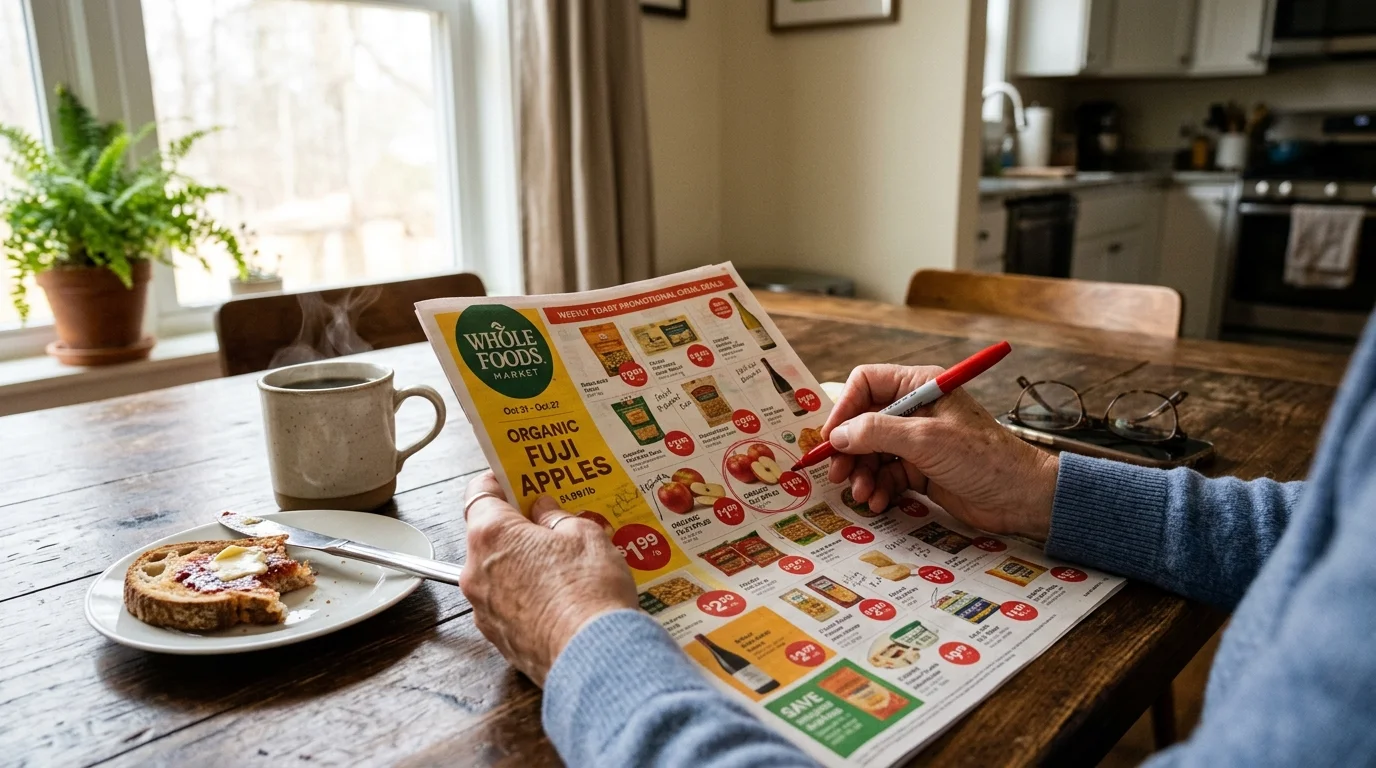
Drafting a rigid menu for ribeye steaks, fresh asparagus, and imported cheeses without consulting the store circular guarantees you pay peak retail pricing.
Deciding what to eat before reviewing seasonal supply and weekly promotional pricing is one of the primary grocery shopping habits that waste money. Supermarket margins fluctuate wildly by product category, and retail chains use weekly sales cycles to discount rotating loss leaders.
Retail circulars typically feature deep discounts on select proteins, seasonal vegetables, and staple grains to drive foot traffic.
If chicken breast is on sale for $1.99 per pound while flank steak sits at $11.99 per pound, building a week of meals around beef instead of poultry can double or triple your protein expenditures.
Multiplying that pricing differential across an entire month creates a staggering variance in your household cash flow.
Reverse your planning hierarchy by letting weekly discounts dictate your ingredient selections. Review digital circulars or store mobile apps before drafting your list.
If bone-in pork chops and broccoli carry heavy promotional markdowns this week, make those items the centerpiece of your weekday dinners. By aligning 70% of your meal planning with rotating store sales, you capture maximum nutritional value at the absolute bottom of the retailer pricing curve.
Tip #7: You Shop Without a Defined Category Spending Ceiling
Walking into a store with an itemized list but no defined dollar spending limit is an open invitation for budget creep. When items lack price parameters, tossing an extra $6 artisanal salad dressing or a $9 specialty cheese into your cart feels inconsequential in the moment.
At the checkout scanner, however, those small unmonitored upgrades compound into substantial overages that bust your monthly budget.
Official USDA Food Cost Reports highlight the massive financial gap between structured spending and undisciplined shopping. For a reference family of four with two adults and two children, the lowest-cost Thrifty Food Plan runs approximately $975 to $1,000 per month.
In contrast, the Moderate-Cost Plan averages $1,200 to $1,300 per month, while the undisciplined Liberal Food Plan routinely exceeds $1,500 monthly. Operating without hard spending caps pushes households rapidly from thrifty baselines into top-tier expense brackets.
Establish strict financial guardrails by writing estimated dollar caps next to every item or category on your list. If your weekly target budget is $140, allocate exact spending maximums: $40 for proteins, $35 for produce, $35 for dry staples, and $30 for dairy and household goods.
Keep a running tally on your smartphone calculator as you place items into the cart. If you approach your category ceiling early, swap planned items for lower-cost alternatives immediately rather than waiting for an unpleasant surprise at the register.
The Bottom Line: What This Means for Your Wallet
Your grocery list is either a precision financial weapon or a leaky bucket draining your household wealth. Grocery retailers invest millions in store architecture, olfactory marketing, and packaging psychology to extract maximum revenue from every shopper.
Entering a store with an undisciplined, vague, or poorly organized list places you at a severe tactical disadvantage against these sophisticated retail techniques.
Mastering smarter grocery shopping habits generates immediate, compounding financial returns. By eliminating duplicate purchases through reverse pantry audits, you recapture a portion of the $2,913 that typical families lose to annual food waste.
Transitioning from name brands to private labels unlocks an automatic 20% to 25% discount across your basket, while avoiding convenience markups saves up to 100% on fresh produce.
Implement these adjustments systematically. Begin by organizing your list by store section, setting hard category spending limits, and aligning your dinners with weekly circular discounts.
Treating grocery planning as a rigorous budgeting process protects your cash flow, eliminates waste, and puts thousands of dollars back into your savings account every single year.
Frequently Asked Questions
How much money can a structured grocery list realistically save each month?
A structured grocery list combined with smart shopping habits can realistically save an average family between $200 and $500 per month.
By preventing impulse buys, capturing the 20% to 25% discount offered by store brands, and eliminating the average $56 per week in wasted food, households quickly reduce annual grocery expenditures by several thousand dollars without sacrificing meal quality.
Is it better to use a paper list or a digital grocery app?
Both tools are effective if used with discipline, but digital grocery apps offer distinct financial advantages. Mobile apps allow you to check digital coupons, review weekly circular markdowns, and monitor running cart totals in real time while walking the aisles.
However, if a physical notepad helps you resist looking at your phone and prevents digital distractions, a well-organized paper list grouped by store aisle remains highly effective.
What is the single biggest grocery list planning mistake people make?
The single most damaging mistake is planning meals without auditing existing pantry and freezer inventory. Shopping in a vacuum leads to duplicate purchases, overstocked cupboards, and rapid spoilage of previously purchased perishables.
Always check your refrigerator, crisper bins, and pantry shelves first to build weekly meals around ingredients you already own.
How do I manage unexpected sales on items not on my grocery list?
Apply the “one-in, one-out” rule for unadvertised sales.
If you discover an exceptional clearance deal on a non-perishable pantry staple or a freezer-friendly protein that you regularly consume, you may purchase it only if you remove an item of equal or greater value from your existing list.
This flexibility lets you capitalize on genuine bargains while keeping your total register receipt strictly under your predetermined budget ceiling.
For consumer protection information, visit the Federal Trade Commission (FTC) and the Consumer Financial Protection Bureau (CFPB). For product safety and reviews, consult Consumer Reports.
Disclaimer: This article is for informational purposes only and does not constitute financial advice. The content reflects the author’s opinion and research at the time of writing.
Always do your own research before making financial decisions.