
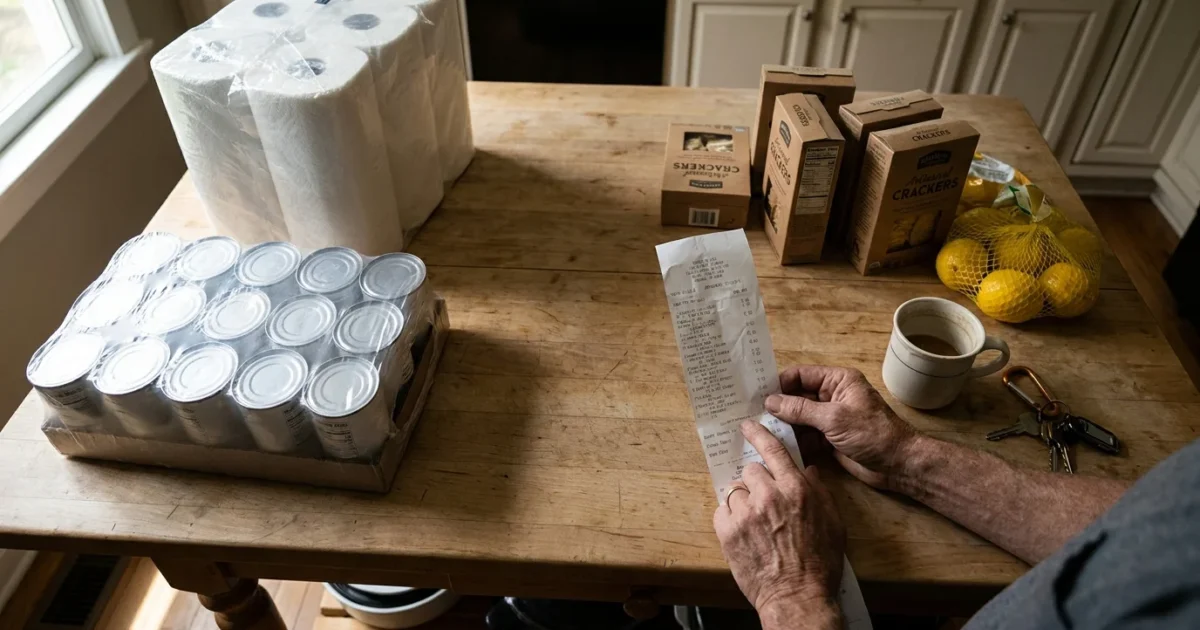
Your grocery budget drains faster than ever, forcing a crucial showdown between the warehouse club giant and the discount darling: Costco versus Aldi. Knowing which store actually saves you money on staple products dictates whether you keep cash in your pocket or burn it at the checkout register. Both retailers claim the low-price crown, but comparing unit pricing reveals a distinct winner for specific everyday items. You must strip away the bulk-buying illusion and the private-label mystique to find the raw data. We tracked down the costs for ten popular grocery essentials to show you exactly where to spend your hard-earned money. Stop guessing and start shopping strategically to slash your monthly food bill.
Tip #1: Extra Virgin Olive Oil
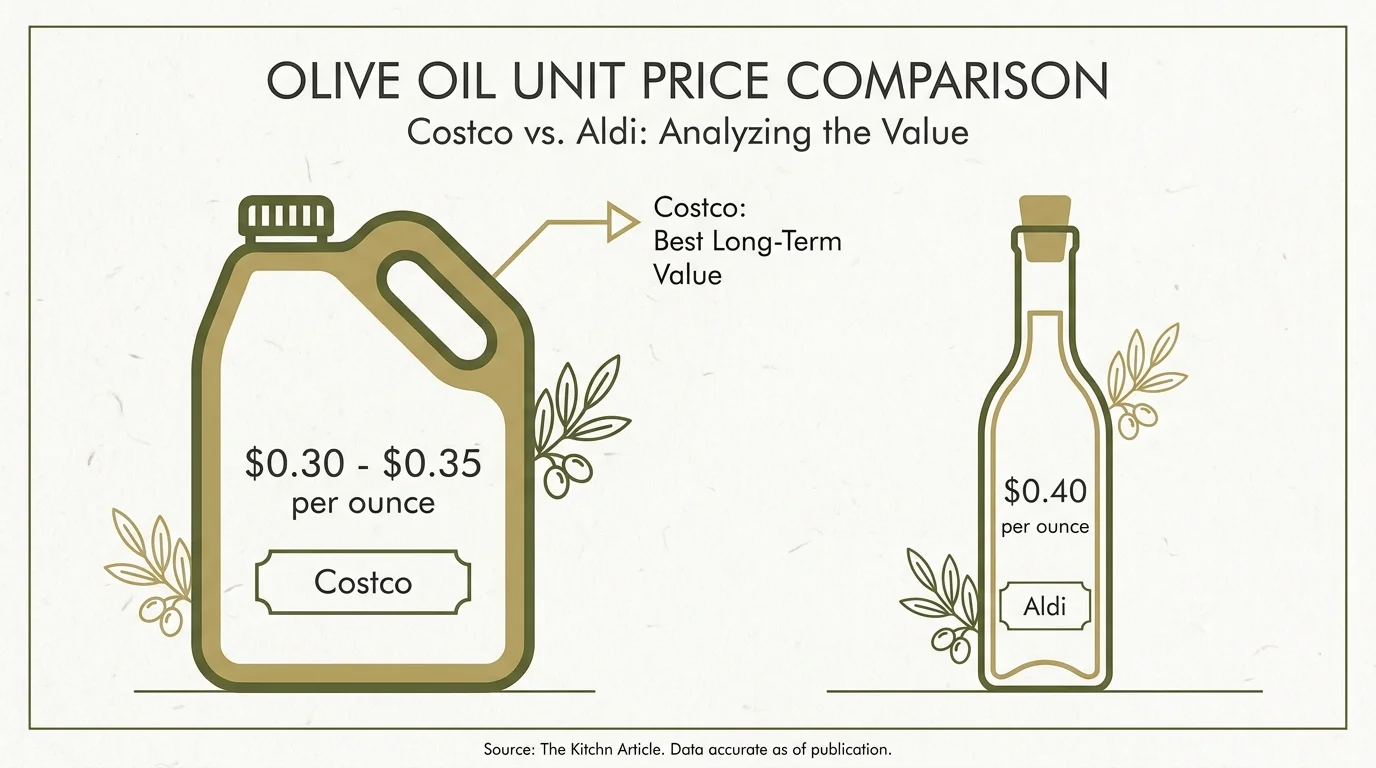
Liquid gold comes with a steep price tag these days, making the choice between Aldi and Costco critical for your kitchen budget. When you examine the per-ounce breakdown, Costco completely dominates the olive oil category. A two-liter bottle of Kirkland Signature Extra Virgin Olive Oil typically prices out around thirty to thirty-five cents per ounce; meanwhile, Aldi’s Specially Selected alternative sits closer to forty cents per ounce. Costco leverages its massive purchasing power to source high-quality, cold-pressed oil directly from Mediterranean growers at a volume Aldi simply cannot match.
The flavor profiles remain highly competitive, but the warehouse club requires a substantial upfront financial investment. This volume forces you to buy a massive jug that might degrade in quality if you do not cook frequently. Aldi offers a smaller, more manageable bottle that prevents oxidation and waste for the occasional chef. If you run a high-volume kitchen, meal-prep every Sunday, and go through olive oil rapidly, Costco provides an unbeatable long-term value. Casual home cooks save more cash upfront at Aldi without risking a rancid pantry disaster.
Tip #2: Boneless Skinless Chicken Breasts
Protein anchors your dinner plates, and boneless skinless chicken breasts remain the ultimate American grocery staple. Costco traditionally prices its bulk fresh chicken breasts around two dollars and ninety-nine cents per pound. Aldi counters with family packs that hover between two dollars and seventy-nine cents to three dollars and twenty-nine cents per pound, depending heavily on regional market fluctuations.
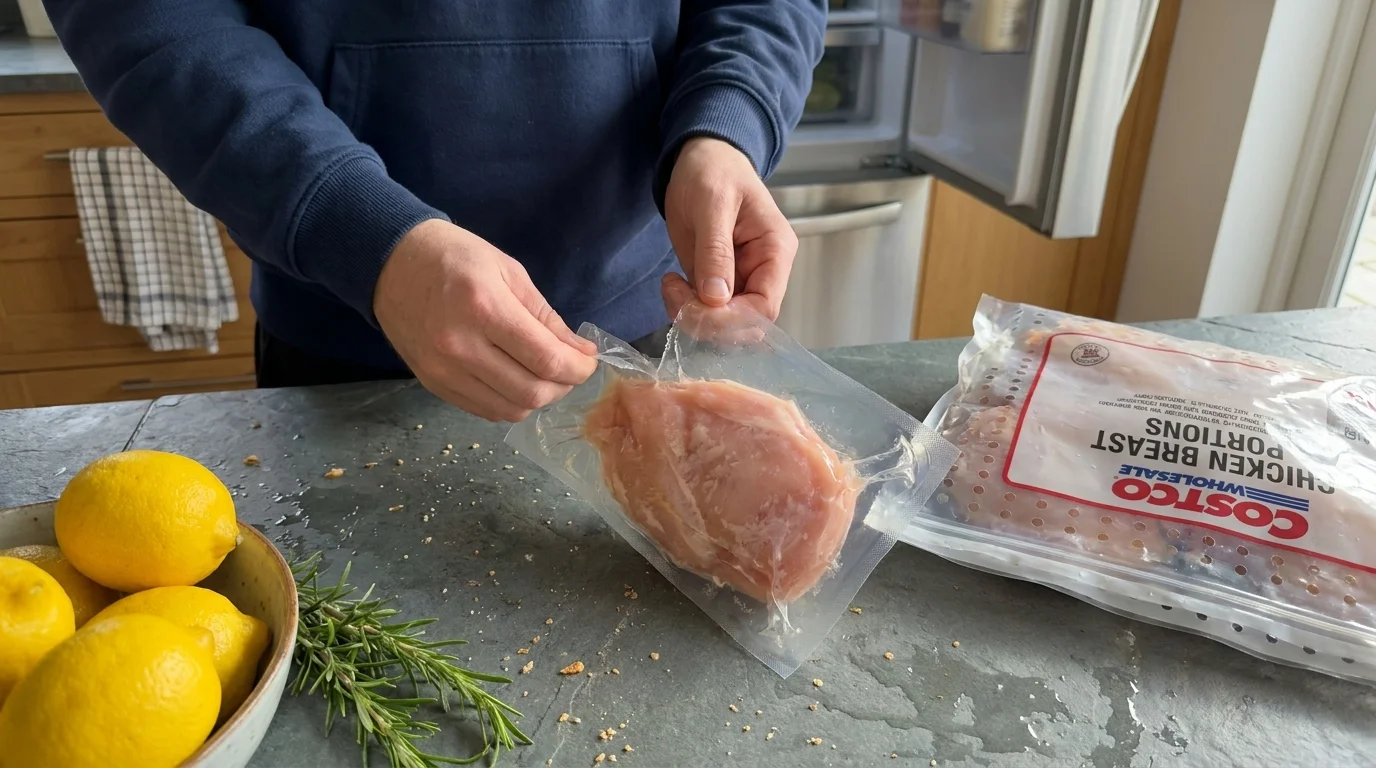
Here is the secret to winning the poultry price war: Aldi weekly promotional cycles frequently undercut Costco’s static pricing. These meat specials occasionally drop the cost to an astonishing one dollar and ninety-nine cents per pound. Costco delivers the most consistent, predictable value day in and day out. Furthermore, Costco vacuum-seals its chicken in convenient tear-away pouches, saving you the hassle of portioning wet meat for the freezer. You secure a steady bargain at the warehouse club, but savvy shoppers who rigorously monitor the weekly ad can strike gold and pay significantly less per pound at Aldi.
Tip #3: Organic Maple Syrup
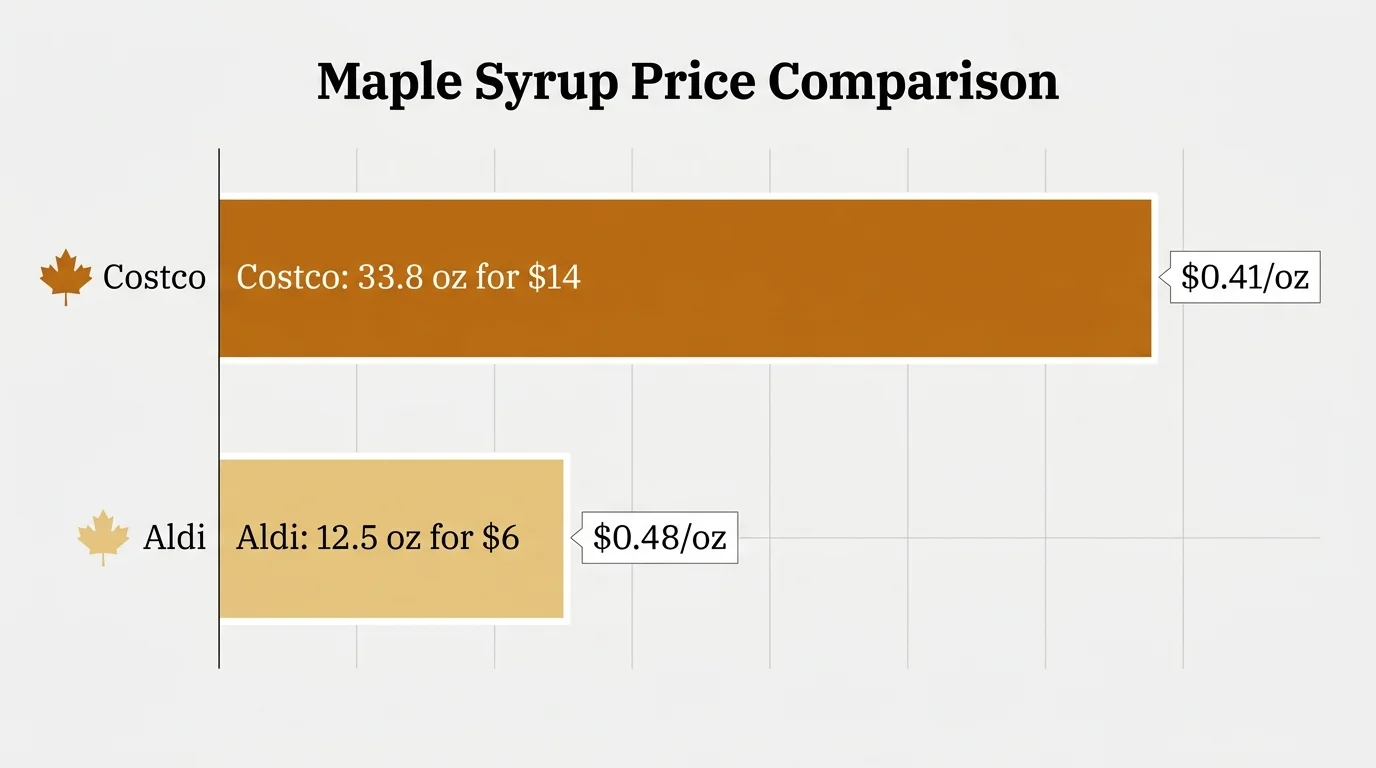
Real maple syrup transforms a mundane pancake breakfast into a premium culinary experience, but the authentic tree sap commands a premium price. Costco sells its Kirkland Signature Organic Pure Maple Syrup in a massive thirty-three-point-eight-ounce jug for roughly fourteen dollars, translating to about forty-one cents per ounce. Aldi stocks a smaller twelve-and-a-half-ounce bottle of its Specially Selected Organic 100% Pure Maple Syrup for approximately six dollars, which equates to forty-eight cents per ounce.
Costco absolutely crushes Aldi in this specific category, handing you a nearly twenty percent discount on a per-ounce basis. The quality matches up perfectly, as both retailers source dark, robust syrup directly from certified North American maple farms. Maple syrup boasts a virtually indefinite shelf life when stored correctly in the refrigerator, completely eliminating the bulk-spoilage risk associated with giant warehouse purchases. You should grab the giant jug at Costco without hesitation. You pay more at the checkout register, but the pure unit-cost savings ensure you keep more money in your bank account over the long term.
Tip #4: Free-Range Eggs
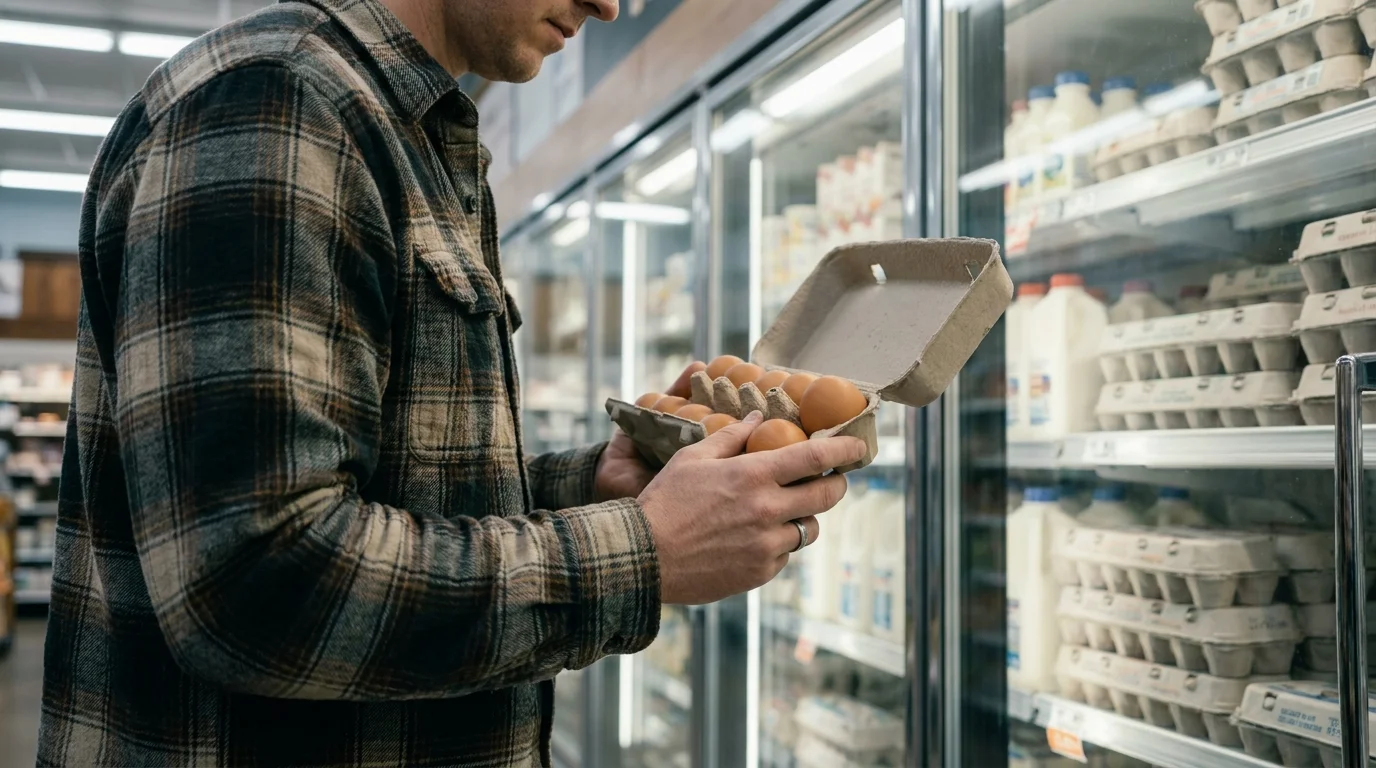
Egg prices experience notorious volatility, turning your morning omelet into a frustrating financial guessing game. Comparing conventional battery-cage eggs often yields a tie, but the free-range and organic markets reveal a distinct pricing gap between the two retailers. Costco typically offers a two-dozen carton of Kirkland Signature Organic Free-Range Eggs for around seven to eight dollars, landing at roughly thirty-three cents per egg. Aldi’s Simply Nature Organic Free-Range Eggs cost about four dollars for a single dozen, putting them exactly on par with Costco’s unit pricing.
However, Aldi edges out a significant practical victory when you factor in freshness and consumption rates. Most standard American households struggle to consume twenty-four eggs before the quality begins to noticeably decline. Aldi gives you the flexibility to buy exactly what you need for the week without surrendering a single cent in the unit-price battle. The discount grocer allows you to secure high-quality, ethically sourced protein without sacrificing valuable refrigerator shelf space or committing to a massive carton.
Tip #5: Ground Beef (85/15)
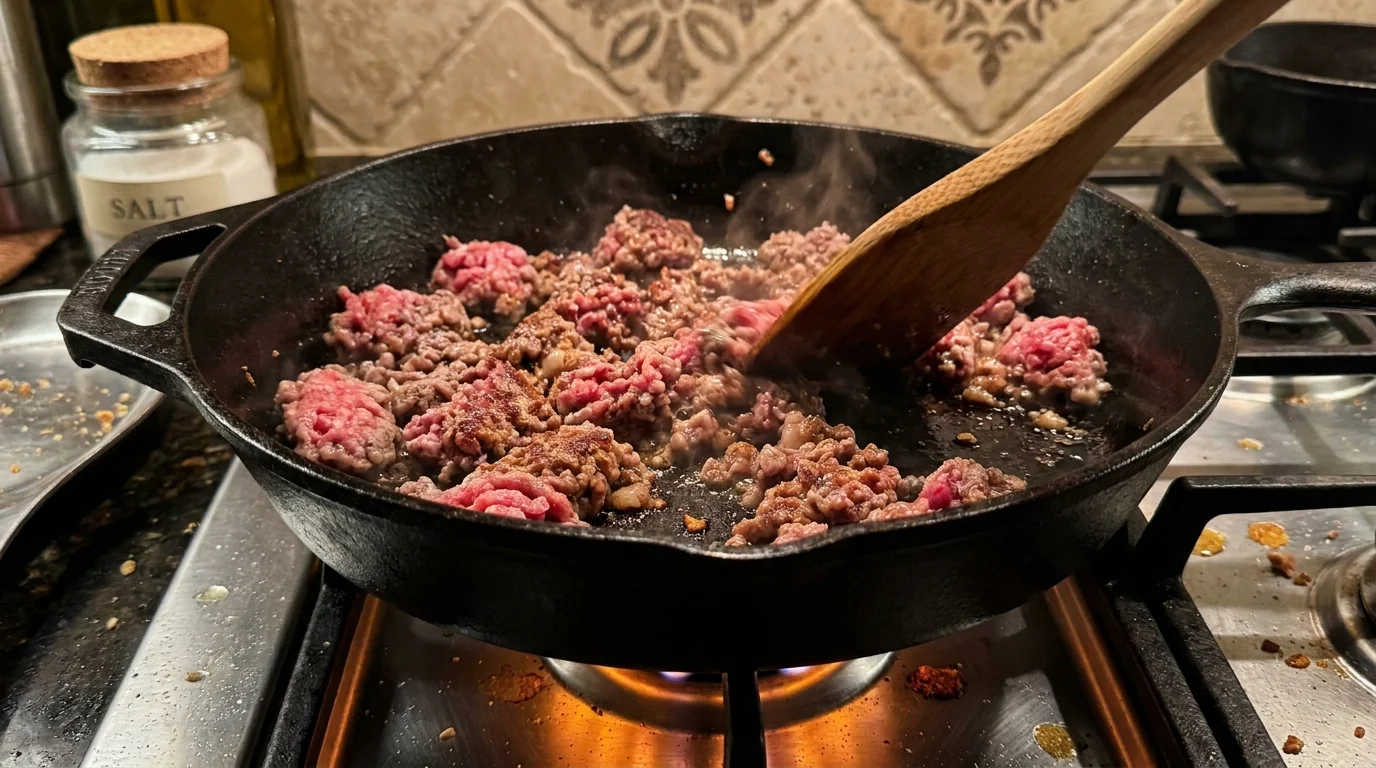
Taco nights, meatloaf dinners, and backyard burgers depend heavily on affordable ground beef. Costco packages its fresh eighty-five percent lean ground beef in massive six-pound packages for roughly three dollars and ninety-nine cents per pound. Aldi counters with smaller one-pound or three-pound packages of equally lean meat for about four dollars and forty-nine cents per pound.
The warehouse club clearly takes the crown for raw unit pricing, making it the supreme destination if you plan to meal-prep large batches of chili or host a massive neighborhood barbecue. However, you must realistically factor in the labor and materials required to divide and freeze six pounds of raw meat. By the time you purchase expensive freezer bags and spend twenty minutes portioning the beef, the Costco savings margin shrinks considerably. Aldi offers a fiercely competitive price for a highly convenient, ready-to-cook package. If you value your time and despise handling enormous slabs of raw meat, the slight premium you pay at Aldi represents a remarkably smart investment.
Tip #6: Rolled Oats
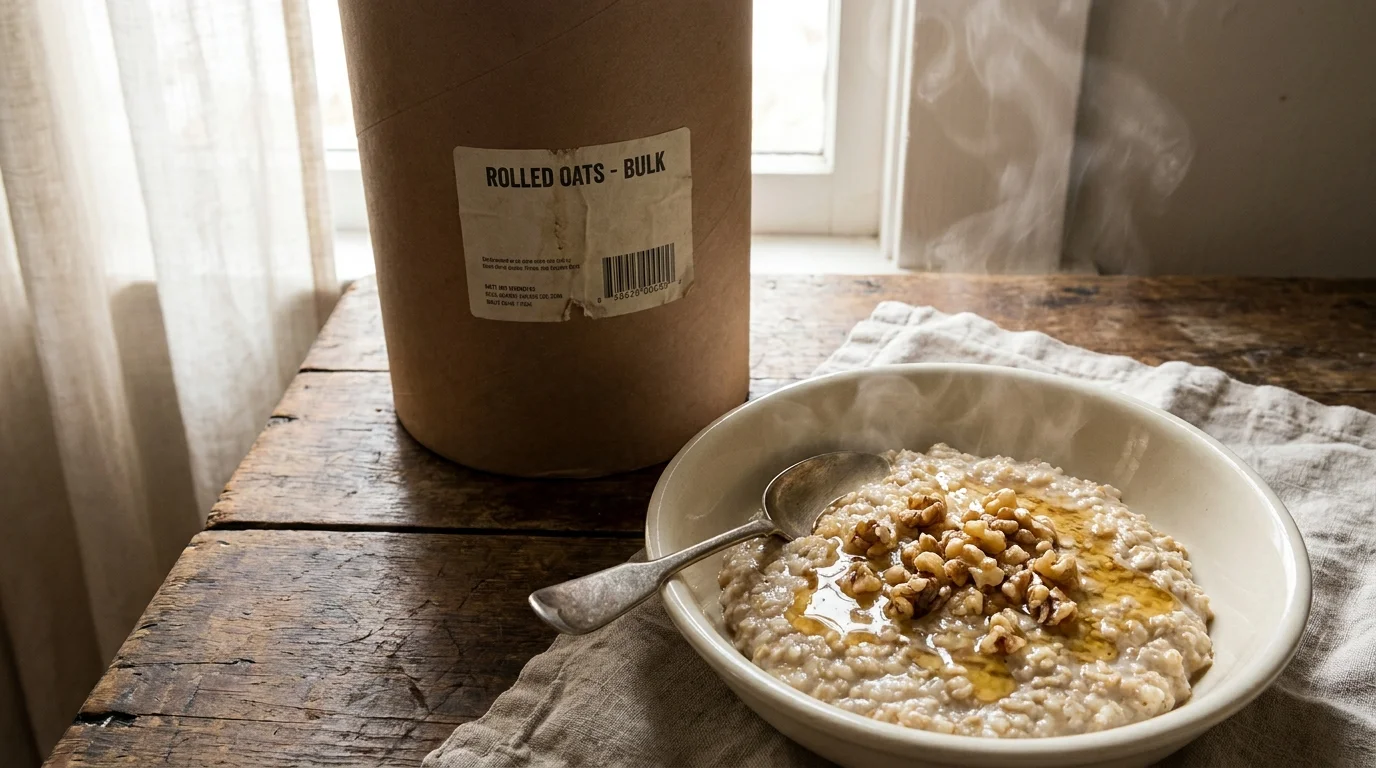
Hearty breakfast staples like rolled oats should cost mere pennies, yet brand-name markups often artificially inflate your grocery bill. Costco sells Quaker Old Fashioned Oats in a colossal ten-pound box for about ten dollars, which breaks down to an incredibly low six cents per ounce. Aldi bypasses the famous brand completely and offers its private-label Millville Old Fashioned Oats in a forty-two-ounce canister for around three dollars, landing at seven cents per ounce.
Costco technically wins the mathematical showdown by a single penny per ounce, but Aldi delivers the superior practical value for everyday living. Storing ten pounds of grain exposes you to the threat of pantry pests and staleness unless you invest in airtight bins. Aldi provides a perfectly sized canister that slides effortlessly into your cupboard. You sacrifice exactly one penny per ounce to gain manageable packaging and eliminate the risk of serving your family a bowl of dusty, flavorless oatmeal.

Tip #7: Shredded Cheese
Dairy products represent a massive portion of the standard grocery budget, and shredded cheese serves as a universal ingredient for everything from casseroles to quick quesadillas. Costco sells its Kirkland Signature Mexican Style Blend in twin two-and-a-half-pound bags for roughly fifteen dollars, which calculates to an impressive nineteen cents per ounce. Aldi stocks its Happy Farms shredded cheese in twelve-ounce bags for about three dollars, coming out to twenty-five cents per ounce.
The math heavily favors the warehouse club, but shredded cheese harbors a dark, expensive secret: it develops mold at a terrifying speed once opened. The cellulose powder used to prevent clumping cannot protect a massive bag of cheese from oxygen and moisture. Unless you freeze the extra Costco cheese—which significantly alters the texture and melting properties—you will likely throw a fuzzy green brick into the garbage. Aldi charges a higher premium per ounce but saves you tangible money by preventing the inevitable food waste associated with bulk dairy purchases.

Tip #8: Purified Bottled Water
Hydration on the go remains a modern necessity, and both retailers aggressively price their private-label bottled water to get you through the front door. Costco notoriously uses its Kirkland Signature forty-pack of purified water as a powerful loss leader, pricing the monstrous flat around four dollars. This brings your cost to a staggering ten cents per bottle. Aldi offers its PurAqua twenty-four-pack for roughly three dollars, pushing the unit price up to twelve or thirteen cents per bottle.
Costco undoubtedly wins this hydration battle, offering a significantly cheaper per-bottle rate that adds up quickly over a long, hot summer. Furthermore, the Kirkland bottles feature a slightly thicker plastic that resists crushing in your car cup holder, whereas the ultra-thin Aldi bottles tend to crumple the moment you crack the seal. If you have the garage space to safely stack heavy flats of water, renewing your Costco membership pays for itself on this single beverage category alone. You simply cannot beat the warehouse club on bulk liquids.
Tip #9: Coffee Beans
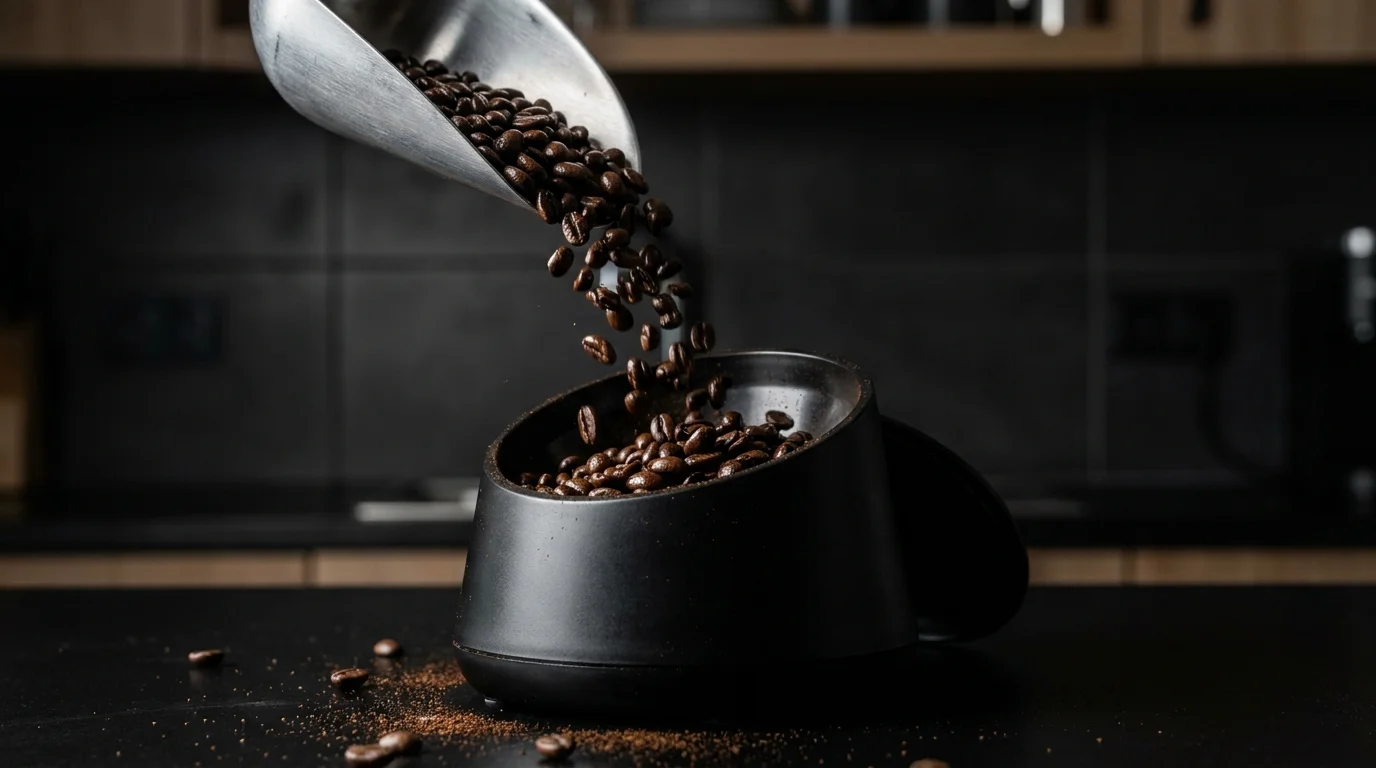
Your morning caffeine ritual dictates the energy for your entire day, but specialty coffee shops will drain your bank account rapidly. Buying whole beans offers the best flavor retention, and Costco provides an unmatched selection of high-quality roasts. The warehouse club sells a three-pound bag of Kirkland Signature Colombian Supremo whole bean coffee for roughly seventeen dollars, or thirty-five cents per ounce. Aldi’s premium Barissimo single-origin whole beans typically cost around six dollars for a twelve-ounce bag, pushing the price to fifty cents per ounce.
Costco dominates the coffee market through exclusive roasting partnerships, famously teaming up with Starbucks for many Kirkland varieties. The quality-to-price ratio simply defies retail logic. While coffee purists argue that bulk beans lose their aromatic oils over time, proper storage in an opaque, airtight container neutralizes this issue completely. When it comes to fueling your morning routine with high-quality caffeine, Costco leaves the discount darling in the dust.

Tip #10: Butter
Baking season demands massive quantities of butter, and this versatile fat serves as a crucial barometer for overall grocery pricing. Costco sells its Kirkland Signature sweet cream butter in four-pound packs for about thirteen dollars, which equals roughly twenty cents per ounce. Aldi prices its Countryside Creamery butter at around four dollars for a one-pound box, bringing the unit cost to twenty-five cents per ounce.
Costco wins the mathematical comparison hands down, saving you an average of fifty cents per pound. Butter freezes exceptionally well, allowing you to stockpile the massive Kirkland bricks for up to six months without any noticeable degradation in flavor or performance. Aldi offers a genuinely great price compared to traditional national supermarkets, but they simply cannot compete with the sheer volume discount Costco leverages on global dairy commodities. Whether you spread it on morning toast or laminate complex croissant dough, buying your butter in bulk at the warehouse club represents a brilliant financial maneuver for any serious home cook.

The Bottom Line: What This Means for Your Wallet
Declaring a definitive champion in the grocery price wars requires you to look beyond the basic price tag and intensely analyze your actual household consumption habits. Costco undeniably wins the pure mathematical unit-price battle on nearly every product, leveraging its massive global supply chain to offer unparalleled volume discounts.
However, raw data does not account for unfortunate food waste, severe storage limitations, or the steep upfront cost of warehouse club shopping. Aldi frequently claims the crown for practical everyday value, giving you impressively low prices on manageable portions that fit perfectly into standard American kitchens. If you possess ample chest freezer space, a large family, and serious meal-prep discipline, Costco serves as an unbeatable engine for wealth retention. If you cook for a smaller household and aggressively hate throwing away spoiled food, Aldi protects your budget fiercely. The smartest shoppers refuse to pledge loyalty to a single store; they strategically buy their bulk proteins and non-perishables at Costco while relying on Aldi for flexible, weekly pantry refreshes.
Frequently Asked Questions
Does the cost of a Costco membership negate the savings?
The standard Costco Gold Star membership costs sixty dollars annually, which means you must save at least five dollars a month to break even on your investment. If you regularly purchase high-volume items like whole bean coffee, bulk butter, and premium olive oil, you will easily recoup the entire membership fee within your first few shopping trips. Casual shoppers who only visit the warehouse once a quarter to browse snacks might actually lose money in the long run.
Are Aldi private-label brands lower quality than Costco’s Kirkland Signature?
Not necessarily. Both Aldi and Costco utilize top-tier national manufacturers to produce their private-label goods in complete secrecy. Aldi frequently secures international awards for its premium dairy, imported chocolate, and exclusive wine selections. Kirkland Signature often masks major national brands behind its iconic label, providing massive discounts on familiar products. You receive exceptional quality from both retailers, though Costco tends to focus more aggressively on organic certifications and premium tier sourcing.
Can I shop at Aldi without bringing my own reusable bags?
Aldi strictly requires you to supply your own shopping bags to maintain their ultra-low corporate overhead costs. If you forget your reusable totes in the car, you must purchase heavy-duty paper or plastic bags at the register for a nominal fee. Savvy shoppers often hunt for empty cardboard display boxes scattered around the store, which the friendly staff allows you to use for carrying your groceries absolutely free.
Why do Aldi prices fluctuate more often than Costco prices?
Aldi operates a highly dynamic, localized pricing model that responds instantly to regional market conditions and aggressive weekly promotional cycles. Costco prefers to negotiate massive, long-term contracts with global suppliers, locking in steady prices for several months at a time. This structural difference explains exactly why Aldi can occasionally undercut Costco during a flash meat sale, while Costco provides incredibly predictable pricing year-round regardless of temporary inflation spikes.
For consumer protection information, visit the Federal Trade Commission (FTC) and the Consumer Financial Protection Bureau (CFPB). For product safety and reviews, consult Consumer Reports.
Disclaimer: This article is for informational purposes only and does not constitute financial advice. The content reflects the author’s opinion and research at the time of writing. Always do your own research before making financial decisions.



Leave a Reply