
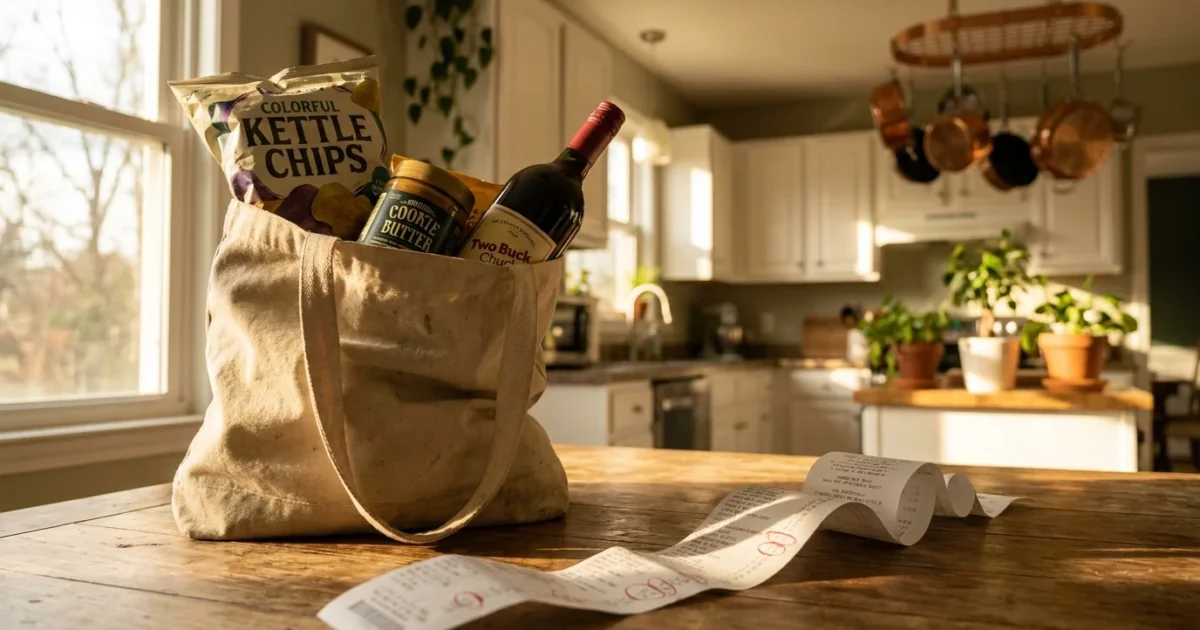
Trader Joe’s cultivates a dedicated following with quirky snacks and affordable wine, but buying your entire grocery haul there drains your wallet fast. Smart grocery shopping demands you separate the true bargains from the cleverly disguised money pits. While the freezer aisle offers undeniably great deals on specialty meals, the store quietly marks up everyday staples to offset those attractive prices. You can slash your grocery bill significantly simply by knowing which items to leave on the shelf. We analyzed the pricing structures, scrutinized the product quality, and mapped out exactly where this beloved chain falls short of delivering value. Skip these nine Trader Joe’s products to protect your monthly budget and navigate the aisles like a true insider.
Tip #1: Pre-Chopped and Packaged Produce
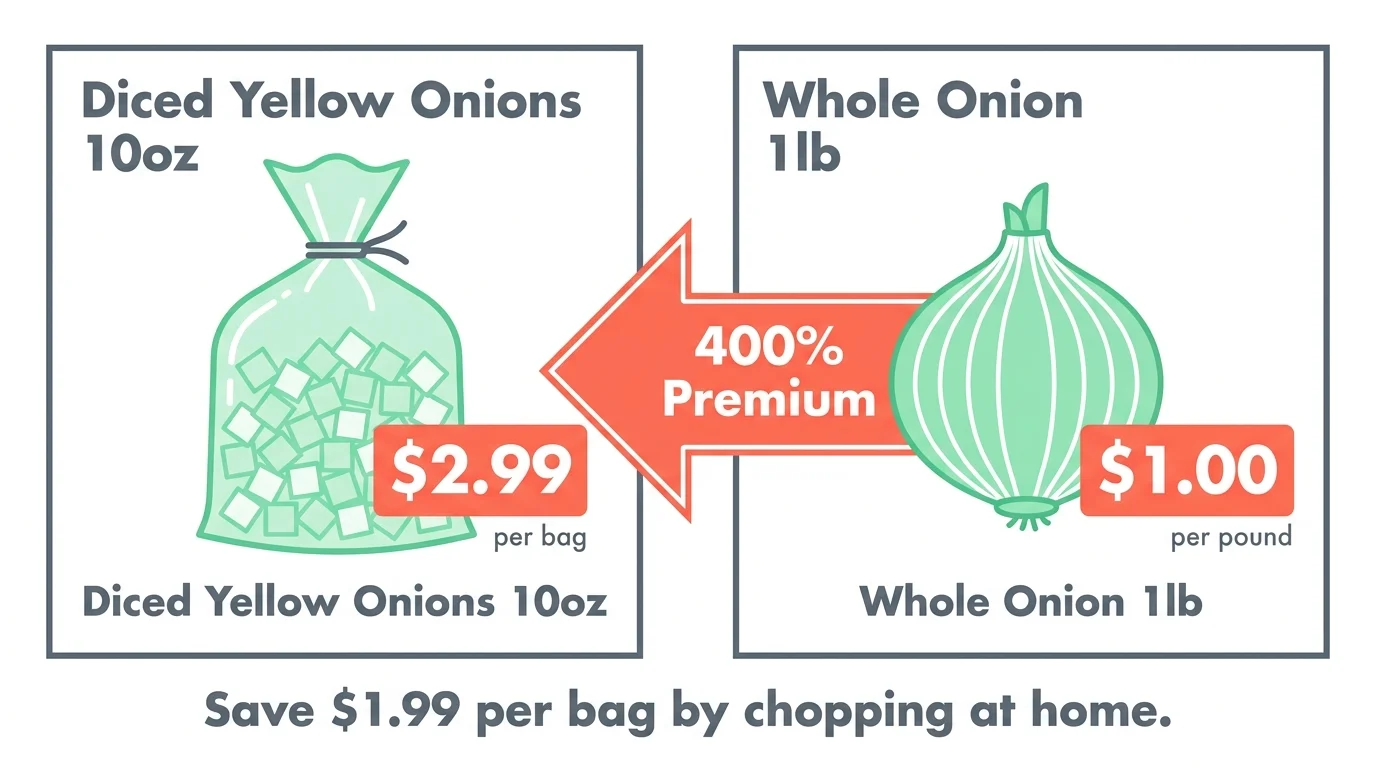
The convenience of pre-chopped vegetables carries a massive and unjustifiable markup that smart shoppers actively avoid. A ten-ounce bag of diced yellow onions at Trader Joe’s routinely costs around $2.99. Meanwhile, a whole, loose yellow onion at the very same store costs about $1.00 per pound. You are paying an exorbitant premium—often approaching 400 percent—simply for someone else to wield a knife.
Beyond the severe financial drain, the packaging actively accelerates spoilage. The moment vegetables undergo slicing, cellular oxidation begins. This chemical process degrades both the nutritional profile and the structural integrity of the food. Pre-cut broccoli florets and sliced bell peppers sit suffocating in rigid plastic containers, losing their natural flavor and crispness with every passing hour on the shelf. Retailers also often charge you for the latent water weight that accumulates at the bottom of those sealed bags.
Your ultimate smart shopping strategy requires purchasing whole vegetables and investing ten minutes prepping them yourself on a Sunday afternoon. You secure significantly fresher ingredients, enjoy robust flavors, and completely eliminate an unnecessary premium from your weekly budget. If you genuinely require pre-chopped items due to mobility limitations or severe time constraints, bypass the fresh section and explore the frozen aisle instead, where Trader Joe’s actually excels in delivering both price value and product longevity.

Tip #2: Fresh Meat and Poultry
Trader Joe’s operates completely without an in-house butcher counter, and this specific operational choice directly inflates your grocery bill. Every cut of beef, pork, and chicken arrives pre-packaged from regional distributors. Because they lack the infrastructure to process meat on site, they cannot offer the standard supermarket loss-leader pricing models on heavy-rotation proteins like chicken breasts or ground beef.
You will regularly spot packages of standard chicken breasts priced well over $6.99 per pound at Trader Joe’s. Contrast this with standard supermarkets, which frequently drop similar cuts to $2.99 or $3.99 per pound during front-page weekly sales to drive foot traffic. A standard package of their pre-marinated shawarma chicken or carne asada rings up at an astonishing premium, charging you a culinary tax simply for a dusting of cheap spices. Steaks and premium roasts carry an even heavier baseline markup.
Furthermore, Trader Joe’s explicitly rejects the “manager special” markdown strategy for meat approaching its sell-by date. Savvy consumers buy their fresh proteins at bulk warehouse clubs like Costco or strategically wait for aggressive sales at traditional grocers like Kroger or Safeway. Stock your chest freezer using those steep promotional discounts, and march right past the Trader Joe’s meat section entirely to keep your food budget comfortably intact.
Tip #3: Ready-to-Eat Sushi
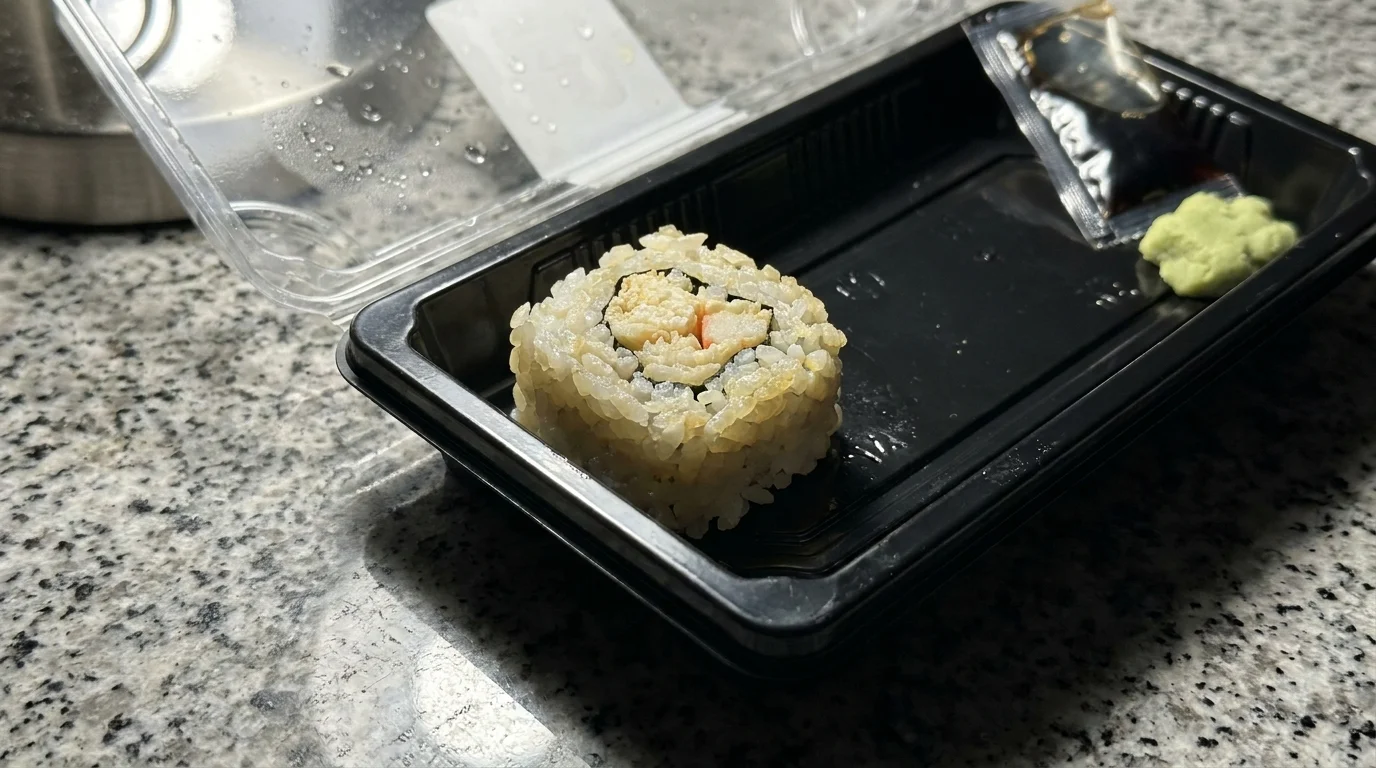
The refrigerated grab-and-go sushi at Trader Joe’s represents one of the most notoriously poor values in the entire store, failing spectacularly in both culinary quality and financial investment. Authentic, high-quality sushi relies entirely on body-temperature, perfectly seasoned rice paired with impeccably fresh seafood. The mass-produced rolls sitting in the Trader Joe’s chiller cases violently contradict these basic culinary principles.
Because these products sit under constant refrigeration, the dense, gummy rice hardens completely after just a few hours below 40 degrees Fahrenheit, destroying the delicate textural contrast required for good sushi. The fish quality itself is universally regarded by food critics and savvy consumers alike as rubbery and aggressively mediocre. Despite these glaring structural and flavor issues, a standard spicy tuna or California roll commands a premium price tag approaching $6.00 or $7.00.
You can procure dramatically superior, freshly made sushi at your local traditional supermarket counter for the exact same financial outlay. Alternatively, you can purchase frozen, sushi-grade tuna or salmon from specialized regional seafood markets to assemble your own high-quality rolls at home for pennies on the dollar. Protect your palate and your wallet simultaneously by permanently skipping this specific cooler.
Tip #4: Name-Brand Beverages and Snacks
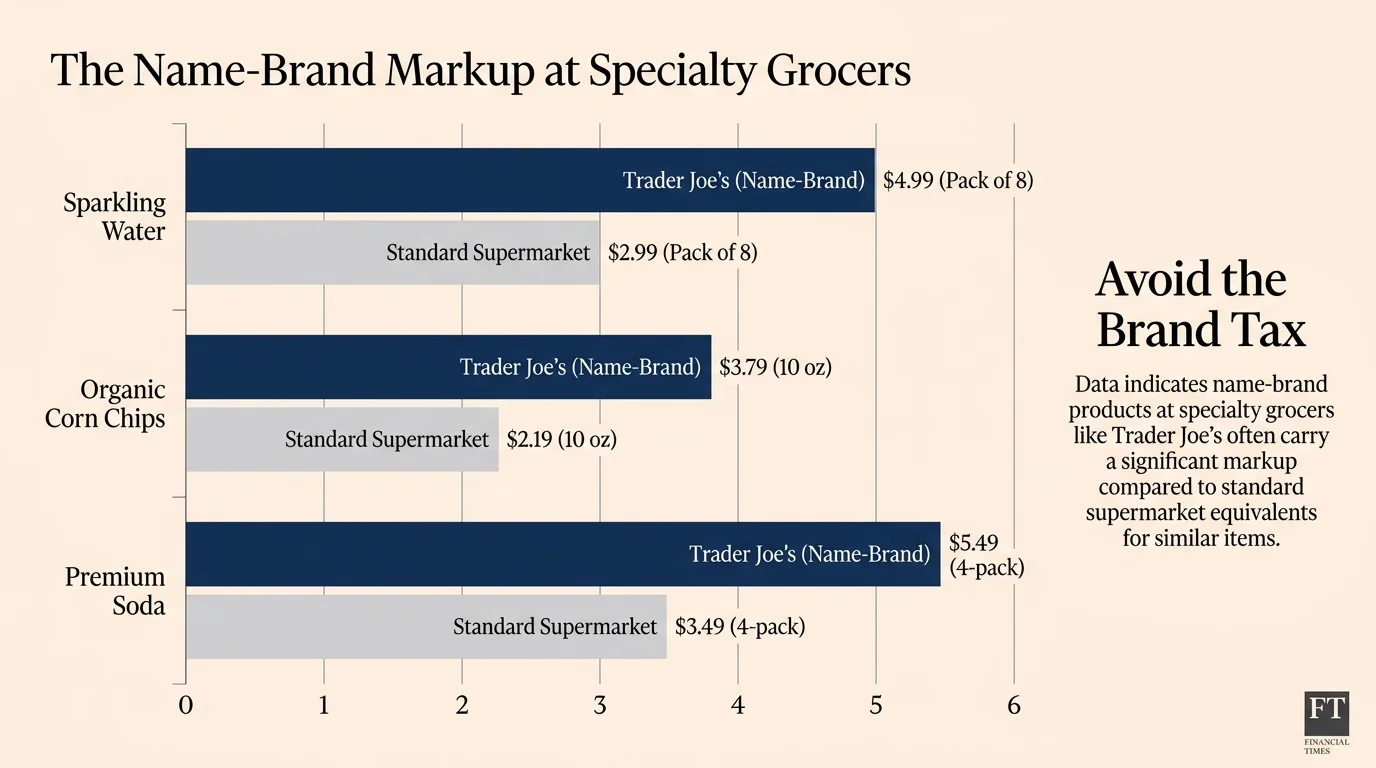
Trader Joe’s built its massive retail empire entirely upon the strength of its private-label goods, which constitute roughly 80 percent of the store’s total inventory. However, corporate buyers strategically intersperse a select handful of recognized name-brand items—such as popular kombuchas, specific protein bars, and regional craft beers—throughout the crowded aisles. Purchasing these familiar items here constitutes a critical tactical error for any budget-conscious shopper.
Because Trader Joe’s operates smaller stores with highly limited shelf space, they simply do not order these outside brands in the massive, cost-saving quantities that giant national retailers manage. Stores like Target and Walmart negotiate ruthless vendor contracts to slash retail prices; that is a leverage Trader Joe’s simply does not wield for external brands. Consequently, you will almost always pay the absolute maximum suggested retail price.
A bottle of premium GT’s Kombucha might cost $3.99 at Trader Joe’s, while Target regularly prices the exact same bottle closer to $2.99 or runs aggressive buy-two-get-one-free promotions. When you spot a brand you clearly recognize from other stores resting on a Trader Joe’s shelf, firmly resist the impulse purchase. Buy your name-brand staples at massive big-box retailers where sheer economies of scale actively work in your financial favor.
Tip #5: Paper Products and Cleaning Supplies
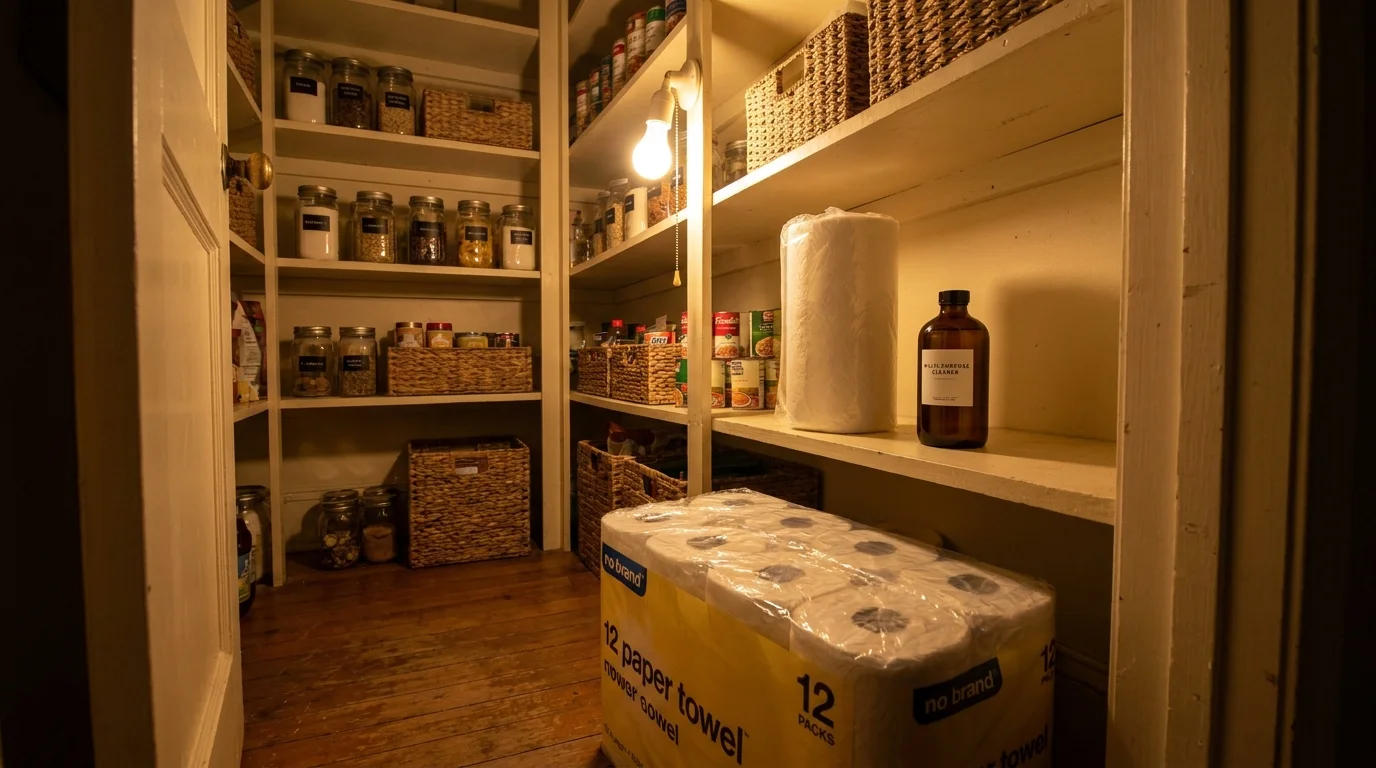
Grocery savings vanish incredibly quickly when you attempt to purchase non-food household items at boutique grocery chains. Trader Joe’s confidently offers its own proprietary lines of toilet paper, paper towels, liquid laundry detergent, and dish soap. While the minimalist packaging and eco-friendly marketing appear attractive to the casual eye, the underlying unit economics are definitively stacked against the consumer.
Paper goods demand massive warehouse space to distribute and stock efficiently. A compact Trader Joe’s store simply does not possess this logistical advantage. Therefore, they deliberately sell these products in frustratingly small quantities. When you calculate the strict cost per hundred sheets of paper towels, the Trader Joe’s house brand frequently costs nearly double the price of Kirkland Signature from Costco or Member’s Mark from Sam’s Club.
The liquid dish soap and multi-purpose spray cleaners follow the exact same disadvantageous pricing model. Furthermore, independent consumer testing frequently reveals that the boutique house-brand paper towels severely lack the structural integrity and absorbency of major national brands. Buy your cleaning supplies and paper goods exclusively from warehouse clubs or massive online retailers to secure the absolute lowest possible cost per use.
Tip #6: Standard Milk and Eggs
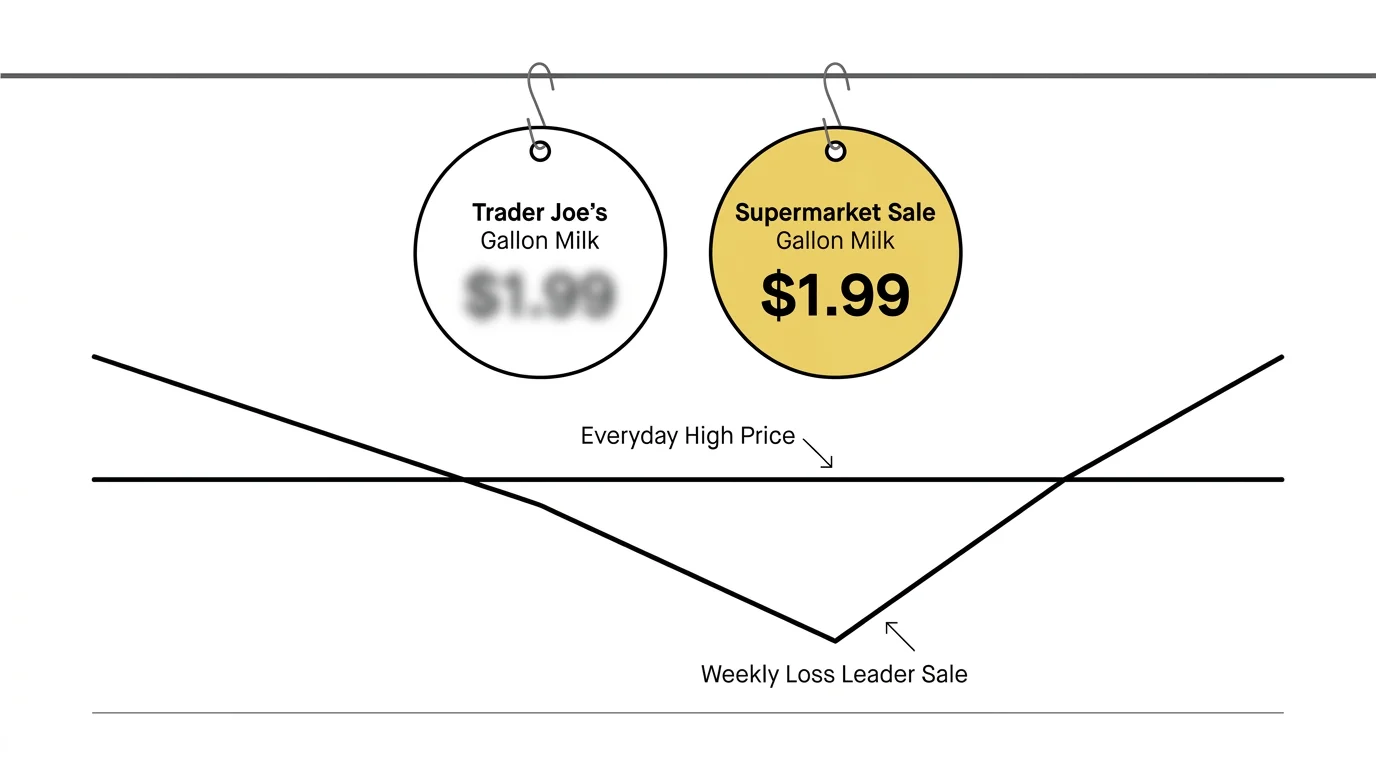
Traditional grocery store chains continuously utilize standard dairy products as heavily subsidized loss leaders. They intentionally sell gallons of regular milk and plain cartons of conventional eggs at or even slightly below their own wholesale cost. Your regional supermarket heavily relies on aggressive milk pricing to maintain neighborhood foot traffic, fully knowing you will purchase highly profitable snack items on your way back from the dairy case.
Trader Joe’s fundamentally rejects this specific retail strategy. They enforce a strict, consistent profit margin across their entire active inventory, definitively including your essential dairy staples. As a direct mathematical result, a standard dozen eggs or a generic gallon of two-percent milk frequently costs 20 to 30 percent more at Trader Joe’s than at fiercely competitive discount grocers like Aldi or even the local Walmart Supercenter.
If your household consumes large quantities of dairy every single week, this subtle per-item price difference rapidly compounds into a massive, invisible annual expense. While the Trader Joe’s specialty cheese section remains a spectacular, undeniable bargain, you must ruthlessly procure your everyday utility milk and standard breakfast eggs from a traditional discount retailer to maximize your grocery savings.
Tip #7: Pre-Made Salads and Sandwiches
The illuminated convenience food section located immediately near the entrance intentionally targets hungry, time-starved shoppers who stop by after a long workday. The brightly packaged salads and tightly wrapped sandwiches look incredibly appetizing under the store lighting, but they harbor terrible financial value and highly questionable freshness.
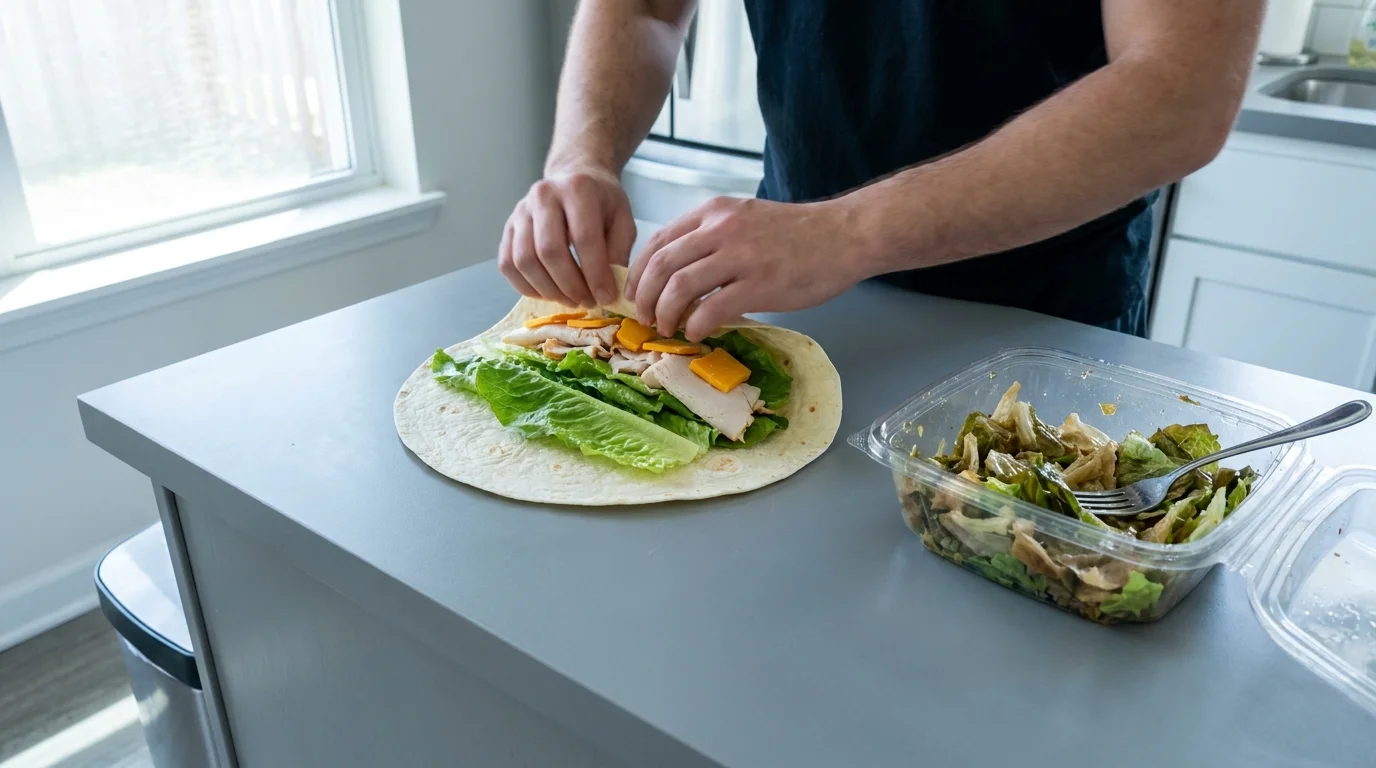
You routinely pay upward of $5.00 to $7.00 for a single-serving salad that consists primarily of cheap, lightweight greens like basic spinach or iceberg lettuce, topped with a mathematically minuscule portion of protein. When you ruthlessly calculate the raw ingredient cost, you realize you are essentially paying a staggering premium for a disposable plastic bowl and a tiny, high-sodium packet of proprietary dressing. Furthermore, to maintain visual appeal on the shelf, these pre-made wraps often contain elevated preservatives.
The heavy dressing and high-moisture ingredients inevitably compromise the delicate texture of the greens, routinely resulting in deeply soggy, disappointing lunches. You can easily purchase an entire fresh bag of baby arugula, a block of sharp cheddar, and a package of precooked grilled chicken strips for about $12.00. This yields four to five substantially superior, customized salads for your entire work week. Stop funding the convenience markup and start actively assembling your own lunches.
Tip #8: Everyday Breakfast Cereal
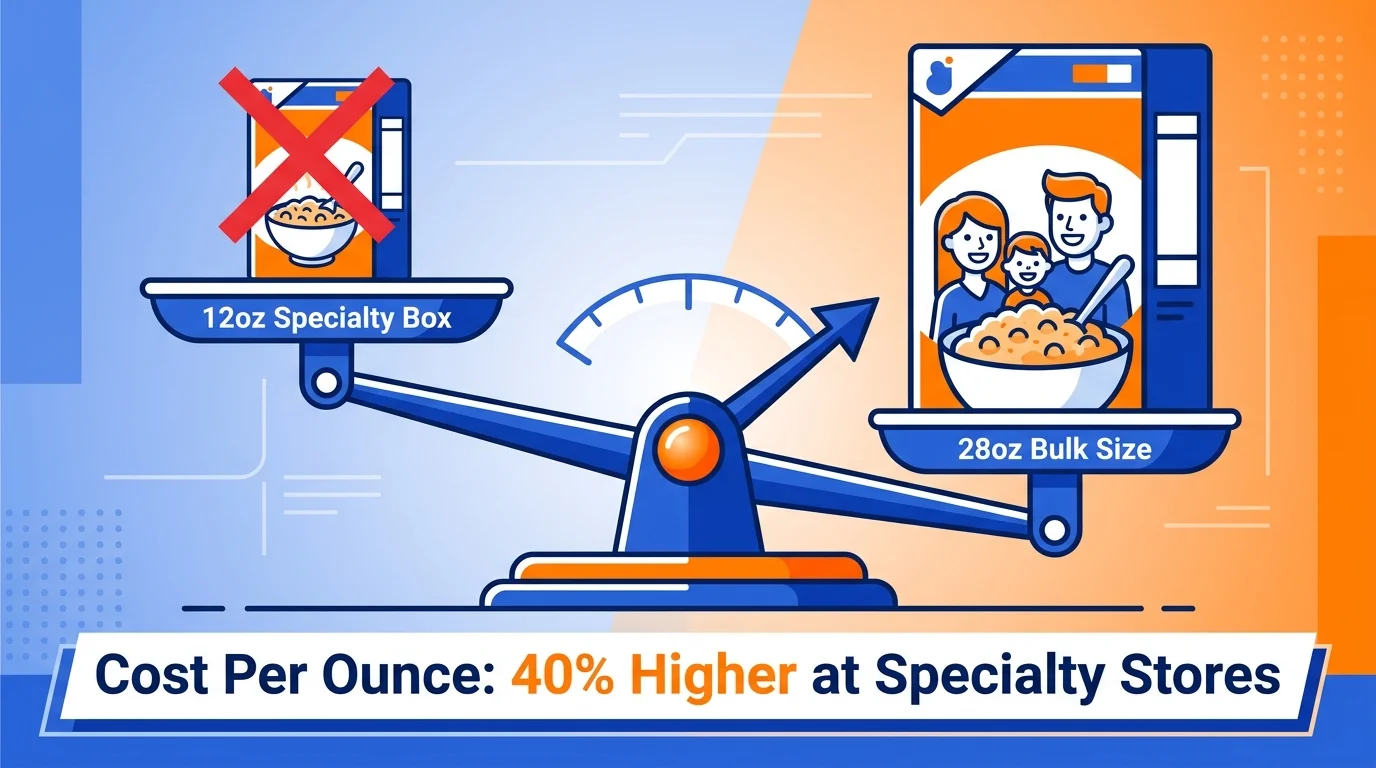
The cereal aisle at Trader Joe’s features exceptionally clever packaging and aggressive health-conscious marketing, but a quick glance at the net weight printed at the bottom of the cardboard reveals a stark reality. Their private-label cereals are sold in notoriously small boxes, typically ranging from a mere 12 to 15 ounces.
While the initial sticker price of $3.49 might not immediately induce sticker shock, the crucial cost-per-ounce metric tells a completely different, highly unprofitable story. A 12-ounce box of generic honey nut loops easily disappears in just three or four family breakfasts, forcing you to restock constantly. Traditional supermarkets routinely run aggressive buy-one-get-one-free promotions on massive, family-sized boxes of General Mills or Kellogg’s favorites.
When you effectively leverage those predictable weekly sales, the mainstream brands thoroughly undercut Trader Joe’s generic offerings by a wide margin. Furthermore, the flavor profiles of Trader Joe’s alternative cereals frequently miss the mark, often tasting overly dense or noticeably lacking the satisfying, airy crunch of their mainstream counterparts. Unless you are specifically purchasing a highly specialized dietary item like grain-free granola, you should always source your morning bowl from a major grocer wielding heavy promotional discounts.
Tip #9: Most Basic Spices and Seasonings
Trader Joe’s rightfully earns massive industry praise and consumer loyalty for their highly inventive, proprietary seasoning blends like “Everything but the Bagel” and “Chili Onion Crunch.” These incredibly unique products absolutely justify their dedicated shelf space and premium pricing. However, purchasing your single-ingredient, foundational spices here constitutes a major strategic error that slowly bleeds your grocery budget.
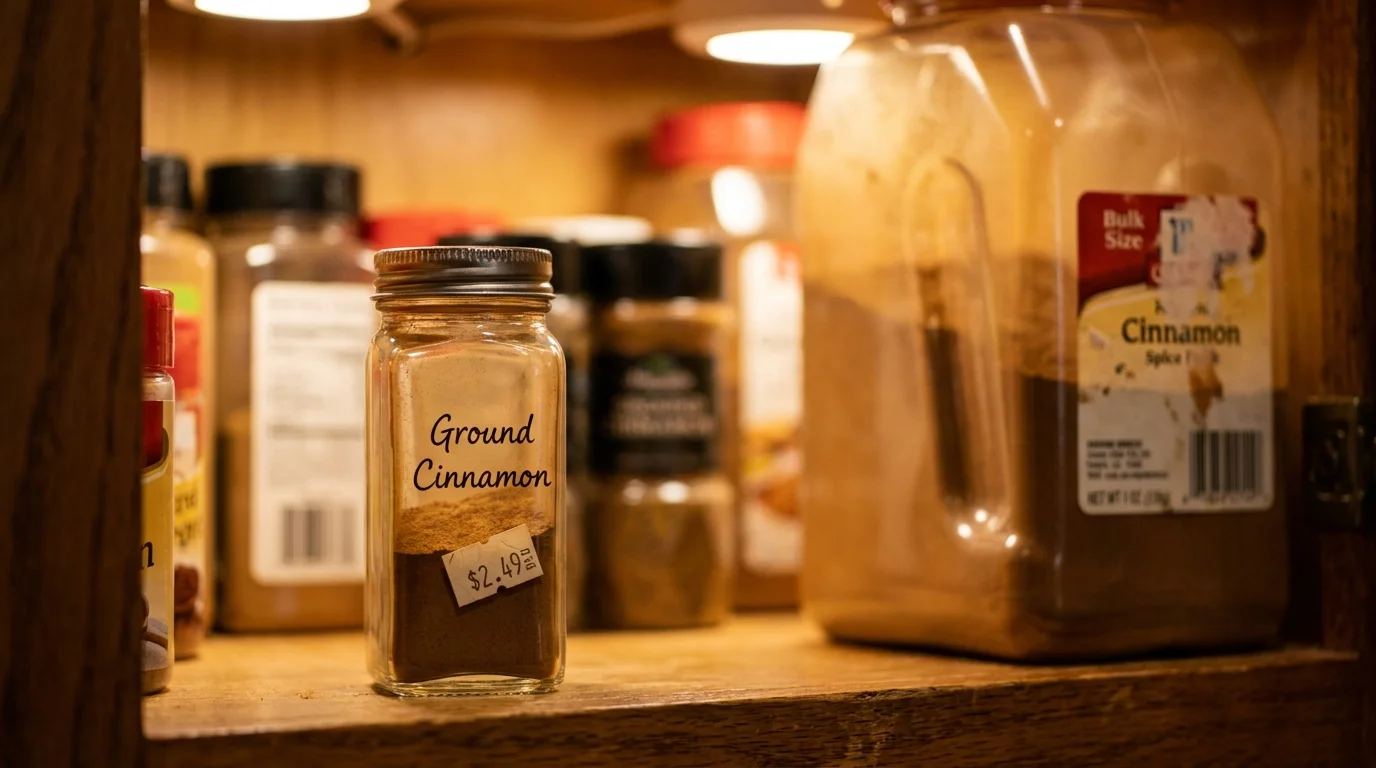
Standard pantry staples like basic garlic powder, ground cinnamon, dried oregano, and crushed black pepper are carefully packaged in tiny, aesthetically pleasing glass jars and sold for around $1.99 to $2.99 each. The actual volume provided inside these jars is effectively negligible. Spices inevitably lose their potent volatile oils over time; buying tiny jars means you continuously pay a premium for a rapidly dwindling flavor profile.
You can effortlessly acquire massive, restaurant-quality containers of these exact same basic spices at local ethnic markets, Indian grocers, or Latin American supermarkets for a mere fraction of the cost per ounce. Even mainstream warehouse clubs offer dramatically superior bulk values on fundamental kitchen seasonings. Reserve your Trader Joe’s spice budget exclusively for their unique, hard-to-replicate flavor blends, and build out your foundational spice rack using bulk suppliers to execute truly smart grocery shopping.
The Bottom Line: What This Means for Your Wallet
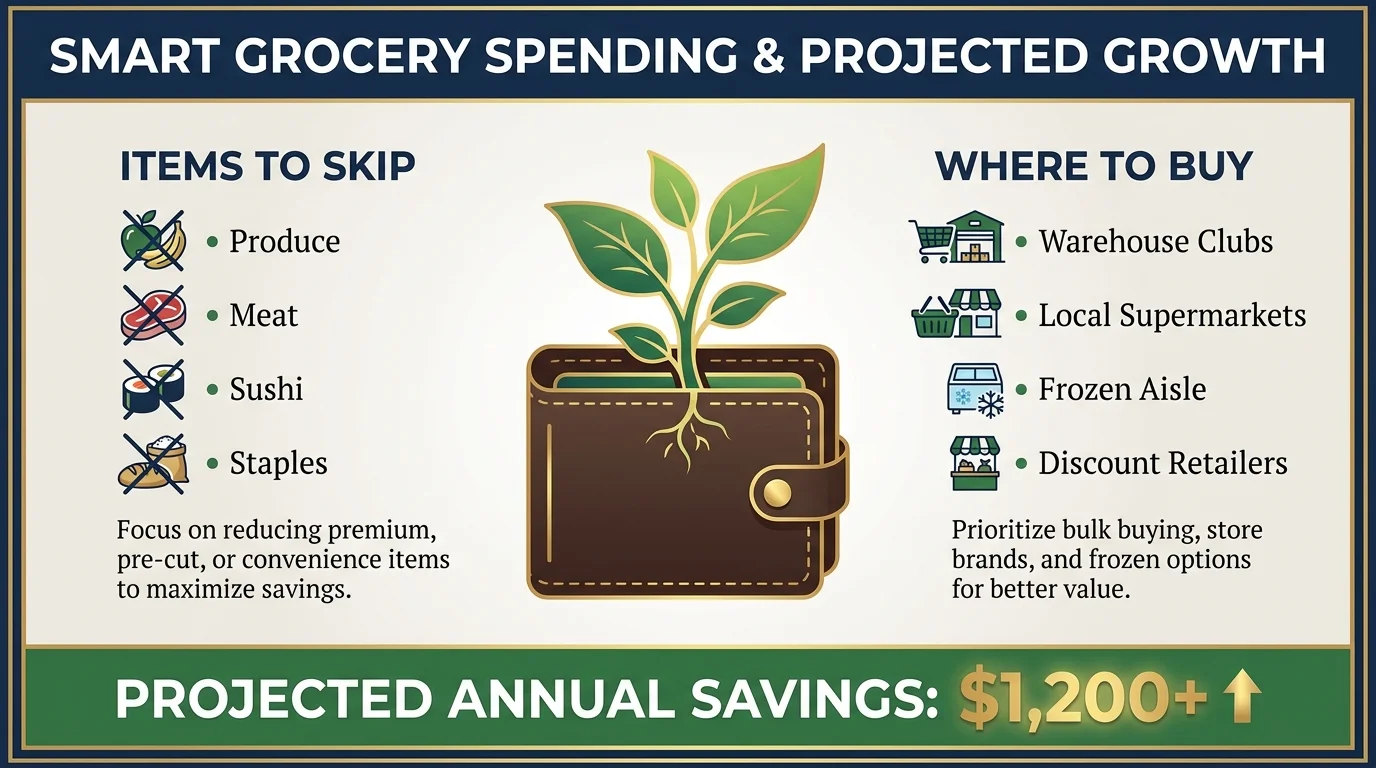
Mastering your household grocery budget does not require you to completely abandon Trader Joe’s; it simply demands a much more tactical, analytical approach to your weekly shopping list. The quirky store shines brilliantly when you actively target imported domestic cheeses, unique frozen appetizers, specialty olive oils, and affordable seasonal treats. These specific retail categories deliver genuine financial value and exceptional culinary excitement.
However, treating this boutique specialty retailer as your primary destination for every single household need will silently hemorrhage your cash flow. By systematically eliminating overpriced chopped produce, expensive fresh meat, and poorly priced basic paper goods from your red cart, you instantly optimize your monthly spending without sacrificing quality. You must ruthlessly leverage the unique strengths of different retailers—relying on warehouse clubs for bulk staples, traditional grocers for aggressive loss-leader meats, and Trader Joe’s strictly for unique culinary enhancements. Execute this strategic split consistently, and you will enjoy premium food without ever suffering premium financial consequences.
Frequently Asked Questions
Is Trader Joe’s actually cheaper than regular grocery stores?
The answer depends entirely on your specific cart composition. Trader Joe’s dominates traditional supermarkets on the pricing of specialty foods, artisan cheeses, roasted nuts, and frozen prepared meals. However, conventional grocers consistently beat Trader Joe’s on household staples, fresh meat, and name-brand items because traditional stores aggressively utilize weekly sales, seasonal loss leaders, and digital coupons—pricing mechanisms which Trader Joe’s outright refuses to implement.
Why doesn’t Trader Joe’s offer sales, discounts, or a loyalty program?
Trader Joe’s operates strictly on an “everyday low prices” business model, intentionally avoiding the immense logistical costs associated with managing promotional campaigns, printing weekly circulars, or running complex digital loyalty applications. Corporate management maintains that offering a flat, consistent price across the board inherently eliminates hidden markups. While this undoubtedly simplifies the retail shopping experience, it actively prevents savvy shoppers from utilizing extreme couponing tactics or exploiting massive markdown events.
What are the absolute best things to buy at Trader Joe’s?
Smart shoppers maximize their value by heavily targeting the store’s core competencies. The absolute best purchases include imported domestic cheeses, which routinely cost half of what Whole Foods or upscale markets charge. Their robust frozen foods section offers incredible value for quick dinners, particularly the frozen Indian meals, gyoza, and legendary mandarin orange chicken. Finally, their private-label wine selection, specialty dark chocolate bars, and unique seasonal baking mixes consistently deliver exceptionally high quality at highly aggressive price points.
For consumer protection information, visit the Federal Trade Commission (FTC) and the Consumer Financial Protection Bureau (CFPB). For product safety and reviews, consult Consumer Reports.
Disclaimer: This article is for informational purposes only and does not constitute financial advice. The content reflects the author’s opinion and research at the time of writing. Always do your own research before making financial decisions.





Leave a Reply