You can cut your monthly out-of-pocket prescription expenses by up to 80 percent without sacrificing the exact medications your doctor prescribed. Over 60 percent of American adults worry about affording their medications, and 40 percent actively skip doses or leave prescriptions unfilled at the pharmacy counter.
Middleman markups and inflated retail prices drive retail prescription spending to 8.8 percent of total U.S. healthcare expenditures, but you never have to pay full sticker price again.
By leveraging aggressive cash discount networks, store-specific pricing tiers, and direct-to-consumer pharmacy models, smart shoppers routinely outsmart high insurance copays and bypass predatory pricing structures entirely.
Tip #1: GoodRx
GoodRx remains the undisputed titan of prescription discount cards, completely changing how Americans shop for essential medications. By aggregating negotiated bulk pricing from major pharmacy benefit managers, GoodRx lets you compare cash prices across local pharmacies in real time.
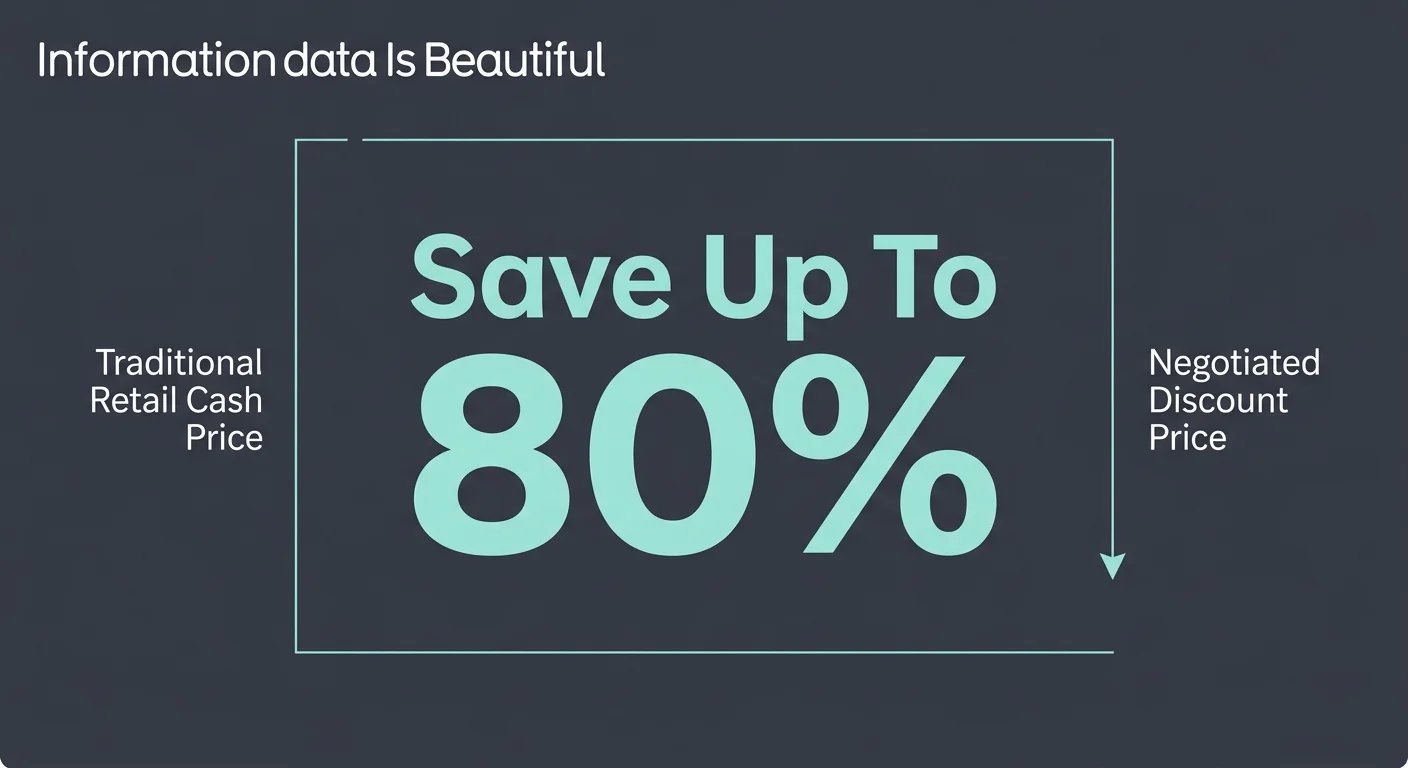
GoodRx advertises savings of up to 80 percent off average retail cash prices on generic drugs. Since its launch, the platform reports cumulative consumer savings exceeding $85 billion.
You simply download their mobile app, search for your specific dosage and quantity, and present the digital coupon code to your pharmacist at checkout.
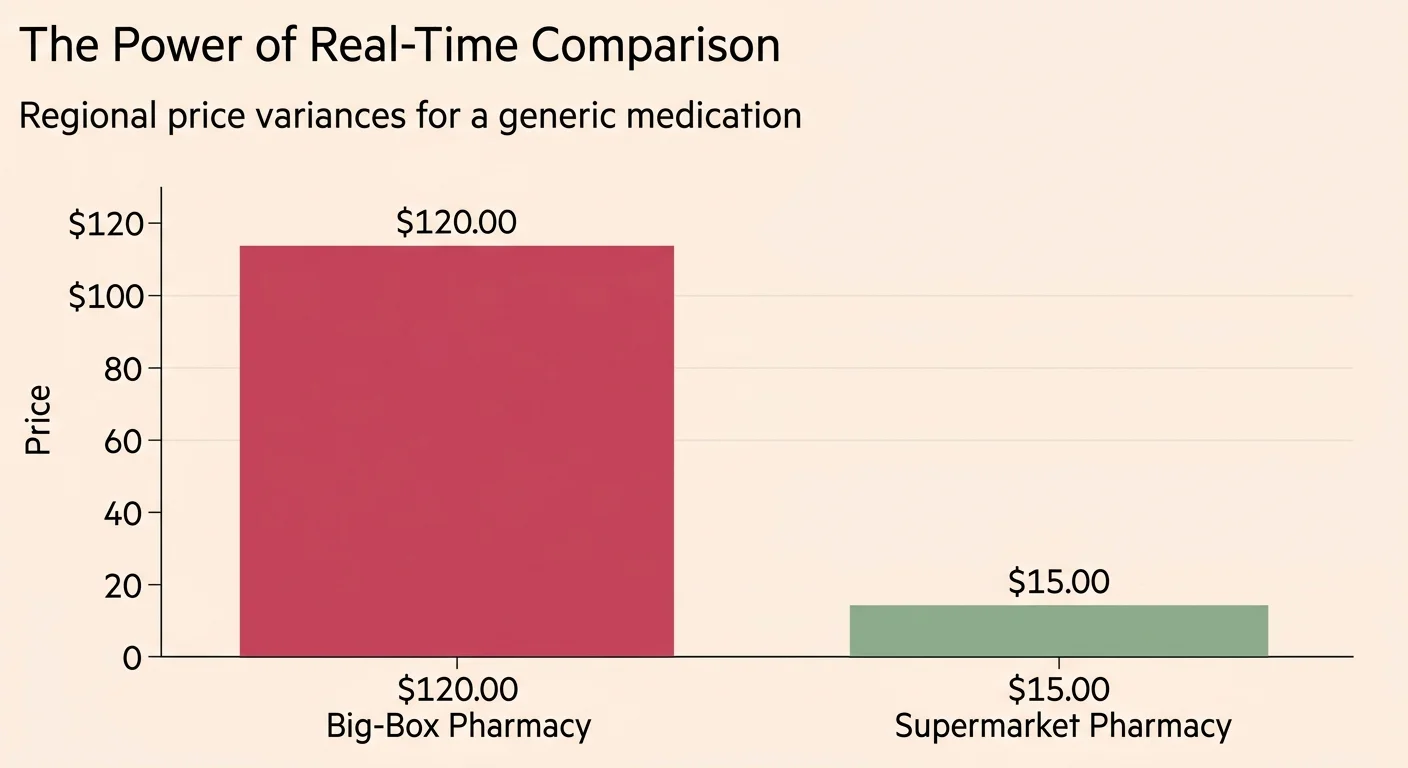
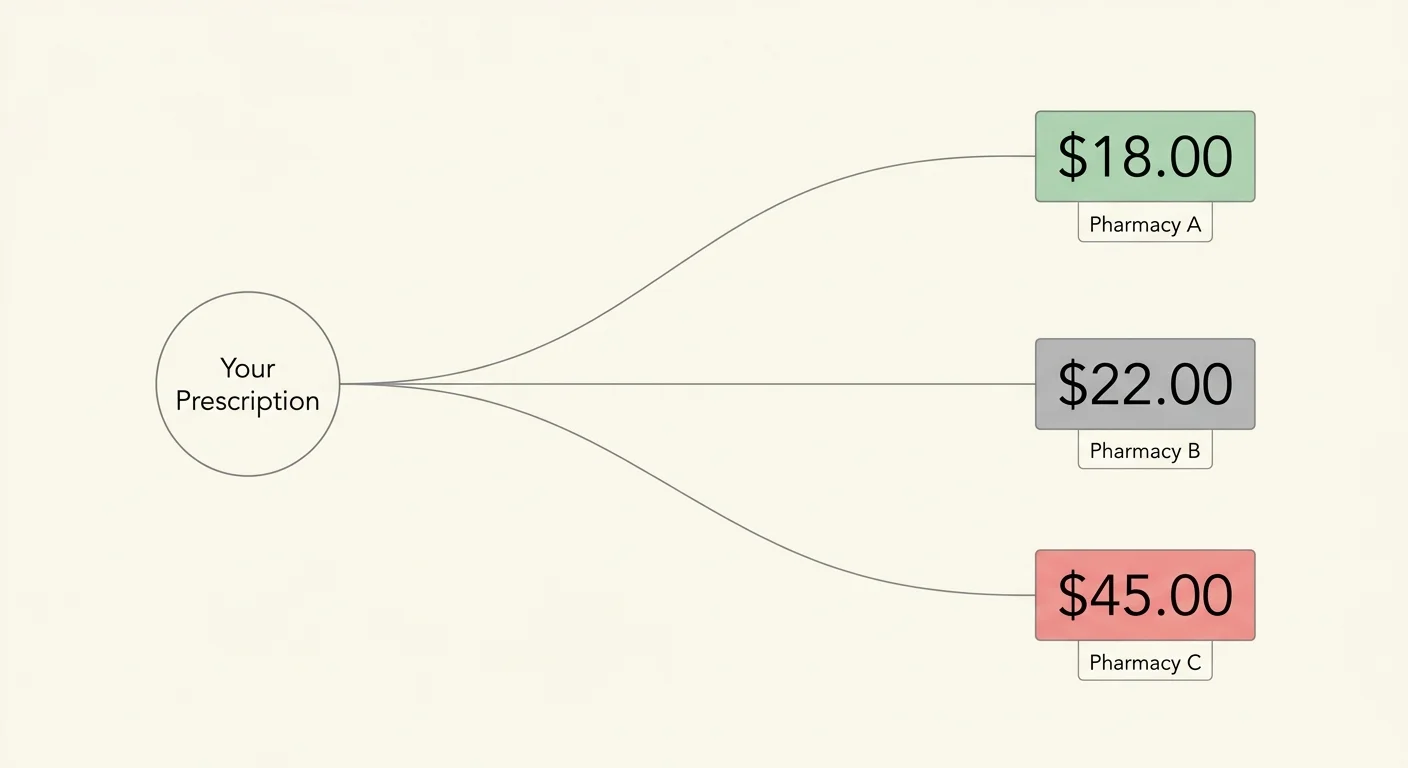
The real power of GoodRx lies in exposing massive regional price variances. The exact same generic cholesterol or blood pressure medication can cost $120 at a big-box retail pharmacy and $15 at a regional supermarket down the street.
GoodRx exposes these secret price discrepancies instantly so you never overpay. Remember that using GoodRx means paying cash outside your health insurance plan.
If you have a low deductible, running purchases through insurance might make sense, but if you face a high deductible or lack prescription coverage, GoodRx routinely beats regular insurance copays hands down.
Tip #2: Mark Cuban Cost Plus Drug Company
The Mark Cuban Cost Plus Drug Company takes a radical, direct-to-consumer approach that blows open traditional pharmaceutical supply chain secrecy. Instead of negotiating behind closed doors with opaque middlemen, Cost Plus charges a completely transparent flat rate.
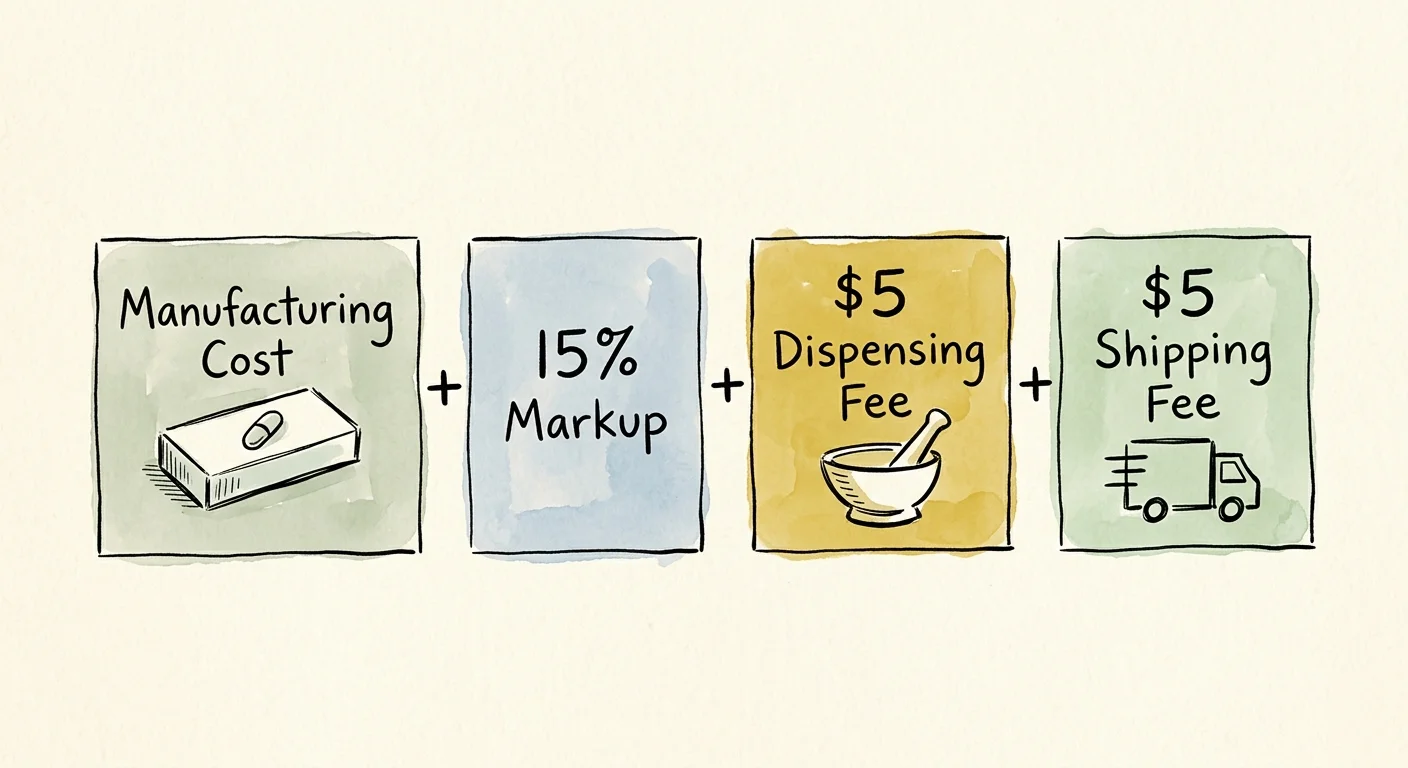
Their pricing formula is straightforward: the exact manufacturing cost plus a fixed 15 percent markup, a $5 pharmacy dispensing fee, and a $5 shipping fee. This straightforward pricing structure cuts out pharmacy benefit managers entirely and delivers astonishing savings on chronic condition medications.
Consider the practical impact on your monthly household budget. Generic cancer, psychiatric, and heart medications that retail for $1,000 to $2,000 per month through traditional insurance billing frequently cost under $20 per month through Cost Plus.
Because Cost Plus operates as an online mail-order pharmacy, you submit your doctor’s prescription directly through their website. While they do not process traditional insurance claims, their flat cash pricing routinely sits lower than standard insurance copays for millions of Americans.
If you take daily generic maintenance drugs, this service offers unmatched long-term financial relief.
Tip #3: SingleCare
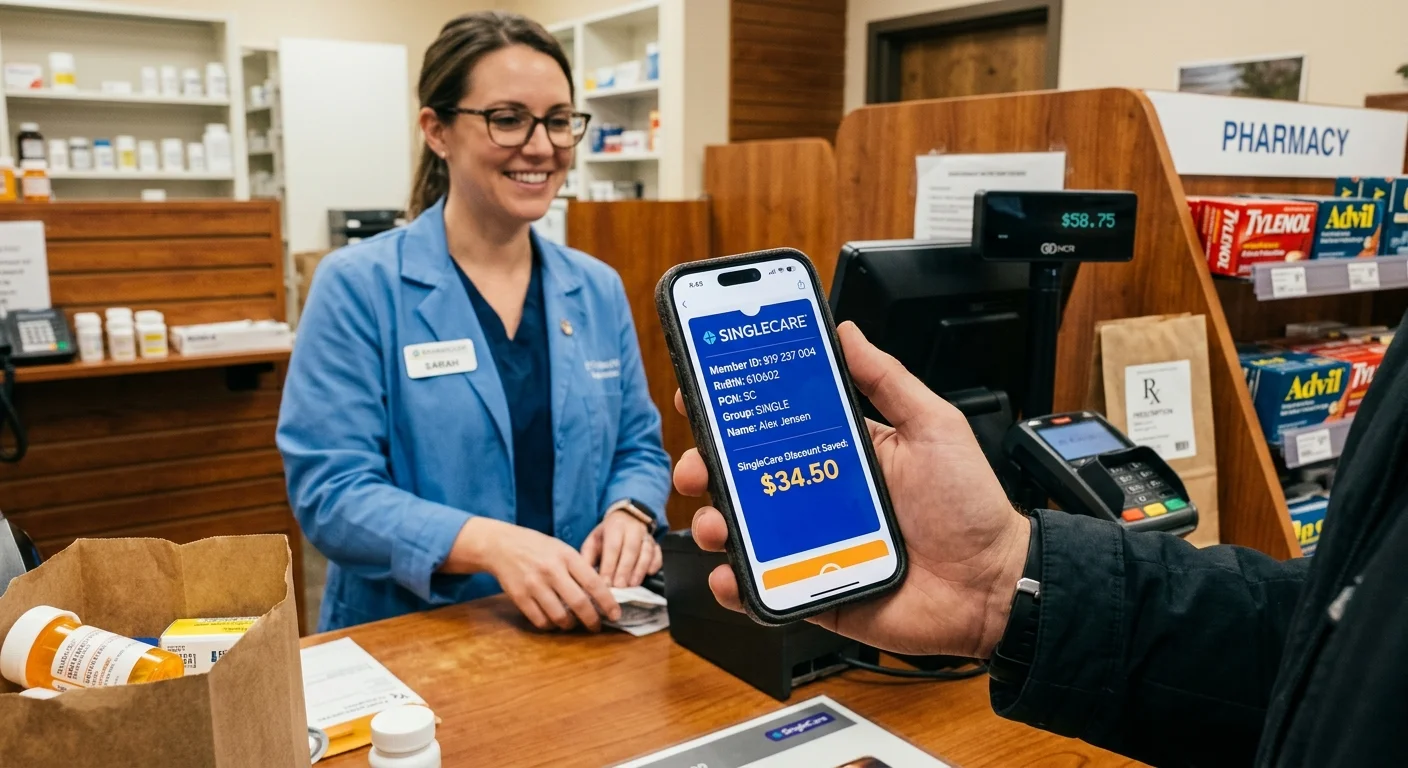
SingleCare acts as a direct competitor to GoodRx, providing free prescription discount cards that lower cash prices at over 35,000 pharmacies nationwide, including major national chains like CVS, Walgreens, and Walmart.
SingleCare partners directly with major pharmacy networks, which allows them to negotiate exclusive discounted rates on thousands of FDA-approved generic and brand-name drugs. Their platform is free to use without any hidden subscription fees, personal registration barriers, or complex paperwork.
SingleCare stands out with its transparent price-matching features and a dedicated loyalty savings program. When you create a free user account, SingleCare adds promotional savings dollars directly into your digital wallet, which you can apply toward future prescription fills.
Furthermore, single-drug cash prices fluctuate constantly based on network contracts. A generic medication that costs less on GoodRx today might cost less on SingleCare tomorrow.
Checking both mobile apps on your smartphone before reaching the checkout counter guarantees you secure the absolute lowest available cash rate every single time.
Tip #4: Retail $4 and $10 Generic Discount Programs
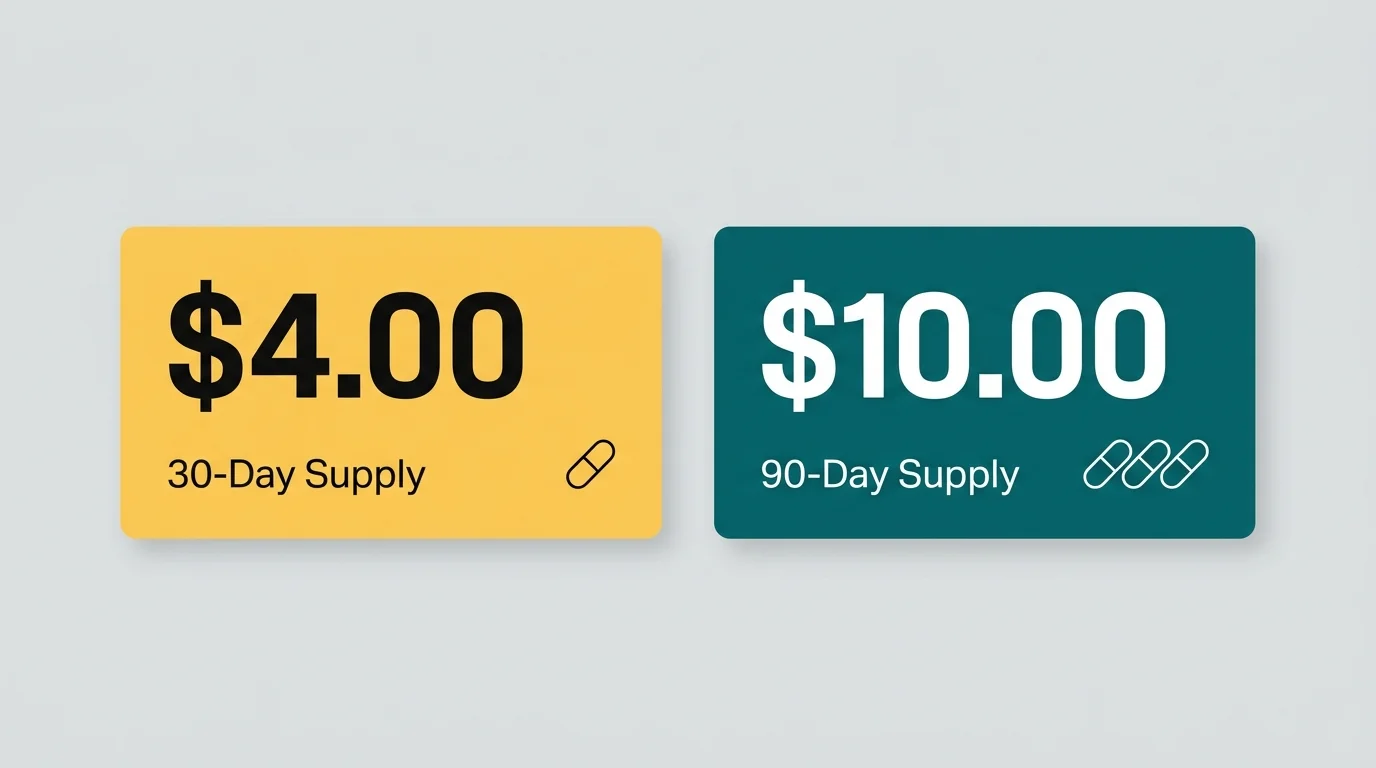
Many consumers forget that major retail pharmacy chains maintain their own proprietary discount lists that bypass third-party apps entirely. The landmark example is Walmart’s Rx Savings Program, which offers select covered 30-day generic prescriptions for just $4 and 90-day supplies for $10 without requiring health insurance.
Other major grocery and retail chains, including Kroger and regional supermarkets, run similar low-cost generic formularies that cover popular medications for heart health, diabetes, mental health, and common antibiotics.
Unlocking these ultra-cheap prices requires zero membership fees or discount card sign-ups. You simply ask your doctor to prescribe medications that appear on the pharmacy’s published low-cost generic list.
If your doctor prescribes a $60 generic medication, ask if an equivalent generic alternative on the store’s $4 list can treat your condition just as effectively.
Switching to a 90-day supply for $10 cuts your annual medication cost down to $40 per year, yielding massive recurring savings for smart household budgeting.
Tip #5: Walgreens Prescription Savings Club
For dedicated Walgreens shoppers, the Walgreens Prescription Savings Club provides a structured paid membership program designed to slice costs on generic and brand-name drugs. The program costs $20 annually for individuals or $35 for a family membership that covers all household members, including pets.
Members gain access to deep discounts on over 8,000 brand-name and generic medications, diabetic supplies, nebulizers, and lifestyle prescriptions not traditionally covered by standard insurance.
Beyond direct pharmacy savings, this program delivers additional cash-back perks for daily household spending. Members earn 20 percent cash back in Walgreens Cash rewards on all Walgreens brand health and wellness products, photofinishing, and store services.
If your family takes multiple routine generic prescriptions, the initial $35 family fee typically pays for itself within your first two pharmacy visits.
The ability to include household pets makes it an exceptional financial tool for families paying out-of-pocket for expensive veterinary prescriptions like heartworm or allergy treatments.
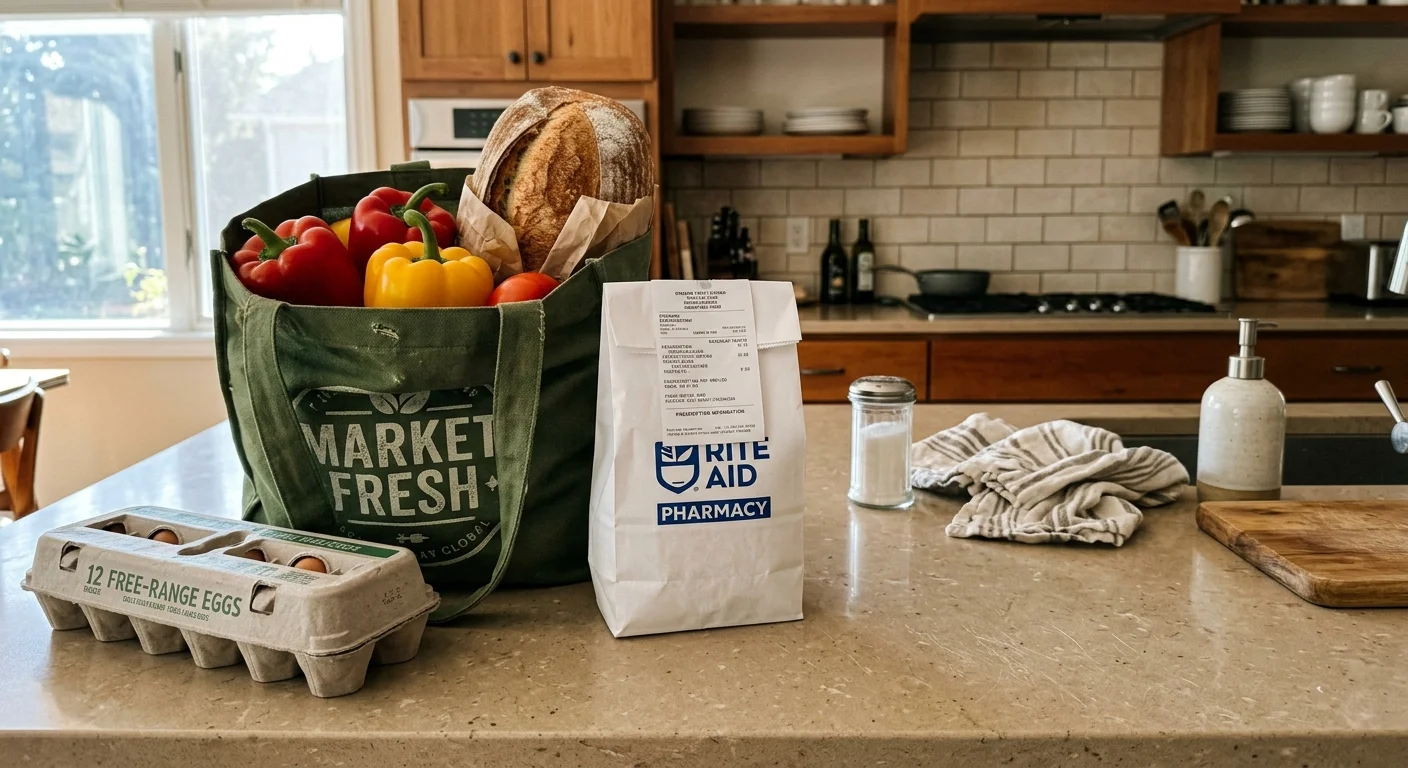
Tip #6: Kroger Rx Savings Club
Kroger partnered directly with GoodRx to build the Kroger Rx Savings Club, an exclusive paid membership program tailored for grocery shoppers. Individual memberships cost $36 per year, while family plans cost $72 per year and cover up to six family members, including pets.
The program establishes exclusive pricing tiers across thousands of generic drugs available at Kroger family pharmacies, including Ralphs, Fry’s, Fred Meyer, and Smith’s.
The marquee advantage of the Kroger Rx Savings Club is its tier of completely free medications. Members receive over 100 common generic prescriptions—including popular medications for diabetes, high blood pressure, and women’s health—for $0 out of pocket.
Other tier-one generics cost just $3 for a 30-day supply or $6 for a 90-day supply. If you regularly take medications featured on their free or $3 lists, paying the annual membership fee generates hundreds of dollars in net financial savings every single year.
Tip #7: Amazon Pharmacy and Prime Savings
Amazon has expanded aggressively into the prescription drug space, offering seamless digital ordering and fast home delivery through Amazon Pharmacy.
For active Amazon Prime members, the service includes built-in prescription savings benefits that yield up to 80 percent off generic medications and 40 percent off brand-name drugs when paying without insurance.
You can compare your insurance copay directly against Prime cash pricing on a single transparent product page before placing an order.
In addition to standard savings, Amazon offers Prime members a subscription add-on called RxPass for just $5 per month. RxPass grants eligible members access to a broad list of eligible generic medications for one flat monthly fee, with free two-day home delivery included.
You pay $5 total per month regardless of how many eligible prescriptions you fill. This model eliminates physical pharmacy trips, provides complete price certainty, and dramatically lowers monthly healthcare expenses for chronic disease management.
Tip #8: RxSaver
RxSaver operates as a free prescription savings platform that helps you search, compare, and redeem prescription coupons across local and national retail pharmacies. Formerly known as RetailMeNot Rx Saver, this tool aggregates pharmacy discount pricing and provides instant digital coupons you present to your pharmacist.
RxSaver targets everyday generic drugs as well as specialized prescriptions that health insurance plans frequently decline to cover.
RxSaver differentiates itself through a user-friendly price lookup tool and price stability tracking. Pharmacy cash prices fluctuate due to backend contract shifts, but RxSaver allows you to verify that a store honors a specific coupon price before driving to the counter.
If your current insurance plan places a vital medication on a high copay tier, checking RxSaver frequently reveals cash rates that undercut your copay by 30 to 50 percent.

Tip #9: Optum Perks
Optum Perks is a discount card platform operated by Optum, a subsidiary of healthcare conglomerate UnitedHealth Group. Because Optum operates one of the nation’s largest pharmacy benefit managers, Optum Perks leverages massive direct negotiation scale to secure ultra-competitive cash pricing.
The service is completely free, open to anyone regardless of insurance status, and accepted at over 64,000 pharmacies nationwide.
You can search for discount coupons on their website or app, send the coupon to your phone via text or email, and present it to the pharmacy staff.
Because Optum controls underlying pharmaceutical distribution networks, their cash discount cards often yield lower pricing on high-demand maintenance drugs than independent aggregator apps.
Furthermore, Optum Perks does not require user registration or personal medical history disclosures to access discount codes, protecting your health data privacy while cutting your bills.

Tip #10: NeedyMeds and Patient Assistance Programs
When generic alternatives do not exist and expensive brand-name medications carry monthly prices in the hundreds or thousands of dollars, generic discount cards may not offer enough financial relief.
That is where NeedyMeds comes in. NeedyMeds is a national non-profit organization that serves as a comprehensive database for Patient Assistance Programs (PAPs), manufacturer co-pay debit cards, and local disease-specific financial aid funds.
Pharmaceutical manufacturers run PAPs to supply free or ultra-low-cost brand-name drugs to low-income, underinsured, or uninsured patients. NeedyMeds simplifies the complex application process by consolidating eligibility criteria, income threshold requirements, and application forms in one free database.
If you qualify based on household income, PAPs can send brand-name medications directly to your home or doctor’s office for $0 per month. Exploring NeedyMeds is an absolute essential step if you face crippling costs for specialized biologic or brand-name drug therapies.
The Bottom Line: What This Means for Your Wallet
Navigating the complex landscape of prescription drug pricing requires you to abandon the assumption that your health insurance copay always provides the lowest price.
Retail prescription drugs account for 8.8 percent of national health expenditures, yet inflated cash prices and opaque pharmacy benefit manager fees mean consumers routinely overpay.
By comparing insurance copays against cash discount cards like GoodRx, Optum Perks, and SingleCare, or utilizing direct transparent platforms like Mark Cuban Cost Plus Drug Company, you take immediate control of your healthcare spending.
Recent legislative shifts also provide key protections for Medicare beneficiaries. Under the Inflation Reduction Act, covered insulin copays for Medicare enrollees are capped at $35 per 30-day supply.
Furthermore, starting January 1, 2025, annual out-of-pocket spending on covered prescription drugs for Medicare Part D enrollees was capped at $2,000 per year, indexed to $2,100 in 2026. Combining these federal protections with smart cash-saving strategies ensures that high prescription costs never derail your financial stability.
Always check cash prices before paying at the counter—your wallet will thank you.
For consumer protection information, visit the Federal Trade Commission (FTC) and the Consumer Financial Protection Bureau (CFPB). For product safety and reviews, consult Consumer Reports.
Frequently Asked Questions
Can I use prescription discount cards along with my health insurance?
You cannot stack or combine a prescription discount card with your health insurance on the exact same purchase transaction. When you purchase a prescription, the pharmacist must process the transaction either through your insurance plan or through the discount card program.
However, you can choose whichever option offers the lowest price at the counter. If the discount card cash price is cheaper than your insurance copay, ask the pharmacist to process the fill using the discount card instead of your insurance card.
Why are discount card prices sometimes cheaper than health insurance copays?
Health insurance copays are fixed amounts negotiated between insurance companies and pharmacy benefit managers, regardless of the underlying cash cost of the drug. For many common generic medications, the actual wholesale cash price is just a few dollars.
Discount card platforms leverage direct bulk negotiated rates with pharmacies, cutting out administrative overhead and delivering wholesale-level pricing directly to consumers. As a result, the cash discount price is frequently lower than your insurance tier copay.
Do purchases made with prescription discount cards count toward my insurance deductible?
Generally, purchases made using cash discount cards or direct programs like Cost Plus Drug Company do not automatically apply to your health insurance deductible or annual out-of-pocket maximum.
Because these purchases bypass your insurance company’s billing system, the insurer has no automated record of the transaction. Some insurance plans allow you to manually submit receipts for out-of-network prescription expenses, but rules vary widely.
If reaching your annual health insurance deductible is a priority, weigh the short-term cash savings against your long-term deductible goals.
Are prescription discount cards completely free to use?
Most third-party discount platforms, such as GoodRx, SingleCare, RxSaver, and Optum Perks, are 100 percent free to consumers and require no paid subscription. These platforms generate revenue by collecting small administrative processing fees paid by the participating pharmacies whenever a coupon code is used.
Some store-specific programs, such as the Kroger Rx Savings Club or Walgreens Prescription Savings Club, charge modest annual membership fees in exchange for deeper discounts or free medication tiers, which pay for themselves if you regularly take qualifying medications.
Disclaimer: This article is for informational purposes only and does not constitute financial advice. The content reflects the author’s opinion and research at the time of writing.
Always do your own research before making financial decisions.