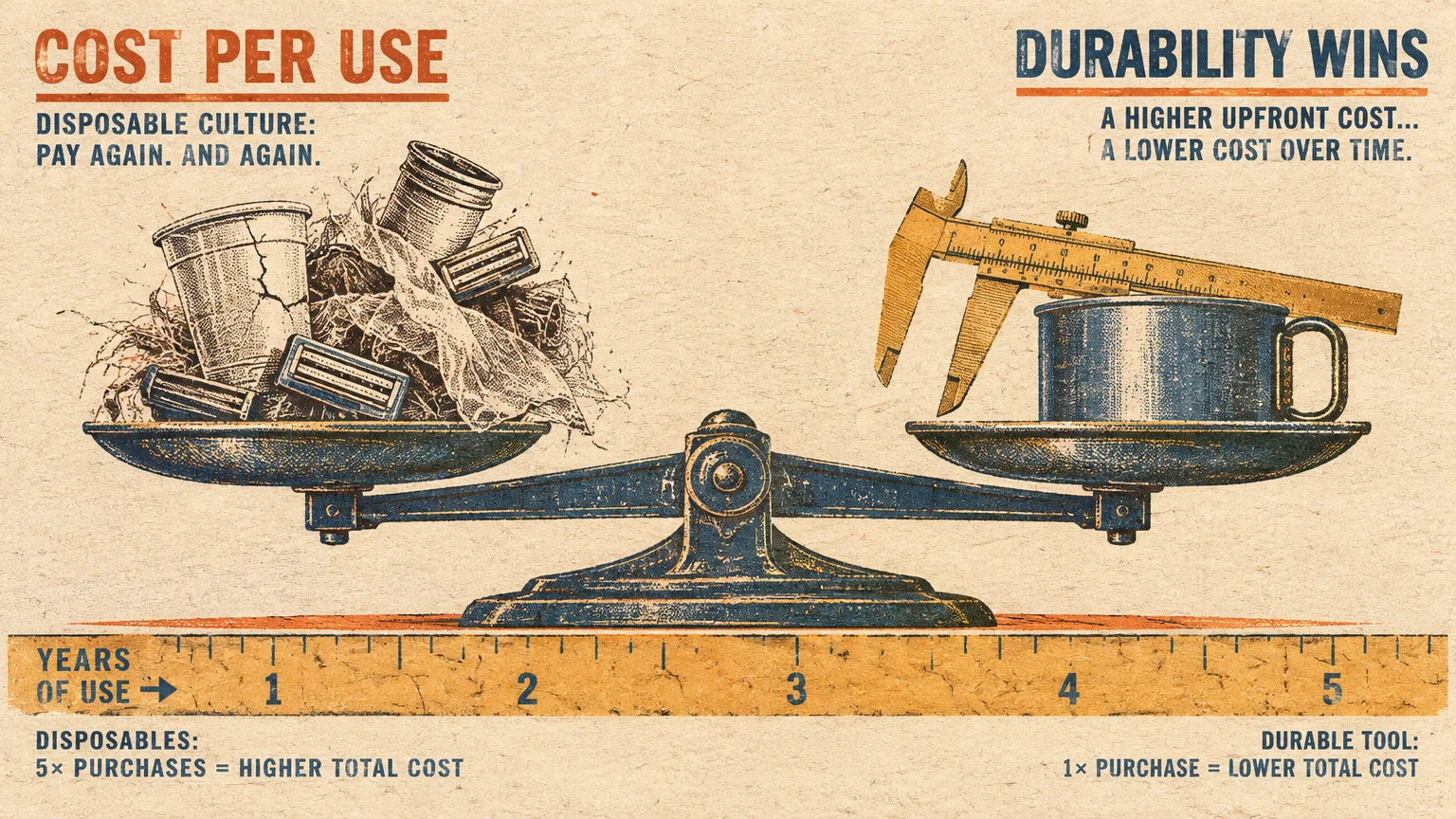
Stores love cheap upfront prices on disposable goods because you have to replace them forever. Flip that script by measuring cost per use, and higher-priced smart purchases suddenly become massive money-savers.
Average U.S. household spending hit $81,905 in 2025, yet much of that cash leaks out through tiny daily habits and flimsy gear. Retailers count on you ignoring the five-year math at checkout.
These twelve worth the money buys turn everyday convenience traps into durable assets that quickly pay for themselves. You get insider retail warnings alongside practical steps to practice frugal spending without sacrificing comfort.

Shopping Trap #1: Overpriced Café Runs (Buy a Home Coffee Setup)
Coffee chains train you to treat a five-dollar cup as pocket change. Look closely at restaurant pricing data, and that innocent morning ritual quietly rivals a monthly car payment.
Toast POS data shows the median U.S. price for a regular hot coffee hit $3.79 in October 2026, up from $3.52 just fourteen months earlier. Cold brew climbed to a $5.58 median in March 2026, while the average latte sits around $5.60.
According to the National Coffee Association, 66% of American adults drank coffee in the past day and 55% had a specialty drink in the past week. Meanwhile, Bureau of Labor Statistics inflation data shows coffee prices jumped 18.3% year-over-year in January 2026 and 47% over five years.
The retail trap: Appliance aisles push flashy single-serve pod machines at steep holiday discounts. Here is what they do not advertise—those proprietary pods lock you into paying far more per cup while locking down your flavor choices.
The smart fix: Skip the pod machine and buy a reliable burr grinder paired with a simple pour-over cone, French press, or programmable drip maker. You control bean quality, slash waste, and drop your cost per use to pennies after the first month.
Watch out for grocery store shrinkflation on the coffee aisle, too. Manufacturers quietly shrink standard bags from sixteen ounces down to ten or twelve ounces while keeping the bag height identical.
Shopping Trap #2: Bottled Water Markups (Switch to a Filter Pitcher and Reusable Bottle)
Walk past any convenience store cooler and you will see bottled water at eye level wearing mountain-spring graphics. Behind that crisp label sits one of the widest profit margins in retail.
The U.S. Environmental Protection Agency estimates average residential tap water costs just $6.64 per 1,000 gallons—or $15.21 per 1,000 gallons including sewer charges. Drinking eight eight-ounce glasses daily from your faucet costs roughly $1.21 to $2.78 for an entire year.
Compare that to bottled water, which averages $1.22 to $3.00 per gallon in warehouse multi-packs and $7.50 to over $12.00 per gallon for single convenience bottles. Even so, bottled water stayed the top U.S. packaged beverage in 2025 with $51.3 billion in retail sales, per the Beverage Marketing Corporation.
The regulatory reality: Under the Safe Drinking Water Act, the EPA regulates public tap water and requires annual Consumer Confidence Reports every July 1.
By contrast, the Food and Drug Administration regulates bottled water as a packaged food product, and many brands simply bottle filtered municipal tap water.
The smart fix: Grab a certified carbon water filter pitcher and an insulated stainless-steel bottle you actually enjoy carrying. Buy replacement filters in bulk multi-packs online rather than grabbing overpriced single cartridges near store checkout lanes.
Shopping Trap #3: Dumb Utility Habits (Install an Energy Star Smart Thermostat)
Your utility company never calls to tell you that an empty house does not need climate control at noon. Roughly 48% of the average U.S. home energy bill—over $900 a year—goes straight to heating and cooling, according to EPA Energy Star.
With average U.S. residential electricity reaching 18.34 cents per kilowatt-hour in October 2026—up 23% since 2022—wasted runtime hits harder every billing cycle. A manual thermostat relies on your memory; a smart model relies on sensors and schedules.
Energy Star field tests across more than 1,000 homes show certified smart thermostats save about 8% on heating and cooling, or roughly $50 a year. Manufacturer estimates run higher depending on old habits, with Google Nest reporting 12% to 15% savings and Ecobee reporting up to 26%.
The retail trap: Home improvement centers display $250 flagship thermostats right at the endcap without mentioning local subsidies. Buying at full retail price stretches your payback period unnecessarily when your electric or gas utility may cover half the sticker.
The smart fix: Typical smart thermostats retail between $150 and $250, delivering a one-to-four-year payback even before discounts. Before you swipe your card, search the Energy Star rebate finder tool using your zip code to claim instant utility credits.
Shopping Trap #4: Bargain-Bin Light Bulbs (Upgrade to Quality LEDs)
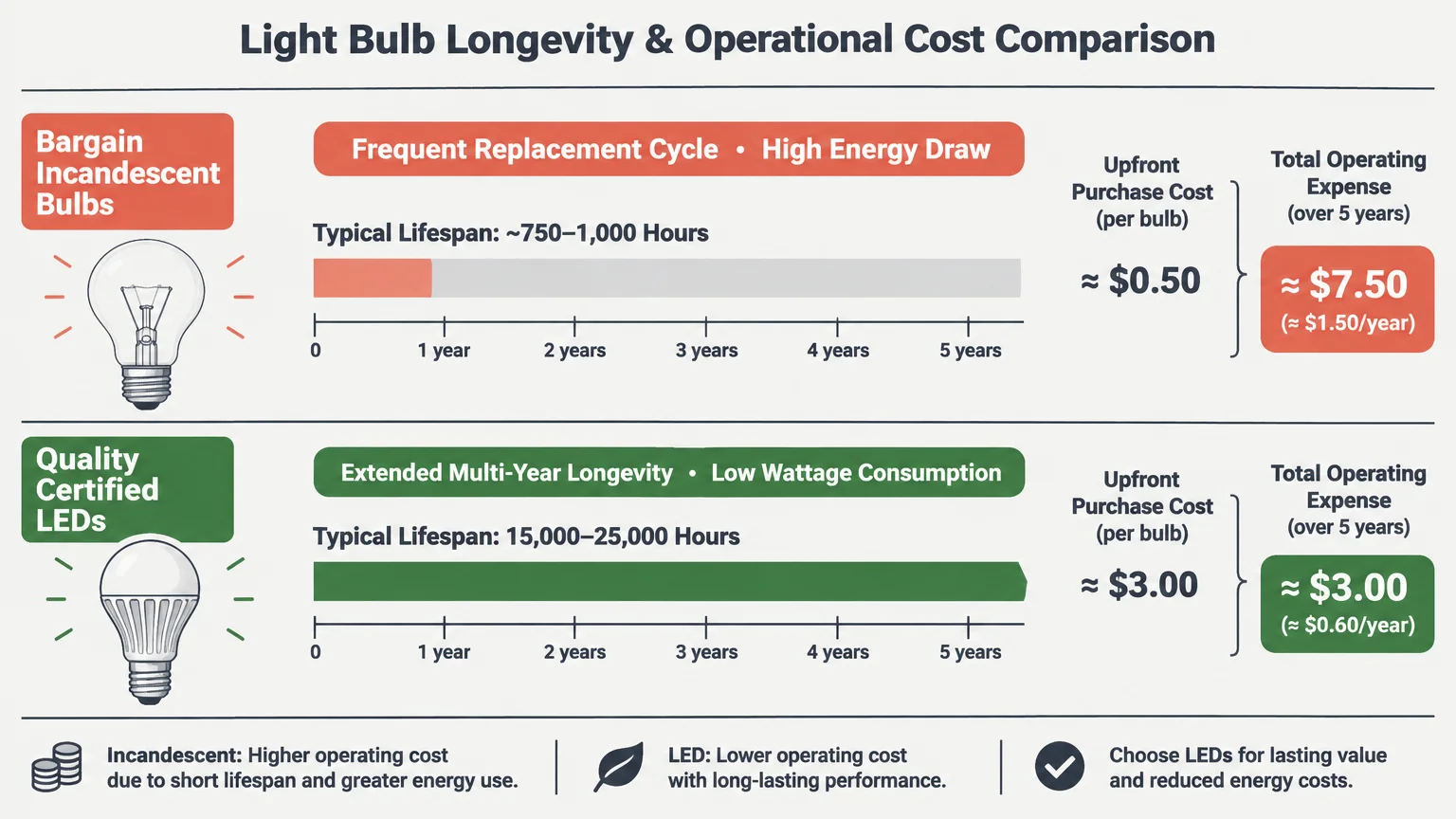
Hardware stores still tuck cheap multipacks of legacy bulbs onto lower shelves because shoppers grab the lowest box price on instinct. That penny-wise habit burns real cash every time you flip a wall switch.
The U.S. Department of Energy notes that traditional incandescent bulbs waste 90% of their electricity as heat rather than light. Quality LEDs use 75% to 90% less energy and last up to 25 times longer.
Switching bulbs throughout an average American home saves $200 to $225 every year, per EPA and DOE estimates. One 15,000-hour Energy Star LED saves about $80 over its lifespan compared with buying fifteen halogen-incandescent bulbs for that same socket.
The quality trap: Dollar stores and discount bins overflow with off-brand LEDs that lack independent certification. Those bargain bulbs often omit proper heat sinks, causing premature flickering and early failure long before their promised lifespan.
The smart fix: Look for the Energy Star label and check brightness in lumens rather than legacy watts. Certified LEDs are rated by L70 lumen depreciation, meaning they still shine at 70% brightness after thousands of hours rather than dying abruptly.
Shopping Trap #5: Water-Guzzling Bathroom Hardware (Install WaterSense Fixtures)
Big-box showroom displays love massive rain showerheads and high-pressure chrome faucets that look like a luxury spa. What those displays hide is how quickly unnecessary flow drains both your water heater and your bank account.
According to U.S. Geological Survey estimates, the average American uses 82 gallons of water per day at home. Meanwhile, EPA WaterSense reports that the average family spends over $1,000 a year on water while losing 9,400 gallons annually to leaks.
Swapping in WaterSense-labeled hardware—which uses at least 20% less water without sacrificing rinse power—cuts those numbers fast. WaterSense upgrades save $130 a year on toilets, $70 a year on showerheads, and $250 over the lifetime of bathroom faucet aerators.
The cost-per-use payoff: Giving a main bathroom a full WaterSense makeover can pay for itself in as little as one year. Pair those fixtures with Energy Star appliances, and annual savings top $380.
The smart fix: You do not need a plumber to start saving today. Screw-on WaterSense faucet aerators and low-flow showerheads cost a fraction of full vanity remodels and take ten minutes to install with basic pliers.
Shopping Trap #6: Unused Gym Contracts (Build a Compact Home Workout Kit)
Fitness chains thrive on New Year optimism and fine print. Their business model does not rely on packed weight rooms—it relies on members paying monthly dues long after their sneakers gather dust in the closet.
According to FITT Finder’s June 2026 index of over 150,000 U.S. fitness businesses, a standard gym membership averages $54 a month, or $648 a year, with a $49 monthly median. Even budget clubs charging $15 a month tack on annual maintenance fees around $49.
Health and Fitness Association data shows 81 million Americans belonged to a gym or studio in 2025, yet visits averaged just 1.5 times per week, down from 2.1 in 2019.
Industry figures from IHRSA show 50% of new members quit within six months, and YouGov found cost is the top reason people cancel.
The contract trap: Many gyms lure you in with zero-enrollment promotions, then bury auto-renewal terms that require in-person visits or certified letters to cancel. Worse, boutique smart machines bundle high monthly app subscriptions on top of four-figure hardware prices.
The smart fix: Invest in adjustable dumbbells, a sturdy pull-up bar, and resistance bands with zero recurring fees. Shop secondhand marketplaces in late spring when January buyers offload barely used gear, and your per-workout cost drops toward zero within months.
Shopping Trap #7: Fridge-to-Trash Groceries (Invest in Glass Food Storage and Meal-Prep Tools)
Warehouse clubs and grocery endcaps tempt you with buy-one-get-one produce and oversized family packs that feel like smart frugal spending. Yet cheap packaging at home turns half those bargains into slimy science experiments by Friday.
An April 2025 EPA report estimates wasted food costs Americans $728 per person each year—or $2,913 annually, roughly $56 a week, for a family of four. Overall, the USDA estimates 30% to 40% of the U.S. food supply goes uneaten.
ReFED’s 2026 report counted 70 million tons of surplus food in 2024 worth roughly $380 billion, naming households the single largest source of waste. Fortunately, a 2023 study in Resources, Conservation and Recycling found that flexible meal planning cuts household food waste by 33%.
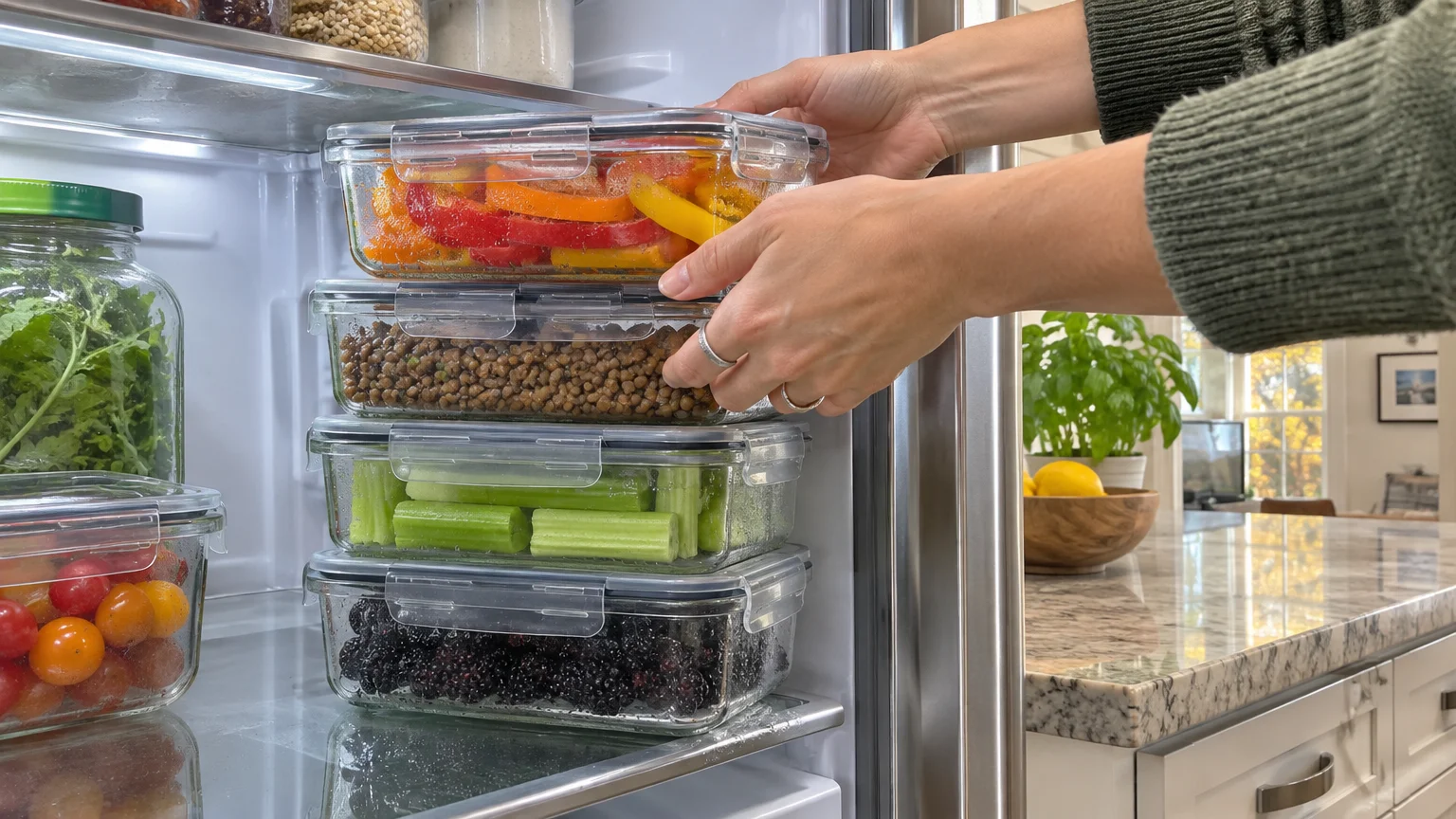
The kitchen trap: Flimsy, mismatched plastic tubs stain, warp in the dishwasher, and lose their lids. When finding a matching lid feels like solving a puzzle, you shove leftovers in loose foil and forget them behind the milk.
The smart fix: Buy one uniform set of airtight glass containers with snap-locking lids plus reusable silicone bags and a basic digital kitchen scale. Transparent glass lets you see leftovers immediately, turning forgotten groceries into tomorrow’s lunch.
Shopping Trap #8: The Delivery App Habit (Equip Your Kitchen for Fast Weeknight Cooking)
When you feel exhausted at 6 p.m., food delivery apps look effortless. They tuck menu markups, service fees, driver tips, and delivery charges onto separate lines so the true markup never hits you all at once.
Bureau of Labor Statistics consumer spending data shows U.S. households spent an average of $4,142 on food away from home in 2025, up 5% from $3,945 in 2024. According to USDA Economic Research Service data from June 2026, dining out now claims 56.3% of all U.S. food spending.
Inflation widens that gap every month. BLS Consumer Price Index figures show restaurant prices rose 4.1% in 2025 compared with 2.4% for groceries—nearly double the pace of inflation.
The cookware trap: Department stores push giant twenty-piece boxed cookware sets filled with thin pans that scorch food and flimsy gadgets you touch once. Frustrating tools push tired cooks straight back onto takeout apps.
The smart fix: Skip the boxed set and put your money into two workhorses: a heavy enameled Dutch oven or cast-iron skillet and one balanced eight-inch chef’s knife. Cooking feels faster and cleanup stays simple, making home meals effortless on busy weeknights.
Shopping Trap #9: The Endless Toilet Paper Treadmill (Add a Basic Bidet Attachment)
Walk down the paper-goods aisle and you will see baffling package math claiming twelve mega-rolls equal forty-eight regular rolls. Retailers shrink sheet widths and fluff up cardboard cores so you burn through packs faster and buy more often.
The average American uses roughly 141 rolls of toilet paper a year, with households typically spending $120 to $250 or more annually. Mid-range paper for a family of four easily reaches $280 to $400 each year, yet only about 6% of U.S. adults own a bidet.
A basic non-electric bidet attachment costs $30 to $100—typically $35 to $80—and installs under your existing toilet seat in fifteen minutes. Each wash uses about one-eighth of a gallon of water, costing roughly $6 to $12 per person annually while cutting toilet paper use by 50% to 75% or more.
The upsell trap: Luxury bath showrooms advertise $500 to $700 electric bidet seats with heated blowers, nightlights, and remote controls. You do not need an electrical outlet beside your toilet to capture the cost-per-use payoff.
The smart fix: Choose a durable brass-valve non-electric attachment with self-cleaning nozzles. At typical household paper spending, a $40 unit pays for itself in four to twelve months and keeps saving cash year after year.
Shopping Trap #10: Plastic Cartridge Razor Extortion (Buy a Metal Safety Razor)
Supermarket shaving aisles lock multi-blade plastic cartridges behind glass cabinets like fine jewelry. That theater of scarcity helps justify charging $3 to $5 per refill, or roughly $18 for a standard four-pack.
Razor companies practically give away plastic handles because those handles lock you into proprietary refills for life. Worse, women’s razors often carry a higher pink-tax markup even when the underlying plastic design is nearly identical.
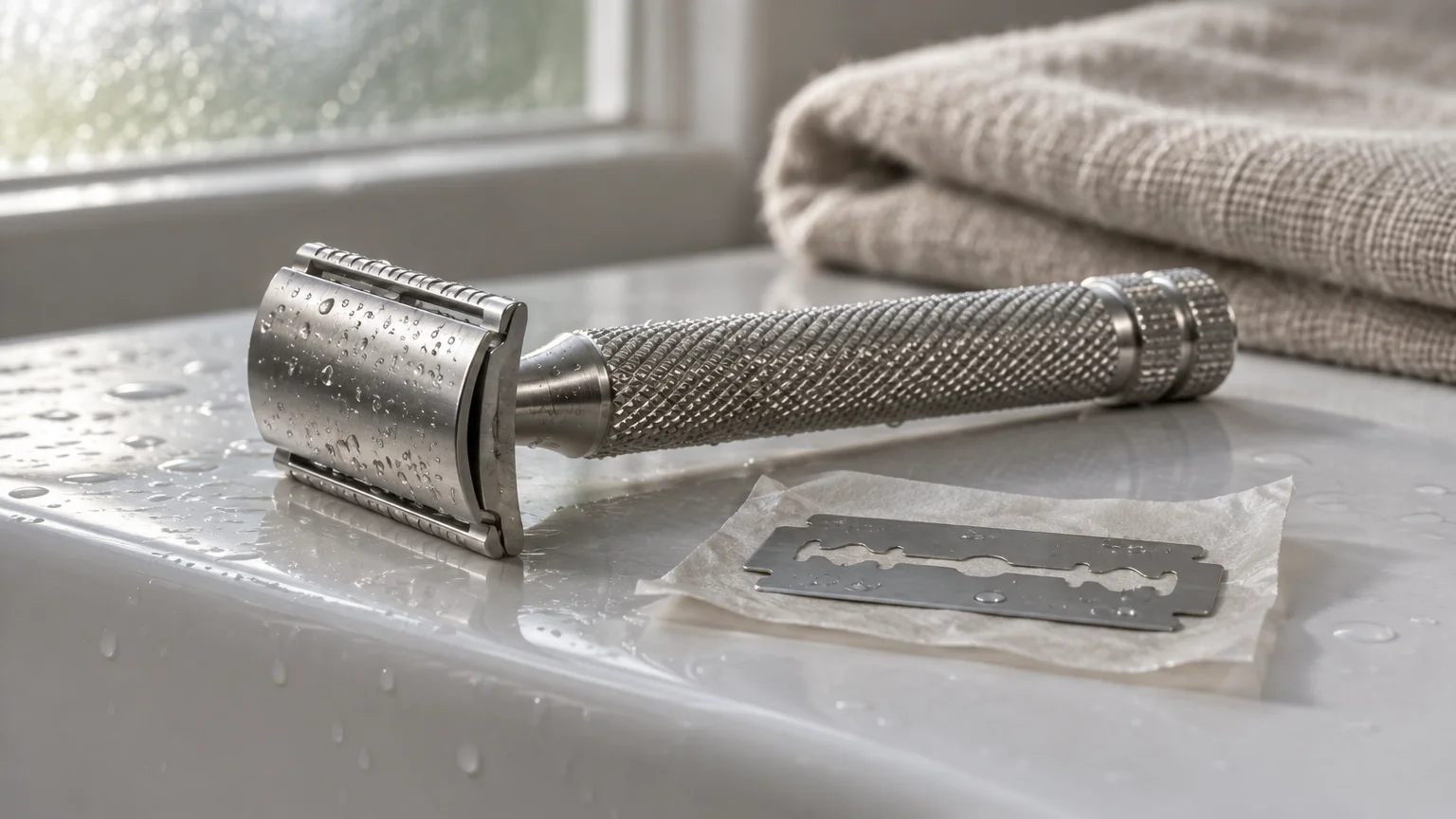
Switch to a solid metal double-edge safety razor for a one-time handle cost around $20 or more, and the math flips overnight. Replacement stainless-steel blades run just $0.08 to $0.10 apiece—roughly $8 to $10 for a 100-pack that lasts years.
The skin and waste bonus: Single-piece steel blades are fully recyclable, unlike bonded plastic-and-metal cartridges bound for landfills. If you worry about irritation, a 2025 review in Federal Practitioner noted that multi-blade razors used with proper skin prep and moisturizer do not worsen razor bumps.
The smart fix: Ignore slick subscription razor clubs that still charge a couple of dollars per plastic cartridge. Buy a weighted brass or stainless handle once, pair it with a bulk box of double-edge blades, and slash grooming costs permanently.
Shopping Trap #11: Upsized Trucks and SUVs (Choose a Right-Sized Hybrid or Small Sedan)
Auto dealerships never lead with five-year ownership costs; they lead with monthly payments stretched across 72 or 84 months. That sleight of hand nudges families into oversized pickups and massive SUVs built for imaginary off-road expeditions.
AAA’s Your Driving Costs 2026 study—based on 15,000 annual miles over five years on a $39,376 average vehicle—puts new-car ownership at $12,863 a year, or $1,071.92 a month. That equals 86 cents per mile once you include $4,422 in depreciation, $2,600 in fuel, $2,098 in insurance, and $1,760 in maintenance.
Look at the class gap AAA uncovered: a small sedan averages $9,259 per year, compared with $16,449 per year for a half-ton pickup—a $7,190 annual difference. Across all four vehicle classes where AAA compared gas, hybrid, and electric powertrains, hybrids delivered the lowest total ownership cost.
The showroom trap: Electric vehicles cut fuel expenses by 66% to 70%, yet AAA noted steeper depreciation pushed their total ownership cost above hybrids. Meanwhile, full-coverage insurance alone hit a $2,237 average in Insurify’s first-half 2026 report.
The smart fix: Right-size your vehicle for the driving you do 95% of the time rather than twice a year. If you haul plywood once a summer, driving a fuel-sipping hybrid or small sedan and renting a store pickup for twenty dollars saves thousands annually.
Shopping Trap #12: Fast-Fashion Glued Footwear (Invest in Resoleable Boots and Heavy Outerwear)
Mall shoe stores and outlet racks bank on shoppers treating boots and winter coats like seasonal disposable items.
You spot a trendy pair of synthetic boots on a clearance table, assume you scored a steal, and toss them in the trash when the heels split four months later.
Here is the quality over quantity rule retailers hate: glued cement construction cannot survive wet sidewalks, salt, and daily flexing. Once the thin foam midsole compresses or the faux-leather plastic topcoat peels, repair shops cannot stitch it back together.
Compare that throwaway cycle to full-grain leather boots built with stitched welt construction or a heavy-duty canvas-and-down winter coat with brass zippers.
When a stitched outsole wears smooth after years of pavement, a cobbler swaps in a fresh sole for a fraction of a brand-new pair.
The outlet-store trap: Watch out for made-for-outlet labels hanging in discount malls. Many famous heritage brands manufacture separate, thinner lines exclusively for outlet racks using synthetic linings, weaker stitching, and hollow plastic heels while stamping the exact same logo on the box.
The smart fix: Inspect the welt seam where the upper meets the sole, check care tags for natural fibers over cheap polyurethane, and verify zipper weight before buying. Shop off-season clearances in late spring to grab heritage quality at fast-fashion prices.
Your Action Plan: How to Be a Smarter Shopper
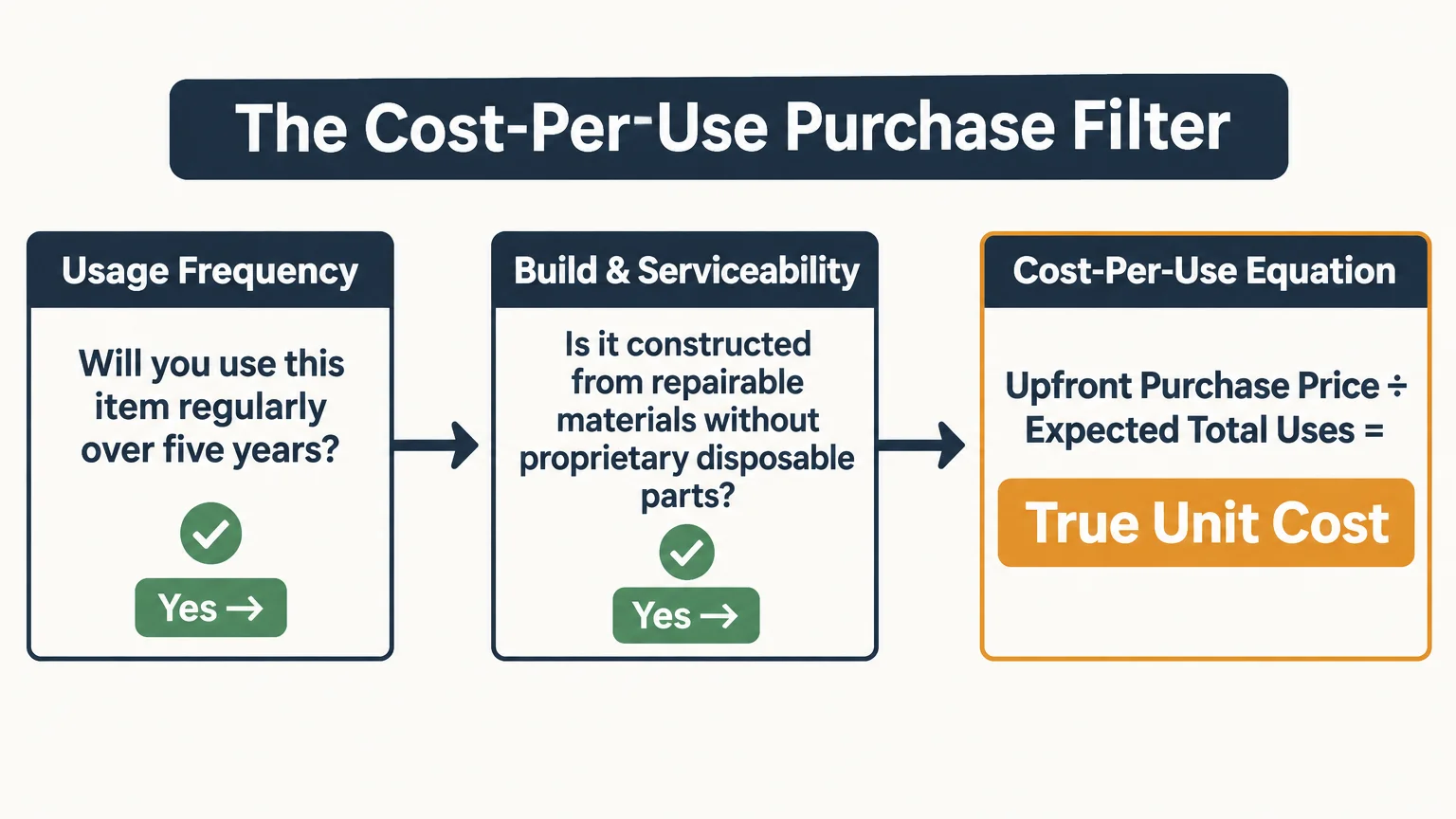
Retailers design every aisle, subscription button, and flash-sale countdown timer to keep you focused on today’s sticker price. Turn the tables on your next shopping trip with a simple three-step filter before anything hits your cart.
Step 1: Run the Five-Year Cost-Per-Use Math
Divide an item’s upfront price by how many times you will realistically use it—and add any mandatory refills, blades, pods, or energy bills. A cheap handle with expensive proprietary refills is never a bargain.
Step 2: Audit Your Recurring Convenience Leaks
Scan last month’s bank statement for repeat small hits: drive-thru coffees, bottled drinks, delivery fees, and unused memberships. Pick your biggest leak first and swap it for one durable replacement that pays back inside twelve months.
Step 3: Verify Quality Before You Pay More
Spending extra only works when the product actually lasts, not when you pay for a trendy logo. Check independent lab certifications like Energy Star or WaterSense, verify warranty terms, and inspect construction materials yourself.
To check for scams and false advertising, visit the FTC. For unbiased product reviews, consult Consumer Reports.
Business ratings are available at the Better Business Bureau.
Frequently Asked Questions
How do I know if an expensive item is actually worth the money?
Focus on repairability, warranty coverage, and replacement-part costs rather than brand prestige. Worth the money buys use serviceable hardware—like replaceable steel blades, standard water filters, or stitched boot soles—instead of sealed plastic designed to fail.
Are extended store warranties ever smart purchases?
Most extended protection plans sold at checkout carry steep markups and narrow exclusions. Check whether your credit card automatically extends the manufacturer’s warranty for free before paying a retailer extra for coverage.
When is the best time to buy durable home and wardrobe upgrades?
Buy counter-seasonally whenever possible. Grab heavy coats and boots during spring clearance markdowns, home gym gear in late spring, and Energy Star appliances during holiday weekend promotions paired with local utility rebates.
How can I avoid fake discounts during big retail sales?
Track prices a few weeks before major sales rather than trusting inflated strike-through MSRP tags. Stores frequently raise list prices right before holiday events so an ordinary discount looks like a massive markdown.
Disclaimer: The opinions in this article are for informational and entertainment purposes. Brands, products, and store policies can change.
Always verify information and prices before making a purchase.