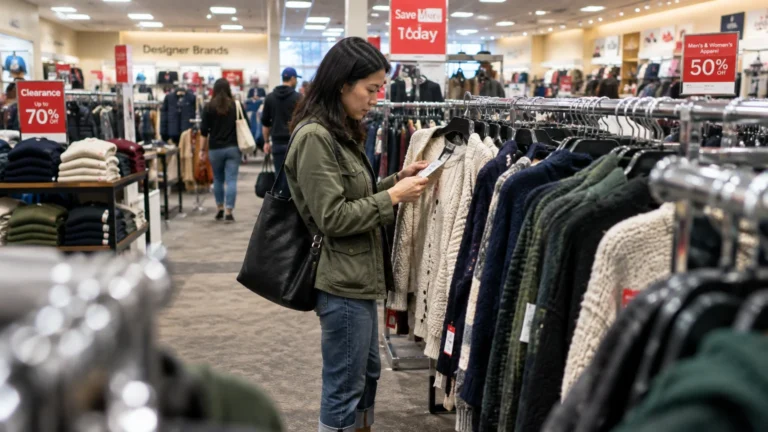
Holiday retail traps cost consumers thousands of dollars every December. You can protect your hard-earned cash by dodging predictable marketing traps right now.
Retailers intentionally engineer late-season pressure to push shoppers into expensive panic buys. High inflation and elevated borrowing rates make those eleventh-hour missteps far more damaging to your household budget than in previous years.
Spotting these traps early keeps your finances secure while you finish purchasing gifts. Here are twelve critical holiday shopping mistakes you must avoid during the final countdown to Christmas.
Tip #1: Falling for the Store Credit Card Pitch at Checkout
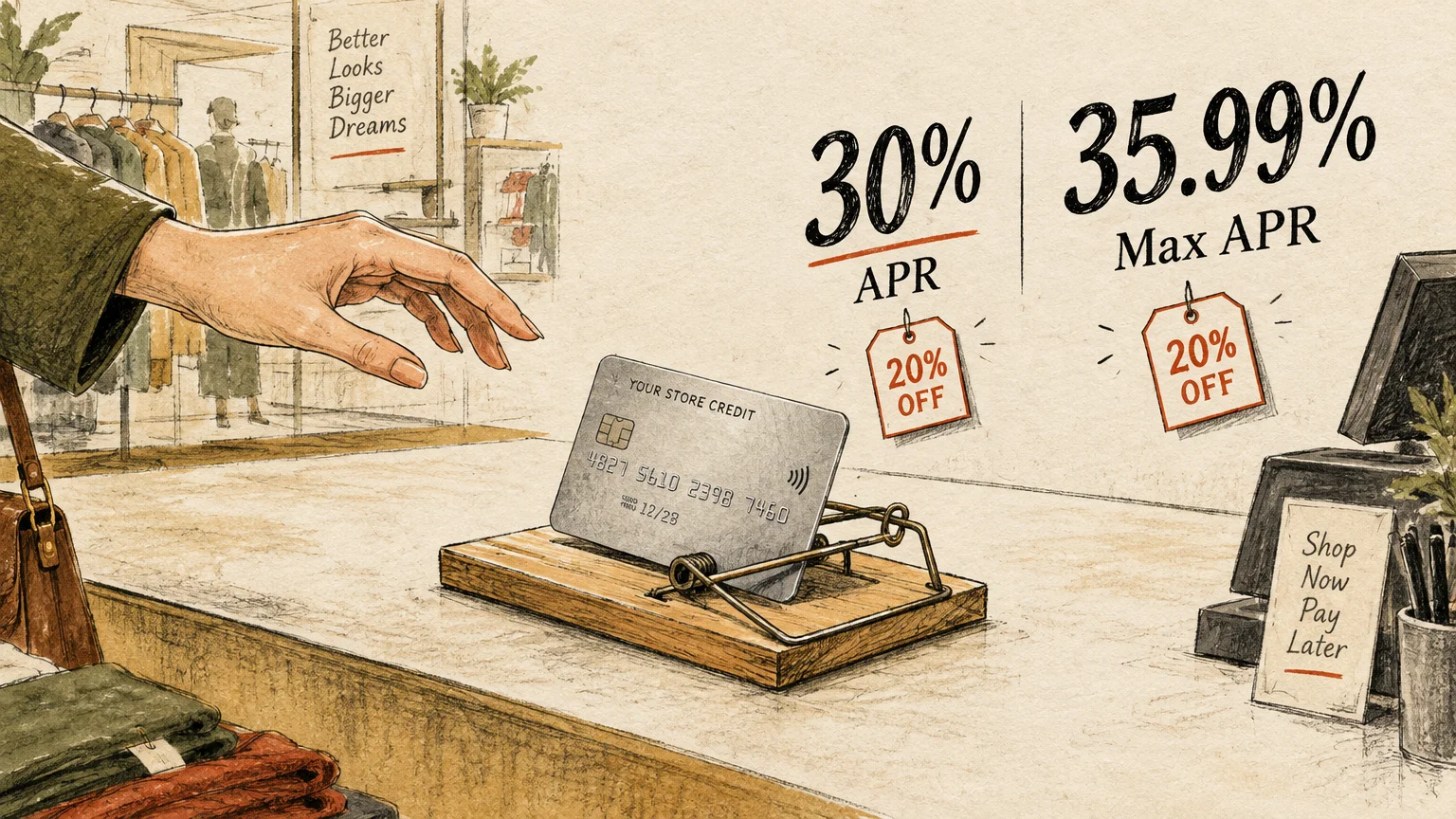
Cashiers frequently offer an immediate discount if you open a store credit card during checkout. That instant twenty percent reduction seems appealing when facing a large holiday balance.
Accepting this offer is one of the most dangerous christmas shopping mistakes of the season. Retailers know that register discounts blind shoppers to astronomical financing costs.
According to Bankrate’s Retail Cards Study, retail store credit cards carry an average APR of over 30%. Subprime store cards push those interest rates as high as 35.99%.
Carrying a balance on a 30% APR card destroys your upfront savings in a matter of months. You trade a modest thirty-dollar discount for hundreds of dollars in compounding interest charges.
Every new store card application also generates a hard inquiry on your credit report. Multiple inquiries in a single month ding your credit score right before the new year.
Politely decline every credit card pitch at the checkout counter. Stick to your existing cash-back cards or pay with debit to keep your balance strictly in check.
If you cannot purchase an item with existing funds, walk away from the register. Sacrificing your financial health for a store coupon is never a winning trade.
Tip #2: Missing Final Carrier Shipping Deadlines
Procrastinating on your digital orders always results in steep shipping penalties. Carriers establish strict deadlines for Christmas arrival, yet millions of shoppers ignore these cutoffs.
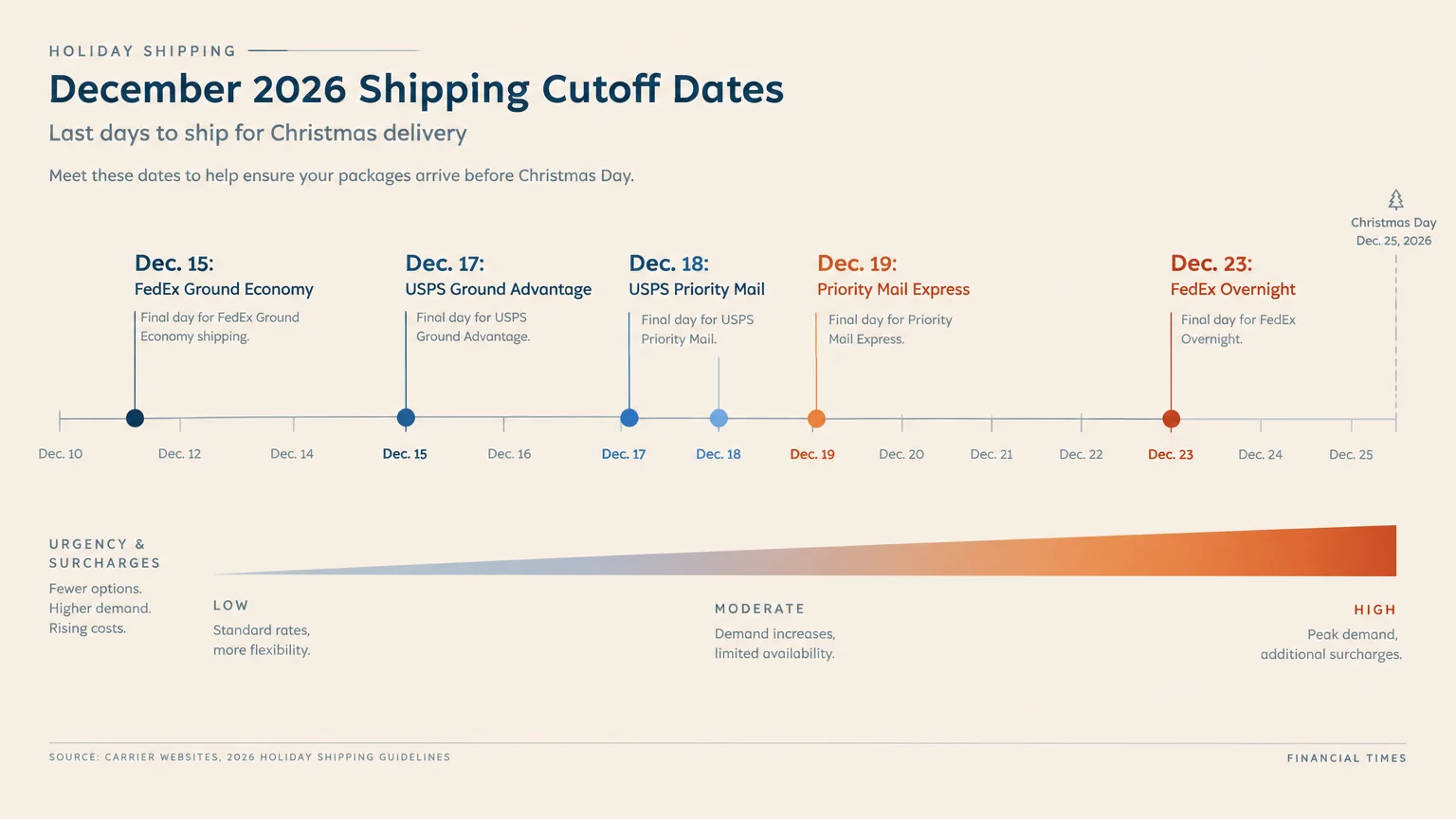
For delivery before Christmas Day on Friday, Dec. 25, 2026, the USPS enforces specific dates.
Ground Advantage and First-Class shipments must clear postal desks by Dec. 17.
USPS Priority Mail requires shipping by Dec. 18, while Priority Mail Express cutoffs fall on Dec.
19. Missing these dates triggers expensive premium parcel rates.
FedEx imposes similarly rigid deadlines. FedEx Ground Economy cuts off on Dec.
15, while standard Ground transit windows close between Dec. 17 and Dec.
23.
Overnight options with FedEx run through Dec. 23, and SameDay delivery extends to Dec.
24. However, those urgent carrier fees often exceed the actual value of the gifts.
Finalize all digital orders before mid-December to capitalize on free standard ground delivery. Planning your orders ahead of time protects your holiday budget from unnecessary delivery surcharges.
If carrier deadlines pass, switch immediately to free in-store or curbside pickup options. Never hand your hard-earned money to shipping carriers due to simple scheduling delays.
Tip #3: Letting “Self-Gifting” Blow Up Your Spending Limits
Browsing through gift aisles inevitably tempts you to purchase items for yourself. Retailers deliberately engineer product placements and promotional bundles to encourage this undisciplined habit.
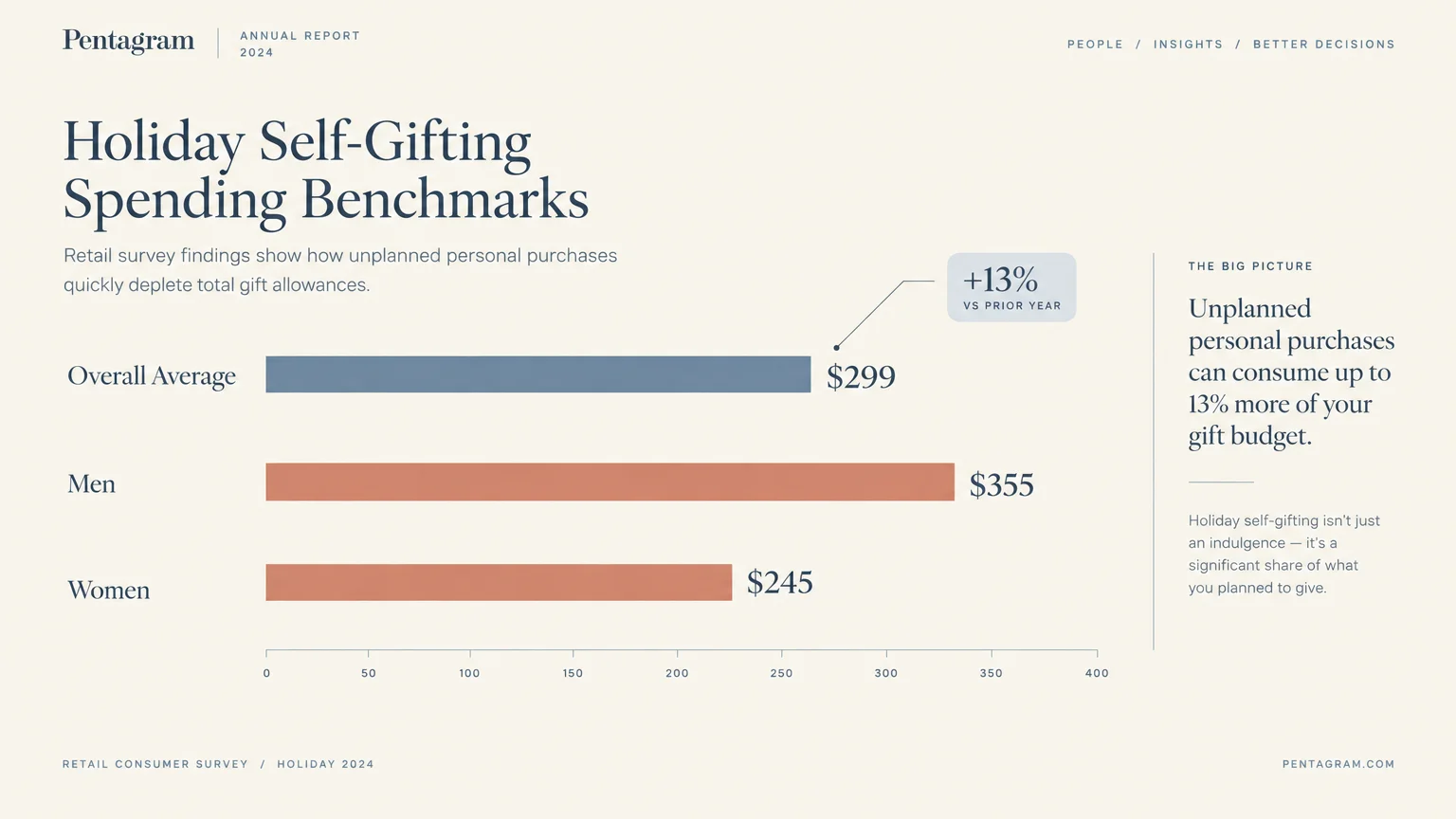
Deloitte’s 2026 Holiday Retail Survey shows shoppers planning to self-gift spend an average of $299 on themselves. That figure represents a 13% increase over 2025.
Men spend even more heavily on personal splurges, averaging $355 compared to $245 for women. Adding unplanned personal items to your cart instantly shatters your budget limits.
Marketers frame these purchases as smart bargains by bundling them with holiday promotions. In reality, buying unplanned discretionary items at any price drains your liquid cash reserves.
Enact an unbending personal buying freeze until the first week of January. Post-holiday clearance events provide substantially steeper markdowns on apparel, tech, and homewares.
Focus your resources exclusively on the family and friends on your gift list. Rewarding yourself now simply pushes unnecessary debt onto your upcoming credit card statements.
Write down every item you feel tempted to purchase for yourself on a wish list. Revisit that list in January when clearance discounts peak and emotions normalize.
Tip #4: Believing December Delivers the Deepest Promotional Discounts
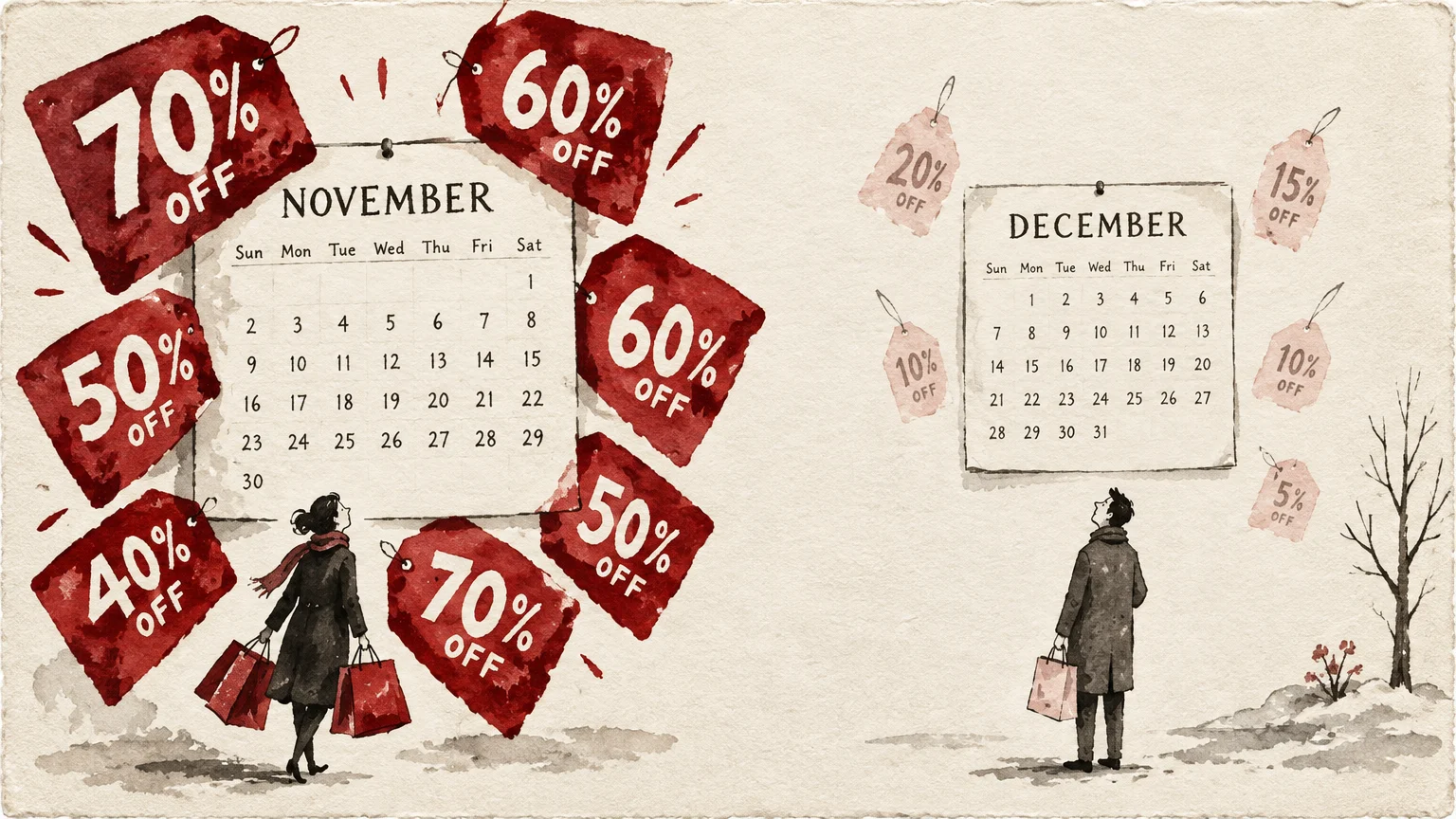
Holding out for mid-December sales in hopes of landing bottom-dollar prices is a costly mistake. Many shoppers falsely believe merchant desperation leads to steeper holiday discounts right before Christmas.
Prosper Insights reveals that 46% of delaying consumers believe the best bargains appear in late November and December. Unfortunately, retail tracking data directly contradicts that popular assumption.
Adobe Analytics reports online discounts peaked at up to 30% during Cyber Week, generating $47.5 billion in sales. As December unfolds, top promotional discounts steadily shrink across major categories.
Top-tier retail merchandise sells out rapidly during the initial holiday rush. Retailers have zero incentive to discount popular inventory when frantic, last-minute shoppers will gladly pay full retail price.
Procrastinators often end up paying premium sticker prices for leftover items that nobody else wanted. Delaying your purchases reduces your product selection while increasing your total register costs.
Lock in key gifts during major promotional waves earlier in the season. If you miss those windows, stick to practical alternatives rather than overpaying for picked-over inventory.
Treat late-season sales banners with healthy skepticism. Retailers regularly inflate baseline prices before applying artificial markdowns to lure unprepared shoppers.
Tip #5: Overlooking Sneaky Mail-In Return Fees and Restocking Penalties
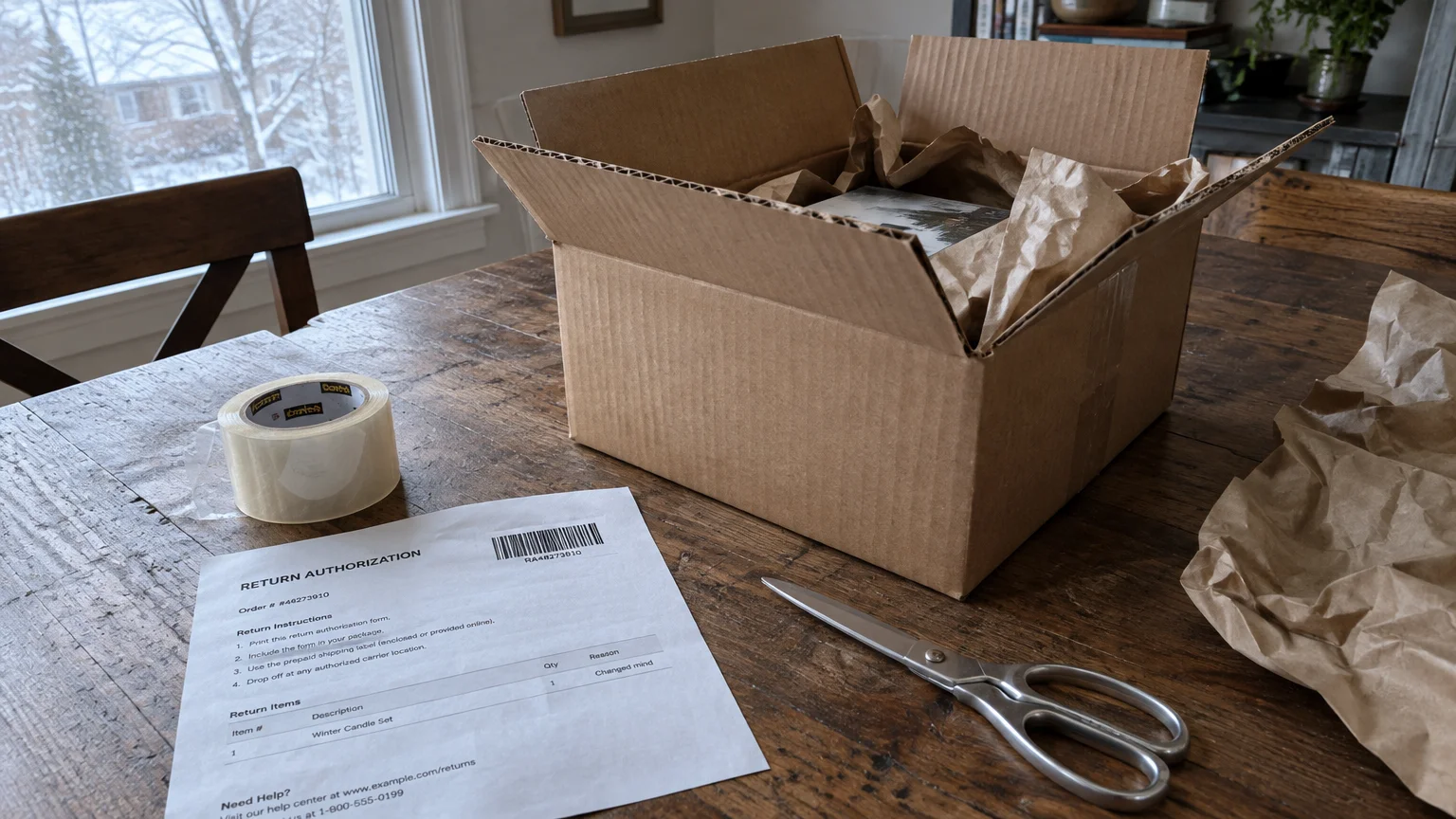
Assuming that every retail return is entirely free is a dangerous financial assumption. Today, sending back an unwanted gift frequently triggers unexpected handling fees and restocking deductions.
The National Retail Federation estimates that 17% of all holiday merchandise will be returned. For online purchases, that return rate jumps to 19.3%.
Roughly 75% of retailers now enforce return fees, targeting mail-in returns specifically. You or your gift recipients could easily forfeit significant cash just to process an exchange.
Mail-in return fees run $11.99 at T.J. Maxx and Marshalls, while Macy’s charges $9.99 for non-Star Rewards members.
JCPenney deducts $8.00, and J.Crew charges $7.50 per package.
Electronics retailers impose even harsher penalties on opened merchandise. Best Buy charges a $45 restocking fee on select opened items, including premium cameras and wireless tech.
Always review the merchant’s return terms before finalizing any purchase. Choose retailers that offer free drop-offs at nearby physical stores to eliminate mail-in deductions entirely.
Include gift receipts inside every package so your recipients can exchange items in-store. Avoiding mail-in return fees keeps your money where it belongs: in your pocket.

Tip #6: Financing Holiday Purchases With High-Interest Debt
Charging holiday purchases without a dedicated payoff plan creates months of financial stress. High borrowing rates quickly erase any bargain you found during holiday sales events.
In September 2026, the Federal Reserve raised its benchmark rate to a target range of 3.75% to 4.00%. That rate increase brought the U.S. Prime Rate to 7.00%.
Federal Reserve data confirms the average APR on credit card accounts actively accruing interest stands at 22.36%. New card offers range from 19.70% on Bankrate to 24.91% on Forbes Advisor.
Carrying a balance forces you to pay compounding interest on perishable goods, meals, and holiday decor. A routine balance can easily take years to clear under current interest rates.
Avoid funding short-term seasonal cheer with long-term revolving debt. Treat your credit card strictly as a payment tool, paying every charge off before interest accrues.
If your liquid savings cannot support your holiday gift ideas, reduce your overall scope. Genuine family traditions should never demand high-interest debt that compromises your household stability.
Track your daily spending against your checking account balance. Never borrow from next year’s income to pay for this year’s December festivities.

Tip #7: Skipping a Written, Itemized Spending Cap
Shopping without an itemized budget guarantees that overspending christmas expenses will wreck your finances. Vague spending targets crumble the moment aggressive marketing triggers an emotional purchase.
Deloitte reports that U.S. households plan to spend an average of $1,654 this season. That budget includes $988 allocated specifically for physical retail merchandise.
Total retail sales will surpass $1.013 trillion this year according to the NRF. That massive national total reflects millions of shoppers drifting beyond their planned spending limits.
Protect your hard-earned money by assigning a rigid dollar limit to each individual recipient. Record every transaction in a budget tracking spreadsheet or notebook the moment it occurs.
Once you hit an individual’s designated spending cap, stop buying for that person immediately. Small supplemental gifts and decorative stocking stuffers quietly destroy well-planned budgets.
Establish your overall holiday spending ceiling and stick to it without exception. Enforcing firm financial boundaries prevents costly holiday budget mistakes before they happen.
Communicate budget limits openly with family members to set healthy spending expectations. Practical holiday shopping tips work best when your entire family shares realistic financial goals.

Tip #8: Panicking on Super Saturday and Purchasing Filler Gifts
Super Saturday brings chaotic crowds, depleted shelves, and immense consumer anxiety. Desperate shoppers frequently grab random merchandise simply to check names off their remaining list.
This eleventh-hour scramble leads to expensive filler gifts that nobody actually wants. Generic gift sets, cheap novelty mugs, and scented lotions represent pure wasted money.
Retailers intentionally position these high-margin, low-utility items near checkout lines to exploit shopper desperation. You end up overpaying for merchandise destined for garage sales or trash bins.
These last minute gift mistakes stem from the mistaken belief that every physical gift must look substantial. In reality, recipients value thoughtful simplicity far more than cheap plastic items.
Never buy low-quality items simply to put a heavy box under the tree. Wasting cash on novelty junk helps retail profit margins while draining your personal bank account.
If you run out of time, bake treats or gift a practical service like home cleaning. Your recipients will appreciate genuine effort far more than panic-bought filler goods.
Step away from crowded stores if anxiety begins driving your purchasing decisions. A calm mind makes far better financial choices than a panicked shopper on Super Saturday.
Tip #9: Failing to Adjust for Cumulative Inflation
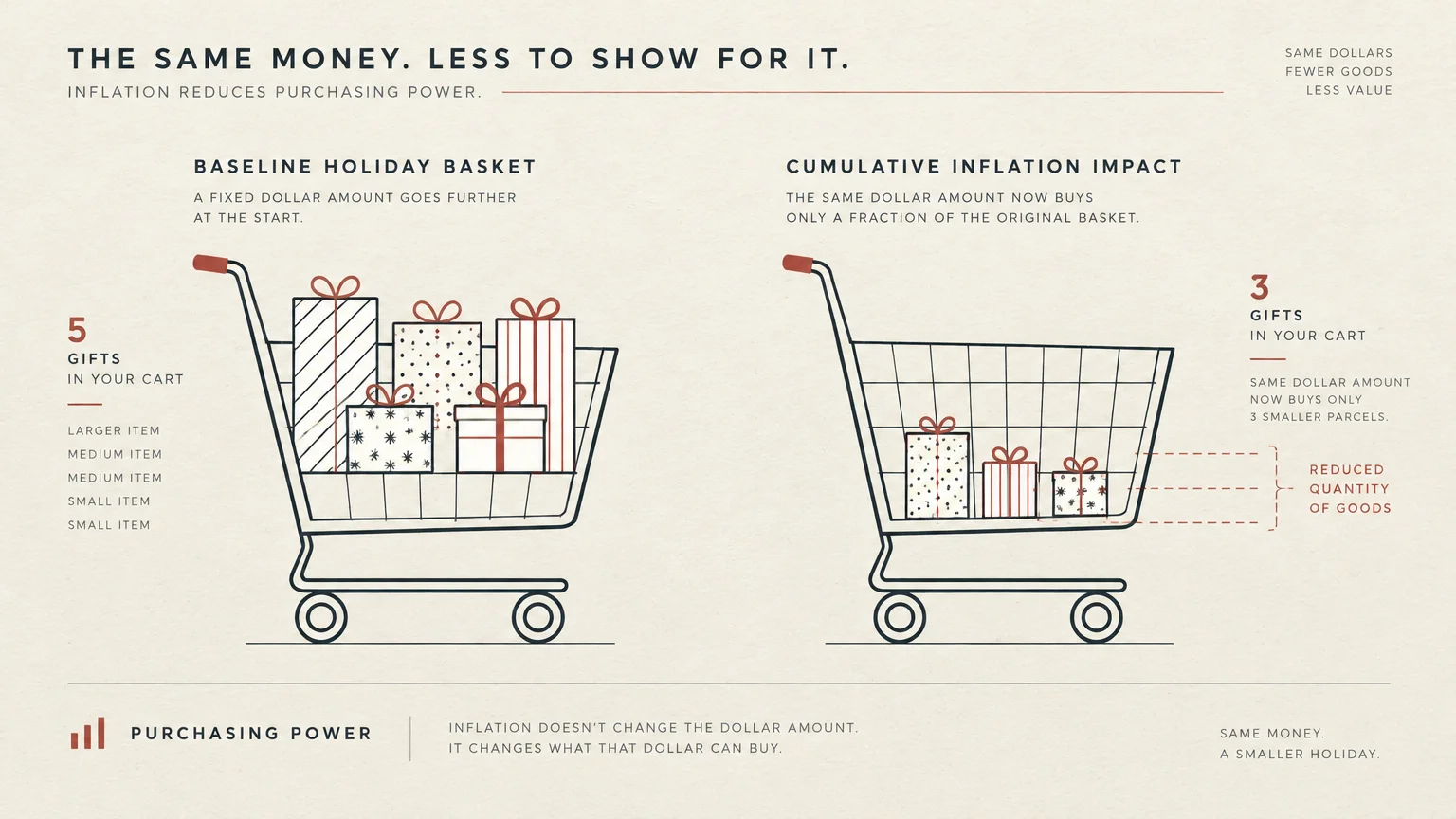
Relying on pricing memories from past years creates major distortions in your holiday calculations. Base retail prices have steadily risen across nearly every consumer category.
The Bureau of Labor Statistics reported that the Consumer Price Index rose 3.7% over the trailing 12 months through September 2026. Everyday goods cost noticeably more today.
This inflation is a primary driver behind the NRF projecting total holiday spending to surpass $1.013 trillion. Consumers are paying higher prices to acquire the same volume of goods.
If you maintain the exact same budget from two years ago, you must reduce your overall gift count. Failing to account for inflation guarantees you will exceed your spending cap.
Review historical pricing trends before assuming a holiday promotional banner represents real value. Retailers frequently bump base prices before applying artificial discounts to deceive unwary buyers.
Adjust your recipient list downward to match current purchasing power reality. Removing two or three peripheral acquaintances protects your budget without diminishing core holiday joy.
Emphasize quality over quantity when purchasing gifts in an inflationary economy. Giving a single durable present creates more lasting value than buying multiple cheap items.
Tip #10: Falling for Bogus Third-Party Marketplace Deals
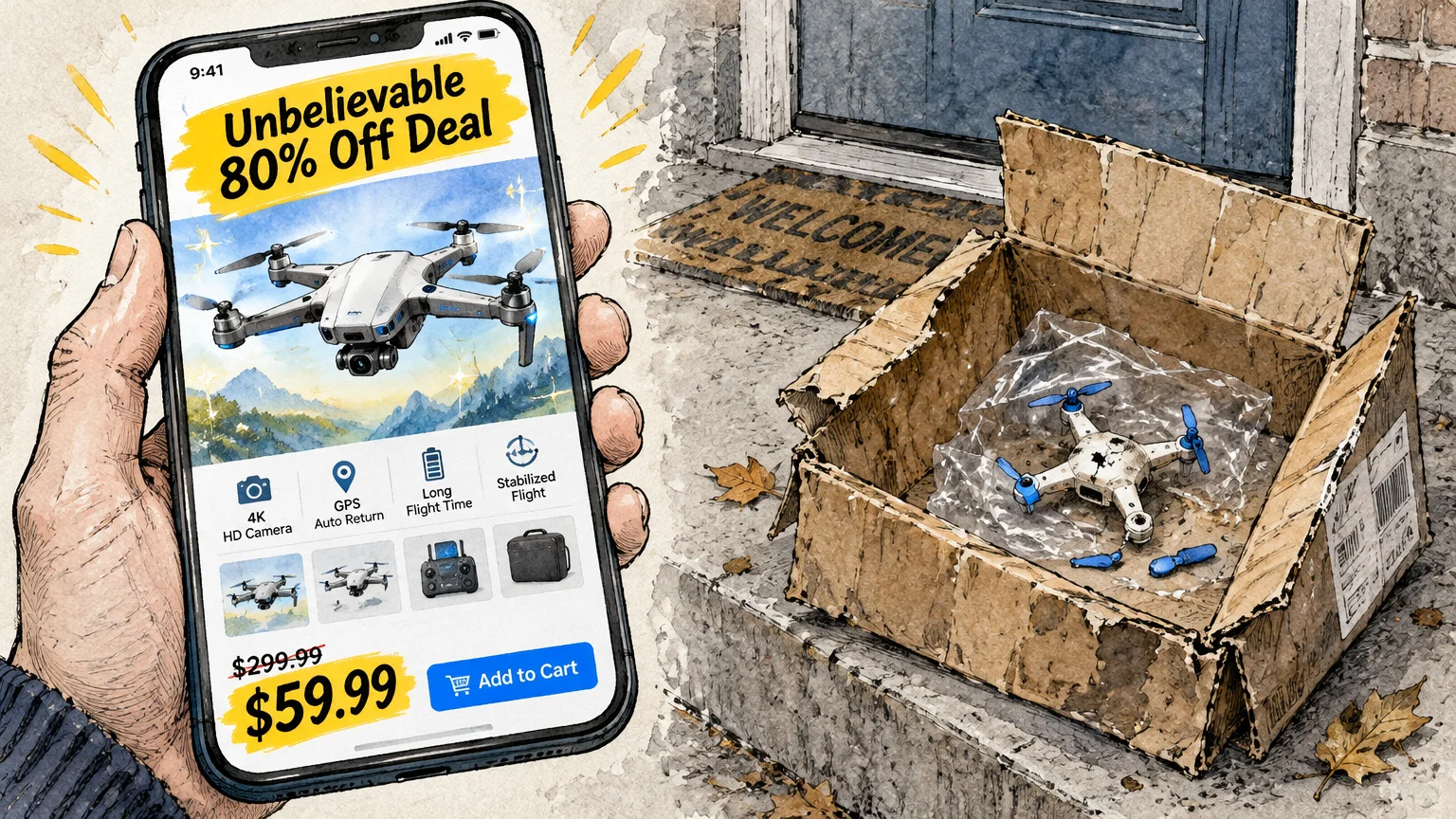
When primary retailers sell out of trending toys and electronics, desperate shoppers flock to secondary online marketplaces. This desperation creates the perfect environment for counterfeiters and online scammers.
Unvetted third-party sellers frequently peddle cheap knockoffs, refurbished goods labeled as new, or nonexistent products. In worst-case scenarios, fraudulent stores capture your payment data and vanish.
Counterfeit electronics represent dangerous safety hazards, featuring uncertified lithium-ion batteries and faulty internal wiring. A seemingly great deal can compromise your household safety and personal property.
Always verify that an online product is shipped and sold directly by the primary merchant. Avoid third-party accounts that registered only weeks before the peak holiday season.
Examine recent customer reviews closely for warnings about delayed delivery, poor packaging, or fake items. If a scarce item sits fully stocked at an incredible price, walk away.
Never send payments outside authorized checkout systems to secure an item. Sticking to vetted retail partners ensures your transactions remain protected under federal consumer safeguards.
Report suspicious listings to platform operators immediately to protect other consumers. Diligence protects your family from substandard goods and fraudulent digital transactions.

Tip #11: Ignoring Secondary Holiday Activities and Entertaining Costs
Focusing exclusively on wrapped presents creates a massive blind spot in your holiday budget. Food, alcohol, travel, festive attire, and social outings quietly drain substantial cash reserves.
Deloitte’s 2026 holiday survey highlights this spending split clearly. While consumers plan to spend $988 on physical goods, they budget an additional $666 on holiday activities.
Specialty baking ingredients, host gifts, holiday drinks, and seasonal dinners add up quickly throughout December. Unplanned entertaining expenses frequently push families into high-interest credit card debt.
Build a comprehensive holiday ledger that tracks social gatherings right alongside physical presents. Treat a sixty-dollar celebratory dinner with the same budgetary discipline as a sixty-dollar gift.
Organize potluck get-togethers rather than paying to cater entire holiday parties alone. Guests genuinely enjoy contributing favorite family dishes, and shared hosting dramatically slashes your expenses.
Record every grocery trip and seasonal social outing in your primary budget tracker. Small convenience charges quickly accumulate into major deficits if you leave them unmonitored.
Set clear spending limits on seasonal entertaining before the holiday party calendar begins. Protecting your hospitality budget prevents uncomfortable financial surprises when January bills arrive.
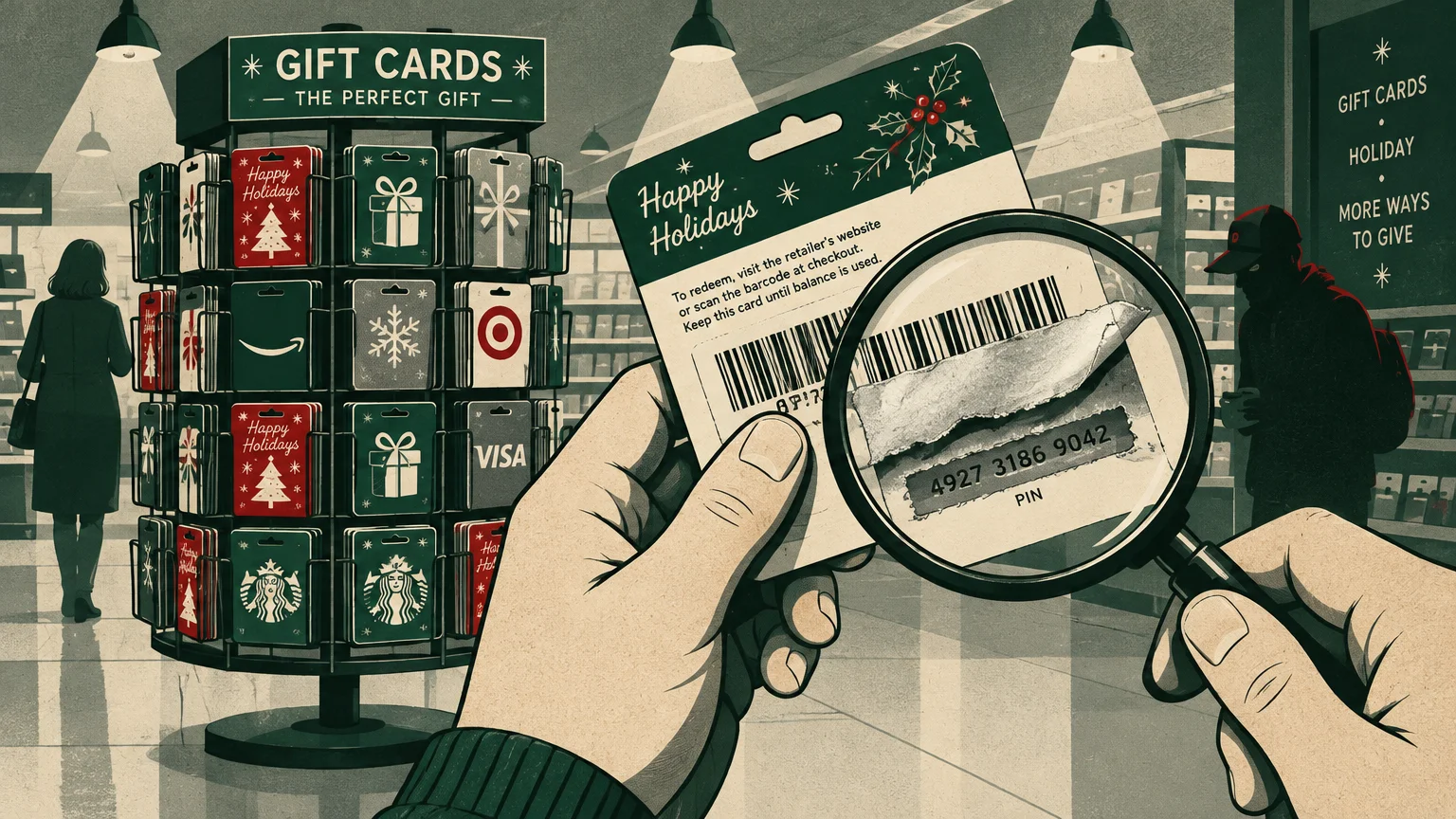
Tip #12: Scrambling for Last-Minute Gift Cards Without Precautions
Gift cards are the most popular fallback option for hurried holiday shoppers. However, grabbing cards off exposed retail racks exposes your wallet to sophisticated barcode tampering.
Criminals routinely scan card numbers in stores, replace security strips, and monitor card activations online. The moment an unsuspecting cashier activates the card, automated software drains the balance.
Your recipient discovers an empty balance when trying to use their present after Christmas. Resolving stolen balances with card issuers takes weeks of tedious customer service inquiries.
Protect your gift by purchasing digital e-gift cards directly through the merchant’s official website. Digital delivery bypasses vulnerable store display racks and delivers codes securely via email.
If you must buy physical cards, request stock stored securely behind customer service desks. Carefully inspect packaging for signs of peeling, fresh glue, or tampered scratch-off coatings.
Always retain the original store activation receipt and slip a copy inside the card. That receipt serves as vital proof of purchase if a balance dispute ever occurs.
Advise your recipients to redeem gift card balances promptly after receiving them. Storing gift cards indefinitely increases the risk of loss, merchant insolvency, or forgotten funds.

The Bottom Line: What This Means for Your Wallet
Retailers build complex holiday marketing strategies designed to trigger emotional, uncalculated spending. Defending your finances requires sticking to strict discipline and ignoring late-season commercial noise.
With average credit card APRs on accruing balances sitting at 22.36%, debt carried into January exacts a severe financial penalty. Every dollar borrowed at high interest diminishes your financial independence in the new year.
Holiday retail spending will surpass $1.013 trillion this season, fueled largely by rising inflation. You do not need to let aggressive commercial trends dictate your personal financial choices.
Prioritize your long-term economic security over short-term holiday expectations. Setting clear boundaries, tracking every dime, and rejecting retail credit cards preserves your cash for what truly matters.
Implement these holiday shopping tips today to finish your seasonal shopping with total peace of mind. A financially disciplined December creates the foundation for a prosperous, stress-free new year.
Take charge of your holiday ledger right now before retail deadlines force your hand. Smart planning consistently defeats corporate marketing traps.
Frequently Asked Questions
Are store credit cards ever worth the register discount?
Store credit cards are rarely worth the initial register discount for average consumers. With APRs averaging over 30% and climbing up to 35.99%, any unpaid balance rapidly obliterates your initial savings.
Unless you have the cash in hand to pay the entire balance immediately, skip the store card. The minor one-time savings do not justify the credit inquiry and borrowing risk.
What should you do if you miss carrier shipping deadlines?
If carrier deadlines for Christmas pass, avoid paying expensive overnight delivery charges. Switch to free in-store or curbside pickup options at major brick-and-mortar merchants instead.
Alternatively, purchase digital gift cards or digital experience vouchers directly from merchant websites. Digital delivery is instantaneous and completely eliminates carrier shipping surcharges.
How can you stop overspending on family members during the holidays?
Establish a written, itemized spending cap for every recipient before you step into a store. Track each purchase in real time using a budgeting app or dedicated notebook.
Once you reach an individual’s dollar limit, stop shopping for them immediately. Propose a family gift exchange or Secret Santa to reduce the total number of gifts needed.
Why are so many retailers charging return fees this holiday season?
Retailers face soaring logistics expenses, with holiday return rates reaching 17% overall and 19.3% for online orders. Roughly 75% of retailers now enforce fees to offset mail-in processing costs.
You can bypass these fees by returning online merchandise directly to the retailer’s physical store. Most major retail chains process in-store returns completely free of charge.
For consumer protection information, visit the Federal Trade Commission (FTC) and the Consumer Financial Protection Bureau (CFPB). For product safety and reviews, consult Consumer Reports.
Disclaimer: This article is for informational purposes only and does not constitute financial advice.
The content reflects the author’s opinion and research at the time of writing. Always do your own research before making financial decisions.