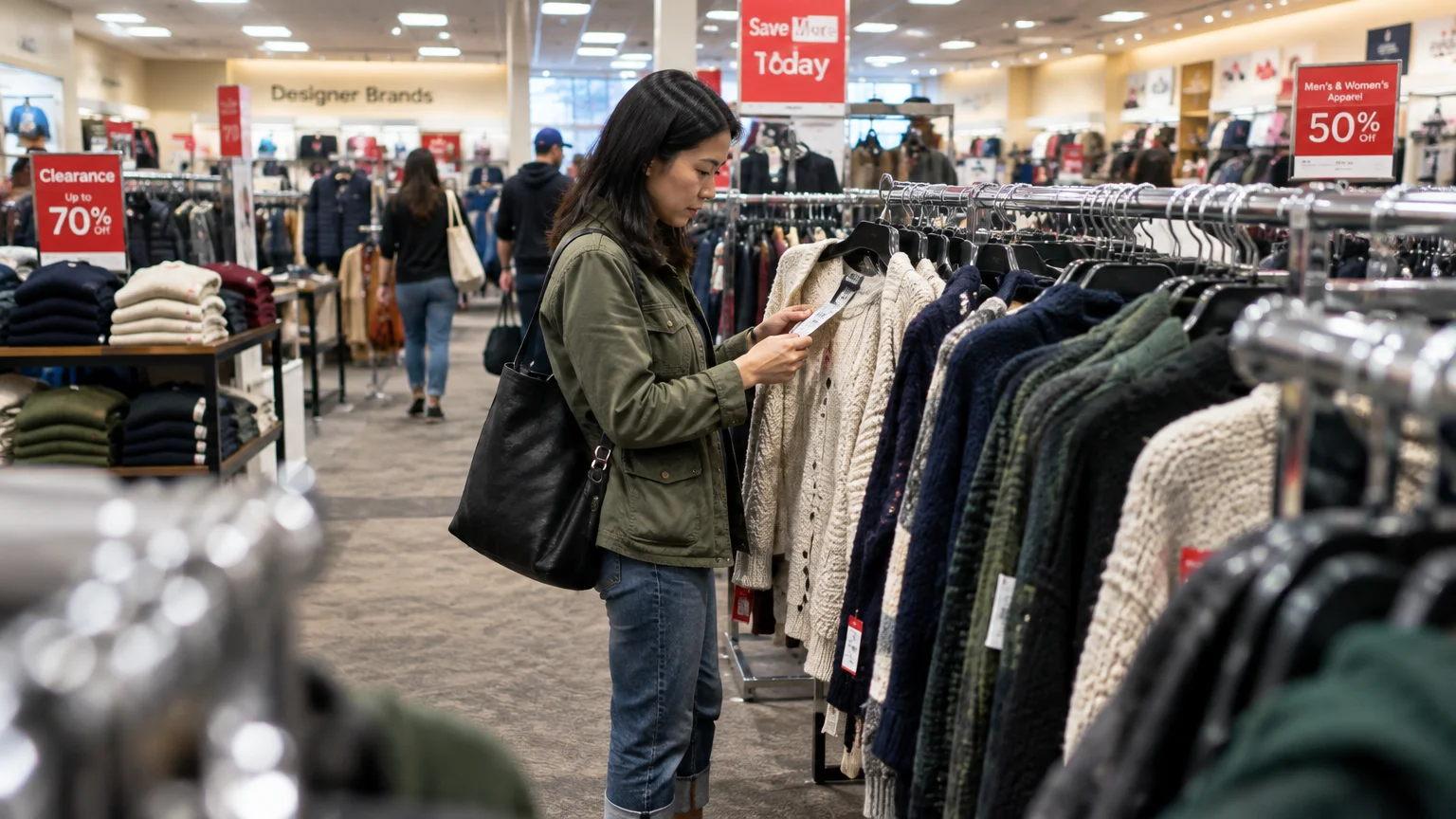
You can cut your retail spending dramatically by mastering how off-price department stores price, rotate, and clear their inventory. Stepping into T.J.
Maxx or Marshalls without a clear plan leads directly to overspending on manufactured bargains.
Savvy shoppers bypass chaotic display tables and target strict markdown rhythms to capture premier designer overstock. Knowing how these retail giants operate behind the scenes gives you an immediate financial edge.
These insider tactics reveal how to secure genuine savings and protect your household budget every time you walk through the automatic doors.
Tip #1: Decode the Price Tag Color System
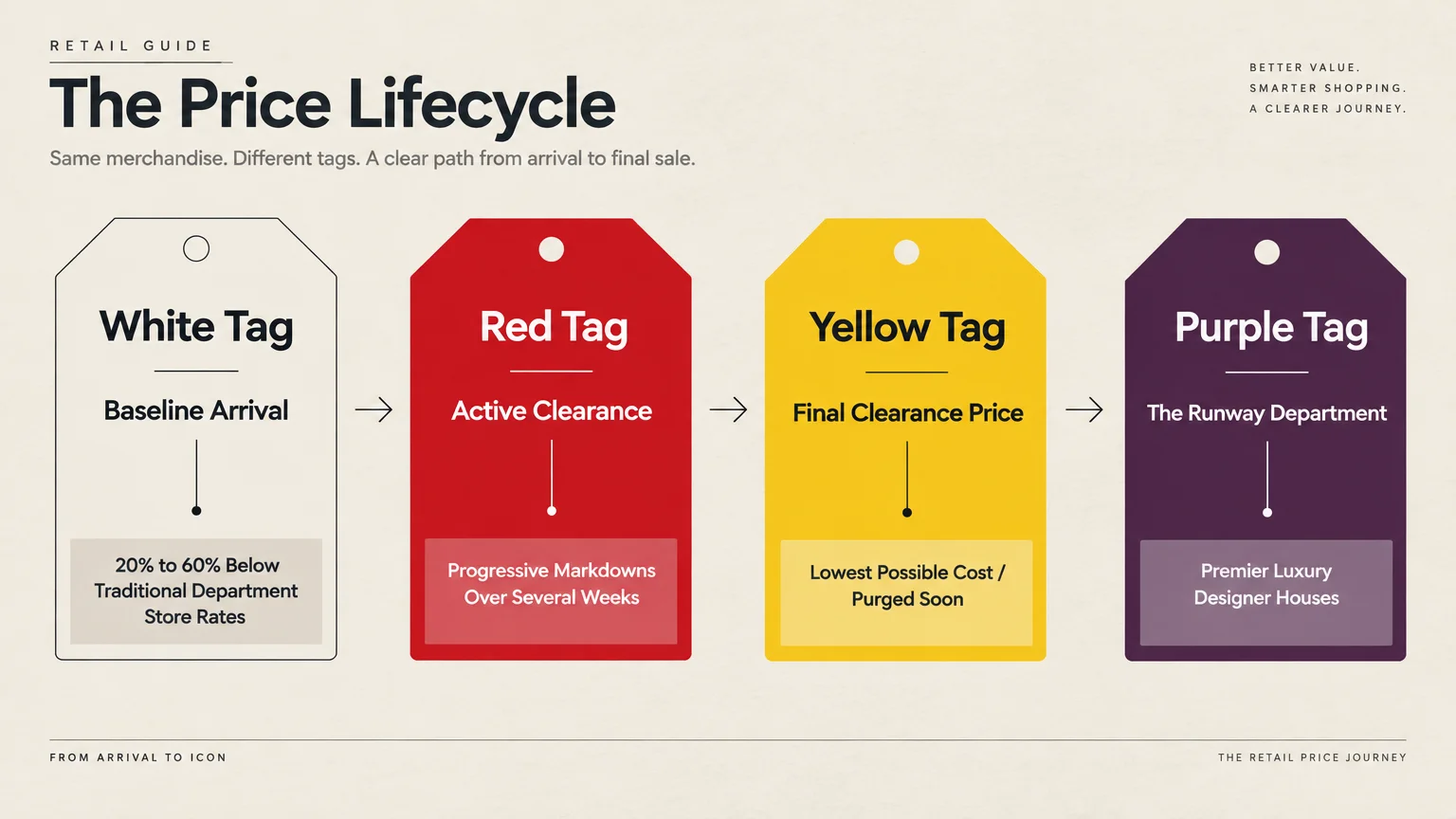
Every price tag attached to merchandise inside these stores conveys vital information about where that item sits in the pricing cycle. Reading the color code enables you to separate fresh arrivals from items nearing their lowest possible cost.
Standard white tags represent everyday retail inventory. These items arrive on the sales floor priced at 20% to 60% below traditional department store rates.
While a white tag offers modest savings, it represents the baseline price. You should never rush to buy a white-tag item unless you genuinely need it immediately.
Store workers systematically review inventory and apply red clearance tags to merchandise that lingers on the racks. A red tag indicates that the retailer has initiated its official clearance process.
Merchandise marked with red tags frequently undergoes progressive markdowns over several weeks. When you spot a red tag featuring multiple layered stickers, you know the price has dropped several times already.
However, red tags do not signal the end of markdown reductions. If consumer interest remains low, the store will slash the price even further.
Yellow tags represent the absolute final clearance price. When an associate places a yellow tag on an item, the store will never mark it down again.
Yellow-tag items sit at the very end of the inventory lifecycle. If you want the product, you must purchase it immediately because store staff will soon purge unsold stock.
Associates carry mobile scanning guns to scan barcodes and print updated tags directly on the floor. If a product was overlooked during a markdown cycle, asking an associate for a price check can sometimes uncover an unapplied discount.
Never peel off stickers to reveal older prices underneath. Cashiers must scan the uppermost active barcode on the tag, and tampering with price stickers can cause register delays.
Select T.J. Maxx stores also feature special purple tags on certain high-end apparel.
These purple tags denote items from The Runway department, which features premier luxury design houses.
While purple-tag items carry higher initial prices, they also receive red and yellow clearance tags over time. A yellow-tagged Runway piece represents one of the deepest luxury discounts available in retail.
Train your eyes to scan past white tags and head straight for clearance aisles. Focusing your shopping time on red and yellow tags guarantees you maximize every dollar you spend.
Tip #2: Time Your Trips Around the Semi-Annual Clearance Cycles
Timing your shopping trips around corporate markdown schedules produces far greater savings than browsing aisles at random. The parent company operates on a predictable inventory rhythm designed to clear floor space.
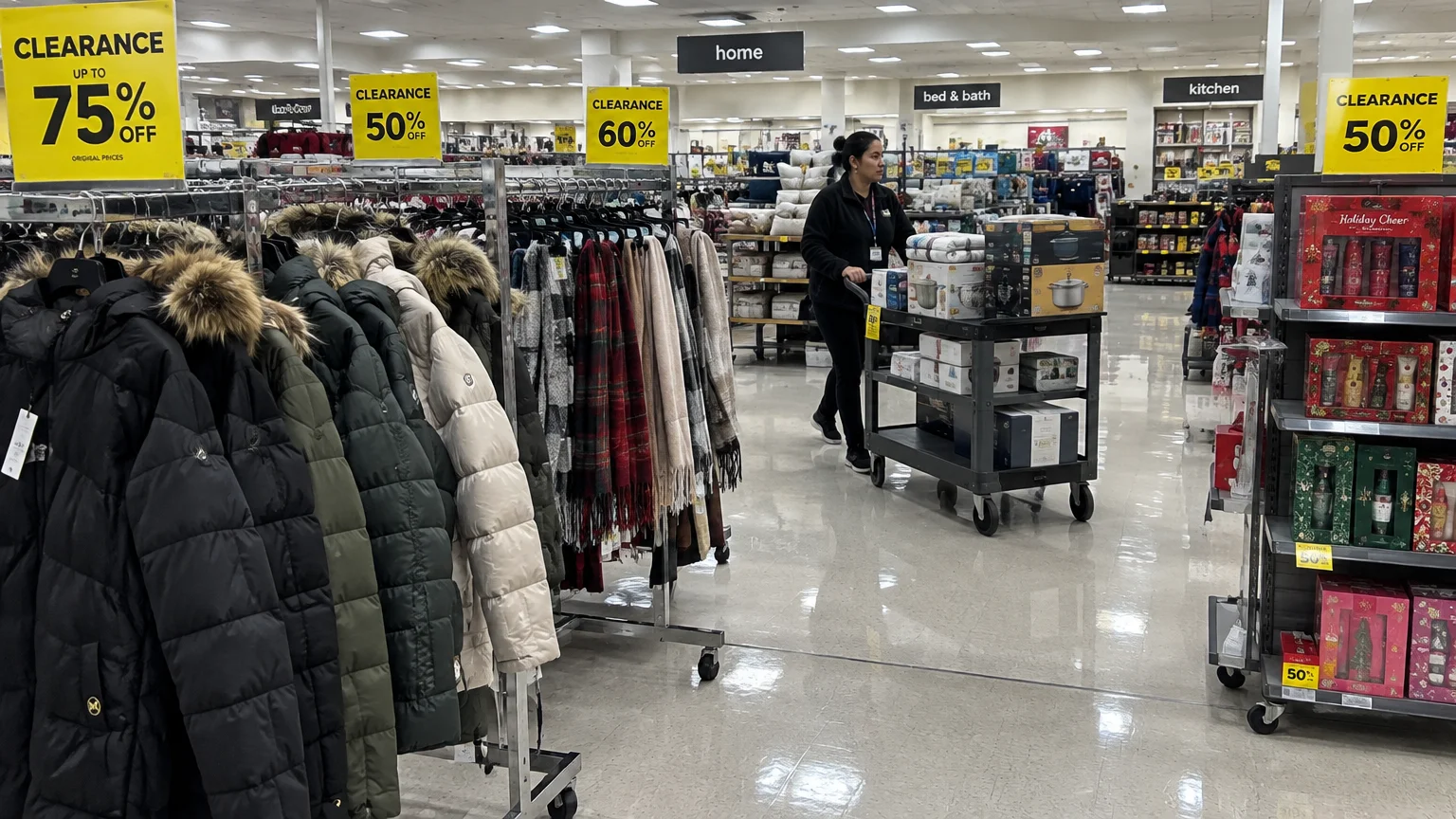
The deepest pricing events occur during the semi-annual Yellow Tag clearance sales. These major events take place twice a year, specifically in January and in late July or August.
The January clearance event typically launches during the first week of January. Stores aggressively purge excess winter coats, holiday gift sets, and festive home decor to reset their selling floors.
During this winter clear-out, discounts drop to 50% to 75% or more below original retail prices. Savvy buyers stock up on premium bedding, cold-weather apparel, and gourmet food gift baskets for pennies on the dollar.
The second major clearance window arrives in late July and extends into August. Retailers must rapidly clear out summer apparel, swimwear, patio furnishings, and luggage before fall inventory arrives.
Discount levels during the late-summer sale mirror the January event, routinely offering reductions between 50% and 75% or higher. This window provides the best opportunity to update warm-weather basics without straining your budget.
At the conclusion of the semi-annual clearance, stores purge remaining yellow-tag items to make room for new inventory. Unsold stock gets liquidated in bulk to third-party salvagers or donation channels.
Because inventory purges happen swiftly, holding out for a price drop below a yellow tag is pointless. If you find a yellow-tag item that fits your needs, grab it before the clearance window shuts.
Beyond these semi-annual events, your weekly schedule matters just as much. Most store locations receive delivery trucks and process inventory markdowns from Tuesday through Friday mornings.
Visiting a store on a Wednesday or Thursday morning allows you to inspect freshly marked-down items before weekend crowds arrive. Weekend shoppers encounter messy racks, disorganized shelves, and thoroughly picked-over clearance sections.
Planning major household and wardrobe purchases around these two clearance months preserves your cash. You can acquire brand-name merchandise for a tiny fraction of its retail value simply by exercising patience.
Tip #3: Dodge the Costly Return Traps and Deadlines
Impressive shopping discounts evaporate quickly when you run into complicated return policies. Both retailers maintain strict return rules that can lock up your hard-earned money if you fail to track deadlines.
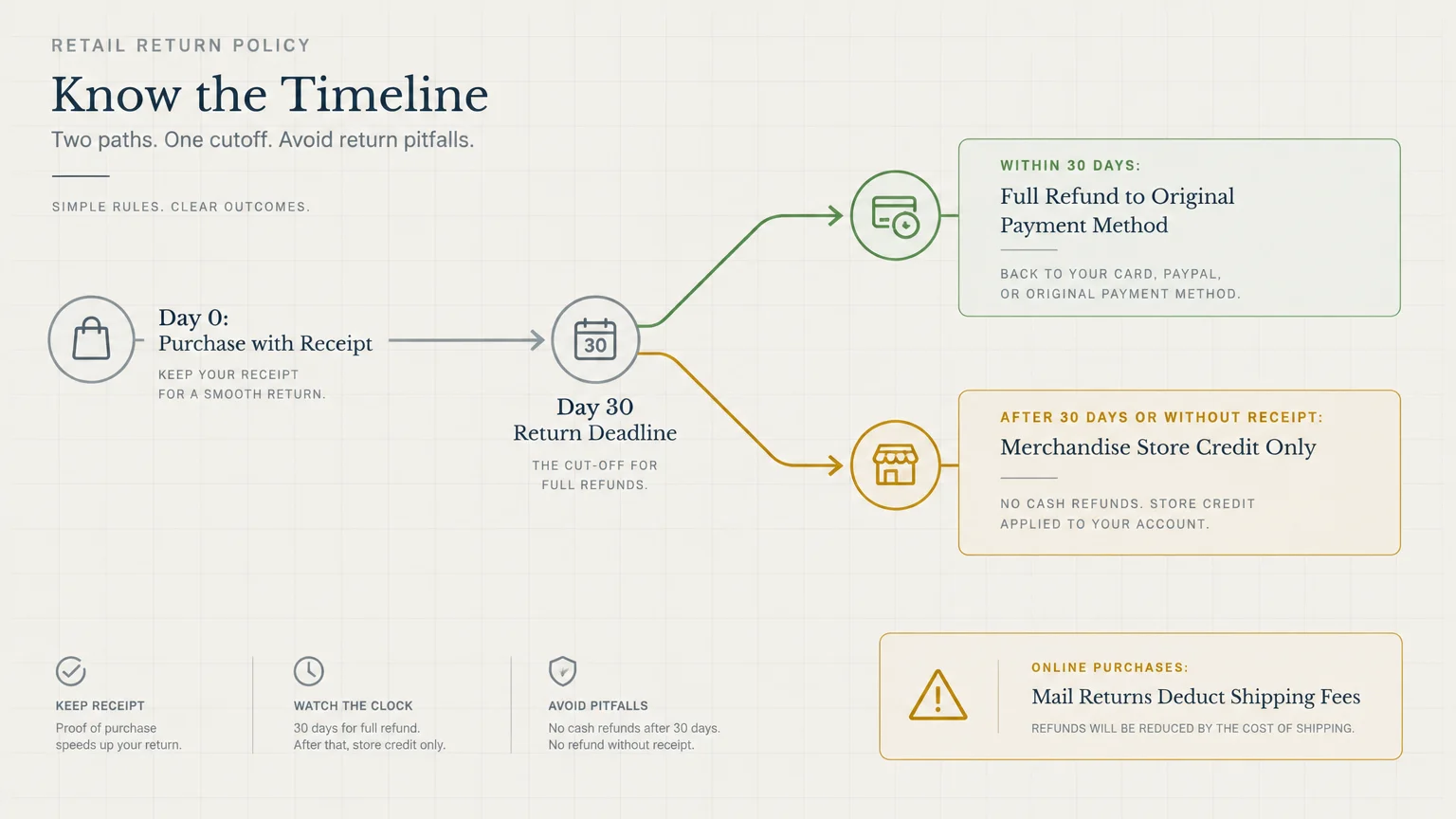
For standard in-store purchases, you have exactly 30 days to return items with your receipt. Meeting this deadline ensures you receive a full refund to your original payment method.
Online orders operate on a different schedule. You have 40 days from the order date to return online items for a complete refund.
Notice that this online return clock starts the day you place the order, not when the package reaches your doorstep. Shipping transit times eat directly into your trial window.
If you miss these deadlines, you forfeit the right to a cash or card refund. The retailer will only grant store merchandise credit, trapping your capital within their corporate ecosystem.
Returning online merchandise through the mail triggers a painful financial penalty. The company deducts an $11.99 return shipping and handling fee directly from your refund amount.
To dodge this $11.99 deduction, you can bring most online orders directly to a local physical store for a free return. However, cross-brand return restrictions apply.
You cannot return an item bought online at tjmaxx.com to a physical Marshalls store, and you cannot return Marshalls online goods to T.J. Maxx.
Each brand requires returns to its own physical storefront or warehouse.
Furthermore, the company enforces strict return rules for high-value online merchandise. Luxury items priced over $1,000, handbags or footwear priced over $499.99, long occasion gowns, and luggage sets cannot be returned in-store.
You must return those restricted high-value goods by mail. Always weigh these policies carefully before purchasing expensive items online.
Always keep your paper receipts in an organized folder or take clear digital photos of them immediately after purchase. Faded thermal receipts can cause processing friction at the customer service counter.
If you lose your receipt entirely, the store will attempt to look up the transaction using your payment card. However, unverified returns without proof of purchase will yield only the lowest recent selling price as store credit.
Tip #4: Inspect for Minor Flaws to Request Additional Discounts
Off-price retail stores operate on massive transaction volumes and open rack browsing. Because dozens of customers handle each item every week, merchandise frequently develops minor aesthetic defects.
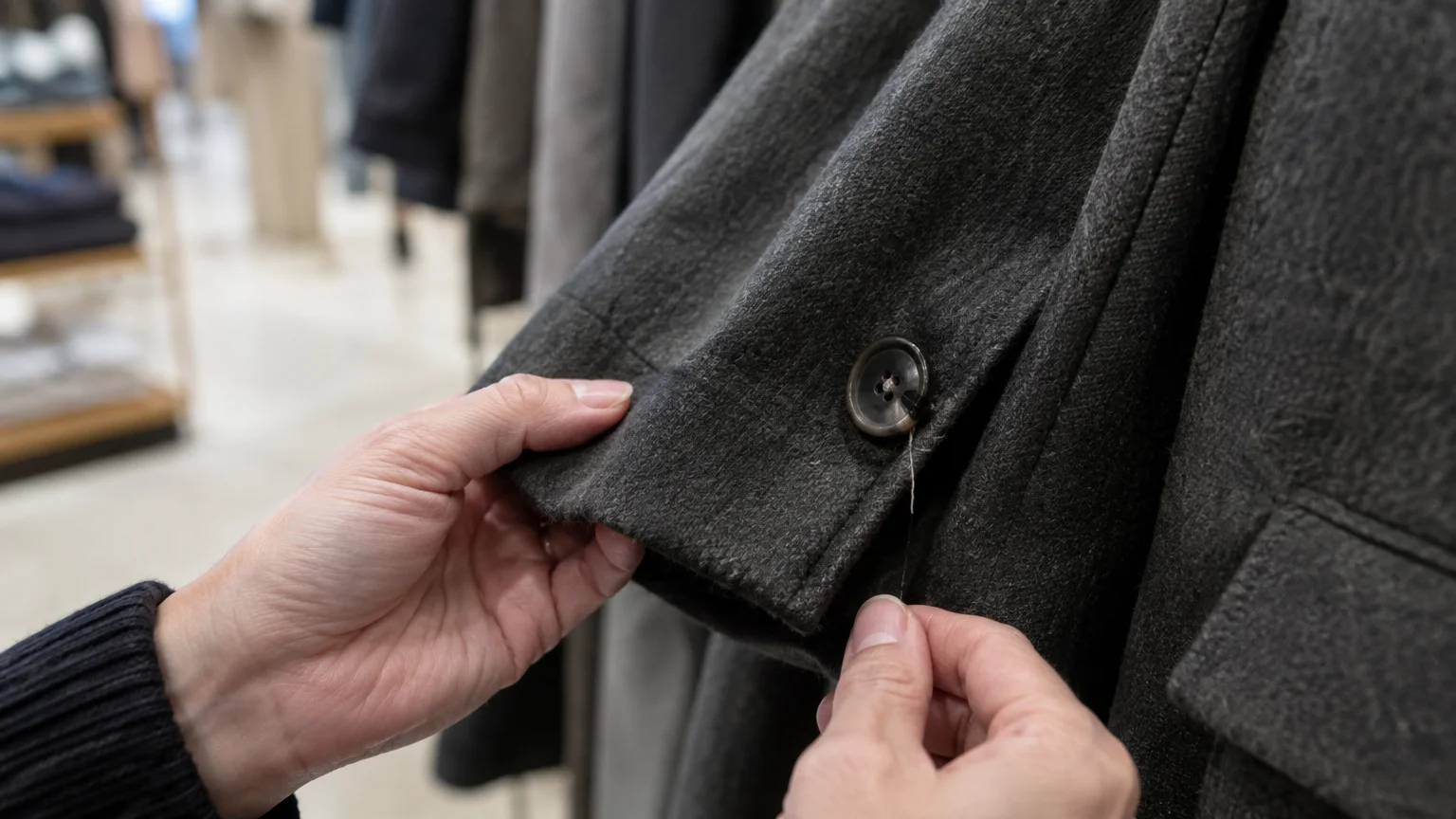
You should inspect every potential purchase with extreme care before heading toward the checkout line. Examine clothing for loose buttons, pulled seams, split hemlines, or light cosmetic dustings near the collar.
Inspect cookware, furniture, and decorative home items for surface scuffs, missing drawer knobs, or small finish chips. Many of these imperfections are purely superficial and easily fixed at home.
Inspect multi-piece sets like cookware, bed sheet bundles, and glassware sets to confirm that every piece is present. Shoppers often break open boxed sets, leaving behind incomplete packages that qualify for steep as-is discounts.
If you spot a three-piece cookware set missing a lid, you can negotiate an aggressive markdown at the register. If you already own compatible lids at home, an incomplete set represents an outstanding bargain.
When you spot a damaged item you want to buy, show the flaw to a store manager or supervisor at the register. Floor supervisors possess the discretion to apply an additional as-is markdown.
Politely point out the defect and inquire whether they can reduce the price to account for the flaw. A calm, respectful request often yields an extra 10% to 20% discount on the marked price.
Make sure the flaw is something you can easily repair or live with before accepting an as-is discount. Items purchased with damage markdowns are often marked as final sale and cannot be returned.
Never assume you can obtain a refund later if an item gets marked down after you purchase it. T.J.
Maxx and Marshalls do not provide post-purchase price adjustments under any circumstances.
Catching imperfections before you swipe your card guarantees immediate savings at the register. Taking two minutes to inspect your selections protects your budget from avoidable buyer regret.
Tip #5: Beat the Free Shipping Minimum Without Overspending
Shopping the digital storefronts of discount retailers gives you access to products unavailable at your local brick-and-mortar location. However, digital orders come with shipping requirements that can undermine your frugal goals.
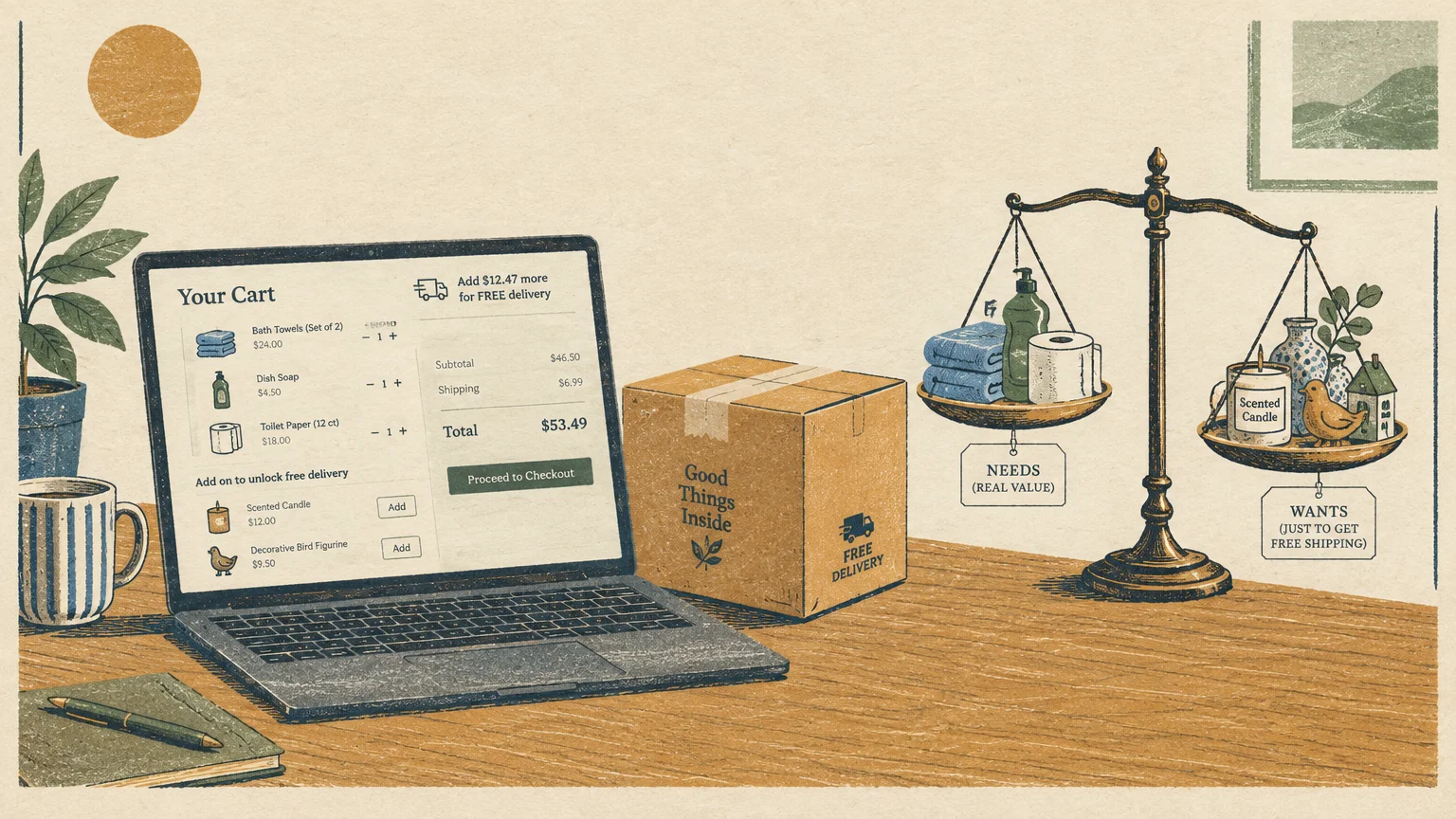
Both brand websites enforce an $89 purchase minimum to unlock free standard shipping. Orders below $89 incur shipping charges that can cancel out your clearance savings.
Retailers design free shipping thresholds to encourage cart padding. Tossing unneeded clearance knickknacks into your cart to avoid a shipping charge causes you to waste more cash overall.
Instead of impulse padding, maintain a running replenishment list of durable household goods. When you want a clearance clothing item, add staple pantry goods, premium kitchen towels, or bed linens to reach the $89 mark naturally.
Another effective strategy is placing combined orders with friends, family members, or coworkers. Pooling multiple small orders into a single transaction helps everyone surpass the $89 threshold without buying unnecessary filler.
If you are placing an order for the first time, look for promotional email incentives. Signing up for store email newsletters often provides a single-use promo code for free shipping on your first order.
During peak holiday periods, retailers occasionally drop the free shipping minimum below the standard $89 threshold. Checking their homepage banner during holiday weekends can reveal temporary sitewide free shipping promotions.
Before submitting any digital order, double-check whether the required free shipping promo code applied correctly at checkout. Overlooking the promotional code box can saddle your account with unnecessary delivery fees.
Use a secondary email address for store registrations to protect your primary inbox from continuous marketing promotions. Daily promotional alerts encourage unnecessary shopping and weaken your financial discipline.
Treat the $89 free shipping requirement as a non-negotiable budgeting rule. If your basket of genuine essentials fails to reach the threshold, leave the digital cart and visit a physical store instead.
Tip #6: Beware the TJX Rewards Credit Card Trap
Cashiers actively promote the store credit card during checkout, highlighting discounts and point earnings. While the marketing pitch sounds tempting, the card contains severe financial traps for the average shopper.
Synchrony Bank issues two distinct versions of the card: a store credit card and a Platinum Mastercard. Both cards earn 5% back in rewards when you shop across the TJX store network.
That 5% rewards structure grants you 5 points per $1 spent at T.J. Maxx, Marshalls, HomeGoods, Homesense, and Sierra.
Accumulating 1,000 points produces a $10 rewards certificate.
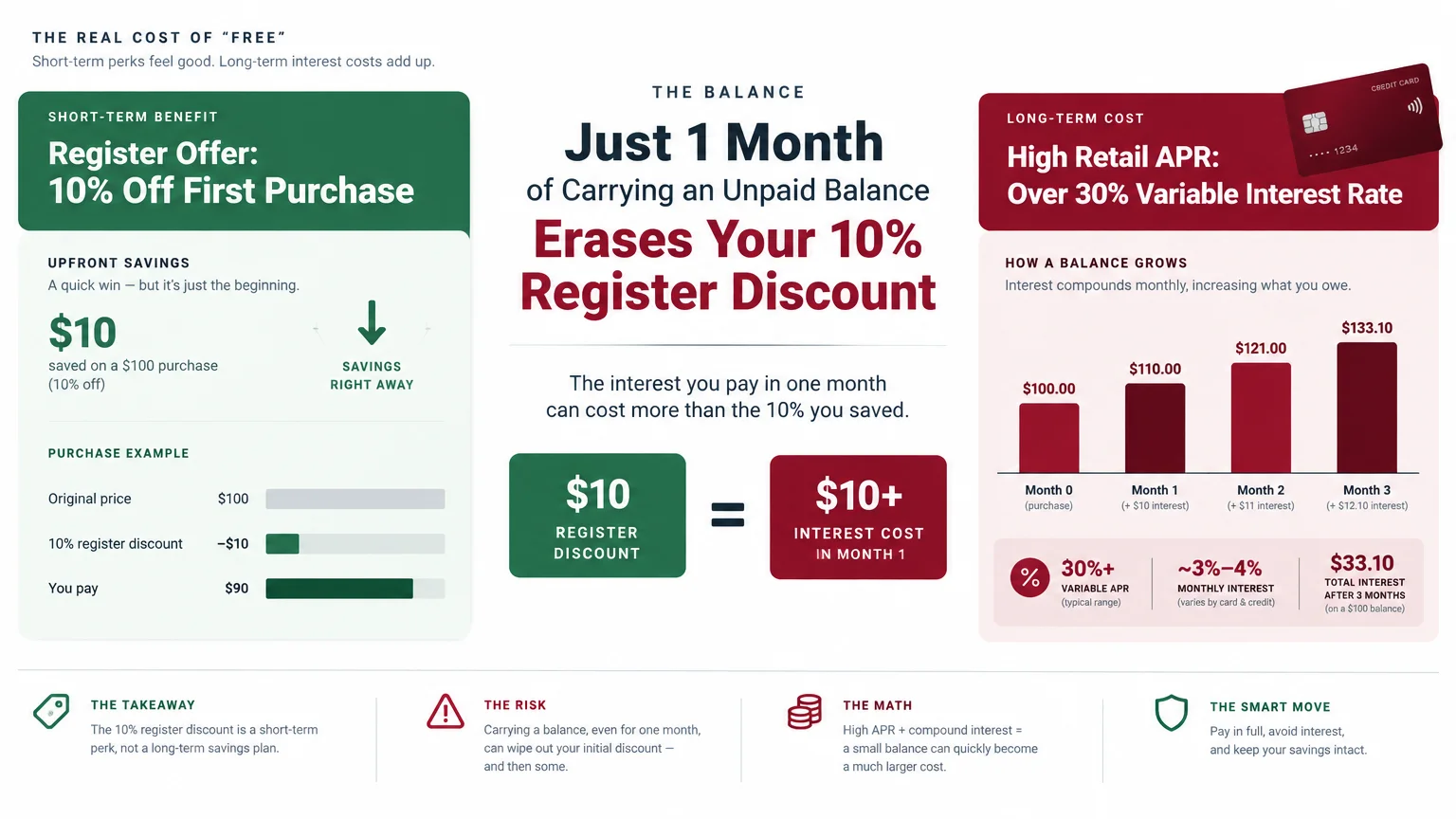
The Platinum Mastercard also earns 2% back on purchases at grocery stores, gas stations, and restaurants, plus 1% on all other spending. The card features a $0 annual fee and offers a 10% first-purchase discount upon approval.
However, the interest rate terms are brutally aggressive. The card carries a standard variable purchase APR of 30.49%, calculated from the Prime Rate plus 23.74%.
If you incur a late payment or trigger penalty terms, the penalty APR jumps to an astronomical 39.99%. Carrying a monthly balance erases any 5% reward savings within a single billing cycle.
The card also charges a $1.99 monthly fee if you receive paper statements rather than electronic billing. Late payment penalties can reach up to $38 per billing statement.
Store rewards certificates also come with strict expiration dates, typically expiring within five months of issuance. Letting your hard-earned certificates expire completely wipes out the value of using the card.
If you choose to use the card for the 5% reward rate, set up automatic balance payments through your bank. Eliminating interest charges and paper statement fees is the only way to retain your savings.
Unless you pay your monthly balance in full every single billing cycle, opening this card makes zero financial sense. High interest charges and account fees will rapidly destroy whatever discounts you earn at the register.
Protect your credit score and wallet by relying on a flat cash-back card with reasonable terms. Avoid high-APR retail cards that exploit impulsive shopping habits.

Tip #7: Distinguish Genuine Overstock from Made-for-Outlet Lines
Many consumers mistakenly believe that every garment on discount racks represents excess stock from luxury department stores. In reality, off-price retail chains source a substantial portion of their inventory directly from manufacturers.
Well-known fashion brands create specialized, lower-tier apparel lines specifically for discount stores. These made-for-outlet items often use cheaper synthetic fabrics, lightweight stitching, and cost-cut hardware to maximize retail profit margins.
To capture authentic value, you must learn to tell genuine designer overstock apart from manufactured discount merchandise. True surplus garments offer superior durability and dramatically lower your long-term cost per wear.
Examine the fabric composition tags sewn inside the garment before making a purchasing decision. Authentic department store overstock prioritizes natural fibers such as pure wool, silk, linen, and heavy cotton.
Made-for-outlet clothing relies heavily on synthetic materials like polyester, acrylic, and cheap viscose blends. These synthetic fabrics pill quickly, stretch out of shape, and deteriorate after only a handful of washes.
Inspect the garment construction, seams, and metal hardware. High-end overstock features dense stitching, heavy-duty metal zippers, reinforced buttonholes, and extra replacement buttons attached to the care tag.
Be particularly watchful in the footwear and handbag aisles, where licensed branding is common. Many legacy fashion houses license their famous logos to third-party manufacturers that produce lower-quality accessories specifically for discount retailers.
Check shoe soles and interior handbag linings for synthetic stampings like man-made materials rather than genuine leather. Paying for a designer logo stamped onto cheap synthetic materials is never a true bargain.
Check brand tags for cut corners, stamped ink marks, or black marker lines drawn through brand logos. Traditional department stores slash labels prior to liquidation to prevent buyers from seeking fraudulent full-price returns.
A slashed label or defaced logo is an excellent indicator of authentic, high-quality department store surplus. Seeking out these genuine surplus pieces ensures you invest your clothing budget in quality that lasts.

The Bottom Line: What This Means for Your Wallet
Shopping at T.J. Maxx and Marshalls can significantly reduce your living costs if you shop with tactical awareness.
Treating these retailers like ordinary department stores invites impulse buying that silently drains your bank balance.
Focus your attention on red and yellow tags to capture substantial markdowns instead of settling for initial baseline prices. Prioritize the semi-annual Yellow Tag clearance events in January and late July to secure discounts exceeding 75%.
Protect your cash by adhering strictly to return deadlines and avoiding mail-in return fees whenever possible. Never let a retailer keep an $11.99 return shipping fee when you can drop items off at a local store.
Reject retail credit card offers that carry a 30.49% variable purchase APR or monthly statement fees. Financial discipline and smart shopping habits will always save you far more money than any store card gimmick.
Build a deliberate shopping list before stepping into any store to prevent impulse purchases from derailing your monthly budget. Off-price retailers rely on visual merchandising to entice you into buying items you never intended to purchase.
Stick to your spending limits, verify product construction, and capitalize on final clearance cycles. Adopting this disciplined mindset turns off-price shopping from an expensive habit into a powerful money-saving tool.
Approach every discount rack with a critical eye for quality, construction, and pricing history. When you control the shopping process, you secure premier products while keeping your savings goals on track.
Frequently Asked Questions
Can I return an item purchased at T.J. Maxx to a Marshalls store?
You cannot return an online purchase from tjmaxx.com to a physical Marshalls store. Online orders must go back to the specific brand store or through mail return.
For items bought in a physical store, corporate policy generally directs you to return the item to the same store chain. Always review your paper receipt for specific store guidelines.
Can I get a price adjustment if an item goes on clearance after I buy it?
No, neither T.J. Maxx nor Marshalls provides post-purchase price adjustments.
Once you complete your purchase, the price you paid remains final.
If an item drops to clearance shortly after you buy it, your only option is to return the unused item with its receipt within 30 days. You can then repurchase it at the new clearance price.
Is the TJX Rewards credit card worth having for the 5% reward rate?
The TJX Rewards card is only suitable for consumers who pay their account balance in full every single month without exception. Its 30.49% variable purchase APR rapidly erases any reward value if you carry a balance.
For most shoppers, using a flat 2% cash-back credit card provides flexible rewards without subjecting your finances to high retail interest rates or late fees.
What happens if I return an item after the 30-day in-store deadline?
If you bring back an in-store purchase after the 30-day deadline with a valid receipt, the store will not issue a cash or credit card refund. Instead, you will receive store merchandise credit.
Store credit never expires, but it locks your money within the retailer’s store network. To keep your cash liquid, always make returns within the 30-day window.
For consumer protection information, visit the Federal Trade Commission (FTC) and the Consumer Financial Protection Bureau (CFPB). For product safety and reviews, consult Consumer Reports.
Disclaimer: This article is for informational purposes only and does not constitute financial advice; the content reflects the author’s opinion and research at the time of writing. Always do your own research before making financial decisions.