
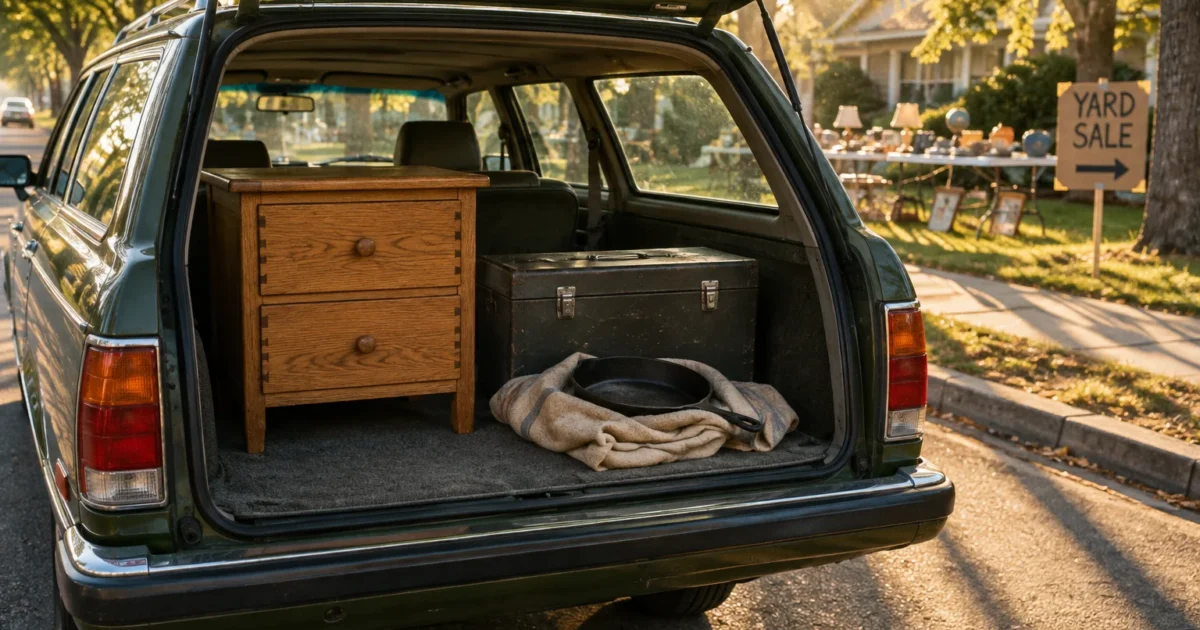
You can slash your household spending immediately by targeting high-depreciation goods at neighborhood yard sales. Big-box retail stores mark up durable household items by hundreds of percent; smart buyers bypass those inflated tags entirely.
Savvy shoppers focus on legendary garage sale finds that retain their structural integrity for decades. Scoring these treasures lets you furnish your home and stock your workshop for pennies on the dollar.
ThredUp reports that 59% of consumers shop secondhand today, driven primarily by retail price inflation. Knowing what to buy used turns an ordinary weekend drive into a serious wealth-building strategy.

Tip #1: Solid Wood Furniture
Modern mass-produced furniture relies heavily on compressed particleboard and synthetic veneers. These flimsy materials swell up when exposed to moisture and collapse under routine household wear.
Authentic solid wood dressers, dining tables, and nightstands at garage sales provide superior heirloom durability. You bypass flimsy corporate craftsmanship while scoring timber that lasts for several generations.
Suburban sellers frequently list heavy oak, maple, and cherry furniture for just $20 to $50. In contrast, purchasing equivalent solid wood pieces at traditional retail showrooms easily costs $800 to $2,000.
Always pull out the drawers to inspect the internal carpentry before agreeing on a purchase price. Look for interlocking dovetail joints at the drawer corners rather than cheap staples, glue, or plastic brackets.
Run your bare hand along the underside of the tabletop and behind the back framing panels. Genuine timber displays continuous natural grain patterns and rough-cut textures, whereas manufactured fiberboard reveals telltale uniform sawdust patterns.
Do not let minor surface scuffs, worn varnish, or dated drawer pulls scare you away from a great deal. A quick pass with sandpaper and a coat of walnut stain will completely revitalize the wood.
Solid furniture remains one of the best things to buy secondhand because it preserves its underlying market value. If you decide to redecorate later, you can usually resell solid timber for your full acquisition cost.
Compare that enduring value to flat-pack furniture, which loses almost all resale worth the minute you assemble it. Sticking to solid wood keeps your living spaces elegant while protecting your personal budget.
Tip #2: Manual Hand Tools
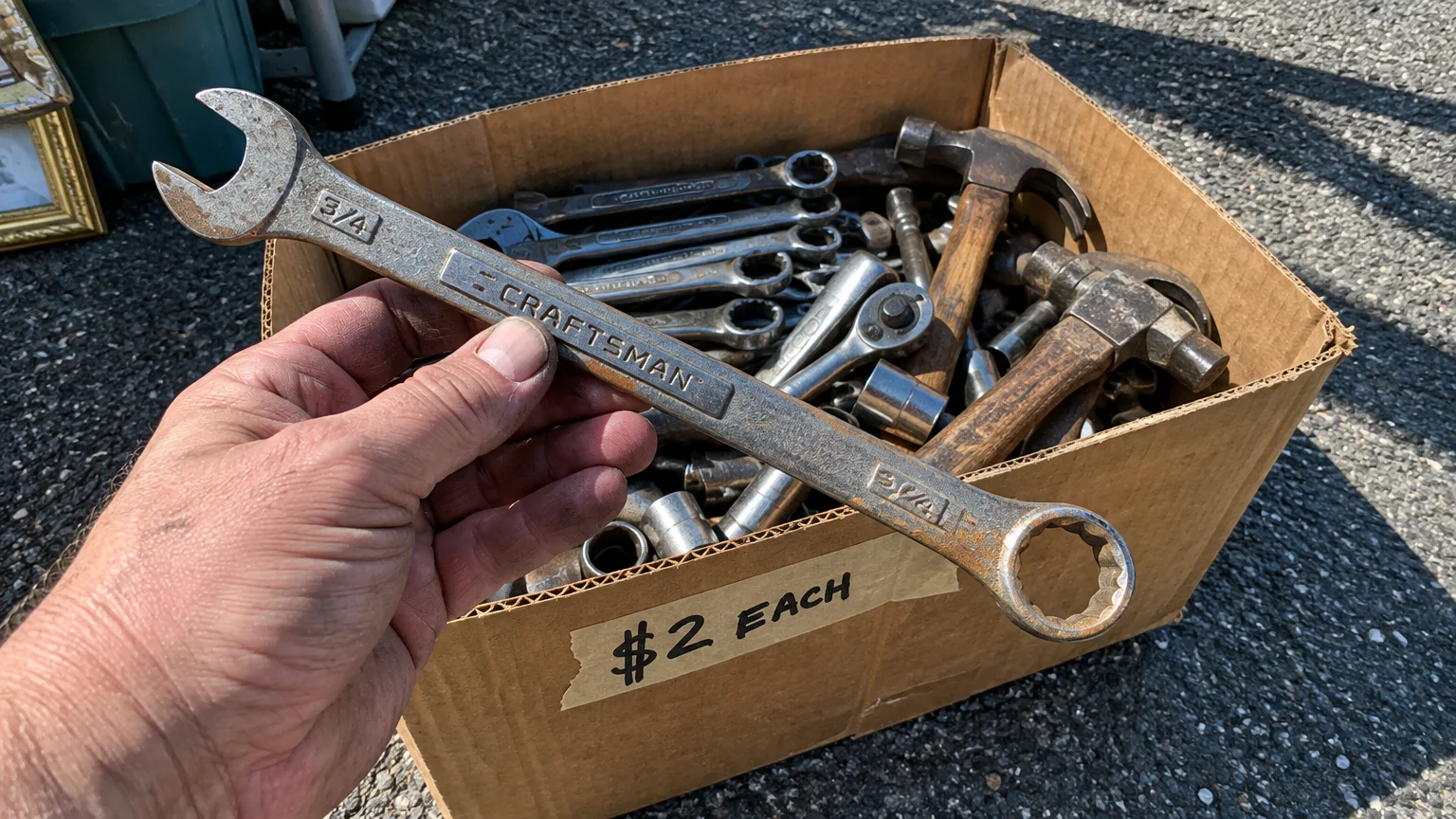
Steer clear of buying basic manual hand tools at corporate hardware stores at standard retail prices. Retail chains charge $15 to $40 for basic socket sets, claw hammers, and combination wrenches.
Neighborhood garage sales routinely offer these exact drop-forged steel tools tossed into cluttered cardboard boxes for $1 to $5. That steep discount matches the classic yard sale benchmark of 70% to 90% off retail.
Keep a keen eye out for legacy American toolmakers such as Craftsman, Proto, Klein, and Snap-on. These heritage manufacturers forged their vintage hand tools from exceptionally dense carbon steel alloys that resist stripping.
Vintage Craftsman manual hand tools feature a legendary full lifetime replacement warranty that protects subsequent owners. You can walk a damaged vintage wrench directly into an authorized retailer for an immediate, no-cost replacement.
You do not need an original purchase receipt or warranty paperwork to claim your tool exchange. The manufacturer honors the guarantee based purely on the stamped brand name on the steel handle.
Always check ratchets and open-end wrenches for severe stress fractures or rounded drive gears before paying. Disregard superficial surface rust, because an overnight soak in household white vinegar dissolves iron oxide effortlessly.
Assembling your core automotive and home maintenance toolkit secondhand saves you hundreds of hard-earned dollars. You acquire industrial-grade equipment that outlasts the fragile chrome tools sold on modern store shelves.
Tip #3: Cast Iron Cookware
Teflon and ceramic nonstick frying pans degrade within a couple of years of routine cooking. Once their synthetic chemical coatings scratch, you must discard them directly into the trash bin.
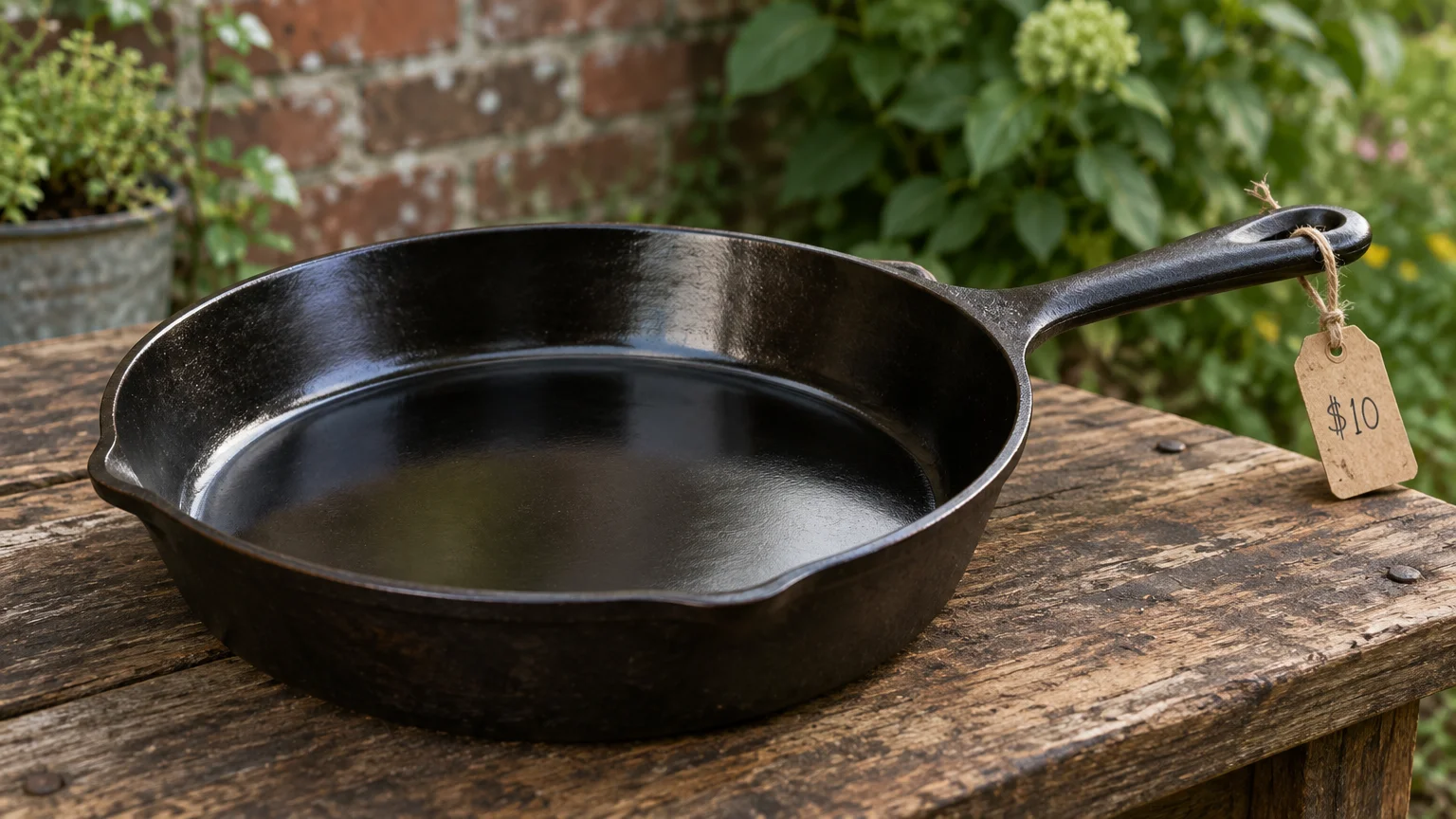
Heavy cast iron cookware represents the ultimate counter-strategy because it lasts indefinitely and improves with sustained culinary use. A well-seasoned iron skillet releases eggs just as smoothly as chemical nonstick pans.
Garage sales are unmatched treasure troves for neglected Dutch ovens, cornstick pans, and heavy skillets. Sellers frequently misidentify surface rust as terminal damage, pricing heirloom pans between $5 and $15.
Check the bottom stamping for iconic antique foundry names like Griswold, Wagner Ware, or early Lodge castings. These vintage culinary pieces feature machine-polished, silky interiors that modern rough-cast pans simply cannot match.
Set the skillet down on a perfectly flat surface to check for heat warping. If the cookware rocks or spins freely, high thermal shock has deformed the base, making it unsuitable for glass cooktops.
Inspect the handle junctions and sidewalls carefully under bright light for tiny hairline fractures. As long as the iron remains structurally sound, removing heavy rust requires nothing more than steel wool and vinegar.
Baking two thin coatings of grapeseed oil into the raw iron restores a slick, black polymer barrier. You gain a professional-grade kitchen workhorse for a tiny fraction of modern retail kitchenware prices.

Tip #4: Children’s Books and Board Games
Young kids cycle through picture books, chapter novels, and developmental board games at lightning speed. Purchasing these items brand new at retail shops drains your monthly family budget with zero financial return.
Suburban parents regularly liquidate full boxes of children’s picture books and scholastic paperbacks for $0.25 to $1.00 each. Compared to $8 to $18 bookstore retail prices, you save roughly 90% on every single title.
Board games offer equally dramatic financial windfalls, consistently selling for $2 to $5 instead of $25 to $40 new. You can build an immense, wholesome family entertainment library without stressing your bank account.
Always open board game boxes on-site to inspect the components before handing over your dollar bills. Ensure the box contains critical proprietary tokens, specialized spinner dials, and intact instruction booklets that cannot be easily substituted.
When browsing children’s book bins, flip through each page to check for torn paper or heavy moisture stains. Steer clear of books with persistent mold odors, because mildew spores can easily migrate to your home bookshelves.
Give plastic game pawns and glossy book covers a fast wipe with a sanitizing cloth when you return home. Your household receives hours of educational entertainment while preserving valuable capital for other family priorities.
Tip #5: Heavy-Duty Lawn and Garden Equipment
Retail home centers stock their garden aisles with flimsy stamped metal spades and cheap plastic rakes. These disposable consumer tools buckle or split the moment you tackle dense roots or rocky backyard soil.
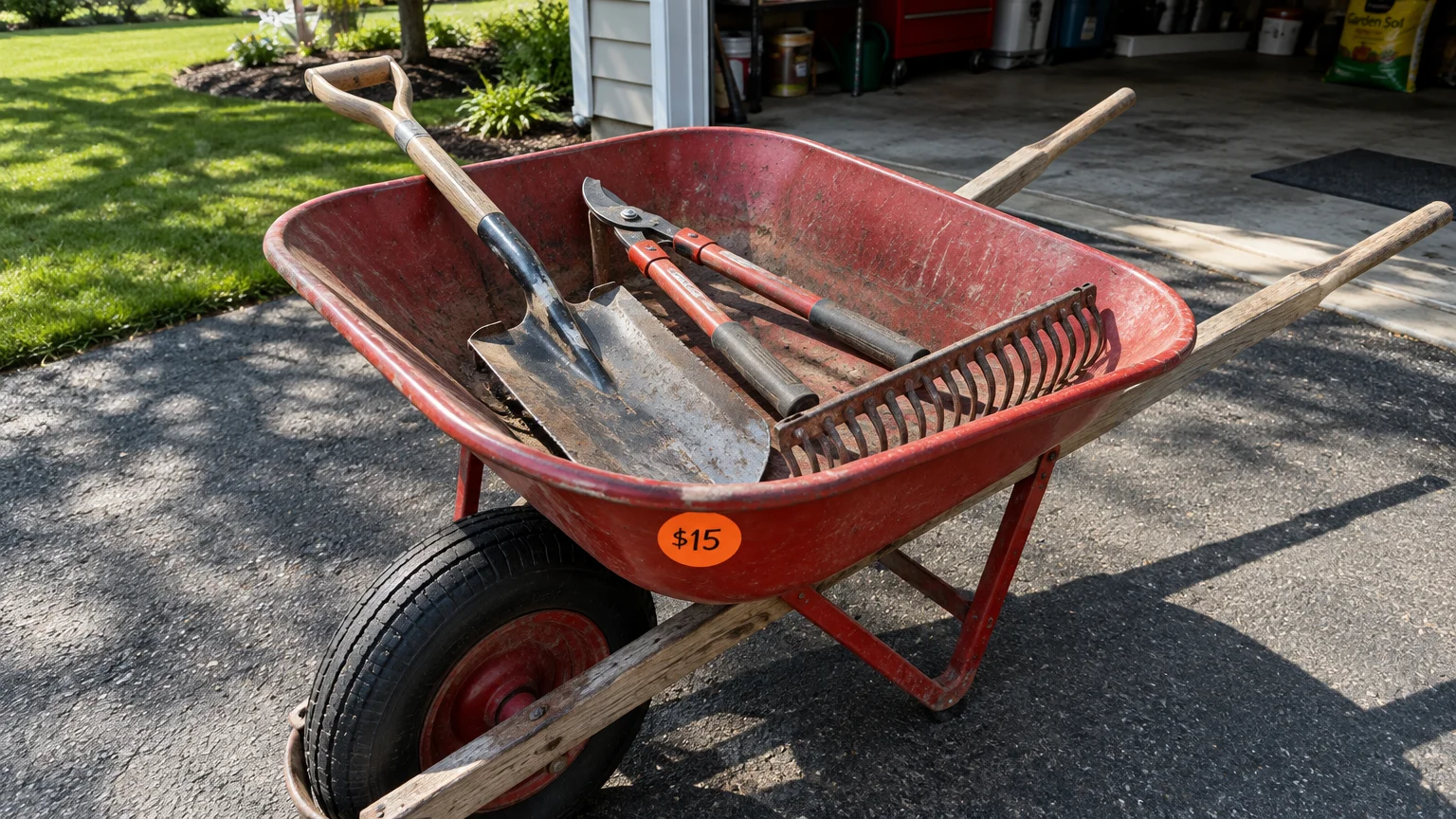
Estate sales and neighborhood garage sales regularly showcase vintage carbon-steel shovels, trenching spades, and heavy post-hole diggers for $3 to $8. These vintage landscaping tools feature thick metal blades that endure punishing backyard tasks without warping.
Wheelbarrows offer another golden opportunity to secure massive practical savings on exterior property care gear. Moving families routinely offload commercial-grade steel wheelbarrows for $15 to $25, compared to $130 at retail home stores.
Examine wooden handles closely for deep structural splinters, dry rot, or loose fitting collars. A sound ash or hickory handle only requires a light sandpaper scuffing and an application of boiled linseed oil.
Even if a wooden shaft splits completely, you can purchase an affordable replacement handle at a hardware store. Fitting that new handle onto a vintage forged steel head yields a tool far superior to retail models.
Dull hedge shears, lawn edgers, and loppers also deserve your attention in rusty yard tool buckets. Restoring their razor-sharp cutting bevels takes just five quick minutes using a standard metal mill bastard file.
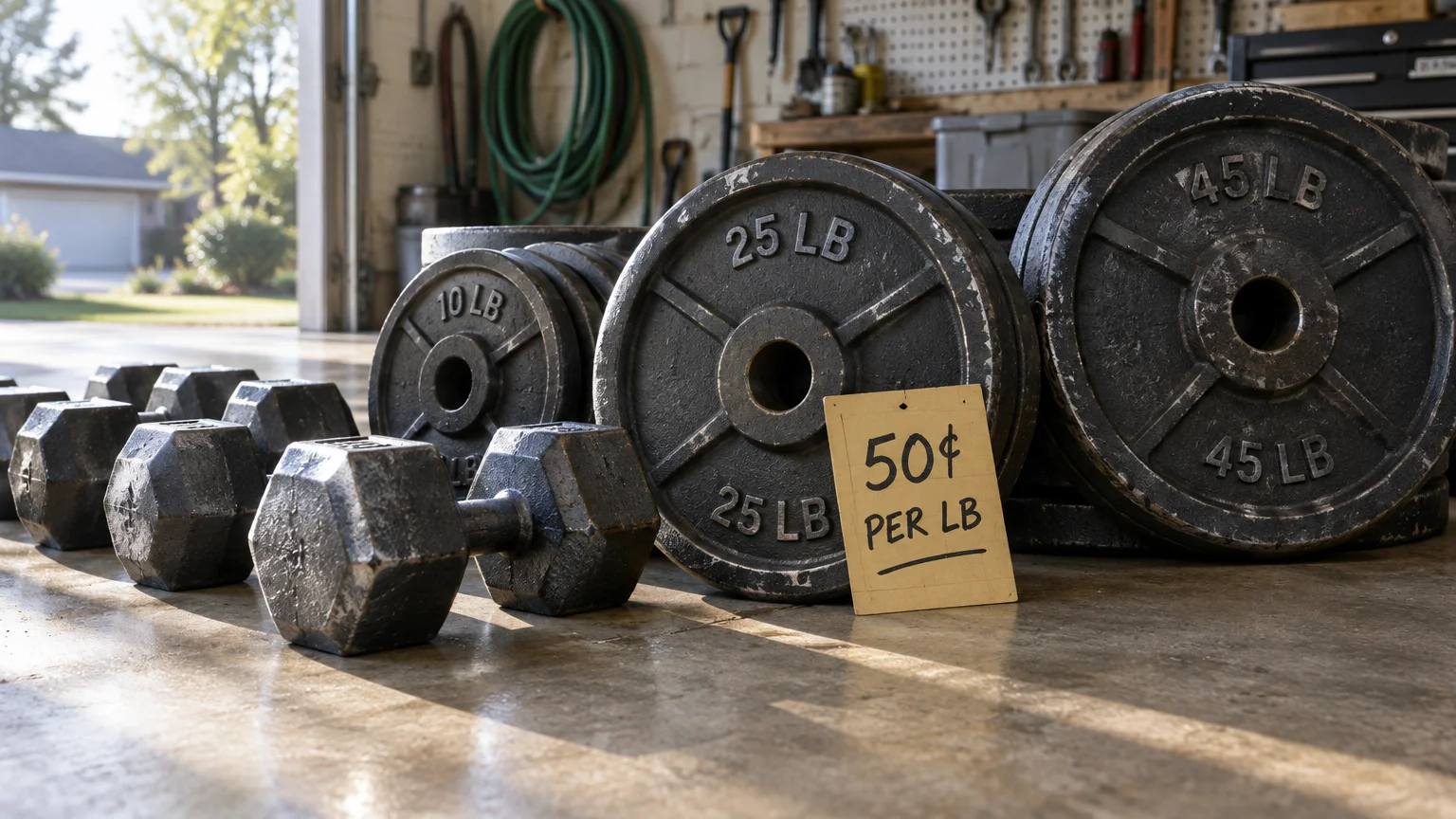
Tip #6: Free Weights and Home Gym Equipment
Commercial fitness retailers capitalize heavily on fitness enthusiasm by charging $1.50 to $2.50 per pound for iron dumbbells. Building a versatile garage gym using new retail inventory easily demands $800 to $1,500 in upfront capital.
Solid cast iron does not suffer structural fatigue, degrade with age, or lose mechanical mass over decades. A 40-pound iron hex dumbbell made forty years ago builds muscle just as effectively as a fresh retail version.
Sellers clearing out unused fitness rooms commonly price metal weight plates and dumbbells at $0.25 to $0.50 per pound. Highly motivated homeowners will often surrender an entire barbell, bench, and plate set for a flat $50.
Walk away from older vinyl-coated weights filled with compressed sand or wet concrete slurry. Those plastic bladders eventually crack under minor impact, spilling gritty debris across your workout flooring.
Prioritize solid cast iron plates and hex dumbbells with securely welded or pinned steel crossbars. Ensure the barbell collars clamp tightly onto the sleeve ends without excessive wobbling or slipping during heavy lifts.
If the bare metal shows light oxidation or chipped factory enamel, do not worry about appearance. A quick coat of black rust-preventative enamel spray makes secondhand weights look brand new in your garage gym.
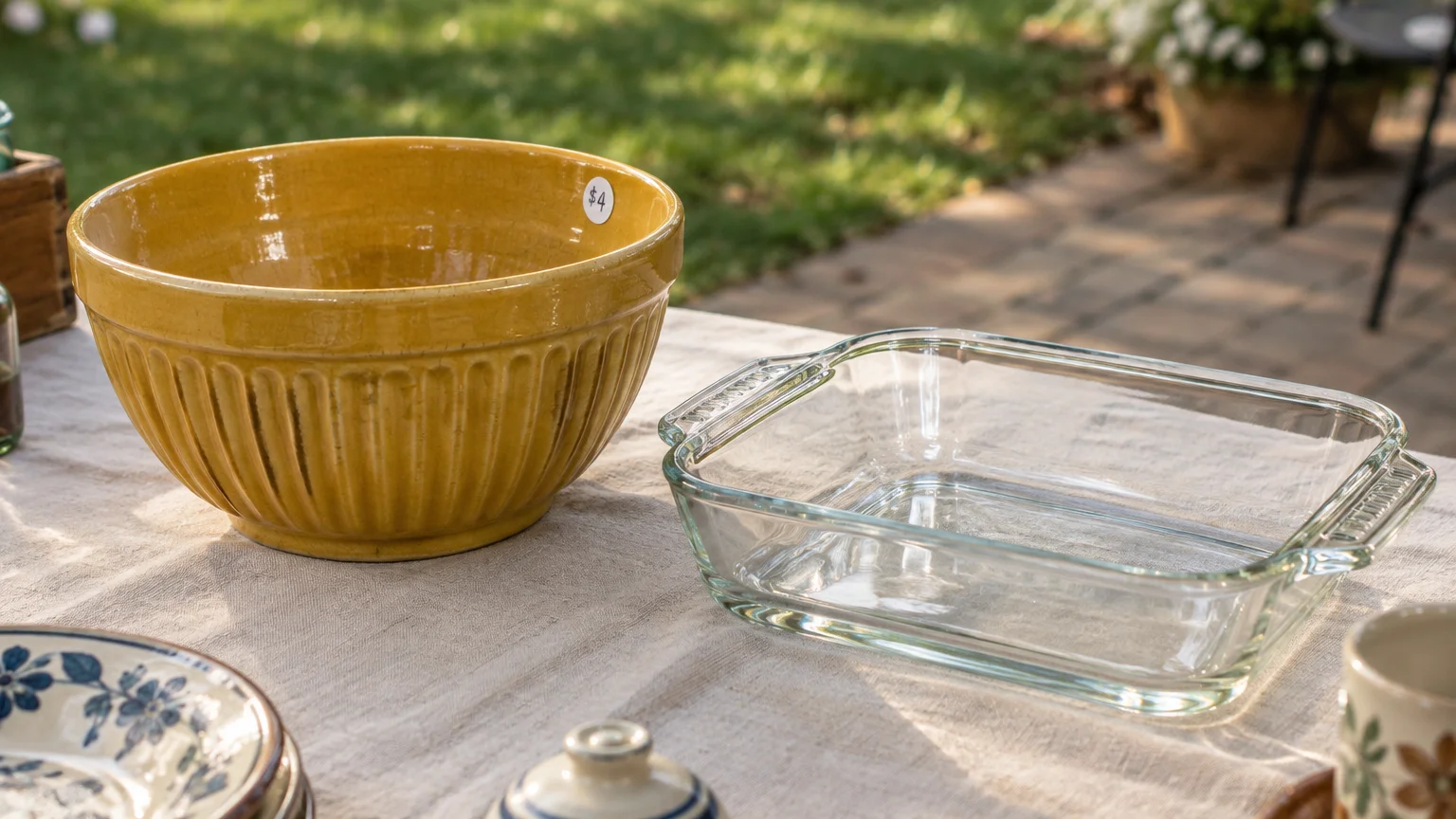
Tip #7: Vintage Glassware and Stoneware Bakeware
Modern baking dishes sold under mainstream kitchen brands frequently replace resilient borosilicate glass with cheaper soda-lime glass. Soda-lime formulas possess inferior thermal resistance and can shatter violently when exposed to sudden temperature shifts.
American Pyrex manufactured before 1998 utilized durable borosilicate glass that easily withstands aggressive kitchen temperature variations. You can regularly find these superior vintage baking dishes and measuring cups at neighborhood yard sales for $2 to $6.
Vintage CorningWare casserole pans featuring classic floral patterns also deliver outstanding culinary performance and durability. These specialized pyroceramic vessels transfer directly from a cold freezer into a preheated oven without cracking.
Run your index finger smoothly around the rim and corners of each dish to check for tiny glass chips. Pass on bakeware displaying cloudy dishwasher etching, as that hazy film represents permanent microscopic pitting across the surface.
Heavy glass Mason jars and storage canisters represent another high-value kitchen score at weekend sales. Sellers regularly offload crates of canning jars for pocket change, providing an eco-friendly alternative to disposable plastic food containers.
Replacing brittle plastic meal prep containers with heavy vintage glassware protects your food from chemical leaching. You save substantial cash while outfitting your pantry with timeless, restaurant-grade glass vessels.

The Bottom Line: What This Means for Your Wallet
Successful thrift shopping hinges on targeting durable, rebuildable goods while leaving disposable consumer junk behind on the driveway. Exploiting the standard 10% to 33% garage sale pricing rule lets you preserve substantial personal wealth.
However, savvy shoppers must always balance steep discounts against non-negotiable household safety regulations. Federal law under the Consumer Product Safety Improvement Act strictly prohibits the resale of recalled consumer goods at yard sales.
Never buy traditional drop-side baby cribs, which the federal government permanently banned on June 28, 2011. These outdated cribs pose severe infant entrapment hazards that no price discount could ever justify.
Child safety car seats also belong on your absolute do-not-buy list during weekend yard sale outings. Car seat shells feature molded plastic expiration stamps spanning 6 to 10 years, and invisible crash stress compromises structural integrity.
For durable household gear, shopping secondhand delivers massive tax-advantaged savings for ordinary families. Under IRS tax regulations, casual garage sale proceeds are non-taxable when goods sell below their original purchase cost.
Adopting this disciplined secondhand shopping strategy transforms casual weekend excursions into a proven wealth-building habit. You furnish your home with premium craftsmanship while retaining thousands of dollars inside your savings account.
For consumer protection information, visit the Federal Trade Commission (FTC) and the Consumer Financial Protection Bureau (CFPB). For product safety and reviews, consult Consumer Reports.
Frequently Asked Questions
What are the best garage sale tips for negotiating lower prices?
Always bundle multiple items together and make a polite, cash-based counteroffer for the entire lot. Sellers eager to clear driveway space will almost always accept a package offer rather than haggle over single items.
Carry small bills like ones and fives so you can pay exact change immediately upon reaching an agreement. Flashing twenty-dollar bills after negotiating a two-dollar discount destroys your bargaining credibility with the seller.
How can you verify that a garage sale item has not been recalled?
Use your smartphone to cross-reference the product model number against the official Consumer Product Safety Commission recall database. You can quickly verify whether older appliances, power tools, or sporting equipment carry active federal safety notices.
If the item lacks clear manufacturer model labels or serial numbers, walk away from the deal entirely. Saving a few dollars is never worth introducing dangerous electrical or mechanical hazards into your household.
Do garage sale sellers have to pay income tax on their proceeds?
Under IRS tax regulations, casual sellers do not owe income tax when selling personal items below their original purchase price. Because typical garage sale items sell at steep 70% to 90% discounts, these transactions generate non-taxable personal losses.
However, if you purchase items specifically to flip them online for a profit, the IRS classifies that activity as taxable business income. Maintain clear purchase receipts if you operate an active secondhand resale venture.
What payment methods should you bring to weekend yard sales?
Physical cash remains the undisputed king of garage sale commerce and gives you maximum bargaining leverage. While some modern sellers accept peer-to-peer mobile payments like Venmo, rural areas often suffer from unreliable cellular data connections.
Carry a designated cash envelope stocked with ten, five, and one-dollar bills before leaving your house. Having exact physical currency speeds up transactions and prevents you from overspending your pre-planned shopping budget.
Disclaimer: This article is for informational purposes only and does not constitute financial advice. The content reflects the author’s opinion and research at the time of writing; always do your own research before making financial decisions.









Leave a Reply