
Target clearance racks look chaotic, but an engineered pricing system controls every markdown across the store. You can easily outsmart this system once you understand the retail giant’s internal discounting rules.
Most everyday shoppers pay far too much simply because they buy items at the wrong time. Learning how store teams process inventory cuts allows you to grab premium merchandise for pennies on the dollar.
These battle-tested target shopping secrets reveal exactly when and how prices drop. Use these proven target clearance tips to stretch your budget and save money at Target on every single trip.
Tip #1: Decipher the Secret Numbers on Clearance Stickers
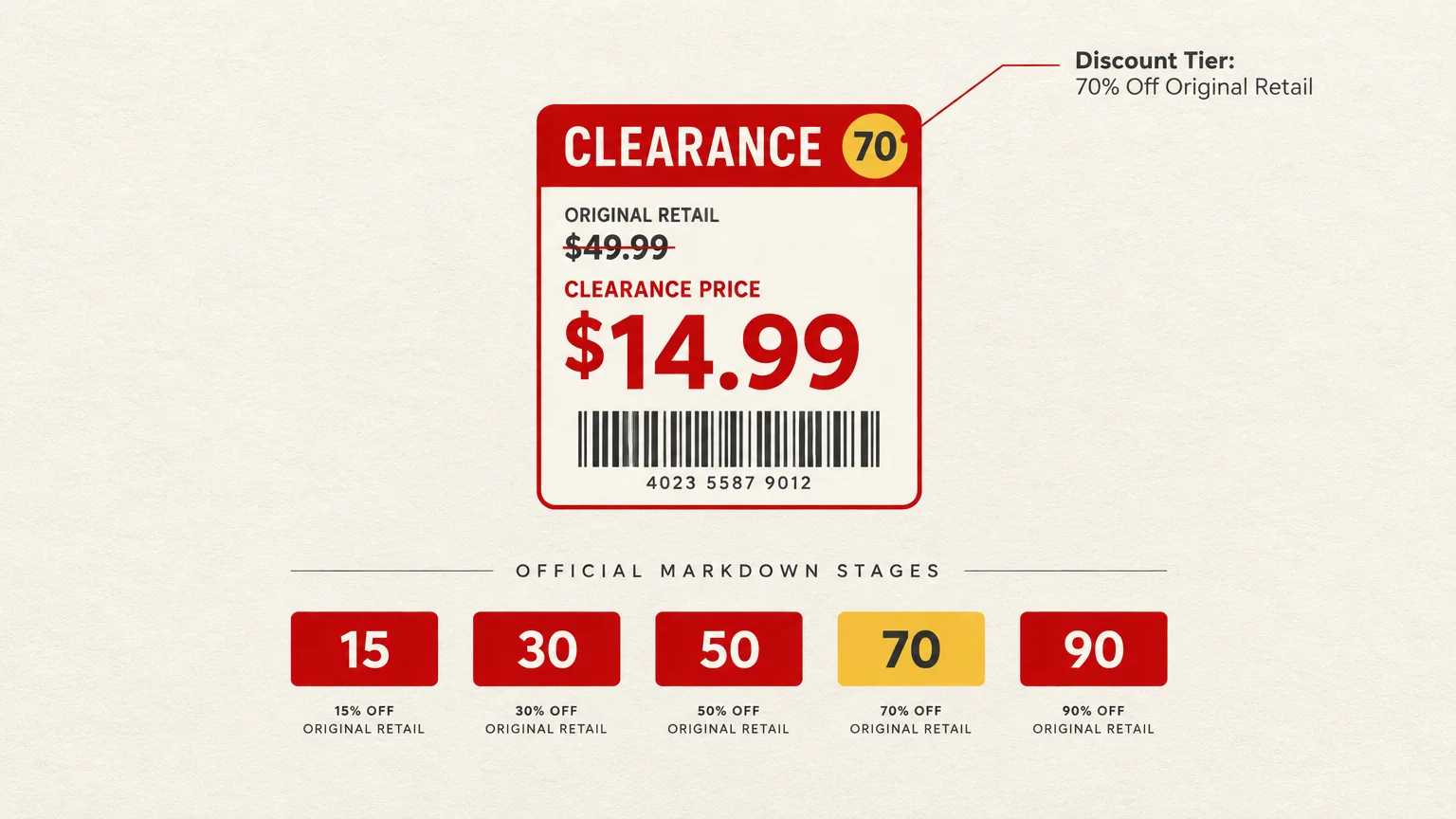
Target clearance stickers carry subtle indicators that casual shoppers overlook completely. The bold markdown price tells only part of the story.
Direct your eyes to the tiny two-digit number stamped in the upper-right corner of the sticker. That miniature number reveals the exact percentage sliced off the original retail price.
Target standardizes these markdowns into specific percentage tiers: 15, 30, 50, 70, or 90. Checking that number tells you instantly how deep the current discount really runs.
An item showing 15 or 30 represents an initial clearance phase. Unless you urgently need the product or store stock is disappearing, hold out for deeper cuts.
When you spot 70 or 90 in the corner, you have reached rock-bottom pricing. Merchandise rarely drops past seventy percent before Target clears it off shelves permanently.
Many shoppers get tricked by red stickers without realizing an item barely received a price cut. Decoding this corner number eliminates marketing illusions and keeps your spending sharp.
Compare that percentage against the remaining shelf quantity. Plentiful inventory at thirty percent off means you can safely wait for the next price reduction.
You should also scan the item with the Target mobile app barcode scanner. App scanners often reveal an unadvertised lower price that employees have not yet tagged on the sales floor.
Store employees must manually apply physical clearance tags to hundreds of items each morning. If you scan an unstickered box, the register system still rings up the lower digital price.
Never assume every red sticker guarantees an unbeatable bargain. Read the percentage code first to ensure you are scoring legitimate target deals.
Tip #2: Shop the Department Markdown Schedule by Day
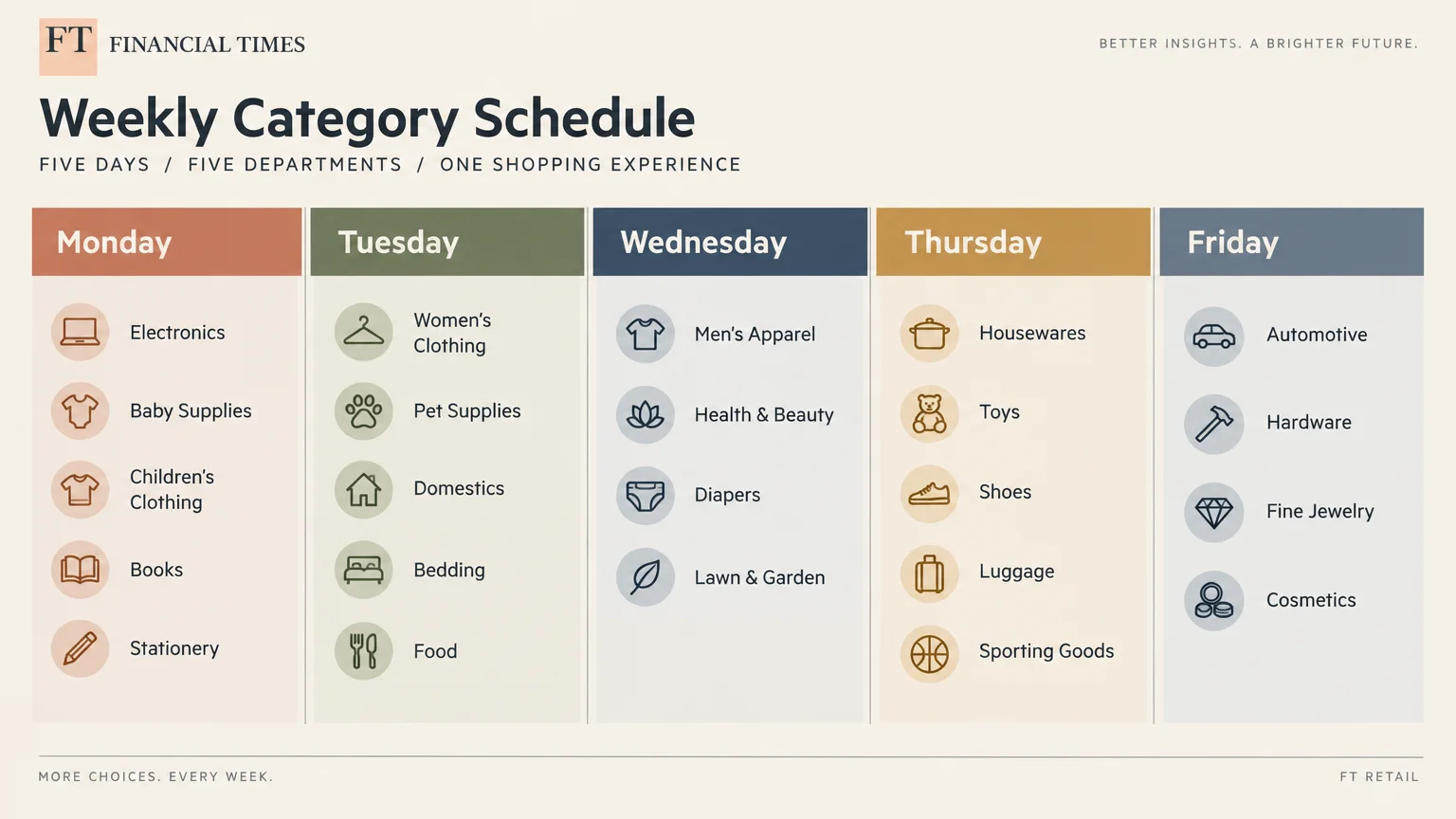
Target does not mark down items randomly across the sales floor. Store associates follow a structured target clearance schedule that rotates through specific departments from Monday through Friday.
Monday focuses heavily on electronics, baby supplies, children’s clothing, books, and stationery. Parents and tech enthusiasts who visit Monday mornings secure the freshest discounts before anyone else.
Tuesday shifts attention toward women’s clothing, pet supplies, domestics, bedding, and food items. You can stock your pantry and refresh your home linens for a fraction of regular prices.
Wednesday marks down men’s apparel, health and beauty essentials, diapers, and lawn or garden products. Combining these midweek reductions on everyday household staples delivers massive budget relief.
Thursday features housewares, toys, shoes, luggage, and sporting goods. Visiting the store Thursday afternoon gives you prime access to discounted kitchen appliances, footwear, and children’s games.
Friday covers automotive items, hardware tools, fine jewelry, and cosmetics. Browsing Friday morning allows you to pick up weekend project supplies right before heavy shopper traffic hits.
Department markdowns generally pause over Saturday and Sunday while staff focus on customer service and stocking. Shopping clearance on weekends usually leaves you browsing picked-over clearance racks.
Arriving early on the designated day maximizes your chances of finding pristine inventory. You beat weekend bargain hunters and reseller competitors who clean out popular aisles.
Aligning your weekly errands with this schedule ensures you browse fresh endcaps rather than depleted leftovers. You gain a massive edge simply by showing up on the correct day.
Tip #3: Crack the Meaning Behind Price-Ending Digits
The final cents on a price tag act as an internal status report for Target inventory. Learning to read these ending digits shows whether an item has reached its absolute floor.
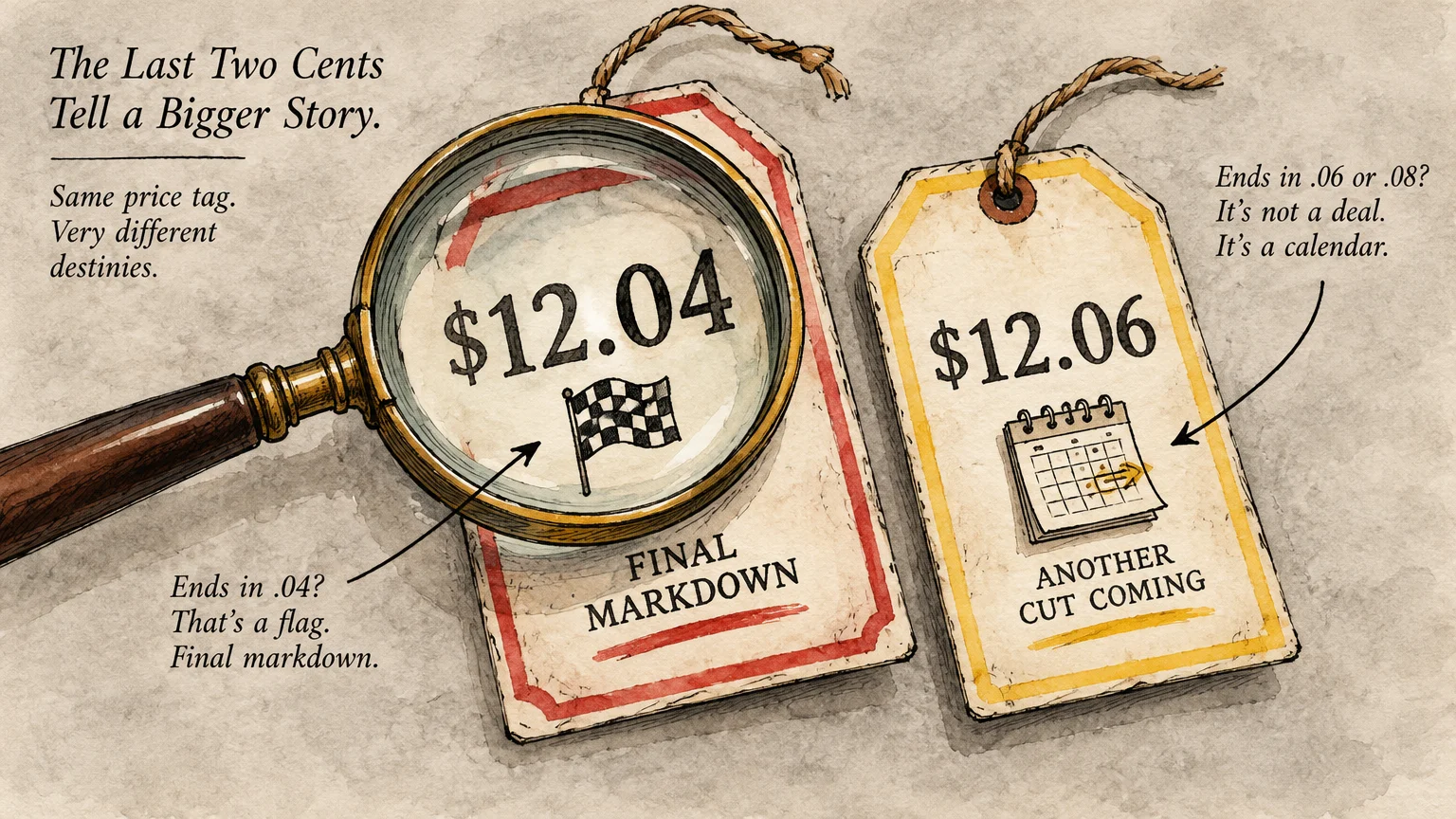
An item with a price ending in $0.09 represents full retail price. Target has not applied any clearance reductions to these products, even if placed near a clearance display.
Prices ending in $0.06 or $0.08 indicate active clearance merchandise that is scheduled for further reductions. These items will drop again in ten to fourteen days if units remain unsold.
If an item ends in eight cents and shelves are packed with inventory, exercise patience. Waiting roughly two weeks can save you an additional twenty to forty percent.
In contrast, a price ending in $0.04 signals a final markdown. That inventory has hit its terminal discount level and will not drop any further in price.
When you spot a four-cent ending on something you want, buy it right away. Any remaining units will soon get pulled from shelves and sent to salvage.
These cent codes remove emotional uncertainty from your buying decisions. You know instantly whether to gamble on a future price drop or seize the bargain on the spot.
Track these prices across multiple visits if you frequently shop at the same local store. You will quickly notice how reliably the ten-to-fourteen-day price cycle operates across different aisles.
Memorizing this simple numeric pattern guarantees you never overpay for merchandise that is days away from another steep markdown.

Tip #4: Time the Massive Semi-Annual Toy Resets
Twice each year, Target overhauls its entire toy department to clear out aging inventory. These massive semi-annual toy clear-outs take place during January and July or August.
Target slashes thousands of brand-name toys during these specific periods to make shelf space for incoming product lines. You will find premier brands like LEGO, Barbie, and Hot Wheels heavily discounted.
Markdowns typically begin at thirty to fifty percent off before plunging rapidly to seventy percent off. The drop to seventy percent often happens mid-month over a single forty-eight-hour span.
The January toy clearance is a goldmine for frugal families planning for upcoming birthdays. Retailers clear out holiday overstock, giving you access to premium inventory at clearance-basement prices.
The summer toy reset in July and August lets you knock out holiday shopping months in advance. You avoid frantic December crowds and save substantial money in the process.
Build a dedicated gift closet at home to store these seventy percent discounts until you need them. This proactive strategy protects your wallet from unplanned expenses throughout the entire year.
Monitor community shopping groups and online deal forums during January and July. Fellow deal seekers often alert shoppers the exact morning that local stores drop toys to seventy percent off.
Remember that inventory levels vary wildly by store location during these reset periods. Checking multiple nearby locations can reveal massive hauls that slower stores have not yet sold.
Tip #5: Master the Holiday Markdown Progression Cadence
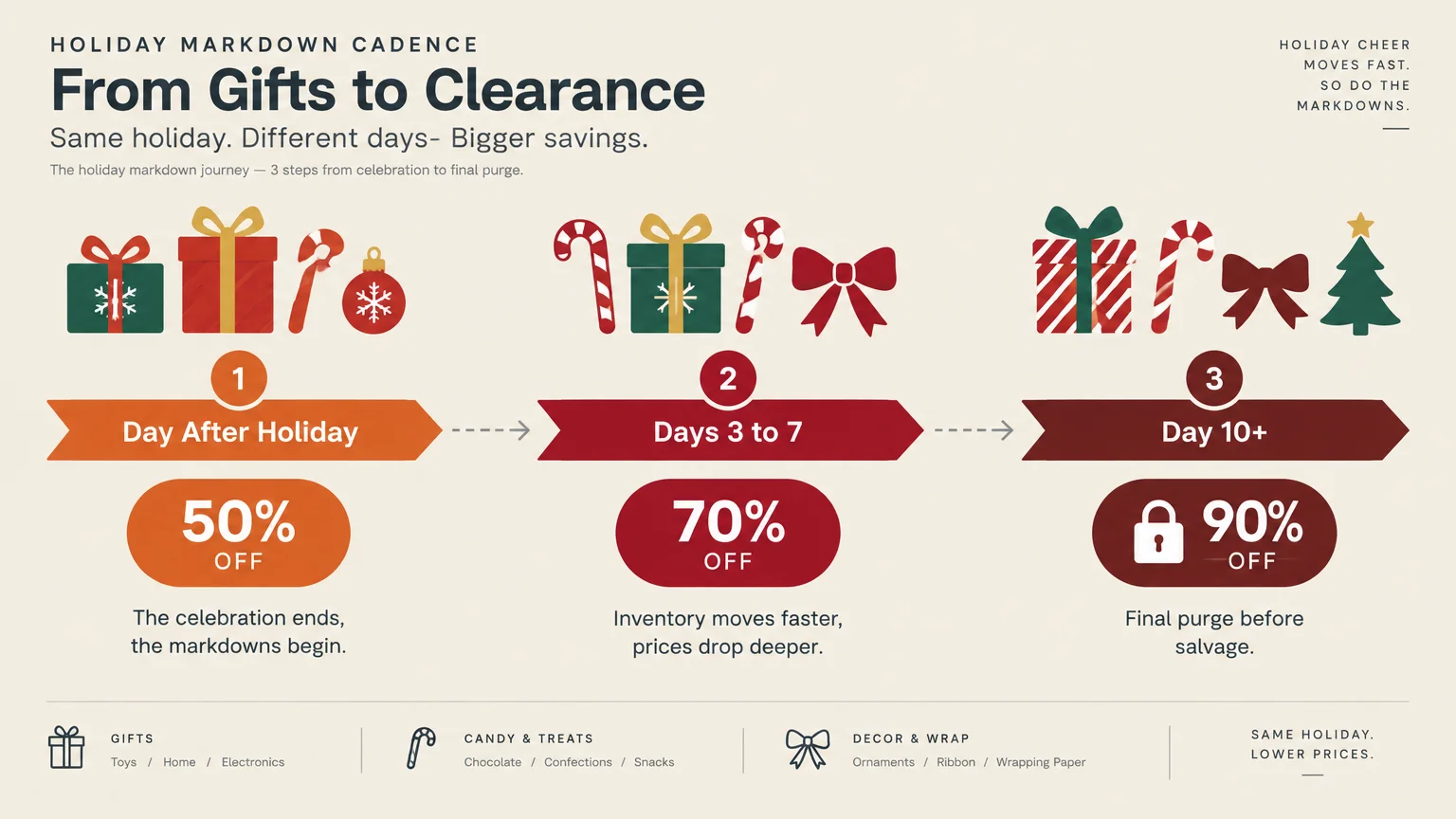
Post-holiday clearance sales at Target follow a precise, clockwork schedule rather than arbitrary pricing decisions. Knowing this timeline lets you grab holiday decor, wrapping paper, and gifts for pocket change.
The day immediately following any major holiday brings an instant fifty percent markdown on decor and seasonal goods. Holiday candy and perishables typically enter the clearance cycle at thirty percent off.
Three to four days after the holiday, Target accelerates remaining seasonal inventory to seventy percent off. This window provides the best balance between deep discounts and available stock.
Approximately seven to ten days post-holiday, remaining seasonal merchandise drops to ninety percent off. At this terminal stage, you can purchase premium decorations and party supplies for literal pennies.
Waiting for ninety percent carries inventory risk because popular items sell out quickly at seventy percent. If you discover high-value lights or specialty inflatables, buy them at seventy percent.
Look beyond obvious holiday themes and hunt for neutral, versatile items during these sales. Solid-color wrapping paper, ribbon rolls, storage bins, and plain napkins work year-round for birthdays and showers.
Applying this formula across Christmas, Valentine’s Day, Easter, and Halloween keeps your celebration costs permanently low. You prepare for future holidays without straining your current monthly budget.

Tip #6: Stack Target Circle Cards and Auto-Discounts
A low sticker price is just the starting point for serious savings at Target. You can compound your clearance discounts by leveraging the retailer’s updated loyalty ecosystem.
Target rebranded its legacy RedCard into the Target Circle Card in April 2024. Whether you choose credit, debit, or reloadable formats, the card provides an automatic five percent discount on purchases.
Crucially, that five percent discount stacks directly on top of already-reduced clearance items. A product marked seventy percent off becomes significantly cheaper when your card applies at checkout.
Circle Card cardholders also receive an extended thirty-day return window on eligible merchandise. This generous perk gives you time to verify clearance items without worrying about locked-in spending.
Target also automated its Target Circle loyalty program in April 2024. You no longer waste time searching through mobile apps to clip digital coupons before arriving at the register.
Standard Circle promotions and eligible manufacturer coupons apply automatically when you enter your phone number. These digital savings trigger at the register without demanding extra effort on your part.
Layering an automatic manufacturer discount on top of a seventy percent clearance price produces massive savings. Paying with your Circle Card slashes another five percent off that final reduced total.
This multi-layered strategy separates casual shoppers from true savings experts. It ensures you never leave free money on the checkout counter.
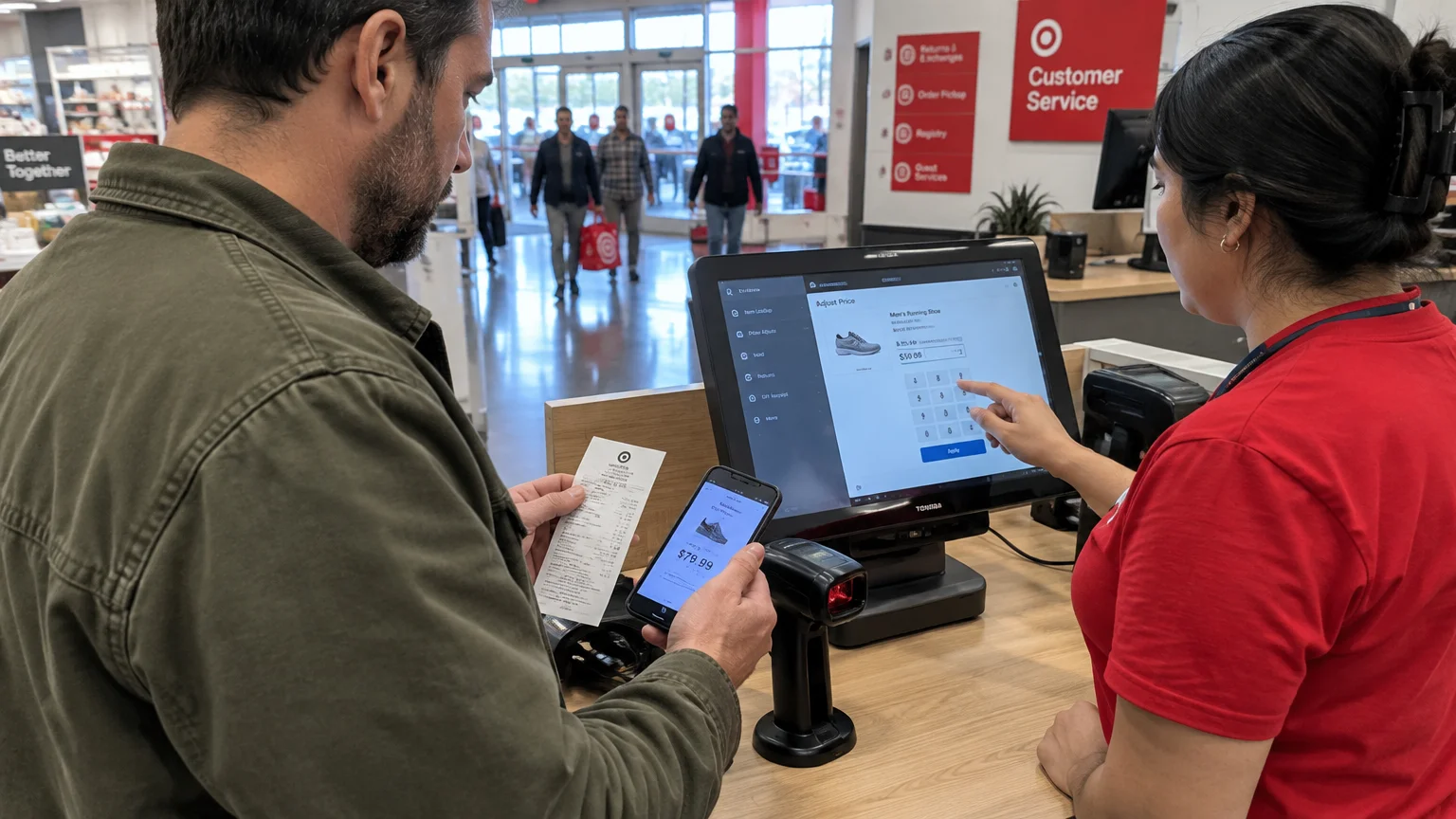
Tip #7: Leverage the 14-Day Price Adjustment Window
Nothing stings quite like buying a clearance item only to watch the price plunge lower days later. Fortunately, Target’s official price match policy offers a fourteen-day price adjustment window.
If Target drops the price of your purchased item within fourteen days, guest services will refund the difference. You simply need to provide your original digital or paper purchase receipt.
This adjustment policy also protects you against lower prices advertised by select major online competitors. Monitoring competitor prices after buying higher-ticket goods can easily claw back extra dollars.
Save all your shopping receipts inside the Target mobile app for instant digital retrieval. Tracking purchases digitally avoids lost paper slips and streamlines adjustments at customer service.
Keep in mind that individual store managers retain discretion over localized clearance-to-clearance markdown adjustments. However, corporate-advertised price drops remain fully backed across stores nationwide.
This safety net eliminates buyer remorse on items with dwindling inventory. You can confidently secure the last unit on the shelf without stressing over a potential price drop next week.
Take a few seconds each week to review recent receipts against current store promotions. Finding a single price adjustment pays for your time and reinforces good financial habits.

The Bottom Line: What This Means for Your Wallet
Target designs its retail floors to encourage spontaneous spending, but armed shoppers control the transaction. Understanding markdown patterns transforms how you navigate every aisle.
Clearance shopping succeeds when you treat it as a disciplined strategy rather than a random scavenger hunt. You save money by letting corporate schedules dictate your shopping runs.
Recognize the power of tag codes, cent endings, and automatic Circle discounts on every visit. These small, stacked advantages add hundreds of dollars back into your bank account each year.
Start checking upper-right sticker corners and tracking weekly department schedules during your next run. You will never view a red clearance sticker the same way again.
Frequently Asked Questions
Do all Target stores follow the exact same clearance schedule?
Most Target stores follow the standard weekday rotation, but individual store managers adjust routines based on staffing and incoming freight. High-volume locations occasionally shift markdown days to manage store traffic.
Visiting your local Target across several consecutive days helps you confirm the precise schedule your specific store follows.
Can you negotiate clearance prices at Target?
Store employees cannot manually change clearance prices on undamaged goods simply because you ask. Markdowns are set centrally through corporate inventory management software.
However, guest services team members can offer an additional discount if an item has visible packaging damage, scratches, or missing parts.
Where can you find the best clearance items in the store?
Look at the endcaps facing the back walls of the store rather than main center aisles. Target routinely places its deepest clearance merchandise on these hidden rear shelves.
Stores also consolidate surplus clearance into dedicated aisles during major seasonal transitions. Wandering along back perimeter walls often reveals these hidden discount corridors.
Does the Target Circle Card 5% discount apply to clearance?
Yes, your five percent Target Circle Card savings apply directly to clearance merchandise. The discount calculates automatically at checkout regardless of how deeply an item was already marked down.
This benefit applies identically across the credit, debit, and reloadable versions of the Target Circle Card.
For consumer protection information, visit the Federal Trade Commission (FTC) and the Consumer Financial Protection Bureau (CFPB). For product safety and reviews, consult Consumer Reports.
Disclaimer: This article is for informational purposes only and does not constitute financial advice. The content reflects the author’s opinion and research at the time of writing.
Always do your own research before making financial decisions.