Retailers spend millions of dollars every year designing floor layouts, pricing strategies, and display lighting to subtly force you into paying full price.
While casual shoppers wander aimlessly down main aisles picking up full-price items, seasoned store associates use insider knowledge to snag top-tier merchandise for pennies on the dollar.
You do not need an employee badge to unlock these massive discounts; you just need to understand the internal rules that dictate how clearance inventory moves through the store.
By mastering price tags, markdown calendars, and hidden store zones, you can consistently bypass retail markup tricks and execute the best clearance shopping strategy every time you shop.
Tip #1: Crack the Secret Price Tag Ending Code
Price tags carry distinct numeric signals that inform floor workers exactly where an item rests in its markdown lifecycle.
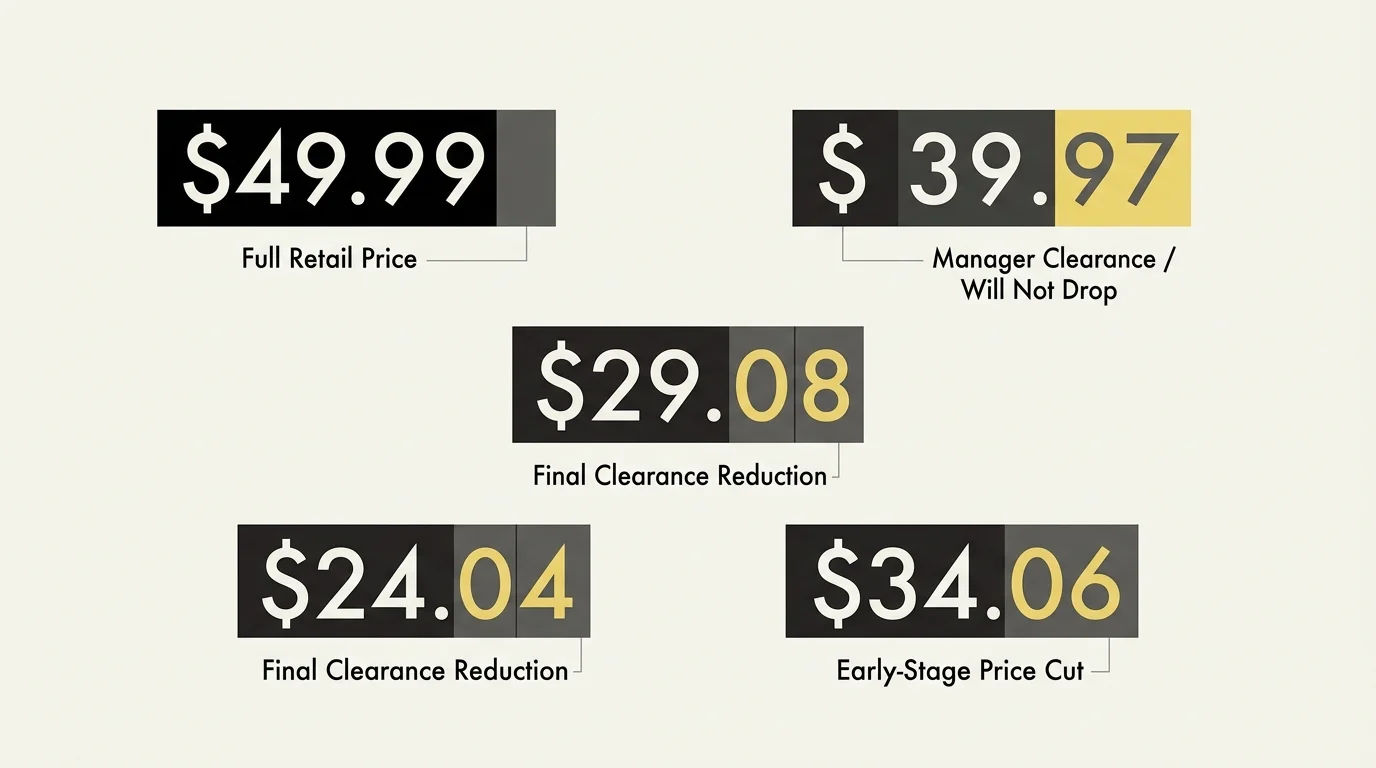
Most casual buyers assume a price tag ending in ninety-nine cents represents standard pricing, but retail inventory systems use specific decimal endings to track pricing tiers without altering promotional signage. When you spot a price tag ending in .99, you are looking at full retail price.
A price ending in .97 at big-box warehouse stores like Costco indicates a manager clearance markdown that will not drop any lower; once that stock vanishes, the store will not reorder it.
At Target, prices ending in .08 or .04 signal final clearance reductions, whereas prices ending in .06 or .08 represent early-stage price cuts that may drop further.
Apparel chains frequently use prices ending in .97, .98, or .88 to designate items marked down for immediate liquidation. Retail workers read these decimal endings like a internal roadmap.
Furthermore, many yellow clearance stickers feature tiny date stamps printed in small font near the barcode—such as 0412, indicating April 12th—which tells you exactly how long the item has sat at its current price tier.
If you find an item ending in .04 or .97 with a date code over three weeks old, buy it immediately because it has reached its absolute floor price; waiting even twenty-four hours means another savvy buyer will snatch it up.
Learning to decipher these clearance shopping secrets gives you an immediate edge over average consumers who mistakenly wait for additional markdowns on final-clearance merchandise.
Tip #2: Map the Corporate Markdown Schedule
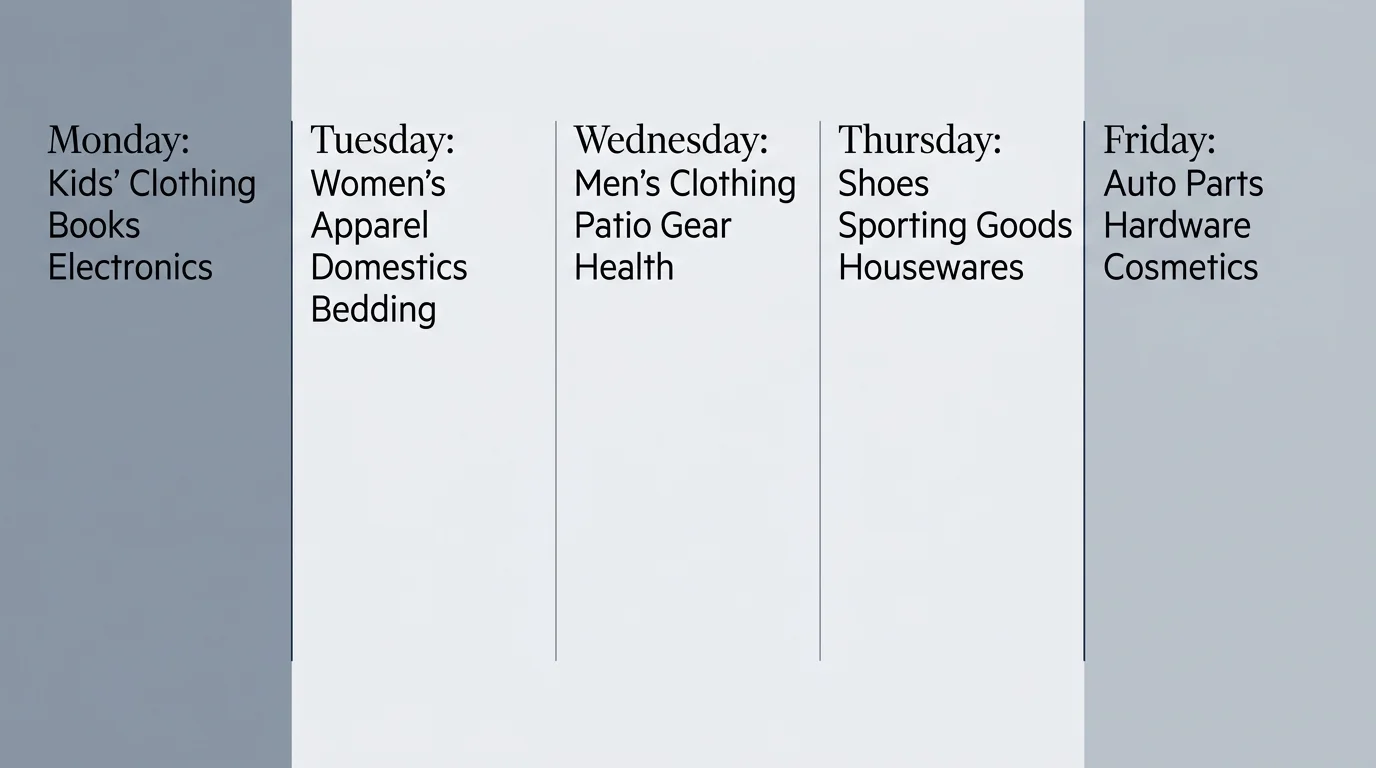
Retail chains do not drop prices randomly throughout the week; they operate on strict corporate markdown schedules. Every major store assigns specific merchandise departments to specific days of the week to manage staff workloads efficiently.
Target, for instance, traditionally processes markdowns for kids’ clothing, books, and electronics on Mondays; women’s apparel, domestic goods, and bedding on Tuesdays; men’s clothing, patio gear, and health items on Wednesdays; shoes, sporting goods, and housewares on Thursdays; and auto parts, hardware, and cosmetics on Fridays.
Department stores like Kohl’s and Macy’s frequently roll out their deepest price drops early on Wednesday mornings right before major weekend promotions kick off. Retail employee shopping tips always highlight the importance of shopping early on these designated markdown days.
Floor workers perform price updates using handheld scanning guns during early morning shifts before store doors open.
If you arrive at ten in the morning on a department’s designated markdown day, you get first access to newly discounted items before evening crowds pick through the remains.
Plan your weekly errands around these corporate schedules to catch fresh markdowns before anyone else sees them.
Tip #3: Search Abandonment Zones and Go-Back Carts
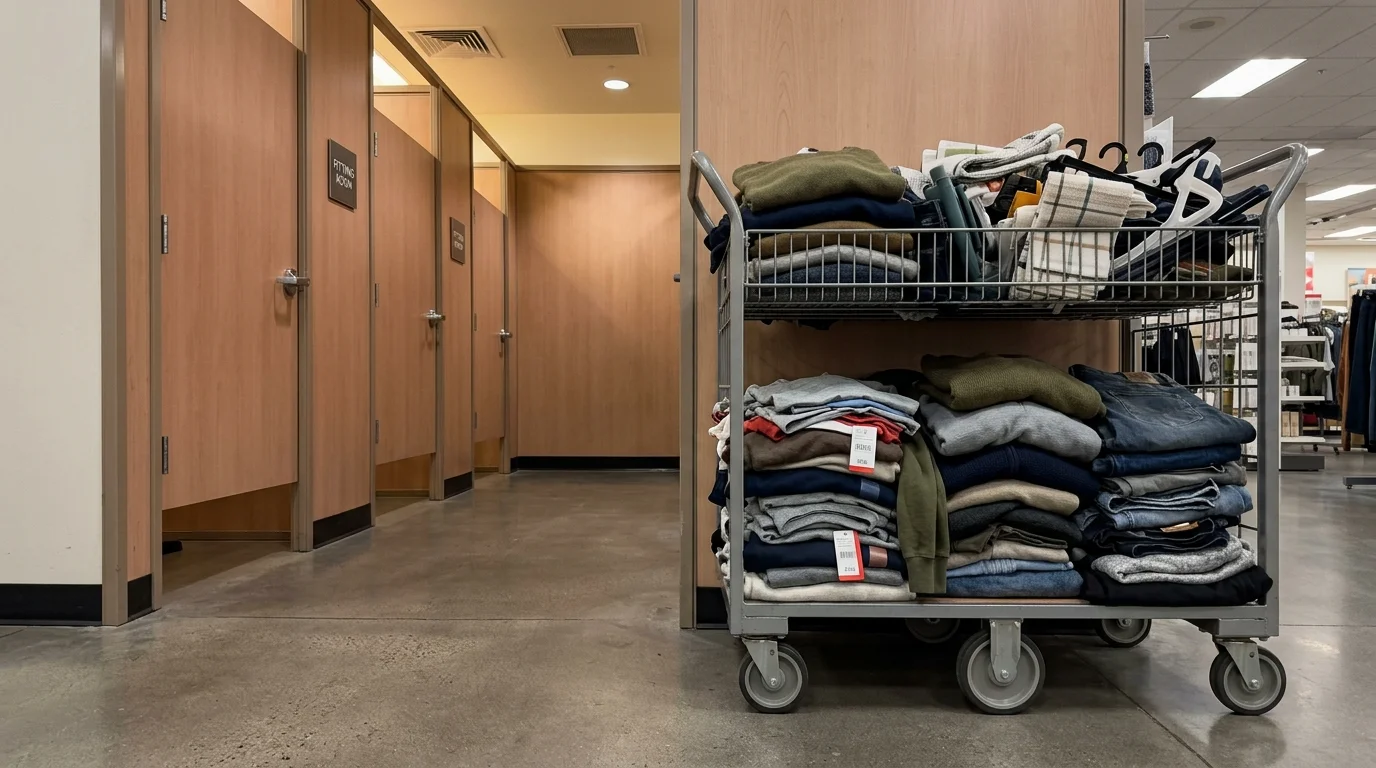
The most valuable clearance finds rarely sit on tidy, well-lit display shelves; they hide in high-volume holding zones where items wait for restocking. Fitting room returns, customer service desk bins, and re-shop carts—often called go-back carts—are absolute goldmines for heavily discounted goods.
Customers frequently carry clearance items around the store while contemplating a purchase, only to discard them at the cash register or leave them inside dressing rooms.
Store associates collect these items into plastic totes or mobile carts behind service counters to process them later in the evening shift. Because these items were already marked down before being carried away, they represent the best active deals in the building.
Store employees habitually scan these holding areas while working because they know high-demand, heavily discounted items collect there.
You can respectfully browse the clearance racks located directly adjacent to fitting room corridors or politely ask associates near customer service if you can glance through recent return carts.
Finding hidden clearance deals in these transitional areas allows you to grab premier merchandise before workers even return it to the main sales floor.
Tip #4: Use Mobile App Scanners for Hidden Markdowns
Physical price stickers lag behind corporate price databases by hours, days, and sometimes even weeks. When corporate headquarters issues an automated price drop across hundreds of stores, store employees must manually walk the floor with handheld printers to physically update every paper tag.
Due to frequent staffing shortages, thousands of items sit on sales racks with full-price tags attached, despite being heavily discounted in the central database.
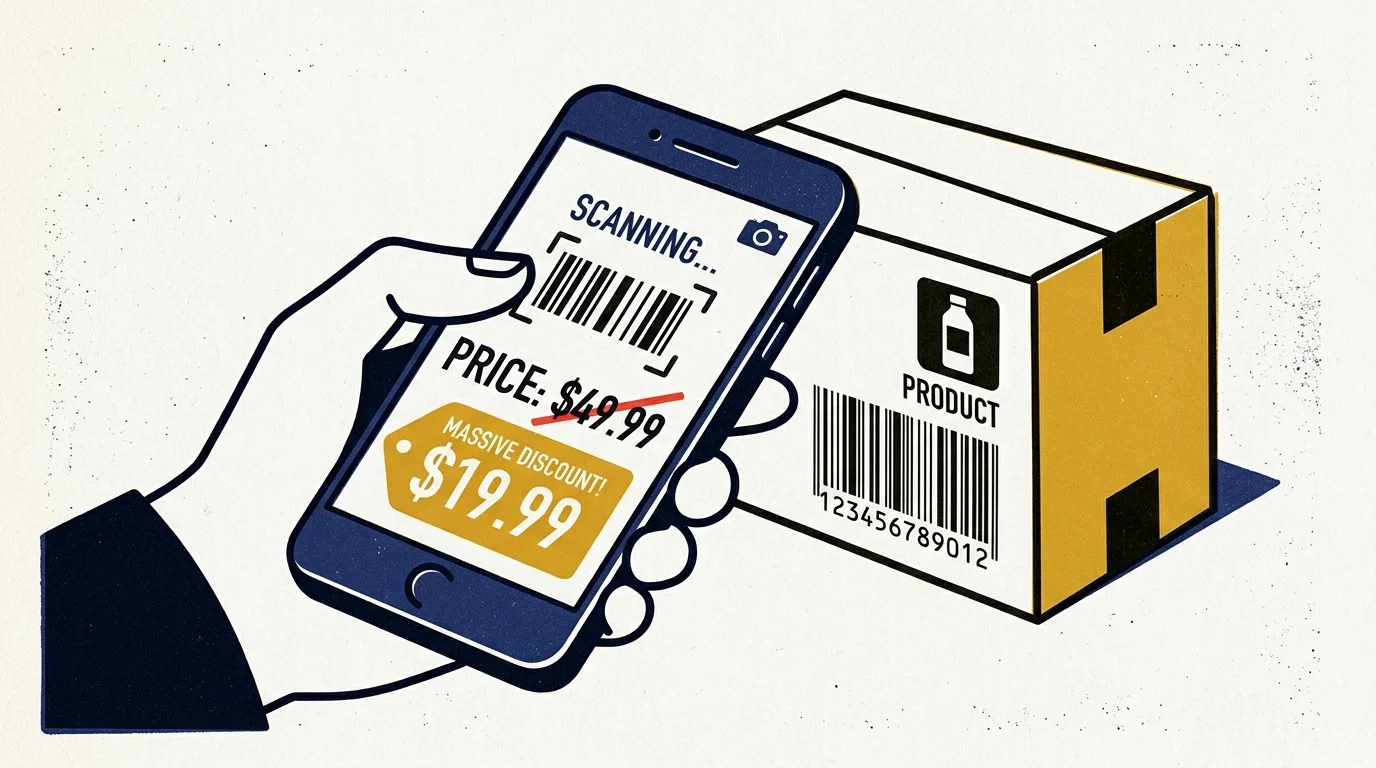
Smart retail workers never rely on physical paper tags; they use retailer mobile apps to scan barcodes directly on the floor.
At stores like Target, Walmart, or Home Depot, opening the retailer’s official smartphone app and scanning an item’s barcode reveals the actual system price in real time.
You will frequently scan an item labeled for fifty dollars on the shelf only to discover the internal database marked it down to fifteen dollars three days prior.
Incorporating barcode scanning into your baseline routine represents the single best clearance shopping strategy for uncovering deep, unadvertised discounts that other shoppers completely pass over.
Tip #5: Request Extra Discounts for Minor Packaging Flaws
Clearance items already feature steep price cuts, but retail employees know that floor supervisors retain wide authority to issue additional price overrides at checkout.
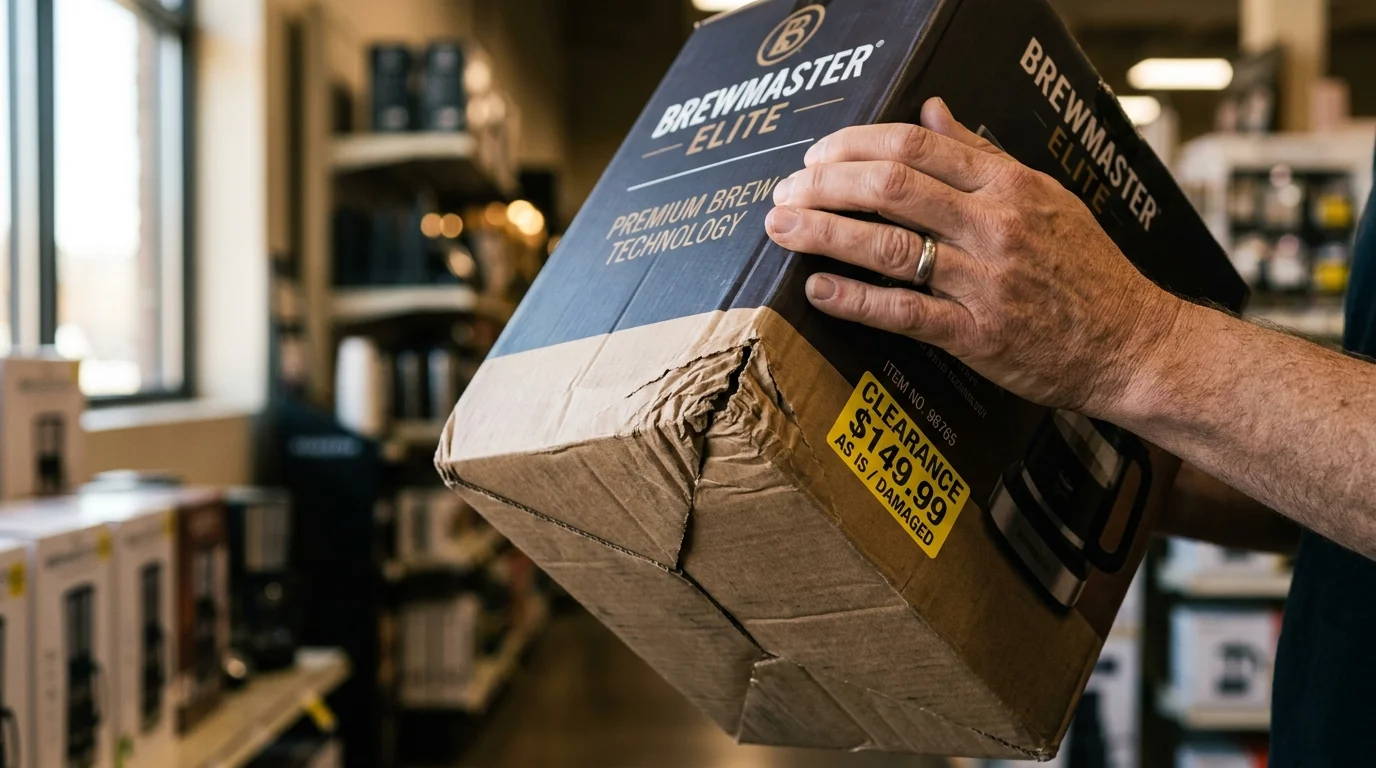
If you find a clearance item with damaged outer packaging, a missing instruction manual, a small cosmetic scuff, or a loose thread, you possess valid leverage for a further discount.
Floor managers care far more about clearing warehouse inventory metrics and reducing holding costs than protecting a few extra dollars on an already-discounted item.
When you present an item with a minor flaw to a supervisor, politely ask if they can apply an open-box or damaged-packaging discount to complete the sale today.
Phrase your request constructively: ask if they can take an extra ten or fifteen percent off to offset the defect. Most store managers will gladly approve the discount on the spot to clear the item off their inventory balance sheets permanently.
This simple maneuver turns an ordinary markdown into an extraordinary bargain, allowing you to stack manager discretionary discounts directly on top of existing clearance tags.

Tip #6: Time the Six-Week Seasonal Clearance Wave
Seasonal clearance follows a predictable mathematical curve, and timing your purchases along this timeline determines how much money you keep in your bank account.
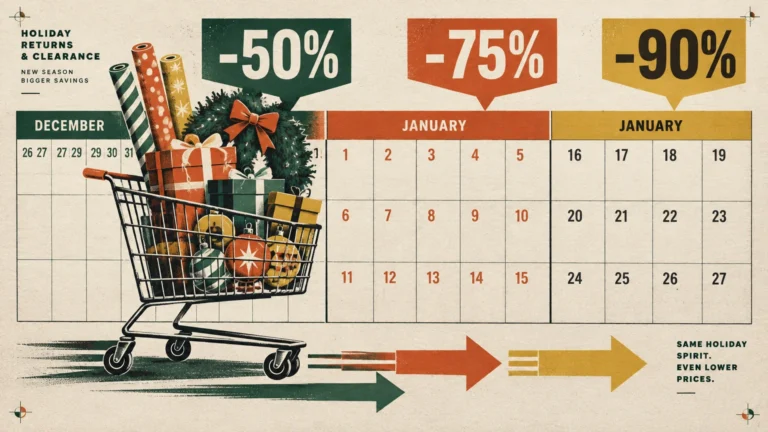
Seasonal items—such as patio furniture, winter coats, holiday decorations, and back-to-school supplies—follow a strict six-week markdown cadence across nearly all major retail chains. The first wave typically begins at twenty to thirty percent off during the final two weeks of the active season.
Within two weeks after the season officially ends, prices plunge to fifty percent off. By week four, reductions reach seventy percent, and by week six, remaining inventory drops by ninety percent before being sent to salvage liquidators.
Retail employees know the sweet spot rests firmly at the seventy percent threshold. Waiting for ninety percent off often leaves you with picked-over items or missing components, whereas buying at fifty percent off leaves substantial money on the table.
Focus your clearance rack tips around buying high-ticket goods during that crucial seventy-percent window, when product selection remains solid while prices hit rock-bottom territory.
Tip #7: Locate Hidden Racks in Peripheral Store Zones
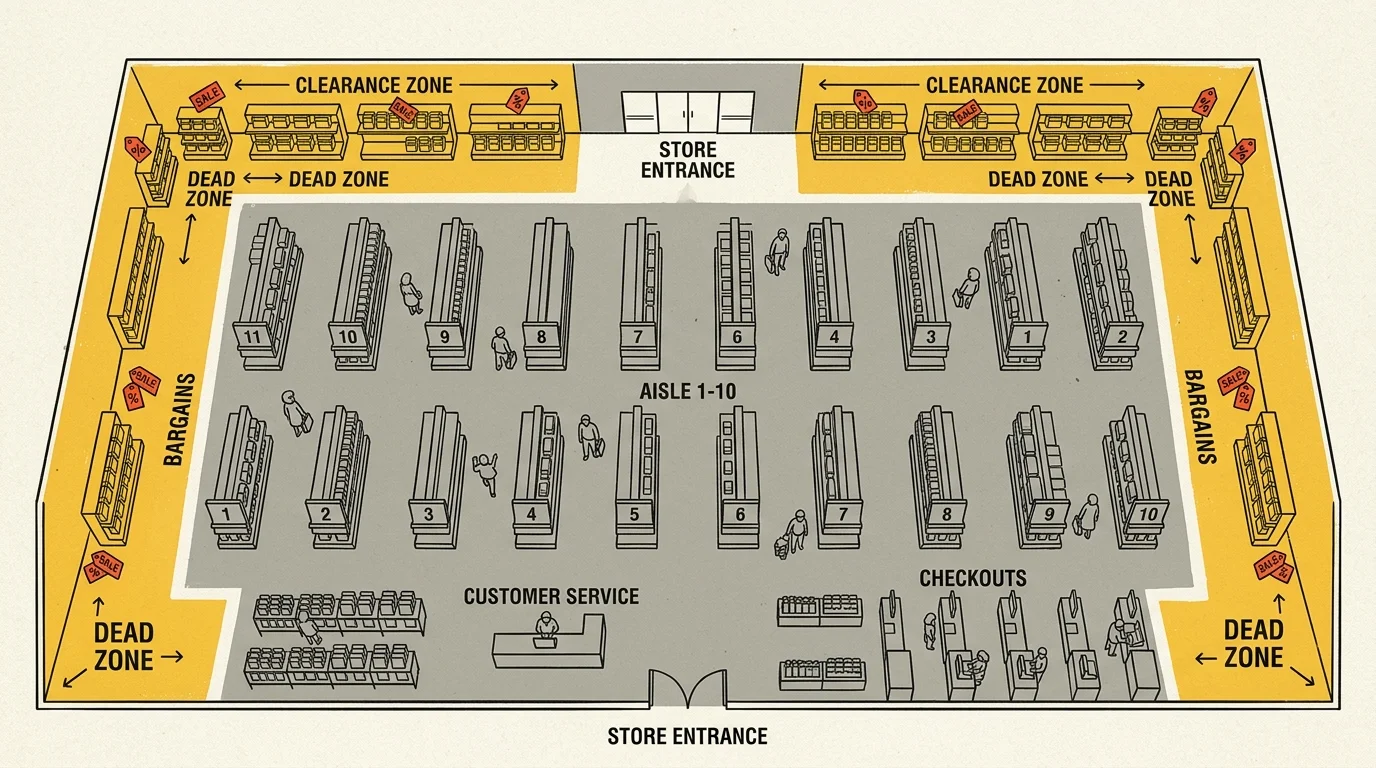
Retail visual merchandisers design store layouts to keep high-margin, full-price items directly in your primary line of sight. Prime real estate—such as entrance displays, main aisle endcaps, and waist-level shelving—is strictly reserved for profitable, full-priced goods.
Consequently, store managers hide clearance section displays in low-traffic corners, structural blind spots, and back wall perimeter zones where corporate auditors rarely pay attention.
Look for clearance endcaps facing rear walls, shelves tucked behind large structural pillars, or hidden racks located in the back corners of low-foot-traffic departments like bedding or sporting goods.
Retail employees who want to purchase heavily discounted items after their shifts frequently check these hidden racks because foot traffic remains light throughout the day. When you enter any retail store, intentionally bypass the main central aisles and head directly for the outer perimeter walls.
Wandering into these forgotten zones will reveal dense clearance racks filled with pristine merchandise that impulse shoppers never manage to see.

Tip #8: Stack Store Coupons with Yellow-Tag Items
The ultimate savings hack involves combining store clearance pricing with external savings instruments like store rewards, promotional coupons, and rebate apps. Uninformed shoppers assume that store coupons cannot be applied to clearance merchandise, but retail policies vary widely depending on the issuer.
While national manufacturers’ coupons often exclude clearance items, store-issued rewards—such as Kohl’s Cash, Target Circle earnings, and department store reward certificates—can routinely be applied to clearance purchases.
Furthermore, mobile cashback apps pay full reward percentages based on your final receipt total regardless of whether an item was marked down.
Smart retail employees stack these layers systematically: they select a clearance item marked down by seventy percent, apply a ten percent store sign-up discount or reward voucher, and submit the final receipt to a rebate app for additional cashback.
By chaining these discounts together, you effectively reduce the out-of-pocket price to near zero. Always read store coupon fine print carefully; you will frequently find that store-backed rewards stack seamlessly on top of discounted tag prices.
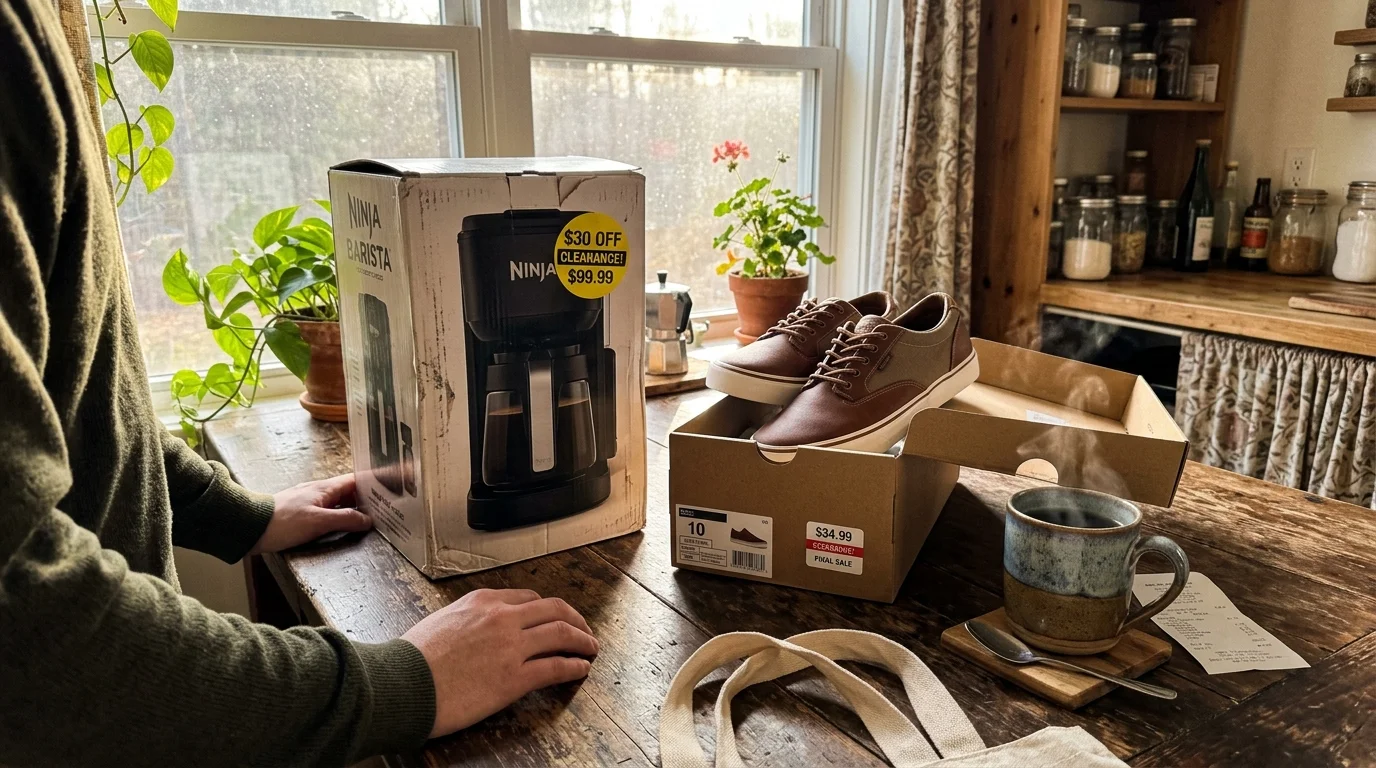
The Bottom Line: What This Means for Your Wallet
Understanding how retail inventory systems operate turns routine shopping trips into profitable treasure hunts. You do not need to spend full price on household essentials, apparel, electronics, or seasonal items when retail stores systematically mark down millions of dollars in inventory every single week.
By cracking price tag codes, scanning items with mobile apps, shopping on designated markdown days, and exploring low-traffic store perimeters, you take total control over your spending habits.
However, the true key to long-term financial success is remaining disciplined; buying an item you do not need simply because it carries a clearance sticker is still a waste of money.
Use these insider strategies to purchase high-quality items you already needed at a fraction of their original retail cost. When you align smart shopping tactics with disciplined budgeting, you keep more money in your checking account and stop contributing to corporate retail margins.
Frequently Asked Questions
Can retail employees hide clearance items to buy them later?
Strict corporate policies prohibit retail employees from hiding merchandise on the sales floor or stashing items in stockrooms for personal purchase.
Most major retailers require employees to wait until items have been on the public sales floor for at least twenty-four hours before purchasing them, and employees must make purchases off the clock.
However, associates who know the exact timing of markdowns can visit the floor immediately after their shift ends to purchase newly discounted stock legally.
What is the absolute best day of the week to shop for clearance deals?
Mid-week days—specifically Wednesday and Thursday mornings—are objectively the best times to find fresh clearance deals. Retail stores process their heaviest inventory shipments and price updates early in the week after weekend sales clear out stock.
By Wednesday morning, staff members have updated tags across major departments, and store aisles remain largely uncrowded compared to hectic weekend shopping hours.
Can you return items purchased on clearance if they are defective?
Return policies for clearance items depend heavily on individual store rules and how the receipt is marked. Most major retailers accept returns on standard clearance items within thirty days if you retain your original receipt.
However, items explicitly marked as final sale, liquidated, or sold as-is cannot be returned. Always inspect clearance items thoroughly for damage before purchasing and ask the cashier about specific return restrictions.
How do you know if a clearance item will be marked down further?
Look at the price tag ending and the date code printed on the sticker. Most clearance tags display a small numeric date code indicating when the item received its last price cut.
If the sticker is more than two to three weeks old and stock levels remain high, another price drop is likely imminent. However, if the price tag ends in final markdown numbers like .97, .04, or .88, the item has reached its absolute floor price.
For consumer protection information, visit the Federal Trade Commission (FTC) and the Consumer Financial Protection Bureau (CFPB). For product safety and reviews, consult Consumer Reports.
Disclaimer: This article is for informational purposes only and does not constitute financial advice. The content reflects the author’s opinion and research at the time of writing.
Always do your own research before making financial decisions.