Navigating a grocery store in the standard order forces you into subtle psychological traps engineered to drain your checking account. Most shoppers stroll through the front doors, grab a cart, and wander straight into high-margin produce or fragrant bakeries that trigger impulse purchases.
You can immediately cut your monthly food bill by up to twenty percent simply by reversing the order in which you walk the aisles.
By prioritizing heavy non-perishable staples, anchoring your cart with mandatory budget items, and hitting delicate perishables and frozen foods last, you maintain total financial control, prevent food waste, and outsmart retail marketing tactics designed to maximize store profits.
Tip #1: Start in the Middle Aisle for Heavy Non-Perishable Staples
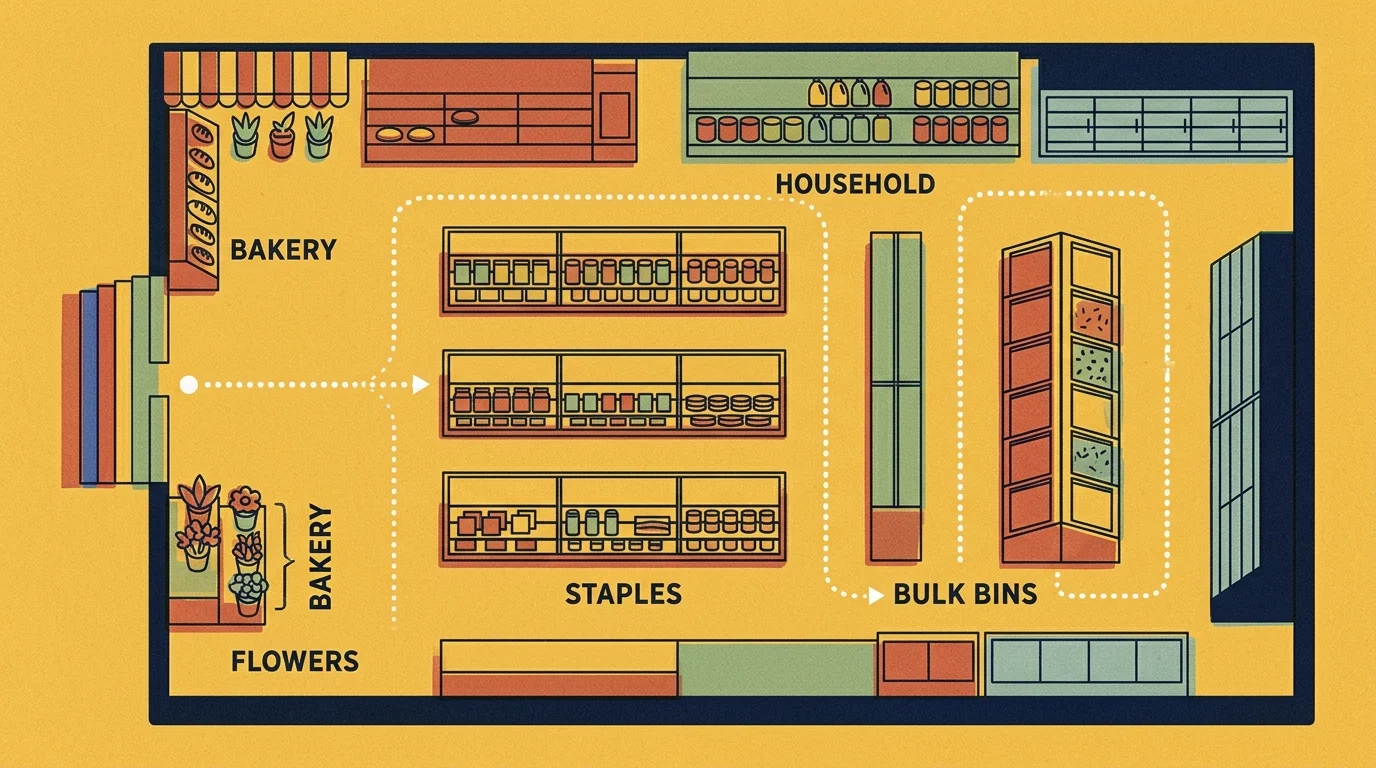
Supermarket architects design store entrances with a clear psychological objective: to lower your guard and encourage spending. Fresh flowers, artisan breads, and brightly lit produce displays greet you at the door because pleasant sights and aromas trigger immediate hunger cues.
When you shop under the influence of these subtle sensory triggers, you fill your basket with expensive, perishable items before you even locate your core pantry necessities.
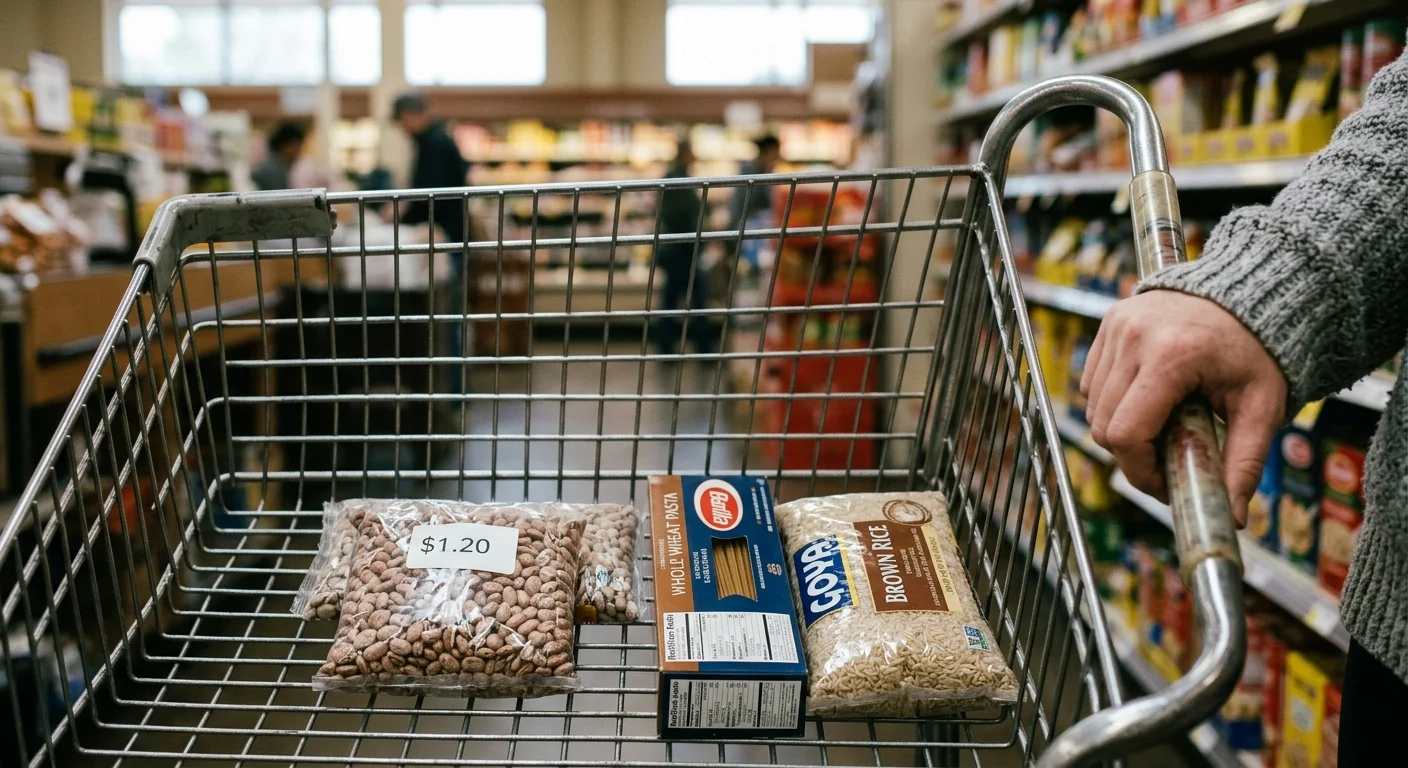
You flip this script by walking directly past the entrance displays and heading straight into the center aisles. Focus on loading the bottom of your cart with low-cost, shelf-stable foundations such as dried beans, whole-wheat pasta, canned crushed tomatoes, brown rice, and rolled oats.
These items form the calorie-dense backbone of your meal plan without breaking your budget.
Loading heavy dry goods first produces a powerful psychological benefit known as the basket saturation effect. As your cart quickly fills up with dense, bulky goods, your brain registers that you already possess a substantial amount of food.
This visual feedback reduces the urge to make unplanned purchases later in your trip. Furthermore, purchasing store-brand dried beans for around $1.20 per pound—compared to specialty canned pre-seasoned varieties at $2.50 or pre-cooked pouches at $3.99—slashes your base carbohydrate costs by more than half.
Tip #2: Hit Household Essentials and Cleaning Goods Second
Grocery stores place household products like paper towels, dish soap, trash bags, and laundry detergent along key traffic corridors for a specific reason.
They know that shoppers frequently forget these non-food utility items until the end of their trip, leading them to blindly grab brand-name packages regardless of price. Grocery retailers mark up non-food items significantly compared to big-box stores or wholesale clubs, quietly eroding your budget balance.
Tackling household necessities immediately after dry staples isolates these functional expenses before food aromas activate your appetite. Check your digital coupons and list for exact household requirements, then head straight to these aisles to secure them.
Sticking strictly to generic or store brands for cleaning products yields massive savings without any loss in performance.
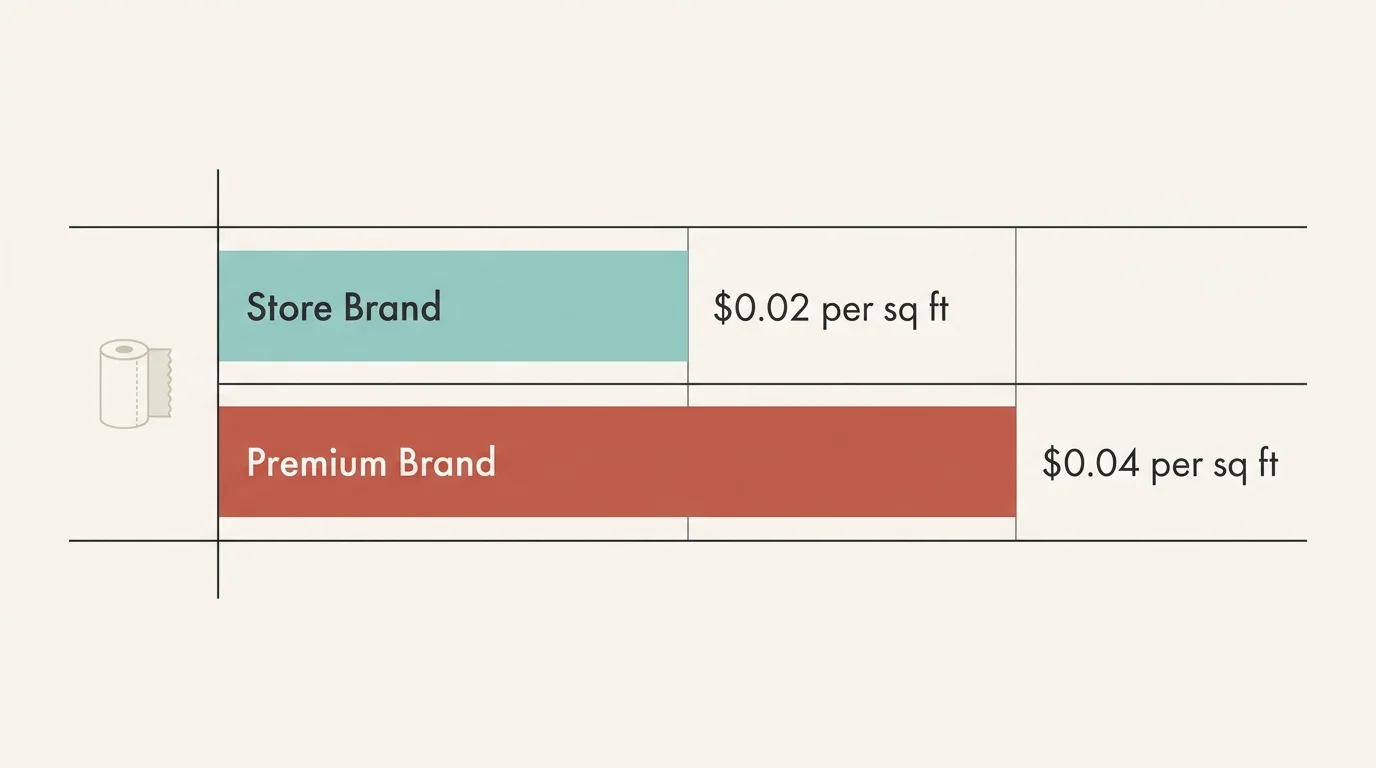
For example, store-brand paper towels often cost around $0.02 per square foot, whereas premium advertised brands easily charge $0.04 to $0.05 per square foot for identical absorption capacity.
By purchasing non-food items when your focus is sharp and unclouded by food cravings, you eliminate impulse upgrades and secure the lowest available price per unit.
Tip #3: Head to the Bulk Bin Section for Custom Quantities
The bulk department offers one of the most effective, underutilized money-saving opportunities in the modern grocery store. Retailers pack pre-packaged spices, nuts, grains, and baking supplies in branded plastic containers that inflate retail costs by 30% to 60% purely for packaging and marketing overhead.
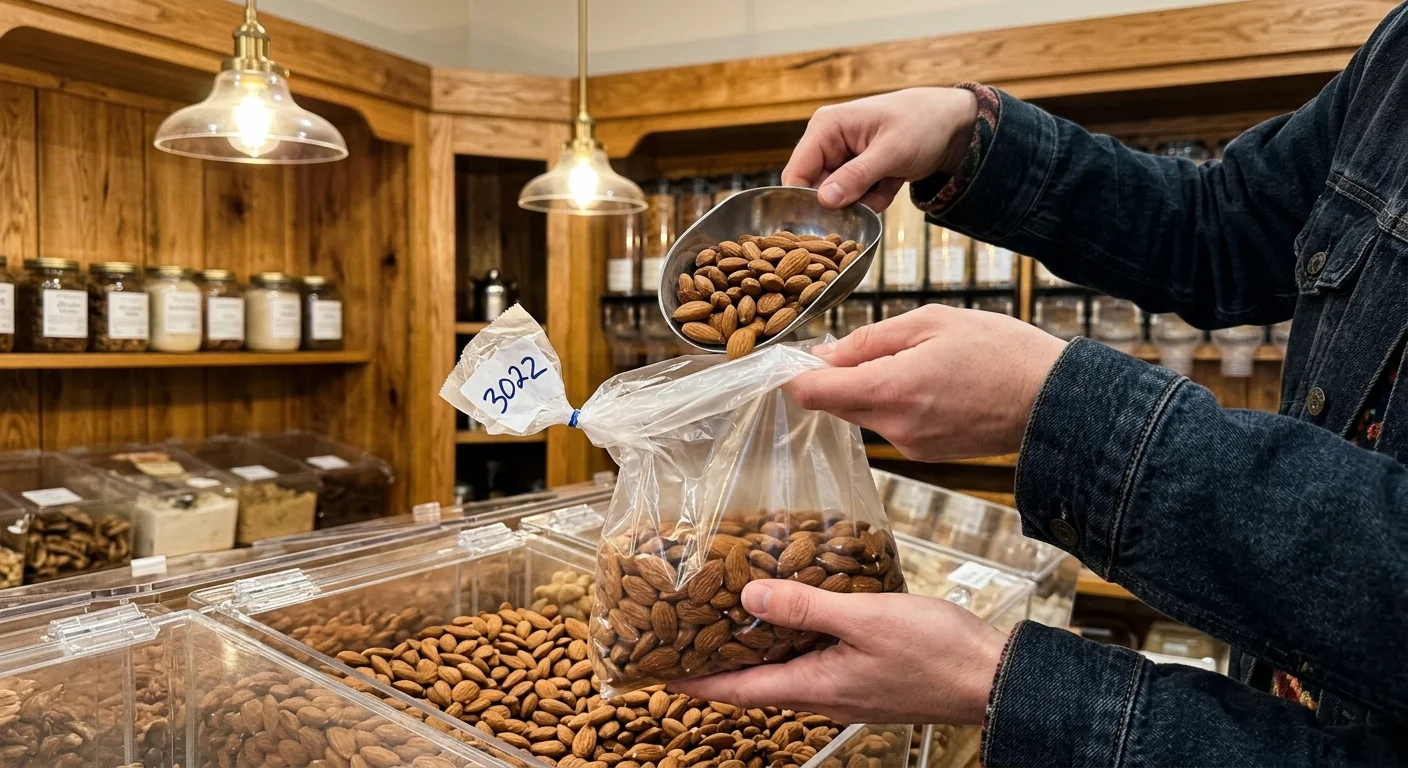
Visiting the bulk section early in your route ensures you have the focus required to weigh items and mark PLU codes accurately before shopping fatigue sets in.
Buying bulk goods allows you to purchase exact amounts rather than arbitrary package sizes. If a recipe calls for two tablespoons of rare ground cardamom, buying a standard $8.99 glass jar leaves $8 worth of spice sitting in your cabinet until it loses potency.
In contrast, measuring out two tablespoons in the bulk aisle costs less than $0.75, keeping your cash in your checking account.
Recent consumer data indicates that Americans spend an average of $318 per month on unplanned impulse purchases, with a vast majority of shoppers adding extra off-list items to their carts.
Securing precise quantities of pantry staples like quinoa, almonds, chia seeds, and specialty flours prevents pantry clutter and stops expensive food waste before it happens.
Tip #4: Tackle Meat and High-Cost Proteins With Math First
Meat and seafood represent the single largest expenditure on most household grocery receipts.
According to recent estimates from the USDA Food and Nutrition Service, a family of four following a Thrifty Food Plan spends approximately $1,003.40 per month on groceries, with meat and fresh protein absorbing nearly 30% of that total budget.
Visiting the meat counter mid-trip allows you to establish your major protein expenses before finalizing delicate produce items.
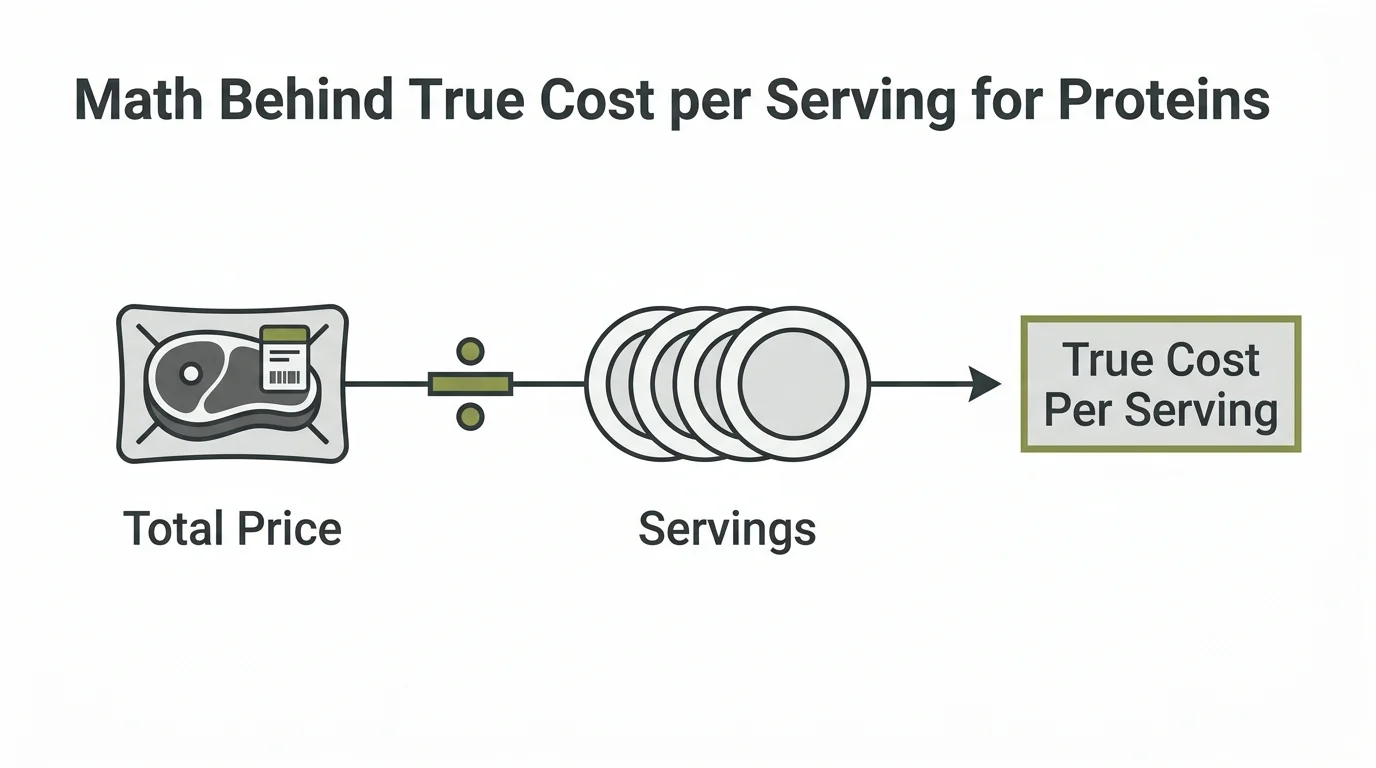
When you arrive at the meat section, calculate the cost per pound rather than the total package price. Look for yellow clearance tags indicating manager markdowns on meats approaching their sell-by date; these cuts are perfectly safe and ideal for immediate cooking or home freezing.
Prioritize bone-in, whole cuts over convenient pre-sliced or pre-marinated options, as pre-cut meats carry heavy labor markups.
For instance, buying a whole chicken at $1.89 per pound and breaking it down yourself takes roughly five minutes and saves you up to $3.00 per pound compared to boneless, skinless chicken breasts.
If meat prices spike, adjust your protein menu immediately by picking up lean ground turkey, pork shoulder, or eggs, allowing you to reallocate spare budget room to your fresh produce list.
Tip #5: Navigate Fresh Produce With Strict Baseline Selections
Most shoppers walk through produce first, filling their empty carts with fragile, high-margin items like pre-cut fruit bowls ($5.99 for 8 ounces), gourmet salad kits ($4.49 each), and exotic tropical fruits.
By shifting produce to the fifth step in your route, you evaluate fruits and vegetables with a full cart and a clear understanding of your remaining spending power.
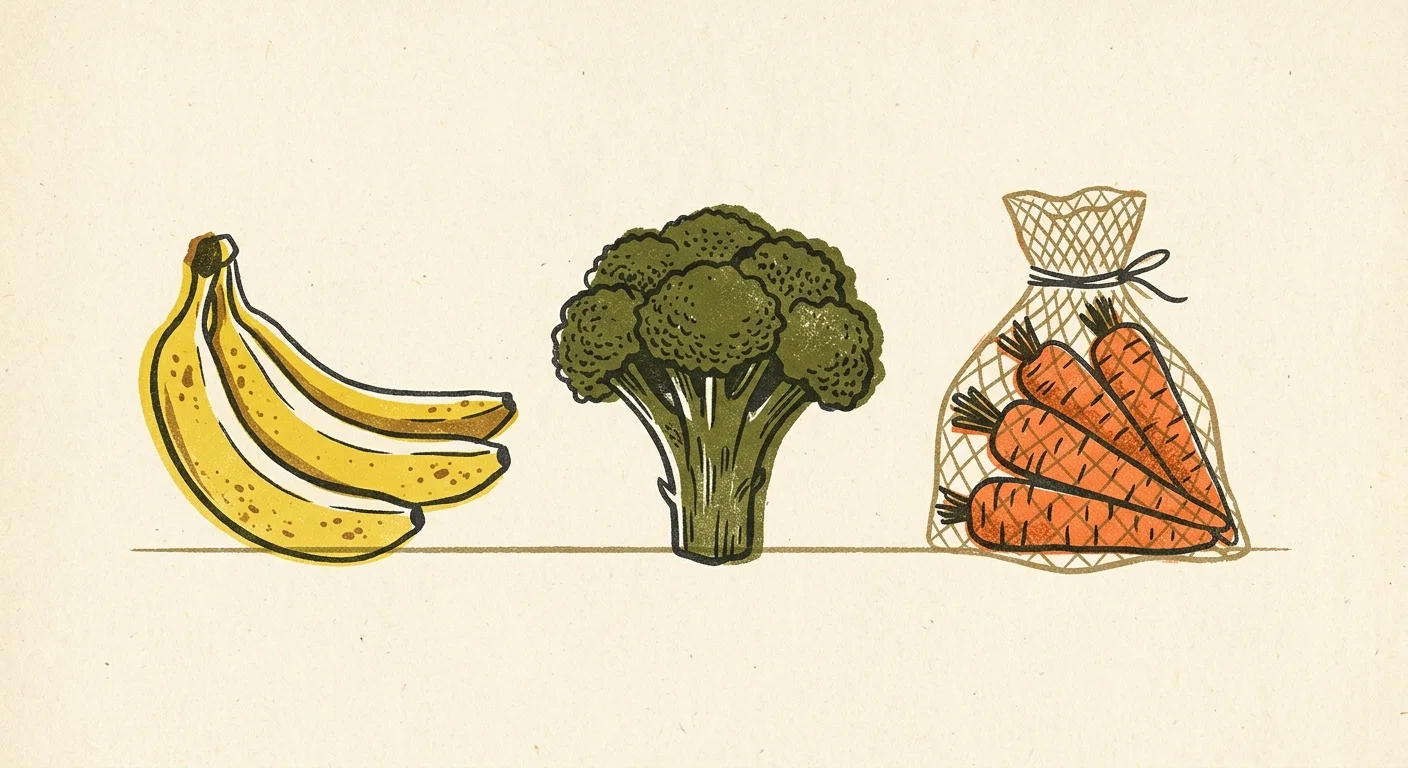
Focus your attention on versatile, low-cost baseline produce that delivers dense nutrition without quick spoilage. Items such as yellow onions, russet potatoes, whole carrots, green cabbage, and bananas yield maximum meal value per dollar.
Green cabbage, for example, frequently costs under $0.80 per pound and provides double the volume of pre-washed bagged lettuce kits that cost four times as much and spoil within days.
Avoid pre-chopped or convenient pre-packaged produce at all costs. Pre-cubed butternut squash routinely carries a 275% markup over whole squash.
By purchasing whole vegetables and prepping them at home, you protect your money while ensuring your produce stays fresh in your refrigerator for a significantly longer period.
Tip #6: Grab Dairy and Refrigerated Basics Near the End
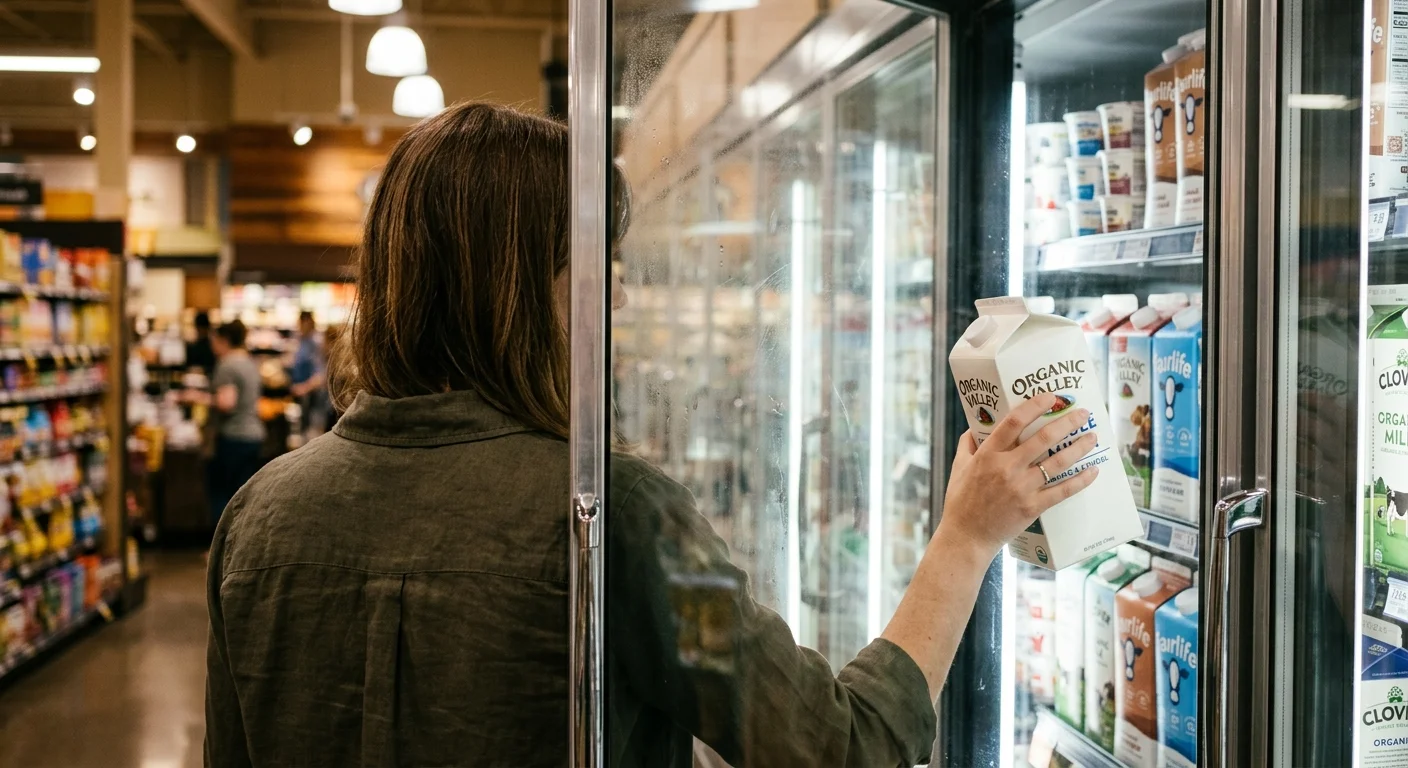
Temperature control is essential for protecting your food investment. Placing dairy products like milk, eggs, butter, and yogurt in your cart early subjects them to prolonged room temperature exposure as you wander through other aisles.
Every ten minutes dairy items spend above forty degrees Fahrenheit accelerates bacterial growth and shortens shelf life, leading to premature souring and wasted food dollars.
Navigating the refrigerated perimeter near the end of your trip preserves the strict cold chain required for these perishable goods. Stick strictly to fundamental staples: block cheese, plain Greek yogurt, large eggs, and fluid milk.
Avoid pre-portioned single-serve yogurt cups or flavored creamers that pack high price markups and added sugars.
Purchasing block cheese and shredding or slicing it yourself saves roughly 30% per ounce compared to bagged pre-shredded varieties. Shredded cheese also contains added anti-caking agents like cellulose that ruin melt quality.
Buying blocks delivers better quality food and keeps your hard-earned money in your pocket.
Tip #7: Finish at the Frozen Food Aisles Right Before Checkout
The frozen food section must serve as your absolute final stop before approaching the cash registers. Frozen items retain their solid thermal core best when transferred directly from store freezers to your insulated shopping bags and home freezer.
Placing frozen foods in your cart early allows partial thawing, creating internal condensation that causes severe freezer burn when re-frozen at home.
Frozen fruits and vegetables represent one of the greatest budget secrets in modern retail. Industry surveys indicate that 61% of consumers have modified their food buying habits due to ongoing grocery inflation, with 46% explicitly cutting back on non-essential snacks and 71% cooking at home more frequently.
Flash-frozen vegetables like broccoli florets, sweet corn, and green peas cost up to 40% less per pound than out-of-season fresh produce, while matching or exceeding their nutritional value.
Selecting frozen items last locks in their shelf life for months, eliminating the threat of food decay. Once you select your frozen goods, head straight to checkout without taking detours through impulse endcaps or candy racks.

The Bottom Line: What This Means for Your Wallet
Grocery store layouts are not designed for your financial benefit; they are optimized to maximize retailer profit margins per square foot. With food-at-home costs rising 2.3% in 2025 and an additional 2.7% year-over-year into 2026, relying on passive shopping habits guarantees a steady drain on your household finances.
Taking control of your route through the aisles serves as a powerful defense against retail psychological manipulation.
Re-ordering your trip—starting with heavy center-aisle staples, moving through household goods and bulk items, calculating protein costs, selecting sturdy produce, and grabbing dairy and frozen foods last—directly targets the $318 per month average Americans waste on impulse purchases.
For a single adult on a Thrifty Food Plan spending between $249 and $313 per month, or a family of four budgeting $1,003.40, this tactical adjustment yields hundreds of dollars in annual savings without sacrificing meal quality.
Stop letting grocery stores guide your decisions. Execute your shopping trip with deliberate order, protect your cold items, and watch your monthly grocery spending plummet.
Frequently Asked Questions
Does shopping out of order take significantly more time?
Initially, walking past front-of-store produce to start in middle aisles might feel counterintuitive, adding two to three minutes as you build new habits. However, once you memorize your new sequence, you actually save time.
By following a structured plan rather than aimlessly wandering, you eliminate backtrack walking and complete your shopping trip much faster.
How does this physical shopping order apply if I order groceries online for pickup?
When using grocery delivery apps or curbside pickup services, digital store layouts mirror physical store traps by promoting high-margin items on the home screen.
Apply the exact same logic online: search and add dry pantry staples, bulk items, and household essentials to your digital cart first. Add fresh protein next, followed by baseline produce, and finalize with cold and frozen items before reviewing your cart for unnecessary extras.
What if my local grocery store layout makes this exact path awkward to walk?
While store floor plans vary, the underlying rule remains constant: prioritize high-density non-perishables and household utility items first, evaluate expensive proteins early, and collect temperature-sensitive perishables last.
Even if you must bypass an aisle and return to it later, protecting your thermal cold chain and avoiding early impulse traps yields maximum cost savings.
Is buying generic store brands truly effective for cutting grocery costs?
Yes, switching from brand-name products to store brands reduces your total grocery spending by 20% to 30% on average.
Major retailers contract with the same food processing plants that manufacture national brand products, meaning store-brand canned goods, oats, milk, and frozen vegetables frequently contain identical ingredients at a fraction of the cost.
For consumer protection information, visit the Federal Trade Commission (FTC) and the Consumer Financial Protection Bureau (CFPB). For product safety and reviews, consult Consumer Reports.
Disclaimer: This article is for informational purposes only and does not constitute financial advice. The content reflects the author’s opinion and research at the time of writing.
Always do your own research before making financial decisions.