

Retailers operate on strict algorithms and sales quotas that artificially slash prices on specific days of the month, entirely independent of major holidays or seasonal sales events. You can intercept these hidden markdowns by timing your purchases to the exact day managers clear out inventory or algorithms drop fares to stimulate lagging demand. Most shoppers blindly pay full price because they buy when it is convenient rather than when the retail cycle hits its mathematical trough. Stop leaving money on the table; you simply need to master the monthly pricing calendar. By understanding the corporate squeeze, you gain absolute leverage over your budget.
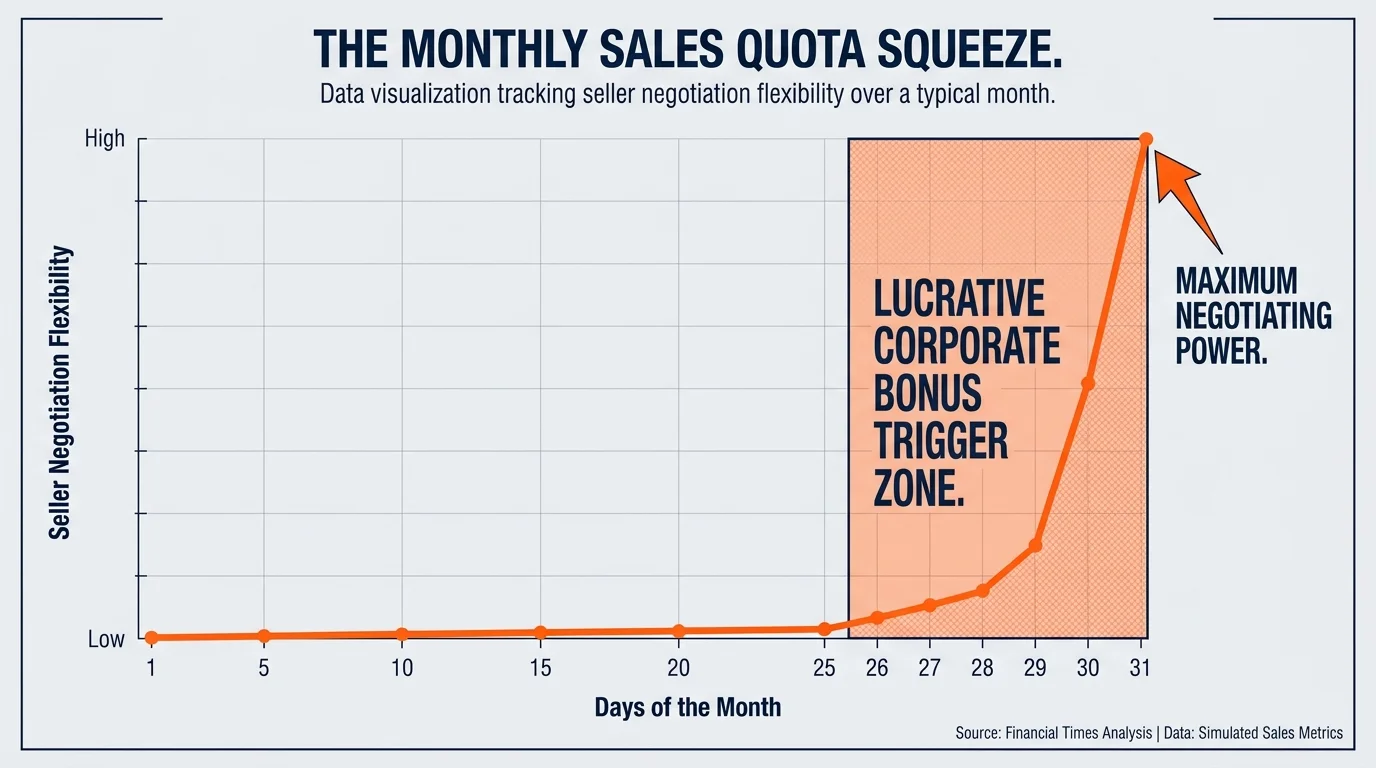
Tip #1: The Final Three Days of the Month
Dealerships, electronics retailers, and big-box appliance stores do not operate on a flat commission structure. They rely on aggressive monthly quotas tied to heavy manufacturer bonuses. If a car dealership hits its assigned unit target by the end of the month, the manufacturer kicks back a massive bonus—often hundreds of thousands of dollars. This financial dynamic changes everything for the consumer. During the first two weeks of the month, salespeople hold firm on margins. By the 29th, 30th, and 31st, they will gladly take a loss on a single transaction just to tip the scales and trigger that lucrative corporate bonus.
This same principle applies to cellular providers and mattress stores. Regional managers evaluate store performance strictly on a month-to-month basis. When the clock is ticking down, the pressure to close deals reaches a fever pitch. You hold all the negotiating power when you walk into a showroom on the final afternoon of the month. Sales managers will authorize deep discounts and throw in free accessories that they would have firmly denied just two weeks prior.
To execute this strategy flawlessly, do your preliminary shopping and test driving mid-month. Know exactly what model, color, and specifications you want. Walk into the store on the 30th with a firm, slightly aggressive offer. Tell the salesperson you are ready to sign the paperwork today if they meet your number. The sheer desperation to finalize the monthly spreadsheet will almost always work in your favor.

Tip #2: The Wednesday Grocery Markdown Shift
Supermarkets operate on razor-thin profit margins and a relentless battle against expiration dates. The vast majority of national grocery chains roll out their new weekly promotional flyers on Wednesdays. This specific day creates a unique overlap window where savvy shoppers can double-dip on savings. On Wednesday mornings, store managers are forced to clear out the remaining inventory from the previous week’s sales to make physical shelf space for the incoming promotional items.
This operational bottleneck results in aggressive markdowns on highly perishable items. The meat department, bakery, and produce sections become goldmines for the frugal shopper. Butchers and bakery managers will aggressively slap bright yellow or red clearance stickers on ground beef, premium steaks, and fresh bread. They would rather sell these items at a fifty percent discount than absorb the total loss of tossing them into the dumpster at the end of the day. The corporate inventory software heavily penalizes managers for food waste, incentivizing them to pass the savings directly to you.
If you want to drastically slash your monthly grocery bill, shift your primary shopping trip to Wednesday morning right after the doors open. Grab the discounted premium proteins and immediately freeze them when you get home. You will secure high-quality cuts of meat at generic prices. By aligning your grocery run with the store’s logistical transition, you beat the weekend crowds and capture the deepest markdowns of the entire week.
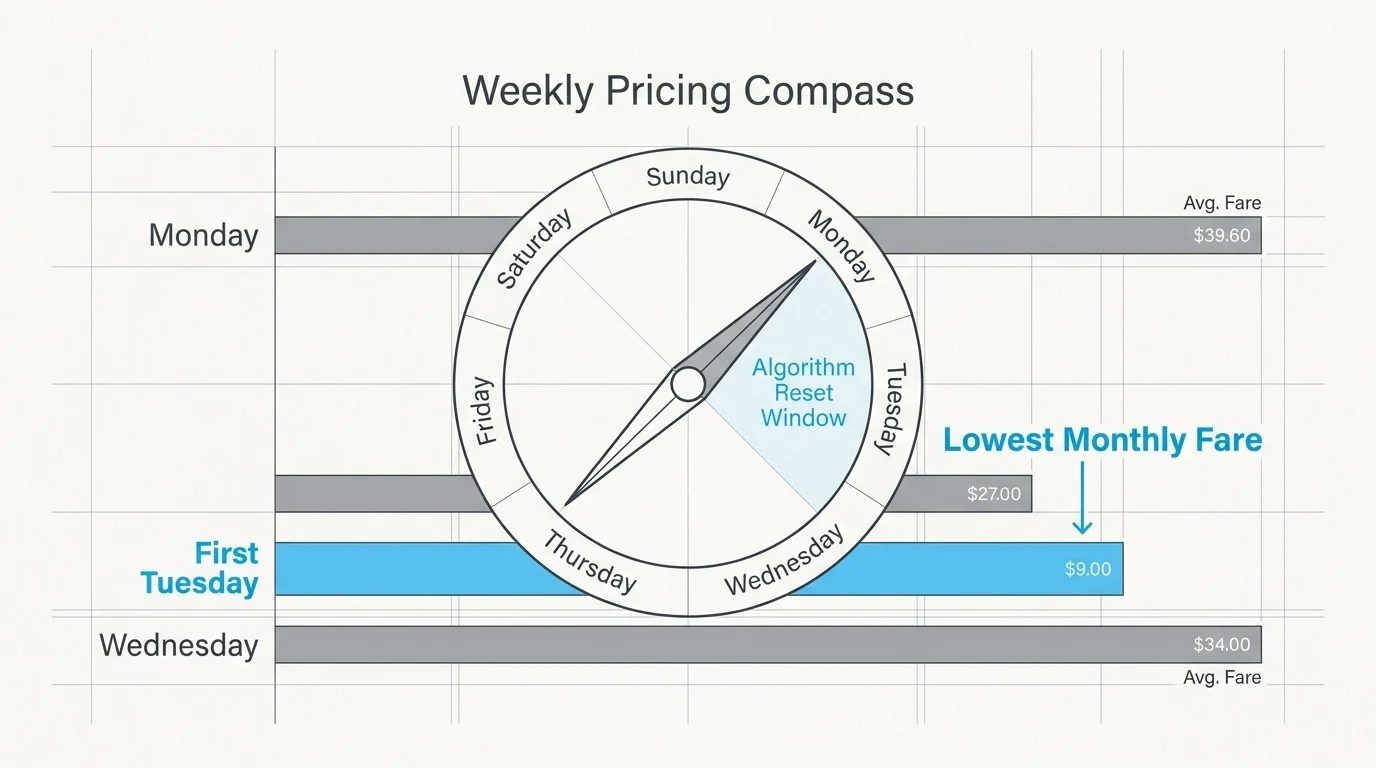
Tip #3: The First Tuesday of the Month
The airline industry utilizes some of the most sophisticated dynamic pricing algorithms on the planet, but human behavior still dictates the schedule. Major carriers typically initiate their monthly route sales on late Monday evenings. By Tuesday afternoon, competing airlines run their automated matching software to ensure they do not lose market share on identical routes. This fierce, rapid-fire price war creates a localized drop in fares that peaks around 3:00 PM Eastern Standard Time on the first Tuesday of the month.
Airlines closely monitor their projected load factors for the upcoming month. If a specific route is underperforming and seats remain empty, the revenue management system dumps the inventory at a steep discount to stimulate immediate bookings. They know leisure travelers are planning their upcoming trips right after the month turns over. By dropping prices simultaneously, they trigger a wave of impulse purchases from budget-conscious vacationers.
Never book a flight on a Friday or a Sunday. Weekend algorithms artificially inflate prices because they assume you are shopping out of immediate necessity or have abundant free time to browse. Instead, set your calendar alerts for Tuesday afternoons. Use incognito browsers or flight tracking tools to monitor the exact moment the competing carriers match the Monday night sales. Pouncing during this brief midweek window can easily shave twenty percent off your domestic and international travel expenses.

Tip #4: The 15th Post-Payday Lull
The traditional American payroll cycle dictates massive spikes in consumer spending on the first and the final days of the month. When paychecks hit bank accounts, people flood online retailers and shopping malls. However, by the time the 15th rolls around, a massive drop in discretionary spending occurs. Mortgage payments have cleared, rent checks are cashed, and credit card bills have decimated the average household checking account. Retailers notice this mid-month traffic slump and immediately deploy countermeasures.
To combat the inevitable lull in sales revenue, e-commerce brands and clothing retailers launch flash sales, targeted email coupons, and aggressive promotional codes right around the 15th. They need to manufacture a sense of urgency to pry open the wallets of consumers feeling the mid-month financial squeeze. This is the exact moment you will find unadvertised sitewide discounts of thirty to forty percent off apparel, home goods, and cosmetics.
Instead of buying that new jacket or replacing your coffee maker when you feel flush with cash on payday, force yourself to wait two weeks. Abandon items in your online shopping cart on the 12th. By the 15th, the retailer’s automated remarketing system will inevitably email you a massive discount code begging you to complete the transaction. Use the predictable broke periods of the general public to secure premium items at clearance pricing.

Tip #5: Monday Mornings for Open-Box Returns
Weekends are the most dangerous time for the average consumer but the most lucrative time for the frugal opportunist. On Saturdays and Sundays, shoppers flood home improvement and electronics stores, making thousands of impulse purchases. By Sunday evening, buyer’s remorse sets in. People realize the television is too large for their living room, or the premium laptop is overkill for their basic computing needs. Monday morning brings a tidal wave of returned merchandise back to the customer service desk.
Retailers cannot legally sell a returned item as brand new, even if the customer never powered it on. The moment the factory seal breaks, the item transforms into an open-box liability. Store managers despise open-box inventory because it eats up valuable floor space in the stockroom and ties up capital. To liquidate these returns instantly, managers authorize steep discounts—often slashing thirty percent off the retail price just to get the heavy boxes out of their physical footprint.
You can exploit this logistical headache by visiting your local electronics or appliance retailer right as the doors open on Monday morning. Skip the shiny display units and walk directly to the open-box section near the back of the store. You will find practically brand-new appliances, computers, and home audio equipment priced significantly below retail. Always ask the department manager if they can take an additional ten percent off the ticketed open-box price; their desperation to clear space almost always leads to a quick agreement.

Tip #6: The Third Thursday Apparel Floor Set
Corporate retail chains like Target, Gap, and Macy’s operate on a highly synchronized national schedule. They do not restock or reorganize randomly. They execute massive inventory transitions known as floor sets, typically occurring on the third Thursday of the month. During a floor set, overnight merchandising teams tear down the old displays and install the brand-new arrivals at the front of the store. The older inventory must vacate the premium real estate immediately.
Where does that perfectly good, month-old inventory go? It goes straight to the clearance racks hidden in the back corners of the store. Because the new items have fully occupied the standard racks, store managers aggressively mark down the displaced clothing. The transition from full retail price to fifty percent clearance happens overnight. The older items are not defective or out of style; they simply lost their prioritized placement due to the corporate merchandising calendar.
To secure high-quality wardrobe additions for pennies on the dollar, schedule your clothing shopping for the third Friday morning of the month. The merchandising teams have just finished tagging the fresh clearance items hours prior. You will have the first pick of sizes and styles before the weekend crowds arrive to pick the racks clean. Never pay a premium for front-of-store placement when identical quality is sitting on a clearance hanger thirty feet away.

Tip #7: The 21st for Seasonal Transitions
The 21st day of March, June, September, and December marks the literal astronomical changing of the seasons. Interestingly, major retail algorithms sync aggressively with these specific dates. Big-box stores operate on a rigid timeline; they refuse to hold seasonal inventory in their warehouses for an entire year because the storage costs obliterate their profit margins. When the season officially flips, the pricing software triggers nationwide liquidation sales to empty the shelves.
On March 21st, winter coats, snowblowers, and heavy boots face dramatic price cuts. On September 21st, patio furniture, gas grills, and swimwear see discounts plunging as deep as eighty percent. Retailers would rather take a massive upfront loss than pay the carrying costs to store bulky outdoor furniture through the winter months. The system forces the price down to a point where consumers cannot resist buying out-of-season goods.
The secret to mastering seasonal shopping is delayed gratification. Buy your winter gear in the spring and your summer gear in the fall. Mark the 21st of these transition months on your calendar and dedicate a small portion of your budget to securing next year’s necessities. You will effectively bypass the artificial scarcity and premium pricing that plagues shoppers who only buy a snow shovel the night before a blizzard.
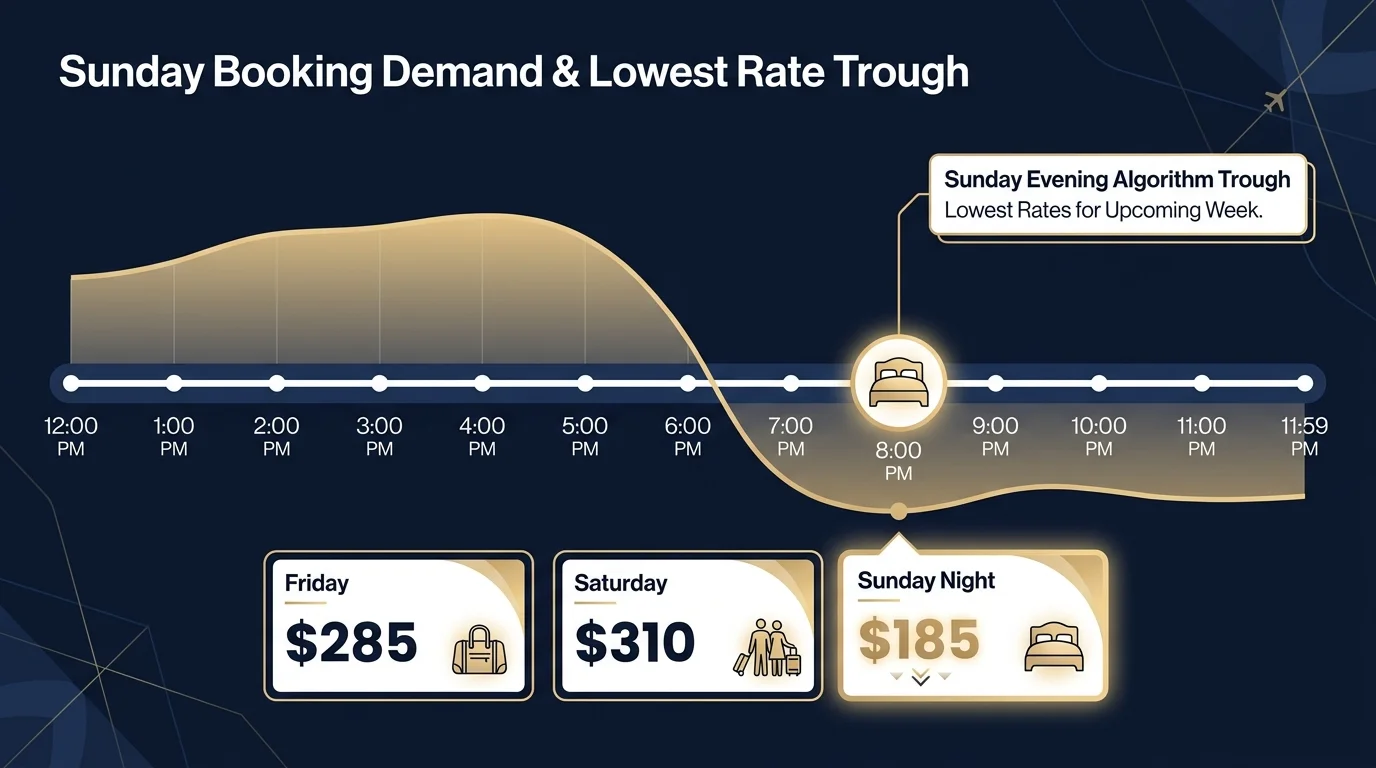
Tip #8: Sunday Evenings for Hotel Booking Algorithms
The hospitality industry utilizes advanced revenue management software designed to maximize the average daily rate for every available room. These systems track historical booking patterns with ruthless efficiency. Business travelers finalize their corporate reservations on Mondays and Tuesdays. Leisure travelers secure their weekend getaway rooms on Fridays. By Sunday evening, booking traffic hits absolute zero. The software detects this dead zone and instinctively drops room rates for the upcoming weeks to capture any lingering demand.
Hotel managers panic when they look at an empty ledger for the upcoming month. An unsold room generates zero revenue but still costs the property in taxes, utilities, and baseline staffing. To prevent catastrophic vacancy rates, the algorithms dynamically lower the prices on Sunday evenings. They quietly upload these discounted rates to the major booking aggregators and their direct corporate websites while the rest of the world is watching television and dreading the Monday morning commute.
If you need to book accommodations, hold off until late Sunday night. Bypass the third-party travel sites and check the hotel’s direct website. Often, the property will offer an unadvertised digital rate just to secure a direct booking and avoid paying commission fees to the travel agencies. You secure a premium suite at a baseline price simply because you timed your request when the booking algorithm was desperate for a conversion.

Tip #9: The Second Day of the Month
The secondary market—comprising local thrift stores, consignment shops, and digital platforms like Facebook Marketplace—operates entirely on consumer cash flow. The first of the month brings crippling financial obligations. Rent, mortgage, car payments, and utility bills drain bank accounts dry. By the second day of the month, a significant portion of the population is completely broke and scrambling for immediate liquidity to cover unexpected expenses or groceries.
This post-rent financial squeeze triggers a massive influx of high-quality inventory into the used market. People hastily list designer handbags, gently used electronics, and premium furniture at rock-bottom prices because they need cash today, not next week. Local thrift stores also see a surge in donations as people clean out their homes to downsize or prepare for abrupt mid-month moves. The sudden supply spike crashes the localized pricing.
You can capitalize on this macroeconomic reality by checking your preferred local selling apps early on the morning of the second. Be prepared to offer cash and arrange immediate pickup. Sellers listing items during this critical window are highly motivated and rarely hold out for their asking price. A respectful, swift cash offer will secure exceptional items at a fraction of their actual resale value, leaving you with incredible goods or prime inventory for your own flipping side hustle.
The Bottom Line: What This Means for Your Wallet
Transforming from a passive consumer into an active financial strategist requires a total shift in your purchasing behavior. Retail pricing is not arbitrary, and the concept of an organic, unpredictable sale is a complete myth. Everything you buy is governed by corporate quotas, inventory management headaches, and ruthless dynamic pricing algorithms. By recognizing the structural triggers that force retailers to slash prices, you claim ultimate leverage over your household budget.
You no longer have to pay full price out of convenience. When you sync your spending habits with these nine specific monthly timelines, you stop subsidizing the corporate profit margins and start aggressively keeping your hard-earned money. The data is clear, and the operational blueprints of these massive retail chains are entirely predictable. Mark your calendars, execute your shopping trips with surgical precision, and watch your monthly savings compound. The system is designed to squeeze the impulsive buyer; make sure you are the disciplined shopper exploiting the hidden schedules.
Frequently Asked Questions
Do these price drops happen online, or do I have to visit physical stores?
These pricing strategies apply to both digital and physical retail spaces. Digital retailers rely heavily on automated algorithms that execute price drops instantly—such as the airline adjustments on Tuesdays or the mid-month promotional emails. Physical stores, however, offer unique opportunities like open-box electronics on Mondays and aggressive grocery markdowns on Wednesdays because managers must clear physical floor space.
Can I get a price adjustment if I purchased an item right before a hidden markdown?
Yes, you frequently can. Many major retailers offer a fourteen-day to thirty-day price match guarantee. If you buy a television on the 20th and the price plunges on the 30th due to quota demands, you can take your receipt to the customer service desk and demand a refund for the difference. Furthermore, premium credit cards often include embedded price protection benefits that will automatically reimburse you if the retailer refuses to honor the adjustment.
Are clearance items from these specific price drops final sale?
It depends entirely on the specific store policy and the depth of the discount. Grocery markdowns and extreme seasonal liquidations are almost always final sale. However, open-box electronics and mid-month apparel markdowns usually retain their standard return window. Always ask the cashier to explicitly point out the return policy printed on the receipt before you finalize a clearance transaction.
How do I track these monthly markdowns without getting overwhelmed?
Rely on automation rather than your memory. Set recurring monthly calendar alerts on your smartphone for specific events, such as the Tuesday airline drop or the third Thursday apparel floor sets. Additionally, utilize free browser extensions that track historical pricing data on e-commerce sites. These tools will confirm whether a mid-month flash sale is a genuine discount or just manipulated retail pricing disguised as a bargain.
For consumer protection information, visit the Federal Trade Commission (FTC) and the Consumer Financial Protection Bureau (CFPB). For product safety and reviews, consult Consumer Reports.
Disclaimer: This article is for informational purposes only and does not constitute financial advice. The content reflects the author’s opinion and research at the time of writing. Always do your own research before making financial decisions.








Leave a Reply