
Your weekly grocery receipt hides an extra charge that quietly drains your bank account every time you scan your items. While most of the country treats basic nutrition as an untaxed necessity, several states continue to collect sales tax on food.
Understanding these grocery sales tax policies can save your household hundreds of dollars every year. Knowing which states tax groceries—and which exemptions exist—helps you slash unnecessary costs at checkout.
Here is the breakdown of the 10 states where grocery taxes still bite your budget, along with practical strategies to protect your hard-earned cash.
1. Mississippi: The Highest State Grocery Tax in America
Mississippi holds the title for the most aggressive grocery sales tax in the United States. The state charges its full 7.0% general sales tax rate on everyday food purchases without providing any reduced rate or broad exemption for staple items. When you buy fresh produce, dairy, or bread in Mississippi, the state treats those items identically to luxury electronics or clothing.
For an average family spending $800 per month on groceries, this 7.0% levy extracts $56 every single month directly from your household budget. Over a full calendar year, that amounts to $672 in state grocery tax alone. Because Mississippi offers no broad refundable food tax credit for middle-income households, residents feel the full brunt of this expense every week.
To cut this cost, shoppers living near the state border often cross into neighboring states like Louisiana, where state food taxes are lower or exempt. If you cannot travel across state lines, lean heavily on federally exempt programs if you qualify; the law strictly bars states from collecting grocery tax on purchases made through the Supplemental Nutrition Assistance Program (SNAP) or the Women, Infants, and Children (WIC) program. Additionally, buying non-perishable pantry items through direct manufacturer discounts or wholesale clubs can help absorb the state surcharge.
2. Idaho: High Upfront Taxes Balanced by an Annual Refund
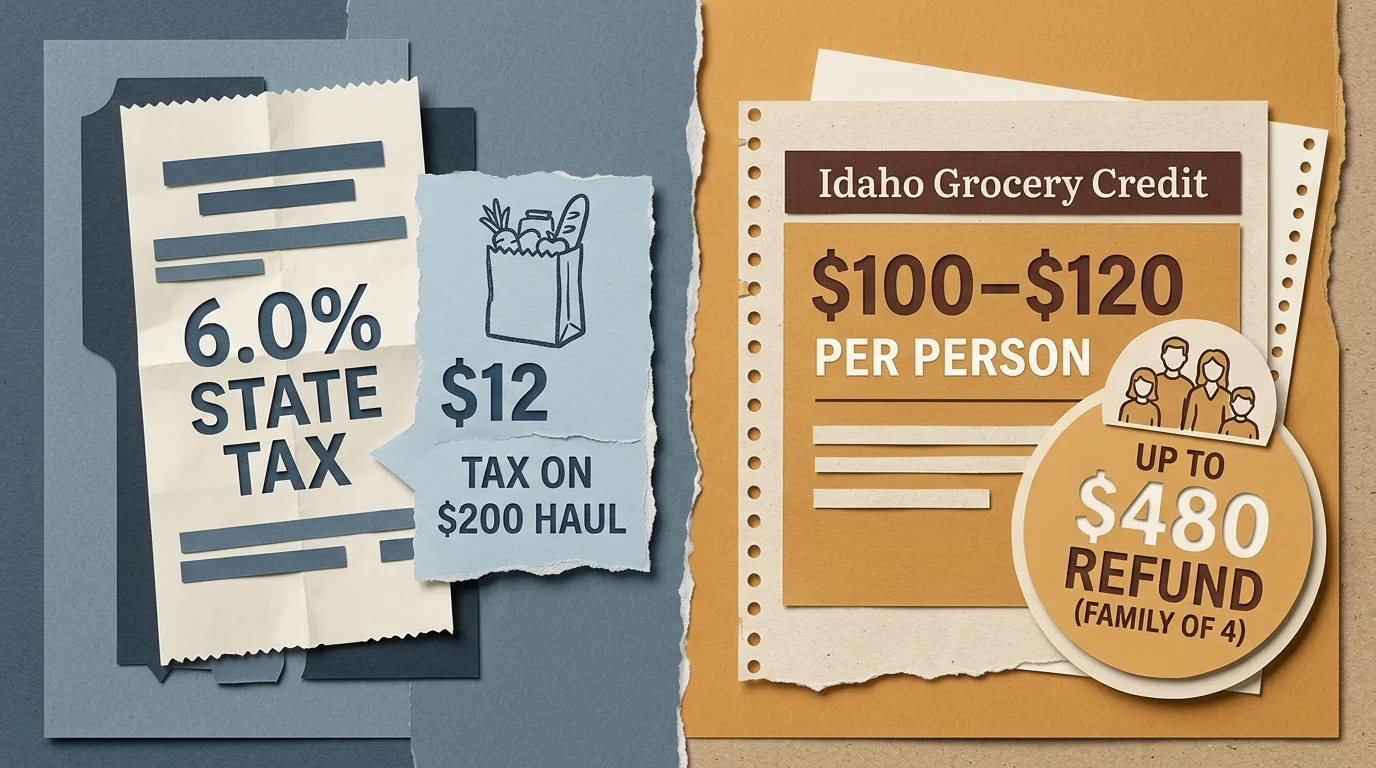
Idaho levies its standard 6.0% state sales tax on all grocery purchases at the cash register. Much like Mississippi, the state does not offer a reduced point-of-sale tax rate for food, meaning your checkout total immediately reflects the standard statewide tax rate. A $200 shopping haul at an Idaho supermarket instantly incurs an extra $12 charge at the register.
However, Idaho offsets this burden through an annual Grocery Credit claimed on state income tax returns. This refundable credit typically provides $100 to $120 per person each year, with an increased credit amount available for senior citizens. For a family of four, this tax mechanism returns up to $480 annually, which partially offsets the sales tax paid at grocery stores throughout the year.
The biggest financial trap in Idaho is failing to claim the credit. Many low-income residents, college students, and part-time workers who do not earn enough money to owe state income taxes assume they do not need to file. If you do not file Form 24 or submit an Idaho state return, you forfeit hundreds of dollars that belong in your pocket. Always file your state tax forms to reclaim your food tax refund, even if your annual taxable income is zero.
3. South Dakota: A Broad Levy Facing a Future Sunset
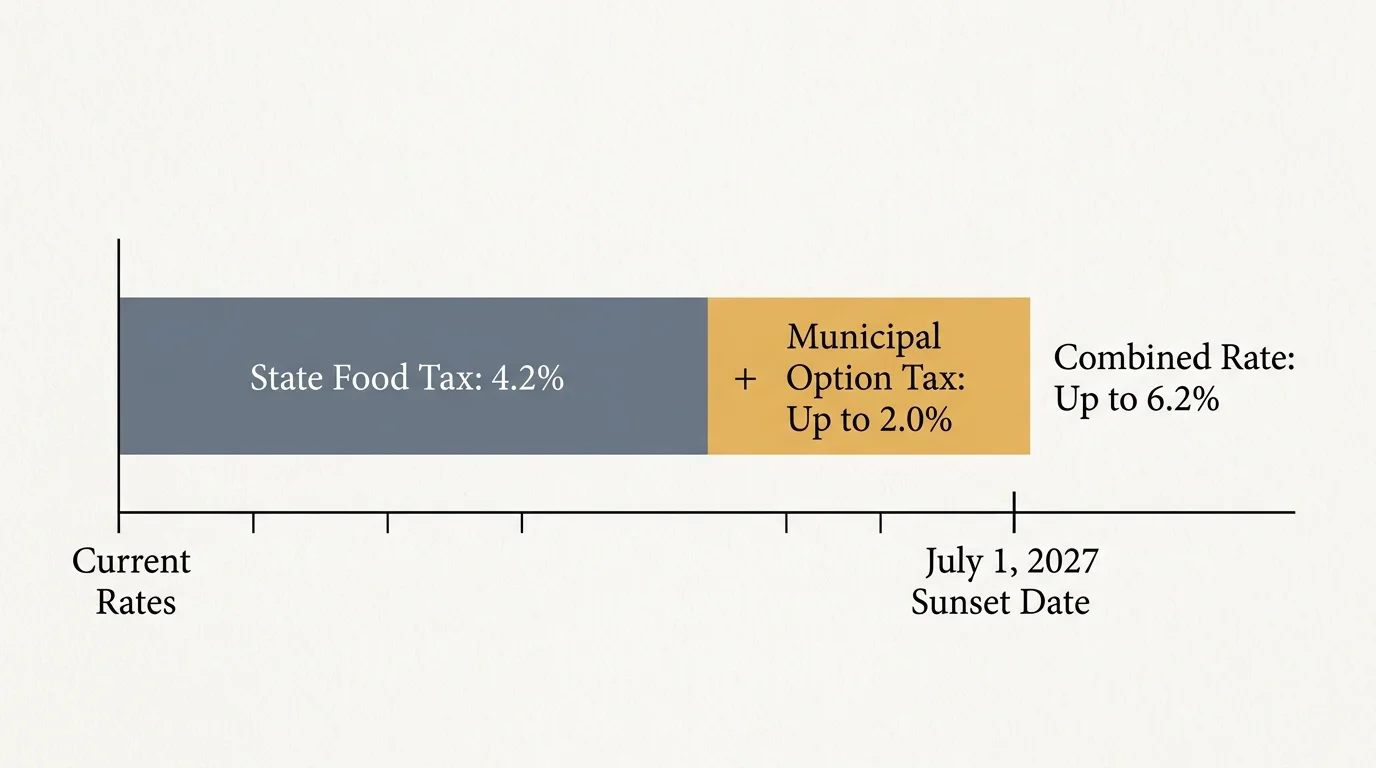
South Dakota imposes a 4.2% state sales tax on food and groceries. While the state reduced this rate from 4.5% as part of a temporary tax relief package, that statutory reduction comes with an expiration date; the lower rate is scheduled to sunset on July 1, 2027, unless lawmakers vote to extend or eliminate it. In addition to the state-level tax, South Dakota municipalities can add up to 2.0% in local option taxes, driving the combined grocery tax rate past 6.2% in several cities.
Because South Dakota does not levy a personal state income tax, the state relies heavily on its broad-based sales tax to fund essential public services. Consequently, basic food items remain fully taxable under state law. This structure increases the cost of living for working families who dedicate a significant portion of their weekly income to staple foods.
You can optimize your food budget in South Dakota by shopping strategically across municipal borders. If you live adjacent to an unincorporated county area or a town with a 0% or 1% municipal sales tax, shifting your weekly shopping routine saves an immediate 1% to 2% on your grocery bill. Tracking local supermarket circulars, stockpiling non-perishable goods during deep discount sales, and buying local agricultural goods directly from exempt farm stands will also protect your wallet.
4. Hawaii: The Hidden General Excise Tax
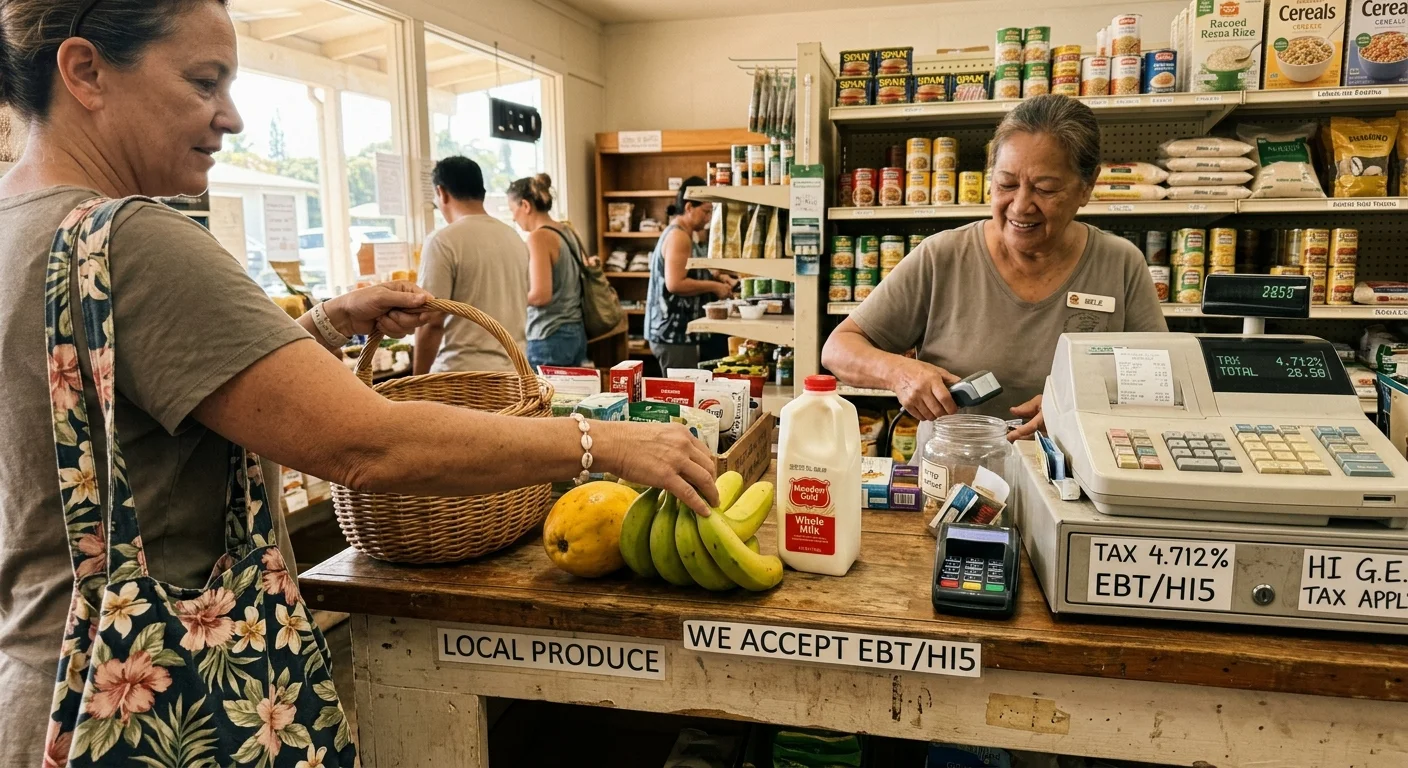
Hawaii does not have a traditional retail sales tax; instead, the state imposes a 4.0% General Excise Tax (GET) on all business activities. Because businesses pass this expense directly down the supply chain, merchants add the GET to retail consumer transactions at the register. When combined with county surcharges, Honolulu shoppers routinely pay a 4.5% tax on their grocery hauls.
Hawaii already contends with some of the highest grocery prices in the nation due to shipping logistics across the Pacific Ocean. Adding a 4.0% to 4.5% surcharge on top of elevated retail prices creates a severe financial hurdle for island residents. Buying a gallon of milk or fresh vegetables costs significantly more in Hawaii than on the mainland, amplifying the real dollar amount collected through the GET.
To mitigate this impact, Hawaii offers a refundable Food/Excise Tax Credit on state tax returns for low-to-moderate-income residents. If your adjusted gross income falls below statutory thresholds, submit Form N-11 during tax season to claim your cash rebate. Military families should also utilize base commissaries, which remain exempt from state and local excise taxes, providing substantial savings on weekly nutrition.

5. Tennessee: Reduced State Rates but Heavy Local Add-Ons
Tennessee taxes grocery items at a reduced state rate of 4.0%, which is significantly lower than the state’s standard 7.0% general sales tax rate. However, looking only at the state rate gives an incomplete picture of your checkout total. Tennessee permits municipalities and counties to levy local sales taxes of up to 2.75% on top of the state grocery rate.
In major urban centers like Nashville, Memphis, and Knoxville, the combined sales tax on food reaches 6.75%. While this is lower than the general retail tax rate, it still represents one of the steepest food tax burdens in the country. Furthermore, the state enforces strict classifications regarding what qualifies as grocery food versus prepared meals.
You can save money by understanding these tax categories before you reach the register. Whole, unprepared foods—such as raw meats, fresh vegetables, flour, and unheated bakery items—qualify for the reduced 4.0% state rate. Conversely, heated items from the supermarket deli, prepared hot rotisserie chickens, and fountain beverages trigger the full 7.0% state rate plus local taxes, pushing the total tax over 9.75%. Stick to whole ingredients and prepare meals at home to secure the lower tax tier.
6. Utah: A Split-Tier System on Food Purchases
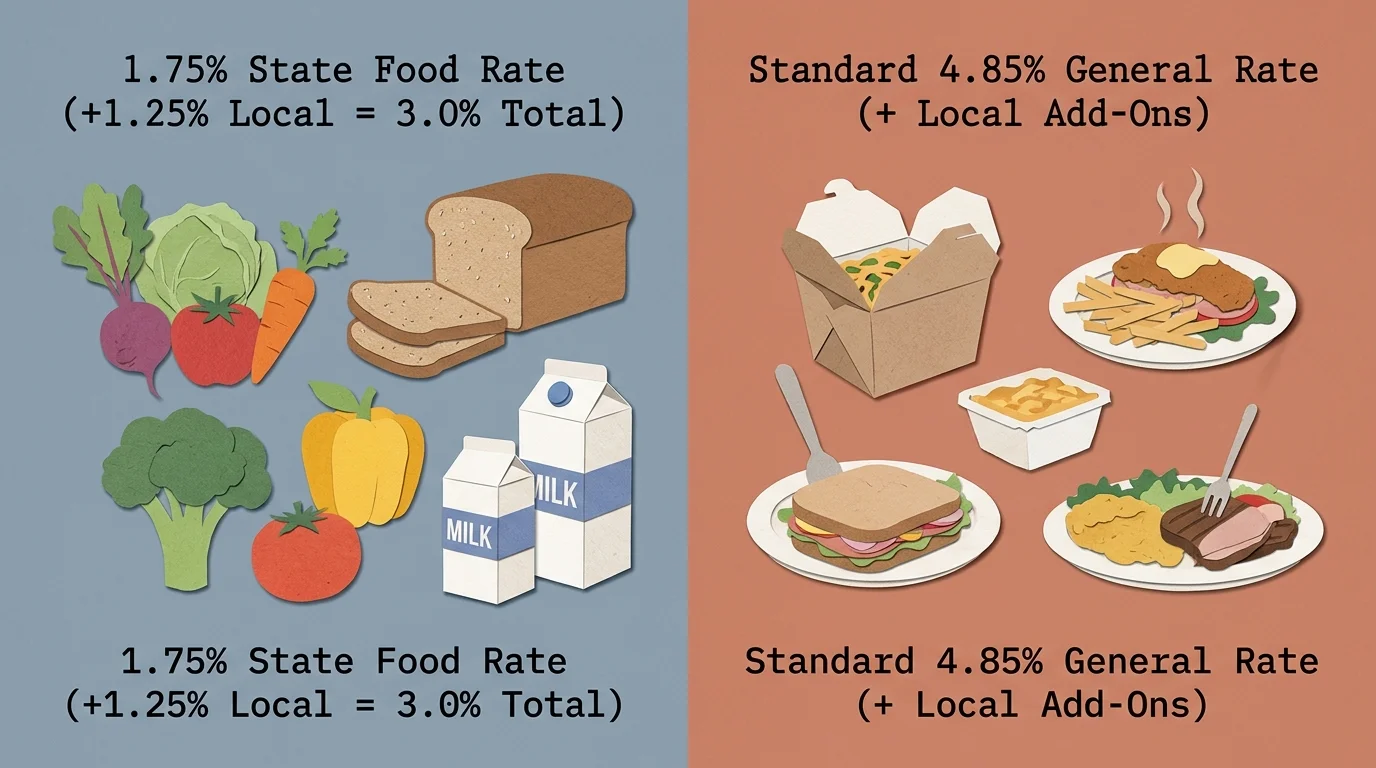
Utah enforces a combined 3.0% tax rate on unprepared food and food ingredients. This rate consists of a 1.75% state-level grocery tax combined with a mandatory 1.25% local option tax. Because Utah’s standard general sales tax rate is 4.85% plus local additions, the state provides a clear discount for essential groceries compared to general merchandise.
Even with this reduced rate, taxing food generates substantial revenue for state education funds while adding a steady cost to consumer budgets. A Utah family spending $10,000 annually on groceries pays $300 in food taxes every year. In addition, the state draws a rigid boundary between essential groceries and convenience items.
To avoid paying higher taxes at Utah supermarkets, be mindful of how the state defines taxable treats. Prepared foods, dietary supplements, and soft drinks do not qualify for the 3.0% grocery rate; they incur the full general sales tax rate, which often exceeds 7.25% depending on the locality. Interestingly, Utah taxes candy at the full rate unless the item contains flour. Checking ingredient labels on sweet snacks can actually prevent you from paying the higher general tax rate at checkout.
7. Alabama: A Steeper Burden From Local Tax Stacking
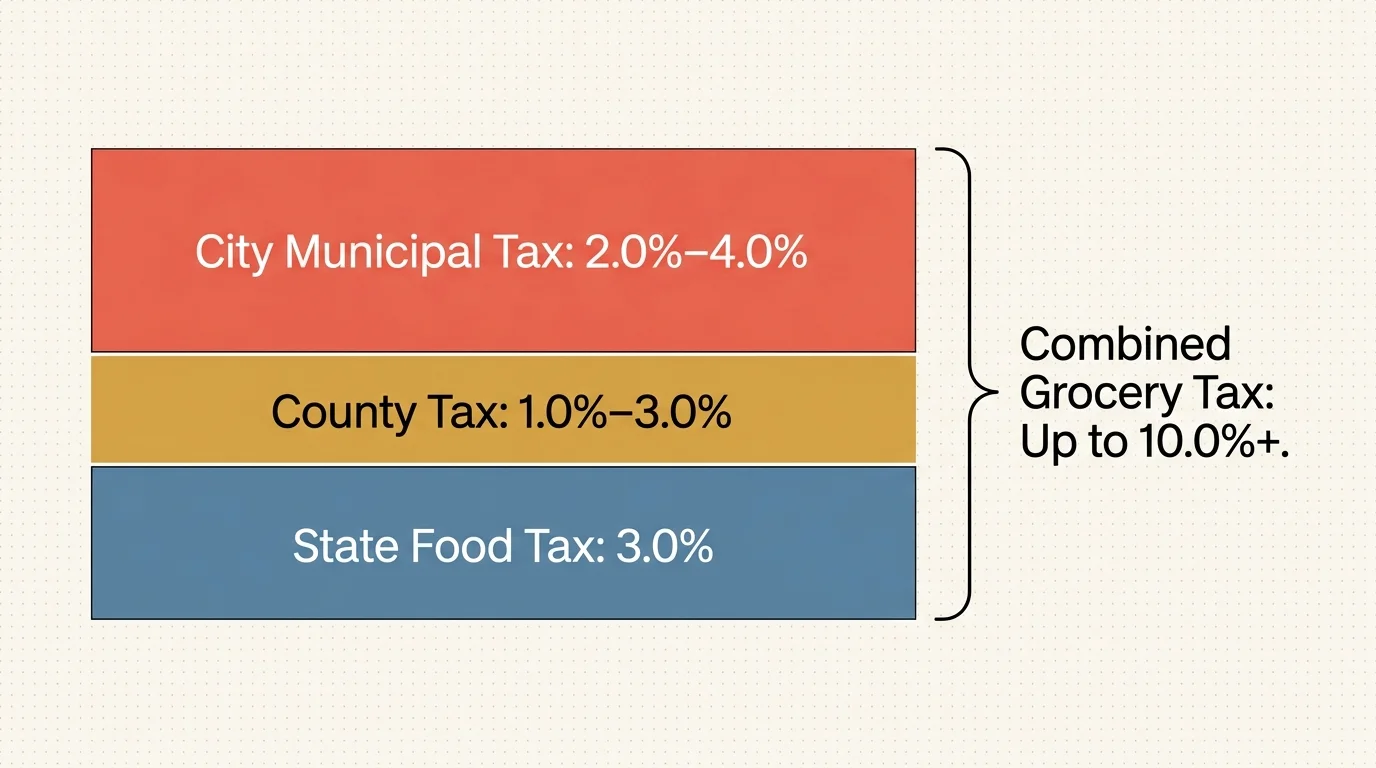
Alabama has made historic legislative moves to lower its grocery sales tax, reducing its state-level food tax rate to 2.0%. This marked a major decrease from the 4.0% state tax rate the state maintained for decades. However, Alabama still presents a unique challenge for frugal shoppers due to local municipal and county sales taxes.
While the state tax is now 2.0%, local city and county governments in Alabama can impose their own sales taxes without restriction. In many municipalities, local jurisdictions add another 4.0% to 6.0% in sales taxes on groceries. As a result, shoppers in certain Alabama cities still pay total grocery sales taxes ranging between 6.0% and 8.0% at checkout.
To reduce your grocery expenses in Alabama, examine the tax rates in neighboring jurisdictions. Driving a few miles outside city limits into an unincorporated county area often eliminates the municipal tax entirely, instantly dropping your total tax bill by several percentage points. Pair this geographic strategy with bulk purchasing of staple pantry items to minimize the number of taxed shopping trips you make each month.

8. Missouri: Low State Rates Masking Complex District Taxes
Missouri charges a reduced state sales tax rate of 1.225% on food for home consumption, compared to its standard 4.225% general sales tax. On the surface, this 1.225% state rate seems minimal. However, Missouri has one of the most complex local taxing structures in the country, allowing cities, counties, and special taxing districts to layer on additional fees.
When you shop at a supermarket located inside a Community Improvement District (CID) or Transportation Development District (TDD), those private districts frequently add their own sales taxes on top of city and county taxes. In parts of St. Louis and Kansas City, these stacked local rates push the final grocery tax rate past 5.0% to 7.0%, turning an affordable shopping trip into an expensive transaction.
Take time to inspect your itemized grocery receipts to see exactly which local districts are taxing your cart. If a specific shopping center includes a 1.0% TDD or CID surcharge, consider moving your weekly shopping to an alternative grocer outside that special district. Bypassing these micro-districts is one of the easiest ways to retain more of your money without changing the items you eat.
9. Oklahoma: High Municipal Taxes After State Repeal
Oklahoma officially eliminated its 4.5% state sales tax on groceries, providing immediate relief to households across the state. However, Oklahoma remains on the radar for smart shoppers because the state legislative repeal applied strictly to the state portion of the sales tax. City and county governments retained the legal authority to continue taxing groceries at their full local rates.
Because municipal governments in Oklahoma depend heavily on local sales taxes to fund police, fire departments, and infrastructure, most cities did not eliminate their local grocery taxes. In cities like Oklahoma City, Tulsa, and Norman, local sales taxes on food range from 3.5% to over 5.5%. When you push your cart through the checkout line in an Oklahoma city, you still pay a substantial food tax.
You can beat this system by using digital store apps to choose supermarket locations situated in low-tax jurisdictions. Major supermarket chains allow you to set your pickup location at stores outside high-tax city boundaries. Placing an online curbside pickup order at a suburban store with a 1.0% or 2.0% county tax instead of a 5.0% city store delivers immediate savings on the exact same grocery items.
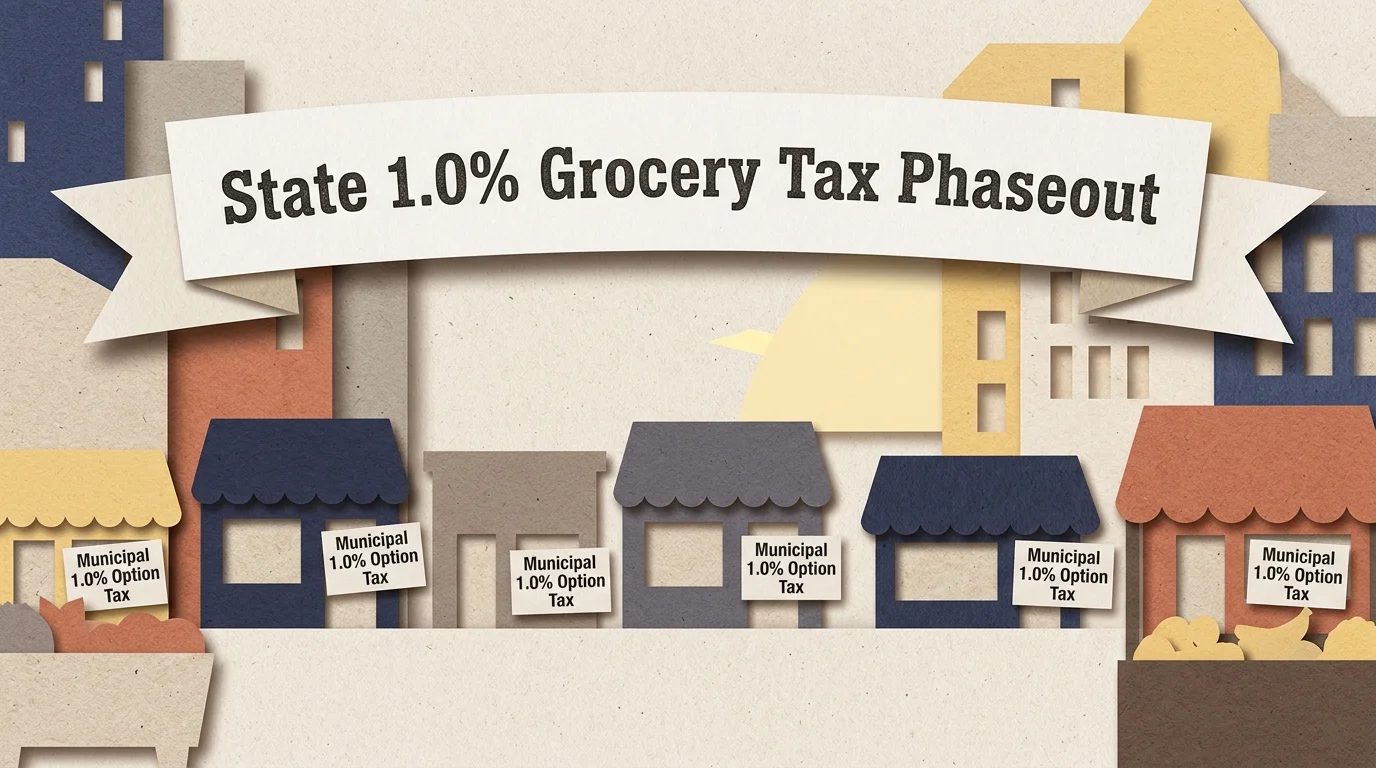
10. Illinois: Local Grocery Taxes After the State Phaseout
Illinois enacted legislation to eliminate its statewide 1.0% grocery sales tax. However, the state law included a critical provision that allowed municipalities and non-home-rule counties to establish their own local 1.0% grocery tax without requiring a voter referendum. Following this change, more than 600 municipalities across Illinois quickly passed local ordinances to keep the 1.0% tax on food in place.
If you live in Chicago or its surrounding suburbs, you likely still pay a 1.0% local tax on food purchases. While a 1.0% tax is modest compared to southern states, it still extracts $10 for every $1,000 spent on groceries. Furthermore, this local food tax applies strictly to unprepared food; hot meals and ready-to-eat items sold in grocery stores continue to trigger the full regional sales tax rate, which often exceeds 10.0% in Cook County.
To optimize your shopping budget in Illinois, verify whether your local municipality enacted the optional 1.0% grocery replacement tax. If an adjacent township opted out of the tax to attract retail shoppers, redirecting your weekly grocery runs across town lines allows you to pocket that 1.0% savings. Over several years, avoiding local tax add-ons preserves meaningful capital for your emergency fund or investments.

The Bottom Line: What This Means for Your Wallet
A grocery tax is inherently regressive; it claims a larger percentage of income from working families who must dedicate a major portion of their earnings to baseline sustenance. When combined state and local rates approach 7% to 10%, a household spending $800 a month on food surrenders between $670 and $960 annually just in taxes on basic nutrition.
Protecting your budget requires a proactive, strategic approach to grocery shopping. Review your receipts carefully to identify local taxing districts and verify that cashiers classify your unprepared foods under reduced grocery rates rather than standard retail rates. Take full advantage of refundable state tax credits in states like Idaho and Hawaii by filing your state returns every single year.
Whenever practical, consider geographic arbitrage by purchasing groceries in adjacent counties or states that offer lower food tax rates. Combining smart shopping locations with store loyalty apps, wholesale volume purchases, and basic home cooking will ensure you minimize the tax burden on your kitchen table.
Frequently Asked Questions
Are SNAP and WIC purchases subject to state grocery taxes?
No. Federal law strictly prohibits states and municipalities from charging sales tax on any food items purchased using SNAP (Supplemental Nutrition Assistance Program) or WIC (Women, Infants, and Children) benefits. Regardless of whether a state taxes groceries at 0% or 7%, your EBT payment is entirely exempt from state and local sales tax.
What is the difference between grocery food and prepared food for tax purposes?
State tax codes generally define grocery food as unprepared ingredients intended for home consumption, such as raw produce, flour, meat, and unheated canned goods. Prepared food includes hot items, meals packaged with eating utensils, or food prepared directly by the seller for immediate consumption. Prepared foods are almost universally taxed at full general sales tax rates rather than reduced grocery rates.
Can you deduct state grocery sales tax on your federal tax return?
If you itemize deductions on Schedule A of your federal tax return, you can deduct state and local sales taxes (SALT) instead of state income taxes. However, the federal SALT deduction is currently capped at $10,000 per year, and most Americans benefit more by taking the standard deduction rather than itemizing sales tax receipts.
Why do some states continue to tax food while others exempt it?
States that lack a personal state income tax (like South Dakota and Tennessee) or maintain low property tax structures rely heavily on broad-based consumption taxes to fund government operations. Because grocery sales remain steady during economic downturns, taxing food provides state and local governments with stable, predictable revenue throughout recessions.
For consumer protection information, visit the Federal Trade Commission (FTC) and the Consumer Financial Protection Bureau (CFPB). For product safety and reviews, consult Consumer Reports.
Disclaimer: This article is for informational purposes only and does not constitute financial advice. The content reflects the author’s opinion and research at the time of writing. Always do your own research before making financial decisions.




Leave a Reply