

You can easily slash hundreds of dollars from your annual animal budget without sacrificing quality or nutrition. Smart pet owners never pay full retail price for premium food, medications, or gear.
Americans spent an astonishing $152 billion on their pets in 2024, with spending projected to exceed $158 billion. Pet food and treats claim over $66.9 billion alone, while supplies and over-the-counter medications devour another $34 billion.
Essential care averages $1,000 to $1,533 annually for dogs and up to $2,400 for cats. These proven strategies will put those dollars back into your bank account immediately.
Tip #1: Slash Kibble Costs with Wholesale Bulk Math
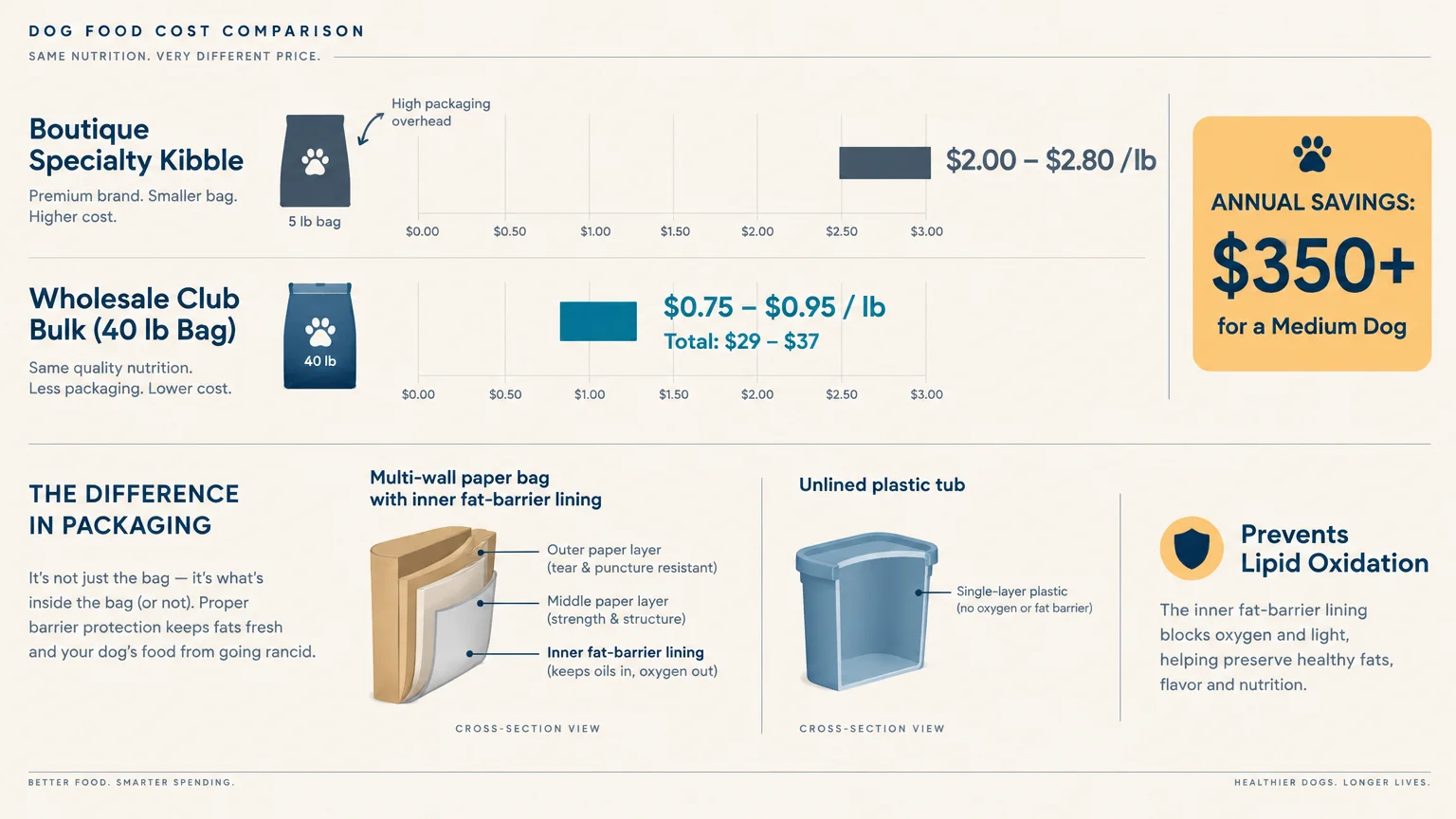
Boutique pet food marketing convinces owners that higher prices equal better health. In reality, specialty brands at boutique shops routinely charge between $2.00 and $2.80 per pound for standard dry kibble.
Compare those inflated prices to warehouse club alternatives. A 40-pound bag of Costco Kirkland Signature Adult Dog Food costs roughly $29 to $37 in-store.
That breaks down to just $0.75 to $0.95 per pound for a top-rated formulation. Feeding a medium-sized dog this warehouse brand saves you over $350 every single year.
Contract manufacturing is the pet industry’s most profitable open secret. Diamond Pet Foods produces Kirkland alongside multiple premium designer labels in the exact same certified facilities.
Always inspect the guaranteed analysis panel on the packaging before you buy. You will frequently find identical ratios of crude protein, essential fats, and added probiotics.
Never purchase small four-pound or five-pound bags of dry pet food. Manufacturers assign their highest profit margins to tiny packages, sticking you with massive markups per ounce.
Protect bulk food quality by storing the kibble properly at home. Keep the food inside its original lined bag, and slide that entire bag inside an airtight plastic container.
The original multi-wall paper bag features a protective fat barrier that prevents spoilage. Dumping kibble directly into bare plastic tubs accelerates lipid oxidation and ruins flavor fast.
Mastering these unit calculations is one of the most effective pet budget tips for immediate savings. You deliver superior nutrition while avoiding the predatory markups of specialty boutiques.
Tip #2: Exploit Retail Autoship Promotions and Subscription Cycling
Online pet supply giants spend millions acquiring new recurring subscribers. You can easily turn their competitive customer acquisition budgets into your personal savings account.
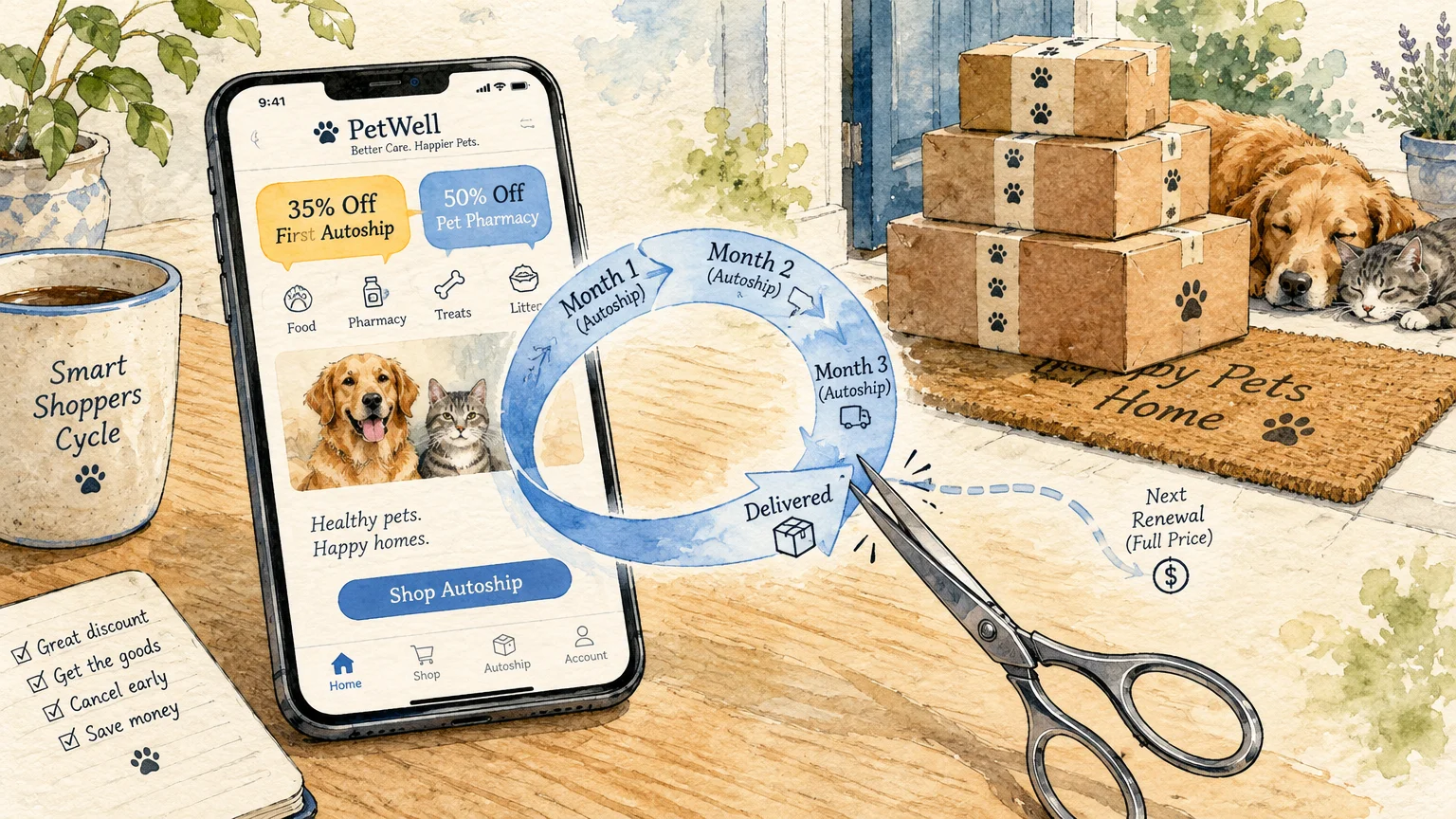
Chewy regularly offers 35% off your first Autoship order, capped at a $20 discount. They also provide up to 50% off—capped at $50—for your first pet pharmacy order.
Amazon matches this aggression by providing 5% to 15% discounts through their Subscribe & Save program. Setting up a delivery schedule takes less than two minutes on your smartphone.
Retail algorithms count on subscription inertia to make their money back. Corporate analysts know most consumers forget to cancel recurring shipments once the initial introductory discount clears.
Outsmart this business model by managing your subscription calendar aggressively. Place your order with the promotional discount, wait for the shipment confirmation email, and cancel the subscription immediately.
You incur zero financial penalties or cancellation fees for terminating recurring orders early. The retail platforms still honor the introductory promotional price on the items already delivered to your door.
Rotate orders between major online pet retailers throughout the calendar year. Cycling between Chewy, Amazon, Petco, and PetSmart ensures you consistently capture introductory price cuts on heavy essentials.
Stack these subscription discounts with cash-back browser extensions and credit card reward portals. Layering digital coupons on top of introductory subscription pricing unlocks massive pet food discounts without compromise.
Tip #3: Fill Pet Prescriptions at Human Pharmacies
Purchasing medications directly from your veterinary clinic carries massive hidden markups. Clinics frequently mark up common pharmaceutical treatments by 100% to 300% over wholesale acquisition costs.
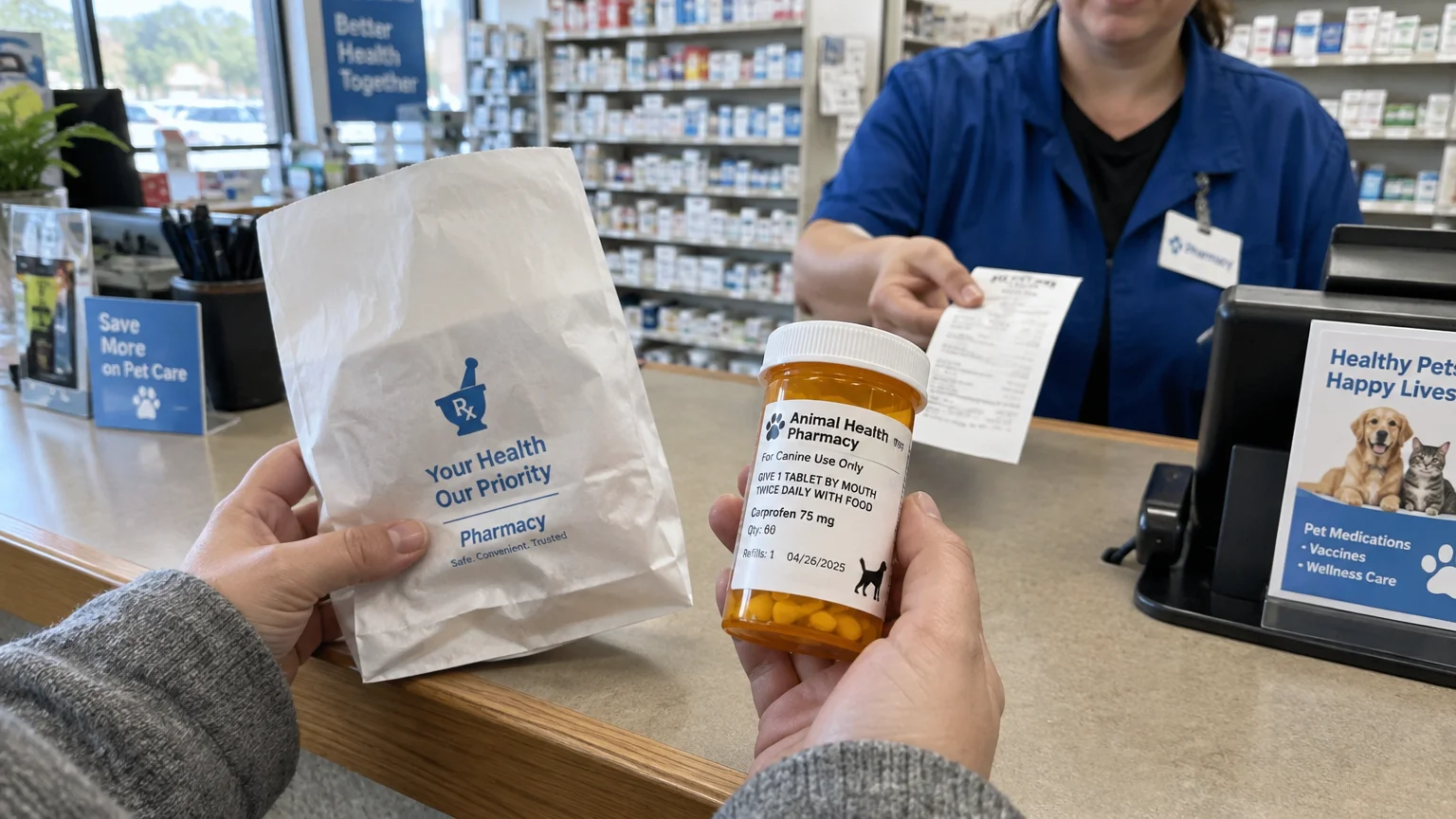
You are never legally required to purchase prescription drugs at the veterinary clinic desk. The American Veterinary Medical Association ethical code requires veterinarians to provide portable written prescriptions upon request.
Under the Animal Medicinal Drug Use Clarification Act, veterinarians can prescribe human-approved generic medications off-label for pets. Many animal medications are chemically identical to common human pharmaceuticals.
Take that portable prescription straight to a retail pharmacy like Costco, Walmart, or Walgreens. Filling generic pet medications at commercial pharmacies slashes your total out-of-pocket costs by 20% to 50%.
You do not even need a paid warehouse membership to use the Costco pharmacy. Federal and state laws grant all consumers access to retail pharmacy services regardless of club membership status.
Always compare pharmacy retail pricing against free prescription discount platforms like GoodRx. Entering your pet’s medication details on these platforms unlocks massive cash discounts on antibiotics and heart medications.
Common maintenance drugs like fluoxetine, prednisone, and gabapentin cost a fraction of the vet price at retail counters. Always ask your veterinarian if a human generic equivalent exists before paying clinic rates.
Securing human-grade generics for chronic animal conditions is essential for truly affordable pet care. Your pet receives the exact same medical therapy while your household budget stays completely intact.
Tip #4: Leverage Open-Bag Return Guarantees to Stop Food Waste
Finicky pets drain household budgets when they reject expensive new diets. Most pet owners toss rejected half-full bags into the garbage, accepting the loss as an inevitable expense.
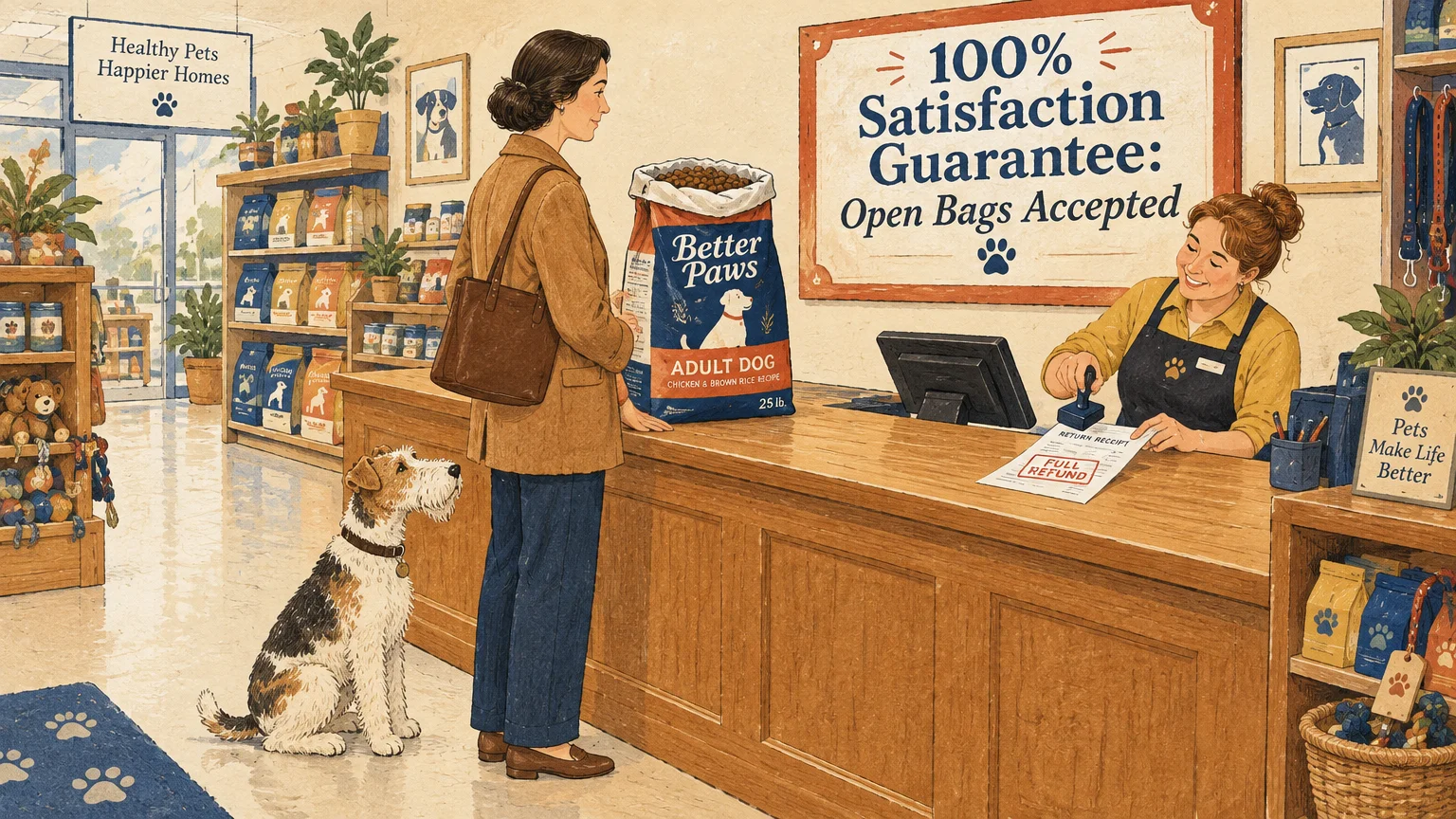
Throwing away uneaten food is a massive financial leak that you can eliminate today. Major pet retailers maintain remarkably generous customer satisfaction return policies on opened pet food.
Petco offers a full refund on opened pet food returned within 30 days of purchase with receipt. You simply bring the remaining portion back to your local store for an immediate credit.
Chewy goes even further with an industry-leading 365-day 100% satisfaction guarantee. If your dog or cat refuses to touch a food formula, their customer service team issues a full refund.
Chewy frequently instructs owners to donate rejected bags to local animal shelters rather than shipping them back. You recoup your hard-earned money immediately while helping rescue animals in your local community.
These retail return guarantees exist because pet food manufacturers provide palatability credits to certified distributors. The retail stores get credited directly by the manufacturers, so your return never penalizes retail staff.
Keep your physical store receipts and digital order invoices organized in an email folder. Knowing these consumer protections eliminates the financial risk of buying specialized dietary formulas for picky animals.
Leveraging return policies ensures you never waste money on foods your companion refuses to consume. It is the smartest way to save on pet supplies when experimenting with specialized diets.

Tip #5: Ditch Boutique Packaged Treats for Pantry Staples
Commercial pet treat bags represent one of the most absurd markups in modern consumer retail. Boutique brands package four ounces of dehydrated sweet potato or chicken jerky and charge $15 per pouch.
That premium pricing equates to an astounding $60 per pound for simple agricultural commodities. You can easily make superior, single-ingredient treats in your own kitchen for pennies on the dollar.
Pick up fresh boneless chicken breasts or beef liver at the supermarket for $3 to $5 per pound. Slice the meat into thin strips and bake them on low heat in your home oven.
Baking lean meat at 200 degrees for two hours dehydrates the strips into irresistible, preservative-free jerky. You save over 80% per ounce while feeding your animal higher-quality protein than commercial factories supply.
Fresh whole vegetables from your refrigerator make fantastic crunchy snacks for dogs. Raw baby carrots, crisp cucumber slices, and fresh green beans provide essential fiber without dangerous chemical additives or calories.
Canned pure pumpkin puree costs under two dollars and acts as an exceptional digestive treat. Freeze spoonfuls of pumpkin in silicone ice cube trays to create soothing, hydrating summer snacks.
Never buy expensive flavored chew pastes designed to fill rubber enrichment toys. Smear inexpensive, xylitol-free generic peanut butter inside the toy and freeze it overnight for hours of mental stimulation.
Making treats from basic pantry staples eliminates the need to hunt for cheap pet supplies online. Your pet receives wholesome, whole-food nutrition while your weekly grocery budget barely notices the difference.
Tip #6: Source Durable Hardware and Toys on the Secondary Market
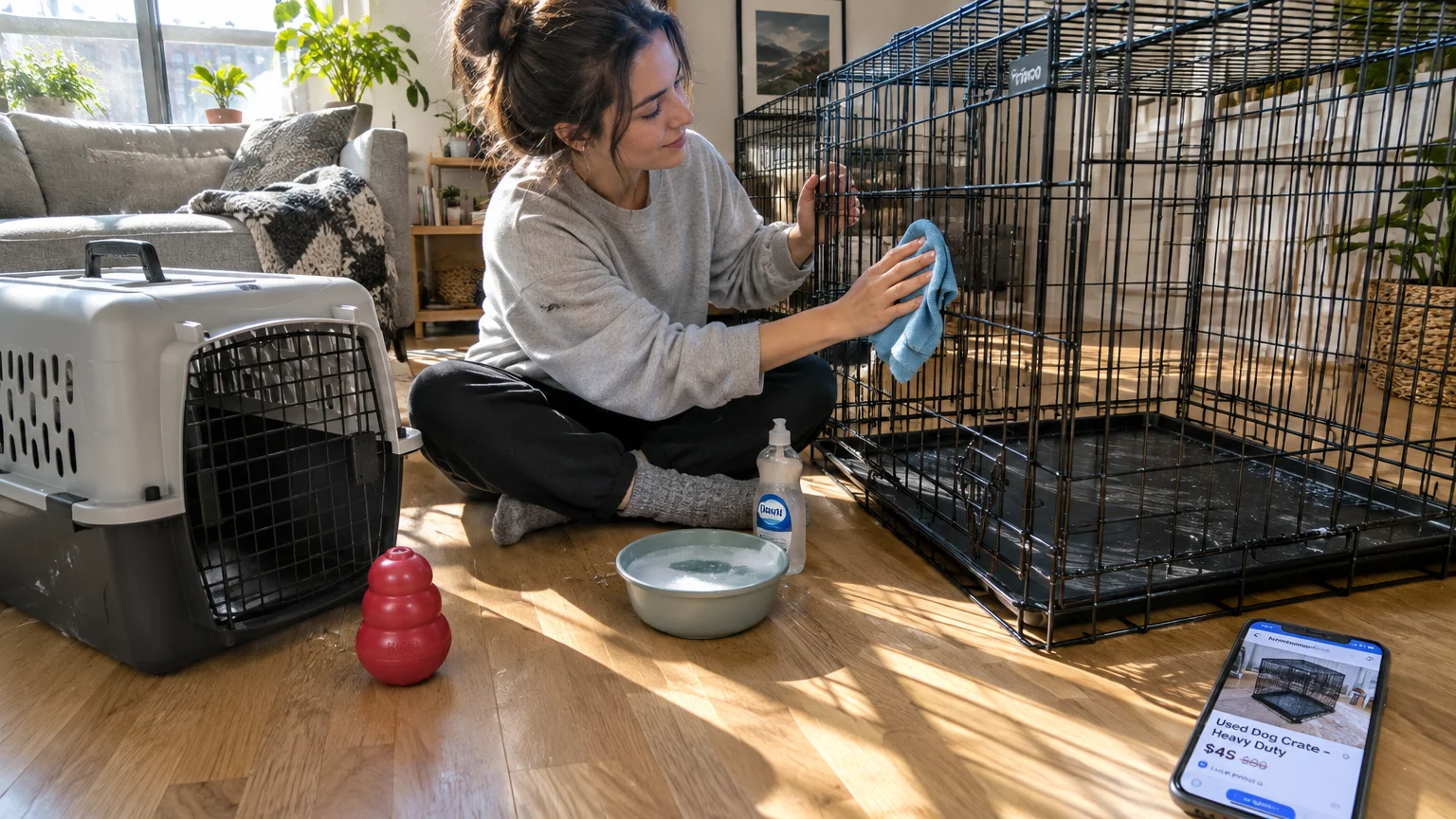
Pet superstores charge shocking premiums for durable metal, plastic, and nylon hardware. A standard heavy-duty wire dog crate or plastic airline carrier routinely costs between $80 and $160 brand new.
These hard-wearing metal and molded plastic items suffer virtually zero functional degradation over time. Purchasing hardware brand new is an unnecessary luxury that drains your pet budget unnecessarily.
Browse Facebook Marketplace, Craigslist, and local thrift stores before spending retail cash on hardware. Families whose puppies grew up regularly sell pristine, heavy-duty wire crates for just $10 to $20.
Join your neighborhood Buy Nothing project group to source high-end pet supplies for free. Neighbors frequently give away barely used exercise pens, cat trees, and travel carriers simply to clear garage space.
Stop paying $15 to $25 for simple plush squeaker toys and braided ropes at pet boutiques. Your local dollar store stocks identical cotton rope tugs and tennis balls for just $1.25 each.
Aggressive chewers destroy boutique toys just as fast as dollar store play items. Spending top dollar on disposable toys that get shredded in five minutes makes zero financial sense.
Sanitize secondhand plastic items and wire crates using warm water and a diluted bleach solution. Wash secondhand fabric bedding in your washing machine on the sanitize cycle with fragrance-free laundry detergent.
Sourcing pre-owned crates, carriers, and gates frees up substantial cash for long-term veterinary care. You secure durable, indestructible equipment without paying traditional retail markups.
Tip #7: Master At-Home Preventative Grooming and Hygiene
Professional grooming salons routinely bill $70 to $120 per appointment for basic washing, brushing, and trimming. Booking those salon visits every six weeks adds up to over $800 annually per animal.
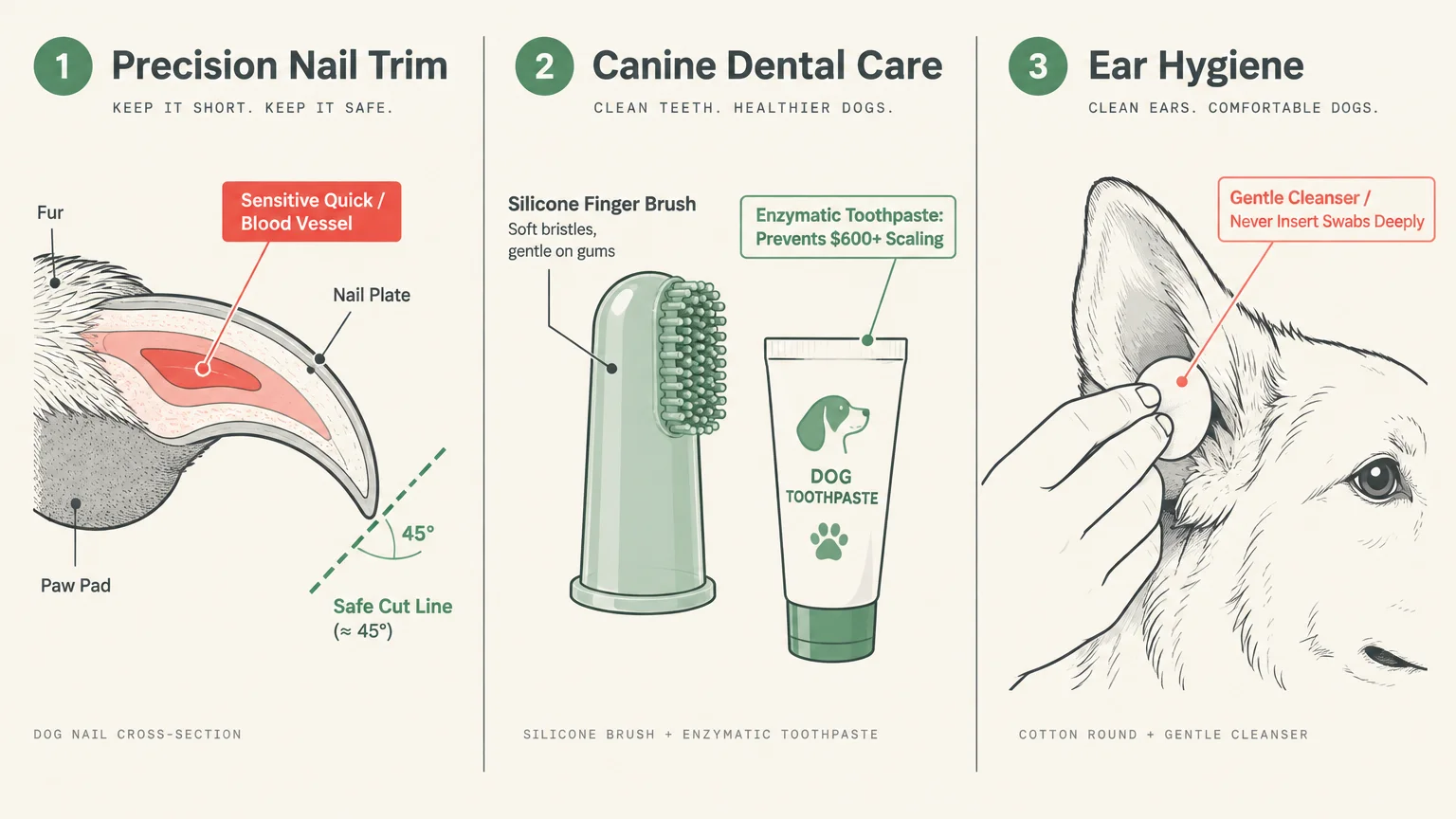
Taking control of basic hygiene at home keeps that hard-earned cash in your wallet. Purchase a set of professional stainless-steel nail clippers or an electric rotary grinder for under $20.
Trimming your pet’s nails every two weeks prevents expensive joint strain, slipped discs, and torn dewclaws. You eliminate the recurring $20 salon nail trim fee while keeping your animal calm at home.
Dental disease is another massive financial hazard that blindsides unsuspecting pet owners. Professional veterinary cleanings under general anesthesia routinely cost between $800 and $1,500 at private veterinary clinics.
Prevent severe dental decay by brushing your pet’s teeth three times weekly with enzymatic pet toothpaste. A four-dollar tube of poultry-flavored enzymatic paste breaks down tartar and protects your bank account from surgery bills.
Avoid bathing large dogs in your personal bathroom where fur clogs expensive plumbing drains. Instead, utilize self-service dog wash stations at local tractor supply stores or car washes for just $10 to $15.
These commercial self-service wash bays provide raised ergonomic tubs, professional shampoo nozzles, and high-velocity forced-air dryers. You get salon-grade washing equipment without paying luxury salon labor markups or cleaning up bathroom messes.
Purchase generic over-the-counter flea and tick treatments containing the exact same active ingredients as leading brands. Generic fipronil and imidacloprid topicals cost half the price of heavily advertised veterinarian labels.
Committing to consistent preventative maintenance protects both your companion’s vitality and your personal wealth. Routine home care prevents catastrophic medical emergencies before they ever begin.
The Bottom Line: What This Means for Your Wallet
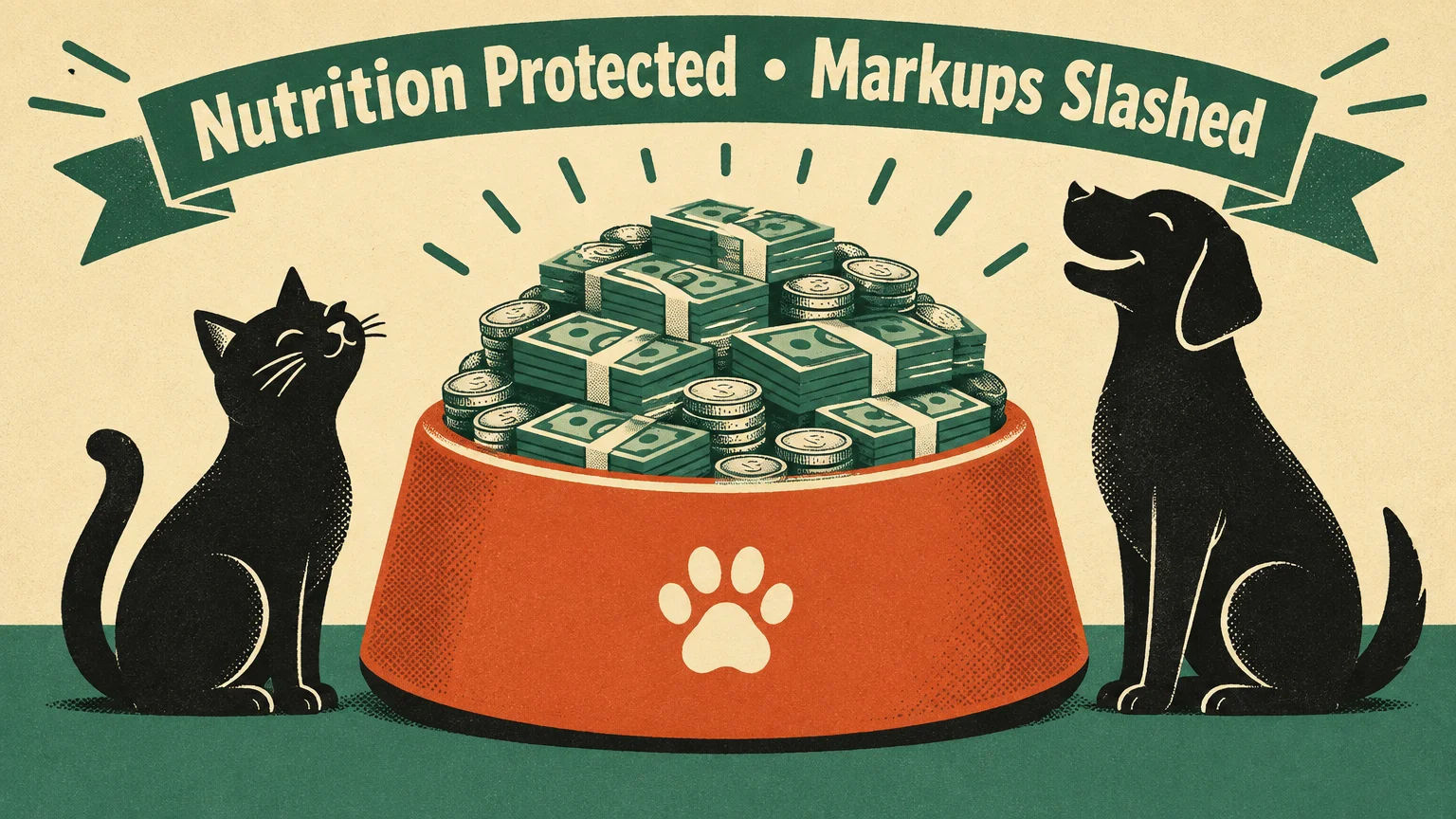
Keeping beloved companion animals healthy and happy does not require financial stress. By rejecting boutique marketing myths, you unlock incredible savings across food, healthcare, and everyday equipment.
Switching to bulk warehouse food saves up to $350 annually on feeding costs alone. Filling medications at commercial pharmacies and utilizing return guarantees recovers another $300 to $600 each year.
Adding DIY grooming and secondhand hardware keeps another $500 in your pocket. Those straightforward adjustments easily add up to more than $1,200 in total annual household savings per pet.
Every dollar you save on routine supplies strengthens your family emergency fund. That financial cushion ensures you can comfortably manage unexpected veterinary emergencies whenever critical care is truly needed.
Take control of your recurring pet budget by implementing one or two of these tactics today. Small strategic changes yield substantial financial breathing room over the lifetime of your animal.
For consumer protection information, visit the Federal Trade Commission (FTC) and the Consumer Financial Protection Bureau (CFPB). For product safety and reviews, consult Consumer Reports.
Disclaimer: This article is for informational purposes only and does not constitute financial advice. The content reflects the author’s opinion and research at the time of writing. Always do your own research before making financial decisions.
Frequently Asked Questions
Is store-brand pet food safe and nutritionally balanced?
Yes, reputable store brands like Costco Kirkland Signature meet strict nutritional profiles established by the Association of American Feed Control Officials. Major manufacturers produce these store brands in the exact same facilities as expensive specialty labels.
Always inspect the ingredient label to ensure whole animal proteins appear first. Store brands deliver identical nutritional value without making you pay for multi-million-dollar marketing campaigns.
Can any pet medication be filled at a human pharmacy?
Many common pet prescriptions share identical chemical compounds with human medications and can be filled at standard retail pharmacies. Drugs like antibiotics, allergy medications, and steroids are routinely dispensed for animals by human pharmacists.
Always ask your veterinarian for a portable written prescription and check if human-grade generic bioequivalents exist. You can then compare prices using GoodRx to secure steep discounts at retail counters.
How do I switch pet foods without upsetting my animal’s stomach?
Transition your pet to new food gradually over a seven-day to ten-day period to prevent gastrointestinal upset. Mix 25% of the new food with 75% of the old food for the first three days.
Gradually increase the proportion of new food every few days until the switch is complete. This measured approach allows your pet’s digestive enzymes to adapt smoothly without causing diarrhea or vomiting.
Are cheap dollar store pet toys safe for aggressive chewers?
Simple dollar store items like thick cotton rope tugs and basic tennis balls are safe when used under direct supervision. However, avoid cheap plush toys with loose plastic eyes, weak seams, or toxic squeakers.
Inspect all toys regularly for fraying or loose pieces that could cause hazardous intestinal blockages. Discard damaged toys immediately to avoid expensive veterinary emergency surgeries.





Leave a Reply