

You can slash your monthly grocery spending by thirty percent without clipping a single coupon. Savvy retirees are ignoring paper circulars and relying on tactical shopping shifts that instantly drop receipt totals.
Traditional couponing often forces you to buy overpriced brand names you never wanted in the first place. Real supermarket savings come from exploiting retail sales cycles and bypassing psychological store traps.
Adopting these eight straightforward shopping strategies will immediately protect your fixed income from stubborn food inflation. Here is how older Americans are lowering their bills today.
Tip #1: Target the Weekly Mark-Down Schedule
Supermarkets do not discount inventory at random hours. Store managers follow rigid corporate schedules to mark down fresh meat, dairy, and bakery items before incoming shipments arrive.
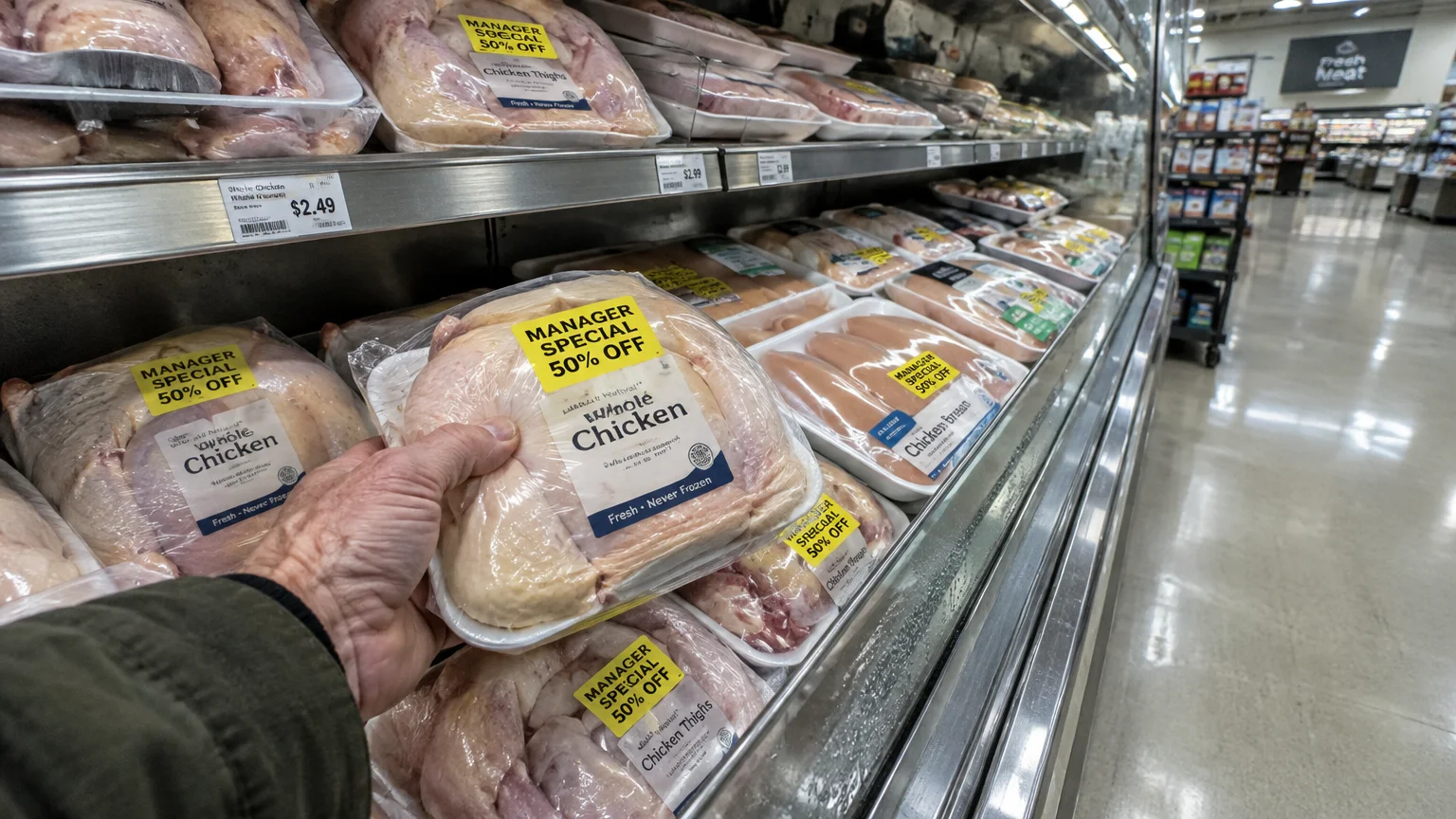
You can ask the meat department manager directly when they apply clearance stickers. Most stores re-tag inventory on Tuesday and Wednesday mornings before ten o’clock.
These yellow-sticker markdowns frequently slash retail prices by forty to sixty percent. You get the same USDA-inspected beef, pork, or poultry at a fraction of standard cost.
Freezing these proteins immediately preserves their quality for months. This single tactical habit secures major retiree food savings without forcing you to compromise on dietary quality.
Commercial grocers discard tons of safe food each week purely due to corporate sell-by guidelines. By arriving right when employees scan these items, you capture peak discounts before other shoppers arrive.
Avoid shopping on Sunday afternoons when clearance shelves sit completely bare. Shifting your schedule to mid-week mornings gives you first access to heavily discounted cuts of meat.
A retiree buying three marked-down roasts or whole chickens saves roughly twenty dollars per week. That compounds into more than one thousand dollars across a single calendar year.
Look for manager specials across every refrigerated case in the store. Packaged deli meats, pre-marinated cutlets, and vacuum-sealed salmon frequently feature these steep price reductions.
Make this routine a permanent part of your weekly errands. Your grocery budget will reflect the savings instantly without needing a single clipping app.

Tip #2: Switch to Plant-Forward and Canned Proteins
Fresh animal protein represents the single largest expenditure on most household receipts. Replacing two beef dinners each week with nutrient-dense legumes creates immediate financial breathing room.
Dried lentils, black beans, and chickpeas cost pennies per serving compared to fresh beef or pork. They deliver exceptional dietary fiber, which supports healthy digestion and heart health in retirement.
If you prefer seafood, bypass the fresh display counter entirely. Canned wild salmon, sardines, and skipjack tuna offer superior omega-3 fatty acids at a fraction of the fresh price tag.
A pound of dried pinto beans yields nearly seven cups of cooked food for under two dollars. The equivalent volume of lean ground beef often costs upwards of twelve dollars.
You do not need to adopt an entirely vegetarian lifestyle to enjoy these financial benefits. Blending cooked brown lentils directly into ground turkey or beef stretches your portions effortlessly.
This blending strategy cuts your protein expense in half without sacrificing rich savory flavor. Smart cooks call this method protein stretching, and it forms the bedrock of cheap meal planning.
Canned beans also provide convenient weeknight meals when you lack the energy to cook from scratch. Rinsing them thoroughly reduces sodium content by over forty percent while keeping textures firm.
Stock your pantry with diverse dry beans and high-grade canned seafood whenever sales hit. You will create dozens of satisfying meals without burning through your cash reserves.
Your body receives vital micronutrients, and your fixed retirement income stays intact. It is a win for your health and your wallet.
Tip #3: Audit Unit Pricing Instead of Shelf Tag Totals
Food manufacturers routinely modify package dimensions to disguise stealth price hikes. This tactic—widely known as shrinkflation—tricks shoppers into paying more money for less physical product.
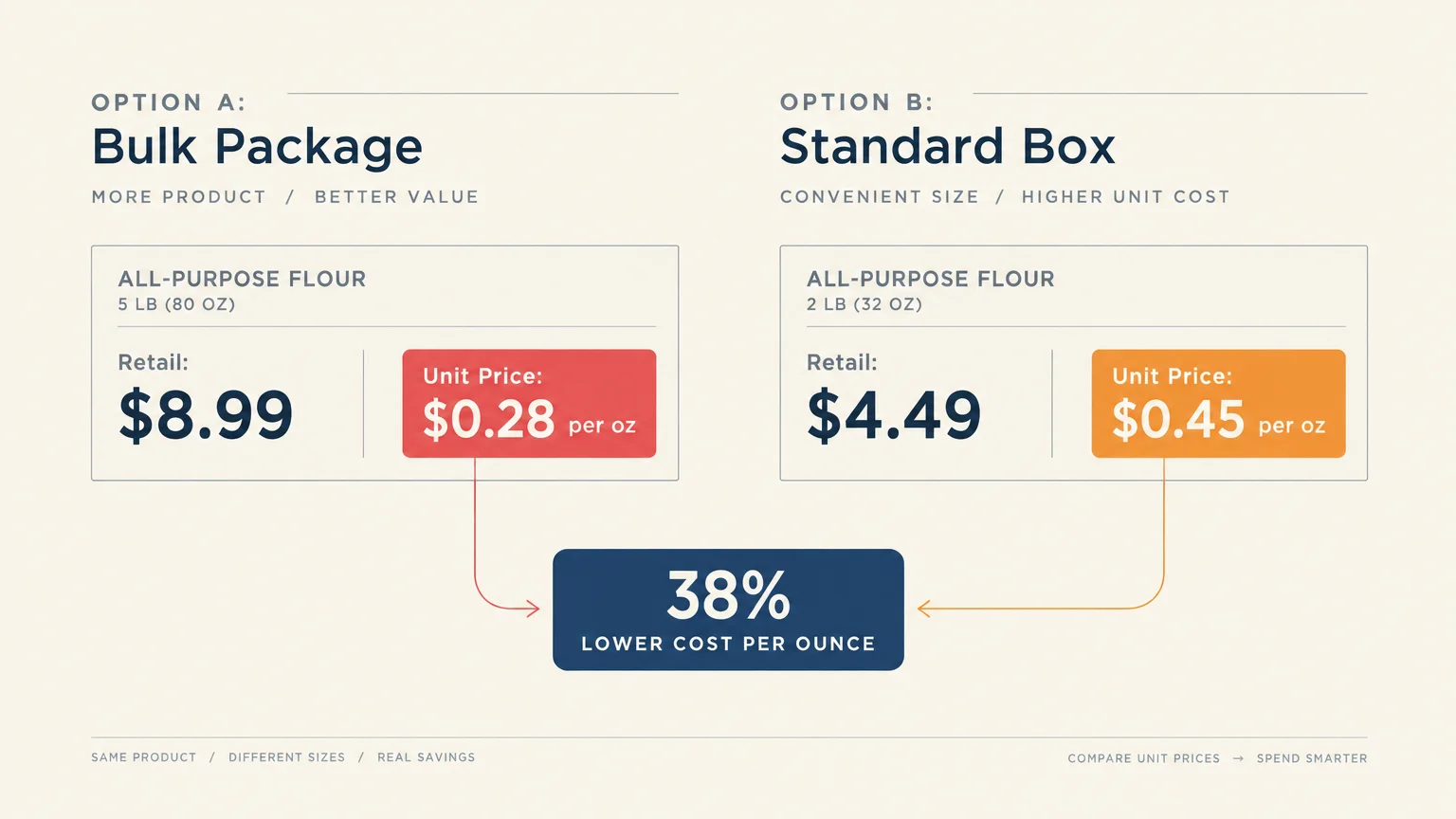
You must train your eyes to ignore the prominent retail price tag on the shelf. Instead, look at the tiny print in the corner displaying the price per ounce, pound, or quart.
Bulk packages do not always offer the best deal. Supermarkets sometimes price family-sized goods at higher unit rates because consumers blindly assume larger boxes are cheaper.
Comparing unit metrics exposes these subtle corporate traps in seconds. You will quickly see whether two smaller twelve-ounce containers actually cost less than one twenty-four-ounce tub.
Modern supermarkets print these measurements on every standard shelf label. Use your smartphone calculator whenever tags omit unit rates or present conflicting metrics across different brands.
Pay special attention to breakfast cereals, cooking oils, and laundry detergents. These staple categories suffer from frequent container resizing that conceals significant price surges.
Verifying unit rates takes only a few seconds per item. Over a typical shopping trip, this discipline prevents ten to twenty dollars in needless overspending.
This quick calculation remains your truest defense against slick marketing gimmicks. Never let packaging dimensions dictate what leaves your bank account.
Tip #4: Shop the Perimeter Clearance Bins at Dawn
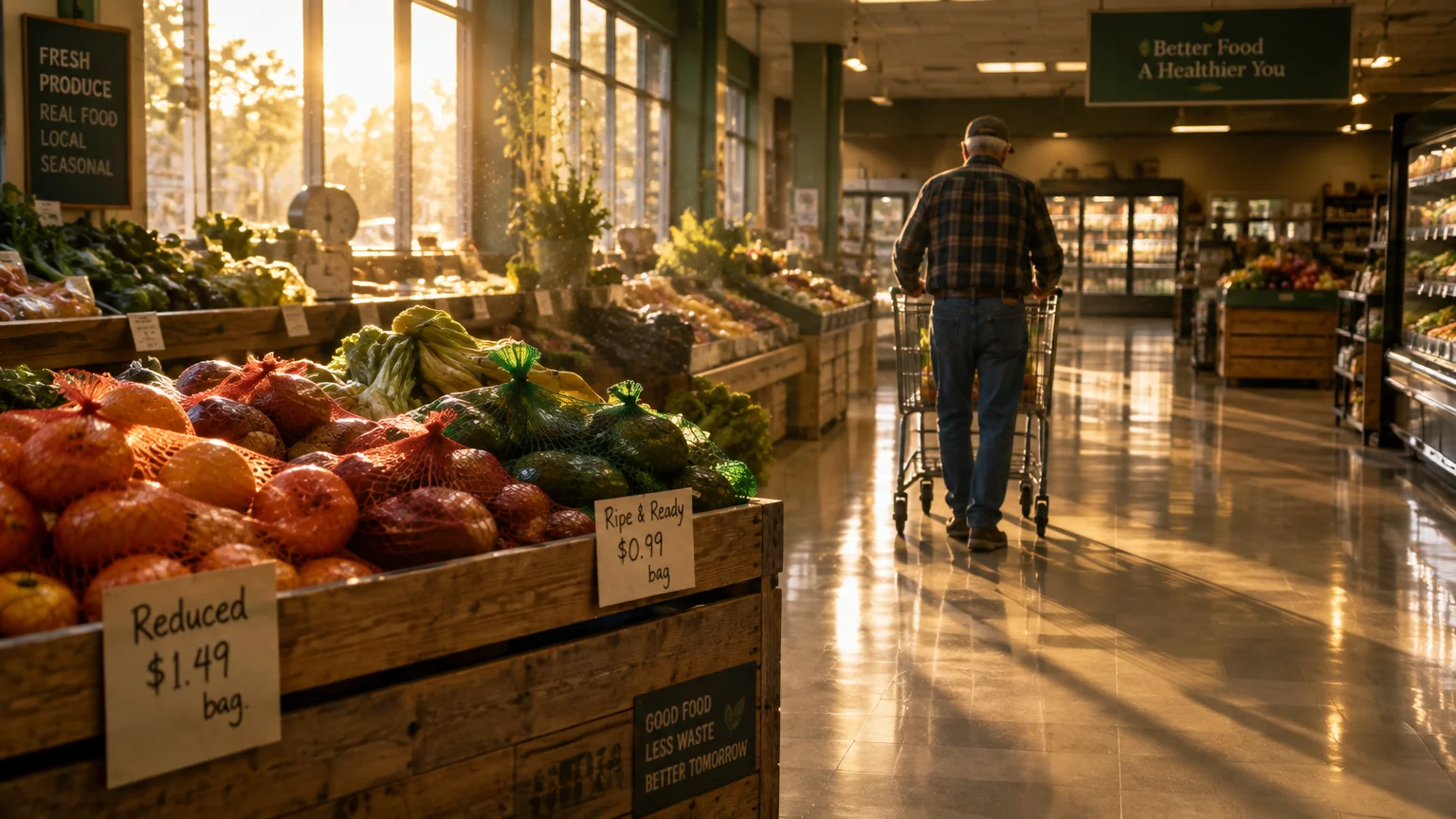
Most grocery stores tuck discount carts into quiet corners of their perimeter aisles. These rolling metal racks contain bakery overruns, slightly dented canned goods, and discontinued dry staples.
Artisanal sourdough, whole-wheat sandwich loaves, and dinner rolls frequently hit these carts at seventy percent off retail value. Store employees bag them simply because they passed yesterday’s baking window.
Day-old bread retains its taste and texture when toasted or frozen immediately upon arriving home. Slicing and freezing artisan loaves ensures fresh sandwich bread for pennies on the dollar.
Always inspect the packaging to confirm that seals remain airtight and clean. Minor surface dents on canned goods are harmless, but you must avoid cans with swollen lids or rusted seams.
Clearance racks frequently showcase discontinued organic spices, premium olive oils, and imported condiments. Grabbing these items provides culinary variety on a strict retiree food savings plan.
Grocery stores also place bagged ripe produce on clearance carts near the loading dock doors. Overripe bananas, slightly bruised apples, and peppers make ideal bases for baked goods and stews.
Make a habit of walking past these clearance locations first during your store visits. Building your weekly meals around what you find on clearance saves hundreds of dollars annually.
Supermarkets prefer liquidating this inventory at cost rather than absorbing disposal fees. Turn their operational surplus into your personal financial windfall every week.
Tip #5: Replace National Brands with Private Labels
Name-brand manufacturers spend billions of dollars annually on television ads, digital campaigns, and endcap displays. You pay for that lavish advertising budget every time you grab their branded boxes.
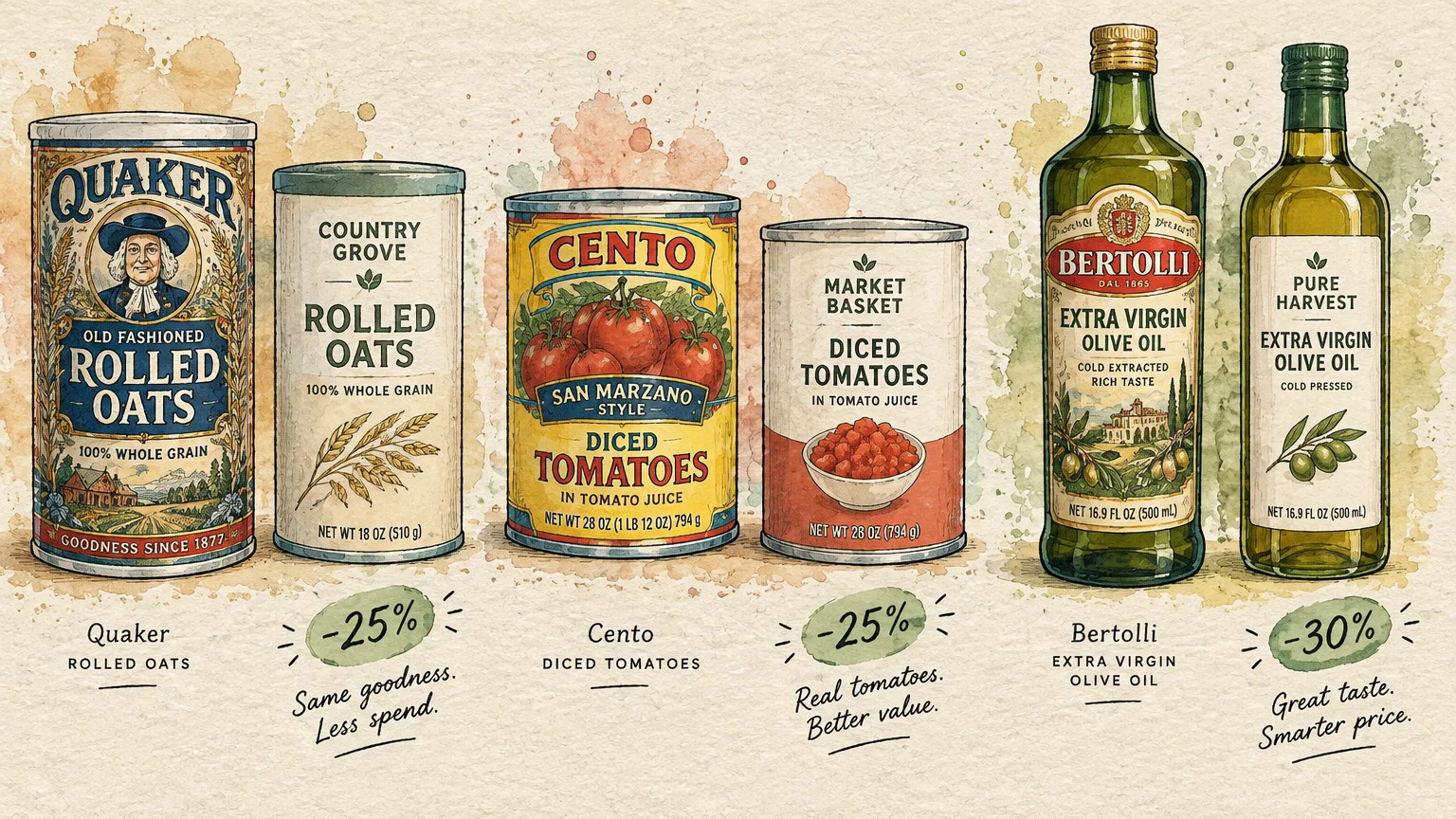
In many instances, the identical processing facility that packages premium national goods also packages the store brand. You receive identical ingredients and strict quality standards under a plainer label.
Shifting from name-brand staples to private labels automatically reduces your grocery bill by twenty to thirty percent. That holds true for oats, sugar, flour, canned tomatoes, and dairy products.
Blind taste tests consistently show that consumers cannot distinguish between store-brand butter, pasta, and beans versus their high-priced counterparts. The primary difference is the price tag.
Over-the-counter medications and basic health supplies offer even more extreme price differences. Generic pain relievers, allergy tablets, and antacids contain the exact chemical compounds as brand-name versions.
Many major supermarket chains now back their private-label lines with unconditional money-back guarantees. If a store brand fails to satisfy your expectations, customer service will refund your purchase completely.
That policy removes all financial risk from testing house brands across various categories. Swap one national brand for a store brand on every trip until your cart is fully optimized.
This simple adjustment represents one of the easiest grocery budget tips to implement today. The cumulative savings across twelve months will astonish you.
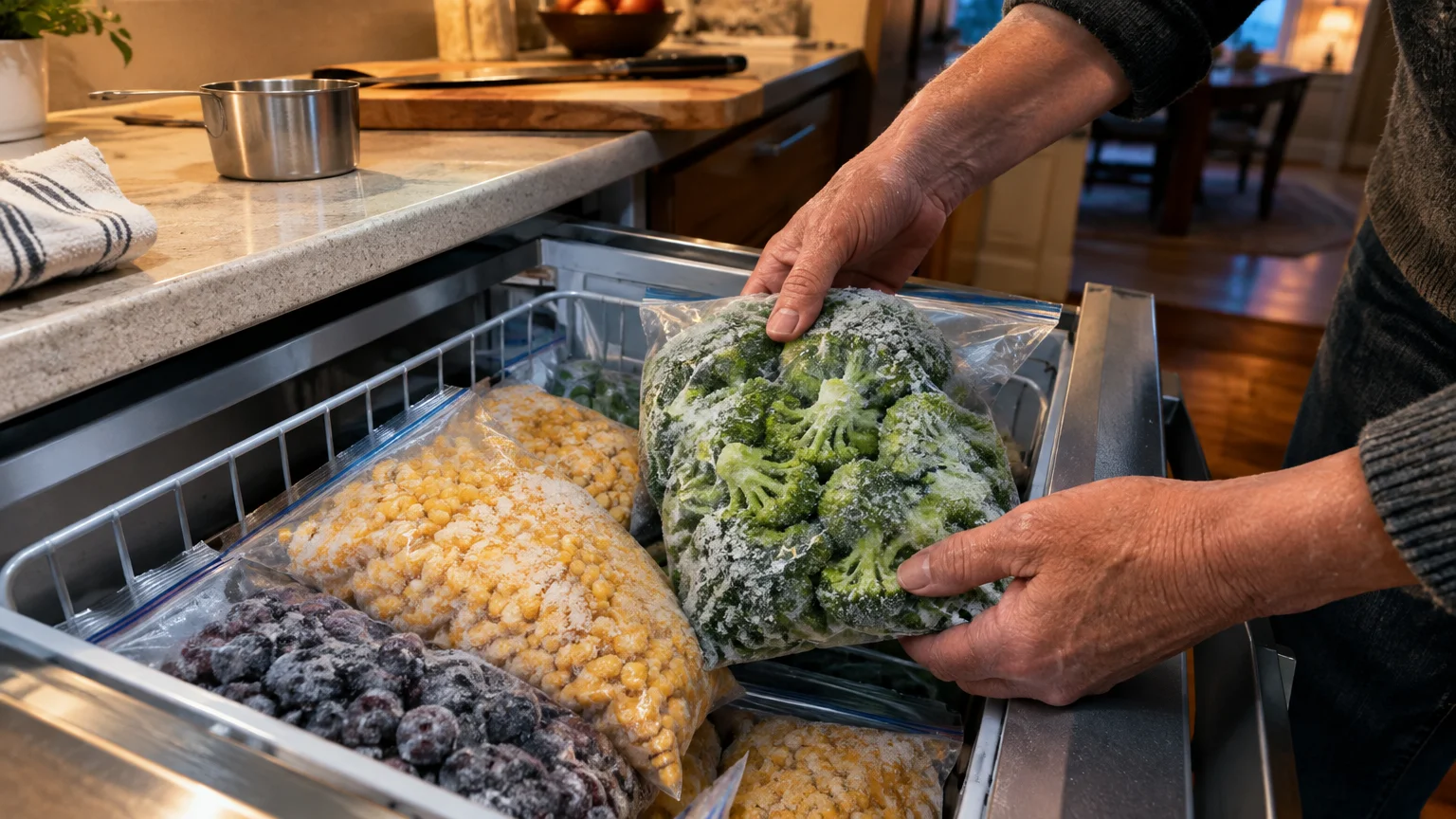
Tip #6: Buy Frozen Produce to Eliminate Spoilage
Fresh produce often turns into an expensive gamble for retired households with one or two people. Half-eaten bags of salad greens and soft cucumbers frequently rot inside refrigerator crisper drawers.
The average American household discards nearly thirty percent of the fresh food it purchases. Tossing spoiled berries and greens directly wastes your hard-earned retirement dollars.
Frozen vegetables and fruits solve this costly problem permanently. Packing plants flash-freeze produce within hours of harvest, locking in peak nutrient density and pristine flavor.
You can pour out the exact portion of frozen broccoli florets, peas, or berries you need for dinner. The remaining portion stays preserved inside your freezer without any quality loss.
Beyond lasting months, frozen produce almost always costs significantly less per pound than out-of-season fresh goods. You dodge expensive transport markups while enjoying consistent quality year-round.
Stock your freezer with versatile staples like chopped spinach, sweet corn, and mixed berries. Use frozen berries in breakfast oatmeal and toss frozen vegetables directly into hot casseroles and soups.
You will enjoy exceptional nutrition without rushing to consume perishables before they turn slimy. This shift alone can lower grocery bill retirees struggle with month after month.
Eradicating food waste delivers an immediate return on your investment. Zero waste in your kitchen translates to maximum money in your pocket.
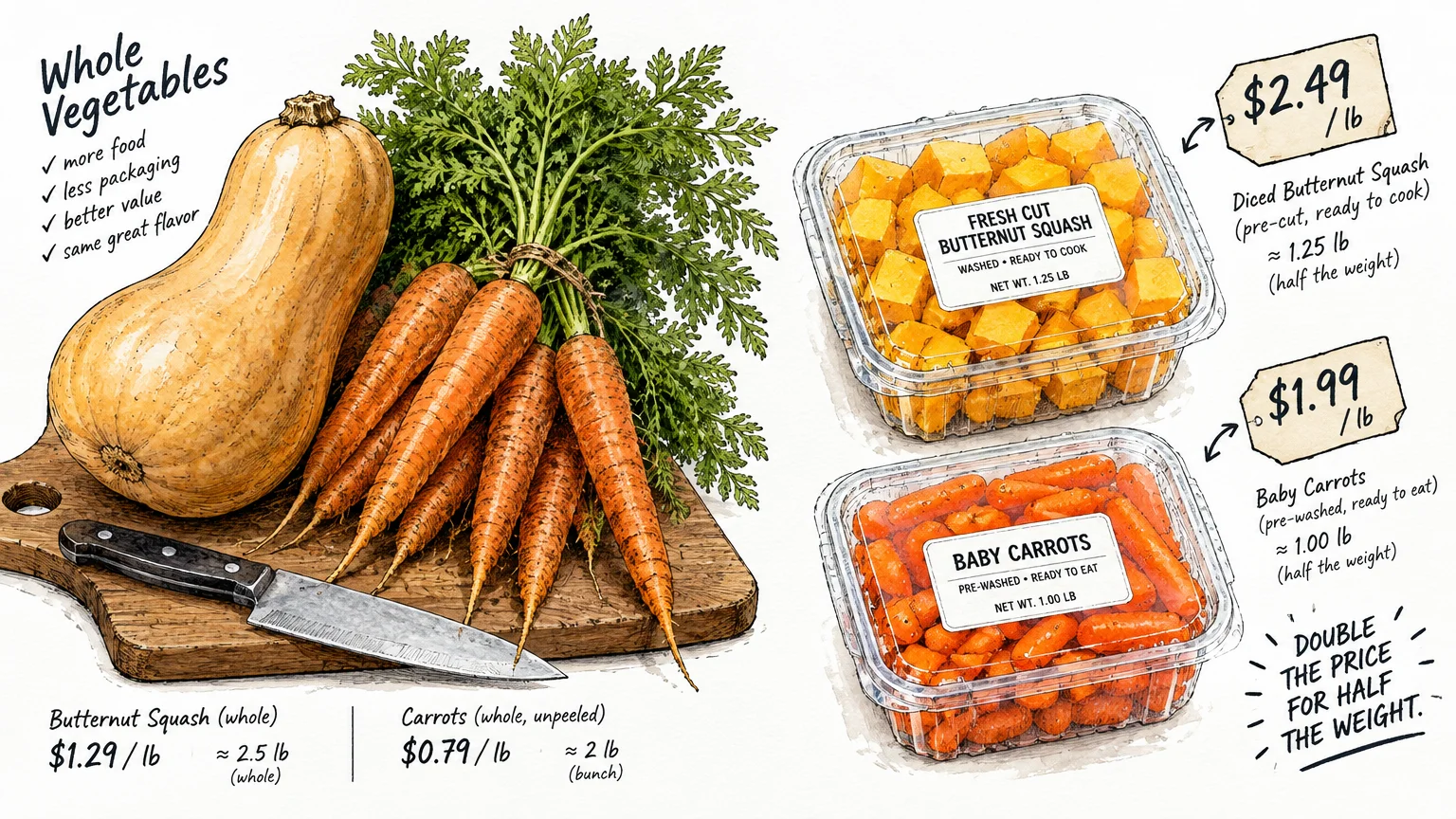
Tip #7: Avoid Pre-Cut and Single-Serving Convenience Items
Supermarkets charge an exorbitant labor premium for washing, peeling, slicing, and packaging fresh goods. Pre-cut melon bowls, sliced bell peppers, and shredded carrots carry price markups exceeding three hundred percent.
While convenience packaging saves five minutes of kitchen prep, it aggressively drains your bank account. As a retiree, you can trade ten minutes of knife work for significant grocery savings.
Whole carrots, solid heads of cabbage, and uncut melons stay fresh in your refrigerator far longer than chopped items. Slicing produce exposes plant cells to air, which accelerates spoilage and nutrient loss.
The exact same dynamic applies to grated cheese and portioned meat cuts. Buying blocks of cheddar and grating them at home saves money while avoiding industrial anti-caking additives.
Avoid individually boxed snack packs and flavored oatmeal envelopes. Purchase large canisters of rolled oats and flavor them yourself with cinnamon, honey, and fresh fruit at home.
Supermarket marketing executives know hurried consumers pay high premiums for convenience without noticing the markup. Bypassing these prepared goods protects your cash reserves from subtle corporate extraction.
Sharpen your kitchen knives and spend a few relaxing minutes preparing whole foods. That small physical investment pays substantial dividends on every single receipt.
Reclaiming your prep time is one of the most empowering ways to save on groceries without coupons. Your food will taste fresher, and your budget will thrive.
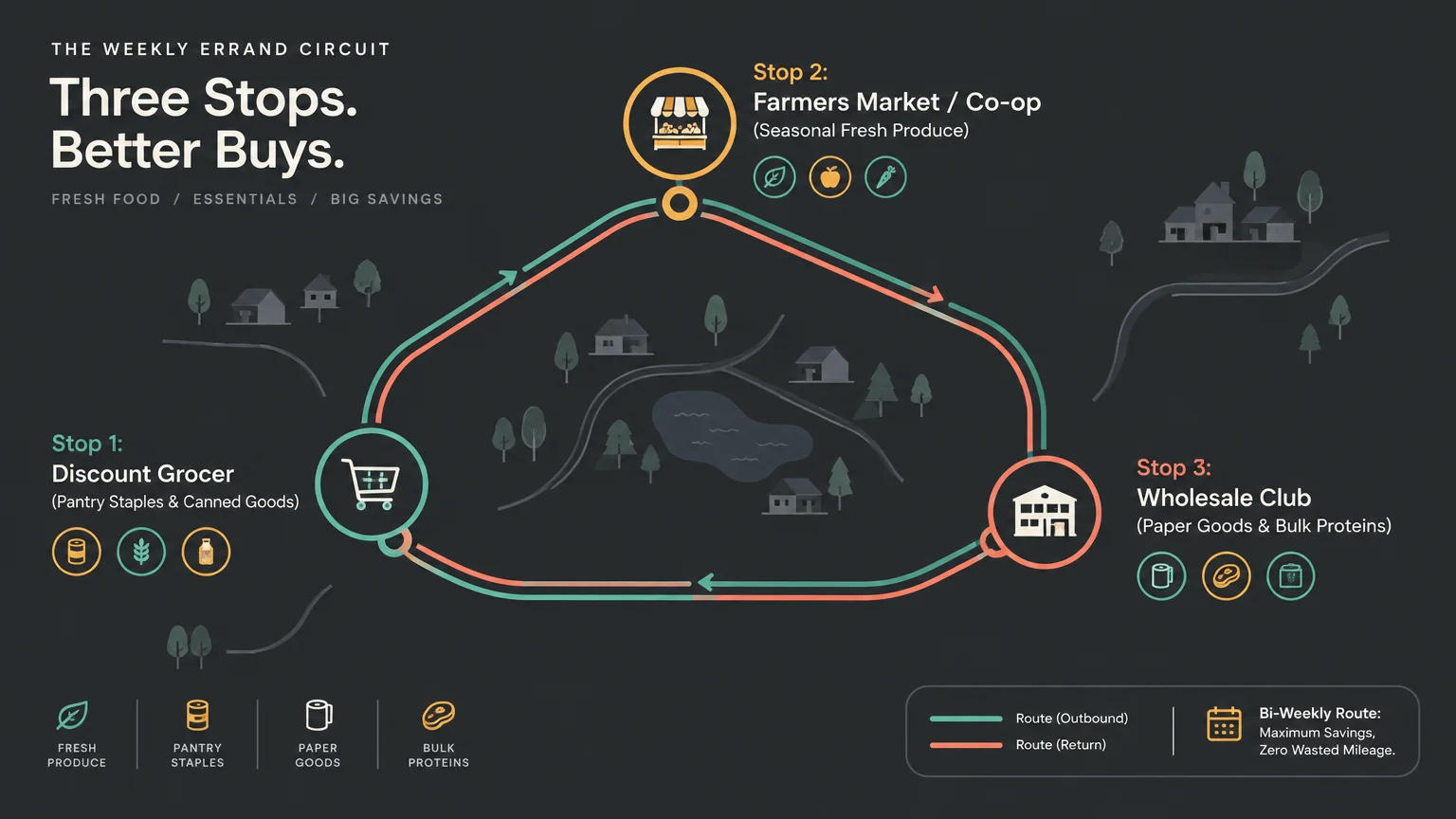
Tip #8: Optimize Multi-Store Shopping Routes
No single supermarket chain offers the lowest price on every single grocery item. Discount grocers like Aldi excel at dry staples, while regional ethnic markets sell extraordinarily cheap produce.
Conventional grocers, meanwhile, run deep loss-leader discounts on specific meats to attract foot traffic. Savvy shoppers divide their monthly list across two or three complementary stores to maximize savings.
Retirees possess the schedule flexibility to visit these stores during quiet weekday mornings. You can coordinate your shopping trips along regular driving paths to avoid burning unnecessary fuel.
Visiting an Asian, Mediterranean, or Hispanic market can cut your produce and spice expenses in half. These specialty markets operate on lower margins and source directly from regional agricultural hubs.
Pick up rice, dry beans, fresh herbs, and leafy greens from local international grocers. Then visit discount retailers to secure olive oil, canned tomatoes, and dairy products.
Use traditional supermarkets exclusively to cherry-pick advertised front-page meat specials. Once you pick up those steep loss-leader bargains, head straight for the checkout without wandering inner aisles.
Planning your route this way requires only thirty minutes of preparation each week. This structured routine breaks the monopolistic hold that major grocery chains attempt to maintain over your budget.
Combining these focused stops generates compound savings that dwarf any paper coupon. You will command your spending like a seasoned retail strategist.

The Bottom Line: What This Means for Your Wallet
Relentless food inflation creates genuine financial pressure for seniors living on fixed incomes. However, shrinking your grocery spending does not require settling for poor nutrition or clipping coupons for hours.
By leveraging unit pricing, embracing private labels, and eliminating produce waste, you take command of your grocery spending. These tactical adjustments deliver immediate cash relief at the register.
A household implementing these eight habits can effortlessly reclaim two hundred dollars or more each month. That puts over two thousand dollars back into your bank account every year.
You can redirect those freed-up funds toward prescription medications, rising utility bills, or family travel. Financial peace of mind in retirement comes from managing daily cash outflows with precision and confidence.
Put these eight practical techniques into action on your next visit to the market. You will witness immediate, undeniable results the moment the cashier hands you your receipt.
Frequently Asked Questions
Are store-brand groceries really as safe and nutritious as name brands?
Yes, store brands must comply with the identical federal safety, sanitation, and labeling regulations enforced by government regulators. Major food companies frequently pack both versions in the exact same facility.
You get equivalent nutrition and flavor without paying for lavish corporate marketing campaigns.
How can I find out the exact markdown times for my local grocery store?
Speak directly with the department managers in the meat, seafood, and bakery sections during a slow morning shift. Most employees will gladly tell you which mornings they apply clearance tags.
Visiting mid-week mornings between eight and ten o’clock generally yields the finest selection of marked-down meats.
Does driving to multiple grocery stores waste more money on gas than it saves?
Multi-store shopping only wastes money if you make dedicated long-distance trips for minor items. You should group stores that sit along your regular driving routes during routine weekly errands.
Splitting purchases between a discount store and a conventional supermarket routinely saves thirty to fifty dollars per trip. That easily eclipses the few cents of fuel required.
Is frozen produce truly as healthy as fresh produce?
Frozen produce is frequently more nutritious than fresh grocery produce that spent weeks traveling across continents. Packing facilities flash-freeze vegetables right after harvest, which seals in vital vitamins and minerals.
Frozen vegetables also prevent spoilage, ensuring that every dollar you spend actually ends up on your dinner plate.
For consumer protection information, visit the Federal Trade Commission (FTC) and the Consumer Financial Protection Bureau (CFPB). For product safety and reviews, consult Consumer Reports.
Disclaimer: This article is for informational purposes only and does not constitute financial advice. The content reflects the author’s opinion and research at the time of writing. Always do your own research before making financial decisions.









Leave a Reply