
Slashing your grocery bill on a fixed retirement income requires choosing the right shopping strategy. While wholesale giants promise deep bulk discounts, standard supermarkets offer unmatched flexibility for smaller households.
The financial math changes dramatically once your household size shrinks. Fixed membership dues, rapid food spoilage, and oversized packaging can quickly wipe out your anticipated savings.
This comprehensive guide compares warehouse clubs against traditional grocery stores to reveal where your dollars stretch furthest. Learn how to maximize your retirement food budget without sacrificing quality.
Tip #1: Weigh Annual Membership Fees Against Fixed Senior Budgets
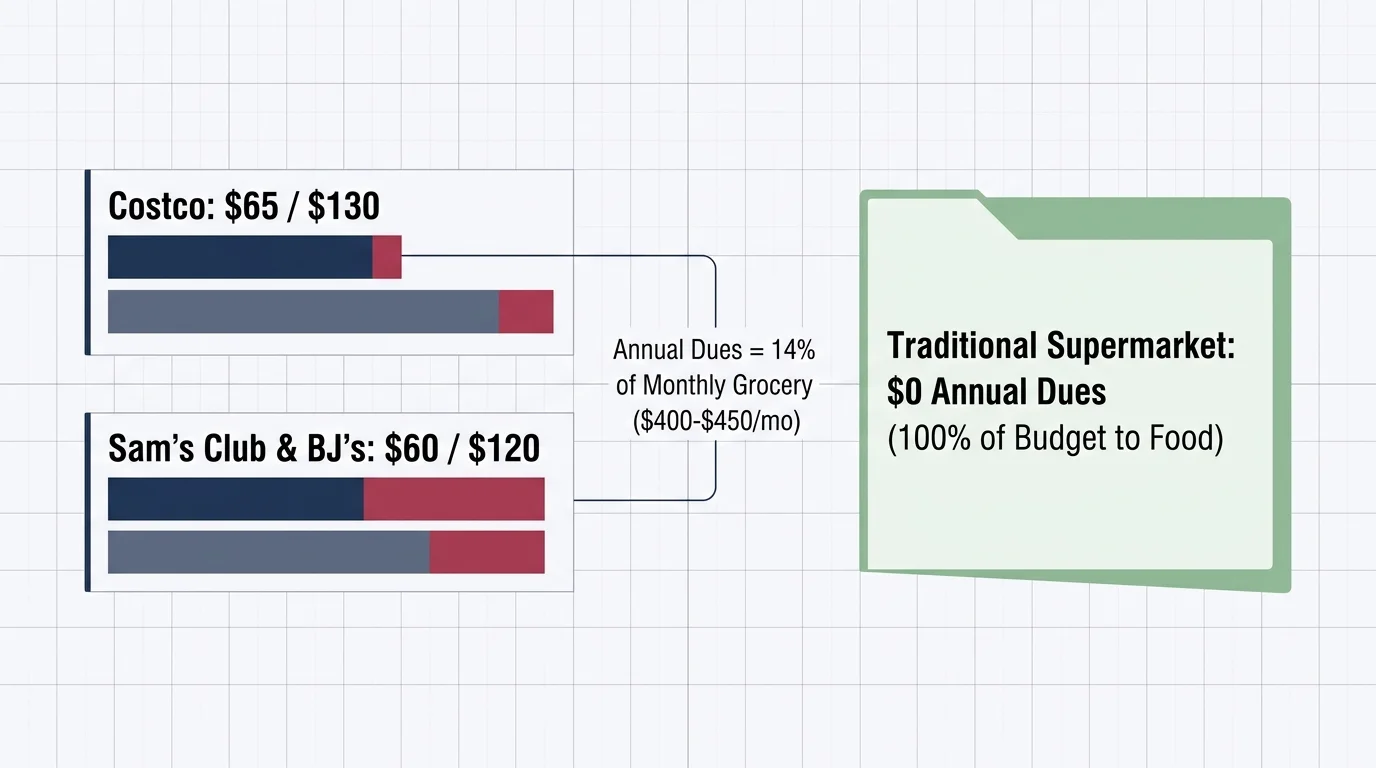
Warehouse clubs require an upfront financial commitment before you purchase a single item. That annual entry fee immediately places your grocery budget in a financial deficit.
A standard Costco Gold Star membership costs $65 per year, while the Executive tier runs $130 annually. Both tiers increased in price on September 1, 2024.
Sam’s Club charges $60 annually for standard Club access and $120 for Plus status. BJ’s Wholesale Club matches these rates at $60 and $120 per year.
None of these major warehouse clubs offer senior discounts on annual membership dues. You pay full price regardless of your retirement status or age.
According to the Bureau of Labor Statistics Consumer Expenditure Survey, adults aged 65 and older spend roughly $4,800 to $5,400 annually on food at home. That translates to approximately $400 to $450 every month.
Paying a $65 annual membership represents more than 14 percent of an entire monthly food budget for a solo retiree. You must generate substantial volume to recoup that initial expense.
Traditional grocery stores charge zero entrance fees. Every single dollar you allocate at a supermarket goes directly toward consumable goods.
If your annual grocery spending sits on the lower end of the national average, membership fees create an unnecessary financial hurdle. Traditional supermarkets eliminate that overhead entirely.
Tip #2: Calculate the Real Cost of Perishable Food Waste
Bulk packaging represents the core business model of wholesale clubs. Buying in massive quantities yields genuine per-unit discounts, but it introduces substantial spoilage risk.
Wholesale clubs typically provide 20% to 30% per-unit savings on fresh groceries. However, those savings disappear the moment you discard spoiled food.
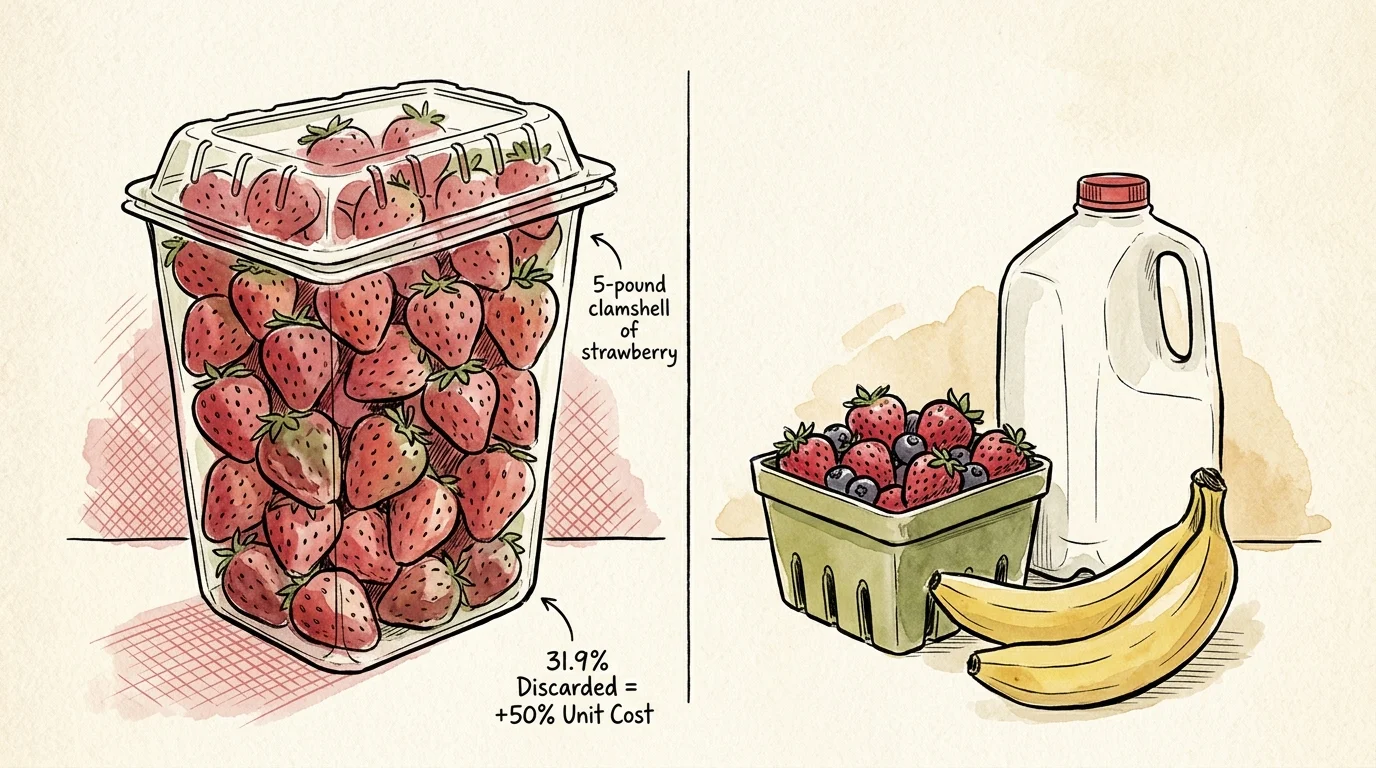
The USDA Economic Research Service estimates that 30% to 40% of the entire American food supply goes to waste. The average household discards roughly 31.9% of acquired food.
When you buy a five-pound container of strawberries or a twin-pack of bread, the ticking clock works against a one- or two-person household. Uneaten food in the trash is money lost.
If you discard one-third of a bulk perishable purchase, your effective unit price increases by nearly 50 percent. That waste instantly cancels out any warehouse club savings.
Traditional supermarkets allow you to purchase exact portions. You can buy two bananas, a single chicken breast, or a half-gallon of milk without penalty.
This precision purchasing prevents unnecessary household waste. For smaller retiree households, portion control at standard supermarkets often outperforms wholesale volume discounts.
Carefully assess your weekly consumption speed before buying fresh goods in bulk. Stick to smaller supermarket portions whenever perishables are involved.

Tip #3: Exploit Pharmacy and Optical Access Without Paying Membership Dues
Healthcare expenses consume a major portion of retiree budgets. Savvy shoppers use a little-known regulatory loophole to lower these critical costs.
Federal and state pharmacy board regulations mandate that warehouse club pharmacies must serve the general public. Non-members can legally fill prescriptions at Costco and Sam’s Club.
You simply tell the door attendant that you are visiting the pharmacy. You do not need an active club card to enter or purchase medications.
Warehouse club pharmacy cash prices on generic medications frequently beat traditional retail pharmacy rates. You pocket these prescription savings without paying an annual membership fee.
Costco does offer a proprietary discount program called the Costco Member Prescription Program. However, that specific program requires an active paid membership to secure deeper generic discounts.
Optical departments also provide exceptional value for budget-conscious seniors. Independent optometrists located inside warehouse clubs generally offer low-cost eye examinations to non-members as well.
Purchasing prescription eyeglasses or contact lenses typically requires an active membership card. Even so, the savings on frames often cover the membership cost in a single visit.
Using wholesale pharmacy access without a membership delivers maximum financial efficiency. It represents one of the best ways to save on groceries and healthcare overhead simultaneously.

Tip #4: Stack Weekly Supermarket Loss Leaders and Senior Discount Days
Traditional grocery stores rely on promotional cycles that warehouse clubs never utilize. Learning to navigate these cycles gives retirees a substantial pricing advantage.
Supermarkets run weekly promotional flyers featuring steep discounts known as loss leaders. Grocers price these staple goods below cost to attract shoppers into the store.
You can cherry-pick deeply discounted meat, dairy, and seasonal produce from two nearby supermarkets. This strategy yields lower prices than warehouse clubs on specific items.
Many regional grocery chains also provide dedicated senior discount days. Retailers like Fred Meyer, Fry’s, and Harris Teeter offer 5% to 10% off for shoppers aged 55, 60, or 65 and older.
Warehouse clubs never match these recurring senior discount days. They maintain uniform pricing across all customer demographics every day of the week.
Traditional supermarkets also accept manufacturer coupons alongside store digital promotions. You can combine digital store coupons with weekly circular sales to drive prices down further.
Costco and Sam’s Club do not accept manufacturer coupons under any circumstances. BJ’s Wholesale Club is the only major warehouse club that permits manufacturer coupon stacking.
When you stack senior discounts with digital coupons and weekly loss leaders, supermarkets consistently beat wholesale club prices. That makes grocery shopping for retirees significantly cheaper.

Tip #5: Target Non-Perishable Household Staples for Bulk Buying Savings
While fresh food carries high spoilage risks, non-perishable goods tell a completely different financial story. This category represents where warehouse clubs deliver genuine value.
Paper products, laundry detergents, trash bags, and cleaning supplies do not spoil on the shelf. You can store these items indefinitely without risking your investment.
Warehouse clubs offer 25% to 35% lower per-unit costs on paper towels and bath tissue compared to retail grocers. Buying these goods twice a year produces guaranteed savings.
Pantry staples like olive oil, canned tuna, rice, and spices also deliver substantial bulk buying savings. A massive container of spices at a club often costs less than a tiny supermarket jar.
Retirees must consider available storage space before pursuing this bulk approach. Downsizing into a smaller home, condo, or apartment can make large boxes difficult to store.
If you possess adequate closet or pantry space, purchasing household essentials in bulk makes financial sense. The unit price advantages remain unmatched by standard supermarkets.
Limit your wholesale club cart strictly to items you know will not expire. This disciplined approach protects your capital while capturing wholesale pricing.
Track your usage rates so you never overbuy supplies you already have in storage. Maintaining a basic pantry inventory prevents duplicate spending.

Tip #6: Compare Private-Label Store Brands Across Both Channels
Private-label products have transformed the retail grocery industry over the past decade. Brand-name loyalty is no longer necessary to secure high quality.
Costco’s Kirkland Signature and Sam’s Club’s Member’s Mark brands enjoy exceptional reputations. Many of these products are manufactured by leading national brands under proprietary contract.
Purchasing warehouse private labels saves you roughly 20% to 30% compared to national brand equivalents. The quality routinely meets or exceeds premium consumer standards.
Traditional supermarkets have upgraded their private labels to compete directly with wholesale clubs. Brands like Kroger, Signature SELECT, and Great Value provide excellent quality at modest price points.
Supermarket store brands provide a critical advantage for retirees: manageable package sizing. You get store-brand pricing without committing to five pounds of product.
During supermarket weekly sales, store-brand items frequently match or beat the per-unit price of warehouse club goods. You secure budget pricing without tying up cash in bulk inventory.
Evaluating Kirkland Signature versus supermarket house brands requires checking unit price tags. Supermarket shelf tags display price per ounce, making direct comparisons effortless.
Test store brands across both retail channels to find products that suit your taste. Embracing house brands remains one of the simplest methods to lower grocery costs permanently.

Tip #7: Factor in Fuel Rewards and Strategic Payment Methods
The total value of a grocery provider extends beyond the items placed in your shopping cart. Transportation savings play a significant role in your overall household budget.
Warehouse clubs operate private fuel stations that sell gasoline significantly below local market averages. Members typically save 15 to 30 cents per gallon compared to surrounding retail stations.
If you drive frequently during retirement, fuel savings alone can offset your annual membership fee. Filling a twelve-gallon tank weekly at a 25-cent discount saves over $150 per year.
Traditional supermarket chains counter this perk with aggressive fuel loyalty programs. Retailers allow you to earn fuel points on everyday grocery and pharmacy purchases.
Accumulating supermarket fuel points during promotional point multiplier events can save you anywhere from 20 cents to a full dollar per gallon. These points provide flexible local fill-ups.
Payment strategies also alter the financial calculation. Co-branded warehouse credit cards offer generous cash-back rates on gas and club purchases.
Supermarkets accept standard credit cards that offer up to 6% cash back on grocery store spending. Most warehouse clubs restrict card types; Costco accepts only Visa cards.
Calculate your annual driving mileage before deciding which fuel program benefits you most. Aligning your grocery trips with fuel refills generates compounded monthly savings.

Tip #8: Split Bulk Club Purchases to Maximize Per-Unit Value
Retirees living in one- or two-person households do not need to abandon warehouse shopping entirely. A collaborative approach unlocks bulk savings without the threat of food waste.
Partnering with a nearby neighbor, friend, or adult child allows you to split large bulk packages. You divide multi-packs of meats, paper products, and produce immediately after checkout.
Splitting items cuts the upfront cost in half while delivering true wholesale per-unit pricing. Both parties secure bulk savings while buying reasonable quantities.
Most warehouse club memberships include two household access cards at no additional charge. You can share your secondary card with a partner or family member residing at your address.
Investing in a basic vacuum sealer transforms how you handle wholesale perishable items. You can portion bulk meat packages into single-meal servings and freeze them for months.
Dividing bulk purchases eliminates the risk of pantry clutter and refrigerator spoilage. It bridges the gap between wholesale unit pricing and the realities of a smaller household.
Establish a regular shopping routine with your buying partner to coordinate weekly needs. This teamwork maximizes your purchasing power without expanding your living space.
Sharing bulk purchases turns the Costco vs grocery store debate in your favor. You capture the benefits of both shopping formats simultaneously.
The Bottom Line: What This Means for Your Wallet
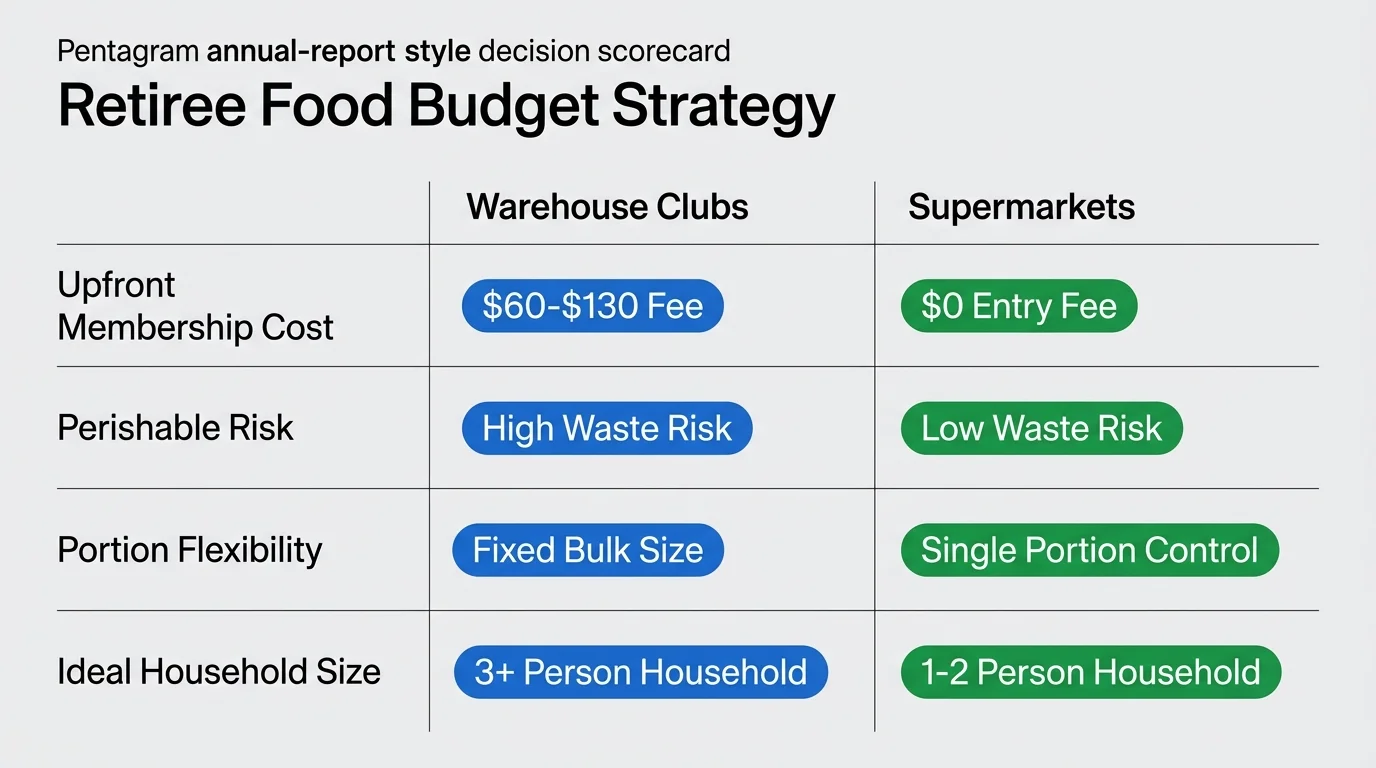
Neither warehouse clubs nor traditional supermarkets hold an absolute monopoly on savings for retirees. The true winner depends on your household size, storage space, and shopping habits.
Wholesale clubs dominate on shelf-stable consumables, fuel prices, and select optical or pharmacy purchases. However, mandatory membership fees and bulk perishable waste often hurt smaller senior households.
Traditional supermarkets excel for retirees who shop weekly, cook smaller meals, and leverage senior discount days. Supermarket loss leaders and coupon stacking routinely outperform wholesale rates on fresh perishables.
The smartest financial strategy for retirees is a calculated hybrid approach. Rely on local supermarkets for weekly perishables, senior discounts, and targeted promotional deals.
Reserve warehouse clubs for non-perishable goods, gas fill-ups, and shared bulk purchases. This balanced approach protects your fixed income and keeps your grocery bills low.
Review your annual grocery spending receipts to ensure your shopping habits align with your bottom line. Making data-driven shopping decisions ensures lasting financial peace throughout retirement.
For consumer protection information, visit the Federal Trade Commission (FTC) and the Consumer Financial Protection Bureau (CFPB). For product safety and reviews, consult Consumer Reports.
Frequently Asked Questions
Can non-members shop at Costco or Sam’s Club legally?
Non-members cannot buy general merchandise on club floors without a valid membership card. However, federal and state regulations grant non-members legal access to warehouse club pharmacies.
In certain states, non-members can also legally purchase prescription medications, alcohol, and optical exams without paying annual dues. Check your local state regulations to confirm specific access rules.
Which store format offers better savings on organic produce for retirees?
Warehouse clubs generally offer lower per-pound prices on organic produce compared to standard grocers. However, the massive portion sizes often lead to spoilage before single retirees can finish them.
Traditional grocery stores allow you to buy smaller organic quantities to prevent costly food waste. Supermarket sales on organic produce frequently provide a safer financial option for solo seniors.
Is an Executive or Plus membership worth the upgrade for a retiree?
Costco Executive ($130) and Sam’s Club Plus ($120) memberships offer a 2% annual cash-back reward on qualified purchases. To break even on the upgrade cost alone, you must spend substantial sums annually.
At Costco, you must spend at least $3,250 annually on eligible goods to earn back the $65 upgrade cost. Retirees with modest grocery budgets rarely spend enough to justify upgraded tiers.
How do return policies compare between warehouse clubs and grocery stores?
Warehouse clubs offer some of the most generous return policies in the retail industry. Costco and Sam’s Club accept returns on almost any item at any time if you are unsatisfied.
Traditional grocery stores maintain much stricter return windows, often requiring original receipts within 14 to 30 days. Warehouse clubs provide superior consumer protection on high-ticket durable items.
Disclaimer: This article is for informational purposes only and does not constitute financial advice. The content reflects the author’s opinion and research at the time of writing.
Always do your own research before making financial decisions.