
Every year, medical providers misbill Medicare beneficiaries out of billions of dollars, leaving unsuspecting patients to pay for administrative blunders. The federal government reported a 6.55% improper payment rate for Original Medicare in Fiscal Year 2025 alone, translating to a staggering $28.83 billion in misallocated health funds.
Most of these financial leaks stem not from criminal cartels, but from everyday clerical slip-ups, misapplied billing codes, and aggressive provider practices. If you fail to inspect your healthcare statements, you are likely handing over your hard-earned savings to resolve mistakes you never caused.
Learning to audit your medical claims will protect your wallet and ensure you only pay what you legitimately owe.
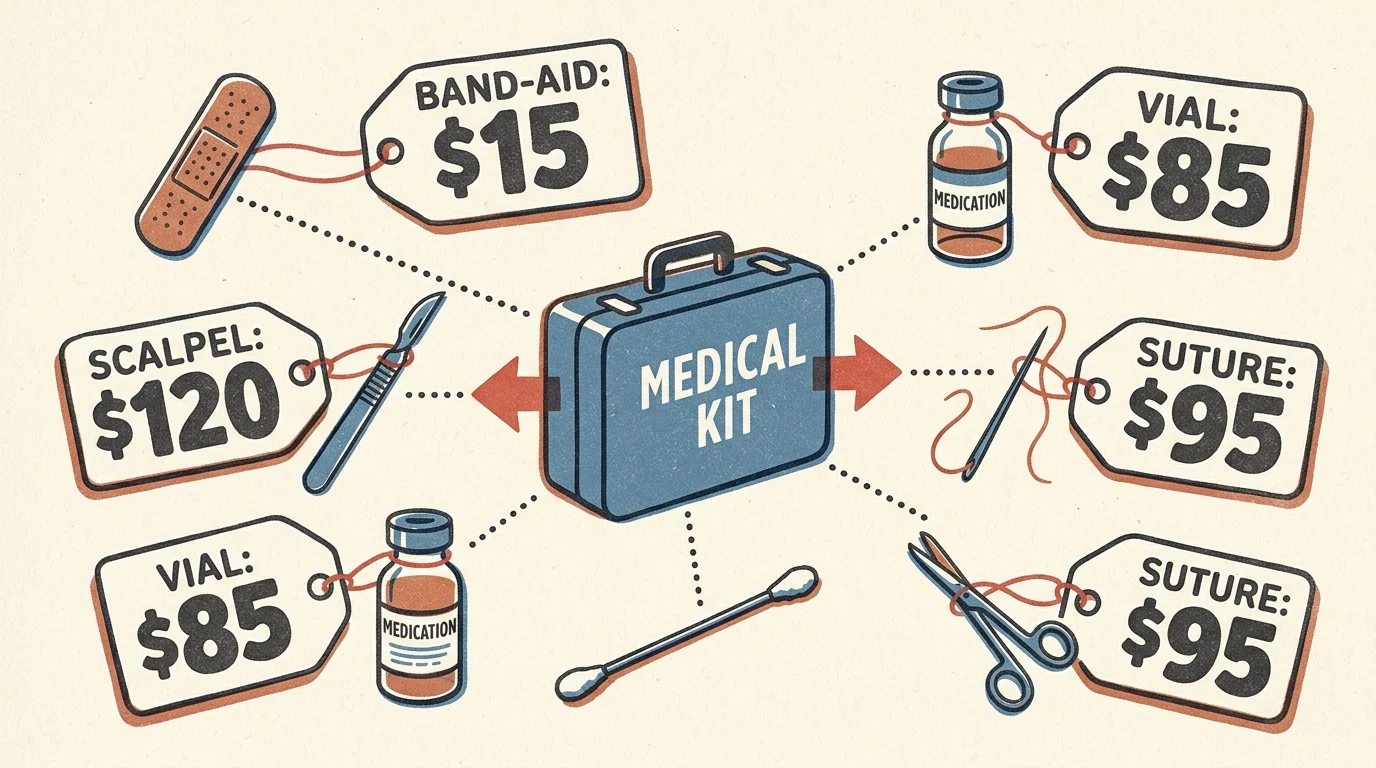
Tip #1: Unbundling Billed Services and Fragmented Coding
Unbundling occurs when a healthcare provider takes a comprehensive medical procedure—one that Medicare rules dictate must be billed under a single umbrella code—and breaks it into several separate billing charges.
Medical coders refer to this practice as fragmented billing, and while it sometimes happens due to simple data entry confusion, it often serves as a subtle tactic to boost clinic revenue.
When providers bill these component parts individually, the total cost billed to Medicare and passed onto your copayment responsibility rises significantly compared to the single bundled rate.
Consider a routine outpatient surgical procedure. Under standard billing protocols, the master Current Procedural Terminology (CPT) code covers the pre-operative preparation, the primary surgical intervention, routine local anesthesia, and basic post-operative wound closure.
When a billing department unbundles that service, they submit discrete codes for each individual step. Suddenly, your statement lists separate lines for skin preparation, individual suture lines, and routine recovery monitoring.
You end up facing multiple inflated deductibles or coinsurance charges for services that should have been fully covered under the primary procedure package.
Another frequent location for unbundling lies inside routine laboratory testing. If your doctor orders a comprehensive metabolic panel, the lab must bill that panel under a unified code.
Fragmented billing occurs when the facility bills for ten individual blood chemistry tests rather than the combined panel code.
According to findings from the Centers for Medicare & Medicaid Services (CMS), documentation and coding errors like unbundling form a massive portion of improper payments tracked across the healthcare system each fiscal year.
Spotting a medicare billing error of this type requires a bit of detective work. Start by requesting a fully itemized hospital bill directly from your provider’s billing department, which lists every individual CPT or Healthcare Common Procedure Coding System (HCPCS) code.
Compare this itemized document against your quarterly Medicare Summary Notice (MSN) or your Medicare Advantage Explanation of Benefits (EOB). Look for multiple codes submitted for the exact same date of service by the same medical group.
You can search free online CPT code lookup tools provided by consumer advocacy groups to see if those listed sub-codes belong to a single bundled procedure.
If you discover fragmented codes, call the billing department immediately and demand a coding review before paying a single dime out of pocket.

Tip #2: Upcoding to Higher-Level Treatment Tiers
Upcoding happens when a hospital, clinic, or physician’s office bills Medicare for a higher, more expensive level of service than the care you actually received. In the medical billing world, treatment intensity and clinical complexity are categorized into specific evaluation tiers.
When a provider artificially inflates your chart level—classifying a routine 15-minute consultation as an intensive 45-minute complex medical decision-making session—they trigger higher reimbursement payouts from Medicare and leave you holding the bag for higher coinsurance obligations.
This issue is especially prevalent in facility care settings. In Fiscal Year 2025, CMS reported that Skilled Nursing Facilities (SNFs) had an improper payment rate of 11.8%, accounting for approximately $4.3 billion in improper payments.
A primary driver of these misallocated funds was the overbilling of therapy hours or administrative care tiers that were not supported by the patient’s actual medical records.
Patients residing in these facilities often find themselves billed for ultra-high intensity physical therapy or specialized nursing protocols that were never actually delivered at the bedside.
Outpatient physician visits suffer from upcoding just as frequently through Evaluation and Management (E/M) code manipulation. E/M codes range from Level 1 (minor, quick consultations) to Level 5 (highly complex, high-severity patient encounters).
If you visit your doctor for a simple prescription refill and a standard blood pressure check—a visit that typically qualifies as a Level 2 or Level 3 E/M service—but your bill shows a Level 5 code, you have been subjected to upcoding.
The physician’s office collects a substantially higher fee, while your required 20% Original Medicare copayment leaps proportionately.
Protecting yourself against upcoding requires consistent record-keeping during every medical encounter. Keep a small healthcare logbook where you write down the date of your visit, the exact time the physician entered and left the room, and the specific topics or treatments discussed.
When your Medicare Summary Notice arrives every three months, verify that the description of the service matches the actual duration and complexity of your appointment.
If you see charges for intensive care management or extended consultations that never occurred, contact your provider’s billing compliance officer and request an audit of the physician’s clinical progress notes.
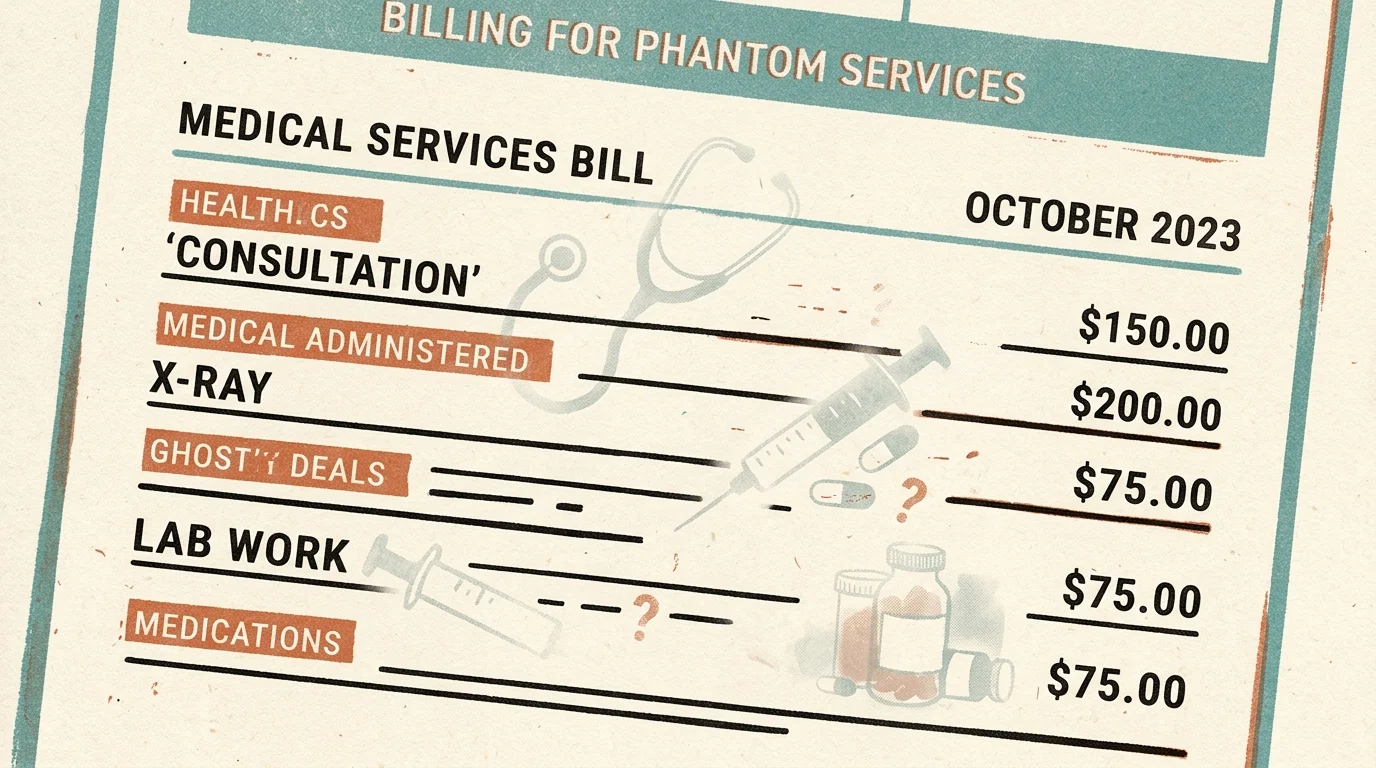
Tip #3: Billing for Phantom Services and Non-Existent Supplies
Few billing issues are as glaring—or as costly—as paying for medical care, diagnostic tests, or medical equipment that you never received.
Phantom billing occurs when medical claims enter the Medicare system for treatments that were cancelled, forgotten, or simply invented out of thin air.
While deliberate fraud causes a portion of these ghost charges, a vast number of phantom bills stem from automated electronic health record (EHR) systems that trigger automatic billing charges the moment an order is entered into a computer, regardless of whether the actual care was administered.
Durable Medical Equipment, Prosthetics, Orthotics, and Supplies (DMEPOS) represents one of the single highest-risk categories for phantom billing mistakes in the entire Medicare framework. For Fiscal Year 2025, CMS reported a staggering 24.1% improper payment rate across all DMEPOS claims.
Even more shocking, specific categories like urological supplies registered an improper payment rate of 74.1%, totaling $885.8 million in improperly billed funds.
Beneficiaries frequently discover charges on their statements for specialized catheters, knee braces, diabetic testing kits, or oxygen supplies that were never ordered, never delivered, or long ago cancelled.
Phantom billing also shows up routinely on hospital discharge statements.
If an attending physician orders a daily chest X-ray or a specialized blood panel, but a nurse cancels the order because your condition improves, the facility’s billing software might still automatically bill Medicare for those cancelled tests.
Similarly, if you are scheduled for physical therapy sessions while recovering from surgery but miss several sessions due to fatigue, those unattended appointments often end up on your final claim statement anyway.
To catch phantom billing, deploy disciplined medicare bill review tips every time you receive healthcare services. Never assume that a bill is accurate just because it came from a reputable hospital system.
Demand an itemized statement for every inpatient stay or outpatient procedure, and cross-reference every listed item line-by-line against your personal calendar and physical receipts. If your statement reflects medical supplies, orthotics, or diagnostic scans that you never touched, highlight those items immediately.
Inform the provider in writing that you are disputing a medicare charge for unreceived services and request a corrected bill showing a zero balance for those specific line items.
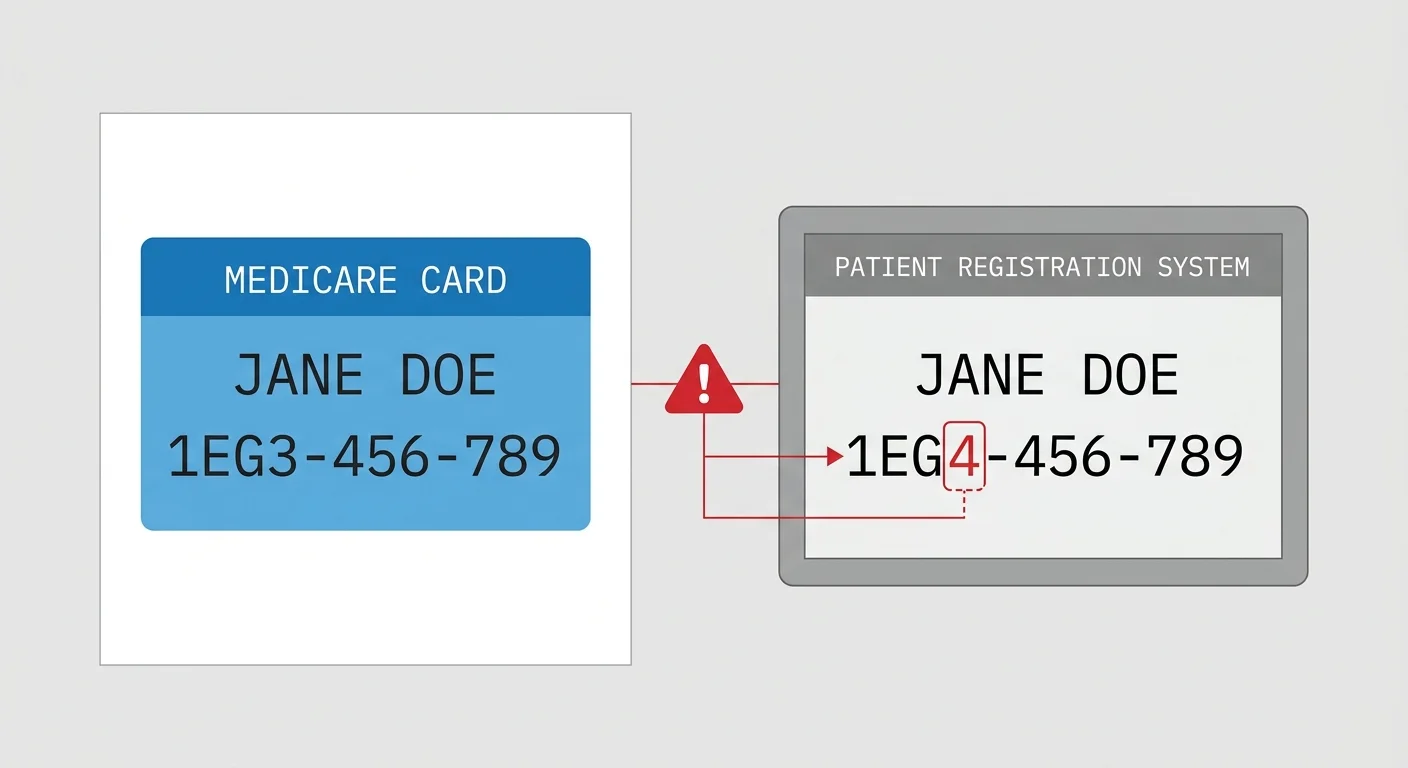
Tip #4: Incorrect Patient Identifier and Demographic Mismatches
Not all damaging billing mistakes involve complex medical coding or high-level clinical disputes; some of the most destructive financial errors are purely administrative.
Demographic and clerical mismatches happen when a doctor’s front desk staff, hospital admissions clerk, or billing processor inputs incorrect personal data into your file.
A single transposed digit in your Medicare Beneficiary Identifier (MBI), a misspelled middle name, an incorrect date of birth, or an outdated home address can trigger instant claim rejections from Medicare, leaving you exposed to balance billing from panicked healthcare providers.
When Medicare’s automated processing system receives a claim containing incorrect demographic details, the system automatically rejects the claim as unprocessable.
Instead of taking the time to fix the administrative typo and resubmit the claim correctly, many busy hospital billing departments simply bypass Medicare altogether and forward the entire, unadjusted bill directly to you.
Suddenly, you receive an urgent notice demanding thousands of dollars for a bill that should have been covered at 80% or 100% by your Medicare plan.
A closely related clerical nightmare involves Coordination of Benefits (COB) errors.
If you have secondary insurance—such as a retiree health plan, a Medigap supplemental policy, or coverage through a working spouse’s employer—Medicare must be properly designated as either the primary or secondary payer.
If a clinic’s billing software lists your secondary insurer as primary, or if Medicare lacks updated primary payer information, both insurers will deny the claims.
The facility then misinterprets these standard administrative rejections as a total lack of insurance coverage and dispatches debt collection letters directly to your mailbox.
Fixing demographic errors requires active preventive maintenance before and after every medical visit.
Whenever you check in at a doctor’s office or hospital, hand the receptionist your physical Medicare card and explicitly ask them to verify that your full legal name, date of birth, and 11-character MBI match Medicare’s central database exactly.
If you receive an unexpected bill stating that Medicare denied coverage due to coverage invalidation or patient identification errors, do not pay it.
Call your provider’s billing office immediately, insist that they correct your demographic profile in their system, and require them to re-submit the clean claim to Medicare.
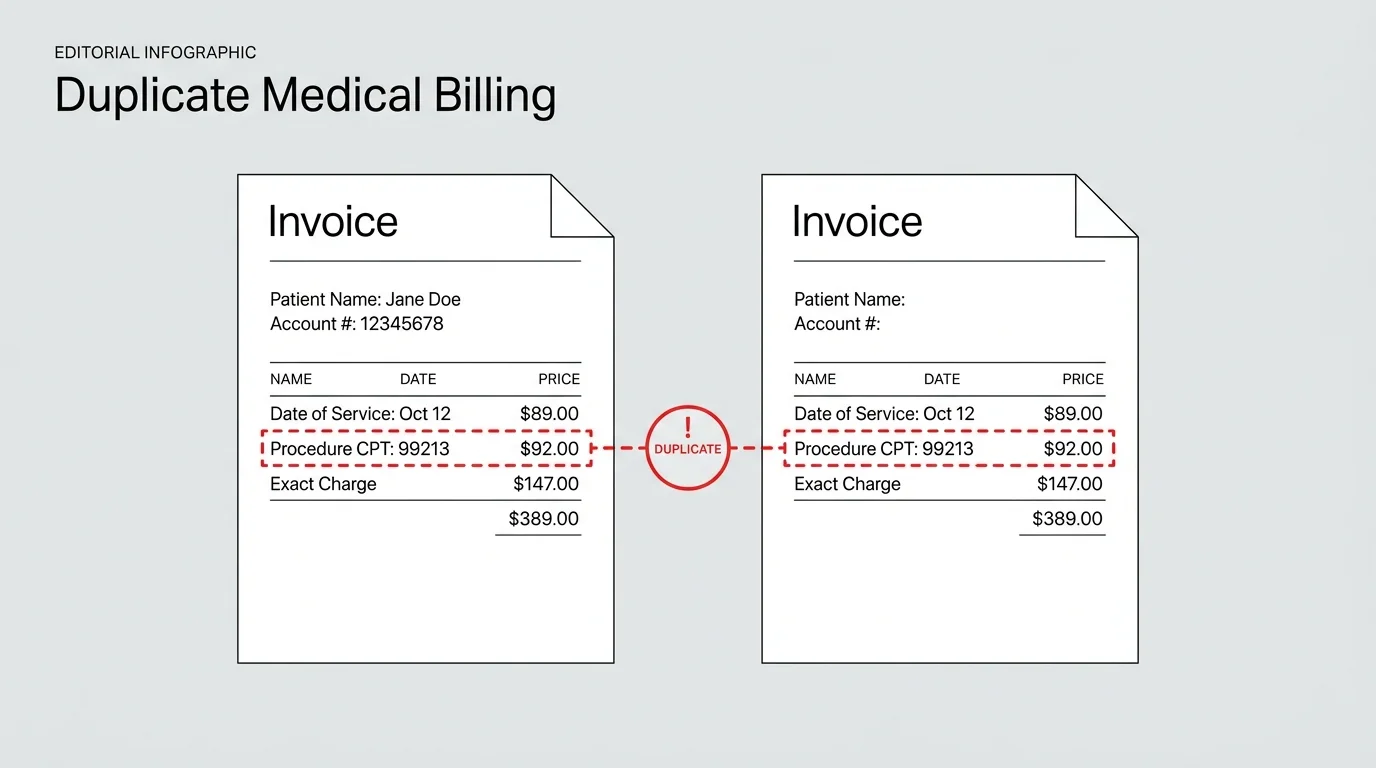
Tip #5: Duplicate Billing Across Providers and Facilities
Duplicate billing occurs when a healthcare provider or medical facility submits multiple claims for the exact same service, diagnostic test, or treatment session delivered on the exact same date. In busy healthcare networks, duplicate charges happen with alarming regularity.
An automated electronic billing system might submit a claim once when a service is ordered and a second time when the doctor signs off on the chart.
In other instances, separate entities—such as an independent radiology group and the hospital housing the X-ray machine—both bill for the exact same technical component of a scan, resulting in double charges for a single procedure.
This issue frequently plagues beneficiaries who undergo outpatient rehabilitation, such as physical, occupational, or speech therapy. If you attend a single physical therapy session on a Monday morning, you might discover two identical line items on your statement for that exact date.
If Medicare inadvertently processes both charges, or if Medicare pays the first and denies the second as a duplicate, the facility’s software may automatically convert that denied second claim into an unpaid balance owed directly by you.
Spotting common medicare billing mistakes of duplicate origin requires comparing statements across different billing cycles. Because Original Medicare issues a Medicare Summary Notice (MSN) every 3 months, duplicate claims submitted weeks apart can easily slip past your initial review if you do not track historical entries.
If you are enrolled in a Medicare Advantage (Part C) plan, which had an improper payment rate of 6.09% ($23.67 billion) in FY 2025, or a Part D plan (4.00% improper payment rate / $4.23 billion), you must scrutinize every Explanation of Benefits (EOB) statement sent by your private insurer to verify that you are not paying double copayments for single medical encounters.
When you uncover duplicate charges, strict legal deadlines govern your rights to dispute them.
Under Original Medicare (Parts A & B), you have exactly 120 days from the date you receive your MSN to file a Level 1 appeal, formally known as a Request for Redetermination, with your regional Medicare Administrative Contractor (MAC).
If you are enrolled in a Medicare Advantage plan or Part D plan, you generally have a tighter window of 60 days from the date of the denial notice to file an initial plan appeal.
If your Level 1 appeal is denied under Original Medicare, you have 180 days from receipt of that decision notice to file a Level 2 appeal for Reconsideration with a Qualified Independent Contractor (QIC).
Act quickly to ensure administrative deadlines do not lock you into paying erroneous duplicate bills out of your savings.

The Bottom Line: What This Means for Your Wallet
Navigating the complex landscape of Medicare billing requires hyper-vigilance, direct action, and zero tolerance for inaccurate charges. Medical billing departments process thousands of claims daily, and administrative mistakes are far more common than most patients assume.
Every unbundled procedure code, upcoded office visit, phantom supply charge, demographic mismatch, or duplicate line item directly threatens your financial security.
By taking control of your healthcare documentation and auditing every statement that arrives in your mailbox, you can stop these improper payments from draining your savings.
Establish a simple audit routine for your personal healthcare finances. Create a dedicated folder where you keep itemized receipts, physician appointment logs, and clinical summary notes.
When your quarterly Medicare Summary Notice arrives, cross-reference every listed service against your logbook before paying any provider invoice. If you spot an error, contact the provider’s billing office immediately to correct the mistake.
If the provider refuses to cooperate, utilize your statutory appeal rights—filing your Level 1 Redetermination within 120 days for Original Medicare or 60 days for Medicare Advantage—to protect your rights and keep your money where it belongs.
For consumer protection information, visit the Federal Trade Commission (FTC) and the Consumer Financial Protection Bureau (CFPB). For product safety and reviews, consult Consumer Reports.
Disclaimer: This article is for informational purposes only and does not constitute financial advice. The content reflects the author’s opinion and research at the time of writing.
Always do your own research before making financial decisions.
Frequently Asked Questions
How do I get an itemized bill, and how does it differ from a Medicare Summary Notice (MSN)?
A Medicare Summary Notice (MSN) is an official summary statement sent to Original Medicare beneficiaries every 3 months that shows all services billed to Medicare, what Medicare paid, and the maximum amount you may owe. However, an MSN often groups services under broad categories.
An itemized bill, which you must explicitly request from your doctor or hospital billing department, breaks down every single charge by specific CPT/HCPCS codes, individual medical supplies, diagnostic scans, and medication doses.
You need both documents to effectively audit your medical care and spot billing errors like unbundling or ghost charges.
What should I do if a medical provider sends a disputed bill to debt collections?
If a disputed bill is sent to debt collections, act immediately in writing. Send a formal debt validation letter to the collection agency within 30 days of their initial contact, stating that the debt is under active dispute due to Medicare billing errors.
Under the Fair Debt Collection Practices Act (FDCPA), the collector must cease collection efforts until they verify the accuracy of the debt with the original provider.
Simultaneously, notify the medical provider’s billing department that the bill is under formal dispute and request that they pull the account back from the collection agency while the Medicare appeal or coding review is processed.
What are the exact deadlines for appealing a Medicare billing error?
Under Original Medicare (Parts A & B), you have 120 days from the date you receive your Medicare Summary Notice (MSN) to file a Level 1 appeal, known as a Request for Redetermination, with your Medicare Administrative Contractor (MAC).
If the Level 1 decision is unfavorable, you have 180 days from receipt of the redetermination notice to file a Level 2 appeal (Reconsideration) with a Qualified Independent Contractor (QIC).
For Medicare Advantage (Part C) or Part D prescription plans, you generally have 60 days from the date of the written denial notice to request an initial plan appeal.
Can I report suspected Medicare billing errors or fraud anonymously?
Yes, you can report suspected billing errors, improper billing practices, or outright Medicare fraud anonymously. You can contact the Senior Medicare Patrol (SMP) or call the Department of Health and Human Services Office of Inspector General (HHS-OIG) hotline at 1-800-HHS-TIPS (1-800-447-8477).
When submitting a report, provide as many specific details as possible, including provider names, dates of service, specific CPT codes, and copies of your Medicare Summary Notice or itemized bills.