You can retire in the mountains without draining your life savings on inflated resort real estate. Smart retirees skip overpriced tourist traps and target undervalued mountain communities with direct trail access, strong healthcare, and sensible living costs.
Housing typically eats the largest portion of your fixed income. Moving to an affordable mountain retirement destination instantly protects your cash reserves and lowers your monthly overhead.
These eight cheap mountain towns offer stunning ridgeline vistas and lower living expenses. You can preserve your nest egg while enjoying the elevated lifestyle you worked decades to achieve.
Tip #1: Hot Springs, Arkansas
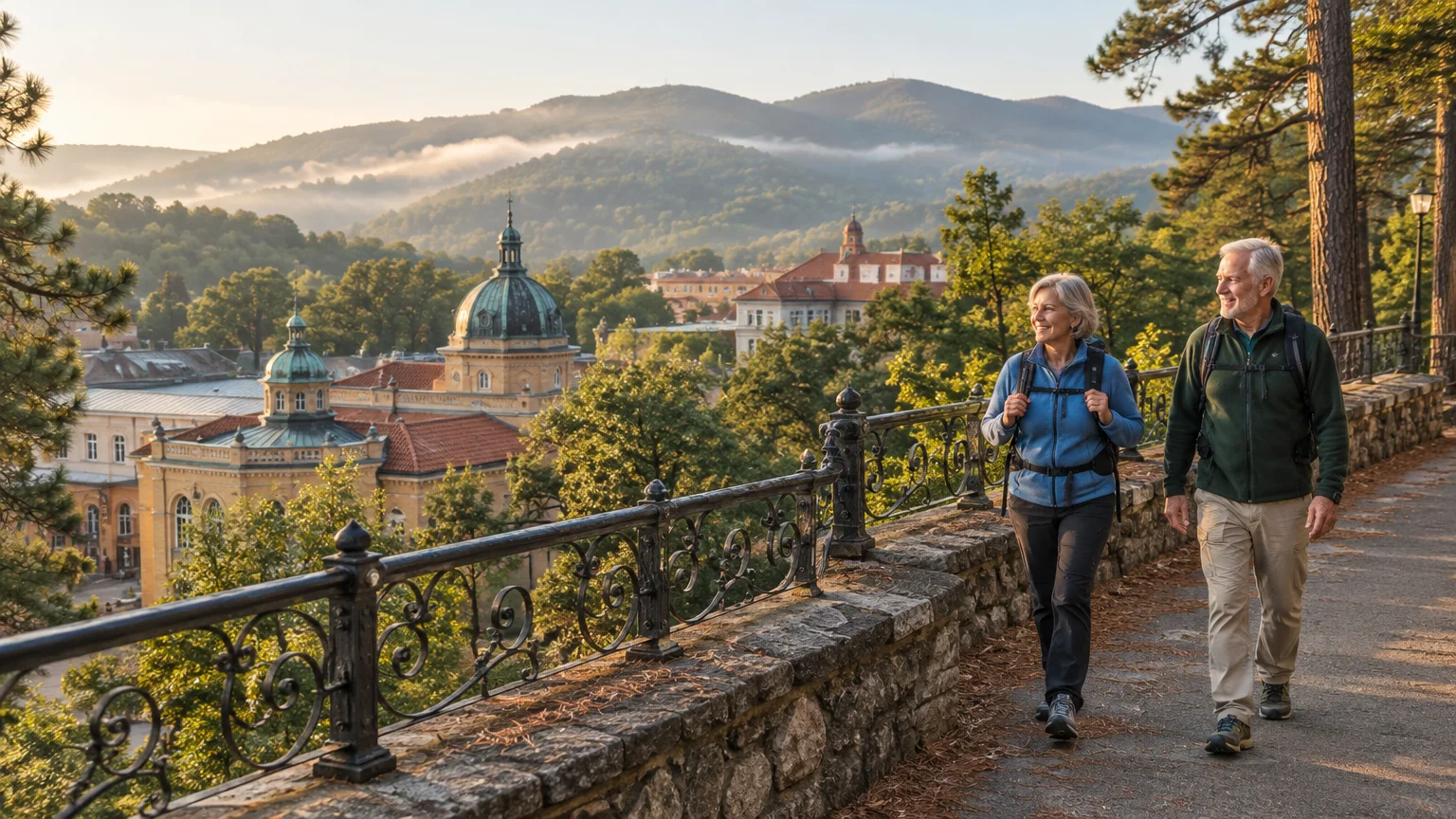
Hot Springs delivers dramatic Ouachita Mountain scenery without the staggering price tag of traditional resort enclaves. You gain direct access to thermal waters, dense national pine forests, and shimmering highland lakes.
Typical home values in Hot Springs stand at $242,674. That sits only slightly above the Arkansas state median of $224,158, offering you genuine real estate affordability.
Compare that figure to the national typical home value of $366,157 or the national median sale price of $410,700. Buying here protects your capital from severe market inflation.
Arkansas treats your fixed income favorably by leaving Social Security benefits completely untaxed at the state level. You keep every dollar of your federal retirement check to cover daily living costs.
The average Social Security retirement benefit currently sits at $2,088.79 per month, or roughly $25,065 annually. In Hot Springs, that baseline monthly income easily covers basic housing overhead and essential utilities.
A 3.6% cost-of-living adjustment adds about $75 per month to that average check. That extra cash gives you added breathing room for local recreation and dining.
Medical care is easily accessible through major regional facilities like CHI St. Vincent and National Park Medical Center. You avoid traveling long distances over dangerous mountain roads to see experienced specialists.
Lake Ouachita and Lake Hamilton provide world-class freshwater fishing and boating right along the city perimeter. You enjoy waterfront leisure against a rugged ridgeline backdrop without paying coastal marina rates.
Hot Springs National Park wraps right around the downtown district, providing maintained walking trails and historic bathhouses. You can walk straight from your neighborhood into protected federal wilderness within minutes.
Smart retirees purchase single-family homes just outside the primary tourist corridor toward the Ouachita National Forest. That simple strategy secures lower property prices, quiet acreage, and lower county property assessment rates.
Tip #2: Roanoke, Virginia
Roanoke anchors the southern Blue Ridge Mountains, serving as a regional haven for retirees seeking elevated outdoor living. Majestic peaks frame the city skyline, providing immediate access to the Appalachian Trail.
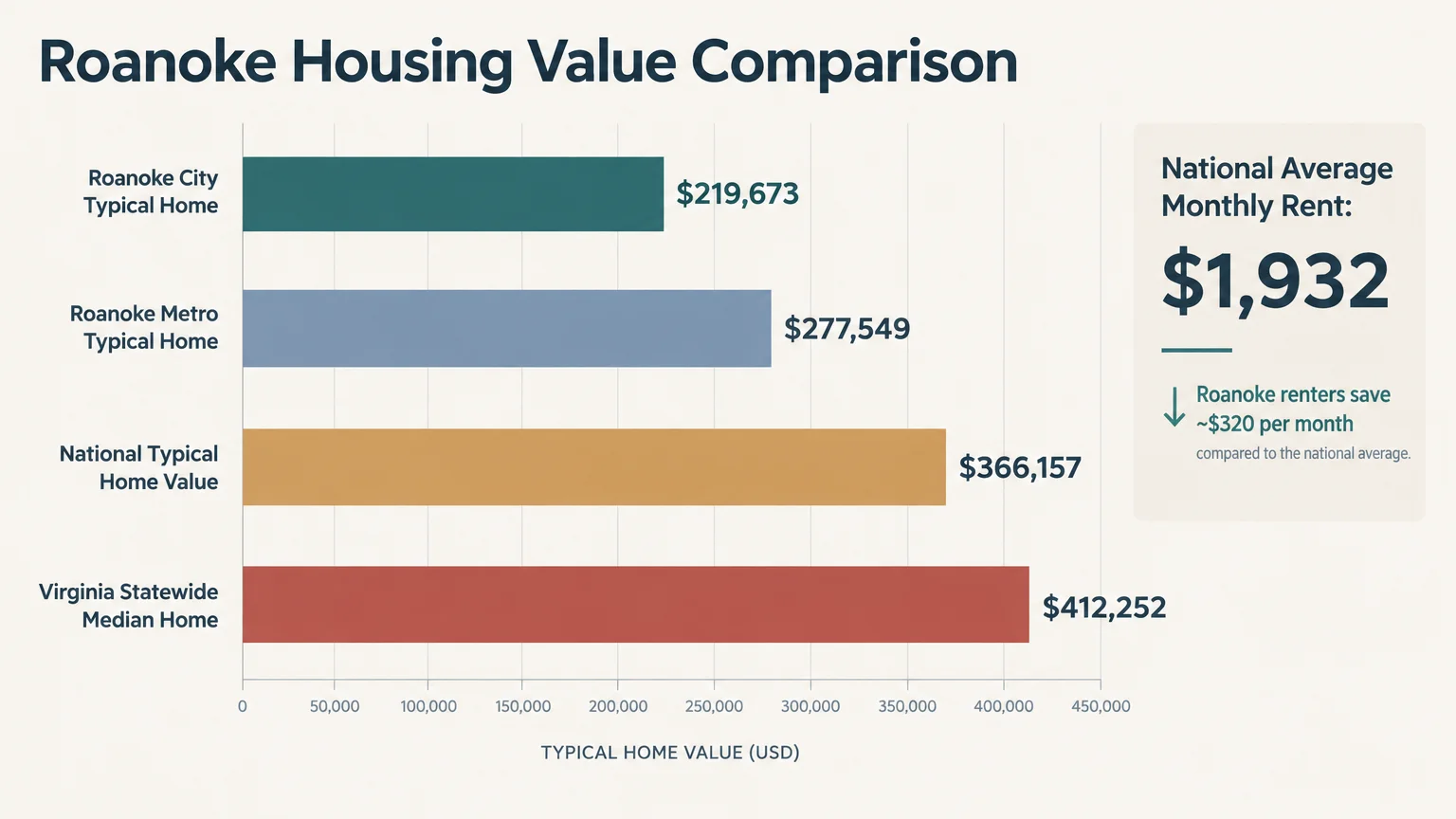
The typical home value across the Roanoke metro area rests at $277,549. Even better, homes within the Roanoke City limits average just $219,673.
Both figures sit drastically below the Virginia statewide median home value of $412,252. You can buy a charming historic property here for nearly half the state average.
Virginia does not tax Social Security benefits, providing significant financial relief on your recurring baseline income. Your pension dollars and investment distributions also stretch much further under Virginia’s reasonable tax structure.
National average rent recently hit $1,932 per month across the country. In Roanoke, rental units and modest single-family rentals cost a fraction of that national benchmark.
Healthcare represents one of Roanoke’s greatest advantages for aging residents. The Carilion Clinic medical system operates a massive teaching hospital and comprehensive specialty clinics right in the city center.
The famous Blue Ridge Parkway runs directly along the ridge above town, offering scenic drives and shaded hiking loops. You can hike morning ridgeline paths and return home in time for lunch.
Roanoke’s downtown features a vibrant historic farmers market, the Taubman Museum of Art, and an extensive greenway network. You can stay active and culturally engaged without spending hundreds on private country club dues.
Downsizing retirees can leverage the city’s pedestrian-friendly grid and public bus network. Giving up a second vehicle instantly cuts thousands in insurance, maintenance, and fuel costs from your annual budget.
Target established neighborhoods like Grandin Village or Raleigh Court for walkable living near grocery stores, local cafes, and neighborhood parks. You gain classic architectural charm without paying inflated northern Virginia housing prices.
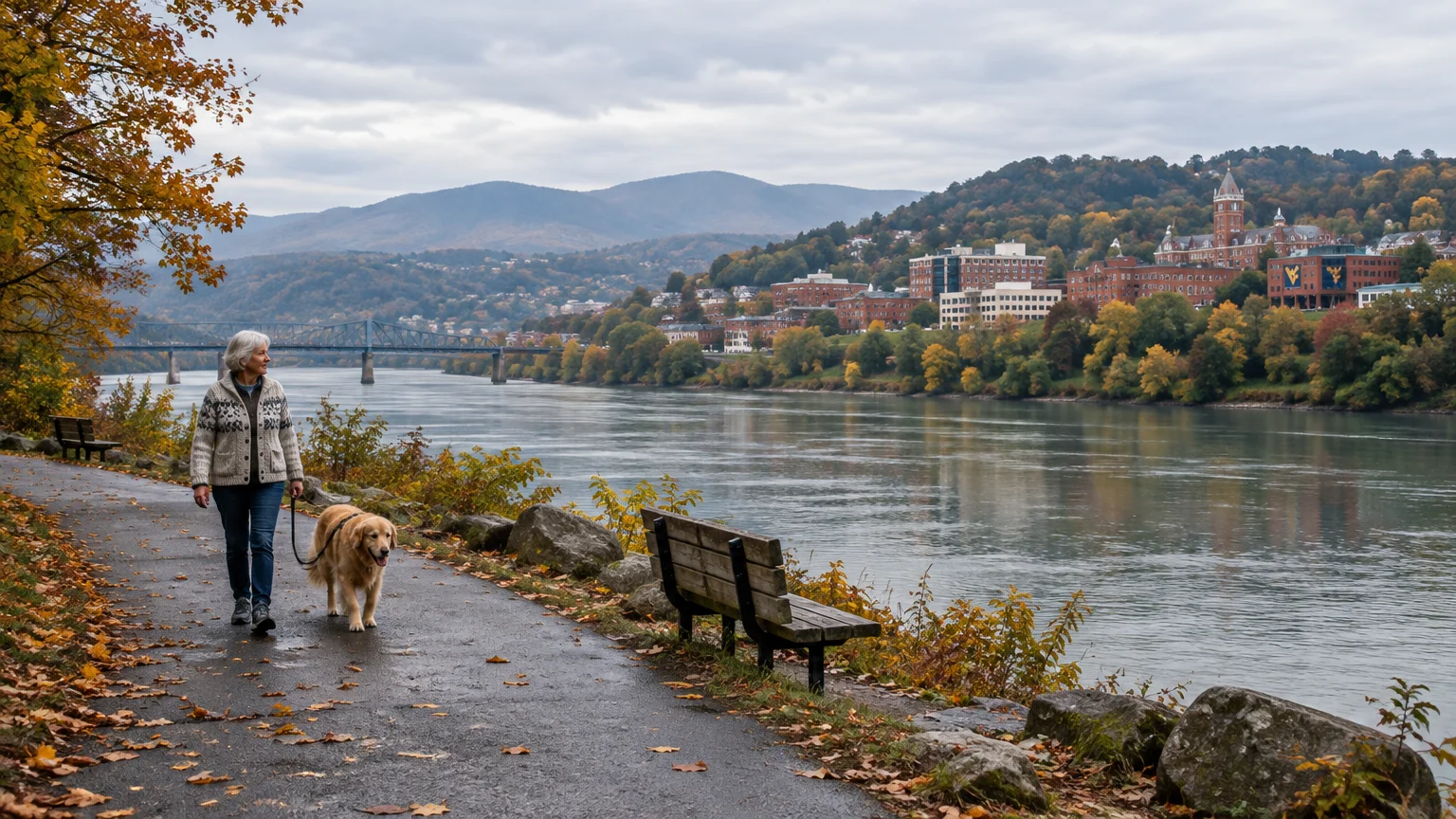
Tip #3: Morgantown, West Virginia
Morgantown combines rugged Appalachian Mountain geography with the cultural assets of an energetic university community. The town sits alongside the Monongahela River, offering dense forested hills and deep river valleys.
Typical home values in Morgantown average $281,832. While higher than the West Virginia state median of $176,576, it remains far below the national home value of $366,157.
West Virginia recently completed its tax phase-out, establishing a full 100% state income tax deduction on Social Security benefits. This policy upgrade eliminates state taxes on benefits, up from the previous 65% deduction limit.
This legislative change shields your baseline Social Security check from state tax collectors completely. Every dollar stays directly inside your household budget where you need it most.
Bureau of Labor Statistics data shows the average senior household spends $61,432 annually, with $22,193 directed toward housing costs. Morgantown’s accessible real estate helps you keep your housing outlay well below that national norm.
WVU Medicine operates top-tier academic medical facilities right in town, including J.W. Ruby Memorial Hospital.
You receive cutting-edge specialty treatments without traveling across state lines to major metropolitan centers.
Coopers Rock State Forest sits just east of the city, delivering dramatic canyon overlooks, sandstone cliffs, and trout streams. You can spend your retirement days hiking, cross-country skiing, and photographing pristine Appalachian ridges.
Cheat Lake offers quiet boating and waterfront dining just minutes from downtown neighborhoods. You can dock a pontoon boat or kayak along calm coves without paying coastal resort fees.
West Virginia University allows older adults to audit select undergraduate courses for nominal administrative fees. You can study history, literature, or art while socializing with curious community members of all ages.
Search for homes slightly outside the student housing zones in neighborhoods like Suncrest or Cheat Lake. You will find quiet residential streets, mature timber, and steady long-term property values.
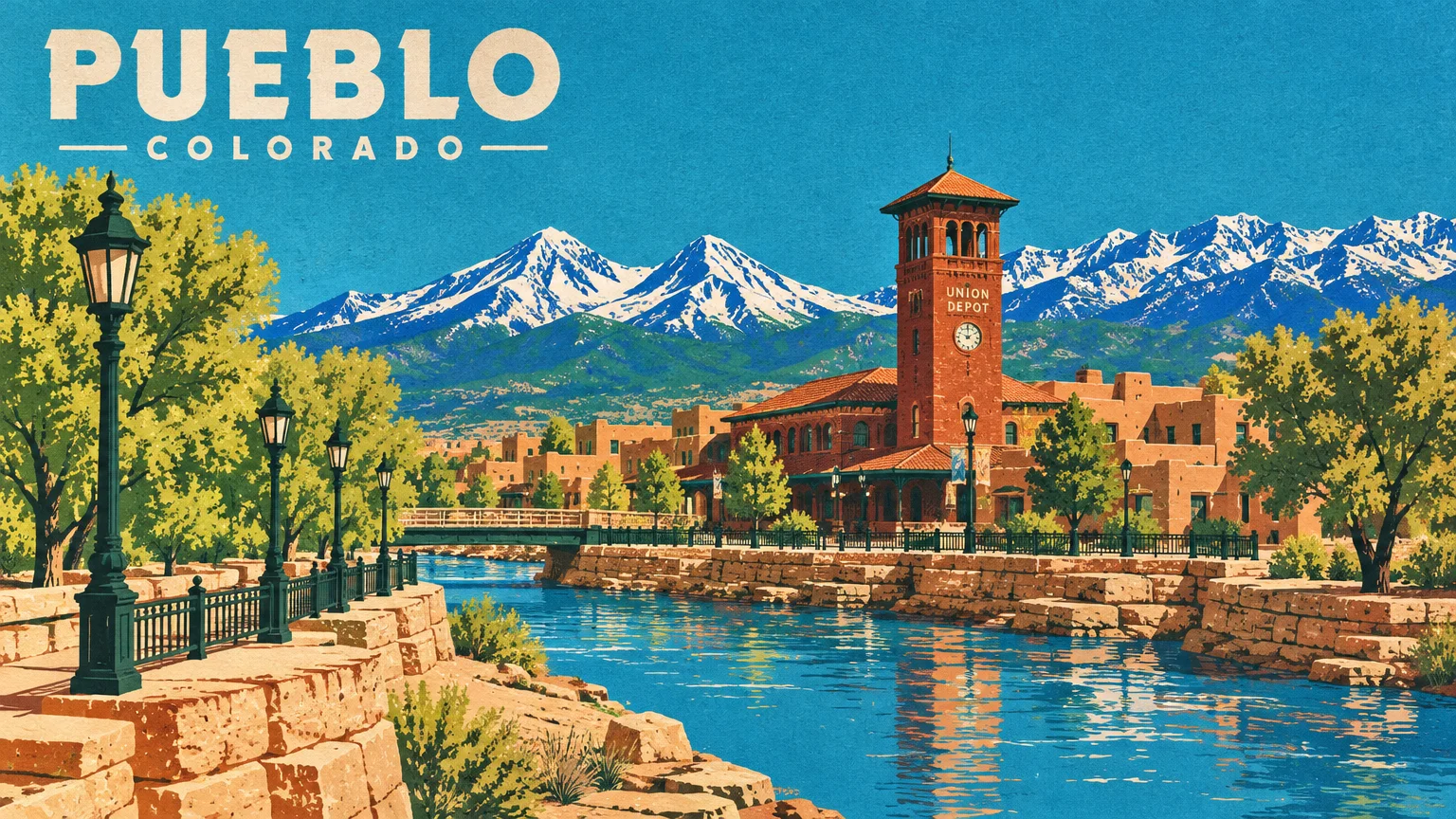
Tip #4: Pueblo, Colorado
Colorado mountain towns often seem financially impossible for middle-class retirees. Pueblo shatters that myth by offering direct Rocky Mountain views and high-desert sunshine at an unbeatable price point.
Typical home values in Pueblo stand at $283,419. That represents an astonishing discount compared to the Colorado statewide median home value of $532,748.
You can purchase a home in Pueblo for nearly $250,000 less than the statewide average. That massive price difference preserves your investment portfolio and keeps mortgage interest expenses low.
Colorado is one of only 8 states that still taxes Social Security benefits. However, the state fully exempts federally taxed Social Security benefits from state income tax once you reach age 65.
This age-based tax exemption neutralizes the state tax burden for older retirees. You can live in Colorado without sacrificing your fixed monthly income to state tax authorities.
Pueblo sits in a unique geographic “banana belt,” providing milder winters than surrounding ski resorts. You enjoy more than 300 days of annual sunshine, drastically lowering your seasonal home heating bills.
Lake Pueblo State Park provides miles of hiking paths, mountain biking routes, and year-round reservoir boating. You get world-class Rocky Mountain recreation without fighting bumper-to-bumper ski corridor traffic.
Comprehensive healthcare is anchored by Parkview Medical Center and St. Mary-Corwin Hospital. You have fast access to emergency rooms, cardiology specialists, and surgical centers right in town.
The Historic Arkansas Riverwalk anchors the downtown core with shaded walking paths, boat tours, and casual eateries. You can stroll along the water and attend seasonal festivals without spending significant money.
Smart buyers explore historic districts like Aberdeen or the North Side for sturdy brick bungalows. These mature neighborhoods offer grand shade trees, larger lots, and dependable resale value.
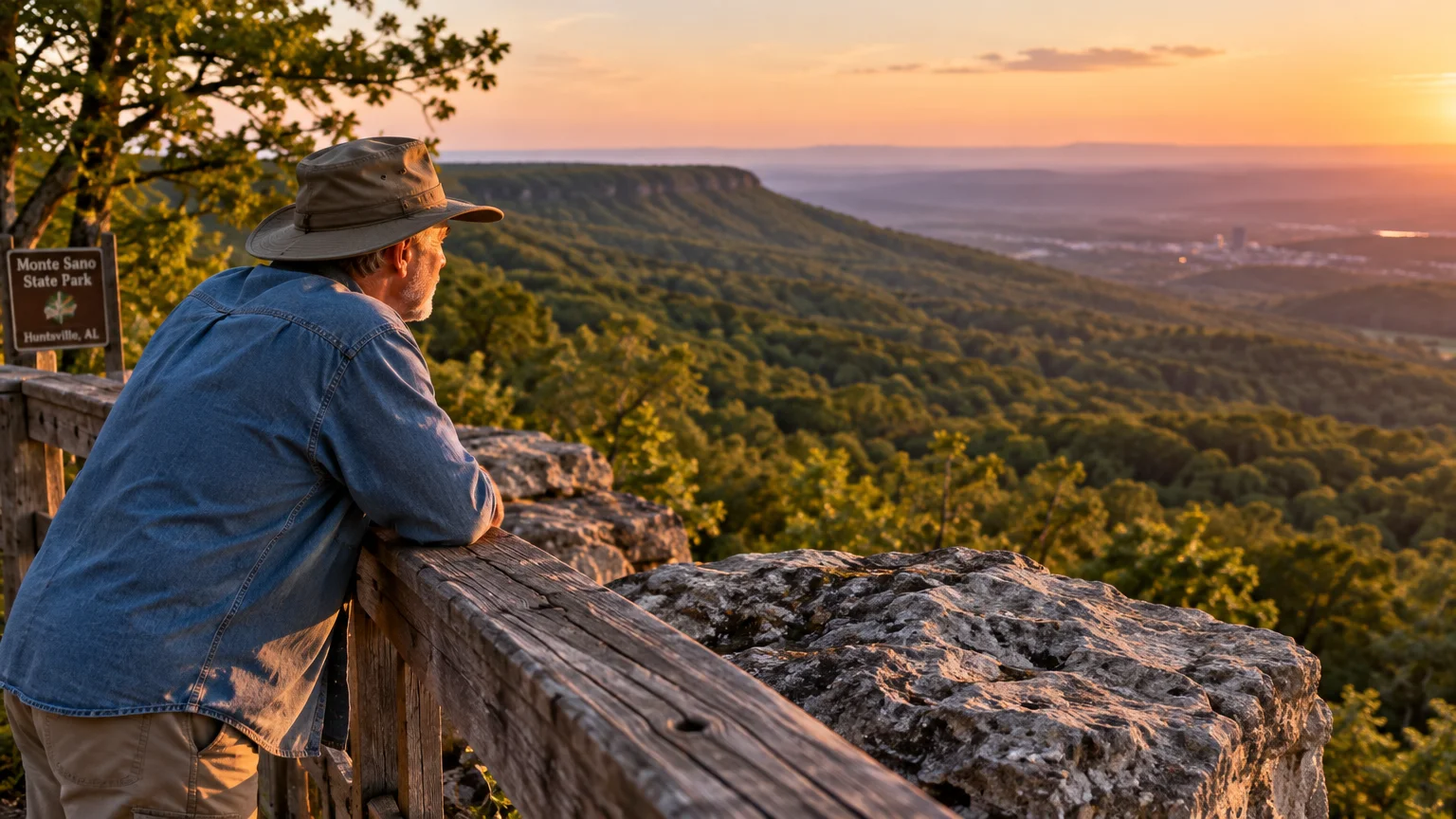
Tip #5: Huntsville, Alabama
Huntsville rests in the rolling foothills of the southern Appalachian Mountains, dominated by the scenic ridgeline of Monte Sano Mountain. The city merges aerospace engineering excellence with relaxed southern mountain living.
The typical home value in Huntsville currently sits at $286,952. That remains far below the national typical home value of $366,157, giving you an affordable gateway into mountain living.
Alabama does not tax Social Security benefits, preserving your monthly checks for your personal needs. Furthermore, the state boasts some of the lowest residential property tax rates in the entire nation.
Low property taxes substantially reduce your recurring annual homeownership expenses. You avoid the sudden property tax spikes that often drive retirees out of higher-cost mountain regions.
The average monthly Social Security benefit of $2,088.79 provides significant purchasing power in northern Alabama. You can cover basic groceries, utilities, and routine home maintenance while keeping your savings invested.
Monte Sano State Park towers over the city, offering miles of shaded hiking trails and panoramic plateau overlooks. You can escape summer humidity on the cooler mountain summit within a ten-minute drive from downtown.
Healthcare facilities are world-class, led by the sprawling Huntsville Hospital system. As one of Alabama’s premier medical centers, it offers comprehensive cardiology, orthopedic, and neurological care for seniors.
The Land Trust of North Alabama maintains several large nature preserves across the surrounding ridges. You can hike rugged limestone valleys, explore caves, and view spring wildflowers for free.
Huntsville’s rich scientific heritage fosters active public libraries, educational lectures, and community astronomy clubs. You can stimulate your intellect among retired scientists and engineers without paying university tuition.
Look for homes along the eastern slopes of Monte Sano or in nearby Madison County suburbs. You will secure peaceful wooded views while staying close to modern supermarkets and top medical clinics.
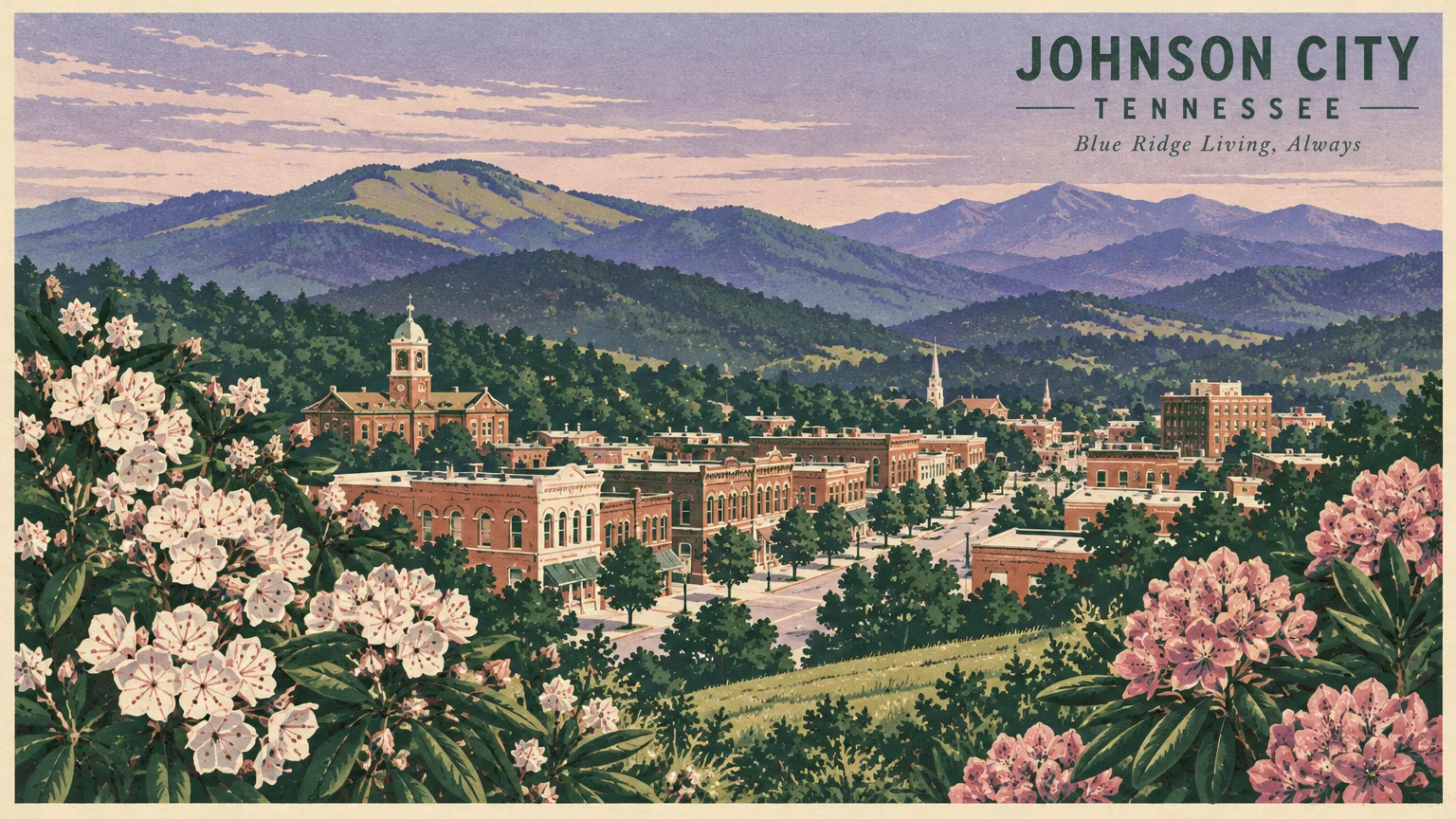
Tip #6: Johnson City, Tennessee
Johnson City sits deep inside the Blue Ridge Mountains of Northeast Tennessee. The city offers dramatic mountain panoramas, rushing trout streams, and pleasant four-season weather without the extreme cold of northern ranges.
Typical home values in Johnson City average $292,890. This price sits well below the Tennessee state median of $330,844 and easily beats the national benchmark of $366,157.
Tennessee charges zero state personal income tax on earned wages, pensions, 401(k) withdrawals, or Social Security benefits. Moving here creates an automatic tax shelter for your retirement distributions.
Squeezing your tax liability down to zero protects your nest egg from unnecessary market drawdowns. You keep more capital compounding in your investment accounts each year.
National median home sale prices recently reached $410,700 across the United States. Purchasing a property in Johnson City saves you over $100,000 compared to that national median purchase figure.
The Johnson City Medical Center operates as a major regional Level 1 trauma center and cardiac hospital. You never need to worry about compromised emergency healthcare while living in this mountain community.
East Tennessee State University anchors local culture, providing senior education programs, musical performances, and college sports. You can attend classical concerts and collegiate basketball games at very reasonable ticket prices.
Nearby Roan Mountain delivers high-elevation rhododendron gardens, cool summer breezes, and direct Appalachian Trail access. You can hike across open grassy balds that look out across multiple state borders.
Watauga Lake and the South Holston River provide prime trout fly-fishing and calm pontoon boating. You can enjoy pristine alpine waters without paying exorbitant luxury lake community prices.
Check out established residential neighborhoods near North Johnson City or along the ridgelines toward Jonesborough. These areas provide larger yards, panoramic mountain views, and quiet surroundings away from major commercial strips.
Tip #7: Chattanooga, Tennessee
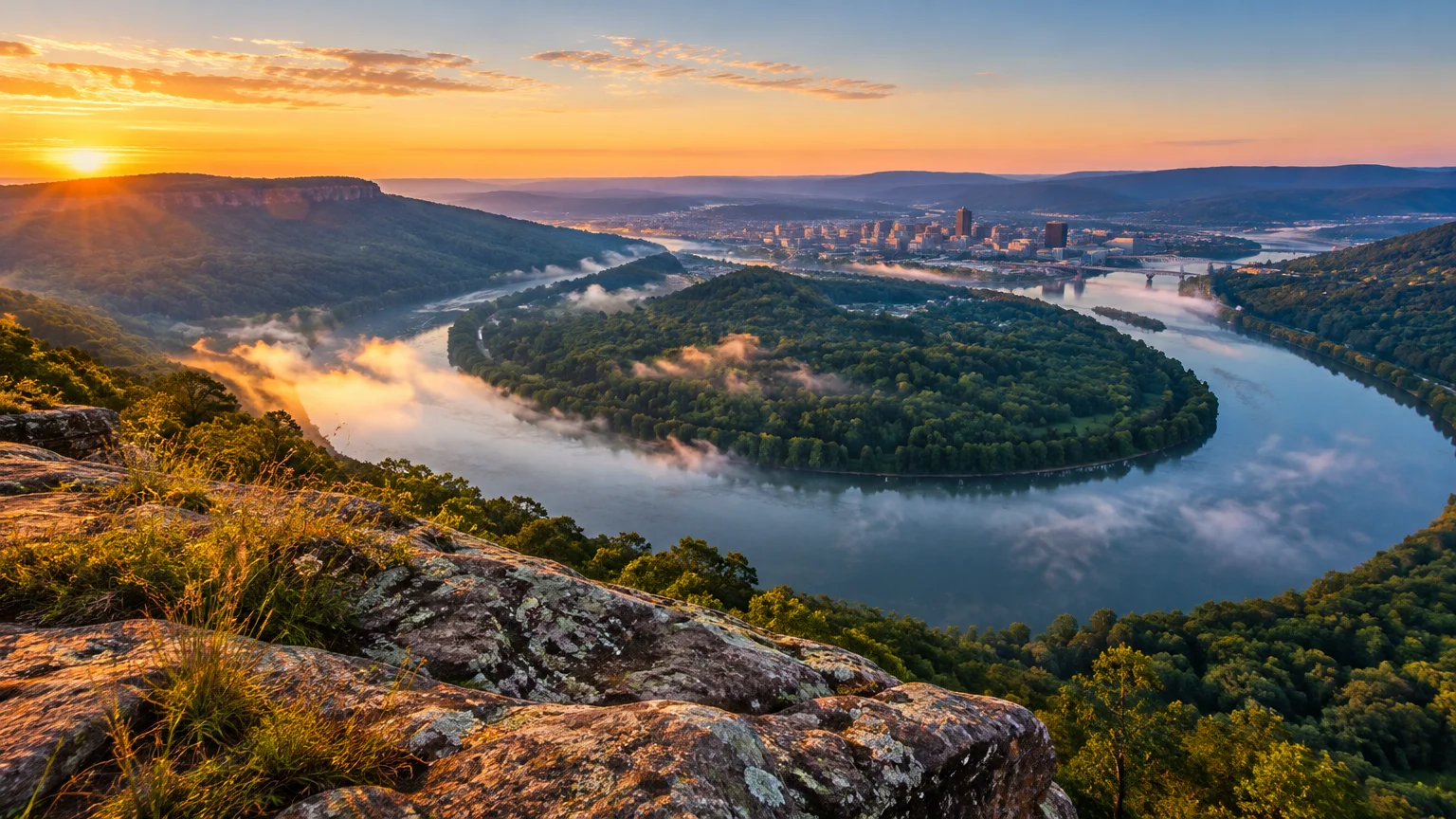
Chattanooga lies nestled along the Tennessee River between the jagged cliffs of Lookout Mountain and the Cumberland Plateau. It has transformed into one of the country’s most celebrated outdoor recreation hubs.
The typical home value in Chattanooga sits at $314,999. That remains comfortably lower than the Tennessee statewide median of $330,844 and the national typical home value of $366,157.
Because Tennessee levies no state personal income tax, your Social Security checks, IRA withdrawals, and pensions remain completely untaxed. You retain complete control over your cash flow throughout retirement.
The average senior household spends $22,193 per year on housing alone, according to federal expenditure data. Chattanooga’s reasonable real estate helps you keep your housing overhead well below that expensive threshold.
Chattanooga built the country’s first citywide municipal gigabit fiber optic network through EPB. You get blazing fast internet and reliable electric service at lower rates than commercial cable monopolies charge.
Erlanger Health System and CHI Memorial provide extensive geriatric, orthopedic, and cardiovascular healthcare networks. You receive premier medical attention without having to drive to Atlanta or Nashville.
The Tennessee Riverwalk provides miles of flat, paved pathways along the river for walking and cycling. You can safely walk beside the water while admiring limestone bluffs and forested mountains.
Lookout Mountain features famous hiking routes, historic battlefields, and dramatic hang-gliding overlooks just minutes from your front door. You can experience spectacular scenic views every afternoon without buying pricey resort passes.
The city features an active arts district, the Hunter Museum of American Art, and walkable riverfront parks. You can spend sunny afternoons exploring outdoor sculpture gardens without straining your monthly entertainment budget.
Consider buying in scenic suburban pockets like Red Bank or along the foot of Signal Mountain. You will enjoy rapid access to mountain hiking trails while keeping your initial purchase price under control.
Tip #8: Ruidoso, New Mexico
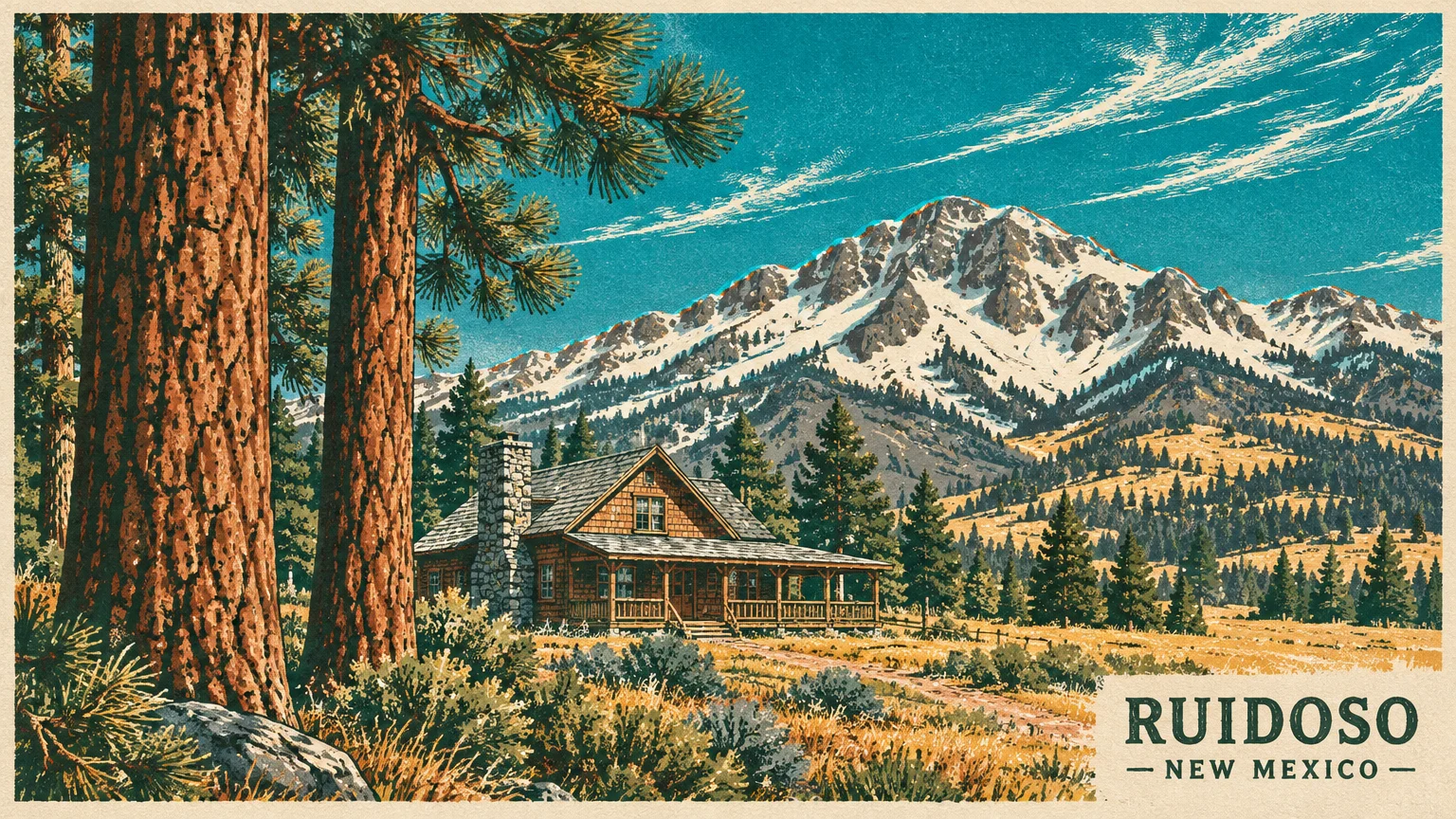
Ruidoso sits high in the Sierra Blanca and Sacramento Mountains of southern New Mexico, surrounded by the Lincoln National Forest. At an elevation over 6,900 feet, it offers true alpine living and crisp pine-scented air.
The typical home value in Ruidoso stands at $320,901. However, neighboring Ruidoso Downs offers an even cheaper entry point with a typical home value of just $220,797.
Both communities provide excellent budget opportunities compared to the national typical home value of $366,157. Ruidoso Downs sits nearly $100,000 below the New Mexico statewide median of $315,812.
New Mexico is one of 8 states that still taxes Social Security benefits. However, the state exempts Social Security benefits for single filers earning up to $100,000 and joint filers earning up to $150,000.
Most middle-income retirees fall well below those generous income limits. This statutory exemption ensures your Social Security benefits remain untouched by state income tax.
High elevation keeps summer temperatures pleasantly mild, offering sweet relief from brutal southwestern desert heat waves. You can open your windows for cool mountain air instead of running costly air conditioning all summer.
Winter brings seasonal snowfall and downhill skiing at nearby Ski Apache. You can enjoy active winter sports against alpine summits and then relax in a cozy mountain cabin.
Lincoln County Medical Center provides modern emergency care, surgical suites, and specialized clinics right in Ruidoso. You avoid traveling down winding mountain highways for routine doctor checkups or urgent medical needs.
Outdoor enthusiasts can explore hundreds of miles of wilderness trails in the surrounding Lincoln National Forest. You can spot wild elk, deer, and wild horses right from your porch or local hiking loops.
Purchasing a home in Ruidoso Downs gives you immediate access to all the mountain recreation of Ruidoso proper. You pay dramatically less for housing while enjoying identical mountain weather and natural scenery.
The Bottom Line: What This Means for Your Wallet
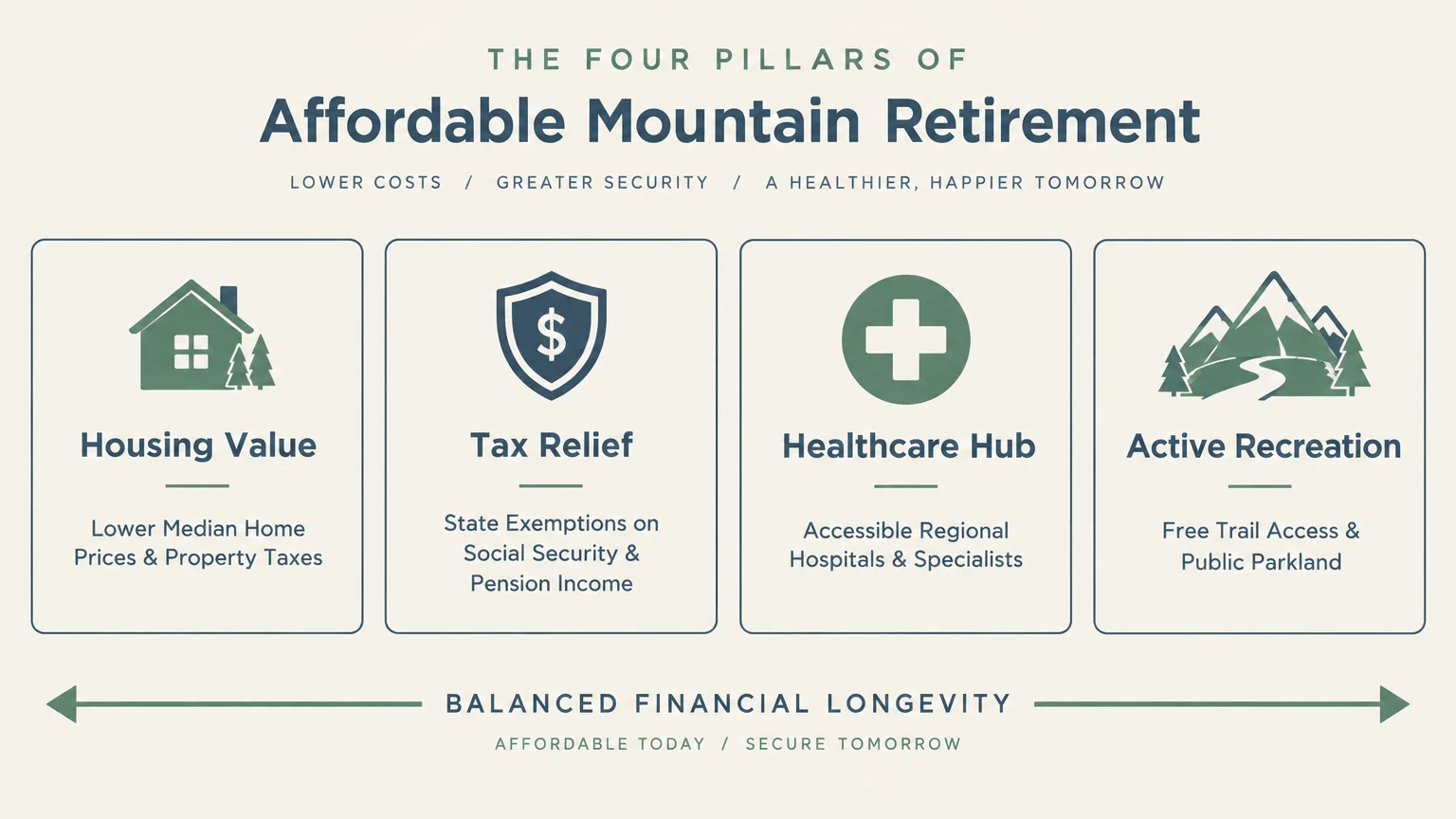
Relocating to an affordable mountain town can permanently secure your financial independence during retirement. High living costs in big cities quickly drain your nest egg, forcing you to compromise on your lifestyle.
The typical American home now costs $366,157, and median sales prices hover around $410,700. In contrast, these eight mountain communities provide home values starting as low as $219,673.
Moving from an overpriced metro area to one of these towns can free up over $100,000 in home equity. You can reinvest those proceeds into income-producing assets to generate reliable monthly cash flow.
Senior households spend an average of $61,432 per year, with $22,193 allocated directly to shelter costs. Slashing your mortgage or property tax bills cuts that massive housing expense dramatically.
The average monthly Social Security benefit sits at $2,088.79, totaling approximately $25,065 each year. In these budget-friendly mountain towns, that monthly check covers the bulk of your essential living expenses.
The upcoming 3.6% cost-of-living adjustment provides roughly $75 more per month for the average retiree. In lower-cost mountain areas, that bump covers your monthly water bill or high-speed internet service.
State tax rules matter just as much as real estate prices. States like Tennessee completely exempt retirement distributions, while Arkansas and Virginia exempt Social Security payments.
Even Colorado and New Mexico offer targeted exemptions that shield Social Security benefits for qualifying seniors. Understanding these state tax laws prevents unnecessary leaks in your retirement budget.
You do not need millions in savings to enjoy an elevated retirement lifestyle. Making a calculated geographical move lets you savor crisp mountain air, pristine trails, and lasting financial peace of mind.
Frequently Asked Questions
How do property taxes impact an affordable mountain retirement?
Property taxes represent an ongoing expense that never goes away, even after you pay off your mortgage. High tax rates can quickly erode your fixed monthly retirement budget over time.
States like Alabama offer exceptionally low property taxes, keeping your annual shelter overhead predictable. Always verify county millage rates before purchasing any mountain property.
Will my healthcare quality decline in a cheap mountain town?
Living in a budget mountain town does not mean sacrificing access to top-quality medical care. Towns like Roanoke, Morgantown, and Huntsville host major academic medical centers and specialized regional hospitals.
These regional facilities provide advanced cardiology, orthopedic surgery, and emergency care. You receive world-class treatment without paying the inflated real estate prices of major metropolitan centers.
How do winter utility bills affect a mountain living budget?
Mountain elevations generally bring colder winters, which can increase seasonal home heating and fuel expenses. However, mild summer temperatures often eliminate the need for heavy air conditioning, balancing your annual energy costs.
You can control winter heating costs by investing in proper attic insulation and efficient heat pumps. Towns like Pueblo also benefit from high sunshine rates that keep winter heating bills surprisingly modest.
Which states still tax Social Security benefits?
Only 8 states continue to tax Social Security benefits: Colorado, Connecticut, Minnesota, Montana, New Mexico, Rhode Island, Utah, and Vermont. Most other states exempt benefits entirely from state income taxes.
Both Colorado and New Mexico provide generous income or age exemptions that protect middle-class retirees from this tax. Choosing towns in states with zero income tax, like Tennessee, provides complete tax protection.
For consumer protection information, visit the Federal Trade Commission (FTC) and the Consumer Financial Protection Bureau (CFPB). For product safety and reviews, consult Consumer Reports.
Disclaimer: This article is for informational purposes only and does not constitute financial advice. The content reflects the author’s opinion and research at the time of writing.
Always do your own research before making financial decisions.