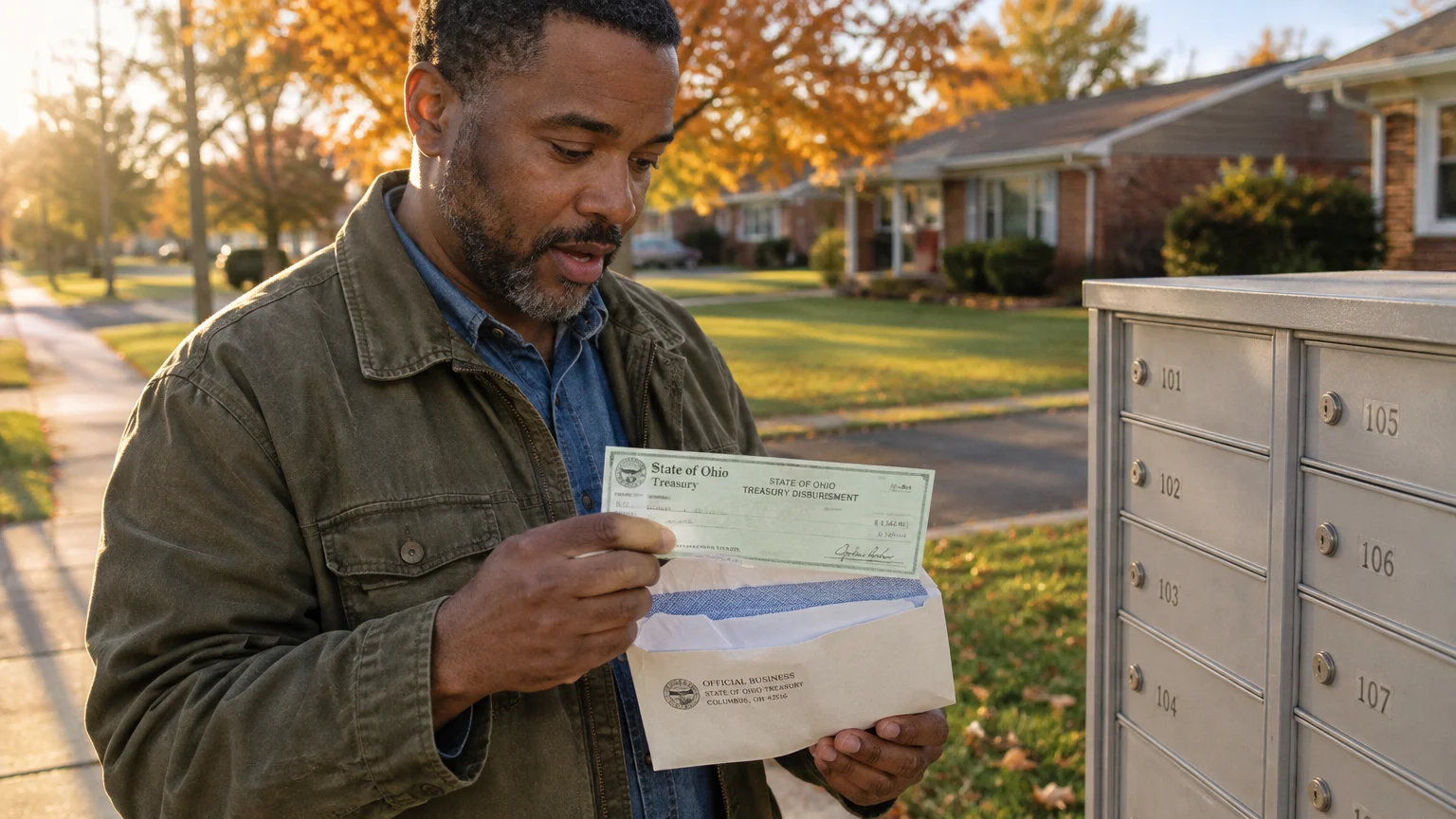
You could have cash sitting in forgotten government vaults or abandoned corporate accounts right now. Official agencies hold billions of dollars waiting for people to claim what belongs to them.
Most people assume administrative errors only affect others, but routine relocations create lost paper trails every day. Checking these public ledgers costs nothing and can put substantial sums directly into your bank account.
A fast lost funds search takes only minutes when you know the right databases to query. Use these proven steps to find money owed to you before government statutory deadlines lock you out permanently.
Tip #1: Run a Comprehensive State Unclaimed Property Search
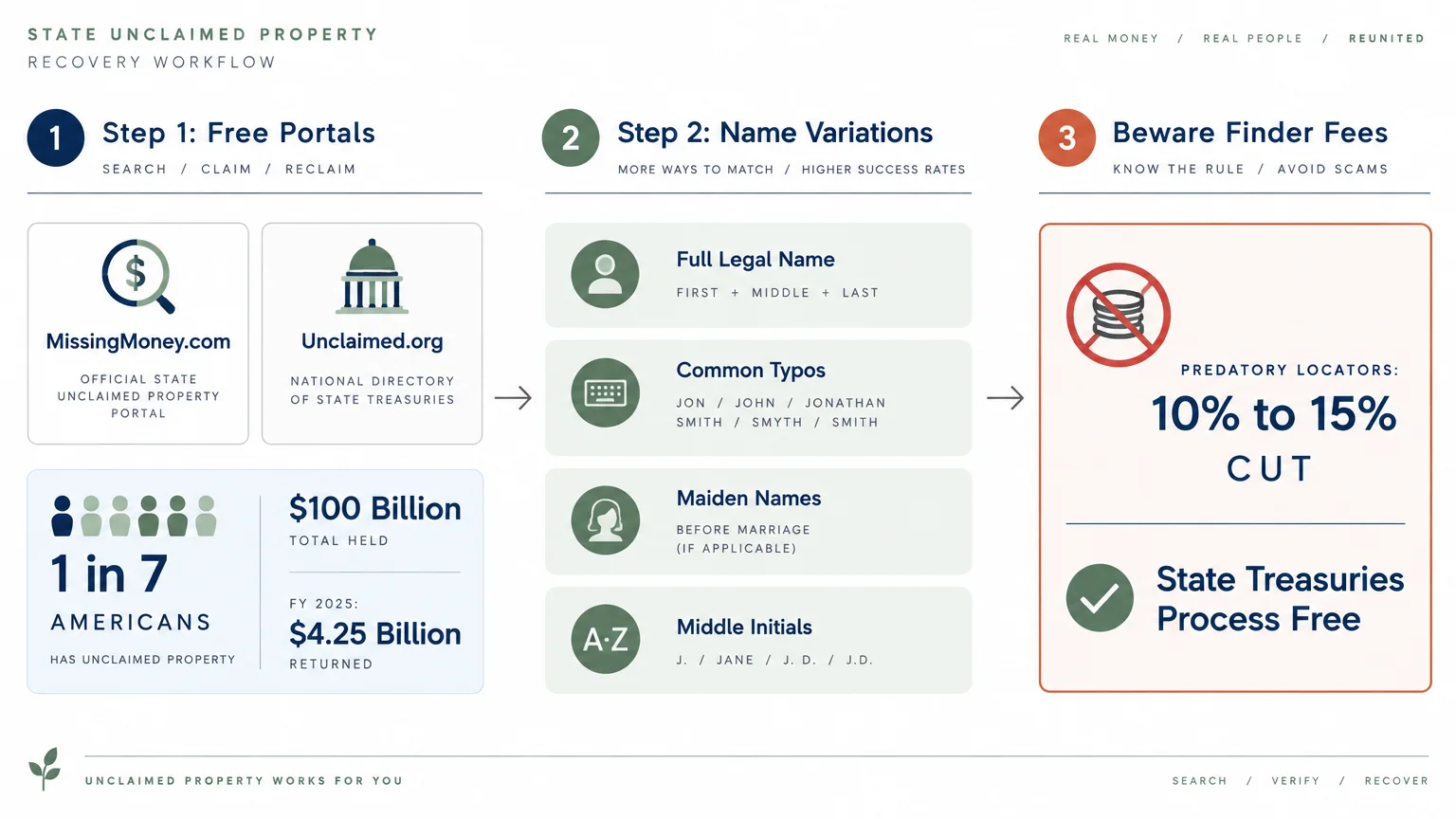
State treasuries hold an astonishing amount of abandoned financial assets. Across the nation, state governments currently hold over $100 billion in unclaimed property.
Statistically, roughly 1 in 7 Americans has unclaimed money waiting in these state registries. In Fiscal Year 2025 alone, state programs returned $4.25 billion to rightful owners.
Financial institutions must surrender dormant accounts to the state through a legal process known as escheatment. This includes abandoned checking balances, uncashed payroll checks, utility security deposits, and dormant investment dividends.
You can run an unclaimed property search without spending a dime. Start by visiting MissingMoney.com, the multi-state database endorsed by the National Association of Unclaimed Property Administrators.
If your state does not feed its records into that portal, navigate to Unclaimed.org to query individual state treasurer databases directly. Always search every state where you have lived, worked, or attended school.
Cast a wide net by searching your full legal name, common typographical errors, and any previous maiden names. Be sure to check records under your middle initial or common nicknames.
Do not overlook physical property either. States routinely inventory abandoned safe deposit boxes, auction off tangible goods after statutory holding periods, and hold the cash proceeds for you indefinitely.
Beware of predatory third-party finder companies that contact you offering to retrieve your assets. These locators routinely charge fees capped by most states at 10% to 15% of your money.
Never pay an outside operator to file these standard claims. State treasuries process claims directly online for free, sending checks directly to your mailbox once you verify your identity.
Tip #2: Track Down Orphaned 401(k)s via the New Federal Portal
Frequent career changes often cause workers to lose track of old employer retirement plans. Tens of millions of people leave behind active nest eggs when moving between jobs.
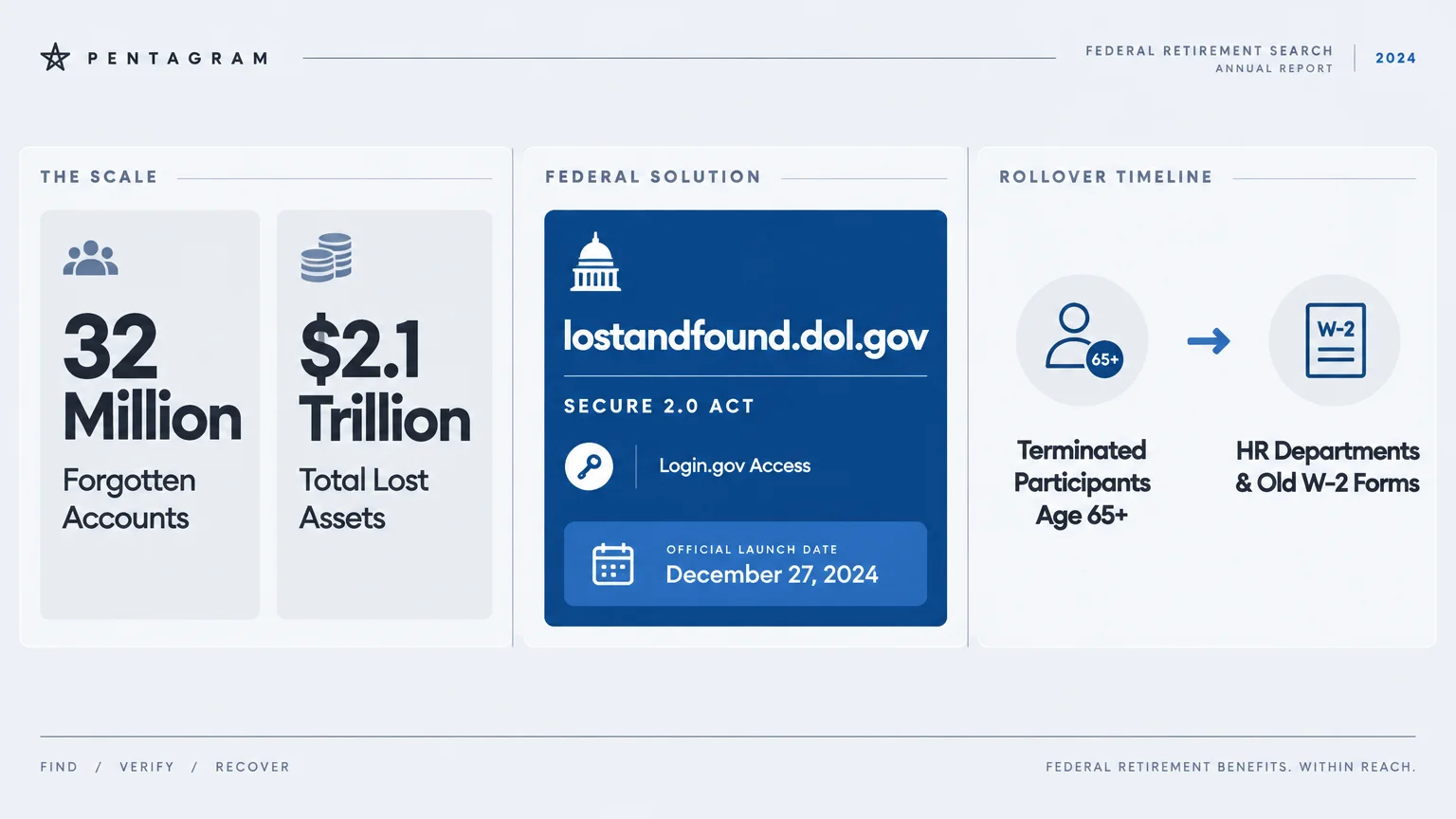
Industry data reveals an estimated 32 million forgotten 401(k) accounts holding roughly $2.1 trillion in total assets. High account maintenance fees steadily eat away at those balances over time.
When you leave an employer with a small balance, companies often initiate an involuntary cash-out or safe harbor rollover. Your money gets dumped into a default account earning negligible returns while administrative charges drain your principal.
To solve this nationwide crisis, the federal government launched the Retirement Savings Lost and Found Database on December 27, 2024. Created under the SECURE 2.0 Act, this portal lets workers locate forgotten plans.
You can access this resource directly at lostandfound.dol.gov using your secure federal Login.gov credentials. The initial rollout prioritizes connecting terminated, non-responsive plan participants aged 65 and older with their defined-contribution plans.
Even if you are younger than 65, you can still reclaim your orphaned retirement balances today. Pull your old W-2 forms and reach out to the human resources departments of your previous employers.
If a former employer went out of business, search the National Registry of Unclaimed Retirement Benefits. Former plan administrators register abandoned accounts there when plan sponsors terminate operations.
You can also search the Department of Labor Form 5500 database online. That public database identifies the current plan administrator and contact details for any active or merged corporate retirement plan.
Once you locate an old 401(k), initiate a direct rollover into your current employer plan or an individual retirement account. Consolidating your balances eliminates redundant administrative charges and puts you back in total control.

Tip #3: Recover Matured U.S. Savings Bonds Without Treasury Hunt
Millions of Americans received paper savings bonds as childhood gifts or bought them through payroll deductions. These paper certificates often sit forgotten in dusty desk drawers and safe deposit boxes.
Paper savings bonds stop earning interest entirely after 30 years. Today, between $26 billion and $40 billion in matured, unredeemed savings bonds languish inside federal accounts.
A major federal operational change caught many savers completely off guard recently. The U.S. Treasury permanently shut down its “Treasury Hunt” online search tool on September 30, 2025.
You can no longer use that retired website to search for missing savings bonds. Under modern SECURE 2.0 Act rules, the federal government now shares matured bond records directly with individual states.
Your first step should be checking your state unclaimed property office. State treasurers now integrate federal savings bond records directly into their searchable public databases.
If state portals do not display your bonds, file federal FS Form 1048 directly with Treasury Retail Securities Services. This official form allows you to claim lost, stolen, or destroyed United States savings bonds.
Be prepared to get this document signed before a notary or an authorized certifying officer at your local bank. Financial institutions typically provide certifying officer signature services to existing account holders at no charge.
Provide the bondholder’s full legal name, Social Security number, and estimated purchase dates. The Bureau of the Fiscal Service will research their archives and reissue electronic credits for your matured assets.

Tip #4: Reclaim Forgotten Traditional Defined-Benefit Pensions
Corporate restructuring, company bankruptcies, and sudden mergers frequently separate workers from earned pension benefits. Many retirees never realize that an old job still owes them guaranteed monthly income.
Workers often assume that when a former employer goes bankrupt, their pension disappears forever. In reality, the federal government steps in to protect defined-benefit plans for private-sector workers.
The Pension Benefit Guaranty Corporation serves as the federal backstop for private pensions. The PBGC maintains a searchable Missing Participants Program database that staff update on a quarterly basis.
The potential value of these forgotten pensions can reshape your retirement budget dramatically. For plans terminating in 2026, the PBGC maximum guaranteed benefit for a 65-year-old taking a straight-life annuity reaches $7,789.77 per month.
Search the PBGC directory using your name, your former employer’s business name, or the company plan sponsor name. You should also check for benefits owed to deceased parents or spouses.
Gather your historical employment documents, including old pay stubs, offer letters, or union membership records. These documents establish your employment dates and vesting status when submitting your claim.
Surviving spouses should check whether a deceased partner earned vested pension rights at an early career job. Spousal survivor benefits often continue paying out monthly benefits long after the original employee passes away.
Depending on plan provisions and your age, you can select lifetime monthly annuity payments or a single lump-sum payout. Choose the distribution option that best fits your broader retirement tax strategy.
Tip #5: Search the Department of Labor Workers Owed Wages Database
Federal wage investigations regularly uncover unpaid overtime, illegal tip pooling, and improper payroll deductions across multiple industries. When the government forces employers to pay up, the company must surrender the back wages.
Wage violations occur most frequently in high-turnover sectors such as food service, hospitality, retail, and construction. Departed employees often leave no forwarding address, leaving enforcement agencies holding unpaid settlement checks.
The Department of Labor Wage and Hour Division recovers staggering sums for displaced workers. In Fiscal Year 2025, the agency recovered $259.3 million in back wages for 176,957 workers.
That enforcement effort resulted in an average recovery of $1,465 per worker. These funds sit in escrow waiting for employees to identify themselves and claim their money.
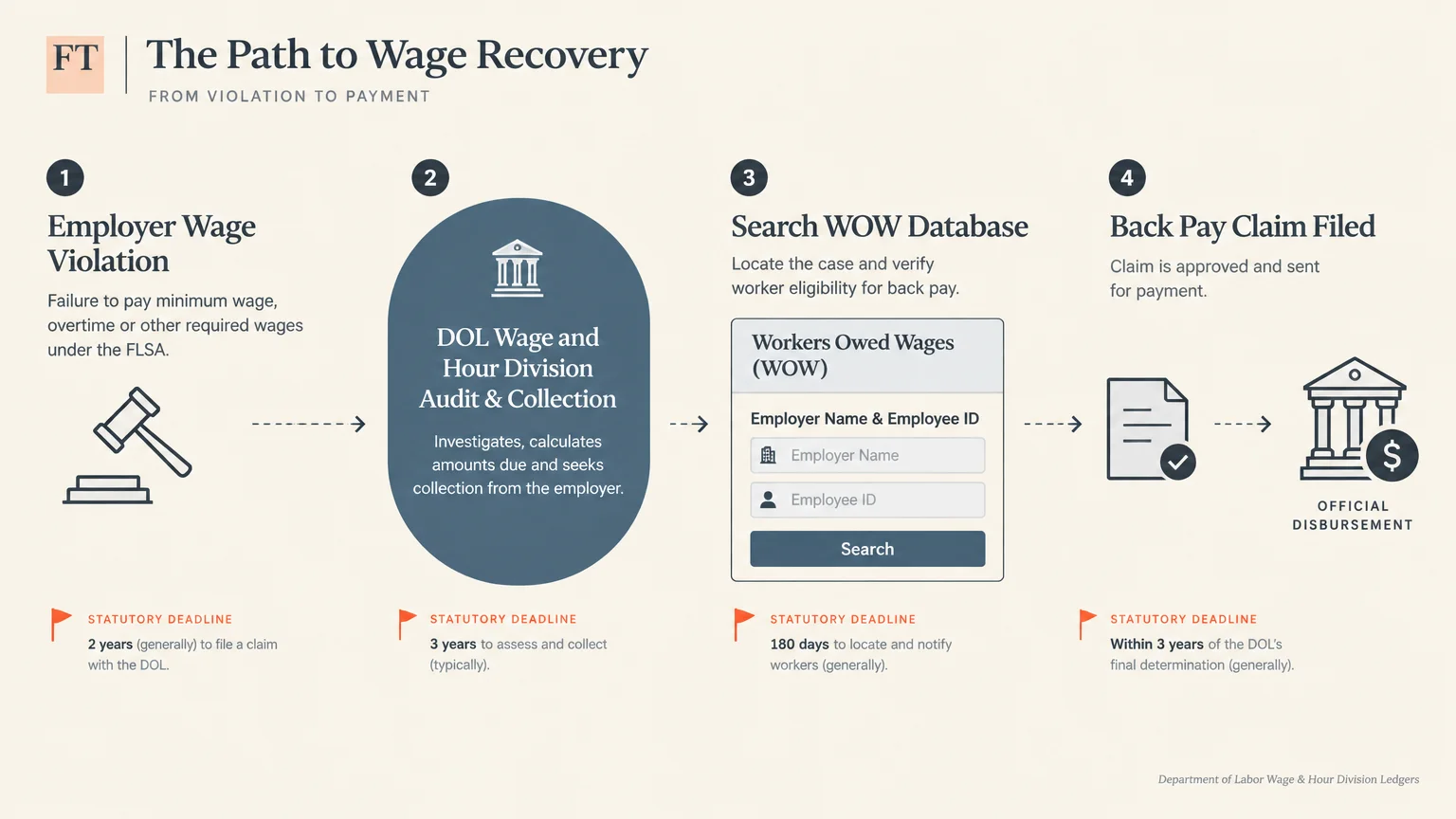
You can quickly locate these funds through the federal Workers Owed Wages tool, commonly known as WOW. Enter your former employer’s company name to verify whether the agency holds funds in your name.
You can search this federal wage database with total peace of mind. Federal law strictly prohibits employers from retaliating against former or current employees who claim legally mandated back pay.
Act promptly if you suspect an old employer violated federal wage standards while you worked there. The Department of Labor holds recovered back pay for three years before transferring unclaimed balances to the Treasury.
Claiming your unpaid wages requires uploading proof of identity and verifying your previous employment. Once agents verify your documentation, the government mails your back-pay check directly to your home.
Tip #6: File Past-Due Tax Returns Before the IRS Three-Year Deadline
Millions of Americans skip filing federal tax returns each year because their annual earnings fall below mandatory filing thresholds. However, skipping a return often means abandoning substantial tax refunds.
Employers automatically withhold federal income taxes from paychecks regardless of your ultimate tax liability. If you earned wages but never filed, the IRS holds your excess withholding in trust.
Many non-filers fear that submitting past-due returns triggers massive IRS penalties. In reality, the IRS charges zero late-filing or late-payment penalties if the government owes you a refund.
You also forfeit refundable tax credits like the Earned Income Tax Credit when you fail to submit a return. Over $1 billion in legitimate tax refunds goes unclaimed every single year.
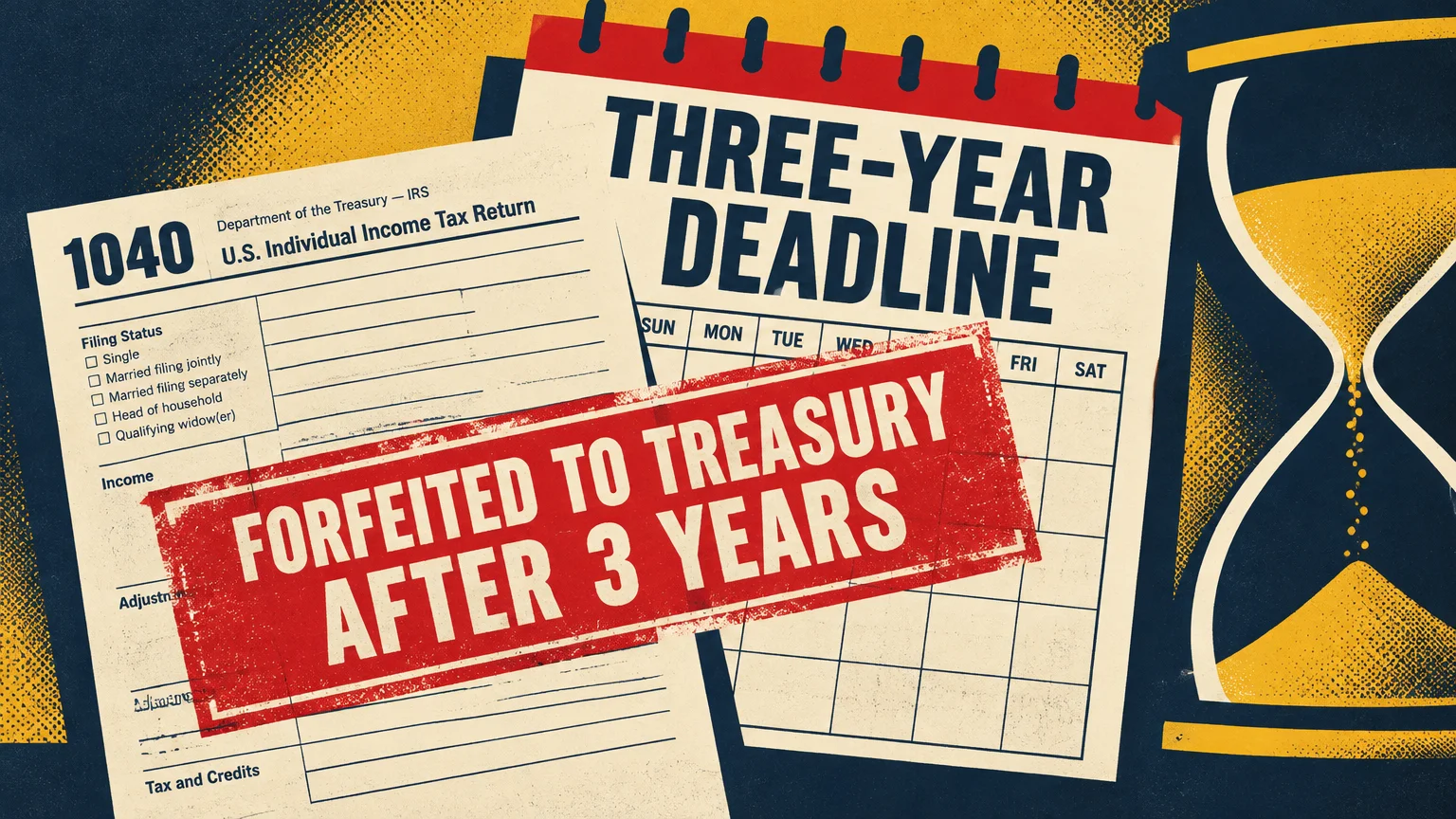
Federal law imposes a strict three-year window from the original filing deadline to claim an old refund. Once that statutory deadline passes, the money legally becomes the permanent property of the U.S. Treasury.
The three-year window to claim $1.2 billion in 2022 refunds, affecting 1.3 million non-filers with a median refund of $686, closed on April 15, 2026. You cannot recover those funds now.
Focus your immediate attention on the next upcoming deadline. The statutory three-year window to file and claim your 2023 tax refund closes permanently on April 15, 2027.
Keep in mind that the window to claim missing pandemic stimulus payments through the Recovery Rebate Credit permanently ended in April 2025. You cannot claim missing COVID checks anymore.
Log into the IRS Get Transcript tool to download your historical wage and income transcripts. Use those official wage records to complete and submit your delinquent returns before the statutory window expires.
Tip #7: Retrieve Funds from Shuttered Banks and Credit Unions
When regional banks or local credit unions fail, federal regulators step in immediately to safeguard consumer deposits. Yet many account holders leave behind uncashed cashier’s checks, loan rebates, or safety deposit contents.
The Federal Deposit Insurance Corporation acts as receiver when commercial banks collapse. The FDIC maintains an online database of unclaimed insured deposits, dividends, and undistributed cashier’s checks.
Regulators also hold unreturned escrow balances left over from closed mortgages when lending institutions collapse. If your mortgage servicer failed while holding property tax reserves, those funds often sit in FDIC receivership.
Search the FDIC Unclaimed Property portal using your name or your business name. If an old bank where you maintained an account failed, your missing money could easily sit in this federal registry.
Credit unions operate under a separate regulatory framework overseen by the National Credit Union Administration. When credit unions liquidate, unclaimed member share accounts move to the NCUA Asset Management and Assistance Center.
You can search the NCUA unclaimed share database directly on their official website. Many former credit union members discover forgotten member dividend payments and abandoned savings deposits there.
Filing a claim requires submitting proof of your former account, such as an old statement or passbook. Regulators also require a copy of your valid driver’s license and your Social Security card.
Once the FDIC or NCUA verifies your paperwork, they distribute your funds via electronic transfer or paper check. The process costs nothing and ensures you receive every cent of your insured balance.

Tip #8: Locate Lost Life Insurance Benefits and Demutualized Stock
Billions of dollars in life insurance payouts go unpaid because beneficiaries never knew a policy existed. Insurers rarely track down beneficiaries when families fail to file a formal death benefit claim.
The National Association of Insurance Commissioners provides a free Life Insurance Policy Locator Service to solve this dilemma. This national registry connects consumers with missing policies belonging to deceased relatives.
Submit a formal search inquiry through the NAIC portal with your relative’s death certificate and identifying details. The system transmits your request to participating insurance carriers across the country for internal review.
You can also search through old banking records or tax returns for payments made to insurance underwriters. Even cancelled checks from decades ago can pinpoint the specific insurer holding a dormant life policy.
In addition to standard death benefits, watch for demutualization proceeds from historical insurance company restructurings. Decades ago, major mutual life insurance firms converted into publicly traded, shareholder-owned corporations.
During those conversions, insurers allocated stock shares and cash compensation to existing policyholders. Millions of policyholders never realized they owned stock, leaving uncashed dividends and shares to sit dormant.
These unclaimed corporate payouts eventually escheat into state treasury registries. Searching your state unclaimed property office under your name or an ancestor’s name often reveals forgotten demutualization assets.
Collecting these corporate assets requires establishing your legal right as a policyholder or surviving heir. Once verified, states reissue stock certificates or liquidate shares into cash payments sent straight to you.
Tip #9: Monitor Class Action Settlements and Federal Redress Funds
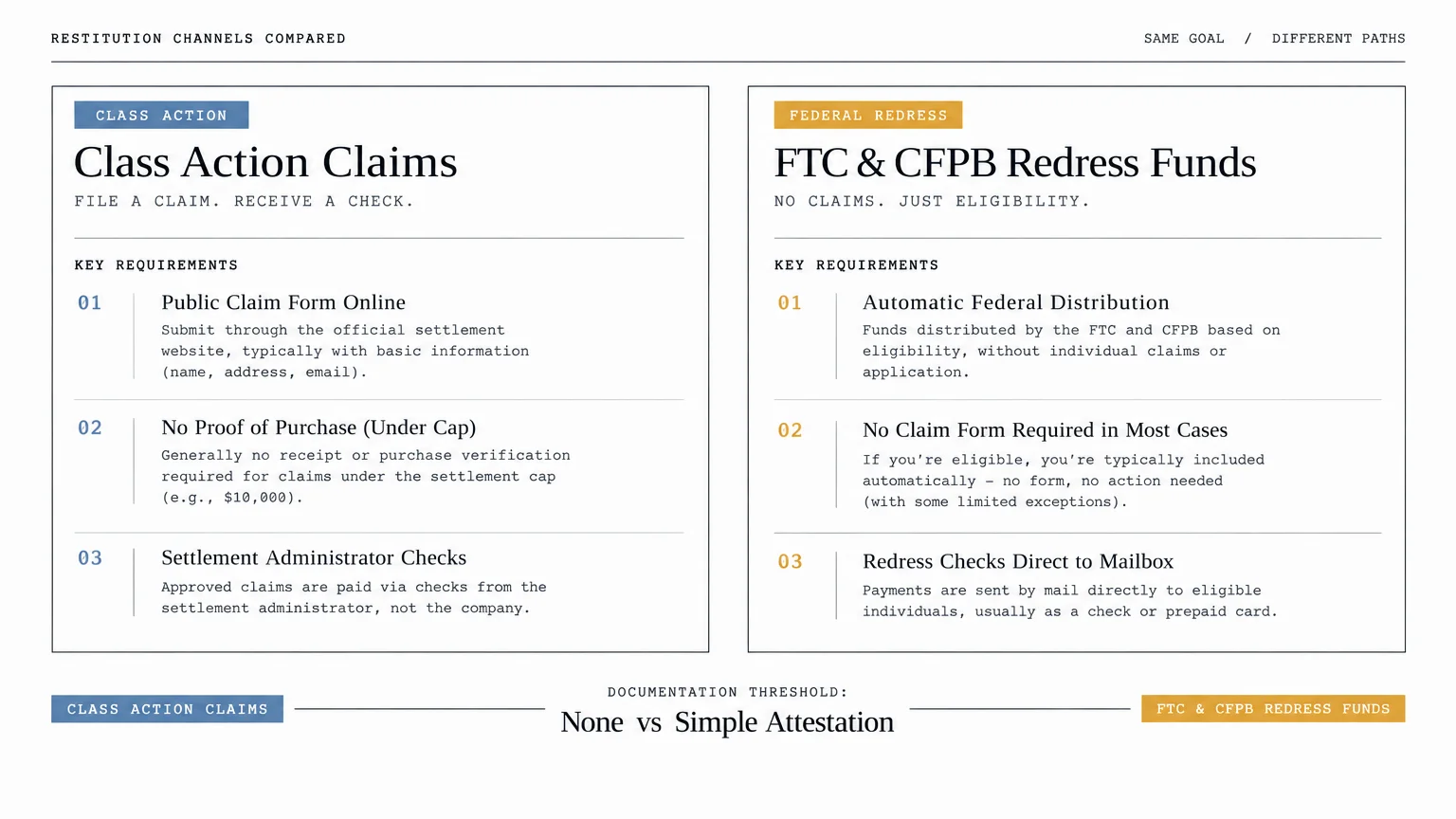
Large corporations routinely settle major lawsuits concerning illegal overdraft charges, deceptive marketing campaigns, and extensive consumer data breaches. These civil settlements establish massive settlement pools to compensate affected customers.
Many eligible consumers ignore settlement notices because the paperwork looks like junk mail. Consequently, tens of millions of dollars in court-approved settlement funds go completely unclaimed every year.
Independent settlement tracking sites catalog hundreds of active class action proceedings requiring no proof of purchase. Regularly checking these consumer directories allows you to submit timely claims before distribution deadlines pass.
You can check major claims administrator websites like Kroll Settlement Administration or Angeion Group directly. These court-appointed administrators publish official claim submission portals for every major corporate settlement in progress.
Federal enforcement agencies also distribute substantial cash restitution directly to consumers harmed by illegal business practices. The Federal Trade Commission frequently issues consumer redress checks following major regulatory enforcement actions.
Visit the FTC refund page to see active corporate distribution programs and track recent refund distributions. If you receive an official FTC refund check in the mail, deposit it immediately.
Government refund checks carry strict expiration dates, often voiding within 90 days of issuance. If you fail to cash your check before that expiration date, the funds revert to the government.
Never pay an outside service to monitor or file class action paperwork for you. Legitimate claim portals provide simple, free submission forms that take only a few minutes to complete online.

The Bottom Line: What This Means for Your Wallet
Reclaiming missing money requires zero financial risk and puts cash directly into your budget. With billions of dollars scattered across state treasuries and federal agencies, conducting regular searches is smart financial hygiene.
Leaving your hard-earned assets in government escrow allows inflation to erode your purchasing power over time. Reclaiming that money puts cash back to work earning interest or wiping out high-interest debt.
Mark your calendar to conduct an annual search across state unclaimed property portals and federal databases. Doing this every January ensures you capture newly escheated funds before statutory deadlines expire.
Never pay third-party asset locators to claim money that belongs to you. Official government portals are completely free and easy to navigate on your own.
Share these search techniques with older family members who may not navigate online databases comfortably. Helping parents or grandparents recover forgotten pensions and insurance benefits can provide a major financial cushion.
Take an hour this week to search your name, previous addresses, and former employers across these official platforms. You might just uncover a financial windfall that changes your budget this month.
Frequently Asked Questions
Do I have to pay taxes on unclaimed money I recover?
It depends on the original source of the recovered funds. If you reclaim your own forgotten savings account balance or a utility deposit, that money is not taxable income.
However, accumulated interest on dormant accounts or traditional retirement distributions constitutes taxable income. Consult a tax professional if you recover a substantial sum with an earnings component.
How can I tell if an unclaimed property notice is a scam?
Legitimate state agencies never demand upfront processing fees, wire transfers, or gift cards to release your money. Anyone charging an upfront fee to release your assets is attempting to defraud you.
If you receive a suspicious letter, ignore the contact information printed on that document. Navigate directly to your official state treasury website to verify the claim through secure channels.
Can I claim missing money on behalf of a deceased relative?
Yes, surviving family members and legal heirs can file claims for assets owed to deceased individuals. However, states demand strict documentation to confirm your legal authority.
You must typically provide a certified death certificate, proof of your relationship, and court-issued probate or estate documents. Once the state verifies your legal standing, they distribute the funds to the estate.
How long does it take to receive my funds after filing a claim?
Processing times vary widely depending on the complexity of your claim and the specific agency involved. Straightforward claims submitted to state registries with electronic identity verification often pay out within two to four weeks.
More complex claims involving deceased relatives, paper savings bonds, or fragmented pension records can take several months to verify. Monitor your claim status through the agency’s tracking portal to ensure timely processing.
For consumer protection information, visit the Federal Trade Commission (FTC) and the Consumer Financial Protection Bureau (CFPB). For product safety and reviews, consult Consumer Reports.
Disclaimer: This article is for informational purposes only and does not constitute financial advice. The content reflects the author’s opinion and research at the time of writing.
Always do your own research before making financial decisions.