You can slash your grocery bill permanently by stocking foods that never spoil. Discarding expired items quietly drains your bank account, but selecting durable staples protects your cash from grocery store inflation.
The average American household throws away thousands of dollars in groceries every year because of misleading expiration labels. Learning which items survive for decades turns your home pantry into a resilient hedge against rising prices.
These ten shelf stable ingredients never demand emergency replacements or rushed meal planning. Build your pantry around them to lock in food security and watch your yearly grocery waste plummet to zero.
Tip #1: Polished White Rice
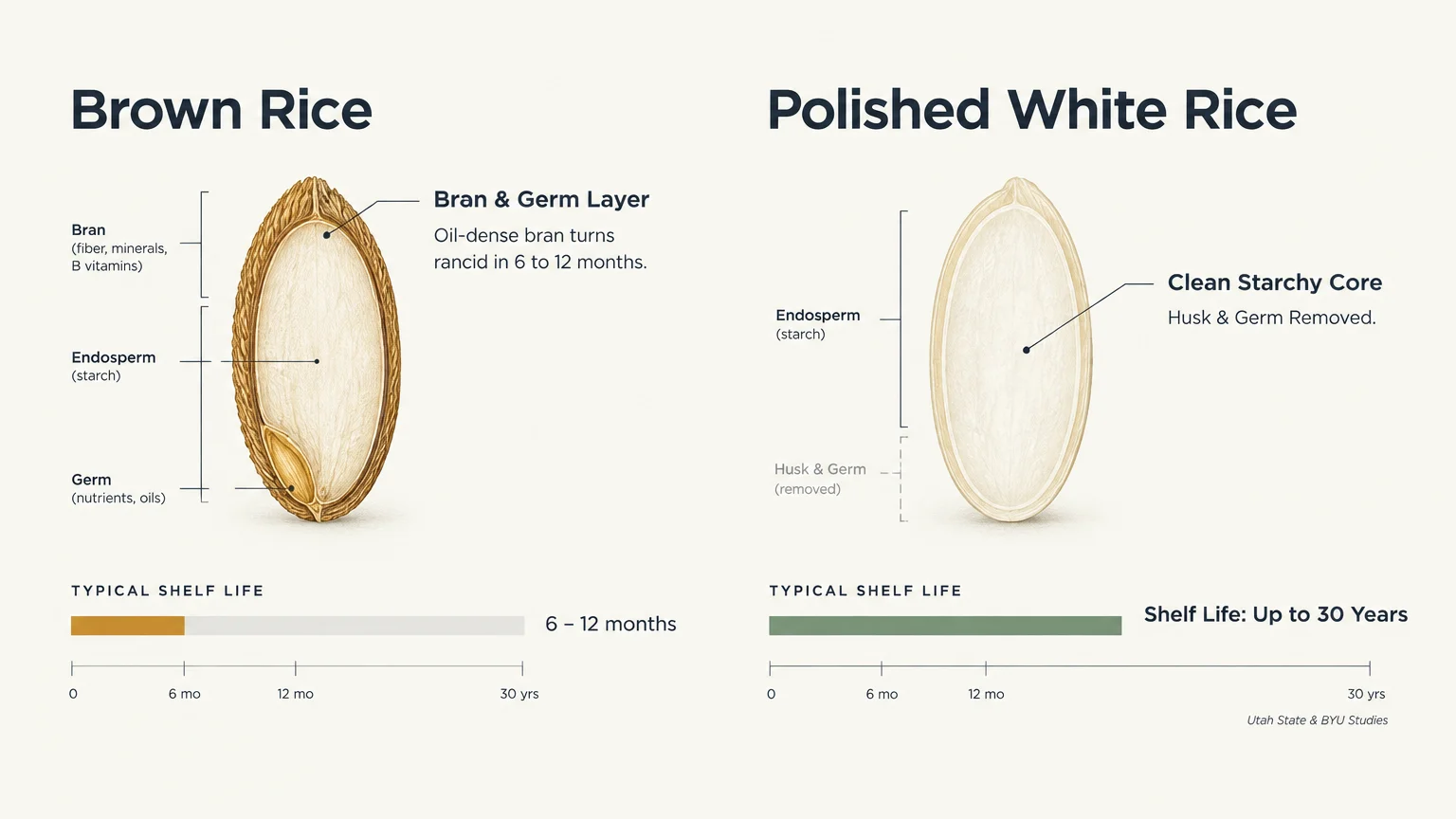
Polished white rice is the ultimate foundation for long lasting pantry foods. When millers strip away the outer husk, bran, and germ, they remove the volatile oils that cause grains to spoil.
Rigorous studies from Utah State University and Brigham Young University prove that white rice maintains its flavor and nutritional value for thirty years. You only need to seal it inside airtight containers with oxygen absorbers at cool room temperatures.
Never make the mistake of stocking brown rice for your emergency food storage. Brown rice retains its oil-dense bran layer, causing the grain to turn rancid within six to twelve months on your shelf.
You can purchase large fifty-pound bags of jasmine or long-grain white rice at warehouse clubs for pennies per serving. Transfer the grain into food-grade buckets lined with Mylar bags to lock in decades of dependable freshness.
This low-cost storage strategy shields your food from ambient humidity, light, and insects. You insulate your budget against agricultural price spikes while building a multi-year carbohydrate reserve.
Tip #2: Pure Raw Honey
Pure raw honey represents one of nature’s authentic foods that never expire. Archaeologists frequently unearth millennia-old pots of honey from ancient Egyptian tombs that remain perfectly safe to eat.
Honey owes its perpetual shelf life to unique biological chemistry. Honeybees create a super-saturated sugar solution with a moisture content consistently below eighteen percent.
This low water content pairs with an acidic pH between 3.2 and 4.5. The hostile chemical environment creates high osmotic pressure, which immediately draws water out of encroaching bacteria and kills them.
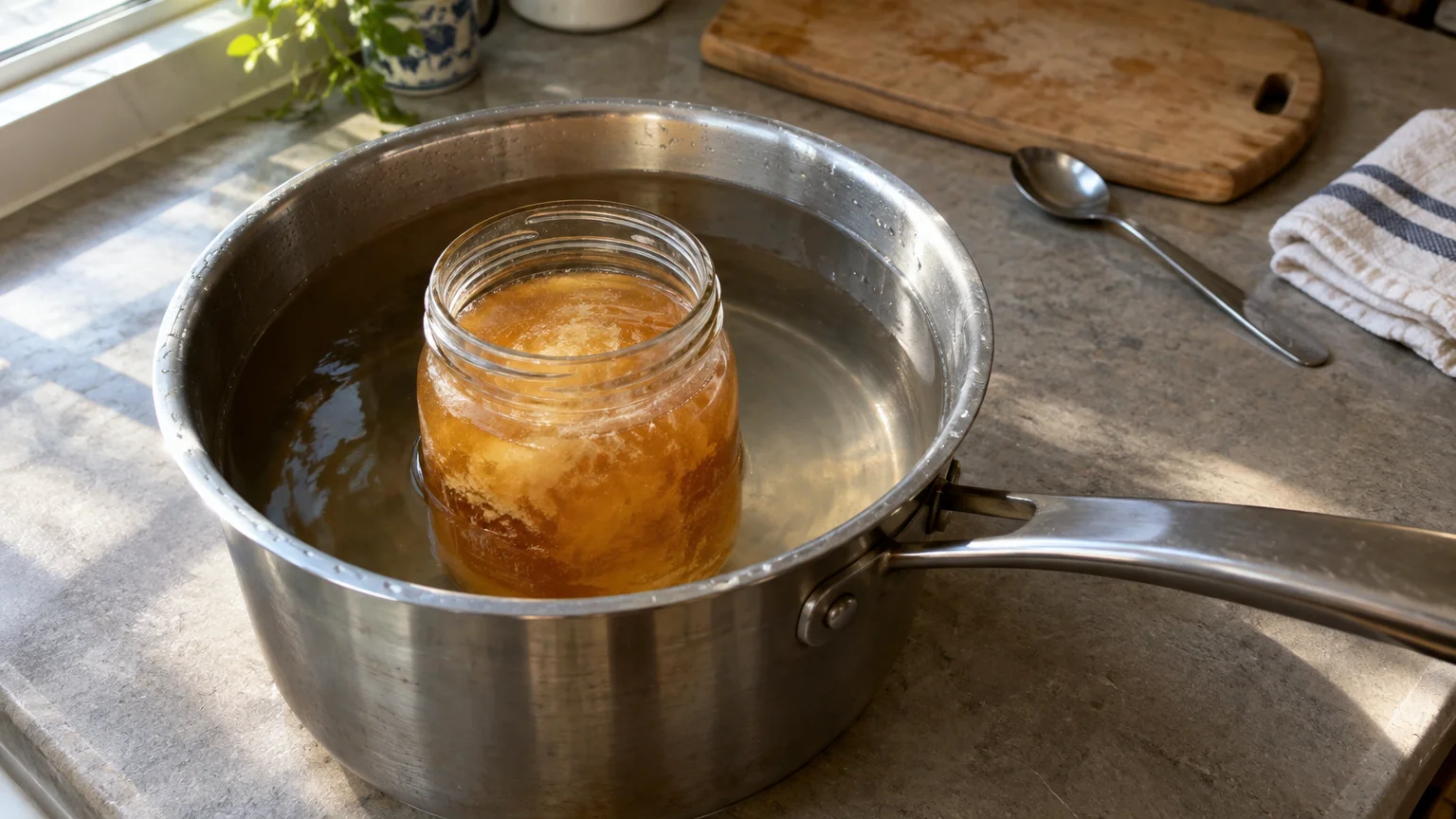
Do not panic if your honey crystallizes into a solid, cloudy paste over time. Crystallization is a natural physical change rather than a sign of spoilage.
To restore crystallized honey, submerge the sealed glass jar in a warm water bath until the crystals dissolve. Never microwave your honey, because intense heat destroys the beneficial enzymes that protect its quality.
Always inspect the label to ensure you buy one hundred percent pure honey. Supermarket syrups cut with corn syrup or artificial sweeteners lack these natural antimicrobial properties and degrade rapidly.
Tip #3: Pure Salt
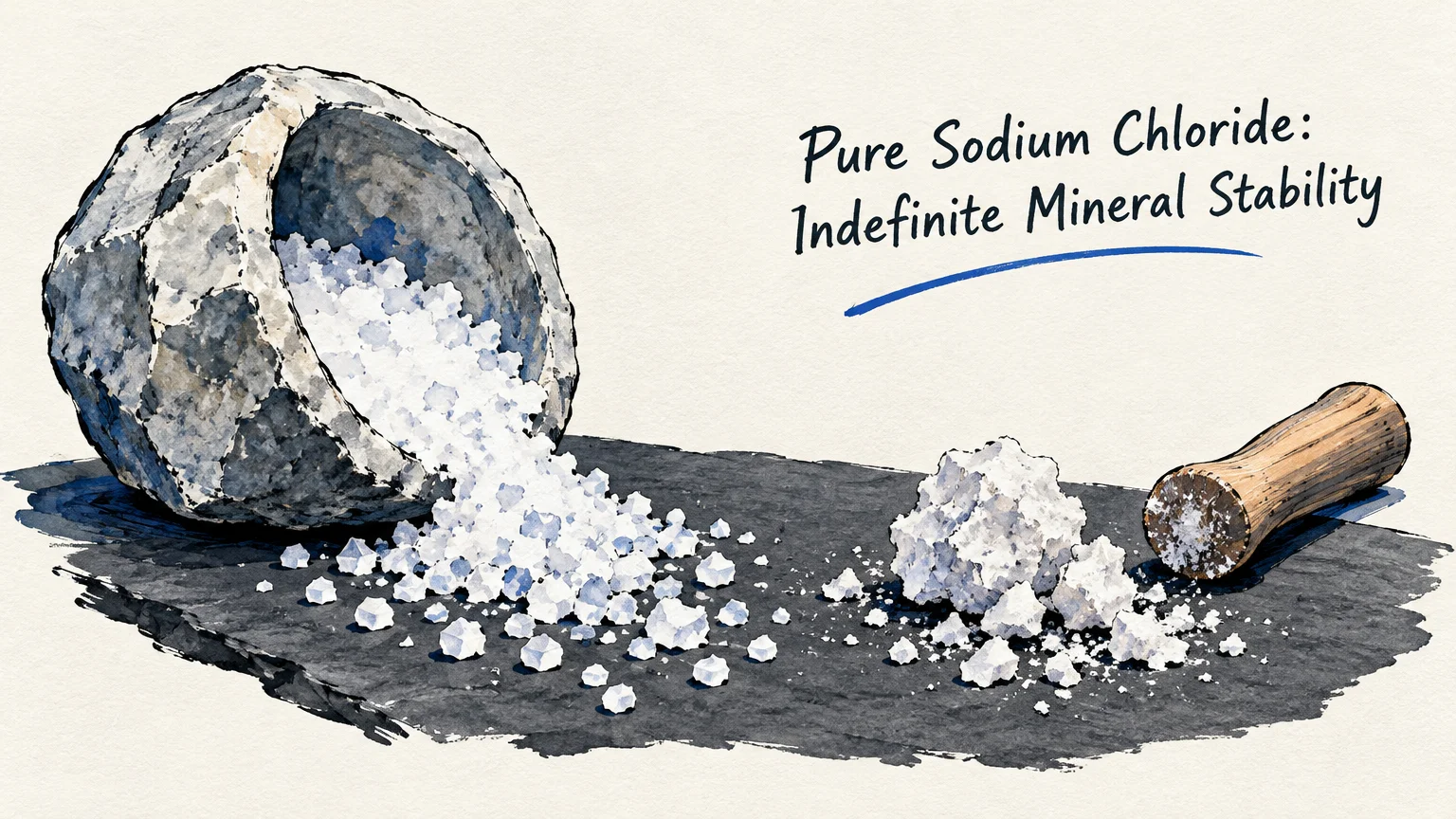
Salt is a natural mineral rather than an organic compound, meaning it contains no biological matter to rot or ferment. Microorganisms cannot survive on pure sodium chloride, making it permanently shelf-stable.
Salt serves as humanity’s original preservative because it creates a powerful hypertonic environment. It rapidly extracts water from surrounding bacteria through osmosis, preventing dangerous mold and microbial growth from taking hold.
Pure sea salt, kosher salt, and uniodized table salt will sit in your pantry forever without degrading. Ambient moisture represents the only real threat to your salt supply because humidity causes the granules to clump together.
Even if your salt hardens into a dense block, you have not lost your investment. Simply break the block with a kitchen utensil or run it through a spice grinder to restore its flow.
Stick to pure mineral salts without added herbs, dairy powders, or organic spices for multi-year storage. While iodized salt remains safe indefinitely, pure non-iodized salts maintain the cleanest flavor over long stretches of time.
Tip #4: Granulated White Sugar
Granulated white sugar boasts an indefinite lifespan identical to pure salt. Pure sucrose acts as an effective desiccant by lowering water activity to levels where microbial life cannot survive.
Bacteria and mold spores cannot thrive on dry sugar crystals because the sucrose rapidly dehydrates invading cellular organisms. You can store bulk sugar in your pantry for decades without risking foodborne illness.
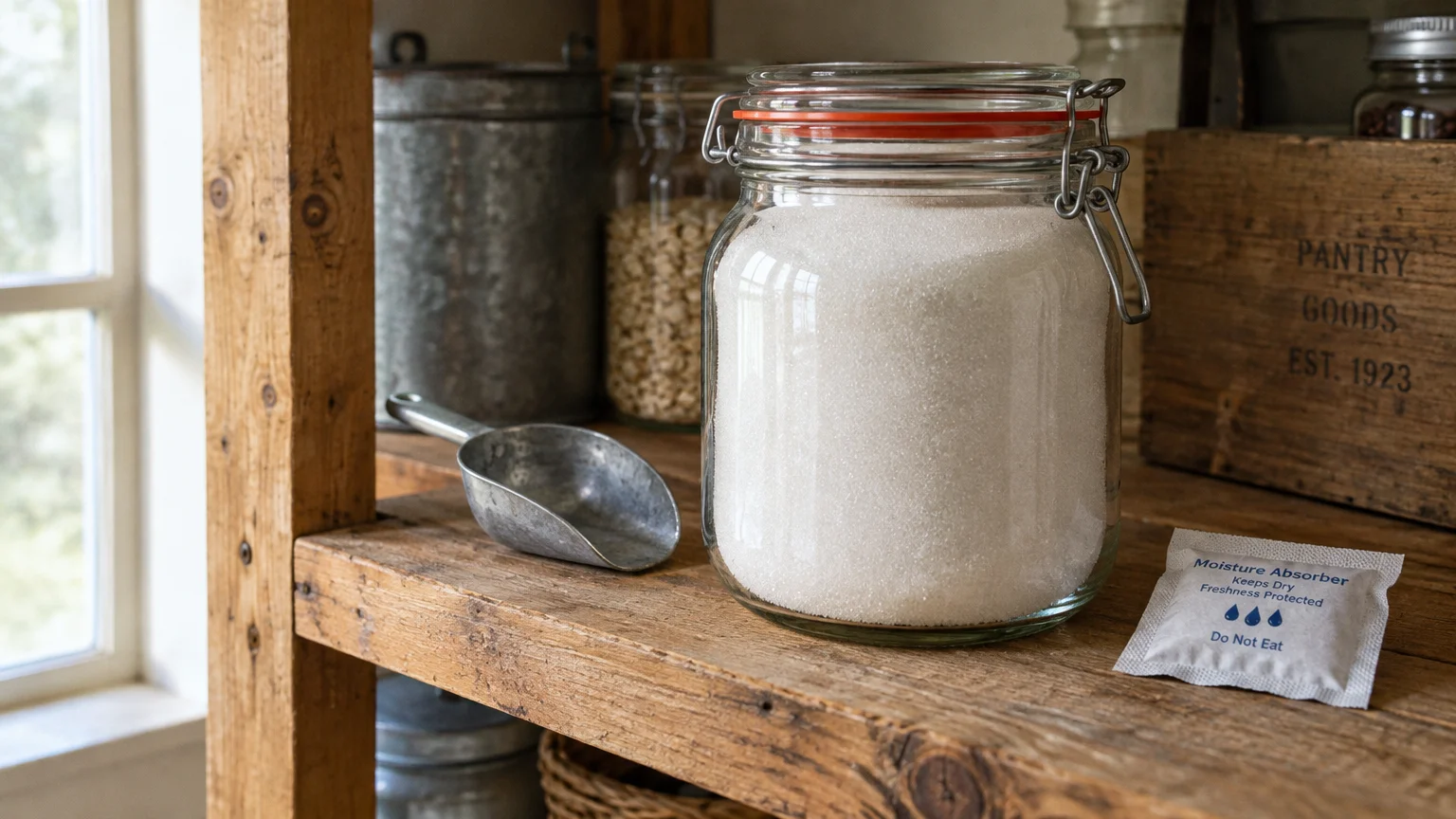
Moisture and household pests remain the primary hazards to stored sugar. Moisture causes individual crystals to dissolve and fuse into solid bricks, while insects can quickly chew through basic paper packaging.
Seal your sugar inside heavy-duty, airtight plastic bins or glass jars to keep humidity out. Never add oxygen absorbers to sugar containers, because depriving sugar of oxygen turns the granules into a rock-solid mass.
If stored sugar ever absorbs moisture and turns hard, place a slice of bread inside the container for twenty-four hours. The sugar draws moisture from the bread and softens without compromising its chemical integrity.
Tip #5: Dry Beans
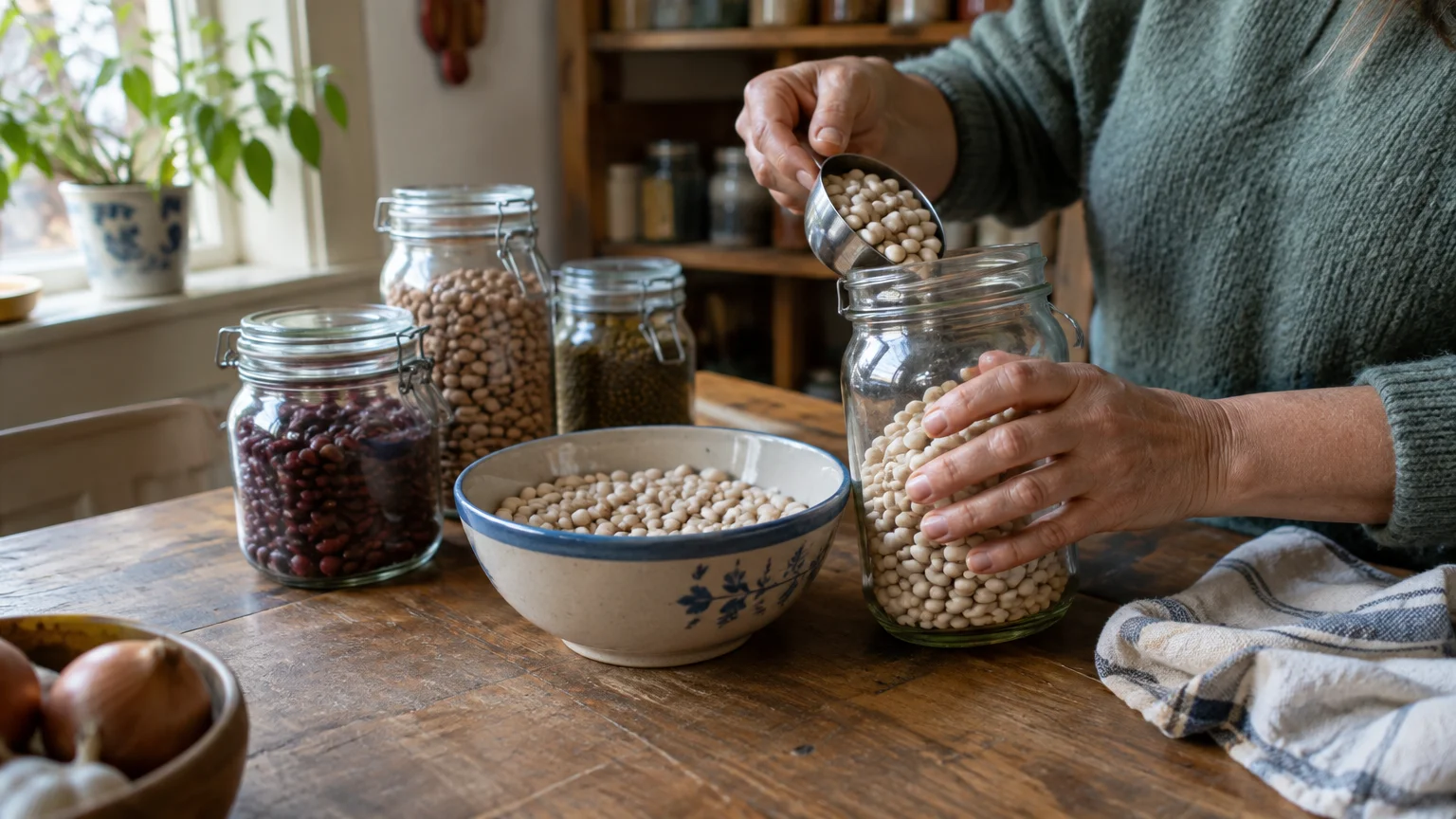
Dry beans are powerhouse pantry staples that supply vital plant-based protein, dietary fiber, and complex carbohydrates. Varieties like black beans, pinto beans, and lentils will remain completely edible and safe indefinitely under cool, dry conditions.
Food scientists have demonstrated that dry beans sealed in oxygen-free packaging retain their core nutritional value for up to thirty years. This endurance makes them a cost-effective pillar of any balanced emergency food plan.
However, beans kept for several years undergo a physical trade-off known as hard-bean syndrome. The natural starches and cellular pectin toughen as moisture slowly evaporates from the inner seed coats.
Aged beans often refuse to soften through ordinary boiling, remaining tough even after hours on the stove. Tossing them out wastes good food when a cheap pantry hack solves the problem instantly.
Add half a teaspoon of baking soda to your soaking or simmering water when preparing older beans. The sodium ions break down tough pectin molecules, allowing your beans to cook tender and creamy every time.
Tip #6: Distilled White Vinegar
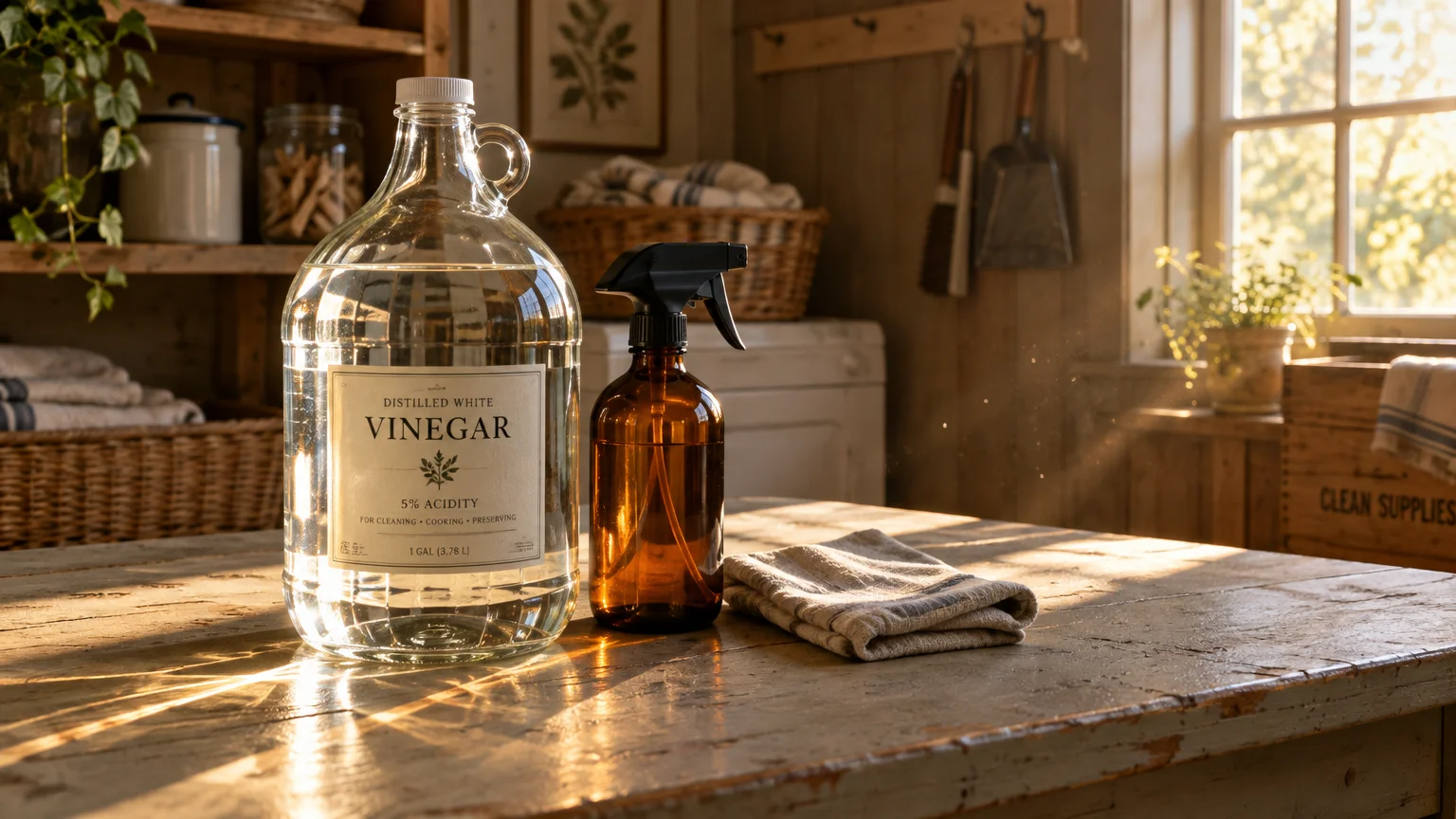
Distilled white vinegar is an acidic pantry workhorse that never spoils, degrades, or requires cold storage. It is produced by fermenting distilled grain alcohol into an intensely acidic solution of roughly five percent acetic acid.
This robust acidity creates a natural antimicrobial barrier where harmful bacteria, yeasts, and molds cannot survive. The liquid preserves itself indefinitely, making it a reliable staple you can safely buy in large quantities.
You can grab a gallon of distilled white vinegar at discount stores for just a few dollars. Keeping several gallons on your shelf gives you incredible utility for cooking, pickling, and tenderizing cheap cuts of meat.
Beyond cooking, white vinegar replaces dozens of overpriced household cleaning sprays. Use it to dissolve mineral deposits, disinfect kitchen counters, and deodorize laundry without spending extra cash on branded chemicals.
Keep the cap firmly screwed on the bottle to prevent slow evaporation over the years. Store the bottle in a dark cupboard to maintain its acidity level for decades without any loss of cleaning or culinary potency.
Tip #7: Pure Vanilla Extract
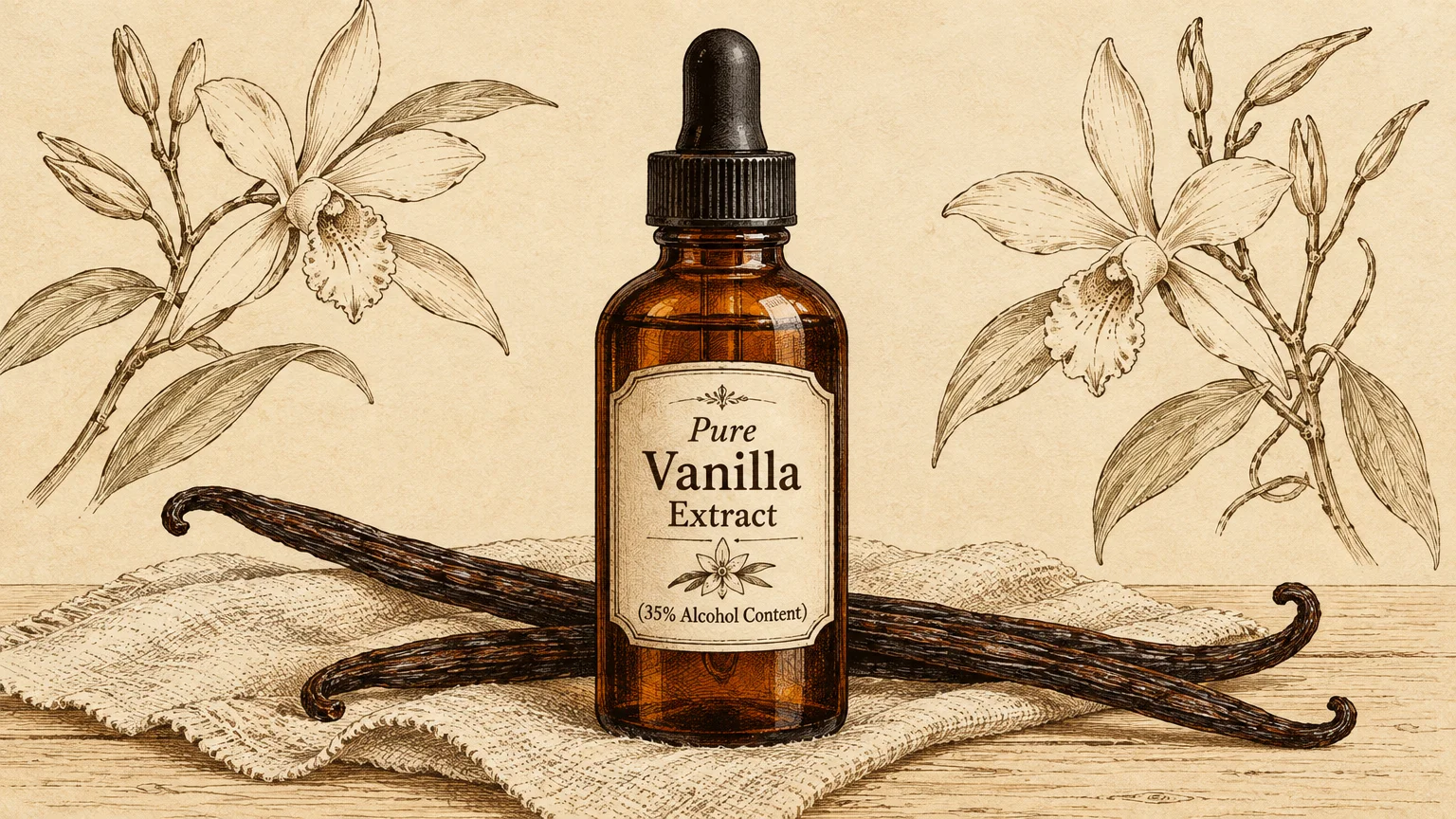
Pure vanilla extract is a high-value culinary staple that lasts indefinitely without losing its aromatic potency. Under federal regulations in 21 CFR 169.175, genuine vanilla extract must contain a minimum of 35 percent ethyl alcohol by volume.
That high alcohol content serves as a permanent preservative that halts bacterial colonization in its tracks. In fact, real vanilla extract actually improves with age as the vanilla beans continue to infuse the alcohol base.
Do not confuse pure vanilla extract with cheap imitation vanilla flavorings. Imitation products rely on synthetic vanillin dissolved in water and chemical stabilizers, which break down and turn bitter within two to three years.
Store your vanilla extract in an amber glass bottle to shield it from ambient light and heat. Keep it away from your stove or warm countertops, since fluctuating heat causes the volatile aromatic oils to dissipate.
Purchase pure vanilla extract in eight-ounce bottles at warehouse clubs rather than buying tiny grocery vials. Since real vanilla never spoils, bulk purchases slash your cost per ounce and save serious money over time.
Tip #8: Rolled Oats
Whole grains often spoil quickly because their natural fats turn rancid, but rolled oats are a remarkable exception. Extension research from Utah State University demonstrates that rolled oats can last up to thirty years when packed properly.
Commercial oat millers steam and heat whole oat groats during the rolling process. This crucial thermal treatment deactivates lipase enzymes that would otherwise break down the natural oils and cause rancidity on the shelf.
Never leave oats in standard cardboard canisters for long-term storage. Cardboard absorbs atmospheric humidity and provides zero protection against pantry pests like grain weevils and flour moths.
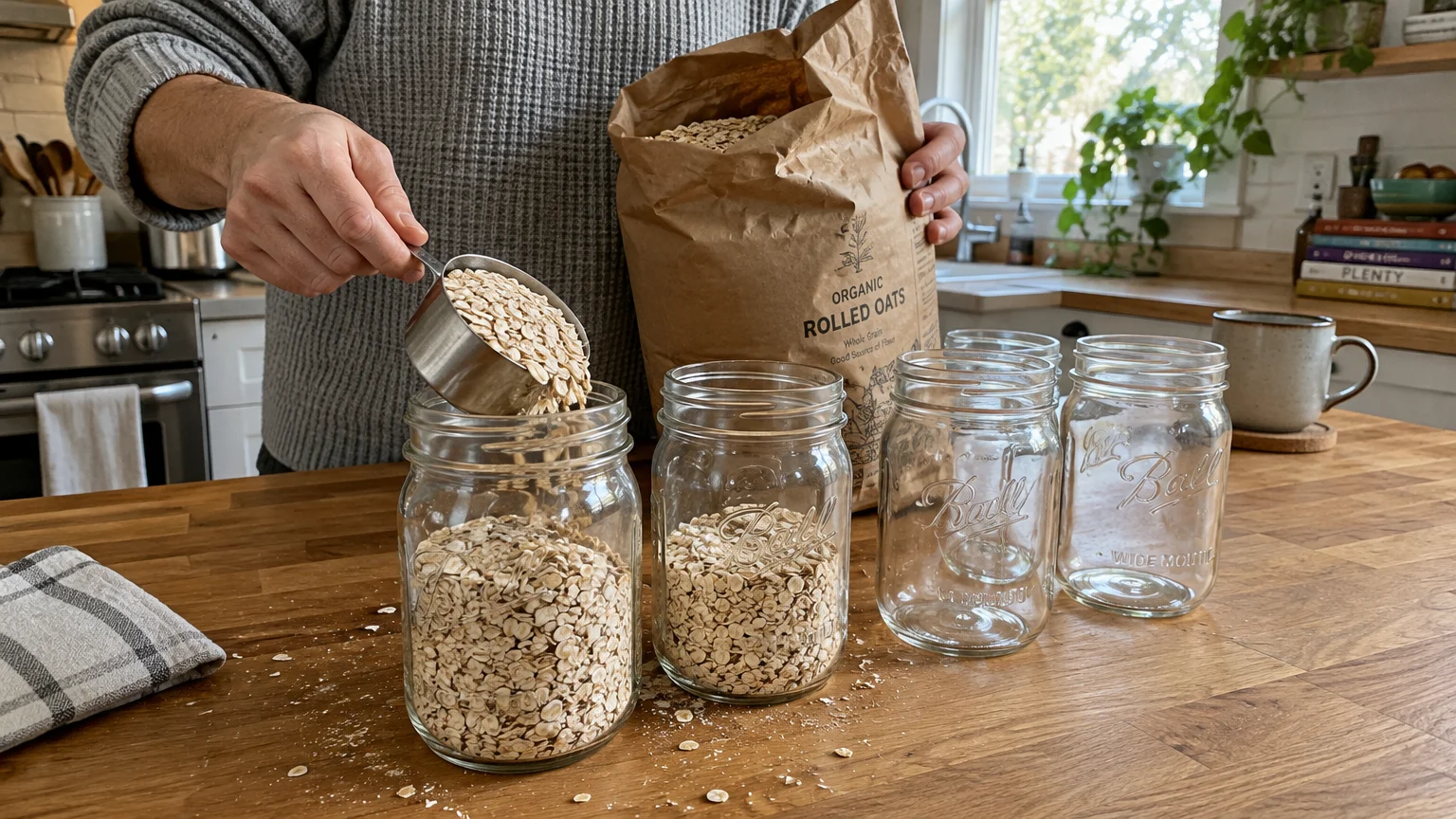
Pack your rolled oats into heavy-duty Mylar bags with oxygen absorbers and seal them inside five-gallon buckets. This storage method keeps oxygen levels below 0.1 percent, preserving the protein, fiber, and flavor for decades.
Rolled oats serve as a frugal powerhouse for breakfasts, baking, and homemade oat flour. Buying bulk oats in fifty-pound sacks allows you to secure years of nutritious meals for a tiny fraction of normal grocery costs.
Tip #9: Cornstarch
Cornstarch is a vital pantry thickener that will never spoil as long as you keep it dry. Extracted from the starchy endosperm of corn kernels, cornstarch is composed almost entirely of pure, long-chain carbohydrates.
Because cornstarch contains no proteins or fats, there are no organic compounds to oxidize or turn rancid. It will remain completely shelf-stable for decades without losing its thickening capabilities.
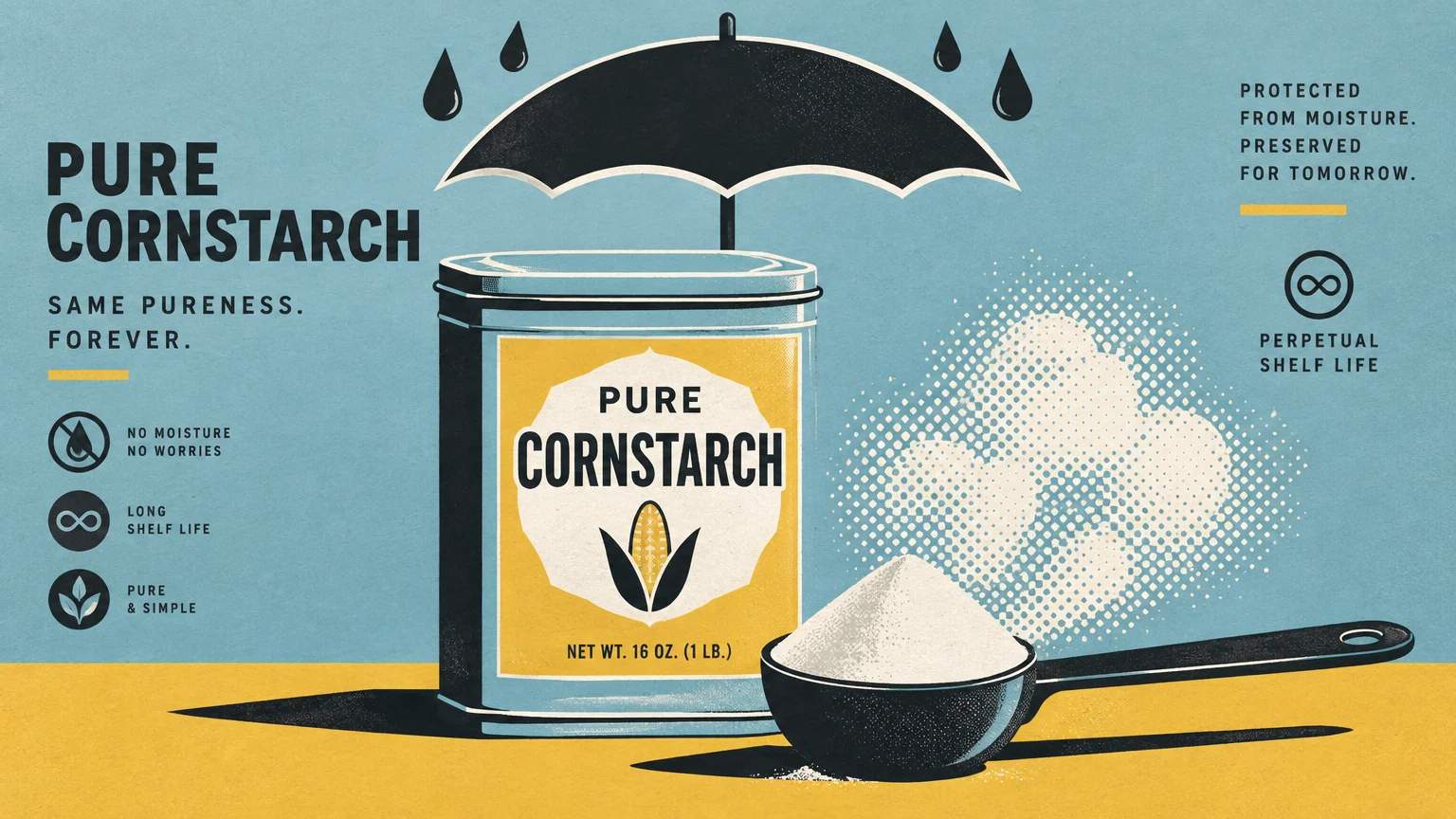
Moisture represents the single danger to your cornstarch supply. If ambient humidity penetrates the packaging, the starch molecules absorb the water, causing severe clumping and opening the door for mold spores to grow.
Discard the flimsy cardboard packaging immediately after bringing your cornstarch home from the store. Transfer the powder into an airtight glass jar or heavy plastic container with an airtight rubber gasket.
Store the container in a cool, dry cupboard far away from stovetop steam and boiling pots. A single large tub of cornstarch can handle all your sauces, soups, and gravies for years without ever needing replacement.
Tip #10: Baking Soda
Baking soda, known scientifically as sodium bicarbonate, is an inorganic mineral salt that never spoils or goes bad. Microorganisms cannot consume or decompose mineral compounds, giving baking soda an indefinite food-safety shelf life.
While baking soda remains safe to consume indefinitely, it can lose its chemical leavening power over time. When exposed to ambient humidity, the compound slowly reacts with moisture and gradually expels its carbon dioxide gas.
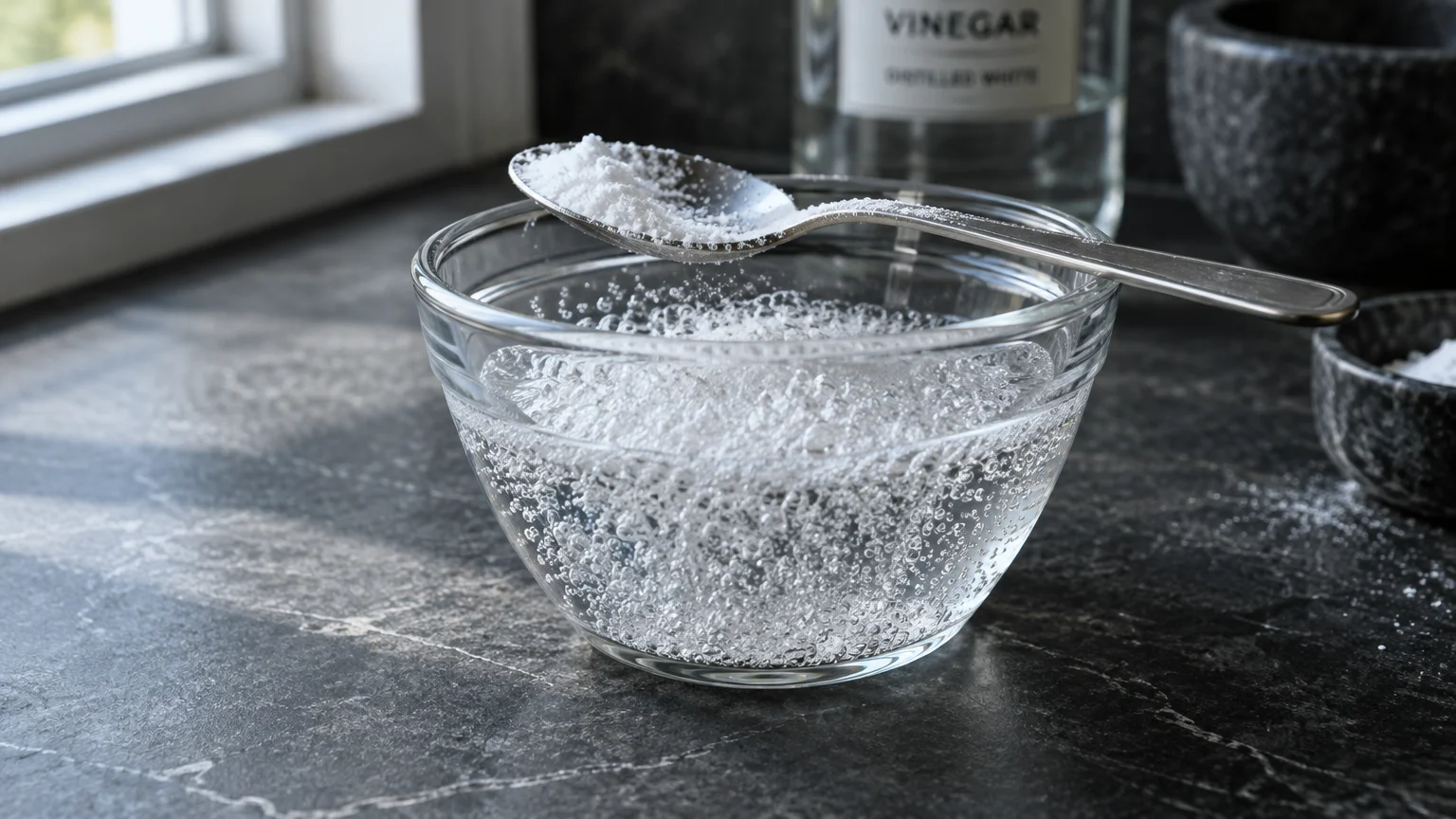
You can verify whether an older container of baking soda is still active before using it in a recipe. Place half a teaspoon of baking soda into a small bowl and add a few drops of vinegar.
If the mixture bubbles vigorously, your baking soda still possesses full leavening power for your baked goods. If the reaction is sluggish or nonexistent, do not toss the powder into the trash.
Demoted baking soda still works perfectly for scouring stained pans, absorbing refrigerator smells, and cleaning drains. Store fresh boxes in airtight glass containers to protect their leavening potency for five to ten years.
The Bottom Line: What This Means for Your Wallet
Food manufacturers profit when frightened consumers toss perfectly good food into the trash based on arbitrary printed dates. Under federal law, date labels like “Best If Used By” are completely voluntary, with infant formula being the sole exception.
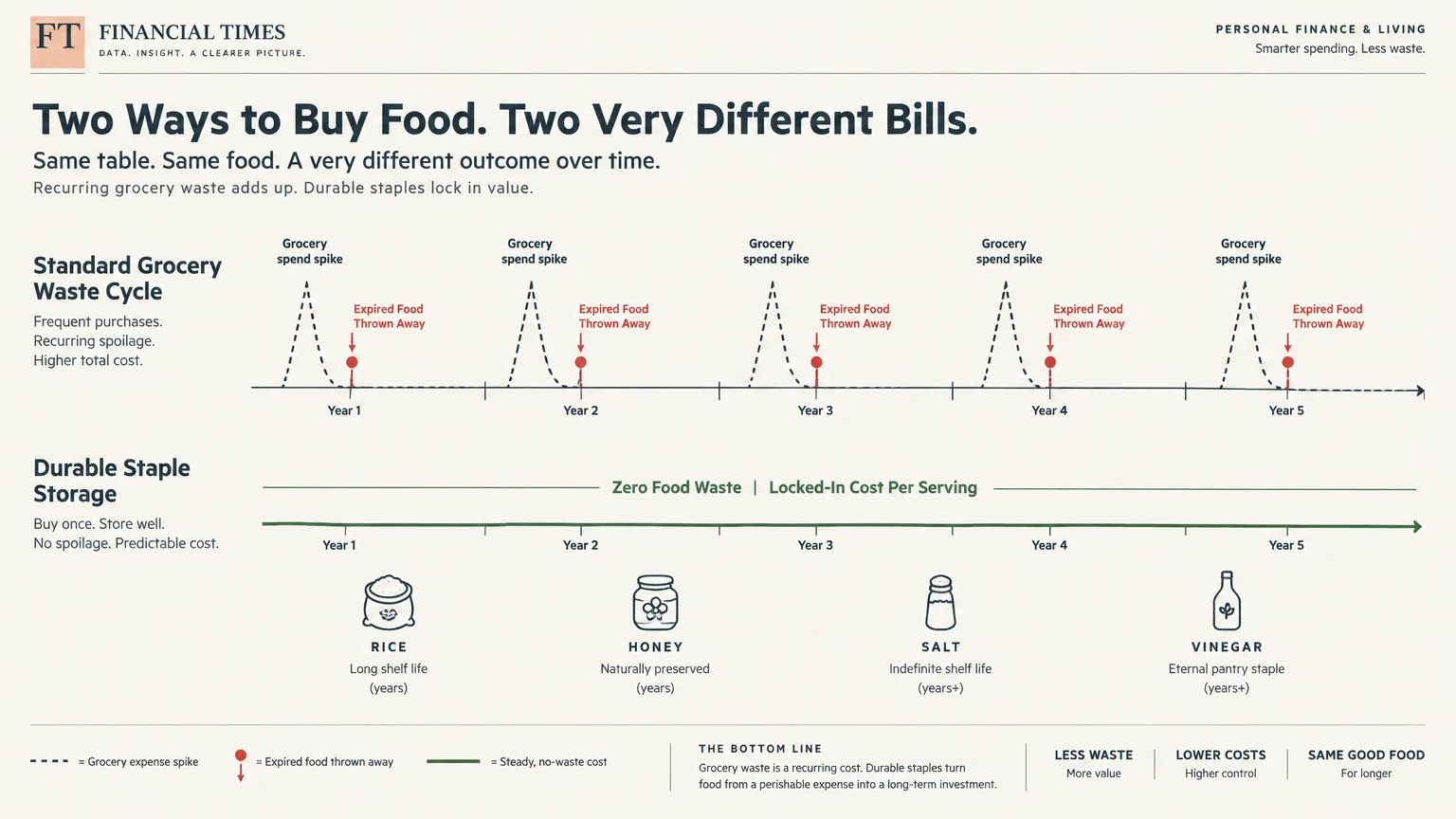
These voluntary date stamps indicate peak manufacturer freshness rather than an objective deadline for food safety. Discarding pantry items simply because they passed a printed date throws your hard-earned money straight into the garbage.
Data from the USDA and EPA reveals that American households waste thirty to forty percent of their food supply. That waste costs a typical family between $1,500 and $2,900 each year in discarded groceries.
Stocking your kitchen with these ten durable pantry staples gives you an unbeatable financial advantage over supermarket inflation. You permanently eliminate food waste, stop emergency grocery trips, and guarantee that your household stays prepared for any unexpected disruption.
Take control of your grocery budget by shifting from high-waste foods to permanent pantry staples today. Buy these resilient ingredients in bulk, store them in airtight containers, and watch your monthly food expenses plunge.
For consumer protection information, visit the Federal Trade Commission (FTC) and the Consumer Financial Protection Bureau (CFPB). For product safety and reviews, consult Consumer Reports.
Disclaimer: This article is for informational purposes only and does not constitute financial advice. The content reflects the author’s opinion and research at the time of writing.
Always do your own research before making financial decisions.
Frequently Asked Questions
Do expiration dates on dry goods mean the food is dangerous to eat?
No, expiration stamps on dry goods indicate manufacturer flavor estimates rather than safety deadlines. Aside from infant formula, federal law does not mandate expiration dates on food products in the United States.
As long as dry pantry goods remain free of moisture, mold, and insects, they remain safe to eat for years beyond the date on the box.
What is the best container setup for long-term emergency food storage?
Food-grade five-gallon plastic buckets lined with five-mil Mylar bags and oxygen absorbers provide the best long-term protection. This budget-friendly combination completely blocks out oxygen, sunlight, humidity, and pests for decades.
For standard kitchen cabinets, heavy glass Mason jars with airtight sealing lids offer outstanding pest-proof storage at minimal cost.
Why does brown rice spoil so quickly while white rice lasts for decades?
Brown rice retains its outer bran layer and oily germ, which contain high concentrations of delicate natural fats. These plant lipids oxidize quickly when exposed to air and room temperatures, turning the rice rancid within six to twelve months.
Milling white rice removes those fat-rich layers entirely, leaving behind pure carbohydrates that cannot oxidize or spoil.
How do you restore brown sugar and white sugar that have hardened?
White sugar hardens when it absorbs excess moisture, while brown sugar hardens when its natural molasses dries out. You can soften brown sugar by sealing it with a fresh apple slice or a damp paper towel for twenty-four hours.
For hard white sugar, crush the chunks with a rolling pin or dry them on a baking sheet in a warm oven at the lowest setting.