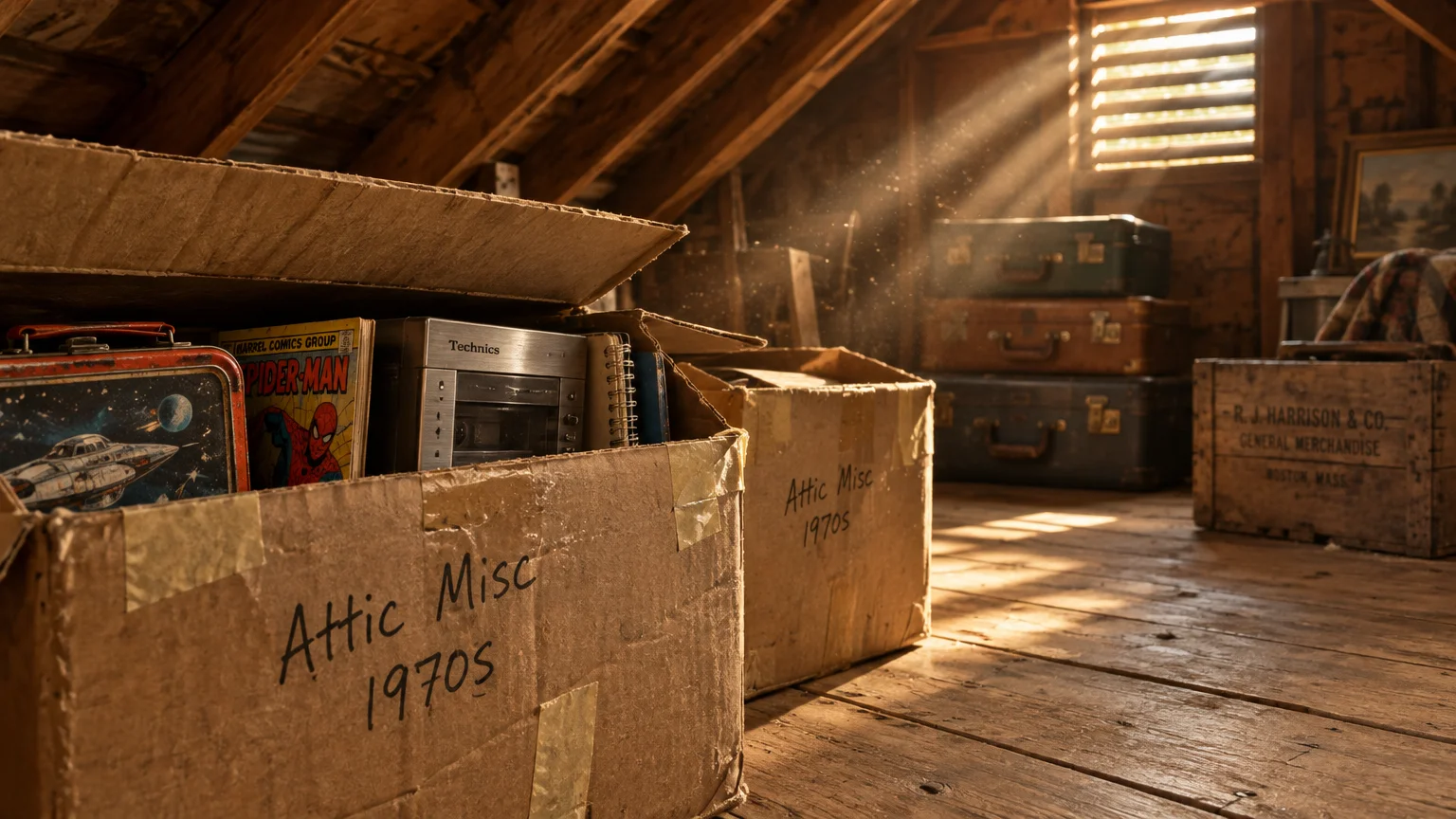
Your dusty attic boxes might hold a fortune in vintage items worth money. Unassuming pop culture relics and electronics from the 1970s now command staggering cash sums from serious collectors.
Before you toss old childhood belongings or donate basement clutter to a thrift shop, inspect every label and serial number. Overlooked 1970s collectibles frequently outperform traditional stock market investments when preserved in prime condition.
This guide uncovers the most lucrative valuable 70s items hiding across American households today. Check your closets against these high-value treasures to claim your unexpected windfall.
Tip #1: 1976 Apple-1 Computer
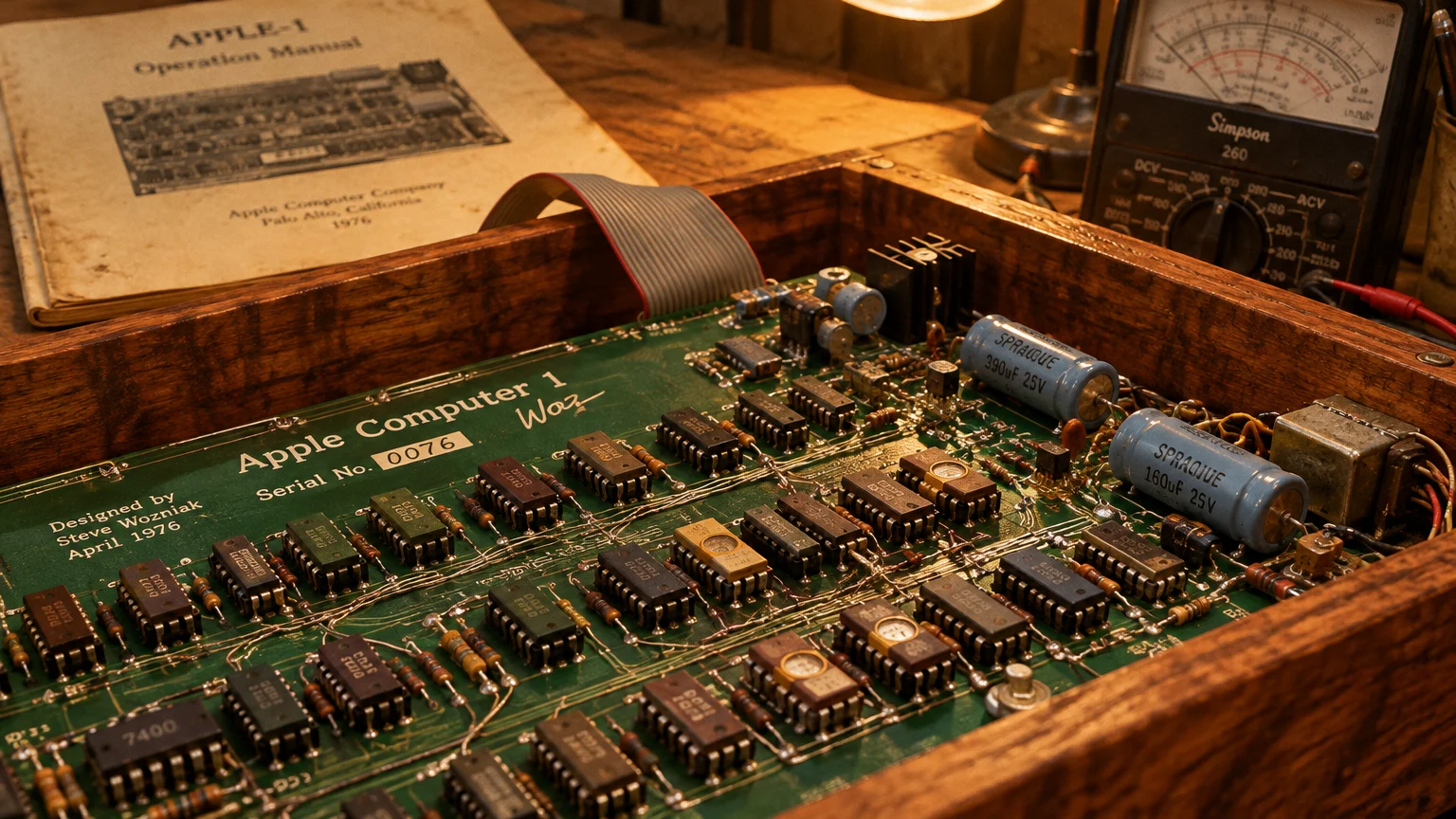
Steve Jobs and Steve Wozniak hand-built the Apple-1 motherboard in a California garage, originally selling units for $666.66 at The Byte Shop in 1976. Fewer than 75 of the original 200 units produced survive today.
On October 14, 2026, the operational Hatfield Apple-1—signed by Wozniak with a 1978 letter from Jobs—sold at Bonhams New York for $1,148,200. In January 2026, the pre-production Celebration Apple-1 reached a record $2,750,000.
Look for green circuit boards stamped with the original Apple Computer 1 logo and Wozniak’s unique wiring layouts. Many original owners built custom wooden cases from koa wood or metal to protect the exposed circuitry.
Never connect an original Apple-1 to a modern electrical outlet before a vintage electronics conservator inspects the power supply. Firing up decayed capacitors can instantly destroy irreplaceable circuitry and erase hundreds of thousands of dollars in value.
Store discovered units in dry, climate-controlled spaces away from attic humidity. Document all original documentation, manuals, and handwritten letters, as provenance dramatically influences final auction bids.
Tip #2: 1979 Kenner Star Wars Boba Fett Action Figures
Kenner revolutionized toy merchandising when they launched their Star Wars line in the late 1970s. The mysterious bounty hunter Boba Fett remains the crown jewel of vintage action figure collecting.
An unreleased 1979 J-slot rocket-firing Boba Fett prototype set the world record for the most expensive toy ever sold at auction. It fetched $1,342,000 at Goldin Auctions in August 2024, following a hand-painted prototype sale of $525,000.
Standard retail 1979 Boba Fett figures still factory-sealed on their original 21 Back B blister cards have sold for up to $84,375. Even loose, uncarded figures in decent condition average between $1,500 and $4,900 on secondary markets.
Inspect the back of your vintage card packaging to identify the printed grid of available characters. Collectors pay top dollar for 21 Back variations that show only the first twenty-one figures produced.
Never attempt to tape loose blister bubbles back onto worn cardboard backings. Authentic factory heat seals determine real collector value, and artificial adhesives instantly destroy pristine toy grades.
Tip #3: 1974 The Incredible Hulk #181 Comic Book
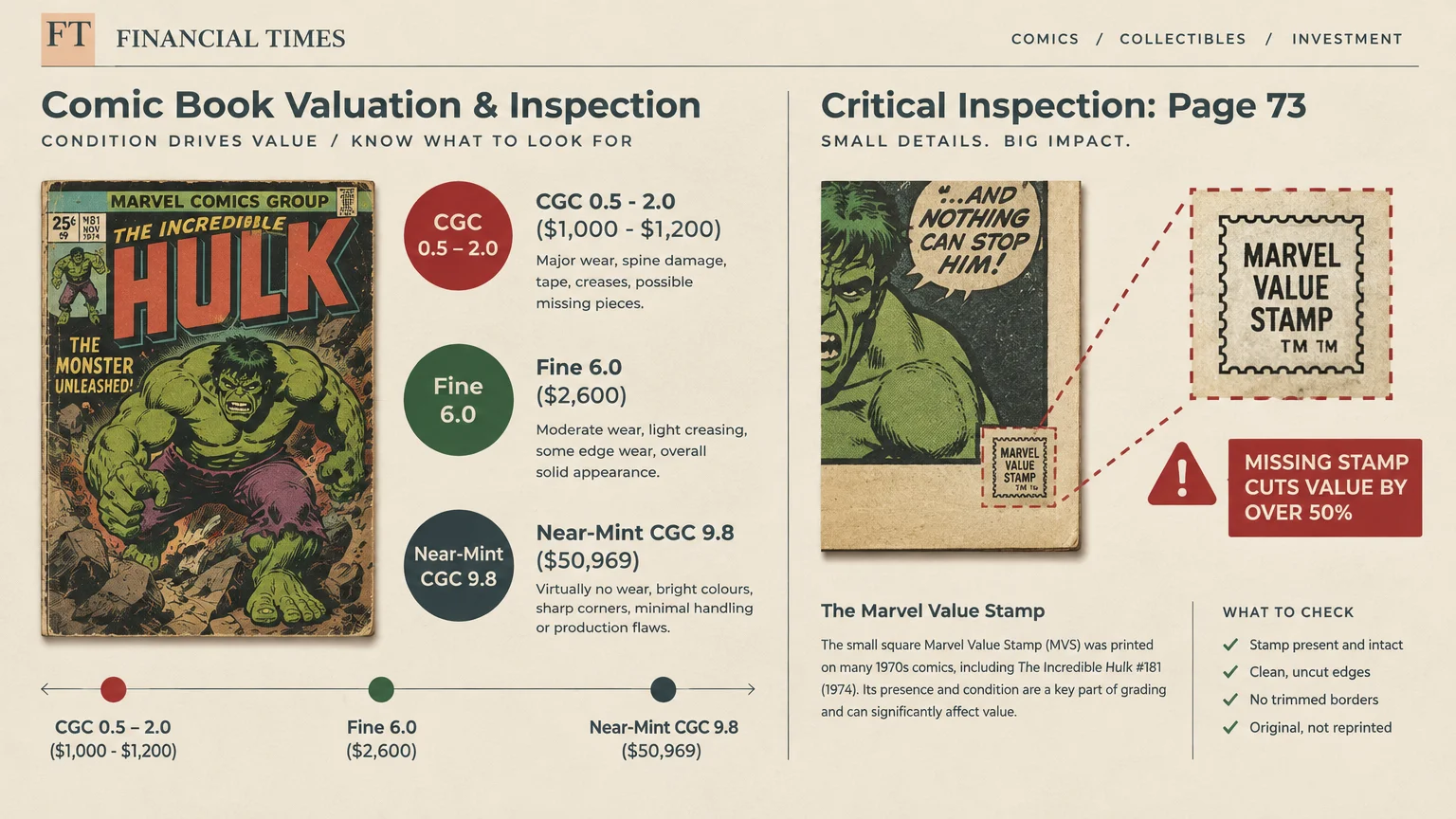
Published in November 1974, issue #181 of The Incredible Hulk features the historic first full appearance of Wolverine. Written by Len Wein and penciled by Herb Trimpe, it ranks among the most coveted bronze-age comic books.
Heavily worn copies with low grades between CGC 0.5 and 2.0 routinely sell for $1,000 to $1,200. Solid mid-grade copies in Fine 6.0 condition trade hands for $2,600.
High-grade copies deliver staggering sums. A near-mint CGC 9.8 copy sold for $50,969 at a ComicLink auction in April 2025, while the sole CGC 9.9 copy carries an estimated valuation of $264,000.
Always inspect page 73 before buying or selling any raw copy from a garage sale. Readers frequently clipped out the small square Marvel Value Stamp, which cuts the comic book’s market value by more than half.
Slide your unslabbed vintage comic books into acid-free mylar sleeves backed with acid-free boards. Keep them standing upright in specialized comic storage boxes away from direct sunlight.
Tip #4: 1974 The Amazing Spider-Man #129 Comic Book
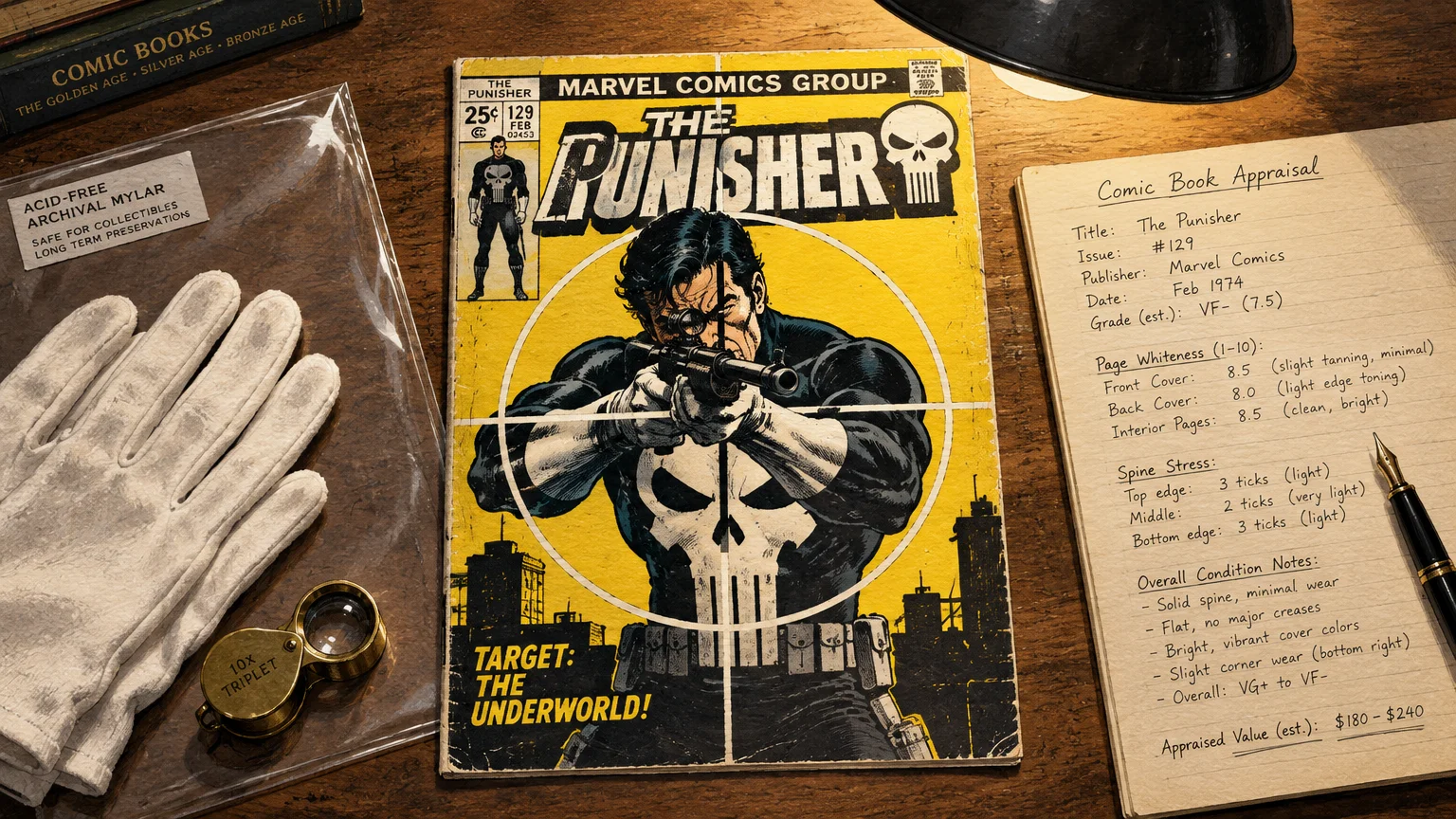
Marvel struck gold twice in 1974 by introducing another legendary antihero. Issue #129 of The Amazing Spider-Man brought Frank Castle, known as The Punisher, into the Marvel Universe.
Well-preserved copies of this iconic issue command substantial prices, easily selling for over $4,000 in good condition. The stark cover featuring Castle pointing a high-powered rifle directly at Spider-Man attracts both comic purists and modern movie fans.
Inspect the white cover background closely for color-breaking spine ticks, foxing, and corner wear. Printers utilized delicate inks during this era, making unblemished covers extremely uncommon today.
Verify that the inner pages retain clean, off-white to white color tones rather than brittle yellow borders. Check both centerfold staples to confirm the pages remain firmly anchored without rust bleeding into the paper.
Send promising raw copies to third-party grading authenticators before listing them on major auction platforms. Professional grading eliminates buyer skepticism and maximizes your net payout.
Tip #5: 1979 Sony Walkman TPS-L2
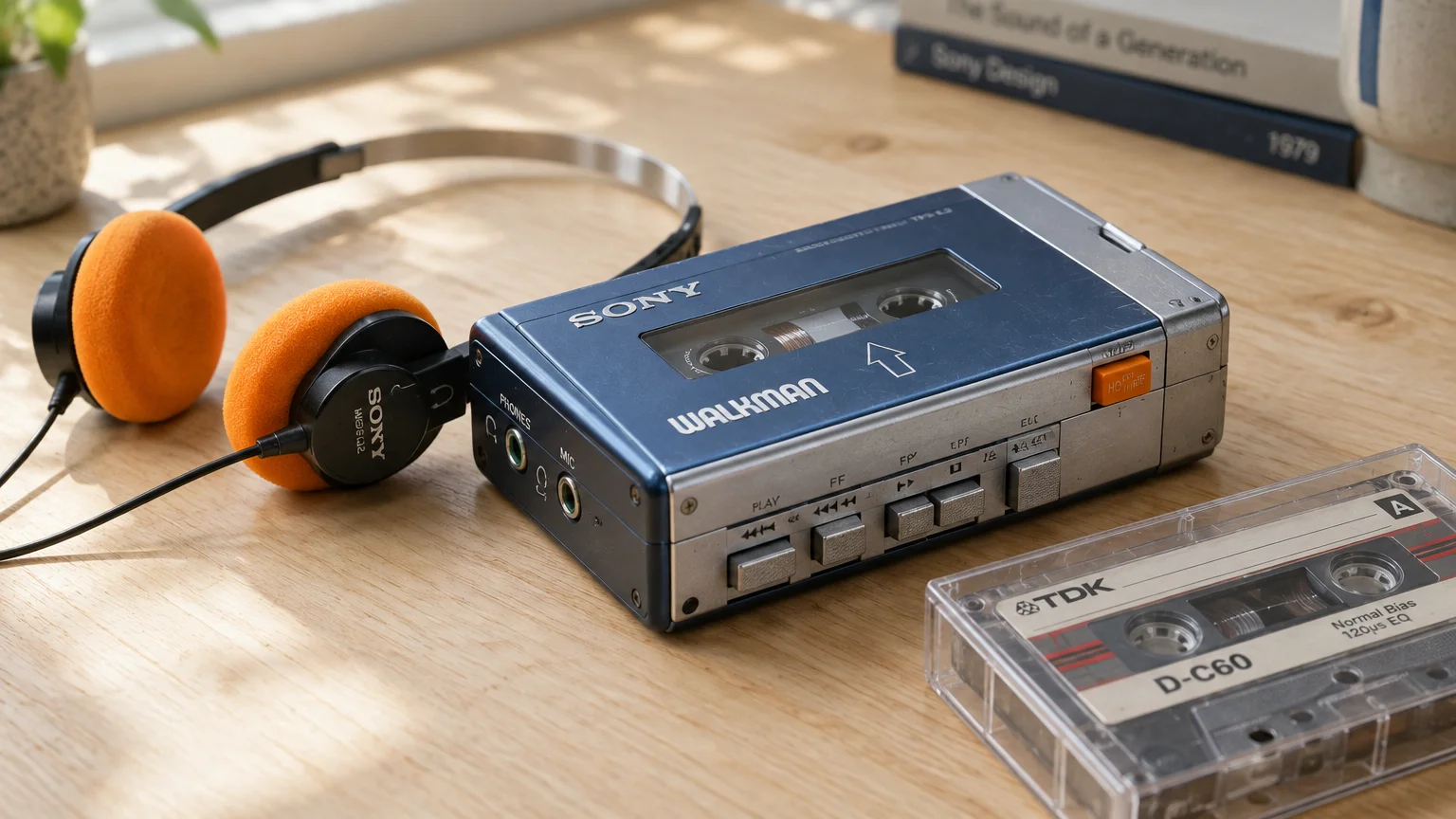
Sony changed personal audio forever when it launched the TPS-L2 portable cassette player in Japan in July 1979. Retailing around $200 at launch, this metallic blue-and-silver brick created the portable audio revolution.
Today, vintage audio enthusiasts actively hunt down original first-generation models. Non-working units intended for salvage parts sell quickly for $295 to $330 on online marketplaces.
Fully functional, serviced units paired with their original blue MDR-3L2 headphones command between $650 and $1,000 or more. Pop culture appearances in modern sci-fi blockbusters have sent global collector demand skyrocketing.
Open the rear battery door and check the metal spring terminals for chalky turquoise battery corrosion. Acid leaks from neglected alkaline batteries often eat through the delicate internal copper traces.
Avoid forcing jammed playback buttons if the internal motor makes a faint whirring sound. Original drive belts stretch and dissolve into black goo over time, requiring replacement by a skilled electronics technician.
Tip #6: 1977 Atari 2600 “Heavy Sixer” Console
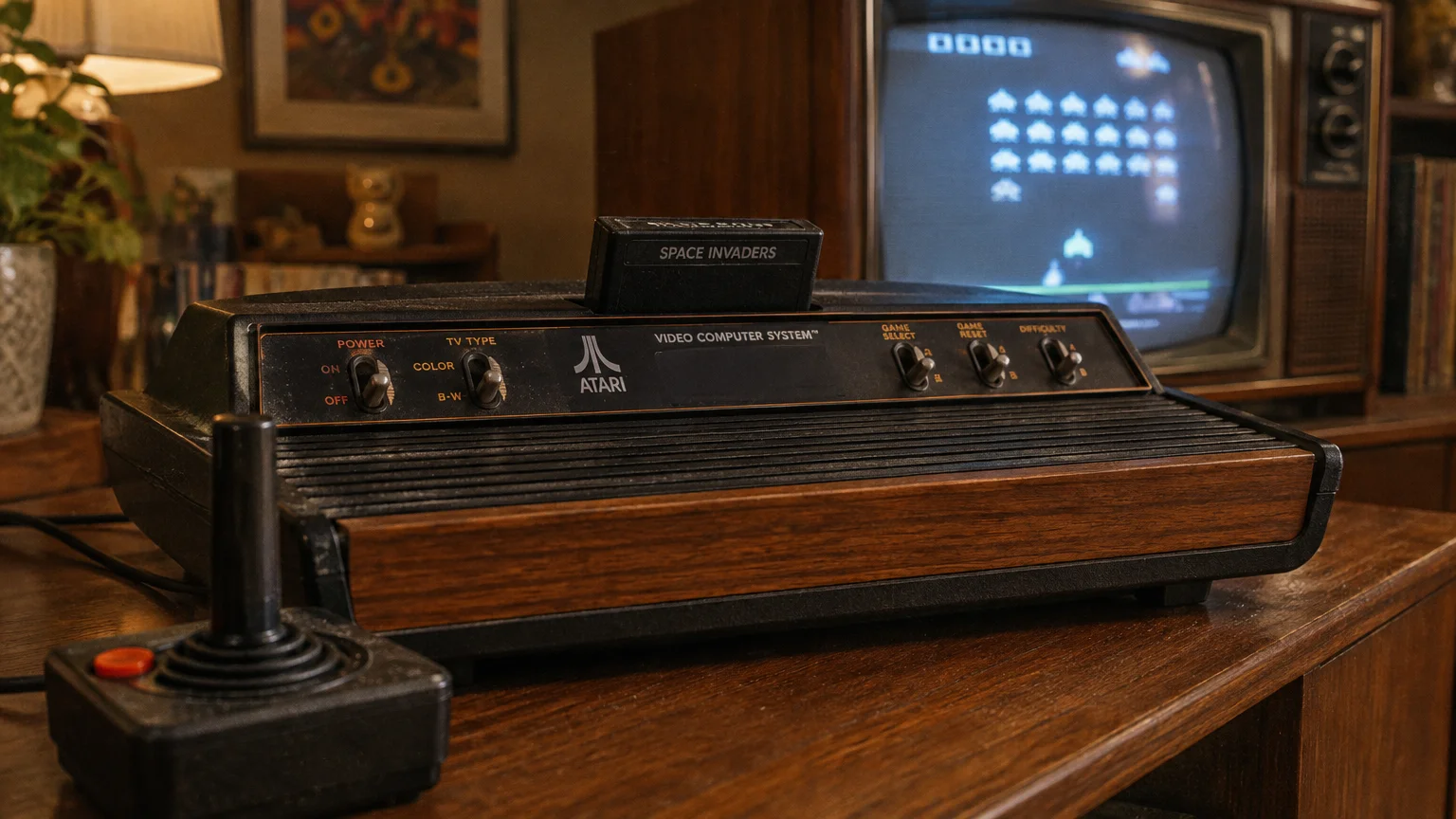
While standard Atari 2600 video game consoles typically resell for $90 to $145, first-year editions hold far greater value. Serious video game historians specifically search for the 1977 Heavy Sixer production run.
These early production units were manufactured in Sunnyvale, California, and feature thick internal radio-frequency shielding and heavy plastic molding. Working Heavy Sixer consoles sell for $145 to $350 or more on secondary markets.
Finding a console complete inside its original chess piece artwork box can push values up to $450. Later cost-reduced variations manufactured in Taiwan used thinner plastic shells that lack this distinct collector appeal.
Flip the console over to examine the manufacturer label on the underside of the plastic casing. Look for the Sunnyvale, California address and heavy curved edges along the bottom rear molding.
Test the six front aluminum switch toggles to confirm clean mechanical spring tension. Clean dust from the cartridge connector slot using isopropyl alcohol and a soft swab before testing game cartridges.
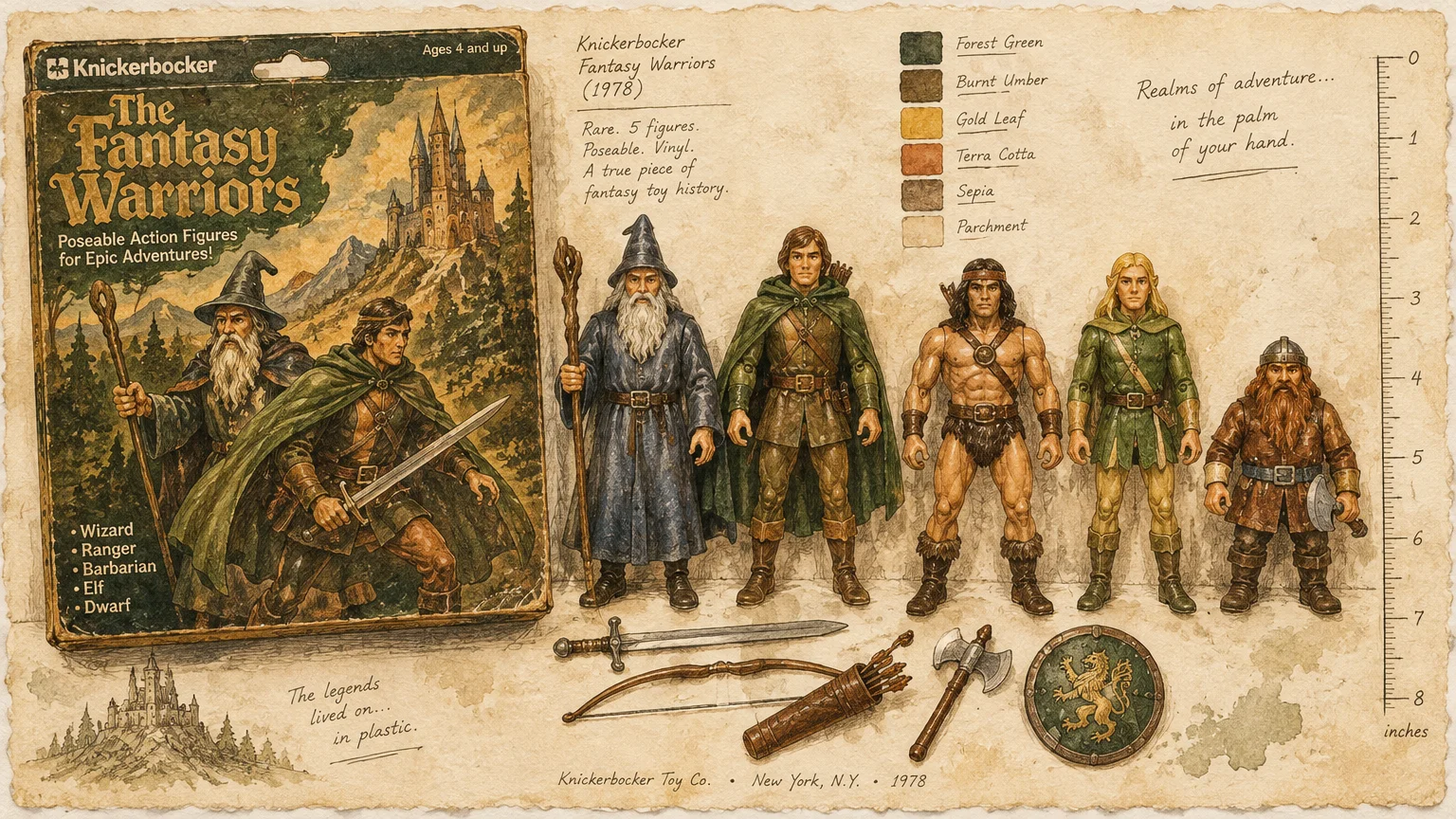
Tip #7: 1978 Knickerbocker The Lord of the Rings Playset
Director Ralph Bakshi brought J.R.R. Tolkien’s high fantasy epic to theaters in 1978 with an ambitious animated film.
Toy maker Knickerbocker released an accompanying line of action figures and accessories that saw limited distribution.
Because children played roughly with these toys, surviving complete sets are exceptionally rare today. A complete vintage Knickerbocker Lord of the Rings action figure and playset collection can fetch up to $17,000 on eBay.
Characters like Aragorn, Frodo, Samwise, and Gollum came with small, delicate vinyl cloaks, swords, and ring accessories. Missing even a single tiny plastic weapon significantly decreases individual figure valuations.
Examine the clear blister bubbles on carded examples for signs of brittleness and yellowing. 1970s toy plastics often degrade when exposed to ambient heat and daylight over multiple decades.
Preserve these fragile vintage figures in custom ultraviolet-filtering acrylic display cases. Never wash vintage painted figures with chemical detergents, which dissolve period-accurate paint finishes.
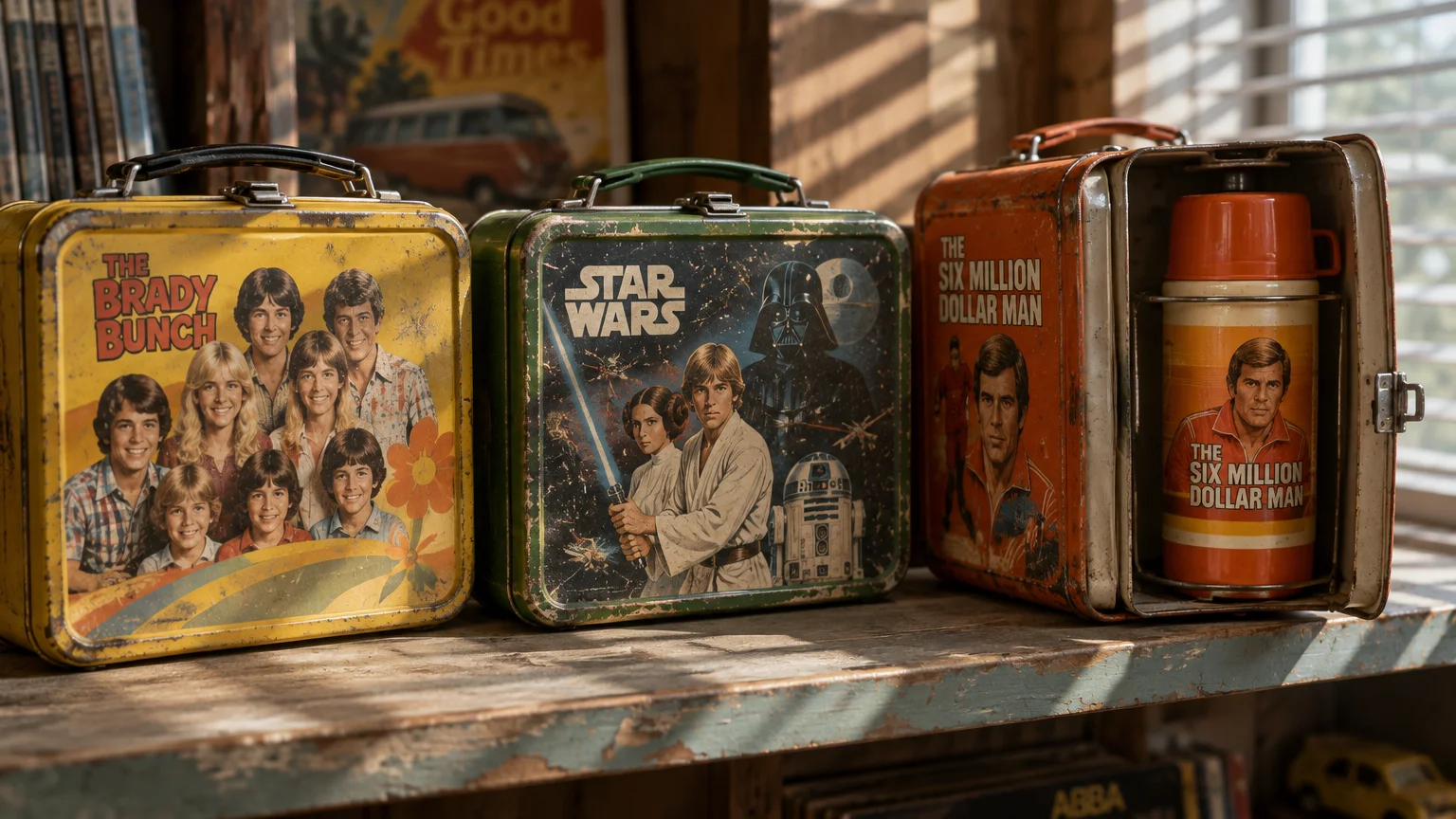
Tip #8: 1970s Metal Lunchboxes
Before schools transitioned to soft insulated lunch bags, metal lunchboxes with matching vacuum flasks reigned supreme in American cafeterias. Pop culture designs from the 1970s represent lucrative old items worth money.
Early 1970s metal lunchboxes in prime condition command outstanding collector prices. For instance, an original vintage Smokey Bear metal lunchbox sells for over $1,100 on eBay.
Finding the original matching insulated thermos inside the box dramatically boosts total buyer payout. Missing thermoses or mismatched plastic caps can reduce final bids by fifty percent.
Inspect lunchbox rims, handles, and latches for red rust and paint loss. Collectors prioritize vibrant lithograph printing with minimal surface denting along the metal edges.
Avoid using abrasive scrubbing sponges or harsh cleaning chemicals to wash away old storage grime. Wipe painted lithographs gently using a damp microfiber cloth and mild dish soap to preserve the original gloss.
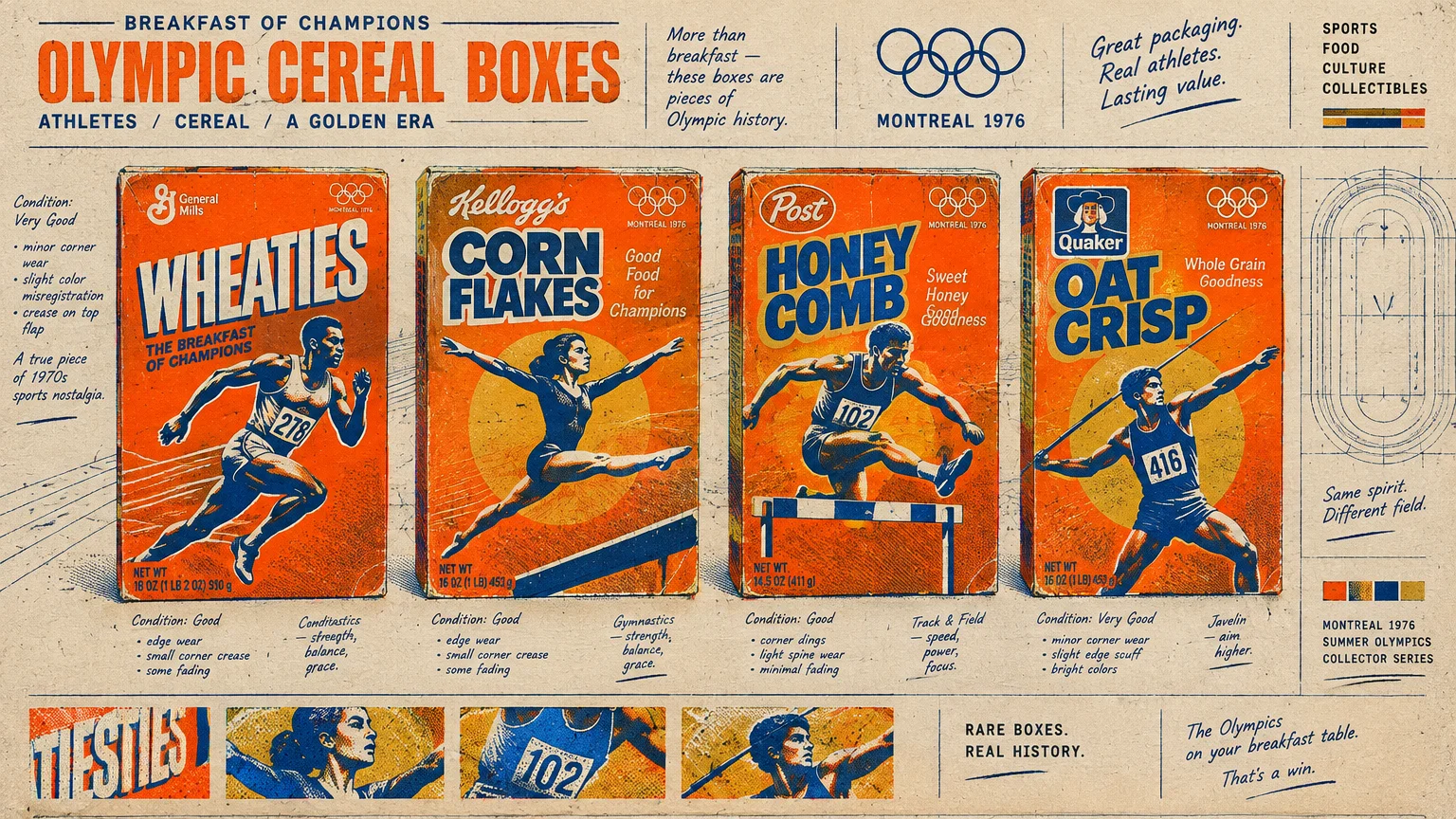
Tip #9: 1970s Olympic-Era Wheaties Cereal Boxes
Cardboard sports memorabilia from the 1970s holds surprising monetary value for patient collectors. General Mills turned breakfast packaging into cultural history by printing legendary American athletes on cereal boxes.
Vintage 1970s Olympic-era Wheaties cereal boxes featuring decathlon champion Bruce Jenner list between $200 and $500 today. Mint, unflattened boxes command top dollar among sports collectors.
Cardboard suffers from insect damage, moisture absorption, and edge creasing far faster than plastic or metal. Check that the top and bottom flaps retain their structural integrity without tears.
Make sure the inner cereal contents were discarded decades ago. Leftover food products attract destructive pests and generate grease spots that soak through cardboard fibers, ruining exterior display artwork.
Store vintage paper goods inside archival cardboard sleeves or rigid plastic containers. Maintaining flat, dry storage prevents humidity from warping the structural shape of the vintage packaging.
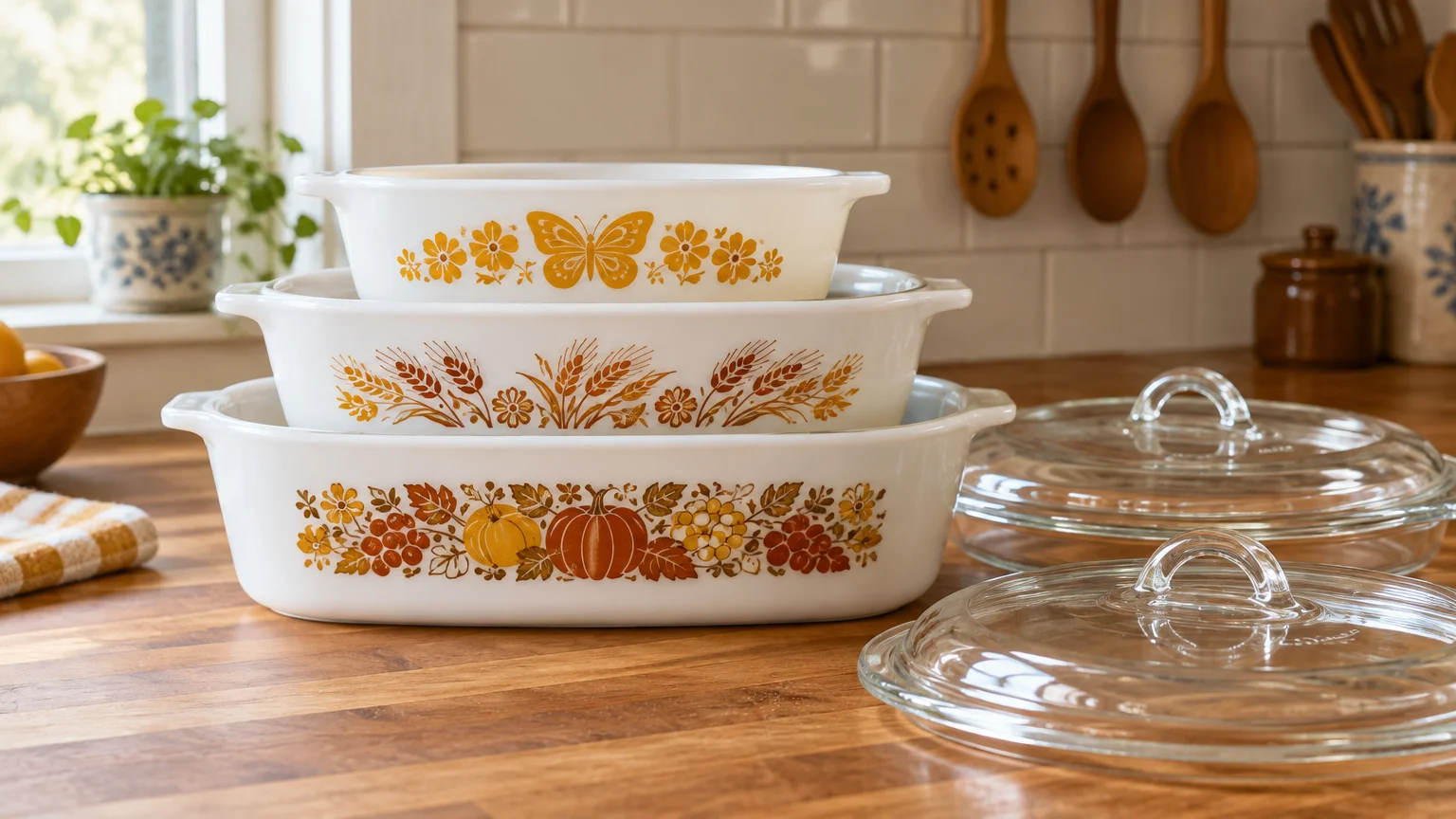
Tip #10: Vintage 1970s Pyrex Pattern Dishware
Kitchenware manufactured by Corning Glass Works during the 1970s represents some of the most accessible antiques worth money. Distinctive patterns like Autumn Harvest, Woodland, and Shenandoah enjoy massive popularity on vintage home-decor markets.
Complete nesting mixing bowl sets and promotional casserole dishes routinely sell for hundreds of dollars. Hard-to-find promotional print editions produced in small batches command higher prices from serious kitchenware enthusiasts.
Flip the glass dish over to examine the embossed circular stamp on the base. Genuine vintage Pyrex displays embossed lettering spelling out Pyrex in all capital letters alongside model numbers.
Inspect the painted colored finish under a bright flashlight for signs of permanent chemical damage. Running vintage Pyrex through a modern dishwasher removes the outer luster and produces permanent white hazing.
Hand wash vintage glassware using soft non-scratch sponge pads and warm water. Never scrub baked-on grease with stainless steel wool pads that scratch vintage surface enamel.
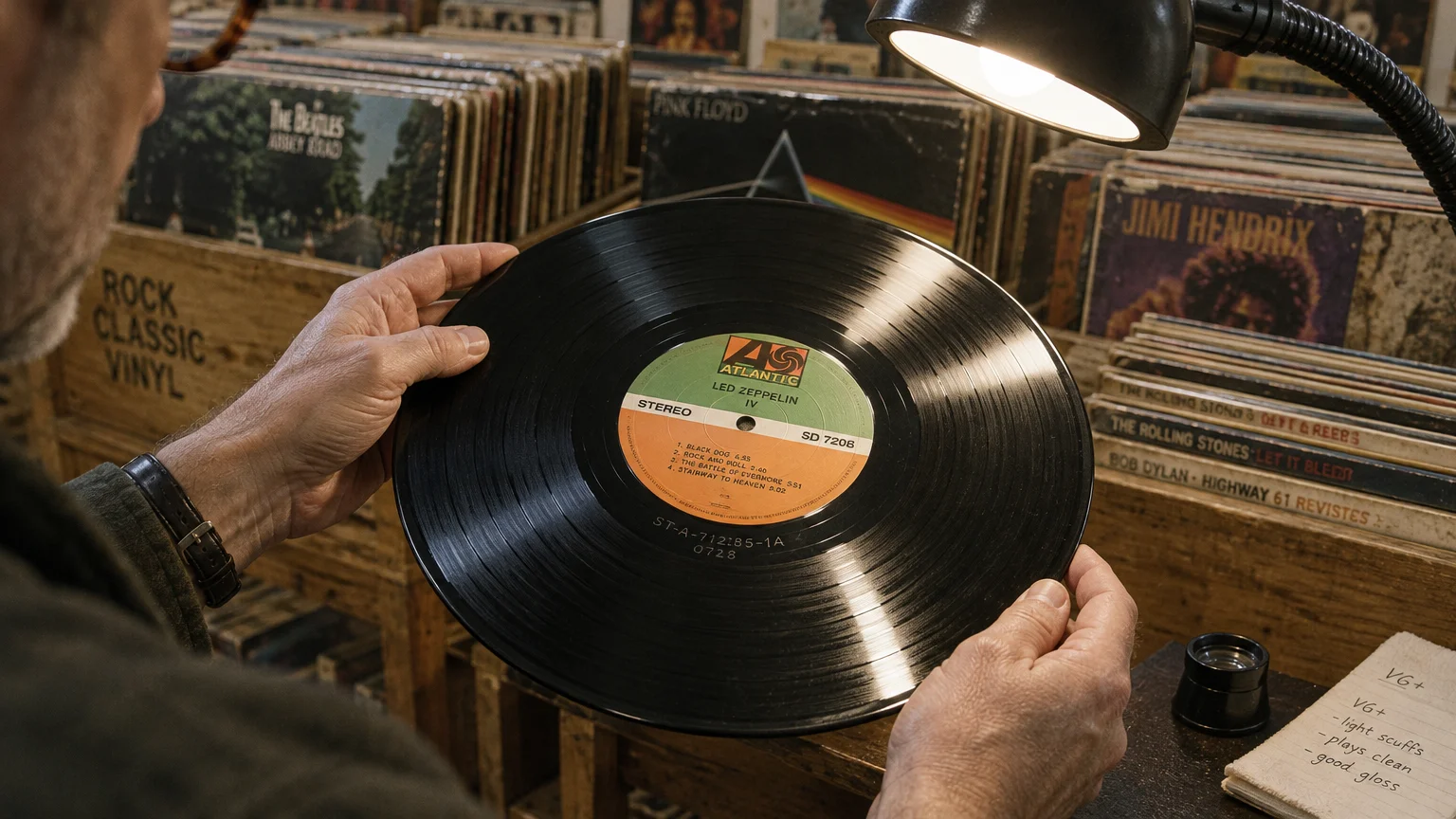
Tip #11: Original 1970s Vinyl Records and Rare Pressings
The 1970s delivered the golden era of rock, punk, funk, and early electronic music. While common mass-market vinyl records sell for pocket change at thrift shops, specific early pressings command fortune.
Audiophile quadraphonic sound pressings, promotional radio copies, and limited first editions from iconic rock bands command high market valuations. Obscure early punk rock 45 rpm singles from private labels sell for remarkable sums.
Check the runout dead wax matrix area near the center label on the vinyl disc. Stamped or hand-etched matrix codes reveal the specific pressing plant, master cut, and release generation.
Examine the physical vinyl surface under raking light to spot hairline scratches, scuffs, and groove wear. A flawless reflective surface free of warping ensures playback fidelity and guarantees highest grading scores.
Always preserve the original inner paper dust sleeves, gatefold posters, and sticker sheets included with the album. Incomplete albums missing original inserts suffer severe price penalties during auction bidding.
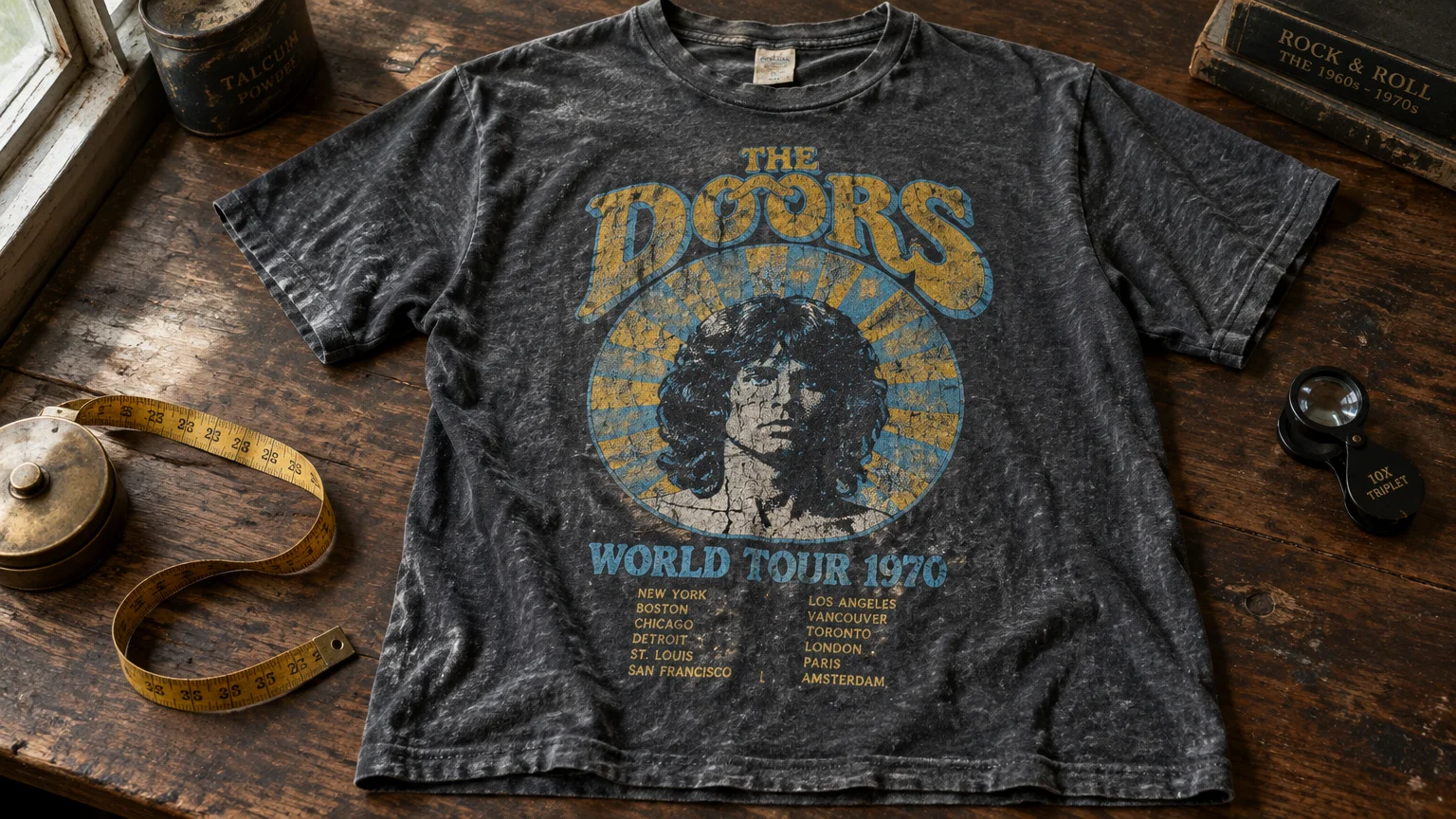
Tip #12: Vintage 1970s Rock Concert Tour T-Shirts
Old rock concert t-shirts tossed in workout drawers or garage rags frequently turn out to be valuable 70s items. Vintage band apparel from legendary stadium tours has transformed into high-end wearable investments.
Authentic tour t-shirts from bands like Led Zeppelin, Pink Floyd, and The Rolling Stones sell for hundreds or thousands. Die-hard vintage fashion collectors aggressively search for authentic, verified concert merch from this era.
Check the hem stitching along the sleeves and bottom waistband of the shirt. Authentic 1970s t-shirts feature single-stitch thread construction rather than the double-stitched hems found on modern reproductions.
Inspect the interior neck tag for classic vintage apparel brandings like Ched, Sportswear, Screen Stars, or Hanes. Period-accurate shirts usually feature ultra-soft thin cotton blends or fifty-fifty poly-cotton fabrics.
Never machine-dry or iron vintage screen-printed band shirts. Wash vintage textiles inside out on gentle cycles using cold water, then lay them flat to air-dry naturally.
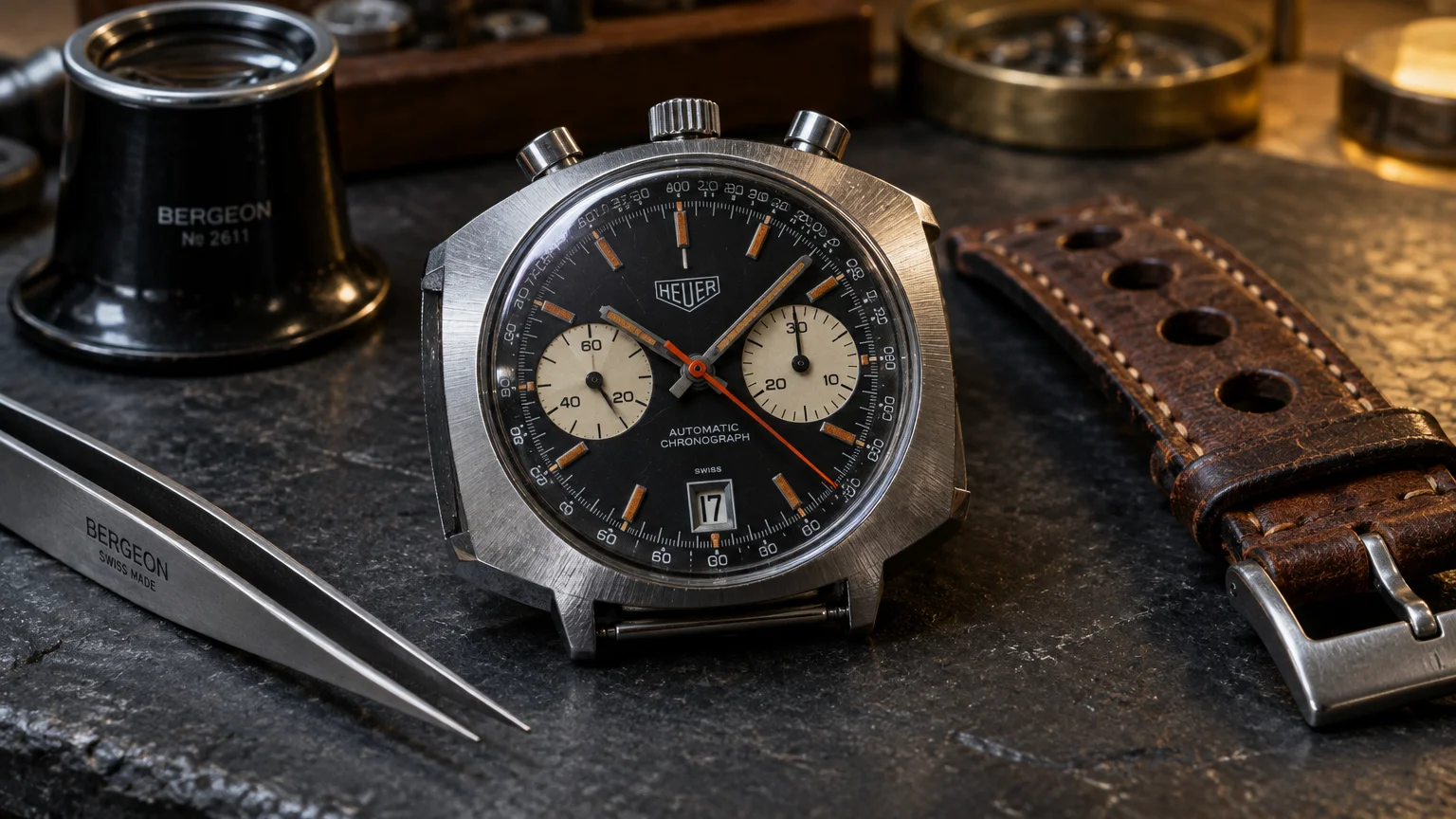
Tip #13: 1970s Mechanical Chronograph Wristwatches
The 1970s marked a dramatic design revolution in mechanical horology, characterized by bold cushion cases and vibrant dial colors. Japanese and Swiss mechanical tool watches from this decade now attract intense international collector attention.
Historic pieces like the Seiko 6139 automatic chronograph—one of the first automatic chronographs ever produced—enjoy incredible collector demand. Vintage Swiss chronographs from heritage watch houses command thousands of dollars in unpolished condition.
Examine the watch dial carefully to ensure all hour markers and hands retain original tritium lume paint. Dials that have been refinished or swapped with modern service parts lose substantial collector appeal.
Inspect the steel case edges for original sharp factory chamfers and brushings. Amateur polishers frequently buff away crisp factory lines, severely diminishing the overall investment value of the watch case.
Service mechanical watches only through reputable vintage horology specialists. Always instruct watchmakers never to replace original dials, hands, or unpolished vintage case parts during routine mechanical cleanings.
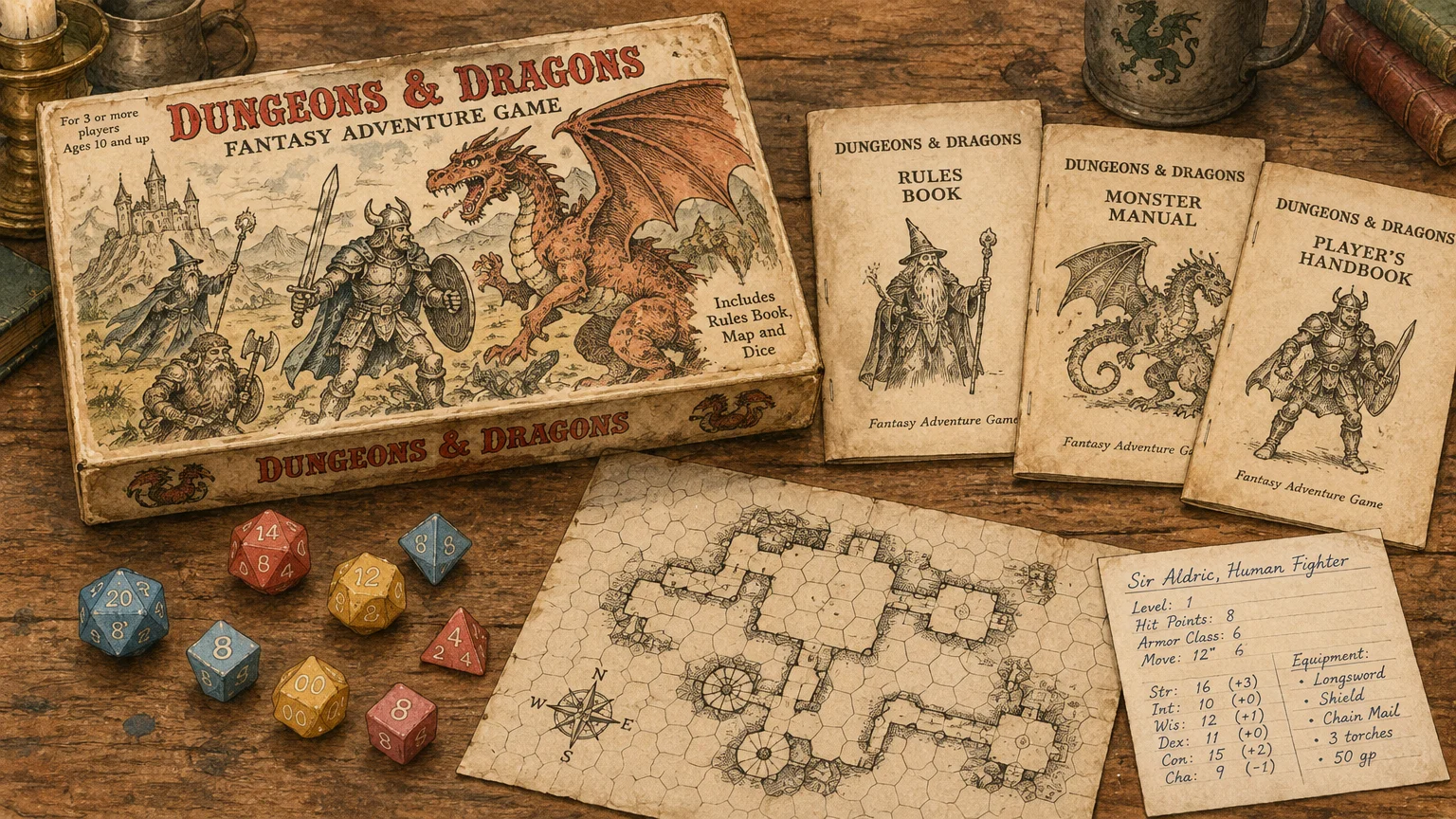
Tip #14: 1970s Dungeons & Dragons Original Boxed Sets
Tabletop roleplaying games burst into global pop culture when Gary Gygax and Dave Arneson created Dungeons & Dragons. Early boxed editions published between 1974 and 1979 represent premier gaming grails.
Original TSR White Box and Woodgrain boxed sets command immense sums among gaming memorabilia collectors. Complete first through fourth printings in pristine condition easily fetch thousands of dollars at specialized toy and game auctions.
Inspect the publisher address on the rulebook covers and reference sheets. Early printings credit TSR Hobbies with addresses located in Lake Geneva, Wisconsin, identifying genuine first-era production runs.
Verify that your boxed set contains all original supplementary rule booklets, reference charts, and polyhedral dice. Incomplete sets missing essential gaming components drop sharply in secondary market value.
Keep fragile paper gaming materials sealed inside archival zip-closure poly bags. Store them away from damp basements where mildew and silverfish insects feast on aged pulp paper fibers.
Tip #15: 1970s Enamelled Cast-Iron Cookware
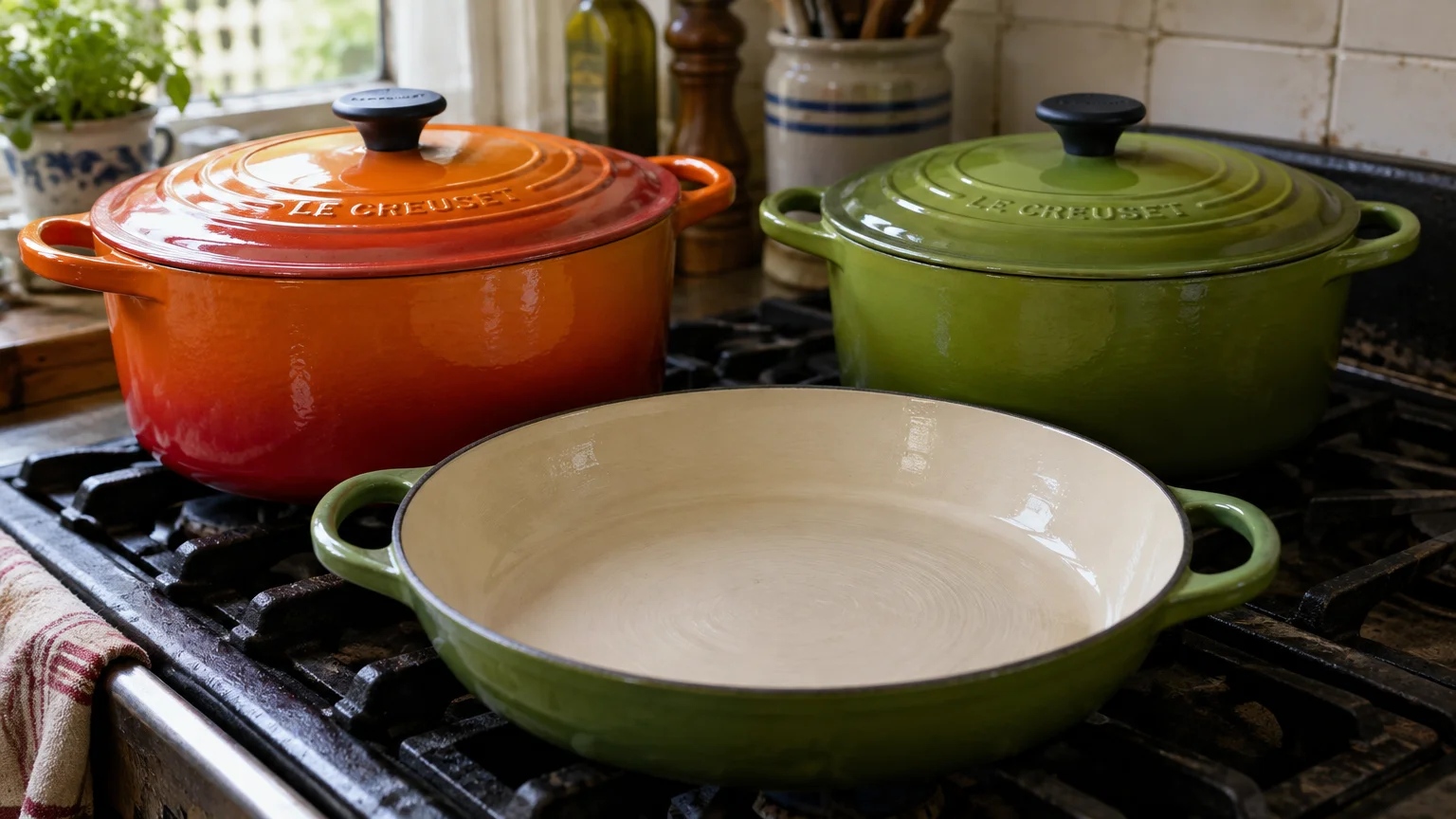
High-end vintage cookware combines practical kitchen utility with surging antique values. Mid-century and 1970s enamelled cast-iron cookware from Scandinavian and French manufacturers remains in high demand on resale markets.
Iconic brands like Dansk Kobenstyle and vintage Le Creuset pieces in vivid period colors yield top dollar. Signature 1970s hues like burnt orange, mustard yellow, and avocado green command instant collector premiums.
Look for the distinctive cross-shaped handles on Dansk Kobenstyle pot lids, designed to double as functional table trivets. Distinctive manufacturer markings stamped cleanly into the cast-iron base confirm genuine period authenticity.
Inspect the interior cooking surfaces for porcelain chips, deep hairline cracks, or persistent discoloration. Enamel cooking surfaces with exposed underlying black cast iron cannot safely cook acidic foods, reducing their resale value.
Restore stained vintage enamel safely using a slow paste of baking soda and warm water. Never chip away burnt food residues using metal scrapers or harsh abrasive oven cleaning sprays.
The Bottom Line: What This Means for Your Wallet
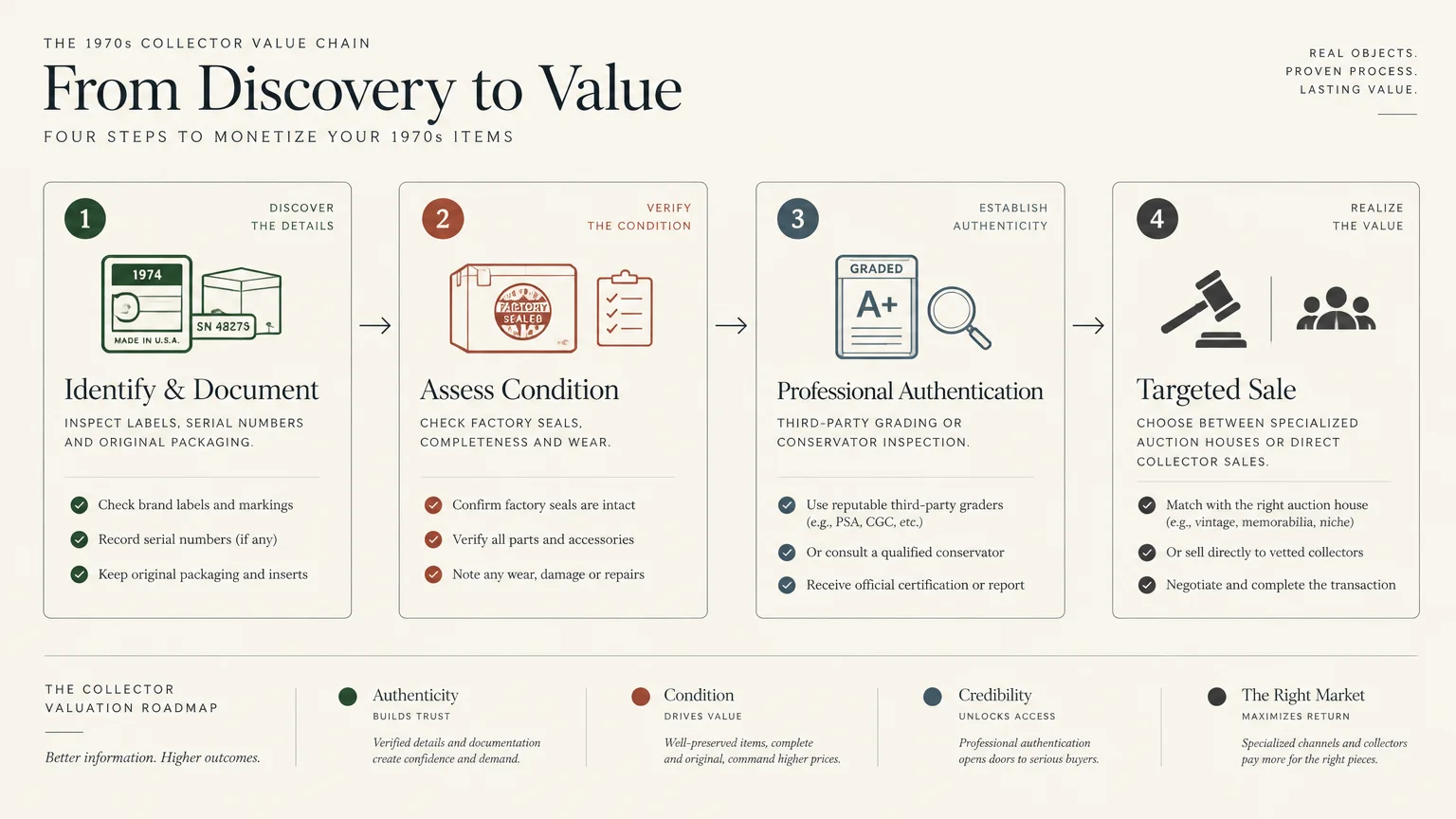
Turning forgotten 1970s collectibles into hard cash requires patience, accurate identification, and smart tax planning. You must know both what your items are worth and the federal rules governing online reselling.
Under the One Big Beautiful Bill Act (OBBBA), signed on July 4, 2025, the federal Form 1099-K reporting threshold was permanently restored. Third-party settlement organizations like eBay, Etsy, and PayPal report payments only if you exceed $20,000 in gross payments and 200 transactions.
Selling personal childhood goods for less than you originally paid generates no taxable income. However, profiting from valuable items held for more than one year triggers federal tax obligations.
The IRS treats profits from vintage memorabilia as collectibles rather than standard capital investments. Long-term capital gains on collectibles carry a maximum federal tax rate of 28 percent.
Document your original purchase costs, restoration fees, and shipping expenses to offset your gross taxable sales gains. Keep receipts and auction statements organized in digital folders for seamless annual tax filing.
For consumer protection information, visit the Federal Trade Commission (FTC) and the Consumer Financial Protection Bureau (CFPB). For product safety and reviews, consult Consumer Reports.
Disclaimer: This article is for informational purposes only and does not constitute financial advice. The content reflects the author’s opinion and research at the time of writing.
Always do your own research before making financial decisions.
Frequently Asked Questions
How do I determine the authentic value of my 1970s items?
Search completed and sold listings on eBay rather than active asking prices. Filter your search results by sold items to view exact cash amounts buyers actually paid.
Should I clean my vintage collectibles before listing them for sale?
Never aggressively clean vintage items using chemical sprays or abrasive tools. Improper cleaning removes original patinas, damages delicate lithographs, and severely cuts item values.
Do I have to pay taxes if I sell old family items online?
You only owe taxes if you sell an item for more than its original purchase price. Under federal law, collectible profits held over a year face a maximum 28 percent capital gains tax.
Where is the safest marketplace to sell high-value 1970s collectibles?
Items worth thousands of dollars are best handled by reputable auction houses like Heritage Auctions, Goldin, or Bonhams. These auction houses authenticate pieces, provide escrow protection, and market directly to verified high-end collectors.