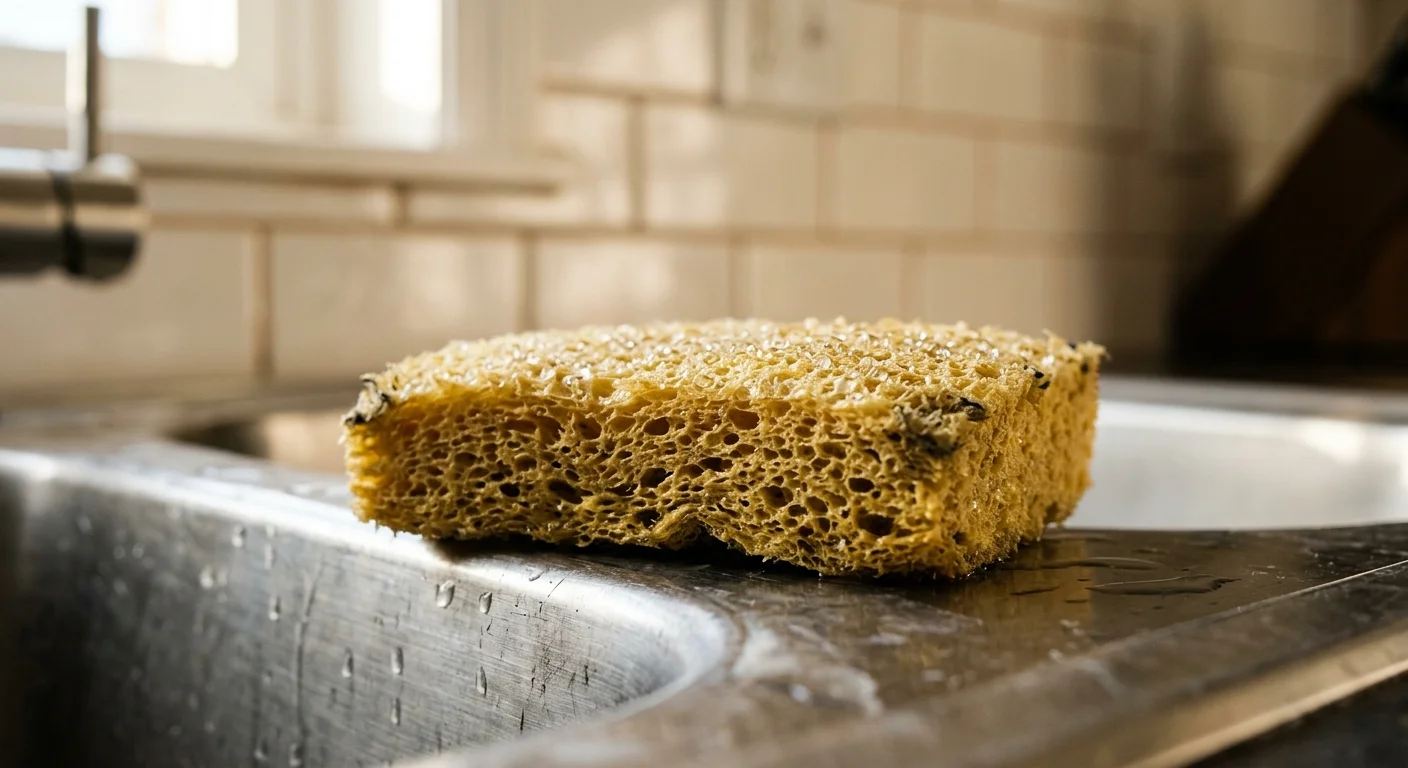
Your humble kitchen sponge might look like an innocent cleaning tool, but it frequently houses millions of invisible pathogens that compromise your family’s health and inflate your household expenses.
Every time you wipe down a countertop with a contaminated sponge, you risk spreading foodborne bacteria across surfaces meant for meal preparation.
Understanding when your sponge transforms into a biological hazard allows you to take immediate control of your kitchen hygiene without wasting money on ineffective cleaning products.
Recognizing the early warning signs of microbial overgrowth protects your stomach, prevents costly medical visits, and ensures that your budget goes toward smart, reusable cleaning strategies rather than health complications.
Tip #1: It Has Developed a Persistent Mildew or Sour Odor
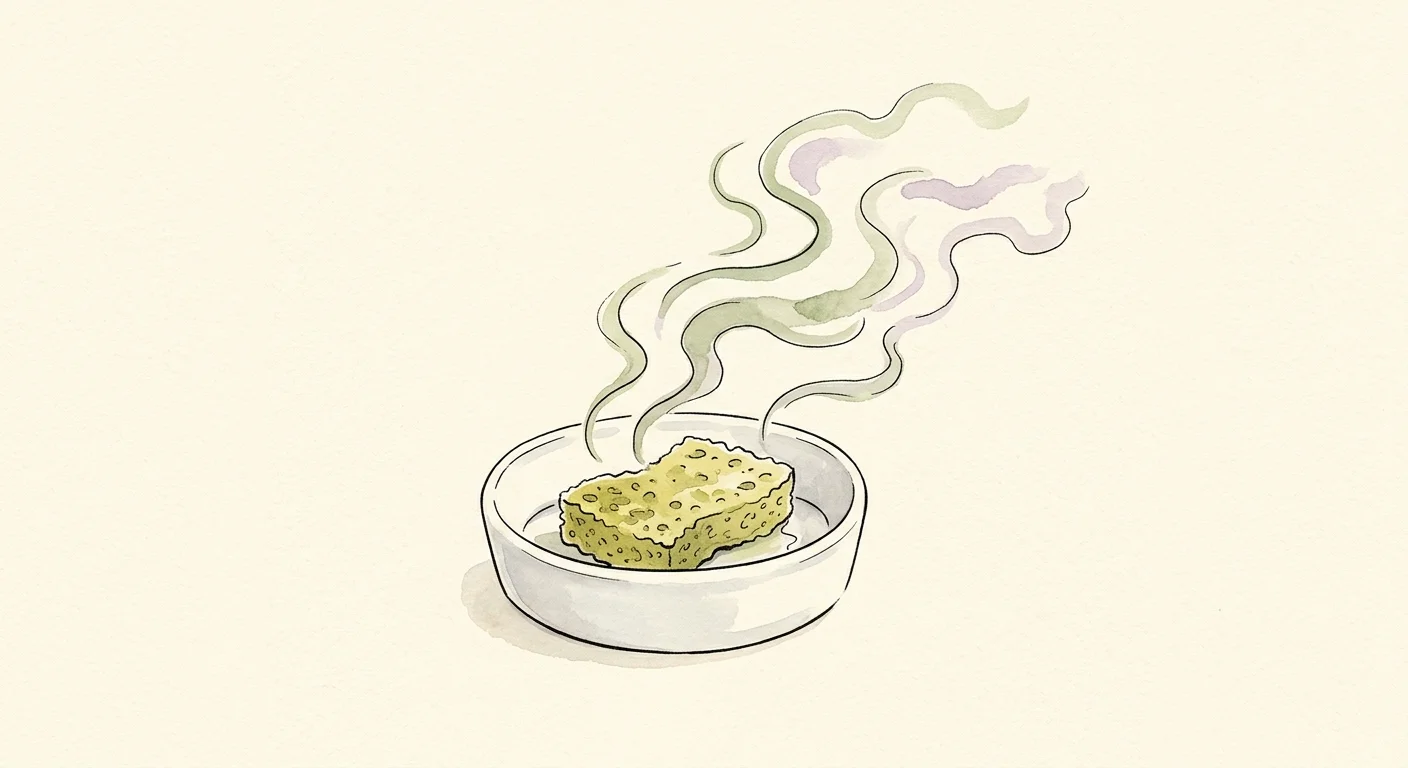
When your kitchen sponge begins to emit a sour, damp, or musty smell, you are not just smelling lingering dish soap; you are smelling volatile organic compounds released by massive bacterial colonies.
Millions of homeowners mistakenly assume that a quick splash of warm water and liquid dish detergent will eliminate the problem. Unfortunately, that foul stench indicates that bacteria have established dense biofilms deep within the porous matrix of the synthetic or cellulose fibers.
A landmark study published in Scientific Reports revealed that used kitchen sponges can harbor astounding bacterial concentrations—up to 54 billion cells per cubic centimeter.
That level of bacterial density is comparable to human fecal matter, making an odorous sponge one of the filthiest objects in the average American household. Rinsing the sponge under the tap simply provides these microscopic organisms with the moisture they need to multiply even faster.
Continuing to use an odorous sponge creates a domino effect of wasted household money. You end up using extra dish soap to mask the smell, and you spend extra time re-washing dishes that take on a faint, unpleasant scent.
When a sponge smells sour, the bacterial infestation has already won.
Squeezing it out or soaking it in cold tap water will not reverse the contamination; it is time to retire the sponge immediately before it spreads lingering pathogens across your eating utensils and food preparation surfaces.
Tip #2: The Sponge Feels Slimy or Tacky Even After Rinsing
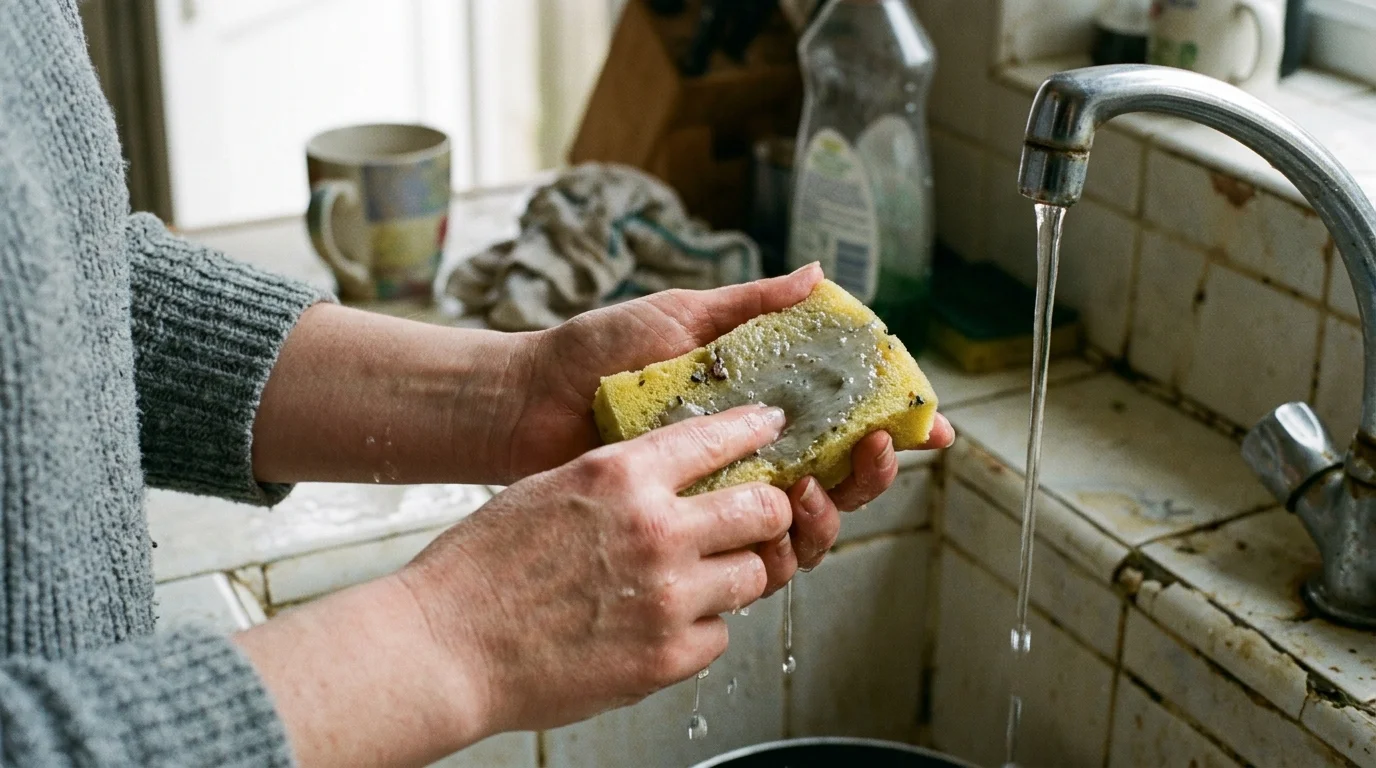
If your sponge feels slick, slimy, or sticky to the touch even after you thoroughly rinse it with hot water, you are holding a fully developed microbial biofilm.
Biofilms occur when bacteria secrete a sticky, protective layer of extracellular polymeric substances; essentially creating a microscopic shield made of complex sugars and proteins.
This shield glues the bacterial community directly to the internal fibers of your sponge, making it virtually impossible to wash away with standard sink water and dish detergent.
This slick texture is a clear warning sign that dangerous cross-contamination is occurring every time you scrub a plate or wipe down a cutting board.
According to the U.S. Centers for Disease Control and Prevention (CDC), foodborne pathogens cause an estimated 48 million illnesses, 128,000 hospitalizations, and 3,000 deaths across the United States every single year.
A contaminated sponge acts as a primary vector for these pathogens, transferring invisible bacteria from contaminated prep zones directly onto clean dinnerware.
From a financial standpoint, trying to clean your kitchen with a slimy sponge is completely counterproductive. The slick bacterial coating repels grease-cutting surfactants in dish soap, forcing you to use double or triple the amount of soap just to produce a decent lather.
Instead of wasting expensive dish detergent and hot water trying to overcome a compromised cleaning tool, replace the sponge or transition to a non-porous alternative that cannot support sticky biofilm formation.
Tip #3: Visible Discoloration, Dark Flecks, or Stains Remain
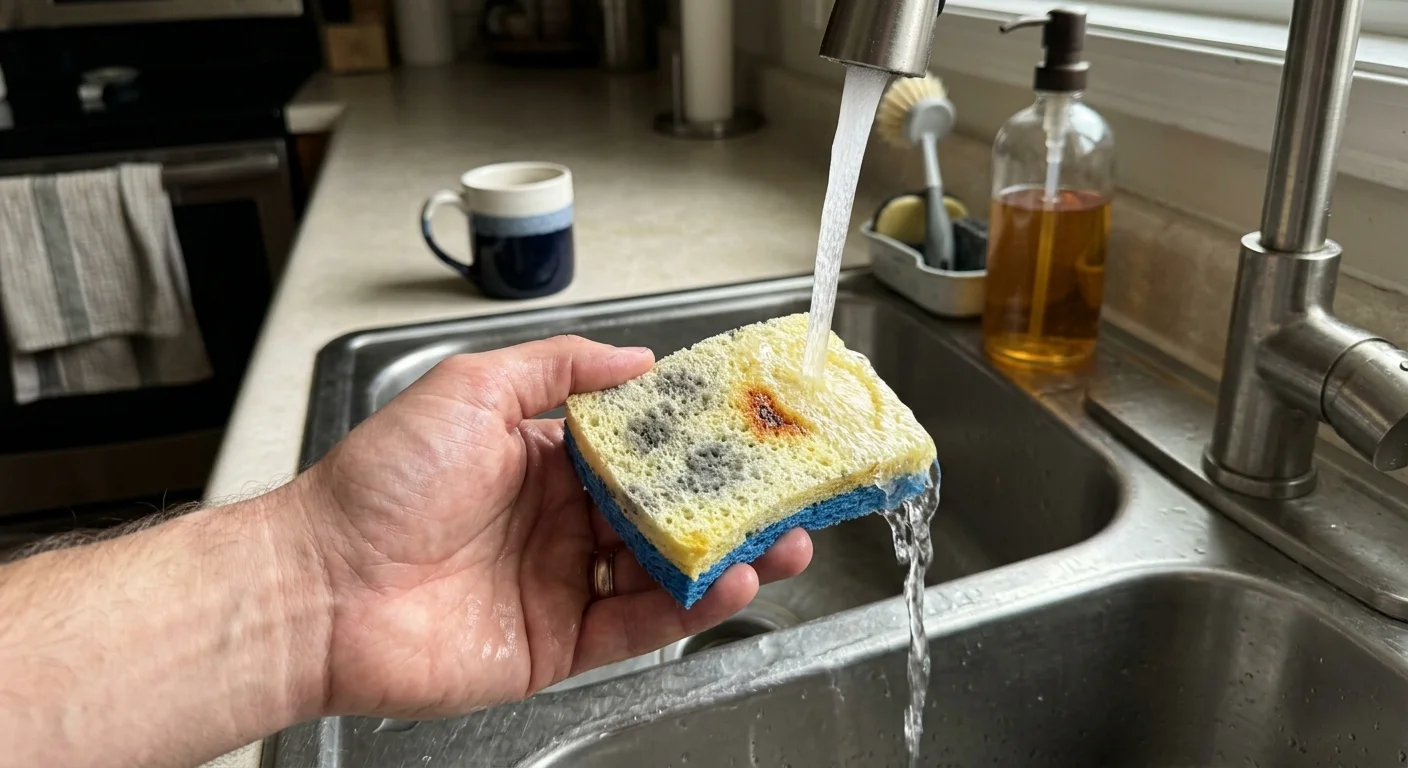
Dark spots, black specks, or permanent brownish discoloration on your sponge are not merely cosmetic flaws from coffee grounds or spaghetti sauce. These spots frequently signify deep-seated mold growth, fungal spores, or heavy bacterial colonization that has permanently stained the structural fibers.
Cellulose sponges retain water like a reservoir, creating the dark, humid environment that fungal species require to flourish.
Many budget-conscious consumers attempt to salvage stained sponges by soaking them in a bowl of cold water mixed with a splash of bleach or lemon juice. However, scientific evidence shows that these home remedies fall drastically short.
Research conducted by the USDA Agricultural Research Service (ARS) demonstrated that soaking sponges in a 10% bleach solution, lemon juice, or plain water eliminated only 37% to 87% of bacteria.
Bleach may lighten surface stains, but it leaves millions of viable microbes alive deep within the sponge’s interior core.
Furthermore, soaking standard sponges in harsh chemical bleach breaks down the synthetic or natural polymers that give the sponge its structural integrity. You end up degrading the material while leaving dangerous pathogens intact, wasting money on chemical cleaners without solving the underlying hygiene risk.
When persistent stains or mold flecks appear, trash the sponge immediately rather than pouring money down the drain on ineffective chemical soaks.
Tip #4: You Used It to Clean Up Raw Meat or Poultry Juices
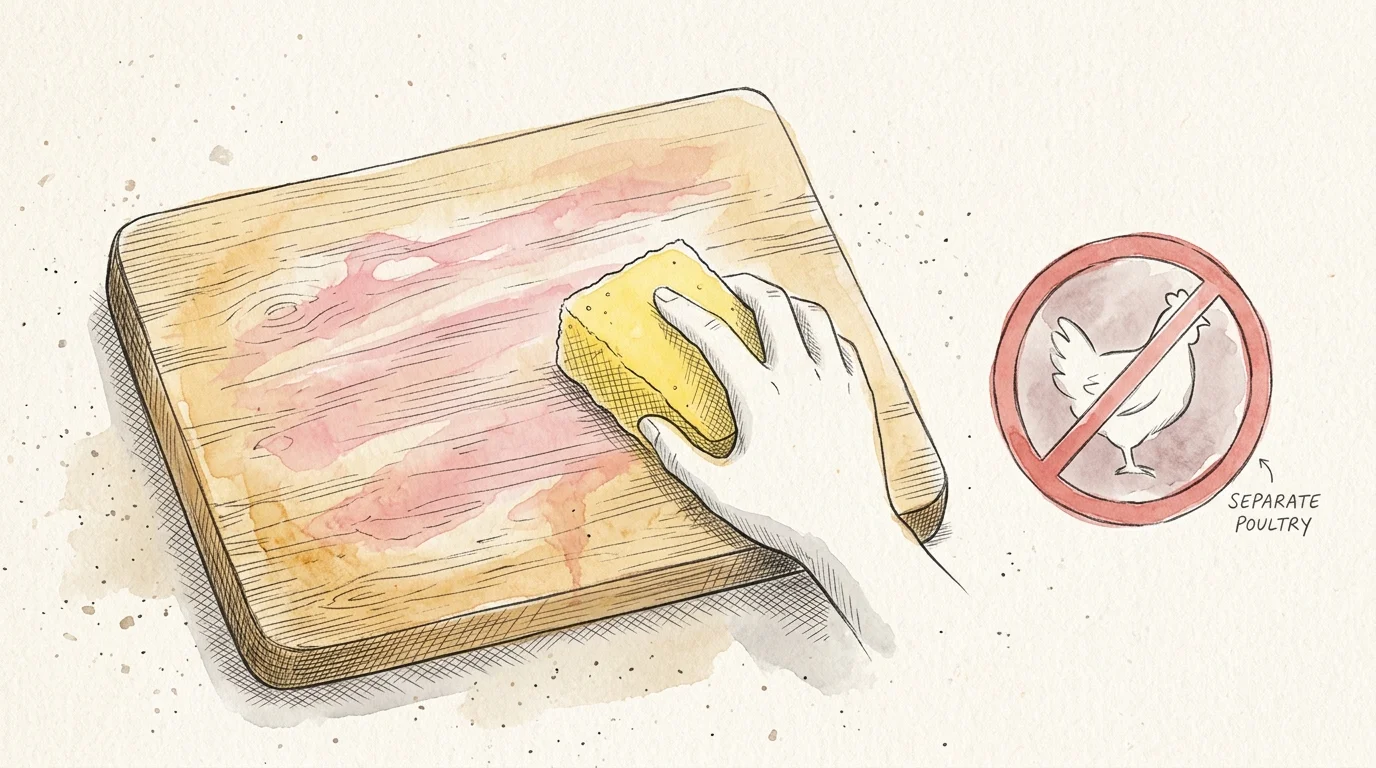
Wiping up raw chicken juice, beef blood, or raw seafood runoff with a standard cellulose kitchen sponge is one of the fastest ways to turn a routine cleaning tool into a biological hazard.
Raw animal proteins frequently carry dangerous bacteria such as Salmonella, E. coli, and Campylobacter. When these protein-rich liquids soak into a damp sponge, they provide an ideal buffet of nutrients that allows bacteria to multiply exponentially within hours.
Once raw meat juices penetrate a sponge, simple rinsing will not render it safe for washing everyday dishes or wiping dining tables.
If you subsequently use that same sponge to clean an infant’s high chair, a kitchen counter, or a fruit bowl, you are spreading virulent pathogens across surfaces that come into direct contact with ready-to-eat food.
The potential cost of a foodborne illness—including emergency room copays, prescription medications, and lost work days—dwarfs the microscopic savings of trying to stretch the lifespan of a two-dollar sponge.
If you accidentally wipe up raw meat juices, you must act quickly to neutralize the threat or discard the pad.
Research from the USDA ARS established that microwaving a damp, non-metallic sponge on high for 1 minute kills 99.99999% of bacteria, while running it through a full dishwasher cycle with a heated dry cycle kills 99.9998% of bacteria.
However, the safest and most economical strategy is to avoid using sponges for raw meat cleanups entirely; rely instead on washable cotton dishcloths that go straight into a high-heat laundry wash.
Tip #5: The Foam Is Crumbling, Flaking, or Losing Its Shape
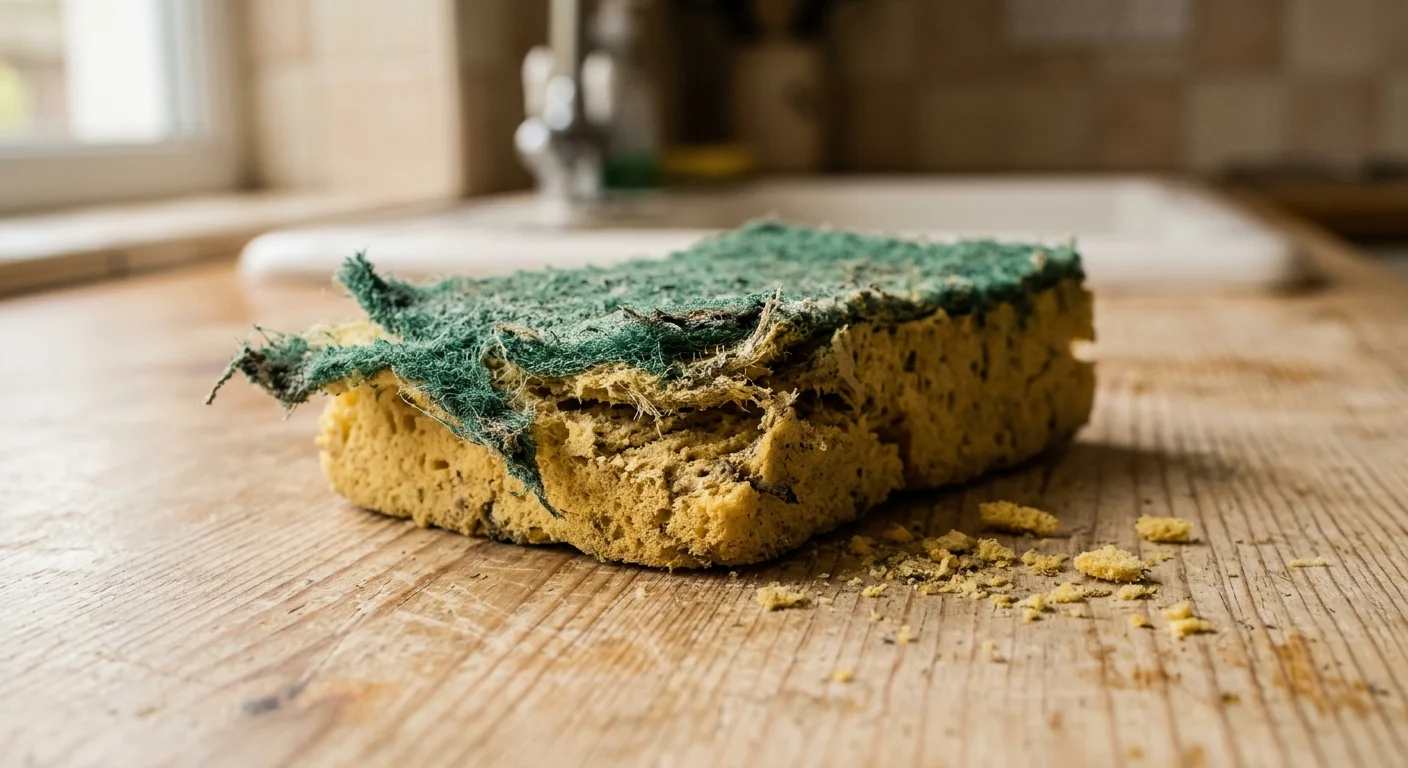
A disintegrating sponge is more than just an eyesore; it is an active hazard to your plumbing, your dishes, and your health. As cellulose and polyurethane materials age, friction and chemical exposure cause the fibers to break down into tiny particles.
When a sponge begins to flake, crumble, or thin out in the center, its ability to trap dirt and absorb water drops significantly, rendering your cleaning efforts inefficient.
Structural breakdown also creates microscopic fissures and pockets inside the foam where debris and organic matter become permanently trapped. These tiny micro-fissures shelter bacterial colonies from heat and dish soap, giving them a safe harbor to multiply undisturbed.
Furthermore, shedding synthetic sponge particles washes microplastics down your drain, contributing to environmental pollution and potentially creating sticky residue build-up in your home’s drainage pipes over time.
Many consumers buy cheap, low-density multi-packs thinking they are getting a great deal, only to watch them fall apart after three or four heavy dishwashing sessions. Purchasing ultra-cheap sponges that crumble rapidly is a false economy.
Investing in higher-density scrubbers, durable Swedish dishcloths, or silicone cleaning pads provides superior durability, keeping your kitchen cleaner while saving you money over the course of the year.
Tip #6: It Takes Hours to Dry Completely in Open Air
If your sponge remains soaking wet hours after you finish doing the dishes, its internal ventilation channels have collapsed. A healthy sponge with intact porous structures allows airflow to pass through, promoting relatively rapid drying when placed in a well-ventilated location.
However, as dirt, grease, and biological matter accumulate inside the sponge, moisture becomes trapped within the dense core, keeping the internal environment perpetually damp.
Moisture is the single most critical factor driving rapid microbial growth. Under warm, moist conditions, common foodborne bacteria can double their population every 20 minutes.
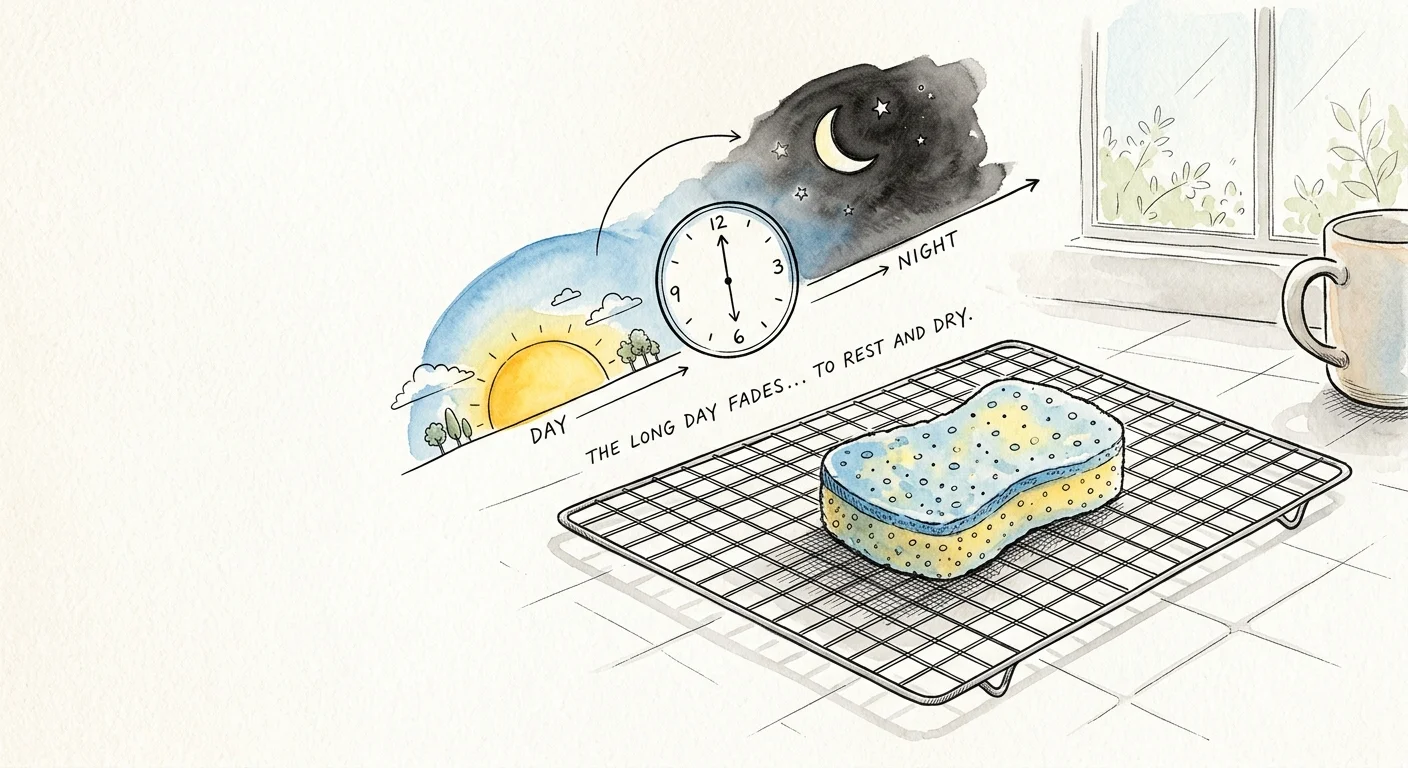
A sponge that stays damp overnight effectively acts as an incubator, growing billions of additional bacterial cells while your family sleeps.
Leaving a wet sponge sitting flat on the rim of the sink or inside a puddle of standing water accelerates this process, turning a simple cleaning pad into a pathogen factory.
You can extend the hygienic lifespan of your cleaning tools by changing how you store them. Squeeze out as much water as humanly possible after every use, and place the sponge in an elevated wire rack or caddy that permits airflow around all sides.
If a sponge continues to stay damp for hours despite proper ventilation and squeezing, its internal fiber network has degraded beyond repair, signaling that immediate replacement is necessary.
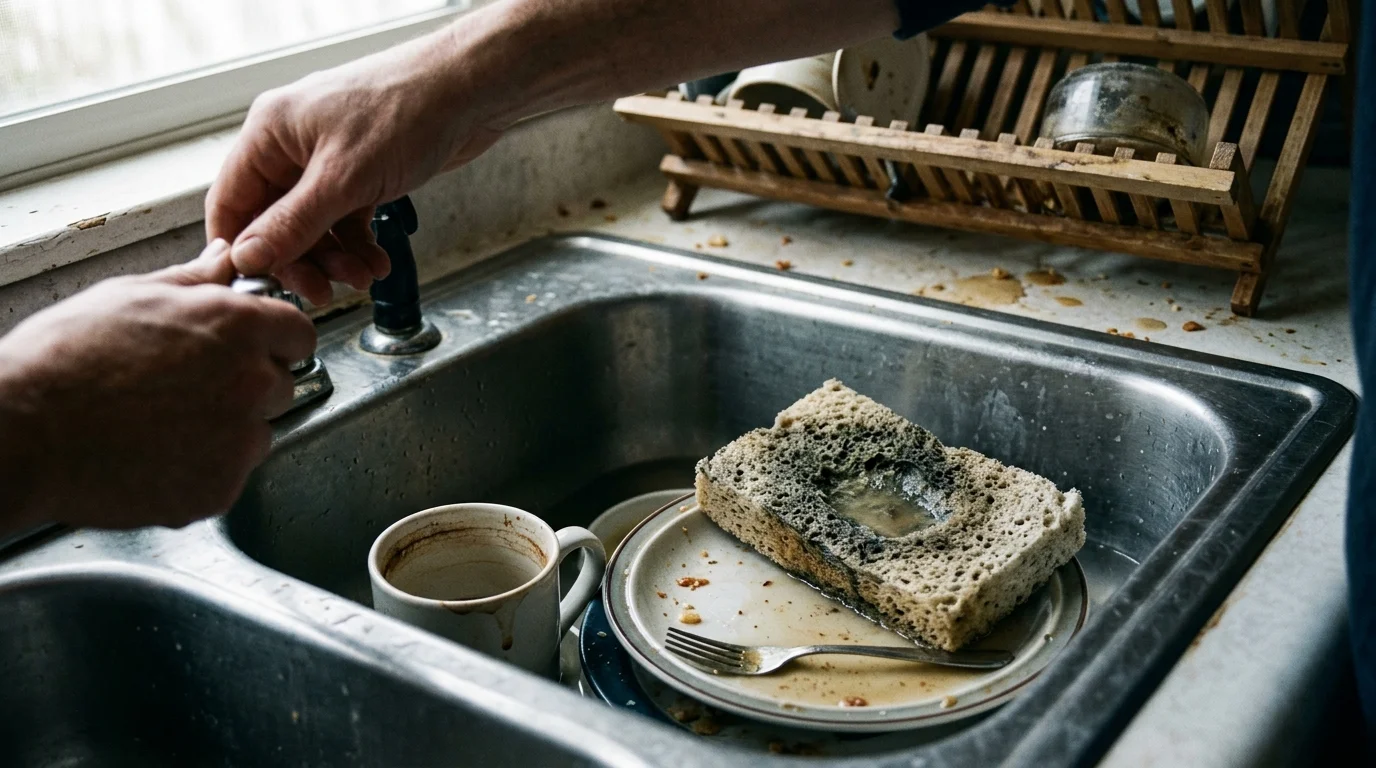
Tip #7: It Has Been Sitting in Your Sink for Over Two Weeks
Even if a kitchen sponge looks spotless, smells fresh, and holds its shape, time alone makes it a hazard. Leading microbiologists and food safety experts recommend replacing standard cellulose kitchen sponges every 1 to 2 weeks, regardless of how clean they appear on the surface.
Microscopic wear and tear coupled with constant exposure to food particles mean that bacterial accumulation is inevitable over a fourteen-day period.
Many frugal households try to stretch a single sponge for months to save a few pennies, but this practice is penny-wise and pound-foolish.
Standard multi-pack kitchen sponges in the United States average between $0.50 and $1.50 per unit, which translates to a total 6-pack cost of roughly $3 to $6.
Replacing a sponge every single week results in an annual expenditure of approximately $26 to $39 per household, while a bi-weekly replacement schedule costs just $13 to $20 per year.
Spending under $40 a year on fresh sponges is a minor price to pay for protecting your home against severe foodborne pathogens. However, if you truly want to optimize your household budget and eliminate recurring disposable costs altogether, you can ditch traditional sponges entirely.
Transitioning to machine-washable cotton dishcloths or long-lasting silicone scrubbers allows you to maintain immaculate kitchen hygiene while keeping that extra money in your bank account year after year.

The Bottom Line: What This Means for Your Wallet
Managing your kitchen hygiene is not just about keeping a clean home; it is a direct financial strategy that impacts your overall wallet. Holding onto a contaminated sponge to save fifty cents creates hidden costs that far outweigh the price of a new cleaning pad.
From wasted dish soap and ruined cookware to expensive medical treatments for preventable foodborne illnesses, an old sponge is a liability lurking right next to your kitchen faucet.
By recognizing the key warning signs—such as foul odors, slimy textures, persistent stains, structural degradation, and slow drying times—you can proactively intervene before cross-contamination affects your family’s health.
Applying USDA-proven sanitization methods, such as microwaving damp sponges for 1 minute or running them through a heated dishwasher cycle, allows you to safely extend the life of your sponges during their two-week service window without taking unnecessary risks.
Ultimately, smart personal finance involves making strategic swaps that eliminate unnecessary recurring expenses without compromising quality of life. Replacing disposable cellulose sponges with reusable, machine-washable Swedish dishcloths or dishwasher-safe silicone scrubbers offers a permanent solution.
These durable alternatives reduce your annual grocery store spend, eliminate plastic waste, and ensure that your kitchen surfaces remain truly clean, health-safe, and frugal for years to come.
Frequently Asked Questions
Is microwaving a kitchen sponge really effective at killing bacteria?
Yes, microwaving a sponge is one of the most effective sanitization methods available in a home kitchen. Scientific research from the USDA Agricultural Research Service shows that placing a damp, non-metallic sponge in the microwave on high heat for 1 minute eliminates 99.99999% of trapped bacteria.
However, you must ensure the sponge is completely wet before microwaving to prevent fire hazards, and never microwave sponges that contain metallic scrubbing pads or wire threading.
Are expensive silicone scrubbers better for my budget than traditional sponges?
Silicone scrubbers are significantly more cost-effective over the long run because they do not absorb water, harbor bacteria, or break down like porous cellulose sponges.
While a silicone scrubber may cost slightly more upfront—typically between $3 and $7—it can last for over a year and easily sanitizes in the top rack of your dishwasher.
While silicone scrubbers do not hold liquid soap as well as foam sponges, their longevity and hygienic properties eliminate the need to purchase monthly sponge multi-packs.
How should I safely clean up raw meat messes without using up expensive paper towels?
To clean up raw meat juices economically and hygienically, use dedicated cotton dishcloths or bar mops instead of sponges or disposable paper towels. After wiping up the spill, place the used cloth directly into a laundry bucket rather than leaving it near your sink.
Washing these cloths in your washing machine using hot water and detergent completely eliminates pathogens, providing a safe, reusable solution that protects your family while saving hundreds of dollars on paper towels each year.
How often should I replace my sponge if I rarely cook or use my kitchen?
Even if you rarely cook at home, you should replace your kitchen sponge every 3 to 4 weeks at maximum. Ambient humidity, residual moisture from sink splashing, and air dust cause bacteria and mold to grow on static sponges over time.
If a sponge remains sitting by your sink for a month, it accumulates dust and microscopic spores regardless of usage frequency, making periodic replacement essential for maintaining basic household sanitation.
For consumer protection information, visit the Federal Trade Commission (FTC) and the Consumer Financial Protection Bureau (CFPB). For product safety and reviews, consult Consumer Reports.
Disclaimer: This article is for informational purposes only and does not constitute financial advice. The content reflects the author’s opinion and research at the time of writing.
Always do your own research before making financial decisions.