Your neighborhood supermarket relies on shiny endcaps and loyalty apps to convince you that you are getting a bargain. Meanwhile, your grocery receipt tells a much harsher story every single week.
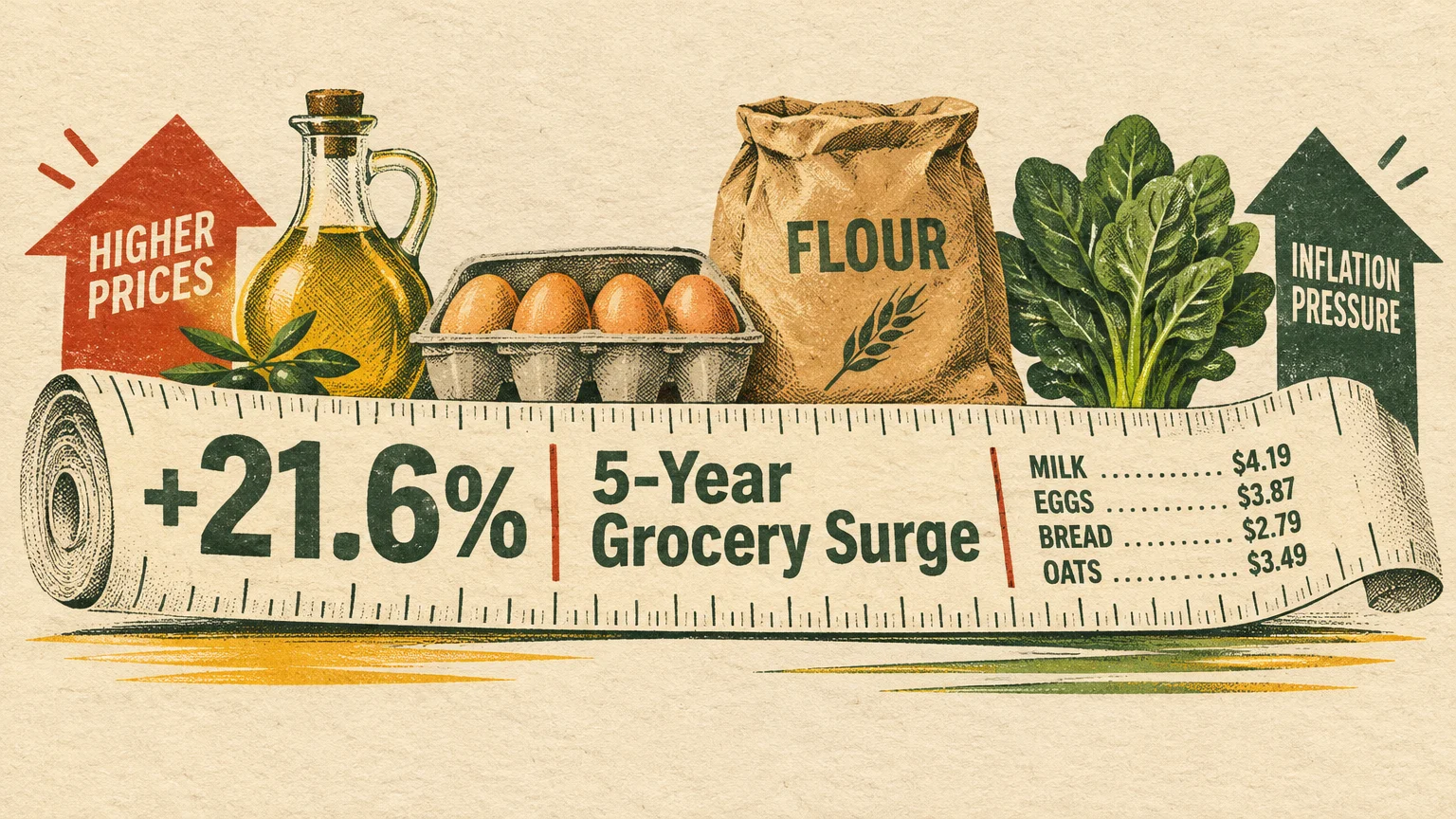
According to the Bureau of Labor Statistics, U.S. grocery prices jumped 21.6% over the five years ending in October 2026. Choosing the wrong store quietly drains your household budget.
We analyzed national price rankings from Consumer Reports to expose the six chains where your money actually stretches furthest. Check whether your go-to market makes the cut—or quietly picks your pocket.
Rank #6: H-E-B — Beating the Conventional Supermarket Markup
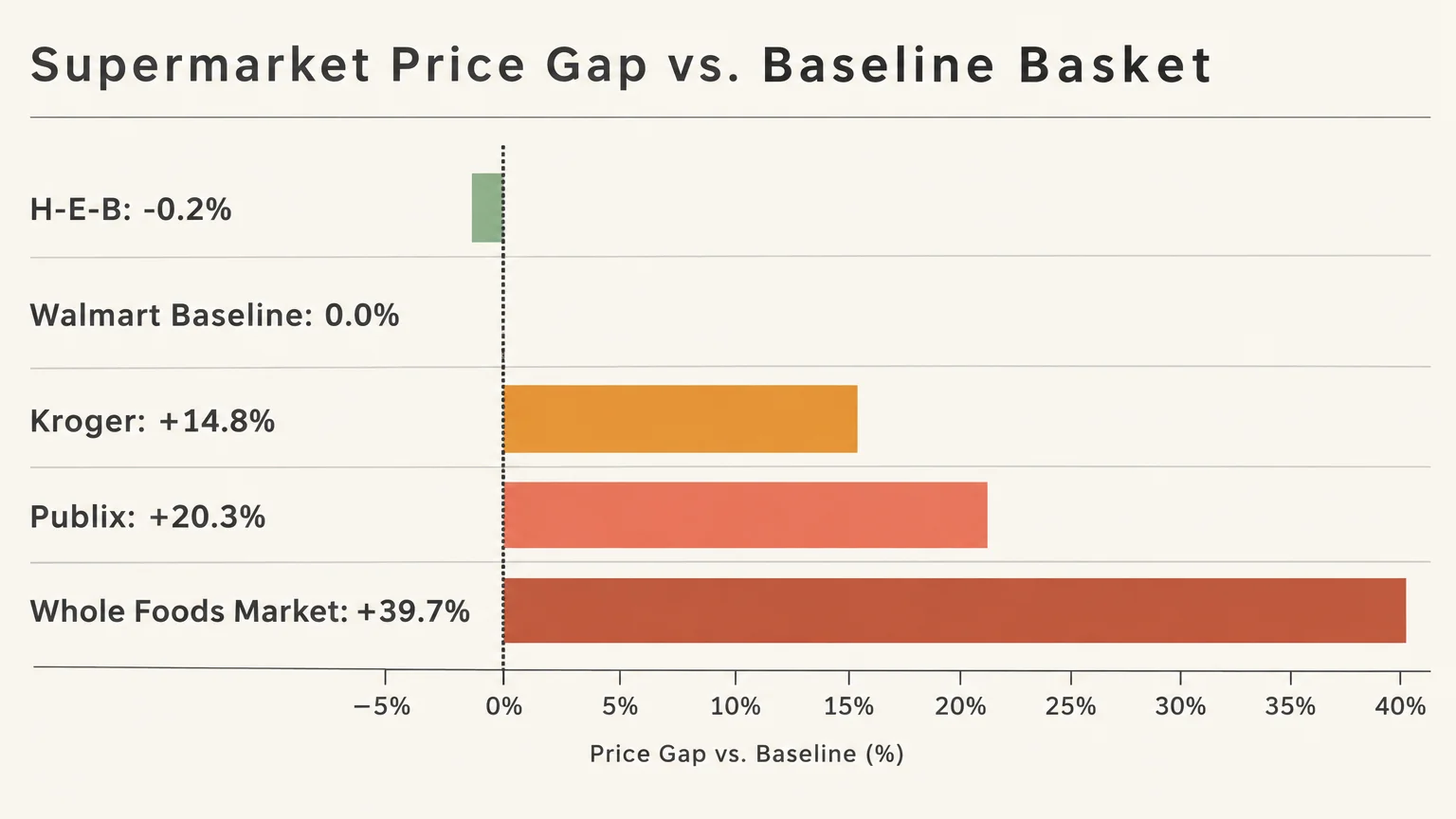
If you live in Texas, H-E-B sits at the edge of our top six—and it destroys traditional grocers on price. In the Consumer Reports national price study published in February 2026, H-E-B beat Walmart’s baseline basket by 0.2%.
Compare that modest edge to the massive markups hiding down the street at conventional competitors. The same Consumer Reports study found Kroger prices ran 14.8% higher than Walmart, while Publix cost 20.3% more and Whole Foods Market cost 39.7% more.
Shoppers noticed that gap long before analysts published their spreadsheets. In January 2026, dunnhumby named H-E-B the number one grocery retailer in America across 81 chains, noting that saving customers money now drives 41% of a grocer’s long-term success.
Why H-E-B Wins Without Feeling Like a Warehouse
Most supermarkets lure you inside with a handful of loss-leader specials and then hike everyday staple prices to pad their margins. H-E-B avoids that bait-and-switch by keeping core groceries consistently below regional rivals.
Its secret weapon is an aggressive lineup of private-label tiers designed to replace expensive national brands. Instead of settling for one bland generic label, you get multiple store brands tailored to different budgets and tastes.
Store-Specific Hacks and Product Warnings
Never walk past H-E-B’s yellow digital-coupon tags without checking the app first. Store employees place these bright markers directly next to full-price national brands, making it easy to grab the wrong item if you rush.
Always compare the unit price on H-E-B’s Hill Country Fare and Meal Simple lines before tossing prepared foods into your cart. Convenience items carry steep labor markups, even at value-focused chains.
If you want the best value grocery stores can offer in Texas, stick to raw ingredients, store-brand pantry staples, and weekly combo-loco deals. Skip the ready-to-heat trays unless you are specifically trading cash for time.
Rank #5: WinCo Foods — Eliminating the Hidden Credit Card Tax
WinCo Foods ranks fifth on our list, beating Walmart’s national price baseline by 3.3% in the Consumer Reports study. It also earned sixth place overall in the 2026 dunnhumby Retailer Preference Index.
Operating across the West, Midwest, and Southwest, this employee-owned warehouse chain skips membership fees entirely. What sets WinCo apart is a strict checkout policy that shocks first-time visitors.
How WinCo Strips Processing Fees Out of Your Bill
WinCo Foods refuses to accept credit cards at the register. You must pay with cash, a PIN-based debit card, a check, or WIC and EBT benefits.
Most grocers quietly bake credit card processing fees into every price tag on the shelf. By cutting out credit networks, WinCo removes a hidden surcharge that other stores force cash and debit shoppers to subsidize.
You also bag your own groceries at the end of long conveyor belts. That simple shift cuts store labor costs without requiring you to pay an annual membership fee.
Store-Specific Hacks and Product Warnings
Head straight to WinCo’s massive bulk-bin aisle before you touch any packaged snacks or baking supplies. Buying oats, rice, spices, and dried beans by weight lets you skip flashy cardboard boxes and pay strictly for food.
Watch out for impulse buys in the center aisles, where national brands still sit at eye level. Grocers place high-margin name brands directly in your natural sightline while hiding cheaper alternatives near the floor.
Bring reusable bags from home and double-check your checking account balance before reaching the register. Getting caught without a debit PIN at checkout is the fastest way to abandon a cart full of bargains.
Rank #4: Aldi — Breaking the National Brand Illusion
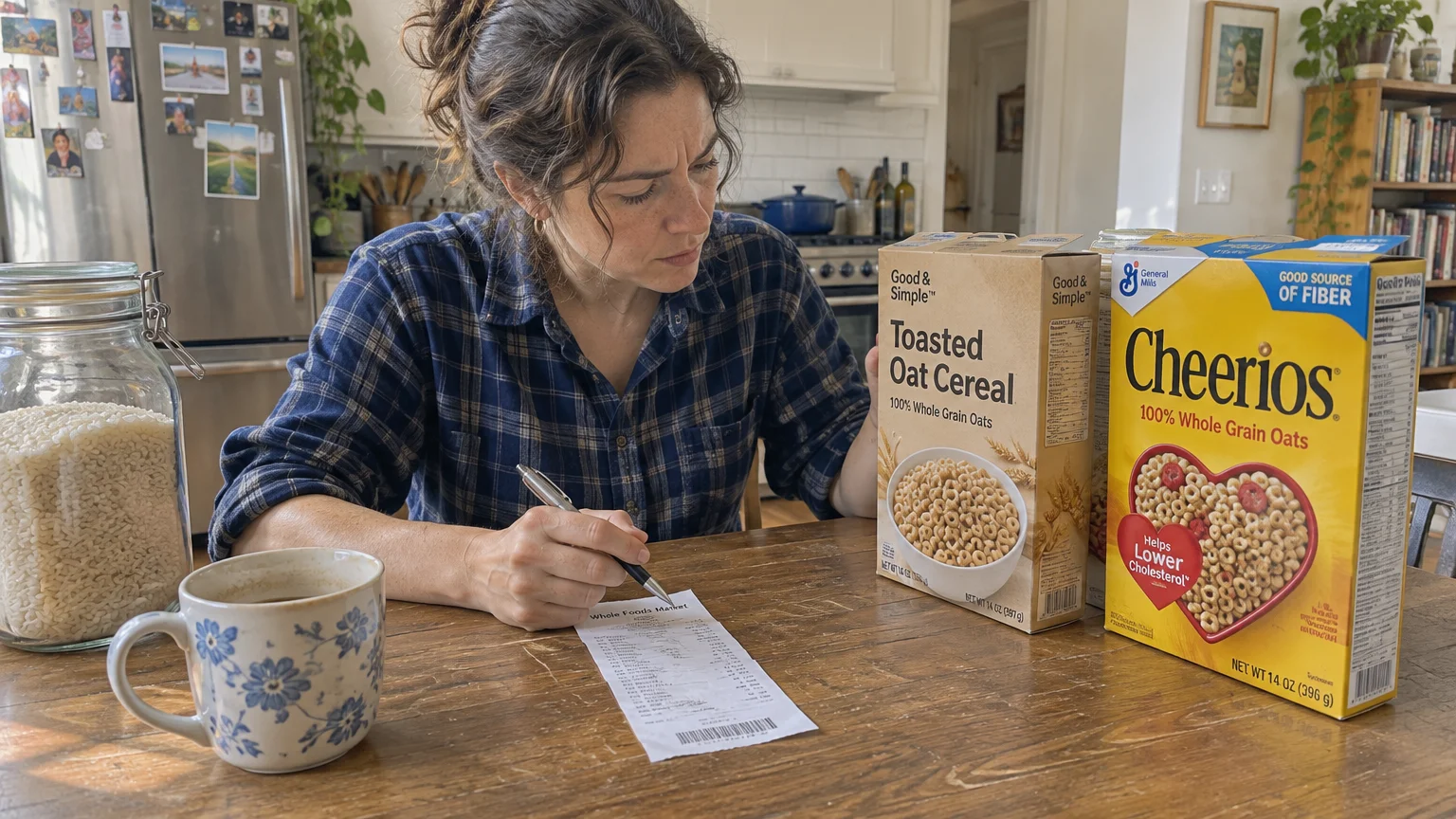
Aldi claims fourth place by undercutting Walmart’s average basket price by 8.3%, according to Consumer Reports. It also landed fifth overall in dunnhumby’s 2026 rankings, proving low prices do not require sacrificing shopper loyalty.
By early 2026, Aldi expanded past 2,624 U.S. stores across 40 states—entering Maine in March—with plans to reach roughly 2,800 locations by year-end. One in three U.S. households already shopped there in 2025.
The Psychology Behind the Quarter Cart and Narrow Aisles
Conventional supermarkets stock tens of thousands of competing products to overwhelm your brain into overspending. Aldi trims the fat by stocking mostly one size and one brand per item, turning a chaotic chore into a fast loop.
Roughly 88% to 90% of Aldi’s shelf items are private-label brands, compared with an industry average of 14% reported by GlobalData. Because Aldi skips middleman marketing budgets, you stop paying for television commercials inside your cereal box.
Even the famous 25-cent cart deposit and self-bagging counter serve a financial purpose. Store workers stay focused on restocking pallets rather than wrangling stray carts across parking lots.
Store-Specific Hacks and Product Warnings
Shop the famous center-aisle “Aldi Finds” section with extreme caution. Those rotating seasonal gadgets, patio chairs, and novelty snacks exist purely to trigger scarcity panic and blow up your weekly food budget.
Read produce labels carefully and inspect berries or leafy greens before leaving the aisle. Because Aldi turns over inventory quickly on open pallets, freshness can vary sharply between delivery days.
Stick to pantry staples, dairy, baking goods, and frozen basics if you want to save money on groceries consistently. Remember to bring a quarter and sturdy tote bags so you never pay extra at checkout.
Rank #3: Lidl — Outsmarting the Weekly Flyer Trap
Lidl edges out its German rival to take third place, beating Walmart’s basket price by 8.5% in the Consumer Reports study. Operating 203 U.S. locations as of November 2026, Lidl concentrates heavily along the East Coast and Mid-Atlantic, including 42 stores in New York.
Like Aldi, Lidl relies heavily on sleek private labels and stripped-down store layouts. However, Lidl blends discount efficiency with an in-store bakery that rivals traditional supermarkets.
How Lidl Uses Fresh Bread to Pull You Deeper Inside
Supermarkets put fresh bakeries right near the entrance for a calculated reason. Warm bread aromas relax your budget defenses and make you hungrier as you walk toward higher-margin aisles.
Lidl runs the exact same psychological play, positioning crusty loaves and pastries upfront before funneling you past seasonal impulse tables. Knowing the trick lets you grab discounted staples without taking the bait.
Store-Specific Hacks and Product Warnings
Download the free myLidl app before stepping through the doors. Unlike generic grocery apps that barely shave pennies off inflated prices, Lidl’s app unlocks deep targeted discounts on meat, dairy, and produce.
Be skeptical of the non-food middle aisle filled with power tools, kitchen appliances, and workout gear. One unplanned skillet or blender instantly erases weeks of disciplined grocery savings.
Check the unit price—the cost per ounce or pound—on specialty European chocolates and cheeses. While Lidl offers standout value on imported treats, specialty items still add up quickly compared with core meal ingredients.
Rank #2: BJ’s Wholesale Club — Stacking Discounts Without Overspending
BJ’s Wholesale Club leaps into second place with prices 21.0% cheaper than Walmart, according to Consumer Reports. Operating 267 clubs primarily along the East Coast as of August 2026, BJ’s bridges the gap between bulk warehouses and traditional supermarkets.
In a 2026 AARP comparison of 28 common grocery items across major clubs, BJ’s beat Costco to claim second place overall. That makes it a serious contender if you live within driving distance of a warehouse.
The Coupon Advantage Other Clubs Refuse to Match
Warehouse clubs charge annual dues for access to rock-bottom margins—and BJ’s raised its standard Club fee to $60 and Club+ fee to $120 on January 1, 2025. Club+ members earn 2% rewards capped at $500 per year.
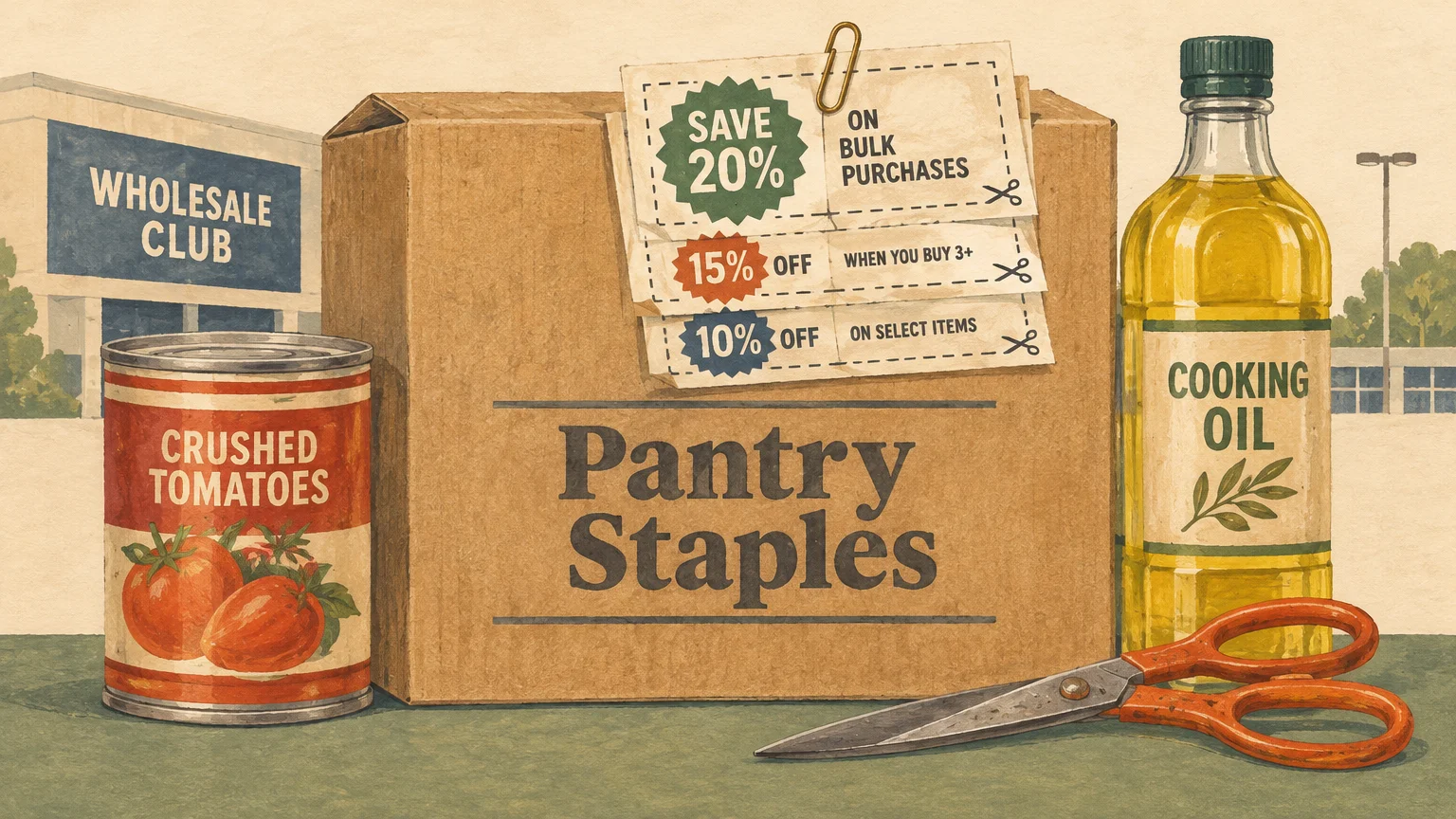
Here is what competitors do not advertise: BJ’s is the only major warehouse club that lets you stack manufacturer coupons on top of in-club coupons. Neither Costco nor Sam’s Club allows that double-dip at checkout.
Eligible SNAP and benefits recipients can also access a discounted $25 membership. That sharply lowers the barrier to bulk savings for tight household budgets.
Store-Specific Hacks and Product Warnings
Do not assume every oversized container inside a warehouse club is automatically a bargain. Retailers count on “bulk blindness”—the false assumption that larger packages always carry lower unit prices.
Perishable produce and giant tubs of condiments frequently expire before small households finish them. Throwing away spoiled bulk food turns a 21% shelf discount into a total financial loss.
Compare pack sizes against local discount grocers using your phone calculator, and clip digital coupons inside the BJ’s app before shopping. Stick to shelf-stable paper goods, coffee, cooking oils, and freezable meats to protect your savings.
Rank #1: Costco Wholesale — Capping Retail Profit Margins at the Door
Costco Wholesale takes the top spot in our grocery store rankings, beating Walmart’s national basket by a massive 21.4% in the Consumer Reports study. It also ranked fourth overall in dunnhumby’s 2026 U.S. Retailer Preference Index.
To understand how Costco pulls off prices that undercut conventional supermarkets by 30% or more, look at its profit structure. Costco operated on roughly an 11% gross margin in fiscal 2025, compared with 22.9% at Kroger.
The Membership Math Retailers Hope You Ignore
Costco restricts each warehouse to fewer than 4,000 active items, forcing suppliers to compete fiercely for shelf space. Rather than gouging you on milk and rotisserie chicken, Costco earns steady revenue from annual membership renewals.
Following a September 2024 increase, Gold Star memberships cost $65 per year and Executive memberships cost $130. Executive members earn 2% cash back capped at $1,250 annually.
Do the break-even math before a cashier talks you into upgrading at checkout. You must spend $6,500 per year on qualifying items to cover the full $130 Executive fee, or $3,250 annually just to cover the $65 upgrade difference.
How Sam’s Club and Walmart Stack Up Outside the Top Six
Two retail giants deserve an honest look alongside Costco, even though Sam’s Club was omitted from the Consumer Reports study. In AARP’s 2026 basket test of 28 common grocery items, Sam’s Club actually beat both BJ’s and Costco for the lowest total price.
Sam’s Club operates 601 locations across 44 states and Puerto Rico, though it raised fees on May 1, 2026, to $60 for Club and $120 for Plus. Plus members need $6,000 in annual spending to break even on the $120 fee.
Eligible SNAP recipients can snag a $20 Sam’s Club membership through January 31, 2027, via ID.me. On October 20, 2026, Walmart also launched a $120 annual bundle combining Walmart+ and Sam’s Club Plus.
Meanwhile, Walmart itself remains the nation’s baseline benchmark, holding roughly 23.6% of total U.S. grocery market share across more than 4,605 stores. In November 2026, Walmart reported roughly 7,700 active price rollbacks and expanded its bettergoods private label toward 1,000 items.
Store-Specific Hacks and Product Warnings
Watch Costco’s sneaky price tags for hidden markdown codes—specifically prices ending in .97, which signal manager clearance deals. Conversely, an asterisk in the top right corner of a sign warns that an item is discontinued and will not be restocked.
Avoid walking the warehouse without a strict written list, because Costco’s famous “treasure hunt” layout hides everyday staples in the very back. Passing discounted electronics, seasonal apparel, and gourmet snacks along the main aisle is designed to trigger impulse spending.
Skip bulk fresh fruit and baked goods unless you plan to freeze portions the moment you get home. Even the cheapest grocery stores fail your budget if half your haul ends up in the trash can.
Your Action Plan: How to Be a Smarter Shopper
Retail data from NielsenIQ covering early 2026 shows shoppers are voting with their wallets: value retailers posted 11.6% year-over-year sales growth versus just 2.3% at conventional supermarkets. Meanwhile, Private Label Manufacturing Association figures forecast U.S. store-brand revenue reaching $280 billion.
That migration makes total sense given recent household cost pressures. Bureau of Labor Statistics figures show the average American household spent $10,633 on food in 2025—allocating 61.0% to groceries—while combined housing and food consumed 46.9% of total spending.
Even though food-at-home inflation cooled to 1.8% year-over-year in September 2026, prices jumped 0.4% in October alone due to fresh vegetables and beef. USDA Economic Research Service projections still forecast beef and veal rising 8.7% in 2026 while egg prices plunge 29.3%.
Step 1: Benchmark Your Budget Against Official Numbers
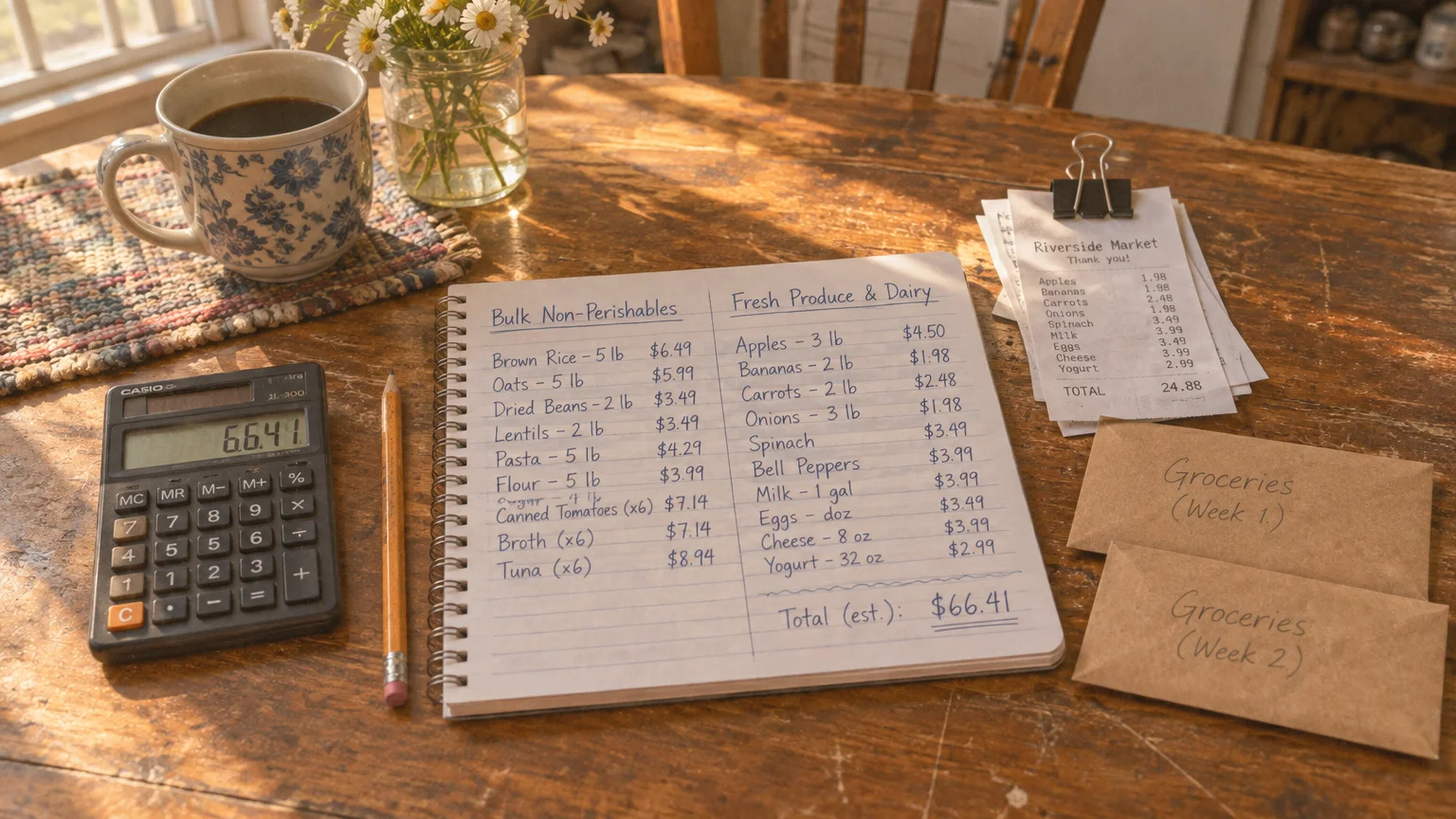
Stop guessing whether your monthly food bill is reasonable. Under the USDA Thrifty Food Plan for September 2026, a reference family of four needs $1,024.00 per month—or $236.30 per week—for a nutritious at-home diet.
Individual October 2026 Thrifty Food Plan benchmarks in a four-person household sit at $254.20 monthly for an adult woman and $319.10 for an adult man. If you live alone, the USDA recommends adding 20% to those figures, or 10% for two-person households.
Step 2: Split Your Trip Using the Two-Store Strategy
No single store wins every category on price, selection, and pack size. Pair one high-volume warehouse or regional discounter from our top six with a convenient neighborhood market for missing ingredients.
Buy dry goods, paper products, dairy, and pantry staples at Aldi, Lidl, WinCo, or a warehouse club. Save smaller trips for fresh produce markdowns or exact recipe items you cannot finish in bulk.
Step 3: Defeat Supermarket Psychology Every Trip
Eat a quick snack before shopping so hunger never hijacks your cart near the bakery or deli. Stick to the outer perimeter first—where fresh essentials live—and enter center aisles only with a targeted list.
Ignore flashy “10 for $10” signs unless the unit price beats your regular store-brand alternative. Most stores price single items at $1 anyway, using bulk phrasing simply to trick you into buying ten.
Always verify shelf tags against unit costs per ounce, pound, or count rather than staring at the bold sticker price. Shrinkflation—quietly shrinking package weights while holding prices steady—makes sticker comparisons completely useless.
To check for scams and false advertising, visit the FTC. For unbiased product reviews, consult Consumer Reports.
Business ratings are available at the Better Business Bureau.
Frequently Asked Questions
Are store brands really as good as national brands?
In most pantry categories—including flour, sugar, canned beans, oats, butter, and frozen vegetables—store brands match national brands on nutrition and ingredients. Many private-label foods are even manufactured in the exact same facilities as famous label rivals.
Start by swapping out three name-brand staples per trip at Aldi, Lidl, or H-E-B until you find your household’s favorites. If a specific store brand disappoints you, most value chains offer easy refund guarantees.
Is a warehouse club membership worth it for a single person or couple?
A $60 or $65 base membership pays for itself easily if you buy coffee, cooking oil, paper goods, pet food, or gasoline regularly. However, buying perishable bulk produce as a single shopper often leads to expensive food waste.
Consider splitting large packages with a friend or neighbor, or stick to non-membership discounters like WinCo, Aldi, and Lidl. Avoid upgrading to $120 or $130 top-tier memberships unless your annual club spending clearly crosses the break-even threshold.
Which grocery chains should I avoid if saving money is my top priority?
According to Consumer Reports price comparisons against Walmart, traditional full-service supermarkets charge steep premiums for convenience and ambiance. Publix ran 20.3% higher, Piggly Wiggly ran 22.6% higher, Trader Joe’s ran 24.6% higher, and Whole Foods Market topped the list at 39.7% higher.
Even Target came in 5.9% higher than Walmart, and Kroger averaged 14.8% more. Use high-priced grocers strictly for rare specialty items or deeply discounted loss leaders rather than your full weekly haul.
What is the easiest grocery budget tip to cut my bill this week?
Switch one or two beef-heavy dinners to eggs, poultry, or dried beans while beef prices remain elevated under 2026 inflation trends. Next, audit your pantry and freezer before writing a list so you stop buying duplicates of ingredients you already own.
Finally, switch your primary shopping trip to one of the six value chains ranked above. Changing where you shop delivers immediate double-digit savings without forcing you to clip a single paper coupon.
Disclaimer: The opinions in this article are for informational and entertainment purposes. Brands, products, and store policies can change.
Always verify information and prices before making a purchase.