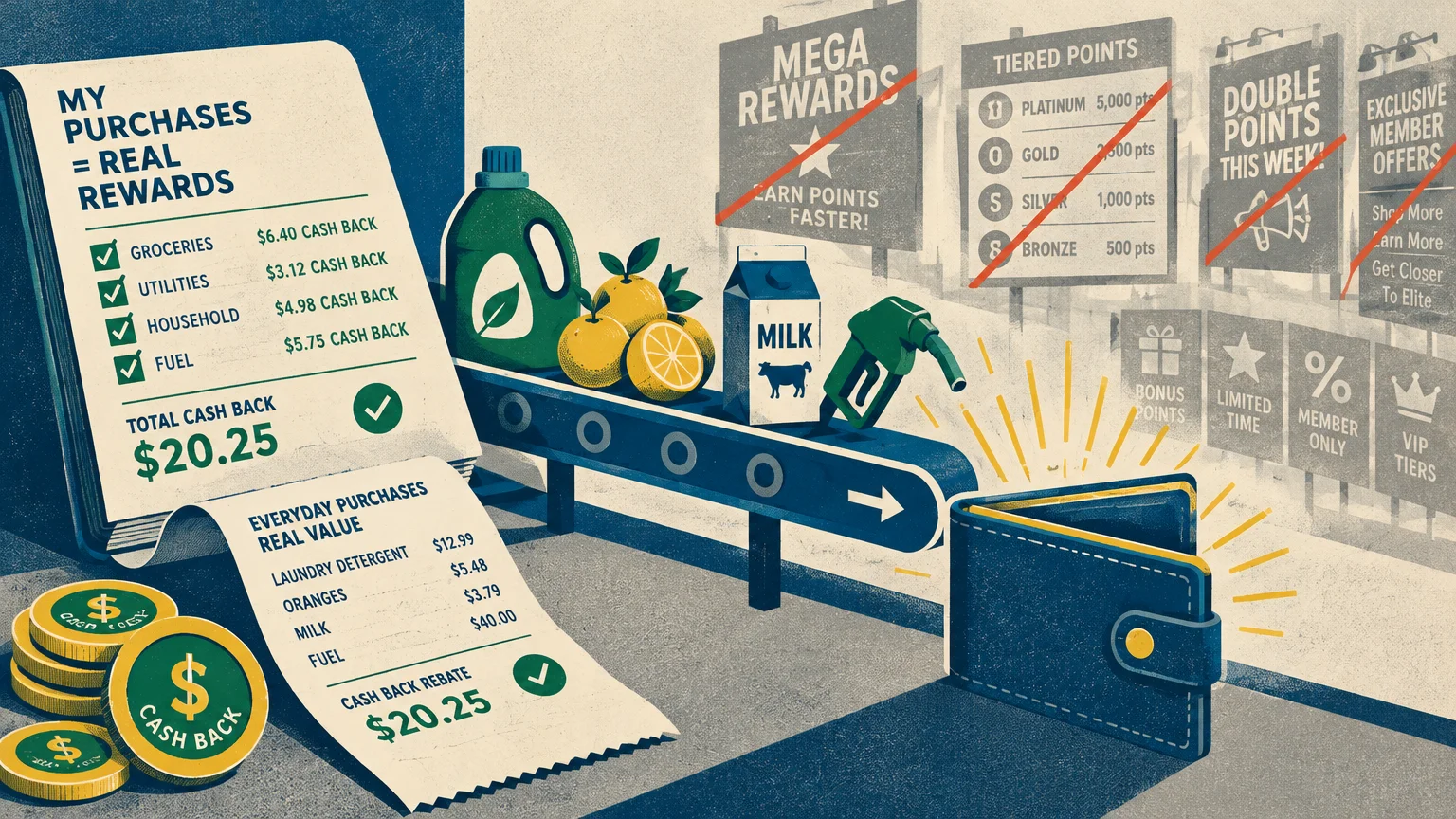
Most store loyalty programs exist to harvest your personal data without offering meaningful savings in return. You can bypass the marketing noise and pocket hundreds of dollars each year by focusing only on programs that deliver undeniable math.
Retailers design generic point schemes to lock you into emotional spending habits. Savvy shoppers ignore vanity perks and target programs that provide guaranteed cash rebates, subsidized fuel, or free travel.
We analyzed the numbers across retail, grocery, and travel rewards to identify the true winners. These eight loyalty programs consistently beat the house and return real cash to your wallet.
Tip #1: CVS ExtraCare Plus for Guaranteed Cash Arbitrage
Most drugstore rewards programs drip pennies back into your account while charging inflated retail prices. CVS ExtraCare Plus flips that equation by offering guaranteed cash arbitrage for anyone who buys basic household essentials.
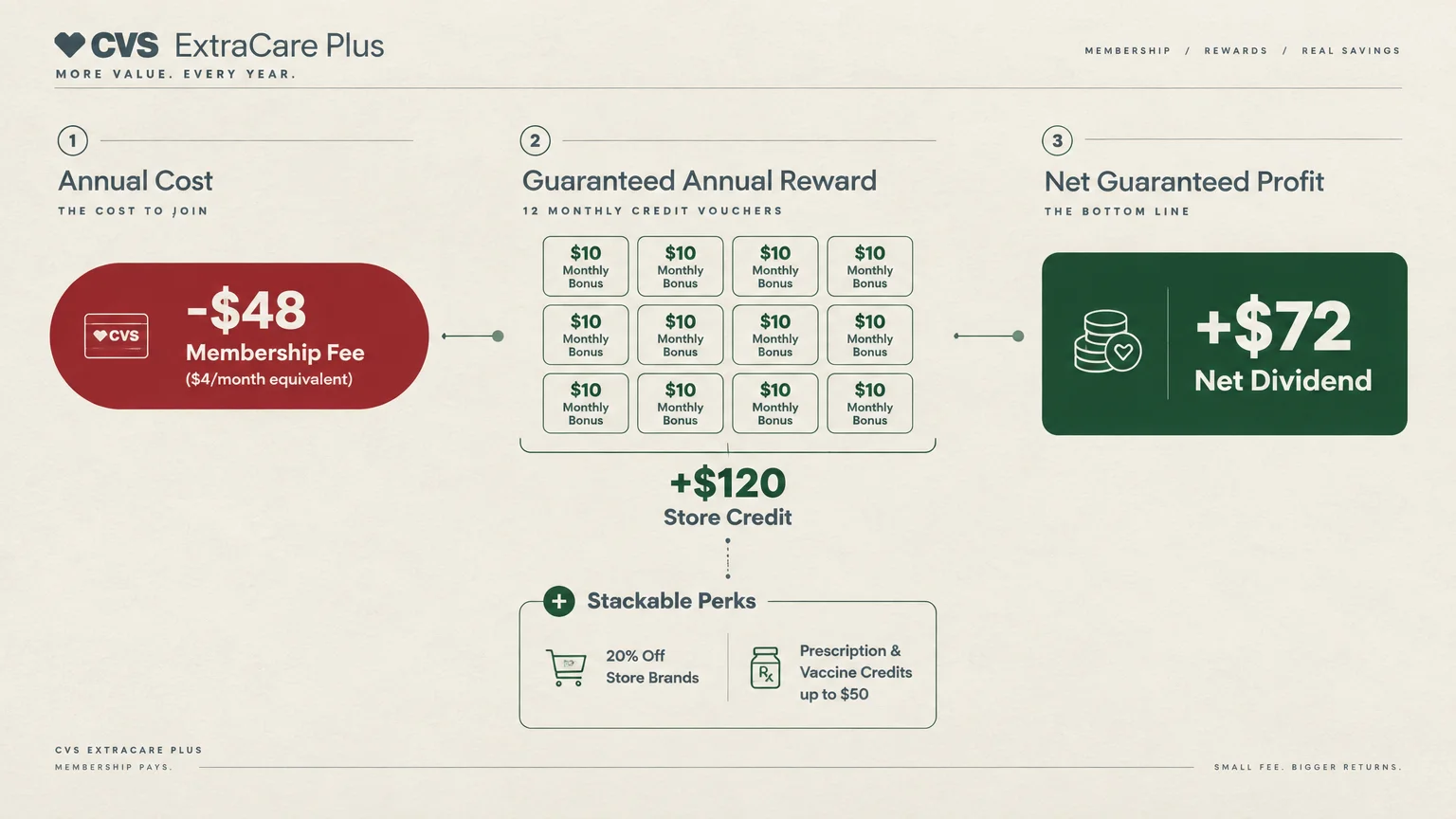
The program costs $48 per year or $5 per month. In return, CVS credits your account with a $10 monthly bonus reward every billing cycle.
That single benefit delivers $120 in annual store currency. After deducting the $48 membership cost, you clear a net profit of $72 each year.
You do not need to alter your regular shopping habits to collect this dividend. Simply redeem the monthly voucher on staple goods like toilet paper, toothpaste, or dish soap.
The service also includes free same-day delivery on eligible orders. That perk saves you valuable time and eliminates impulse buys in physical aisles.
Members receive a 20% discount on all CVS Health brand items. That price reduction stacks on top of weekly manufacturer coupons and standard promotional sales.
Even the free tier of ExtraCare provides substantial utility for prescription management. You earn 2% back in ExtraBucks on qualifying purchases and $2 for every four prescriptions filled.
When you add routine immunizations, you can pocket up to $50 annually just for filling your necessary medications. Stack that with the paid tier’s monthly voucher to extract maximum value.
Beware of spending your bonus cash on overpriced snacks or impulse displays near the register. Treat the $10 credit as an essential household subsidy to lock in your return.
If you shop at CVS even once a month, this program functions as an automated cash-back vehicle. Few store loyalty programs offer an instant, guaranteed mathematical return on investment.
Never let the monthly reward expire at the end of the billing cycle. Set a recurring calendar alert to claim your staple goods and bank the savings.
Tip #2: The Walmart+ and Sam’s Club Plus Bundle for Total Grocery Dominance
Amazon Prime once held the undisputed crown for household subscription value, but rising prices have eroded its dominance. Walmart now delivers a far superior combination of grocery savings and wholesale perks.
A standalone Walmart+ subscription costs $98 per year or $12.95 per month. If you qualify for government assistance or attend college, Walmart+ Assist drops the fee to $49 per year.
The standard membership includes free grocery delivery from local stores on orders over $35. It also provides a 10-cent discount per gallon at participating gas stations across the country.
Subscribers also receive free video entertainment through their choice of Peacock Premium or Paramount+ Essential with ads. That streaming benefit alone covers the full annual cost of the subscription.
The real insider play is the annual bundle combining Walmart+ and Sam’s Club Plus for $120 per year. Purchasing those memberships separately costs nearly $100 more.
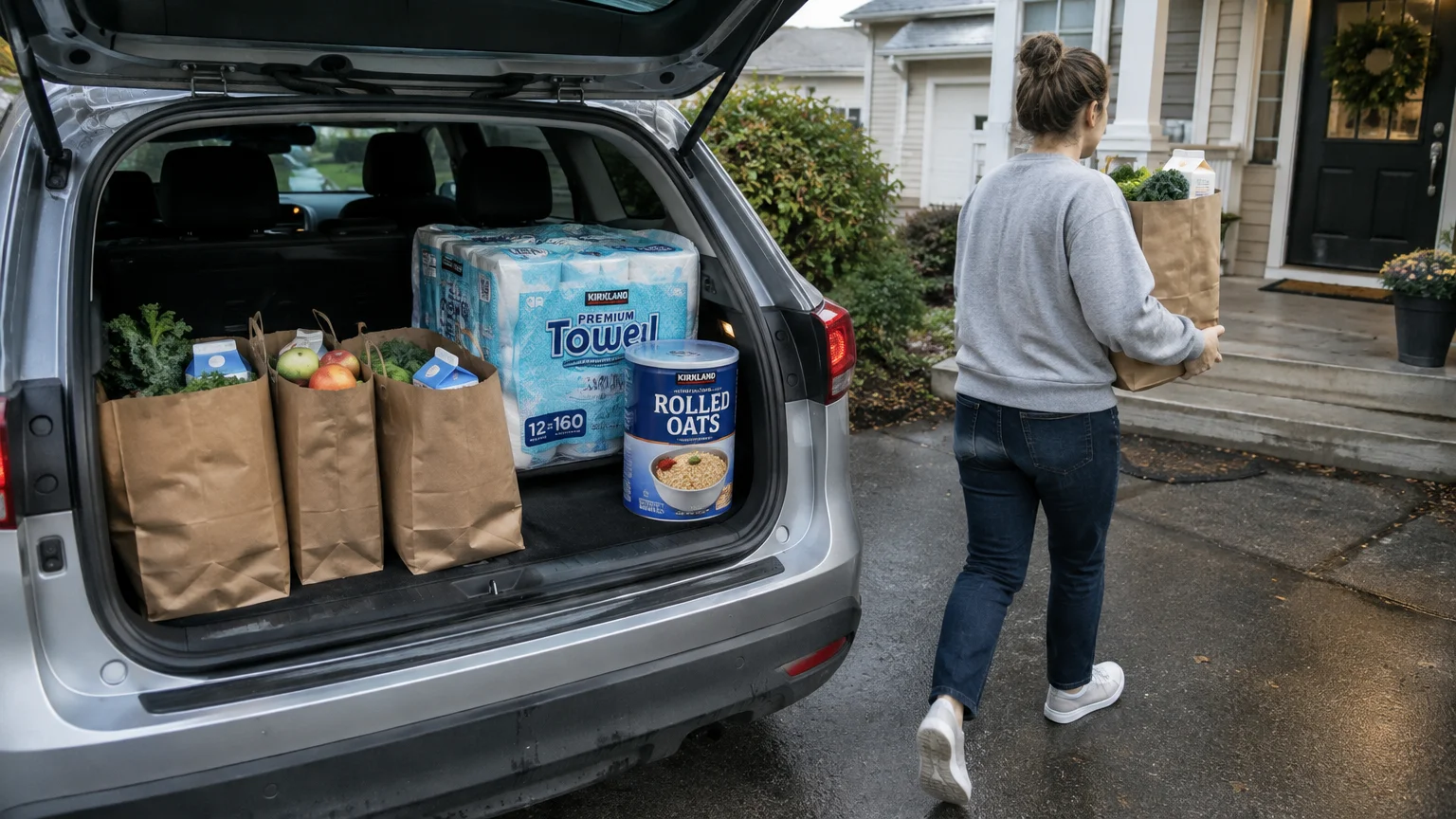
Sam’s Club Plus unlocks wholesale bulk pricing, early shopping hours, and free shipping on eligible catalog orders. Pairing bulk wholesale purchasing with same-day retail grocery delivery eliminates almost all convenience markups.
In comparison, standard Amazon Prime costs $139 per year or $14.99 per month. While Prime includes free shipping and Grubhub+, ad-free streaming requires an extra $4.99 per month.
Amazon does offer 10 cents off per gallon across 7,500 gas stations, matching Walmart’s fuel perk. However, Amazon cannot match the physical grocery footprint of Walmart’s local store network.
Prime Access cuts the cost to $6.99 per month for qualifying assistance recipients. Prime for Young Adults and Students also discounts membership to $69 per year or $7.49 per month.
Even with those discounts, the combined Walmart and Sam’s Club bundle dominates the field for family food budgets. You secure fresh food delivery, wholesale pricing, fuel discounts, and streaming entertainment under one roof.
Audit your annual delivery fees and streaming bills before renewing your current retail subscriptions. Switching to this unified retail package instantly cuts redundant recurring expenses.
Tip #3: Target Circle and Target Circle 360 for Daily Five Percent Savings
Target completely restructured its loyalty ecosystem to reward dedicated suburban shoppers. The core program now combines effortless discount tracking with an aggressively discounted delivery tier.
The basic Target Circle program remains completely free and applies manufacturer deals automatically at checkout. You no longer need to manually clip digital coupons inside the mobile app.
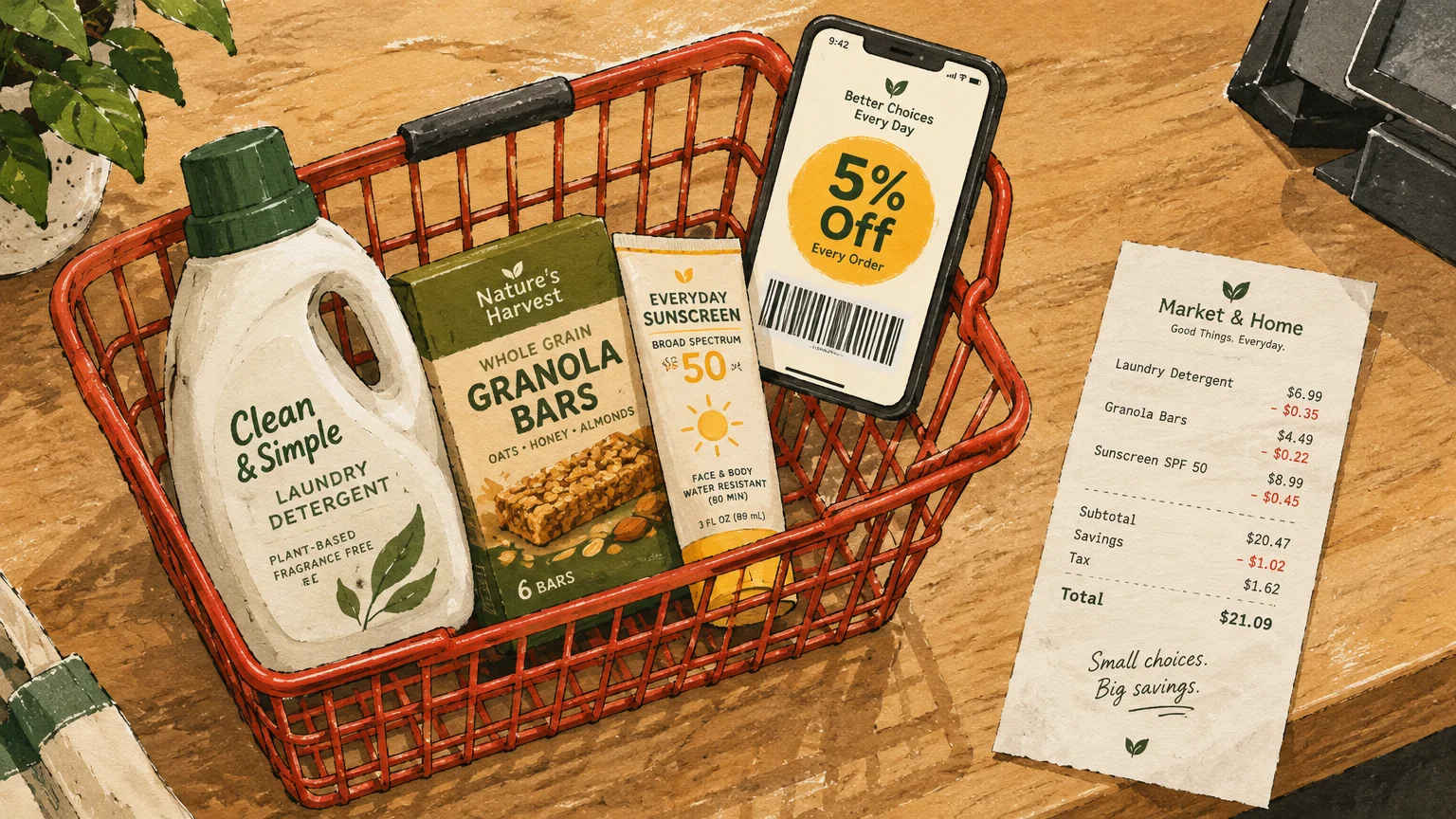
Linking a Target Circle Card unlocks an instant 5% discount on almost every purchase. The card is available as a debit card tied to your existing bank account, bypassing credit inquiries entirely.
That 5% margin applies immediately at the register rather than accumulating as confusing points. Over a full year of grocery and apparel spending, that discount preserves hundreds of dollars.
Target also launched Target Circle 360 to compete directly with Amazon Prime and Instacart. The paid tier costs $99 per year or $10.99 per month for standard users.
The service provides unlimited same-day delivery on orders over $35 through Shipt without retail markups. Unlike third-party apps, you pay the exact same shelf price as in-store shoppers.
Circle Card holders, college students, teachers, military personnel, and government assistance recipients qualify for a permanent discount. These groups pay just $49 per year or $4.99 per month for Target Circle 360.
Circle 360 members also receive curated monthly freebies and access to exclusive seasonal promotional events. These perks quickly offset the reduced annual subscription fee.
By combining the 5% Circle Card discount with the subsidized Circle 360 delivery service, you build an unbeatable shopping system. You save money on goods while clawing back hours of errand time.
You also earn free two-day shipping on hundreds of thousands of items without meeting standard order minimums. That convenience keeps you from adding unnecessary items to your cart just to reach a shipping threshold.
Never pay full retail price for delivery when Target offers transparent, subsidized rates. This program provides reliable loyalty program savings for disciplined suburban households.
Tip #4: Costco Executive Membership for the High-Volume Dividend
Warehouse clubs require paid memberships to walk through their doors, which repels casual shoppers. However, the Costco Executive Membership functions as a self-funding vehicle for households that manage their spending strategically.
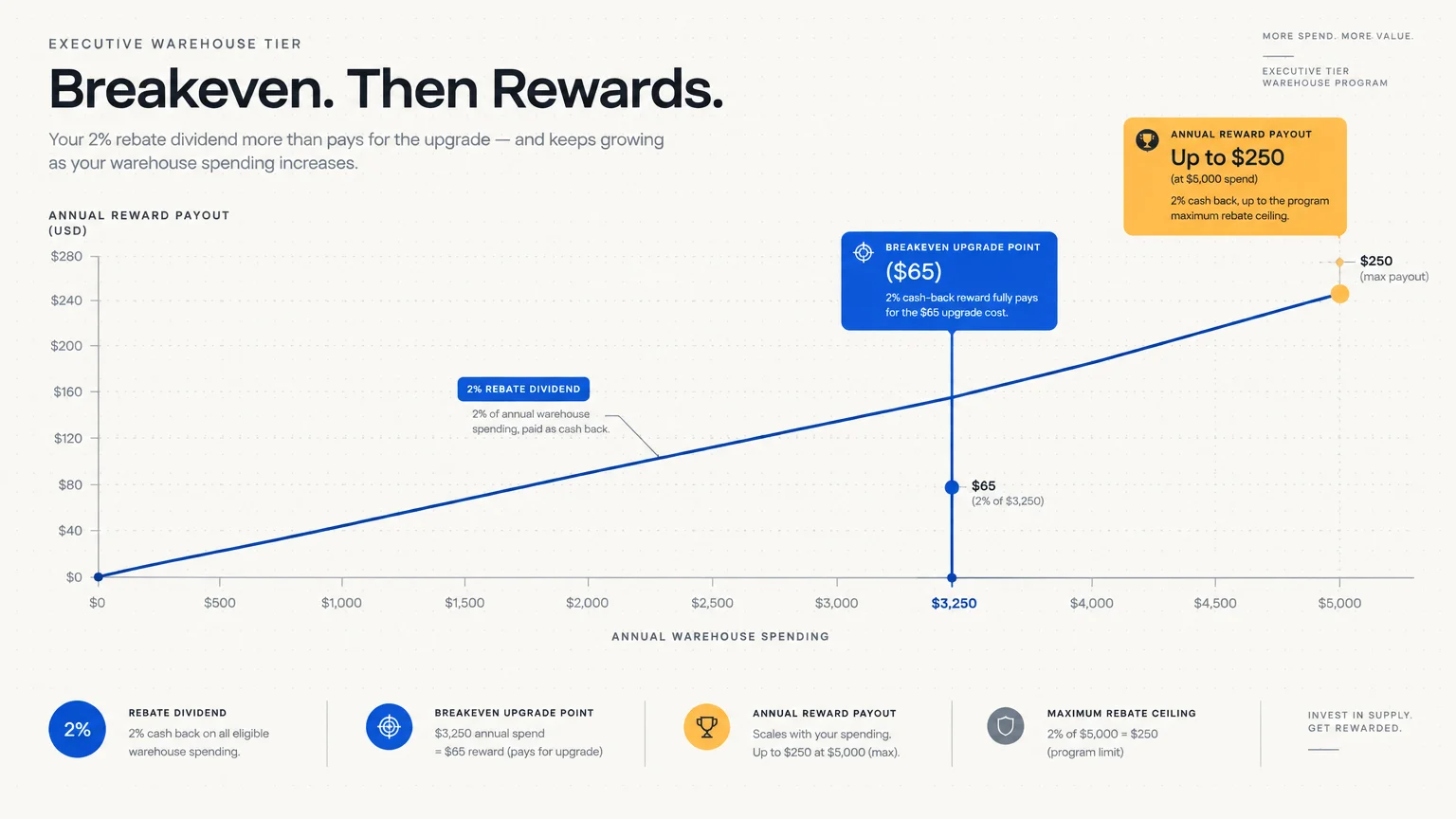
A standard Costco Gold Star membership costs $65 per year. Upgrading to the Executive Membership doubles the total annual cost to $130.
That extra $65 upgrade pays a 2% annual reward on all qualified warehouse and online purchases. The math on this upgrade is completely transparent and risk-free.
If your household spends $3,250 annually at Costco, you earn exactly $65 back. That spending level equates to roughly $271 per month on groceries, cleaning supplies, and household goods.
Every dollar spent beyond that breakeven point generates direct profit for your household budget. Families who spend $500 monthly receive $120 back each year, effectively wiping out their membership cost.
Costco reported a staggering 92.3% renewal rate in the United States and Canada across 84.1 million paid members. Shoppers stay loyal because the pricing structure provides unmatched value on bulk staples.
Executive members also receive exclusive discounts on Costco Services, including auto insurance, pet insurance, and home installation projects. Major appliance or tire purchases can trigger hundreds of dollars in instant rebate checks.
If your annual spending falls short of the breakeven mark, Costco maintains an ironclad customer satisfaction policy. Visit the customer service desk to request a refund for the price difference of your upgrade fee.
That policy eliminates all downside risk for shoppers testing the higher membership tier. You either earn cash-back rewards or receive your original investment back upon request.
Treat your Costco card like a financial instrument rather than a retail vanity badge. Consolidate your bulk staples, fuel fill-ups, and optical purchases to maximize your annual rebate check.
Time your large purchases around tire promotions or seasonal sales to accelerate your earnings. Disciplined shopping turns a routine warehouse membership into a high-yielding dividend.

Tip #5: Kroger Boost for Cheaper Groceries and Fuel Point Multipliers
Supermarket chains often offer lackluster loyalty schemes that force you to trade points for cheap snacks. Kroger Boost bucks that trend by delivering massive fuel pump savings and streaming entertainment credits.
Kroger split the program into two distinct tiers to fit different consumer shopping styles. Boost Essential costs $69 per year or $8.99 per month for value-focused households.
Boost Essential includes free next-day grocery delivery on orders over $35 and doubles your fuel points on every purchase. It also comes with a six-month trial of Disney+, Hulu, or ESPN+ with ads.
The premium Boost tier costs $99 per year or $12.99 per month. It upgrades your grocery fulfillment to free same-day delivery within as little as two hours.
Premium Boost also provides an ongoing annual subscription to your choice of an ad-supported Disney streaming service. That media perk alone recovers the entire subscription cost.
The 2X fuel points multiplier is where active drivers find the biggest financial upside. Every 100 fuel points knocks 10 cents off per gallon at Kroger fuel centers and partner stations.
Spending $500 monthly on family groceries generates 1,000 fuel points under the Boost multiplier. That yields a full $1.00 discount per gallon on a single 35-gallon fill-up.
Maxing out that monthly fuel discount can save you up to $35 at the pump each cycle. Over twelve months, those fuel savings can exceed $400 in direct automotive relief.
Kroger delivery also uses temperature-controlled vans driven by company employees rather than gig contractors. That operational structure ensures fresher produce and eliminates mandatory tipping expectations.
If you live near a Kroger-brand store and commute regularly, this program pays for itself multiple times over. It ranks among the best store loyalty programs in the supermarket industry.
Always check weekly digital coupons before placing your delivery orders. Stacking digital manufacturer coupons with double fuel points multiplies your return on routine grocery runs.

Tip #6: Bilt Rewards for Slashing the Cost of Rent and Mortgages
Housing costs represent the single largest expense in most American monthly budgets. For decades, paying rent yielded zero financial perks unless you incurred predatory credit card transaction fees.
Bilt Rewards shattered that barrier by allowing tenants and homeowners to earn valuable points on housing payments without surcharges. The platform operates both a free loyalty app and a co-branded credit card.
Under the Bilt Card 2.0 program updates, cardholders unlock simplified housing-only rewards. You earn between 0.5X and 1.25X points on rent or mortgage payments based on your everyday card spending.
The update removed the previous 4% Bilt Cash earning option for new applicants in favor of this streamlined structure. This shift prioritizes straightforward point accumulation on your biggest mandatory bill.
For non-cardholders paying rent via ACH or debit inside the app, earnings are capped at up to 250 points per month. Even that modest cap generates 3,000 free points annually without opening a new credit line.
The true strength of Bilt lies in its elite roster of 1:1 travel transfer partners. You can transfer points directly to high-value programs like American Airlines AAdvantage, World of Hyatt, and United MileagePlus.
Those transfer partners allow you to convert routine monthly housing payments into aspirational vacation flights and luxury hotel nights. No other consumer loyalty program touches this massive spending category.
Bilt also offers regular “Rent Day” promotions on the first of each month. These events feature double points on dining and travel purchases alongside lucrative transfer partner bonuses.
Smart users pair their monthly rent payment with necessary everyday purchases like transit and dining. Meeting the five-transaction monthly card requirement unlocks complete points eligibility without carrying revolving debt.
Always pay your card balance in full every single month to avoid high interest charges. When managed responsibly, Bilt converts an unavoidable fixed expense into an engine for free vacations.
If you rent an apartment or pay a mortgage, skipping Bilt leaves free travel rewards on the table. It remains one of the few rewards programs worth it for every household.

Tip #7: American Airlines AAdvantage for Outsized Travel Redemption Value
Airline frequent flyer programs have spent years devaluing their points charts and stripping perks from regular travelers. Despite this trend, American Airlines AAdvantage has emerged as the premier loyalty program for savvy flyers.
In recent rankings by U.S. News & World Report, AAdvantage captured the #1 spot for Best Airline Rewards Program. That victory ended the remarkable 11-year winning streak of Alaska Airlines’ program, now rebranded as Atmos Rewards.
United MileagePlus took the top spot for business travelers, but American Airlines delivers superior value for personal budgets. American continues to maintain competitive redemption pricing across its global oneworld alliance network.
The greatest secret of the AAdvantage ecosystem is that you do not need to fly to earn elite status. American’s Loyalty Points system rewards members for everyday online shopping, hotel bookings, and dining spend.
You can route regular household purchases through the AAdvantage eShopping portal to harvest bonus miles and Loyalty Points simultaneously. Buying basic office supplies, clothing, or pet food can yield 5 to 10 miles per dollar.
Miles redeemed for premium international flights or off-peak domestic routes regularly yield over 2 cents per point in value. That return significantly outperforms generic cash-back credit cards.
Furthermore, American does not implement aggressive dynamic award pricing to the extreme degree of its main competitors. You can still discover exceptional sweet spots for transcontinental and overseas travel.
Combine everyday portal spending with a no-annual-fee or mid-tier co-branded card to accelerate your balance. Free checked bags and preferred boarding privileges quickly offset any modest card costs.
Never let airline miles sit idle in your account for years because award charts undergo periodic inflation. Earn points strategically and redeem them promptly for your planned vacations.
Watch for web special award pricing when planning off-peak trips across North America and the Caribbean. You can often book one-way domestic flights for as few as 6,000 miles.
AAdvantage provides the highest return on investment among domestic carriers for disciplined award travelers. Focus your travel rewards strategy on this resurgent airline program.

Tip #8: Wyndham Rewards for High-Value Free Hotel Nights
Hotel loyalty programs often create Byzantine reward charts that demand hundreds of thousands of points for a single weekend stay. Wyndham Rewards cuts through that confusion with a predictable, consumer-friendly redemption model.
U.S. News & World Report named Wyndham Rewards the #1 Best Hotel Rewards Program overall. It beat out Marriott Bonvoy at #2 and World of Hyatt at #3, while Marriott captured top honors for business travelers.
Wyndham achieves this dominance through its transparent, three-tiered redemption structure. Free nights cost a flat 7,500, 15,000, or 30,000 points per bedroom at thousands of global properties.
That predictable pricing prevents the frustrating dynamic award spikes common in rival hotel programs. A room that costs $350 during peak tourist season still requires the exact same point balance.
The ultimate insider hack within Wyndham Rewards involves booking vacation rental properties through Vacasa. You can redeem 15,000 points per bedroom per night for spacious beachfront condos and mountain cabins.
That partnership allows families to book full vacation homes with kitchens and multiple amenities for a fraction of the retail cost. In many markets, this yields redemption values exceeding 2.5 cents per point.
Earning Wyndham points is remarkably fast through affordable road-trip stays and co-branded credit card sign-up bonuses. The program also guarantees a minimum of 1,000 points on every qualifying paid stay.
Status matching provides another instant avenue to value within the Wyndham ecosystem. Wyndham frequently matches status from competing hotel programs, unlocking free room upgrades and late checkout privileges.
Road trippers and family vacation planners should make Wyndham their primary lodging partner. It strips away deceptive marketing jargon and delivers straightforward, free nights where Americans actually travel.
Their points-and-cash redemption option also lets you unlock discounted stays when your balance runs low. That flexibility ensures you never strand orphaned points inside an inactive account.
Avoid hoarding points for an indefinite retirement vacation. Book high-value rental condos and boutique hotels annually to maximize your loyalty program savings.
The Bottom Line: What This Means for Your Wallet
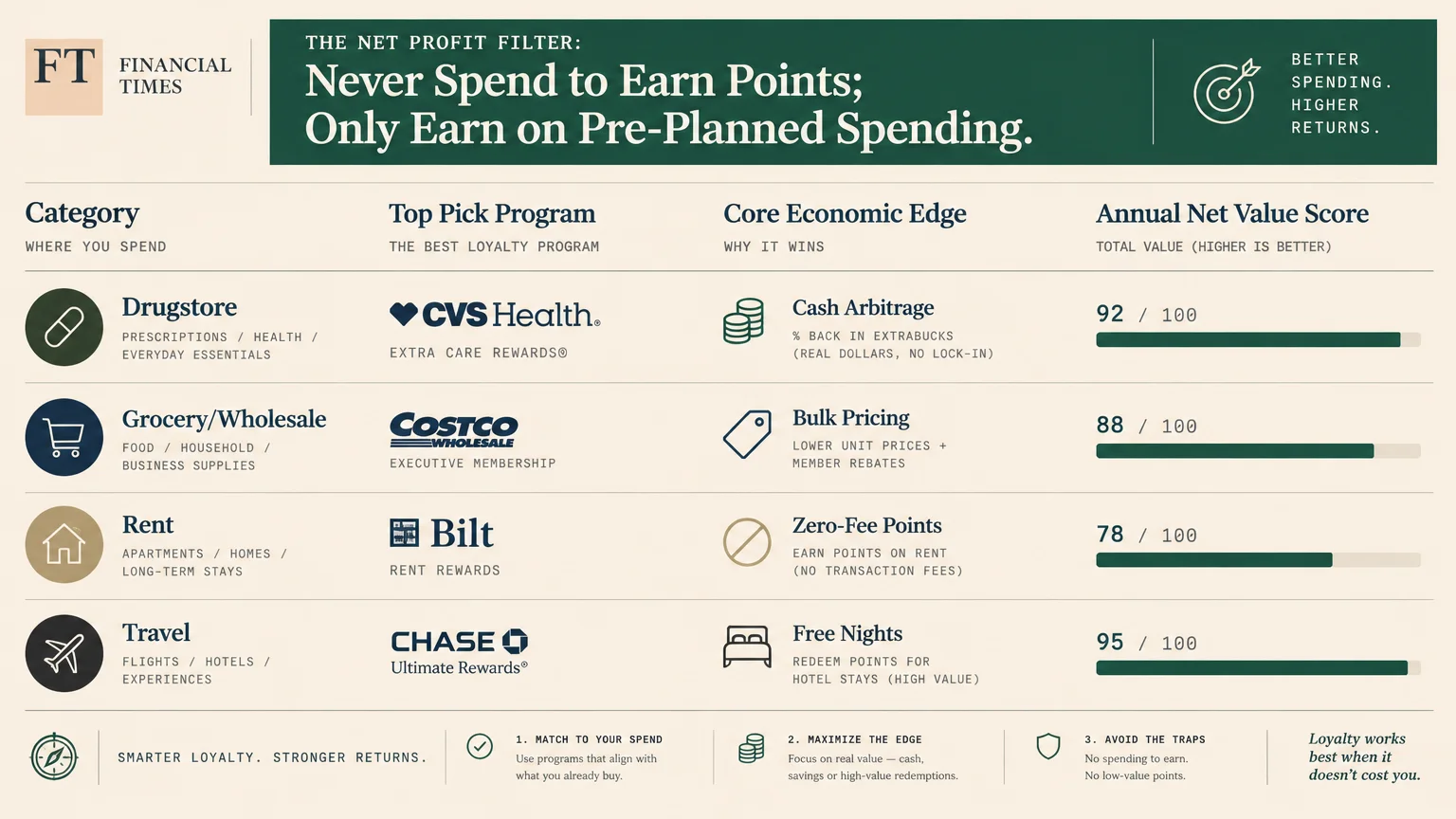
Most consumer loyalty programs are engineered to benefit corporate balance sheets rather than household bank accounts. They trade pennies in slow rewards for your personal data and shopping compliance.
The eight programs detailed above represent the rare exceptions to that corporate rule. Each one provides transparent mathematical advantages that actively reduce your living expenses.
To win at this game, you must audit your monthly recurring expenses and identify where your cash naturally flows. Never spend extra money simply to chase arbitrary points or digital badges.
Select two or three programs that align with your largest regular budget categories, such as groceries, rent, or fuel. Ruthlessly cancel paid memberships that fail to yield a net positive return on investment.
Stack store rewards with manufacturer coupons, discounted gift cards, and portal cash back to compound your savings. This multi-layered approach turns ordinary shopping trips into substantial annual wealth preservation.
Review your active loyalty accounts every quarter to clean out dormant subscriptions and cash out balances. Unredeemed points remain an interest-free loan to corporate retailers until you claim them.
The math always tells the truth, regardless of flashy marketing campaigns. Focus strictly on programs that put tangible cash, discounted fuel, and free travel directly into your pocket.
Frequently Asked Questions
Do paid loyalty programs ever cost you more than they save?
Yes, paid loyalty programs cost you money if your organic spending falls below the annual breakeven threshold. Retailers rely on breakage, which occurs when consumers pay upfront fees but fail to redeem their perks.
Always calculate your annual net return before paying an upfront membership fee. If the guaranteed perks do not exceed the membership cost, stick strictly to free rewards programs.
How do store loyalty programs make money if they offer large discounts?
Retailers profit from loyalty programs by collecting granular consumer purchasing data and building habitual shopping behavior. That data allows companies to optimize inventory, personalize pricing, and sell targeted advertising space.
They also generate revenue from shoppers who purchase high-margin discretionary items while visiting stores to redeem nominal discounts. Protect your budget by sticking strictly to your pre-planned grocery list.
Is it worth signing up for every free rewards program you encounter?
Signing up for every free program clutters your inbox and exposes your personal data to security breaches. Inactive loyalty accounts with small point balances often expire before you can redeem them.
Limit your memberships to four or five stores where you shop at least twice each month. Focusing your spending builds meaningful point balances that you can actually convert into savings.
What is the most effective way to track multiple loyalty balances?
You can manage multiple loyalty programs effortlessly using award tracking apps or a simple encrypted spreadsheet. Tracking tools monitor point expiration dates and alert you when redemption opportunities arise.
Set calendar reminders every six months to review your active memberships and points balances. That discipline ensures you redeem expiring credits and purge programs that no longer serve your financial goals.
For consumer protection information, visit the Federal Trade Commission (FTC) and the Consumer Financial Protection Bureau (CFPB). For product safety and reviews, consult Consumer Reports.
Disclaimer: This article is for informational purposes only and does not constitute financial advice. The content reflects the author’s opinion and research at the time of writing; always do your own research before making financial decisions.