
Frequently Asked Questions
What documentation do I need to present when applying for ex-spouse social security benefits?
You must present original or certified copies of your birth certificate, proof of U.S. citizenship or lawful residency, your marriage certificate showing the wedding date, and your official final divorce decree confirming the dissolution date.
You will also need your ex-spouse’s Social Security number; if you cannot locate their number, providing their full legal name, parents’ full names, and date and place of birth allows the Social Security Administration to search their system and identify the record.
What happens if my ex-spouse was married to multiple people for over 10 years each?
Federal law allows multiple eligible ex-spouses to claim spousal benefits on the same worker’s earnings record without any reduction or division of funds.
Each qualifying ex-spouse receives their full, independent entitlement based on 50 percent of the worker’s Primary Insurance Amount (or 100 percent for survivor benefits). Payouts are not split among exes, and one ex-spouse’s claim will never reduce or alter the monthly check of another ex-spouse.
Can my ex-spouse block my claim or force Social Security to deny my benefits?
No. Your ex-spouse has zero legal authority or administrative power to prevent you from claiming on their earnings record. Social Security benefits are governed entirely by federal statutory rules, not private contracts or divorce decrees.
Because your claim does not reduce your ex-spouse’s payout or send notifications to their address, their consent is completely unnecessary and never requested by the Social Security Administration.
Can I collect divorced survivor benefits and my own retirement benefit at the same time?
No, you cannot collect full payouts from both records simultaneously, but you can strategically switch between them.
Unlike living spousal rules bound by deemed filing, survivor rules permit you to claim reduced divorced survivor benefits as early as age 60 while leaving your personal retirement benefit untouched to grow until age 70.
At age 70, you can switch to your maximum personal benefit if it exceeds your survivor payout, optimizing your total lifetime retirement income.
For consumer protection information, visit the Federal Trade Commission (FTC) and the Consumer Financial Protection Bureau (CFPB). For product safety and reviews, consult Consumer Reports.
Disclaimer: This article is for informational purposes only and does not constitute financial advice. The content reflects the author’s opinion and research at the time of writing.
Always do your own research before making financial decisions.


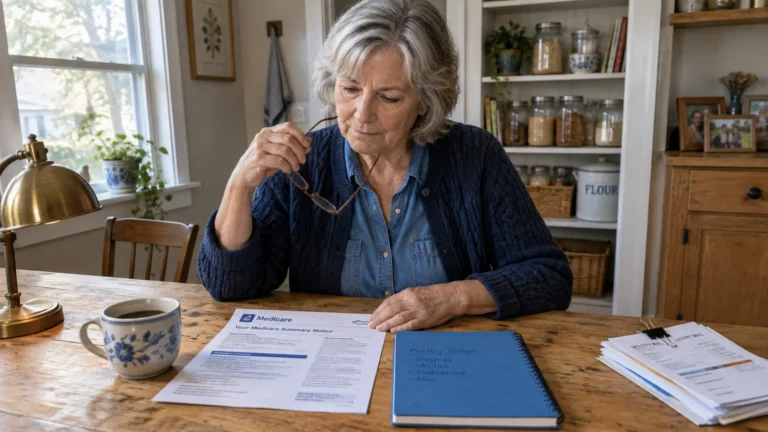

I took my personal SS at age 62. Can I switch to or “add” my ex’s full retirement now? I am 75 and never made as much money as my rx but sure could use the extra now.
Too Good to be trueAre you saying if I’m 62 I can apply for my x husband social security without letting him know or get in trouble for applying for his disability so how many years are you going to come back after 2 and tell me I made to much money or I’m not supposed to have done that.
I am still working but my ex husband is not can I get some social security from him.
Part-time
Does it matter how long you’ve been divorced? If not, how do I apply to receive from his social security?
Does it matter how long you have been divorced?
This is not a comment but a question. I applied for Social Security at age 64 due to personal medical reasons (not officially disabled). I asked the SS worker about this ex-spouse rule and was told that the amount “would not make a difference,” even though my ex-spouse was still working. It is now 4 yrs later and my ex-spouse has retired. Am I able to apply for this ex-spouse benefit now, even though I have been receiving my own SS benefit for the past 4 years? I do not mean retroactively to my retirement date, but from the current date.
I’ve remarried and I’m receiving my social security can I change and receive my x husband
I retired at 62 I’m now 71 . Could I use my x husbands retirement social security? I only make 1,300. a month and I’m disabled now in my back. Funds are so tight, every month.
If I am 62 and my husband is deceases, can I draw my husband Social Security now, he has been deceased since August 24, 2021
My ex husband and I have devoiced for years and he has remarried. He has been deceased since December 2025.
I am retired, remarried and collecting my own SS. Can I apply for benefits under my Ex-spouses SS?