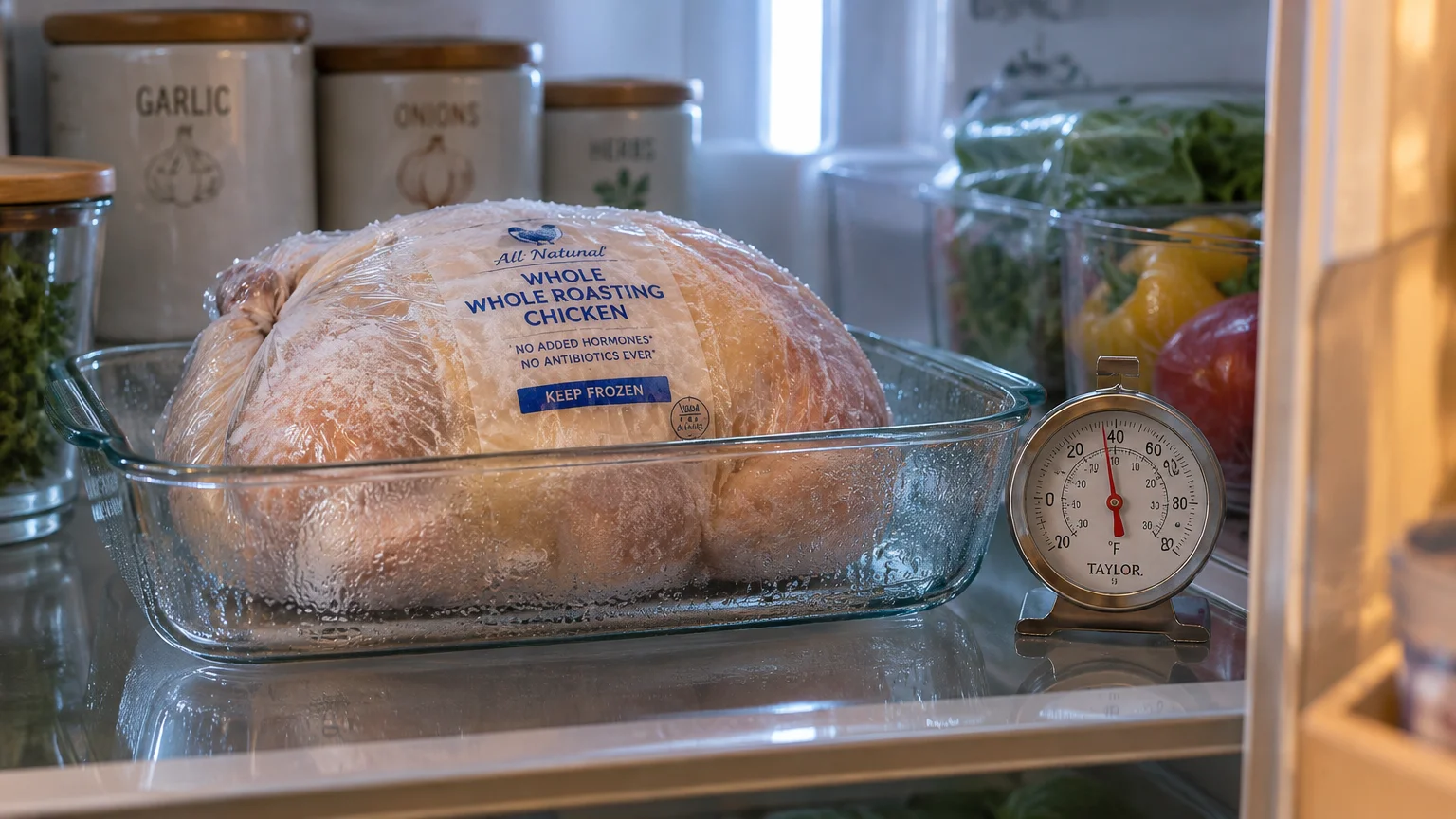
Safeguarding your hard-earned grocery budget starts with mastering practical kitchen hygiene. Learning how to defrost chicken properly protects your household from severe illness and prevents costly food waste.
Data shows that roughly 1 in 25 packages of chicken at the grocery store contains Salmonella. Mishandling frozen poultry creates serious biological hazards that turn an affordable dinner into an expensive medical crisis.
Actionable food safety tips stop aggressive bacterial colonies from multiplying across your kitchen counters. Avoiding routine chicken thawing mistakes preserves your family grocery investment and keeps your household budget fully intact.
Household Hack #1: Abandon Room-Temperature Countertop Thawing
Leaving raw poultry on the kitchen counter is among the most dangerous chicken thawing mistakes. Room air warms the outer surface long before the center ever melts.
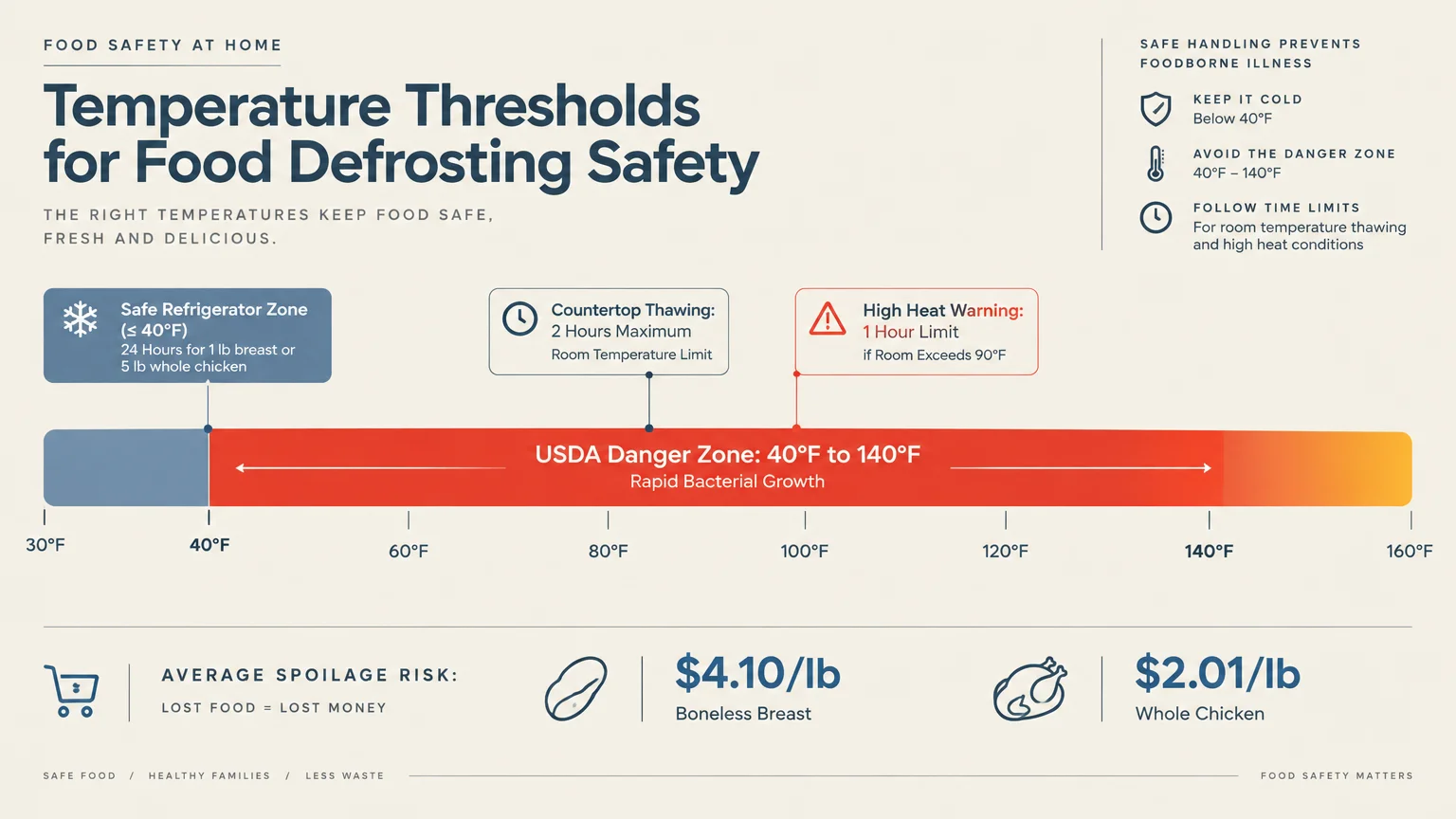
Bacteria thrive inside the USDA Danger Zone between 40°F and 140°F. When the meat surface enters this zone, Salmonella reproduces at an alarming rate.
Perishable foods must never sit at room temperature for more than 2 hours. If your room temperature exceeds 90°F, that safety limit drops to just 1 hour.
Salmonella accounts for 1.35 million infections, 26,500 hospitalizations, and 420 deaths in the United States every year. Over 23% of these illnesses are traced directly to poultry.
According to the CDC, about 1 million people get sick from contaminated poultry annually. Thawing food on an open counter creates ideal conditions for bacterial growth.
In October 2026, boneless chicken breast cost an average of $4.10 per pound. Throwing out spoiled chicken wastes real money from your household budget.
Mid-2026 prices for whole chickens also reached $2.01 per pound. Preventing spoilage protects your investment and stretches your weekly grocery funds.
Always plan ahead and thaw poultry in the refrigerator. The interior temperature remains safely at or below 40°F throughout the defrosting process.
A 1-pound package of boneless chicken breast takes about 24 hours to thaw inside a refrigerator. Whole chickens up to 5 pounds also require 24 hours.
This low-temperature method preserves meat texture and moisture. You keep your food safe while maximizing your hard-earned dollars.
Never try to rush refrigerator thawing by opening the door repeatedly. Keeping the refrigerator sealed maintains steady internal cooling and prevents warm air infiltration.
Household Hack #2: Stop Submerging Poultry in Hot or Warm Water
Using hot tap water to defrost chicken quickly introduces severe health risks. Warm water brings the surface of the meat into the Danger Zone almost instantly.
While the exterior climbs past 40°F, the center remains completely frozen. This drastic temperature split allows bacteria on the surface to multiply rapidly.
A major CDC and USDA-FSIS study revealed that cut-up chicken parts account for 68.6% of chicken-linked Salmonella outbreaks. These parts also cause 53.8% of related illnesses.
Raw chicken parts cause outbreaks 5.6 times more often than expected based on retail sales volume. Hot water baths make these vulnerable meat cuts even more dangerous.
Getting sick from Salmonella creates devastating household medical expenses. The USDA Economic Research Service calculates the average economic cost per Salmonella case at $16,668.
That figure includes emergency care, diagnostic tests, lost workplace wages, and long-term health complications. A shortcut during dinner prep can destroy your family savings.
Use a cold-water immersion bath instead of hot water. Cold water safely transfers heat away from the frozen meat without warming surface bacteria.
Keep the poultry inside its original packaging or a leak-proof plastic bag. Submerge the sealed package fully under cold tap water in a clean container.
Cold water thawing saves valuable time when you forget to defrost overnight. It provides a fast dinner solution without endangering your household.
Water heater settings in most homes stay between 120°F and 140°F. Placing poultry in that water creates an incubator environment that promotes bacterial proliferation.
Household Hack #3: Master the 30-Minute Cold Water Cycling Method
Submerging chicken in cold water works well, but you cannot leave it unattended. Unmonitored water steadily warms up to room temperature over time.
Once the water rises above 40°F, bacterial colonies begin multiplying again. Maintaining strict temperature control is essential for safe thawing.
The USDA advises changing the cold water bath every 30 minutes. Emptying the bowl and adding fresh, cold water keeps the meat safe from microbial blooms.
Never place bare, unwrapped chicken directly into a water bath. Unprotected meat absorbs standing water, ruining its flavor and diluting natural juices.
Raw juices can also leak out into the water basin. Splashes from that water can spread invisible pathogens across your sink and countertops.
Press the air out of your plastic storage bag before sealing it tightly. Ensuring the meat stays fully submerged speeds up the heat exchange process.
A 1-pound package of boneless chicken breasts usually thaws within an hour with regular water changes. Larger portions require additional time.
Once the poultry finishes thawing in cold water, cook it immediately. Never return cold-water-thawed poultry to the refrigerator to cook on another day.
Cooking immediately destroys any surface microbes before they can spread. Use a meat thermometer to ensure the internal temperature reaches 165°F.
Set a digital kitchen timer on your phone for every 30 minutes. Consistent reminders guarantee you change the water on schedule without letting temperatures rise.
Household Hack #4: Prevent Cross-Contamination with Low-Shelf Storage
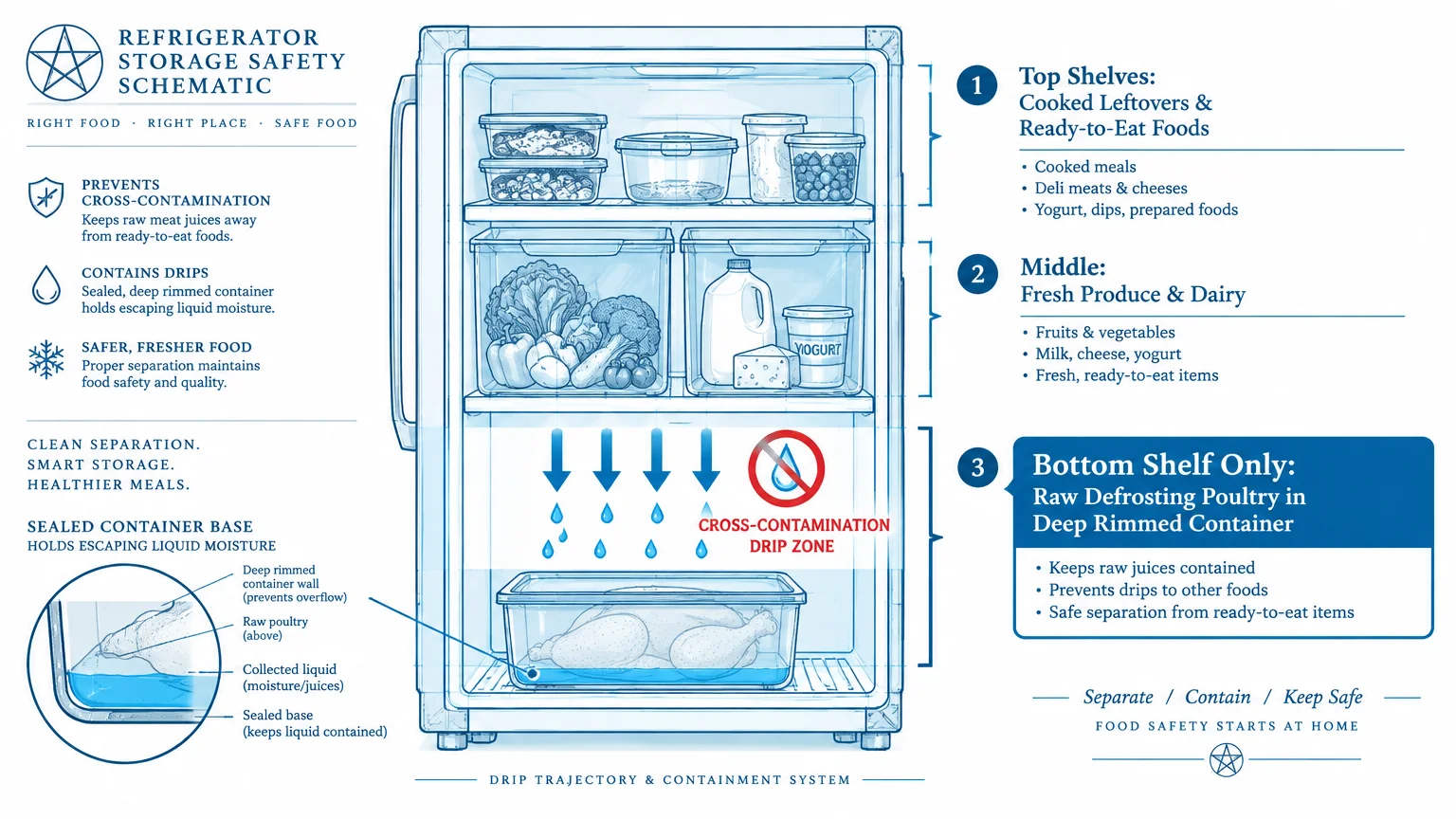
Defrosting poultry in the refrigerator is safe, but placement errors cause severe cross-contamination. Storing raw meat on top shelves poses a serious threat to other groceries.
As raw chicken thaws, melting frost mixes with poultry juices and leaks from packaging. These contaminated drips carry viable Salmonella bacteria downward.
Dripping poultry juices can easily contaminate lower shelves, fresh salad greens, and pre-cooked leftovers. Consuming those uncooked items leads directly to food poisoning.
Foodborne illness inflicts an annual economic burden of $74.7 billion across the nation. Smart food storage habits shield your family from these painful statistics.
Always place thawing chicken on the lowest shelf of your refrigerator. Low-shelf positioning ensures that rogue condensation cannot drip onto any other foods.
Never rest wet poultry packages directly on refrigerator grates. Place the chicken inside a rimmed tray, casserole dish, or wide ceramic bowl.
The rimmed container catches all stray liquid and condensation reliably. Sanitizing a single dish is far easier than scrubbing your entire refrigerator.
Verify that your refrigerator runs at or below 40°F. An inexpensive appliance thermometer helps you monitor your cooling settings accurately.
Chicken thawed in the refrigerator can safely rest there for 1 to 2 days before cooking. This buffer gives you convenient flexibility when scheduling weekly meals.
Inspect your packaging for micro-tears before placing chicken into your refrigerator. Even tiny factory tears allow contaminated juices to escape onto clean surfaces.
Household Hack #5: Stop Leaving Microwave-Defrosted Poultry Uncooked
Microwaves offer rapid defrosting capabilities when you face tight evening schedules. However, mishandling microwave-thawed chicken creates major bacterial breeding grounds.
Microwave energy distributes heat unevenly across irregular meat cuts. The thin edges of chicken often warm past 40°F and start cooking while centers stay icy.
Those warm sections enter the Danger Zone between 40°F and 140°F rapidly. Pathogens multiply within those warm meat pockets while you wait to prepare dinner.
The USDA requires that you cook microwave-thawed chicken immediately after defrosting. Storing partially warm chicken back in the refrigerator allows bacteria to survive.
Refrigerators cannot cool warm meat pockets down quickly enough to stop bacterial growth. Immediate heat application on a stove or grill is necessary for safety.
Remove all commercial plastic wrapping and styrofoam trays before microwaving. Place the poultry on a microwave-safe ceramic plate or glass dish.
Set your microwave to its defrost setting or reduce power to 30%. Lower power levels minimize hot spots and promote more even thawing.
Pause the appliance every two minutes to flip and rearrange the chicken pieces. Separating connected pieces helps each cut thaw evenly without premature cooking.
Transfer the poultry directly to your preheated cooking appliance once thawed. Cook the meat thoroughly until all sections reach an internal temperature of 165°F.
Never use microwave defrosting if you plan to marinate raw chicken for several hours. The warm pockets in the meat will accelerate bacterial growth during marination.
Household Hack #6: Cease the Dangerous Practice of Washing Raw Chicken
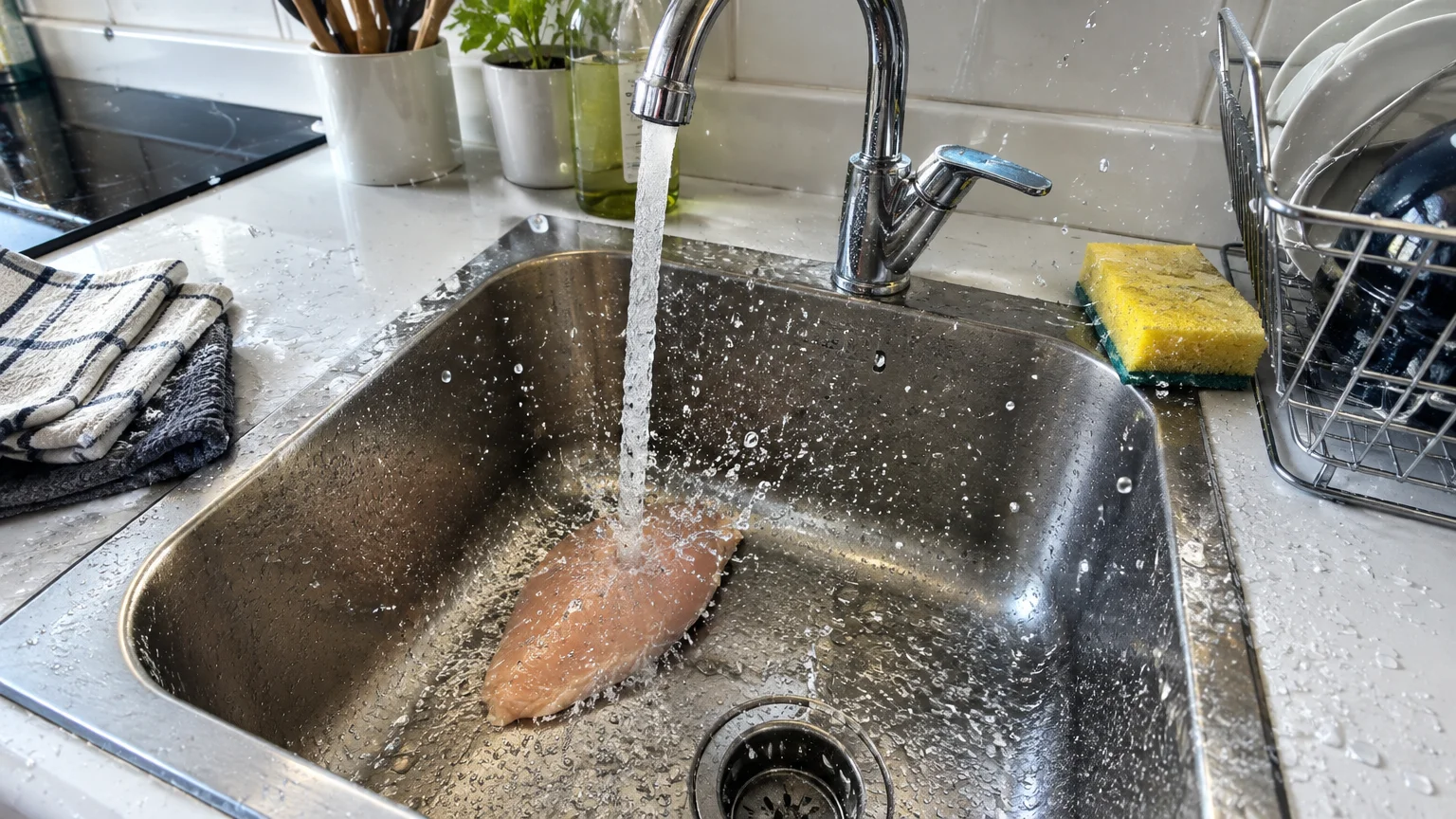
Rinsing raw chicken in the sink before or after thawing is a dangerous kitchen habit. Many home cooks believe washing cleans the meat, but it actually spreads disease.
Tap water cannot eliminate Salmonella or other foodborne pathogens from raw poultry flesh. Only sustained cooking heat kills dangerous bacterial cells.
Rinsing meat causes contaminated water to splash up to 3 feet in every direction. This aerosol spray coats your counters, dish drying racks, faucets, and sponges.
Non-typhoidal Salmonella is the costliest foodborne pathogen in the United States, causing $17.13 billion in annual losses. Preventing kitchen contamination avoids these extreme costs.
Splashed bacteria transfer easily from kitchen surfaces onto clean silverware and ready-to-eat foods. This cross-contamination sickens family members without their knowledge.
Move your thawed chicken directly from its container into your hot pan or baking dish. Eliminating the washing step saves time and keeps your kitchen clean.
If excess moisture covers the meat, pat it gently with disposable paper towels. Dry chicken sears much better in hot fat, creating superior culinary results.
Discard used paper towels into the trash immediately to prevent accidental contact. Wash your hands with warm water and soap for 20 seconds right away.
Wipe down all surrounding prep surfaces with an effective household disinfectant. Keeping work zones sanitized ensures your kitchen remains safe for meal preparation.
If raw poultry juices touch your sink, clean the basin thoroughly before washing any produce. Never wash fruit or vegetables in a contaminated sink basin.
Household Hack #7: Never Thaw Frozen Poultry Directly in a Slow Cooker
Putting rock-hard frozen chicken into a slow cooker is a tempting shortcut for busy families. However, this common practice violates essential food safety guidelines.
Slow cookers heat food very slowly over several hours by design. Placing frozen poultry inside keeps the meat within the Danger Zone between 40°F and 140°F for too long.
Bacteria multiply to dangerous concentrations before the slow cooker reaches pasteurizing temperatures. Some bacteria produce resilient toxins that survive even prolonged cooking.
Always thaw chicken completely inside your refrigerator before adding it to a slow cooker meal. Defrosted poultry heats up swiftly and reaches safe internal temperatures without delay.
If you need to prepare frozen chicken without advance thawing, use your conventional oven or stovetop. The USDA confirms cooking directly from frozen is completely safe in high-heat appliances.
Cooking frozen poultry directly takes approximately 50% longer than cooking fresh or thawed pieces. Plan your meal schedule to accommodate this extra cooking duration.
Use a reliable food thermometer to check the core of the chicken before serving. Ensure every piece reaches the mandatory minimum internal temperature of 165°F.
This high-heat approach produces tender chicken without exposing your household to prolonged bacterial growth. You save dinner plans while preserving food safety.
Always cut thawed poultry into uniform pieces before placing it inside a slow cooker. Evenly sized pieces cook uniformly, ensuring all meat reaches safe internal temperatures.
Household Hack #8: Follow Strict Protocols Before Refreezing Thawed Meat
Changing dinner plans often leaves home cooks with thawed chicken they cannot use immediately. Refreezing poultry requires specific steps to avoid creating severe contamination hazards.
If you thawed your chicken inside the refrigerator, you can safely refreeze it raw. Because the meat remained below 40°F, bacterial colonies never multiplied aggressively.
Refreezing raw meat causes slight cellular breakdown that may release natural moisture. The texture might turn slightly drier upon cooking, but the meat stays safe to eat.
However, chicken thawed in cold water or a microwave must never be refrozen raw. You must cook the meat thoroughly to 165°F before placing it into the freezer.
Cooking pasteurizes the poultry and kills any bacteria that began multiplying during faster thawing. Once cooked, the meat freezes safely for future meals.
With retail whole chicken reaching $2.01 per pound in mid-2026, avoiding waste protects your household budget. Proper refreezing prevents you from throwing away good food.
Store cooked chicken in the refrigerator if you plan to eat it soon. Ensure you consume or freeze those leftovers within 3 to 4 days.
Label your freezer packages with dates and contents using freezer tape. Organizing your freezer prevents forgotten food items and stops costly freezer burn.
Wrap chicken in freezer paper and seal it in heavy freezer bags before freezing again. Double wrapping prevents freezer burn and keeps the meat tasting fresh.
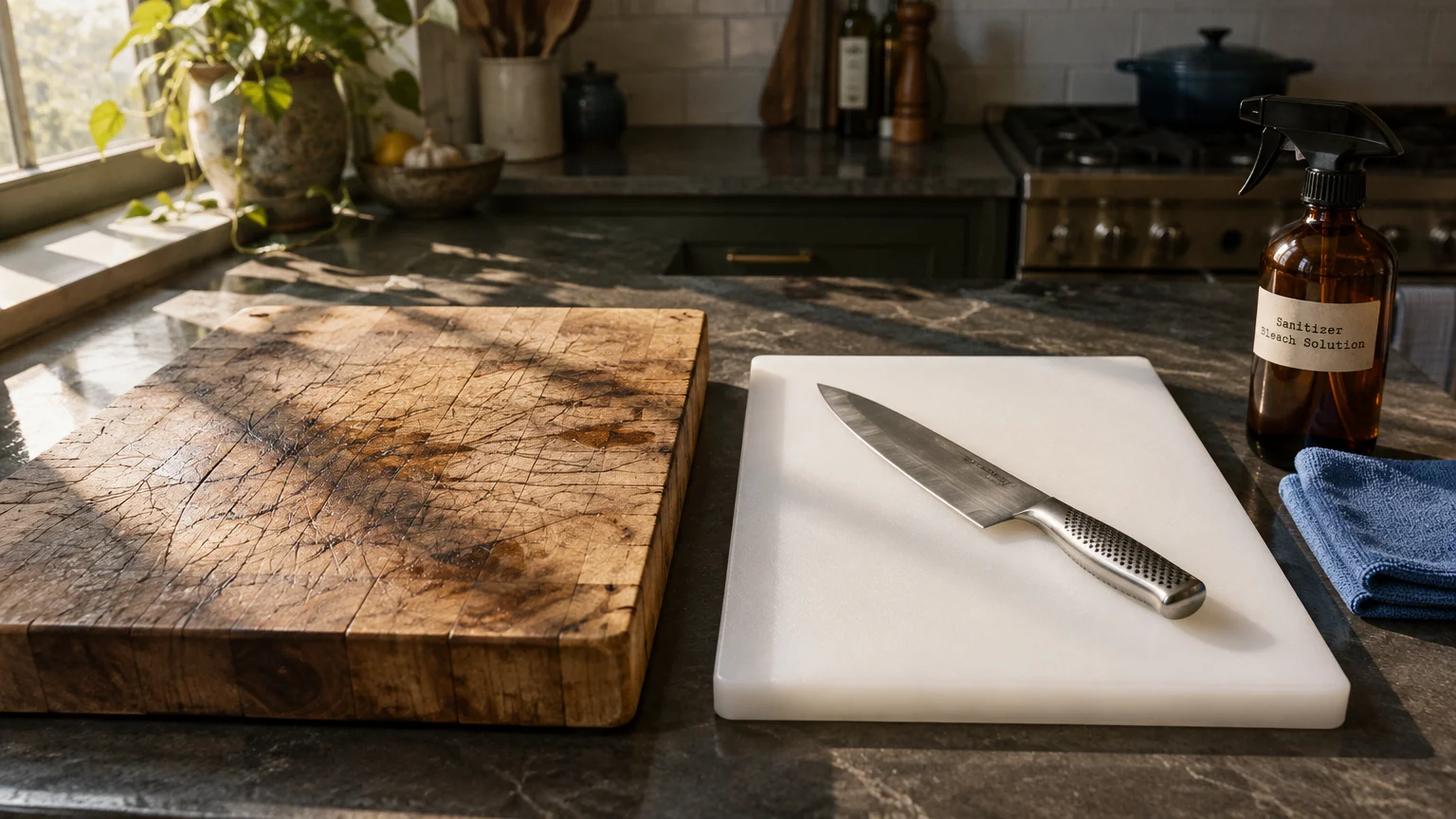
Household Hack #9: Eliminate Unsanitized Utensils and Porous Thawing Surfaces
Defrosting poultry safely involves more than temperature control; surface sanitation is equally vital. Placing thawing chicken on wooden boards or porous surfaces creates persistent bacterial reservoirs.
Raw poultry juices seep deeply into tiny knife grooves and porous wood grains. Standard hand washing often fails to dislodge Salmonella trapped deep inside these microscopic crevices.
When you prepare raw vegetables on that same cutting surface later, bacteria transfer directly. That cross-contamination leads to serious foodborne illness across your entire household.
Non-porous cutting surfaces made of durable plastic or tempered glass are ideal for handling thawing chicken. These smooth surfaces clean easily and resist deep liquid absorption.
Designate a specific, color-coded cutting board strictly for raw poultry preparation. Separating raw meat boards from produce boards prevents dangerous bacterial transfers effortlessly.
Never reuse plates or platters that held thawing raw chicken for serving cooked food. Always use a clean plate to carry cooked poultry from the grill or stove.
Wash all knives, tongs, and prep platters in hot soapy water immediately after handling raw meat. High water temperatures and detergent break down fatty bacterial cell walls.
Air-dry your sanitized kitchen tools or use fresh paper towels rather than shared cloth rags. Cloth kitchen towels quickly collect and spread moisture-loving pathogens across prep stations.
Sanitize kitchen sponges regularly or switch to washable microfiber cloths. Damp sponges harbor bacteria that can survive and transfer onto clean kitchen countertops.
Household Hack #10: Verify Safe Cooking Temperatures with a Digital Thermometer
The final step in overcoming chicken thawing mistakes is verifying your cooking temperature. Relying on visual checks like clear juices or white meat is dangerously unreliable.
Chicken flesh can turn white and opaque before reaching pasteurization thresholds. Visual inspections often fail to identify undercooked meat harboring active Salmonella bacteria.
The USDA food safety guidelines mandate cooking all poultry to an internal temperature of 165°F. Achieving this temperature instantly destroys Salmonella and prevents foodborne infections.
Invest in an accurate digital instant-read meat thermometer for your kitchen. A quality food thermometer is a frugal tool that prevents thousands of dollars in medical costs.
Insert the thermometer probe into the thickest part of the chicken breast or thigh. Avoid touching bone or gristle, as density differences distort accurate temperature readings.
If you cook whole chickens, insert the probe into the innermost part of the wing and thigh. All sections must consistently register at or above 165°F.
When cooking partially thawed or frozen chicken, check multiple spots across each piece. Uneven thawing causes temperature variations that require extra cooking time to eliminate.
Once your thermometer registers 165°F, remove the chicken from the heat source. Let the meat rest for several minutes to redistribute juices and finish cooking safely.
Clean your digital thermometer probe with hot soapy water after every single temperature check. Sanitizing the probe prevents cross-contaminating undercooked parts with cooked meat.
The Payoff: Real Savings for Your Home Budget
Strict adherence to food safety protocols is one of the most effective ways to protect your personal finances. Preventing food poisoning keeps your household budget resilient against unexpected shocks.
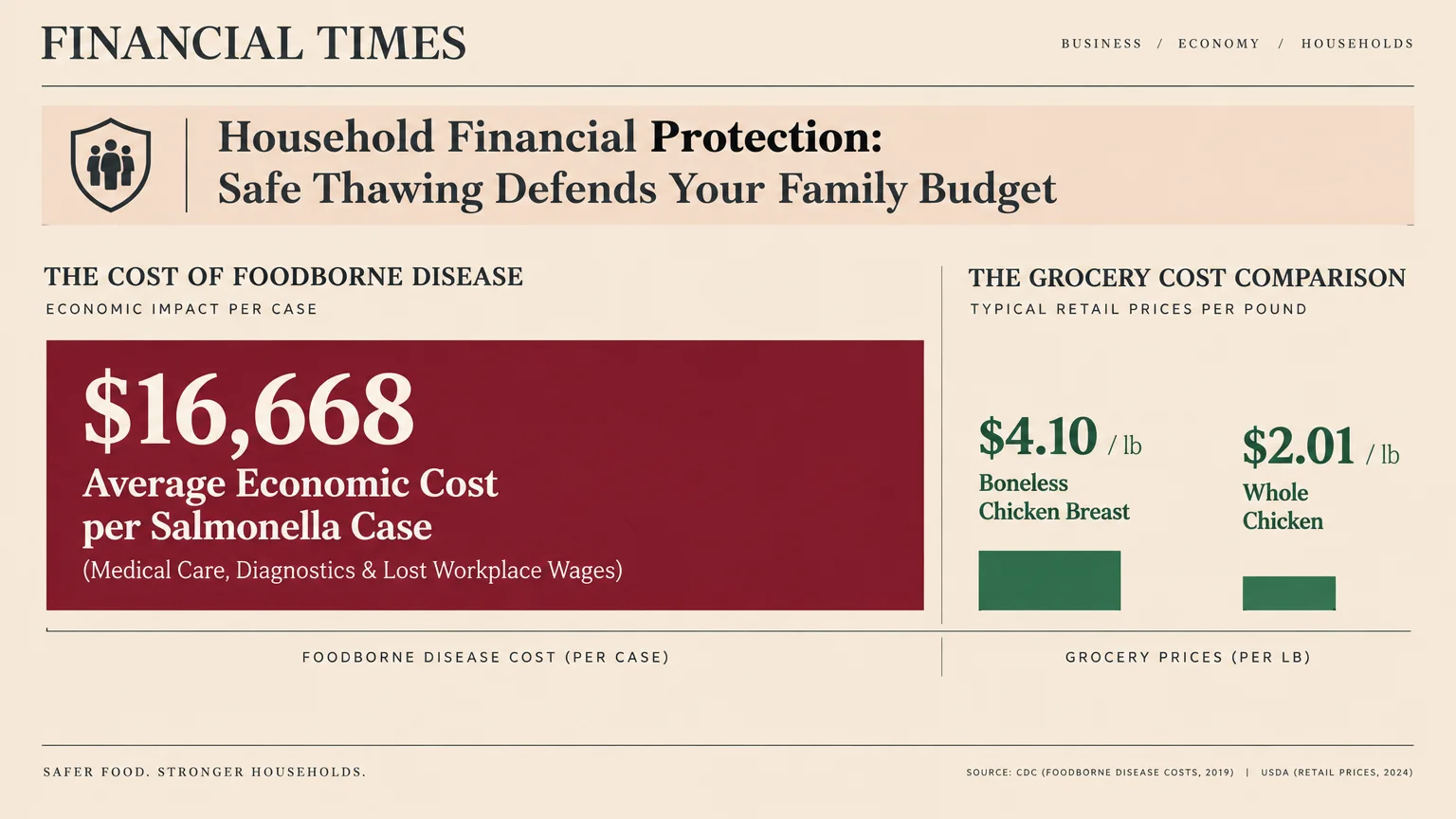
Grocery store chicken prices continue to demand respect in household budgets. Boneless chicken breast reached $4.10 per pound in October 2026, averaging $4.16 across 2026 and $4.20 in September.
Whole chicken prices hit $2.01 per pound in mid-2026, rising 9.2% from $1.84 in January 2023. Throwing out contaminated chicken wastes hard-earned money that could fund other household goals.
The personal financial risk of foodborne illness is far larger than grocery bills. Non-typhoidal Salmonella imposes $17.13 billion in annual economic costs across the nation.
Across all pathogens, foodborne disease inflicts an annual economic toll of $74.7 billion. The average cost per Salmonella case reaches an alarming $16,668.
Paying hospital bills, prescription charges, and absorbing lost wages can wipe out family emergency funds. Mastering safe chicken thawing protects your health and preserves your financial security.
Implement these practical kitchen habits every time you defrost poultry for dinner. You will eliminate unnecessary food waste, feed your family safely, and keep your hard-earned money intact.
Treating food safety as a financial strategy protects your family from medical debt. Simple adjustments in how you handle raw chicken deliver peace of mind and real savings.
Frequently Asked Questions
Can you safely refreeze raw chicken after thawing?
You can safely refreeze raw chicken only if you thawed it inside a refrigerator set below 40°F. The meat must have remained continuously chilled and held for no longer than 1 to 2 days.
Never refreeze raw poultry that was thawed in cold water or a microwave oven. You must cook that meat thoroughly to 165°F before freezing it again.
Is it safe to cook chicken directly from a frozen state?
Yes, cooking chicken directly from frozen is completely safe when using a conventional oven or stovetop. However, you must never cook frozen poultry inside a slow cooker.
Cooking frozen meat takes approximately 50% longer than cooking thawed cuts. Always check that the internal temperature reaches 165°F with a food thermometer.
How long does chicken take to thaw in cold water?
A 1-pound package of boneless chicken breast typically thaws within an hour in cold water. Larger packages or whole chickens can take two to three hours.
You must submerge the meat in a leak-proof bag and replace the water every 30 minutes. Once thawed, you must cook the meat immediately.
How long can thawed chicken stay in the refrigerator before cooking?
Raw chicken thawed in the refrigerator remains safe to cook for 1 to 2 days. Keep it stored on the lowest shelf in a leak-proof container.
Once cooked, store your leftovers in the refrigerator and eat them within 3 to 4 days. You can also freeze cooked leftovers for longer preservation.
For information on energy savings in your home, visit the U.S. Department of Energy at Energy.gov. For eco-friendly household tips, consult the Environmental Protection Agency (EPA).
Disclaimer: This article provides tips for informational purposes. Follow all safety precautions when attempting DIY projects or using household products.
The author is not liable for any damages or injuries. Results may vary.